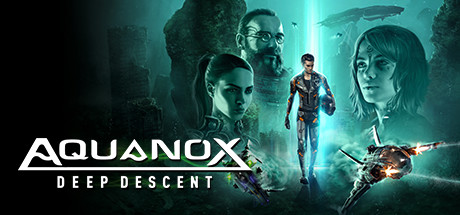
Game review
Aquanox Deep Descent
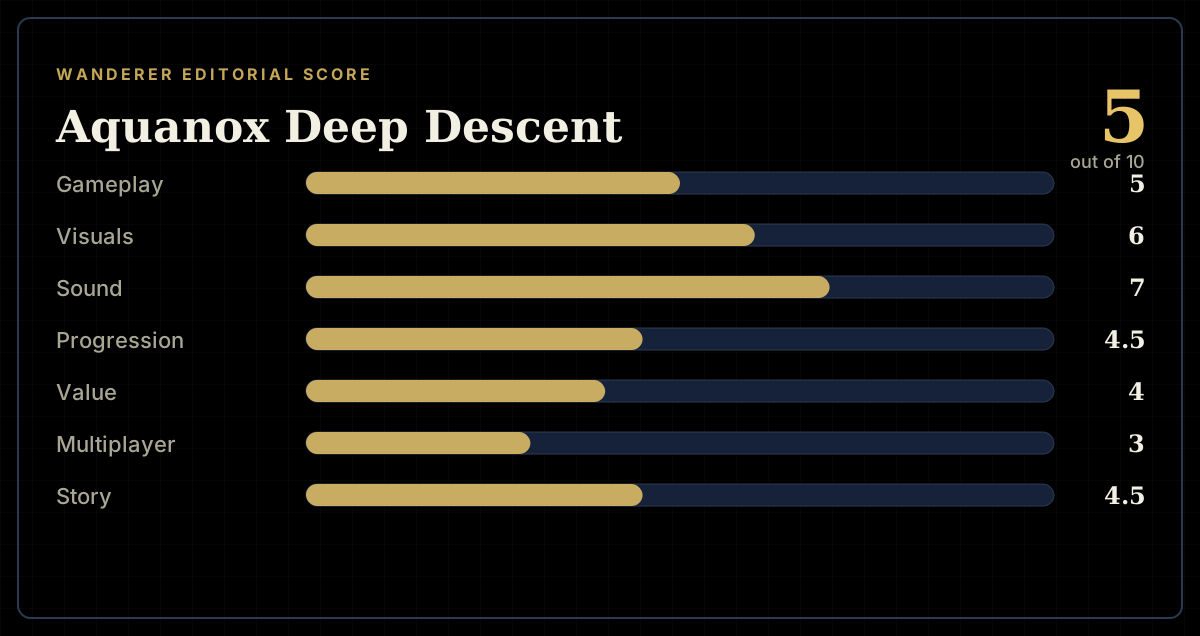
5 / 10
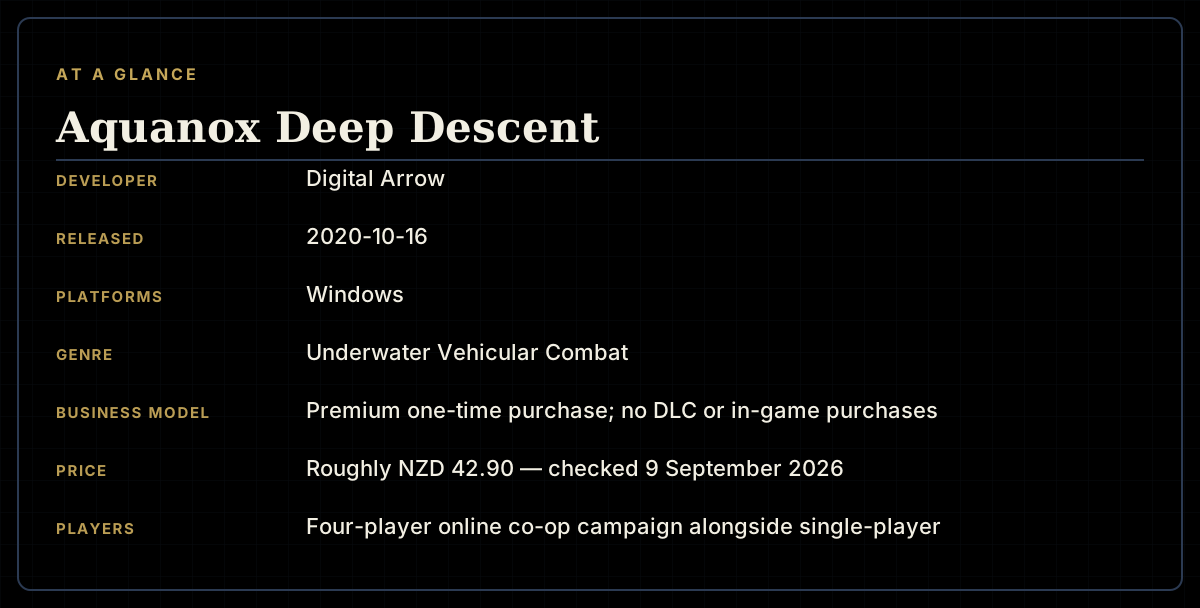
- Developer
- Digital Arrow
- Publisher
- THQ Nordic
- Released
- 16 October 2020
- Platforms
- Windows
- Genre
- Underwater Vehicular Combat
- Monetisation
- Premium one-time purchase; no DLC or in-game purchases
- Players
- Four-player online co-op campaign alongside single-player
The short version
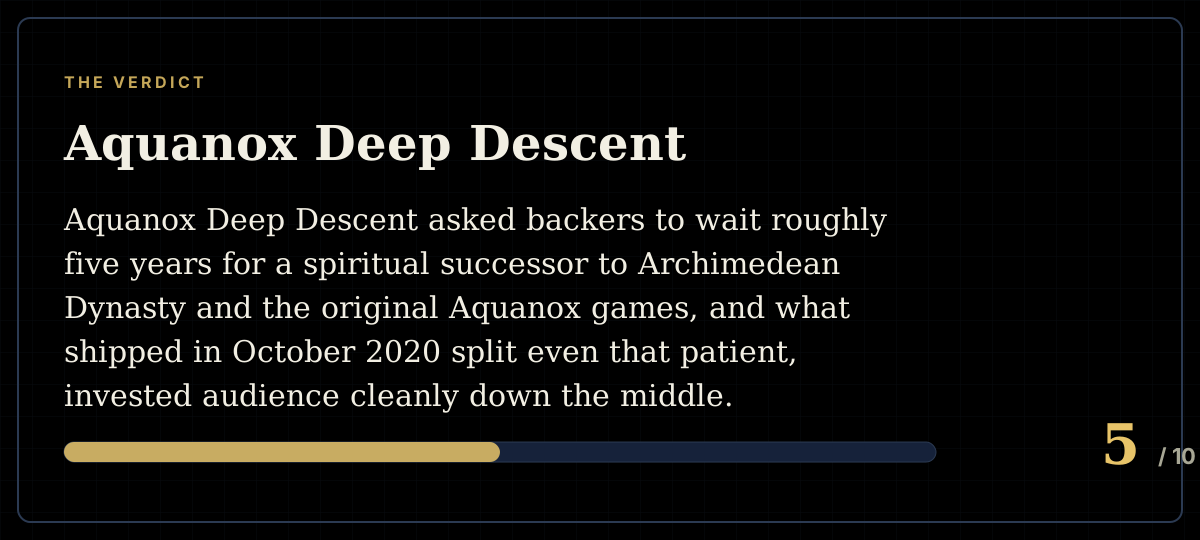
Aquanox Deep Descent asked backers to wait roughly five years for a spiritual successor to Archimedean Dynasty and the original Aquanox games, and what shipped in October 2020 split even that patient, invested audience cleanly down the middle. Longtime series fans divide between those who find the slower, more linear underwater combat a reasonable if imperfect continuation and those who say it abandons everything that made the originals distinctive — and the developer's own confirmed patch history backs up a separate, sharper complaint: real post-launch support stopped within about two months of release.
Biggest strengths
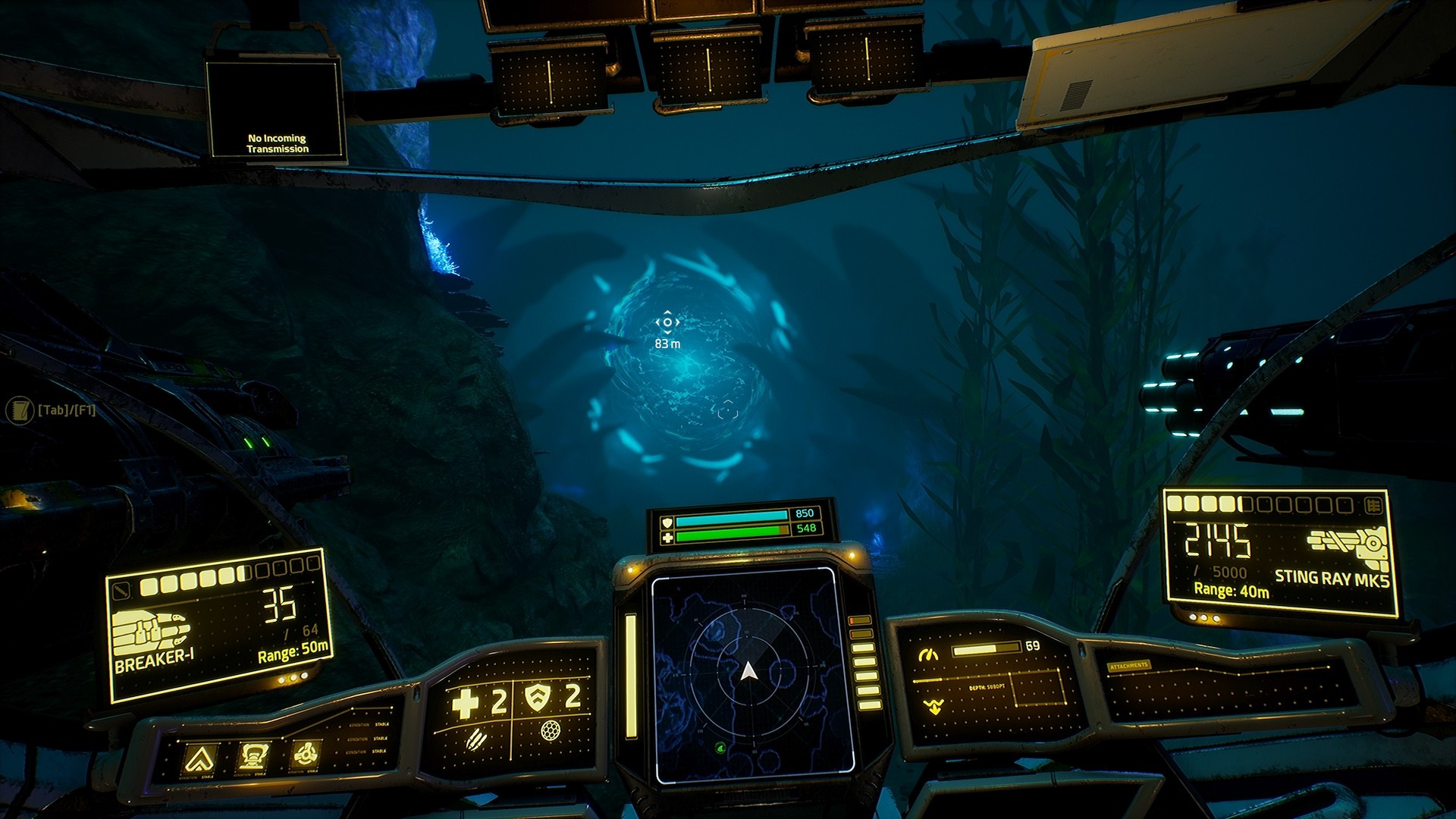
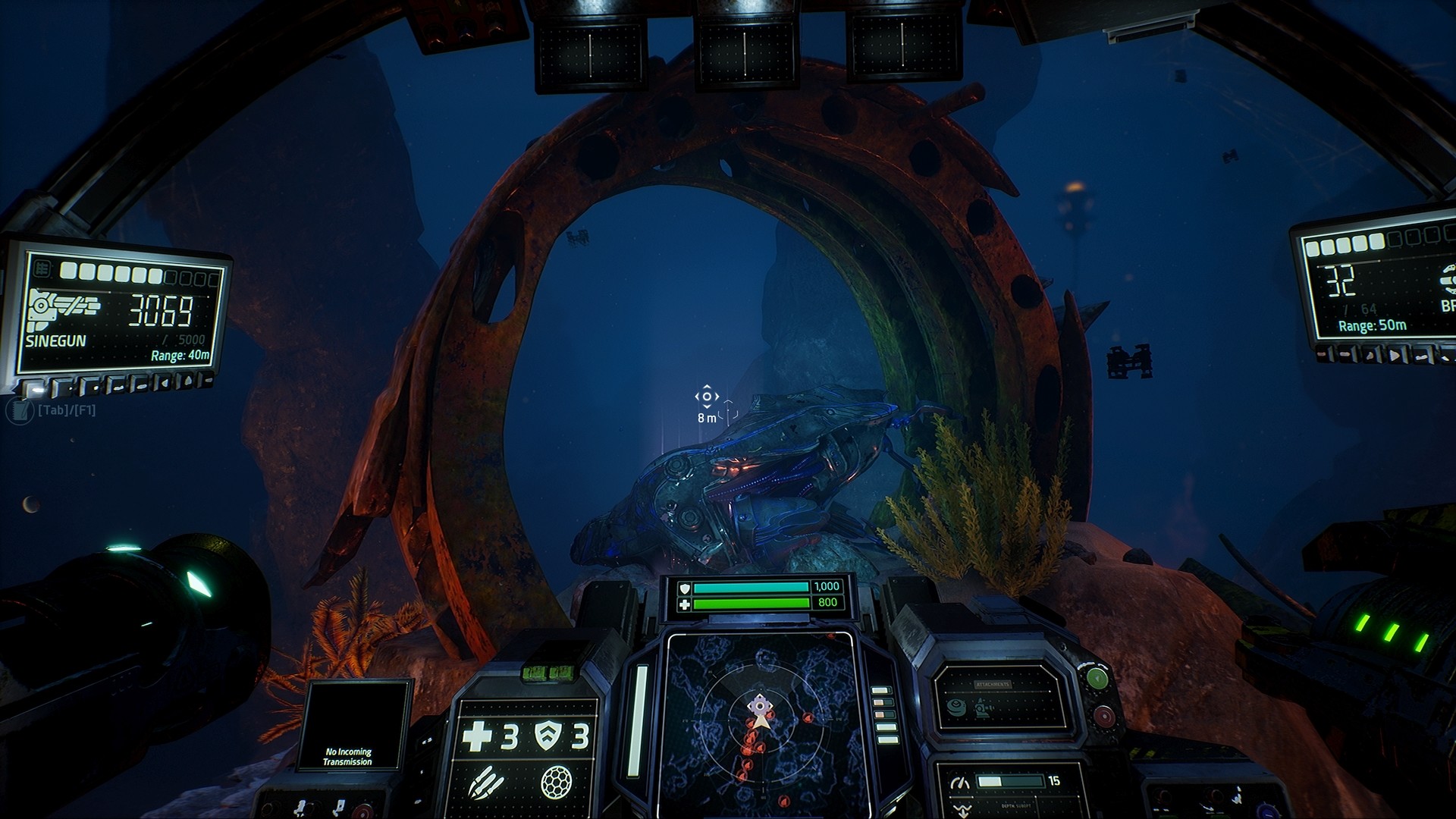
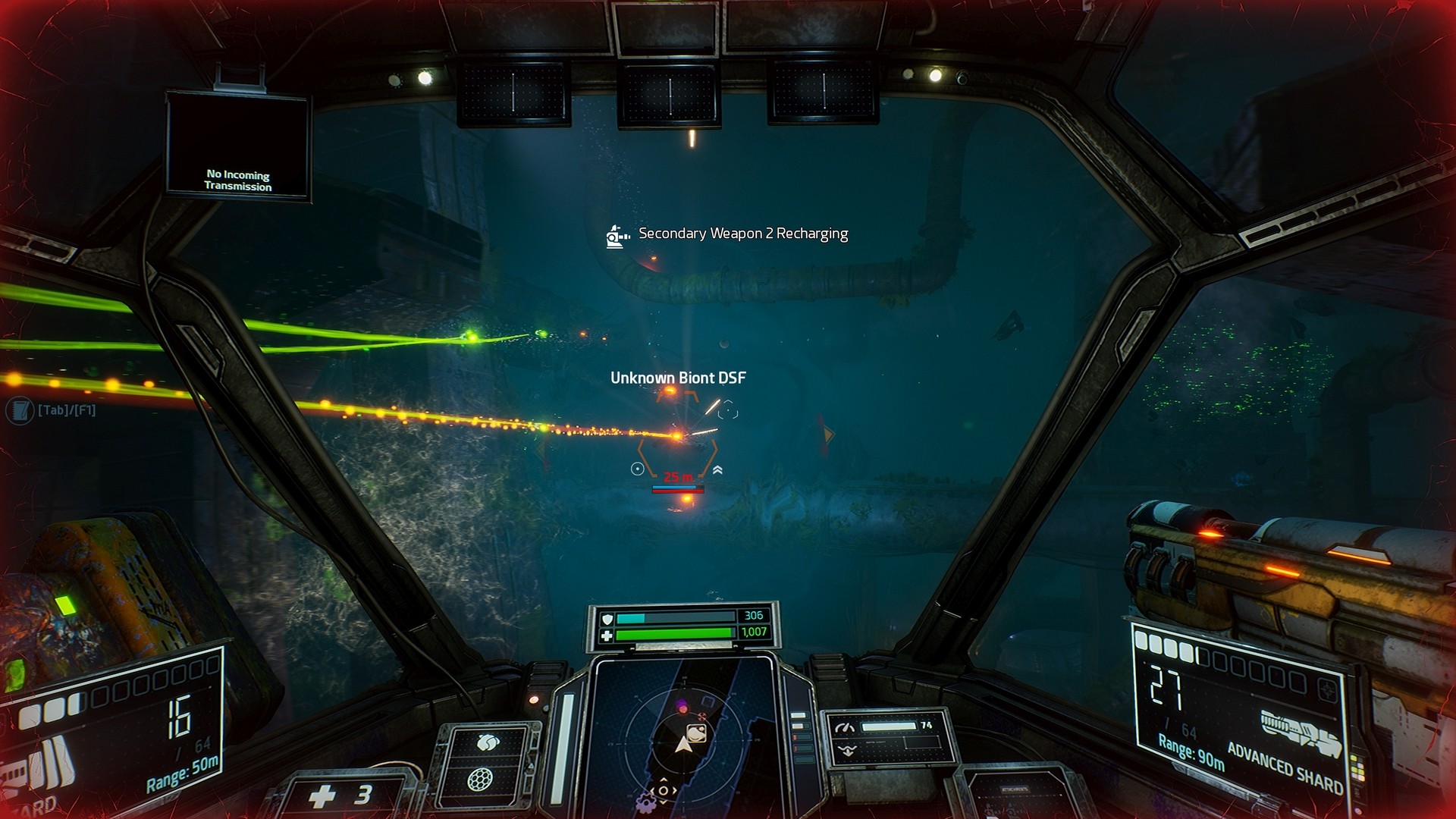
- The core arsenal and 6-degrees-of-freedom underwater combat give combat encounters genuine tactical texture for players willing to meet the game's slower pace on its own terms
- German-language voice acting is singled out by multiple reviewers as a genuine highlight, and Kai Rosenkranz's soundtrack draws consistent praise consistent with his work on the earlier games in the series
- Reviewers who approach the game without directly comparing it to the fast, evasive dogfighting of the original 1996-2003 games report a reasonably enjoyable, atmospheric underwater shooter in its own right
Biggest weaknesses
- A large, detailed body of longtime series fans reports that core combat identity was lost in translation: the fast, evasive dogfighting of Archimedean Dynasty and the original Aquanox games is replaced by slower, more cover-based encounters against enemies some reviewers say simply out-tank and out-shoot the player rather than testing genuine skill
- The developer's own confirmed patch history shows three post-launch updates in October, November and December 2020, with no further patches visible afterward — corroborating multiple reviewers' independent claims that meaningful support ended within about two months of release
- A specific, severe co-op bug is repeatedly and independently reported: a guest player's campaign progress does not save between sessions, forcing groups to replay earlier content or abandon shared saves entirely
Who it's for: Longtime Archimedean Dynasty and Aquanox fans curious enough to judge the combat and atmosphere for themselves, more than newcomers or anyone specifically buying for the four-player co-op campaign given its confirmed save-data problems.
Our recommendation: Approach as a single-player experience judged on its own terms rather than as the Aquanox 3 backers funded; the co-op mode's guest-save issue is a real, confirmed problem worth knowing about before planning a session around it.
5 / 10
Archimedean Dynasty released in 1996, spawned two Aquanox sequels by 2003, and then went quiet for well over a decade before a 2015 Kickstarter campaign promised its remaining, still-devoted backers a proper spiritual successor at long last. Aquanox Deep Descent finally arrived five years later, in October 2020, to a reception the review sample describes in unusually personal terms — this is a fanbase that waited two decades for a follow-up and funded it directly, and their disappointment where it exists reads accordingly sharper and more personal than an ordinary critical letdown usually does.
A combat identity longtime fans say went missing
The central, most detailed complaint concerns what actually happens in combat. The original games built their reputation on fast, evasive, six-degrees-of-freedom dogfighting — genuine skill expression in three-dimensional movement. Multiple longtime fans report that Deep Descent replaces that identity with slower, more cover-based encounters, and several specifically describe enemies that simply out-tank and out-shoot the player rather than rewarding the maneuvering skill the earlier games demanded. That's a precise, mechanical complaint rather than a vague "it's different now," and it's repeated closely enough across independent reviews to treat as a real design shift rather than one player's unmet expectations.
Reviewers approaching the game without that direct baseline comparison report a more forgiving experience — a reasonably atmospheric, arcade-style underwater shooter that doesn't need to be judged against 1996 to be enjoyable on its own terms. Both readings show up seriously in the sample, and which one a given player lands on tracks closely with how much personal history they bring to the comparison.
A confirmed support timeline, not just a feeling
Beyond the combat debate, a specific and verifiable claim recurs: that Digital Arrow effectively stopped supporting the game within a couple of months of release. This review can confirm that directly rather than taking it purely on faith — the developer's own public patch history shows three post-launch updates, in October, November and a "Christmas Patch" in December 2020, with no further patches visible in the record after that point. Whatever the reason, that timeline matches what multiple independent reviewers describe as an abandonment, and it's a genuinely different, more serious claim than ordinary "I wish they'd patched X" feedback.
That gap matters especially for one specific, severe bug: multiple reviewers independently report that a guest player's progress in the four-player co-op campaign doesn't save between sessions, forcing groups to either replay content from scratch or give up on a shared campaign entirely. A bug this disruptive to the mode built around it, left unaddressed after support effectively stopped, is a serious mark against the co-op experience specifically, separate from any single-player combat debate.
What still genuinely lands, even for disappointed backers
Presentation isn't where most of the complaints concentrate. German-language voice acting draws specific praise as a genuine high point, and Kai Rosenkranz's score — continuing his own long-running work on the earlier Aquanox games — is consistently and specifically well-regarded across the sample. A Collector's Edition also delivered physical rewards to backers exactly as originally promised, a concrete point of follow-through several reviewers specifically credit even while expressing real, broader disappointment with the finished game itself.
A steep drop-off that matches the frustration
Global achievement data reinforces the shape of the disappointment rather than contradicting it. Early-game achievements clear a solid majority of owners — around 60% for the first handful — but that figure collapses to roughly 1% for most of the game's later achievements, one of the steepest drop-offs on this list. That's consistent with a genuinely divisive experience rather than a merely difficult one: a real share of players engage with the opening hours and then stop, whether from the pacing and combat complaints discussed above, the story's reported weaknesses, or simply losing motivation once the promised co-op experience turned out to be unreliable.
Five years from pledge to release
It's worth spelling out the timeline directly, since it shapes how seriously this review treats the backer disappointment as a distinct thread from ordinary launch-day criticism. The Kickstarter campaign began in 2015, with regular development blogs and community updates continuing for several years before the game's actual October 2020 release — genuinely five years between pledge and delivery. Reviewers who backed the project aren't reacting to an ordinary purchase gone wrong; they're reacting to half a decade of anticipation resolving into a combat system several say fundamentally misunderstands what made the games they backed it to honor work in the first place. That context doesn't change what shipped, but it explains why the disappointment in the review sample reads so much more personal and detailed than a typical mixed reception.
Verdict
Taking the whole record together, Aquanox Deep Descent is a genuinely divisive continuation of a beloved, long-dormant series — its combat identity reads as a real departure to longtime fans judging it against Archimedean Dynasty and the original Aquanox games, while newer or more forgiving players find a reasonably atmospheric shooter underneath. What tips this toward a below-average score isn't the divide itself but what's confirmed on top of it: development support that visibly stopped within two months of launch, and a severe, apparently never-fixed co-op save bug undermining the one mode built specifically to bring friends into this world together. Half a decade of anticipation deserved a steadier landing than that, whatever the merits of the combat debate underneath it.
Pros and cons
Pros
- The core arsenal and 6-degrees-of-freedom underwater combat give combat encounters genuine tactical texture for players willing to meet the game's slower pace on its own terms
- German-language voice acting is singled out by multiple reviewers as a genuine highlight, and Kai Rosenkranz's soundtrack draws consistent praise consistent with his work on the earlier games in the series
- Reviewers who approach the game without directly comparing it to the fast, evasive dogfighting of the original 1996-2003 games report a reasonably enjoyable, atmospheric underwater shooter in its own right
- The four-player co-op campaign, on the occasions its save issues don't intervene, is described by multiple reviewers as genuinely fun with the right group of friends
- A Collector's Edition delivered physical goods to backers as promised, a concrete point of follow-through some reviewers specifically credit even amid broader disappointment
Cons
- A large, detailed body of longtime series fans reports that core combat identity was lost in translation: the fast, evasive dogfighting of Archimedean Dynasty and the original Aquanox games is replaced by slower, more cover-based encounters against enemies some reviewers say simply out-tank and out-shoot the player rather than testing genuine skill
- The developer's own confirmed patch history shows three post-launch updates in October, November and December 2020, with no further patches visible afterward — corroborating multiple reviewers' independent claims that meaningful support ended within about two months of release
- A specific, severe co-op bug is repeatedly and independently reported: a guest player's campaign progress does not save between sessions, forcing groups to replay earlier content or abandon shared saves entirely
- Environmental and world design draw direct, unfavourable comparisons to Subnautica, with several reviewers describing the underwater setting as visually monotonous across a campaign that spans multiple oceans
- Several longtime backers describe nearly two decades of prior goodwill toward the franchise curdling into specific disappointment, citing weak writing, a story some call boring, and mechanical regressions like the removal of dynamic lighting from weapon fire that was present in the original 1996 game
Screenshots
-
Aquanox Deep DescentImage: THQ Nordic via Steam -
Aquanox Deep DescentImage: THQ Nordic via Steam -
Aquanox Deep DescentImage: THQ Nordic via Steam -
How the review scores each part of the gameWanderer Editorial -
At a glanceWanderer Editorial -
The short versionWanderer Editorial