Game review
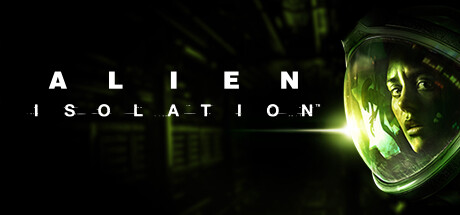
Alien: Isolation
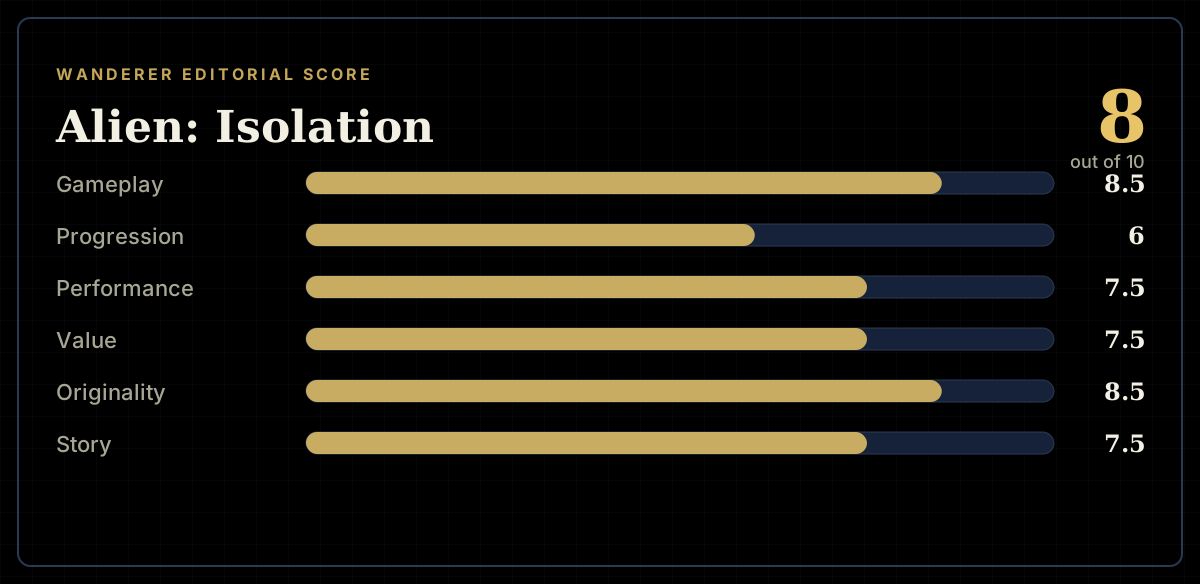
8 / 10
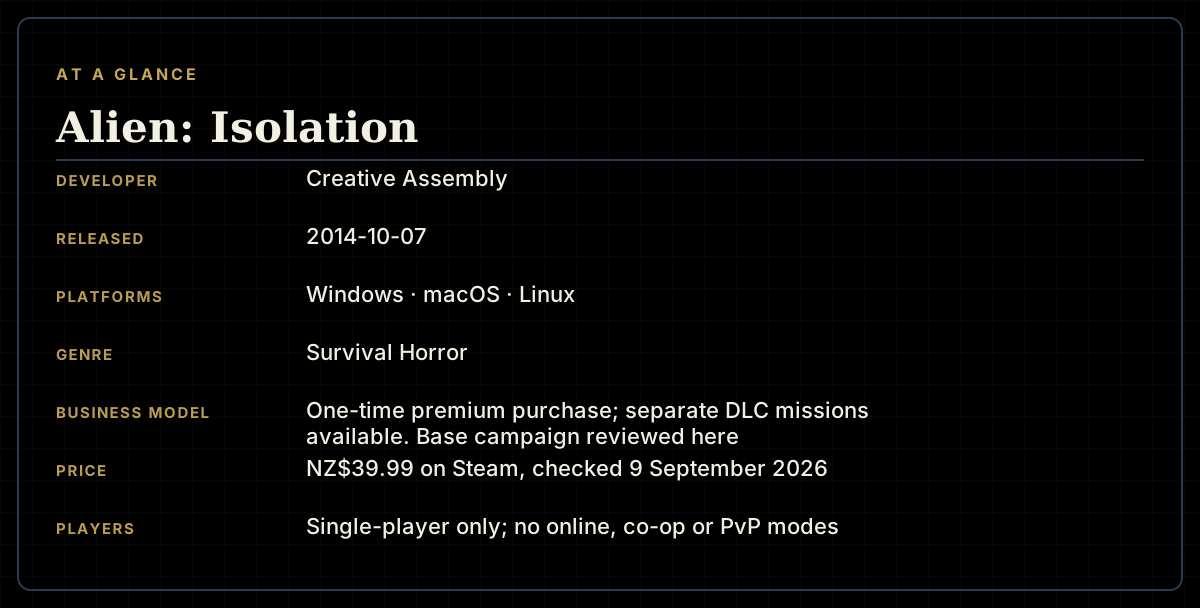
- Developer
- Creative Assembly
- Publisher
- SEGA
- Released
- 7 October 2014
- Platforms
- Windows, macOS, Linux
- Genre
- Survival Horror
- Monetisation
- One-time premium purchase; separate DLC missions available. Base campaign reviewed here
- Players
- Single-player only; no online, co-op or PvP modes
The short version
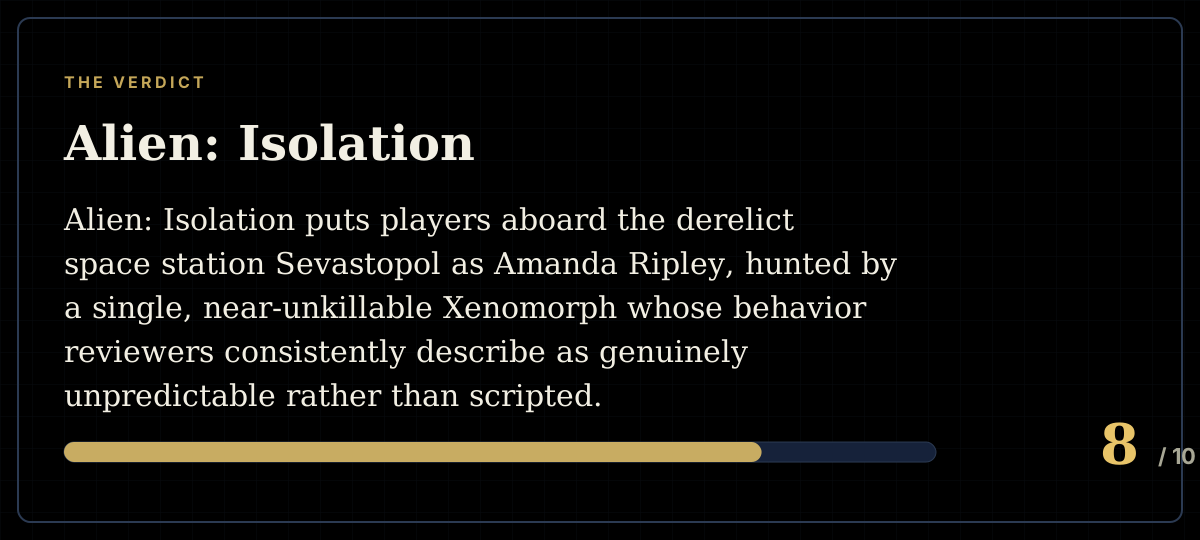
Alien: Isolation puts players aboard the derelict space station Sevastopol as Amanda Ripley, hunted by a single, near-unkillable Xenomorph whose behavior reviewers consistently describe as genuinely unpredictable rather than scripted. One detailed reviewer explains the underlying design directly: rather than full machine learning, the developers built "a much lighter-weight system that behaves just as well" at convincing players the creature is thinking and adapting to them specifically. Combined with a meticulously recreated late-1970s sci-fi aesthetic straight out of the original film, reviewers repeatedly call it one of the most authentic and frightening horror experiences available.
Set against that praise, a specific and widely repeated structural complaint recurs across many of the most detailed reviews: the game simply runs too long for the tension it builds. Multiple reviewers independently describe roughly the same arc — an outstanding, perfectly paced first five hours followed by a campaign that stretches to twenty or more, repeating false climaxes and wearing out the exact dread that made the opening so effective. That's a real, corroborated pacing problem worth going in aware of, distinct from the game's genuinely well-earned reputation for atmosphere and AI design.
Biggest strengths
- Genuinely unpredictable, non-scripted-feeling Xenomorph AI that reviewers consistently praise as one of the best examples of enemy design in the horror genre
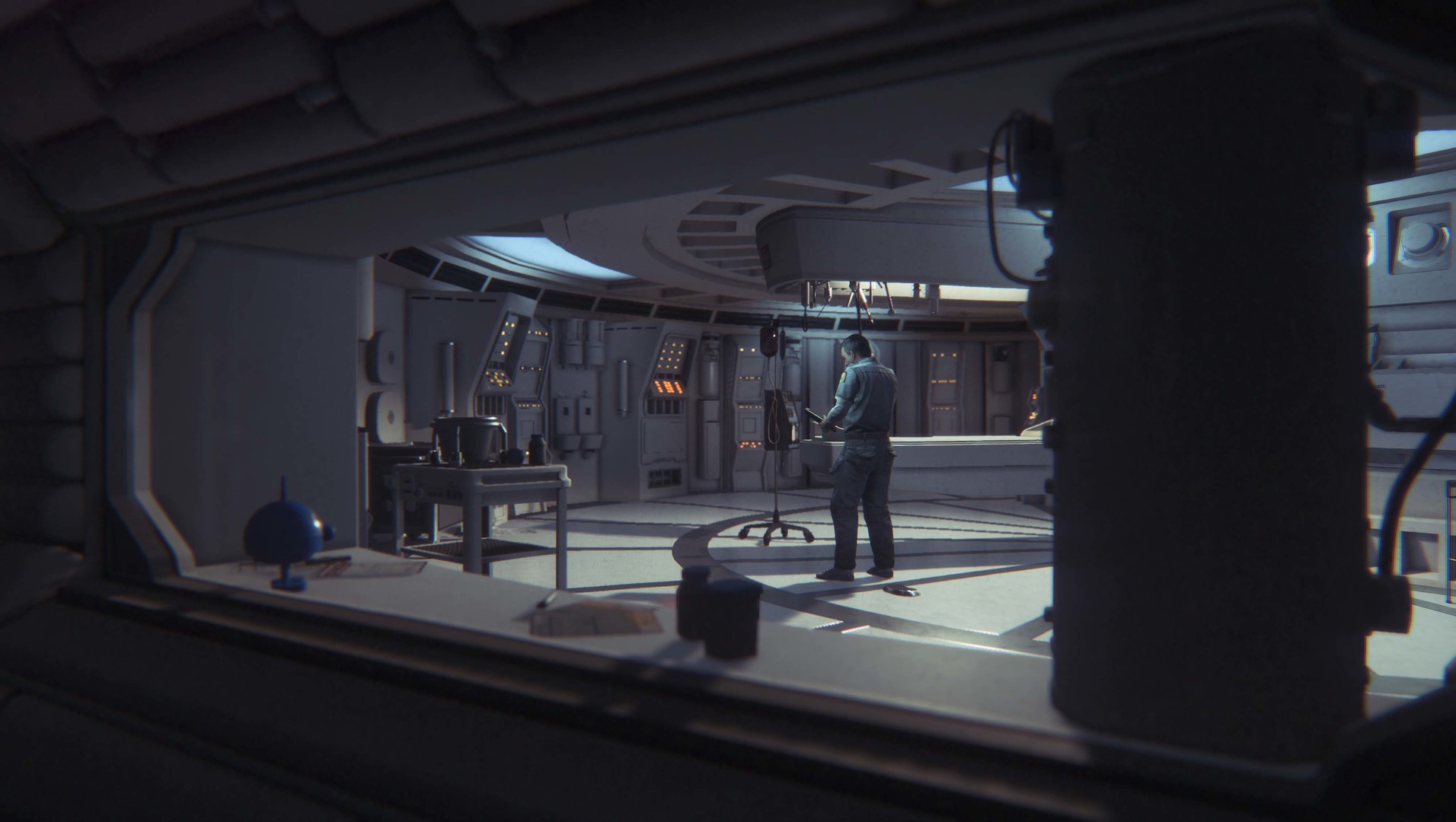
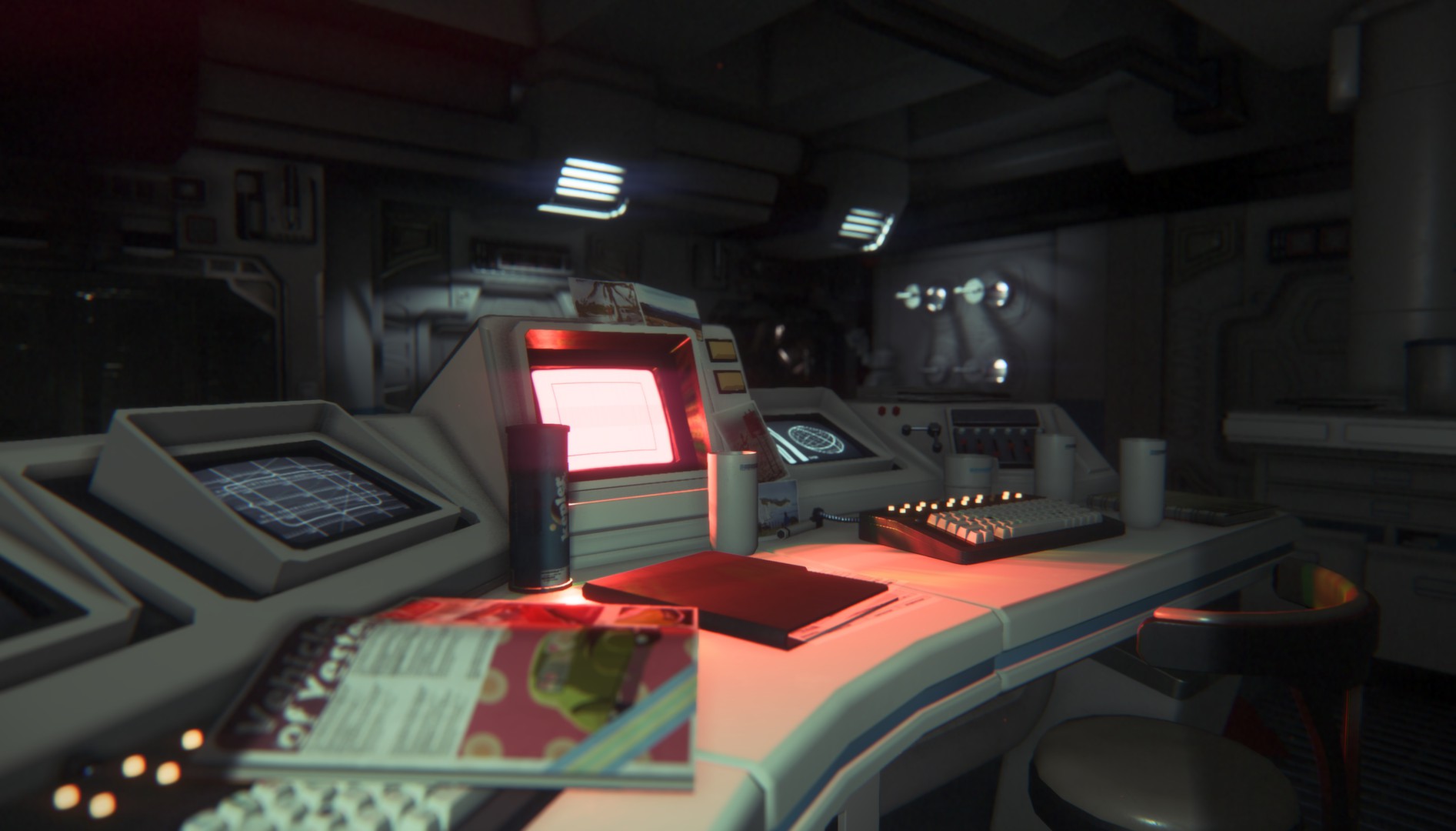
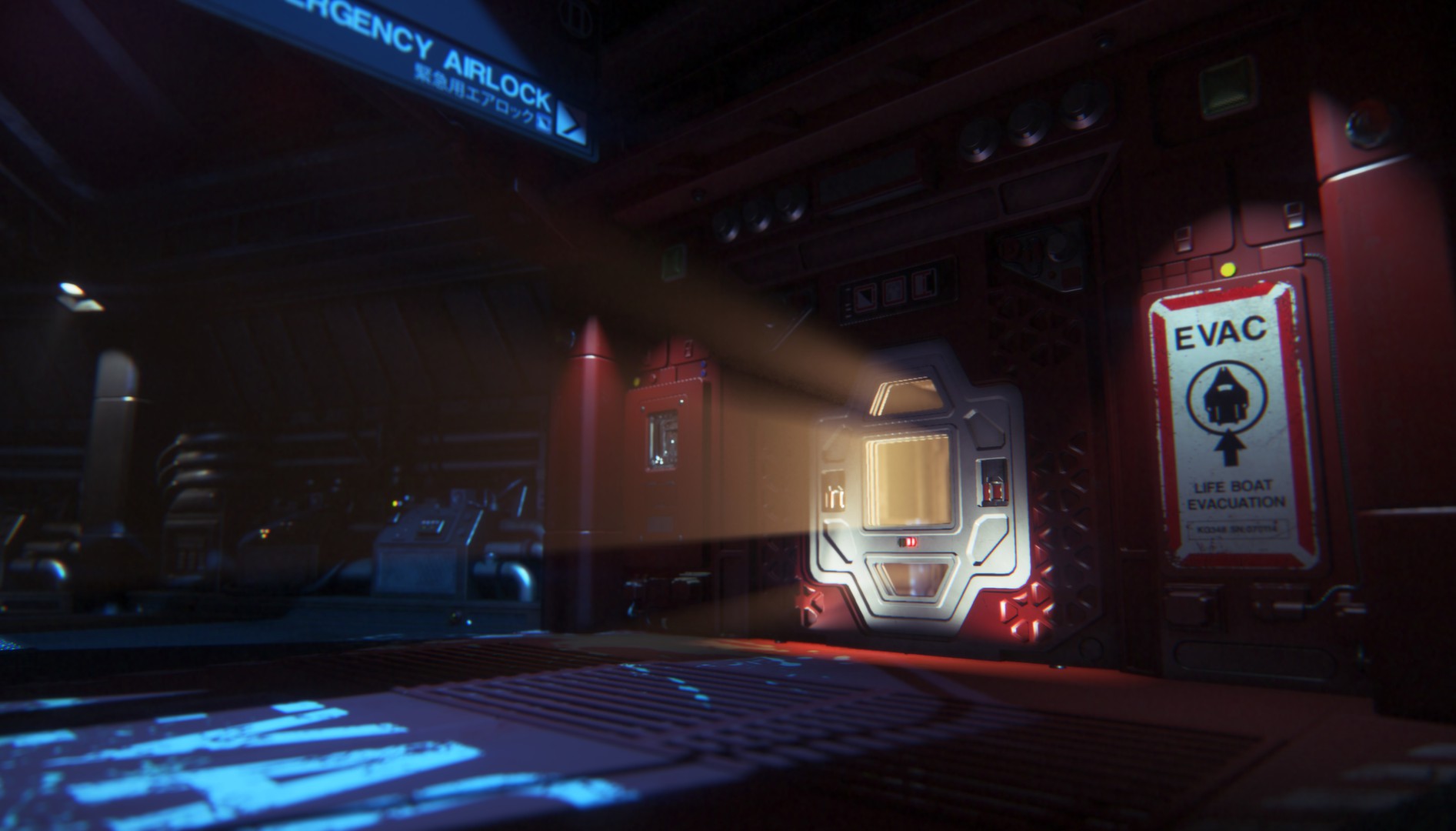
- A meticulously authentic recreation of the original 1979 film's late-1970s sci-fi aesthetic, with reviewers specifically praising the environmental design and sound work
- A tense, genuinely frightening cat-and-mouse stealth loop that reviewers describe producing real physical reactions during play
Biggest weaknesses
- A specific, widely repeated structural complaint: the campaign runs roughly three to five times longer than the tension its design can comfortably sustain, with multiple reviewers independently describing an outstanding first five hours followed by a drawn-out, repetitive back half
- Several detailed reviewers describe the game repeating "false climaxes" — moments that feel like the story's ending arriving several times before it actually does — as a specific source of fatigue rather than sustained tension
- At least one reviewer reports specific concerns about SEGA's privacy policy and data collection practices tied to the game's EULA, worth checking directly for privacy-conscious buyers
Who it's for: Horror and stealth fans who want a genuinely unpredictable, authentically atmospheric take on the Alien franchise. Less suited to players who want a tightly paced, shorter horror experience, since the campaign's back half is widely described as overstaying its welcome.
Our recommendation: A must-play for horror fans and Alien devotees for its atmosphere and AI alone — just go in aware the campaign runs considerably longer than its core tension can comfortably sustain, and consider that a real pacing tradeoff rather than more value for the price.
8 / 10
Alien adaptations have a rough track record of capturing what actually made Ridley Scott's original film frightening, and Creative Assembly's Alien: Isolation is the review sample's clear counterpoint to that history. Set fifteen years after the first film, it puts players in the role of Amanda Ripley, searching for answers about her missing mother aboard a space station stalked by a single Xenomorph that can't simply be shot until it dies.
AI and atmosphere reviewers call genre-defining
The praise here is specific and comes from reviewers who clearly understand what makes horror AI work or fail. One detailed, technically literate review explains the underlying system directly: rather than a full machine-learning model, the developers built "a much lighter-weight system that behaves just as well" at convincing players the creature is genuinely adapting to their specific habits and hiding spots. That perception of intelligence is what reviewers credit most: "the immersive unpredictable AI keeps you on edge, making the Xenomorph feel like a real living threat that's always one step ahead," one writes. The recreated late-1970s aesthetic draws equally specific praise, with reviewers repeatedly noting the "analog computers and claustrophobic hallways" as a meticulous, loving translation of the original film's visual language rather than a generic sci-fi reskin.
A specific, widely repeated pacing problem
Set against that praise, one structural complaint recurs across an unusually large share of the most detailed reviews in this sample, phrased in strikingly similar terms by reviewers who clearly loved the game's opening. "The first 5 hours of this game were some of the best I'd experienced in a game, but after 25 hours, I was ready to quit," one writes. Another arrives at nearly the same conclusion independently: "An outstanding first half makes the latter half of this game all the more disappointing." A third reviewer gives the specific mechanism behind that fatigue a name: "Lever puller: The Game," describing the back half as repetitive fetch-and-restore objectives that dilute the tension the opening hours built so carefully. Yet another counts roughly six separate moments where the story feels like it's about to conclude before continuing on regardless. That's a specific, mechanically described complaint rather than vague overlength grumbling, and it recurs independently often enough across this sample to treat as a real structural limitation.
A survival-crafting layer that supports the tension rather than undercutting it
Beyond stealth and evasion, the game layers in a lightweight crafting system, letting players build noisemakers, flares, and improvised weapons from scavenged materials scattered around the station. Reviewers generally describe this system as well-judged rather than overbearing, providing just enough player agency to feel resourceful without ever tipping into the kind of power fantasy that would undercut the Xenomorph's threat. Save stations, deliberately limited and placed at specific points rather than available on demand, add a further layer of tension several reviewers specifically credit with keeping stakes high even during the campaign's less tightly paced later stretches.
Two smaller, specific concerns worth flagging
Beyond the pacing debate, two more targeted complaints are worth passing along directly. At least one reviewer raises a specific concern about SEGA's privacy policy and data-collection practices tied to the game's EULA, worth checking directly for anyone particularly privacy-conscious. Separately, a few reviewers who otherwise praise the game's respect for player agency single out its occasional forced quicktime-event sequences as a specific, jarring exception to that design philosophy, arguing they undercut the tension built by the game's stealth systems in the moments they're used.
What the completion data confirms about that pacing complaint
This listing's achievement schema uses readable names rather than opaque codes, and the resulting curve independently backs up the pacing complaint described above. Early milestones like first encountering the Xenomorph sit at 58% of the tracked playerbase, and general progression markers early on reach as high as 89–93%. But completion-focused achievements much later in the game — finishing without any human kills, collecting every audio log, or completing the entire campaign without dying even once — drop to below 3% each. That's a steep, telling drop-off consistent with a large share of players either not finishing the full campaign or losing the drive to pursue full completion once the back half sets in, corroborating the specific pacing fatigue reviewers describe directly rather than merely suggesting it.
A high point in a franchise with an otherwise rough game history
It's worth noting the wider context this game sits in: licensed Alien games had, for years before this release, struggled to translate the franchise's tension into something that actually played well, and reviewers in this sample are frequently explicit about comparing it favorably against that history. One reviewer states it succeeds specifically where "other games recapturing the feeling of the original Alien movie" have failed, by deliberately withholding the kind of pulse-rifle power fantasy those earlier games leaned on. That contrast is part of why this particular game's reputation has held up as strongly as it has, even a decade on.
Where it lands
Alien: Isolation earns its reputation as a genre-defining horror game through AI and atmosphere design reviewers consistently rank among the best in the genre, delivering a meticulously authentic take on its source material's original 1979 aesthetic. The specific, widely corroborated complaint about its bloated back half is concrete enough to weigh seriously when deciding how to approach the game, and going in prepared to potentially stop once the central tension has run its course is reasonable, well-supported advice rather than giving up early. For horror fans willing to treat the back half as optional rather than obligatory, this remains one of the strongest licensed games ever made.
Pros and cons
Pros
- Genuinely unpredictable, non-scripted-feeling Xenomorph AI that reviewers consistently praise as one of the best examples of enemy design in the horror genre
- A meticulously authentic recreation of the original 1979 film's late-1970s sci-fi aesthetic, with reviewers specifically praising the environmental design and sound work
- A tense, genuinely frightening cat-and-mouse stealth loop that reviewers describe producing real physical reactions during play
- Strong, well-integrated story and voice work building on the Alien franchise's established lore through Amanda Ripley's search for her mother
- Scalable technical performance, with reviewers reporting the game still looks and runs well on a wide range of hardware even a decade after release
Cons
- A specific, widely repeated structural complaint: the campaign runs roughly three to five times longer than the tension its design can comfortably sustain, with multiple reviewers independently describing an outstanding first five hours followed by a drawn-out, repetitive back half
- Several detailed reviewers describe the game repeating "false climaxes" — moments that feel like the story's ending arriving several times before it actually does — as a specific source of fatigue rather than sustained tension
- At least one reviewer reports specific concerns about SEGA's privacy policy and data collection practices tied to the game's EULA, worth checking directly for privacy-conscious buyers
- Some reviewers report the marketing around the game's AI system, at original launch, oversold certain specifics relative to what shipped, though this review can't independently verify the exact scope of that gap years later
- Quicktime-event-style forced sequences recur at points, which at least one detailed reviewer argues undercut the player agency the rest of the game's design otherwise emphasizes
Screenshots
-
Alien IsolationImage: SEGA via Steam -
Alien IsolationImage: SEGA via Steam -
Alien IsolationImage: SEGA via Steam -
How the review scores each part of the gameWanderer Editorial -
The specsWanderer Editorial -
The short versionWanderer Editorial