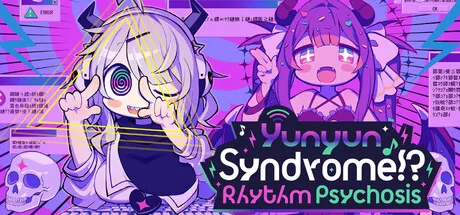
Game review
Yunyun Syndrome!? Rhythm Psychosis Review: Great Game, Sabotaged Translation
6.9 / 10
- Developer
- WHO YOU
- Publisher
- Alliance Arts
- Released
- 23 April 2026
- Platforms
- Windows
- Genre
- Adventure
- Monetisation
- $16.99
- Players
- false
The short version
Yunyun Syndrome!? Rhythm Psychosis has a genuinely excellent rhythm-game core, over 30 denpa tracks, cute fully-voiced presentation, and real affection for 2000s-2010s otaku internet culture, but its English localization has been extensively and credibly documented by players as an ideologically-slanted rewrite of the original script, a serious integrity problem for a story-driven game that the developers are actively patching but haven't yet fully resolved.
Biggest strengths
- A genuinely well-built rhythm game with over 30 denpa tracks, including licensed songs from well-known artists, praised even by reviewers who aren't rhythm-game regulars
- Sharp, distinctive art direction and full voice acting that carry the same affectionate energy as the developer's prior cult hit, Needy Streamer Overload
- A developer that responded quickly and visibly to the localization backlash, with reviewers confirming meaningful translation fixes rolling out in patches since launch
Biggest weaknesses
- The English localization has been extensively documented by players as replacing the original script's meaning with unrelated modern internet slang and politically-charged phrasing not present in the Japanese or other language versions
- For a game that leans heavily on its story and internet-culture satire, a compromised translation undermines the entire English-language experience even where the underlying writing is strong
- Some reviewers who play primarily for the story found it comparatively shallow once the localization drama is set aside
Who it's for: A strong fit for rhythm game fans with an interest in denpa music and 2000s-2010s Japanese otaku internet culture, especially those willing to play in Japanese, another supported language, or with a fan translation patch until the English localization is fully repaired.
Our recommendation: Wait for a sale
6.9 / 10
From the makers of Needy Streamer Overload, a denpa-soaked descent into brain rot
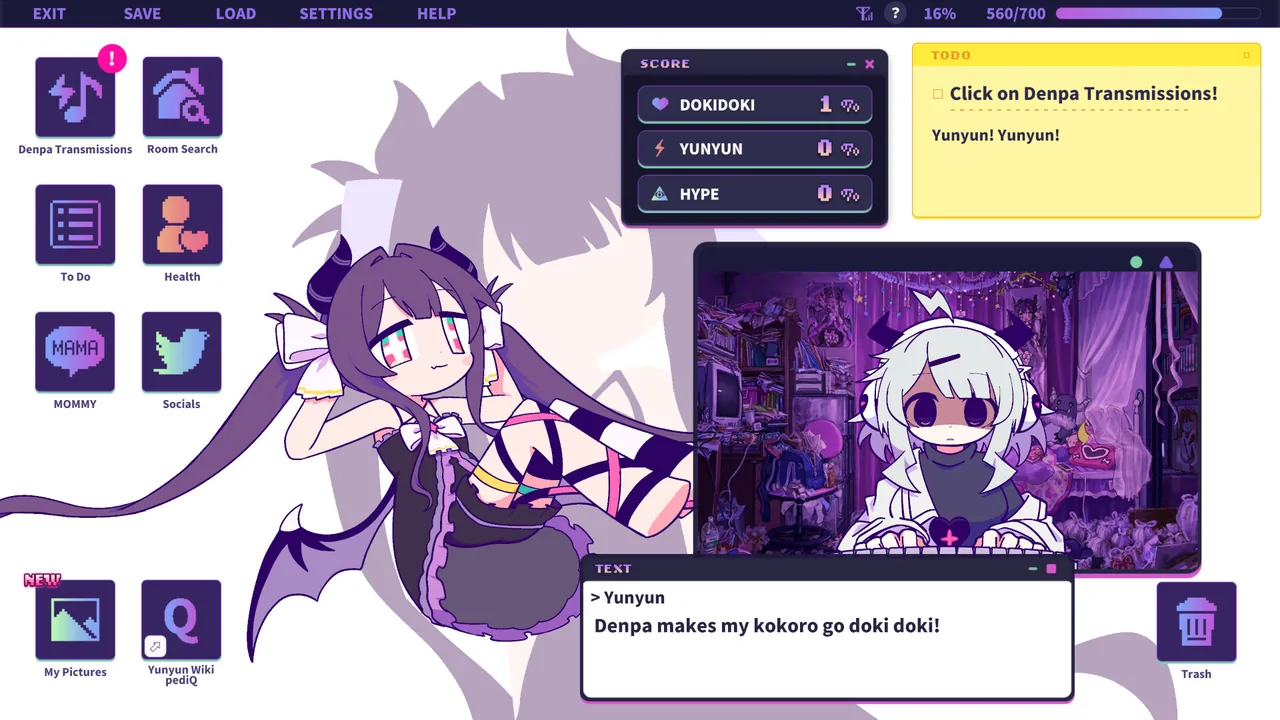
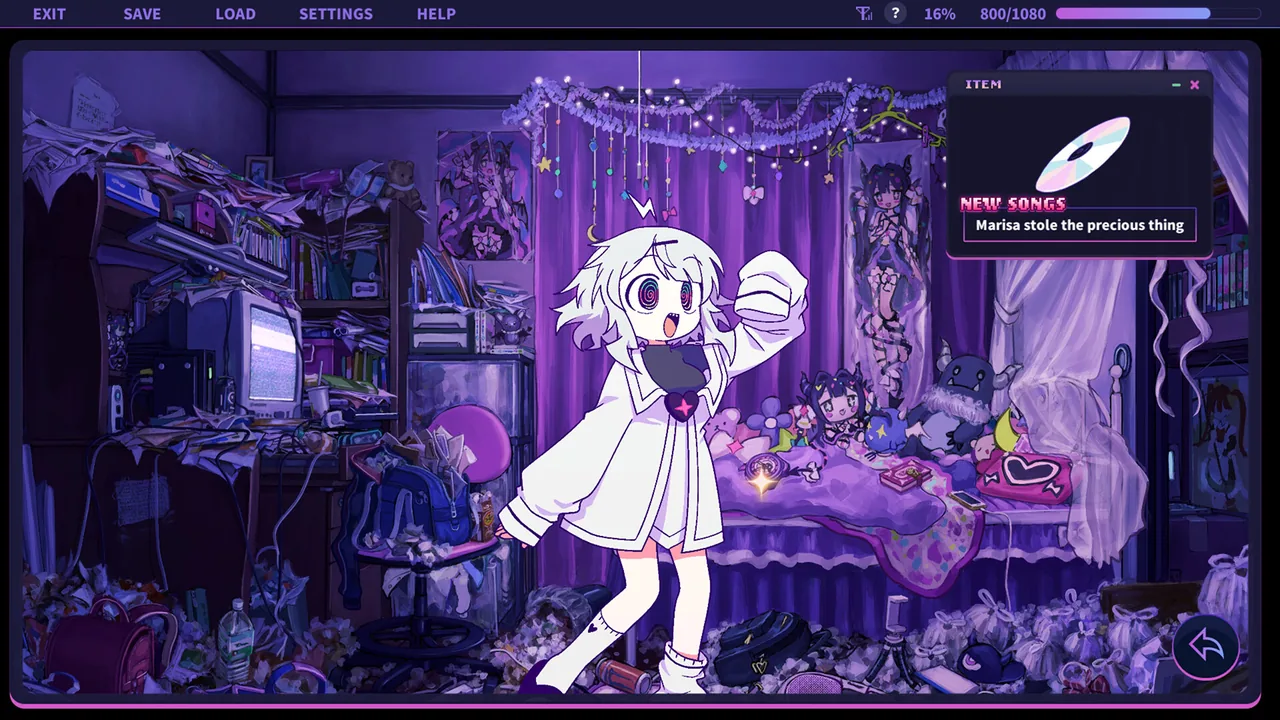
Yunyun Syndrome!? Rhythm Psychosis comes from WHO YOU, the studio behind the cult-favorite visual novel Needy Streamer Overload, and it carries a similar spirit into rhythm-game territory. You play a hikikomori girl who gets progressively more "brain rotted" on denpa music, an upbeat, deliberately overstimulating Japanese music subgenre, while anonymously posting online and gradually corrupting the internet with her psychosis. It's a premise built entirely around a very specific slice of 2000s-2010s otaku internet culture, and reviewers with that background consistently describe the game as a genuinely loving, detailed tribute to it.
A genuinely strong rhythm game underneath everything else
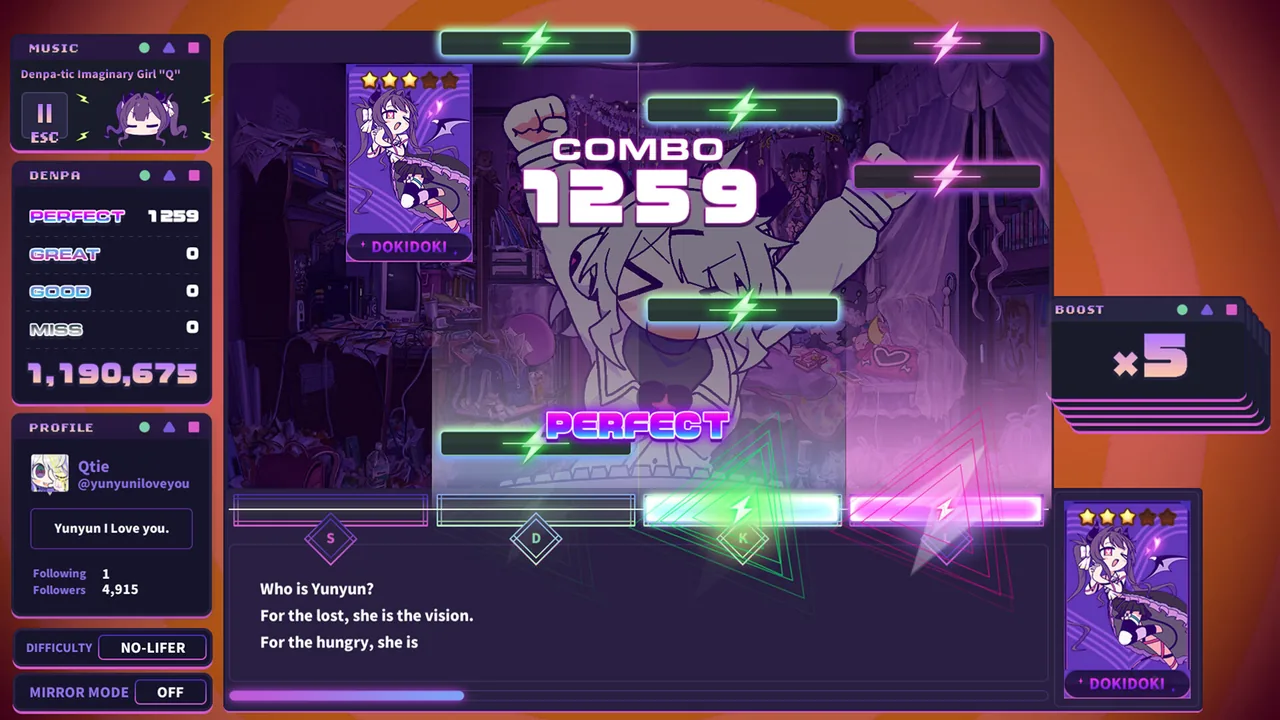
Set the controversy aside for a moment, and the core rhythm game is very well received. With over 30 denpa tracks, including licensed songs from recognizable artists and crossover tracks from series like Touhou Project and Muse Dash, reviewers consistently praise the song selection as a "total banger lineup." Even a reviewer who explicitly identified as outside the target audience, unfamiliar with denpa music and new to rhythm games generally, wrote that "the game still delivers," citing the art style, OST, and general vibe. The rhythm charts themselves are generally described as forgiving and accessible, which cuts both ways: casual players and newcomers find it approachable, while a handful of experienced rhythm-game veterans found the difficulty too easy to sink their teeth into on anything but the hardest settings.
A serious, well-documented localization controversy
Where this review sample turns sharply critical is over the English localization, and the volume and specificity of the complaints here go well beyond ordinary translation-quality grumbling. Reviewers with Japanese fluency describe combing through the game's script files and finding lines rewritten with meanings substantially different from the original, one detailed review claims a simple Japanese line meaning "stop it" was replaced with "END FASCISM," while other reviewers report basic vocabulary errors, like confusing "influencer" for "influenza," alongside heavy insertion of contemporary internet slang and political phrasing that multiple reviewers say has no basis in the source text. Because the game is explicitly built as a tribute to a specific, dated slice of Japanese internet culture, several reviewers argue the anachronistic slang actively works against the game's own thesis, "this game is a tribute/homage to late 2000s~early 2010s otaku culture... what did these translators do? splurge genz zoomer speech everywhere," as one put it. This isn't a fringe complaint, it's the dominant theme across the negative portion of an otherwise Very Positive review sample, and it comes from reviewers who are explicit that they otherwise love the game.
A developer that's visibly trying to fix it
To the developer's credit, this isn't a case of a studio ignoring its audience. Multiple reviewers confirm WHO YOU responded to the backlash and has been issuing translation patches since launch, with several updating their own reviews from negative to positive as fixes rolled out. One reviewer wrote, "The devs are still working on fixing" the localization and expressed hope the same care would extend to the studio's next project, while another flipped their opinion entirely: "I was going to leave a negative review but they're already fixing the english translation, I'm so happy." Still, as of this review, a meaningful number of reviewers report the localization remains only partially repaired, and players particularly invested in the story-driven side of the experience may still want to wait for further patches, or use one of the community fan-translation patches several reviewers recommend, before diving in through the English version.
Presentation and voice work carry real weight
Outside of the translation dispute, the game's presentation draws consistent praise. It's fully voiced, with reviewers specifically calling out the strength of the vocal performances alongside "beautiful" art and a well-integrated soundtrack. The overall production values, animation, UI feedback on rhythm hits, and general audiovisual cohesion, are described by multiple reviewers as far beyond what the game's relatively modest $16.99 price tag might suggest, and it's clear a great deal of care went into every part of the game except, ironically, the specific English script that ended up in players' hands.
Who this is actually for
Given the specificity of both its appeal and its problems, it's worth being direct about audience fit. Players fluent in Japanese, or comfortable switching the game's language away from English entirely, can sidestep the entire localization controversy and access what multiple reviewers describe as an excellent game underneath it, strong writing, a well-realized central character, and a story that several reviewers describe as "actually really cute" once experienced as intended. English-only players who care primarily about the rhythm gameplay and are willing to treat the story as background flavor will likely have a fine time even with the current translation. But English-only players drawn to the game specifically for its promised deep dive into 2000s-2010s Japanese internet culture and its narrative should be the most cautious, since that's precisely the dimension the localization dispute most directly undermines, and where a fan translation patch, several of which reviewers recommend by name, may currently be the better way to experience the game as its developers intended.
Worth it, with one serious asterisk
Yunyun Syndrome!? Rhythm Psychosis is, mechanically and artistically, a genuinely well-made rhythm game with real ambition and specificity in its cultural references, and the Very Positive score it's earned reflects real substance underneath the controversy. But for a game whose entire hook is faithfully channeling a very particular internet subculture through its writing, a credibly documented, ideologically altered English script is not a minor quibble, it strikes directly at what the game is trying to be. Until the localization fixes are further along, English-speaking players, especially those most drawn in by the story and dialogue rather than the rhythm charts alone, may be better served waiting for a sale or a more complete patch before committing.
Pros and cons
Pros
- A genuinely well-built rhythm game with over 30 denpa tracks, including licensed songs from well-known artists, praised even by reviewers who aren't rhythm-game regulars
- Sharp, distinctive art direction and full voice acting that carry the same affectionate energy as the developer's prior cult hit, Needy Streamer Overload
- A developer that responded quickly and visibly to the localization backlash, with reviewers confirming meaningful translation fixes rolling out in patches since launch
- A genuinely loving, detailed homage to 2000s-2010s Japanese internet and otaku subculture, particularly for players who recognize the era's references
Cons
- The English localization has been extensively documented by players as replacing the original script's meaning with unrelated modern internet slang and politically-charged phrasing not present in the Japanese or other language versions
- For a game that leans heavily on its story and internet-culture satire, a compromised translation undermines the entire English-language experience even where the underlying writing is strong
- Some reviewers who play primarily for the story found it comparatively shallow once the localization drama is set aside
- Rhythm gameplay is described by experienced genre veterans as too easy, making the core loop more appealing to casual players and newcomers than to series regulars
Screenshots
-
Yunyun Syndrome!? Rhythm PsychosisImage: Alliance Arts via Steam -
Yunyun Syndrome!? Rhythm PsychosisImage: Alliance Arts via Steam -
Yunyun Syndrome!? Rhythm PsychosisImage: Alliance Arts via Steam -
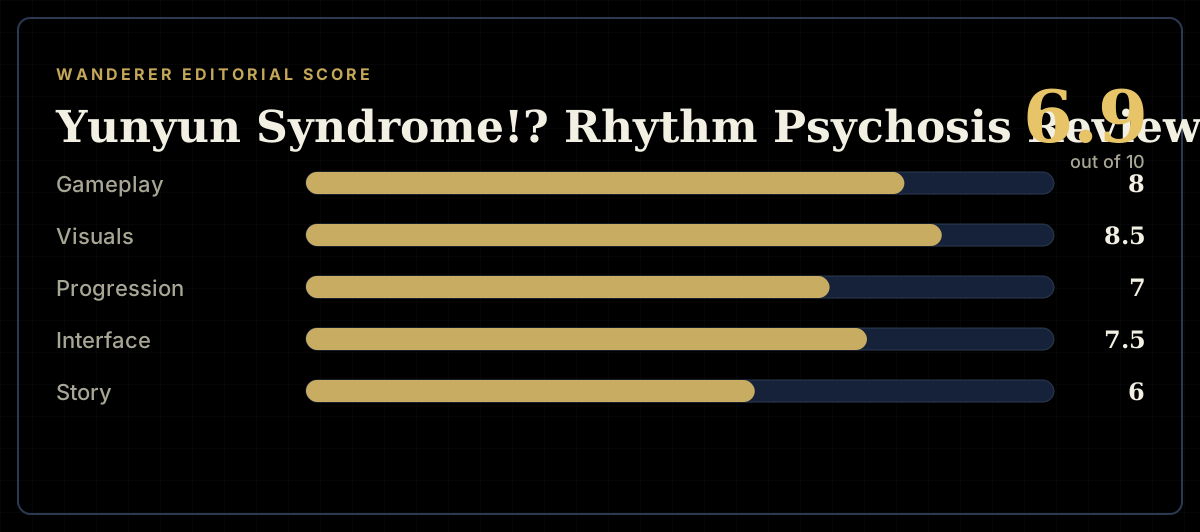
How the review scores each part of the gameWanderer Editorial -
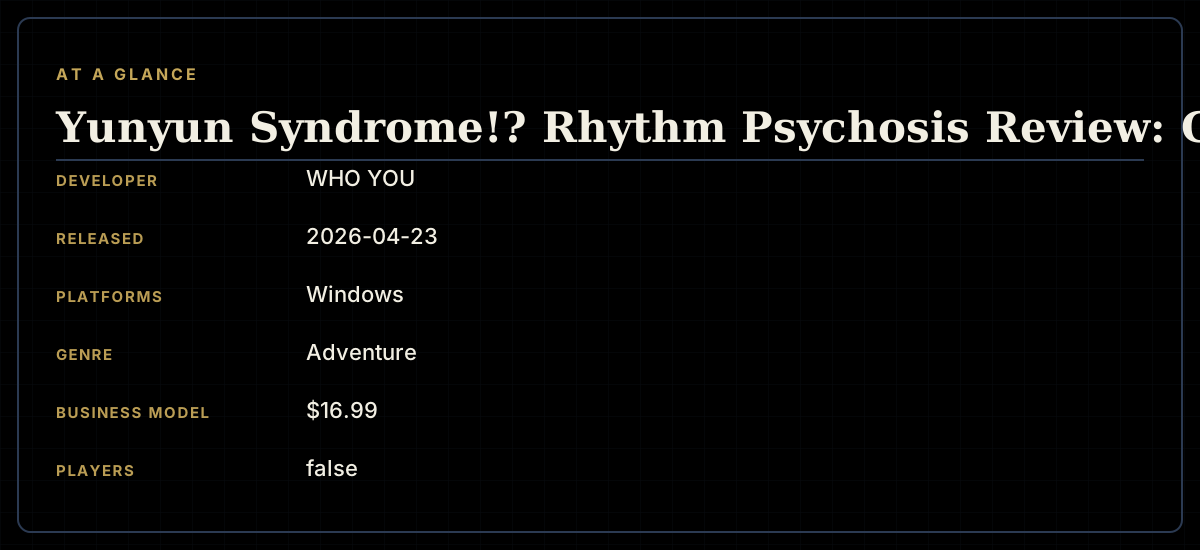
Platform and release detailsWanderer Editorial -
The short versionWanderer Editorial