Game review
Glisynth
7 / 10
- Developer
- Team Charlotte
- Publisher
- Team Charlotte
- Released
- 26 June 2026
- Platforms
- Windows
- Genre
- Casual, Indie, Free To Play
- Monetisation
- free
- Players
- false
The short version
Biggest strengths
- A genuinely distinct two-layer, color-and-row note system that reviewers consistently describe as a fresh mechanical identity rather than a reskin of existing rhythm games
- Over twenty songs across three difficulty settings already available in Early Access, with reviewers praising the soundtrack quality throughout
- Completely free with no microtransactions, and the developer has stated it will stay that way, a rare combination reviewers repeatedly single out as goodwill-earning
Biggest weaknesses
- Calibration screen has scaling issues and doesn't mute background music, making it possible to calibrate against the wrong beat, according to a detailed reviewer
- No key remapping options and no colorblind mode yet, both real accessibility gaps for a rhythm game that depends entirely on color and timing recognition
- Several experienced rhythm-game players report real difficulty internalizing the simultaneous two-layer chord system, even when they understand the concept intellectually
Who it's for: Rhythm game fans looking for a genuinely fresh mechanical twist on the genre who don't mind Early Access rough edges like calibration bugs and missing accessibility options, especially anyone drawn to a free, no-microtransaction passion project
Our recommendation: recommended
7 / 10
A rhythm game that reinvents its own note lanes
Glisynth's core hook is a genuine mechanical departure from typical rhythm-game design: rather than a single row of note lanes, the game splits notes into two colors, yellow mapped to the keyboard's Q row and white to the A row, requiring players to track and respond to both simultaneously. One detailed review laid out exactly why that matters: "rather than relying solely on traditional note lanes, the game challenges players to react to two different note colors, assigning each to a separate row of keyboard inputs. This simple concept dramatically changes how players process incoming patterns, requiring both quick reflexes and constant visual awareness." That reviewer called the result "a rhythm experience that feels familiar enough for genre veterans while offering a unique mechanical identity that distinguishes it from more conventional music games."
A forgiving system that still rewards precision
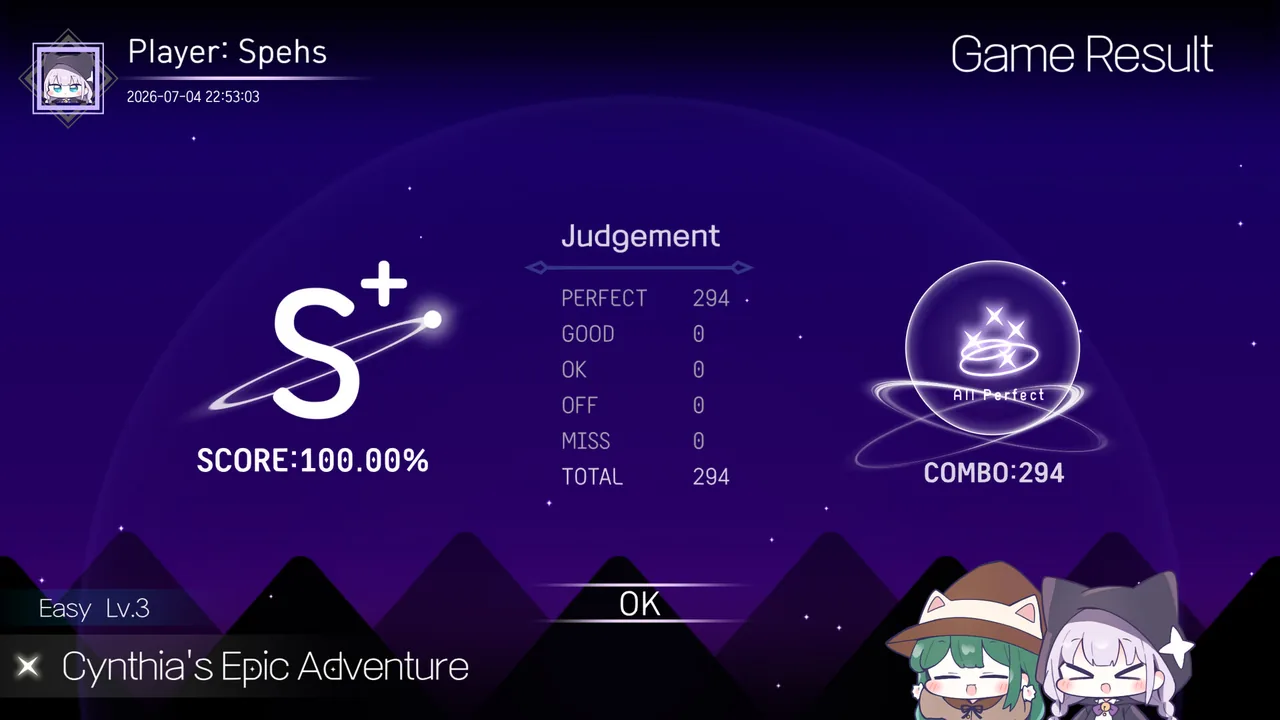
A specific design choice reviewers repeatedly praised is how the game handles near-miss inputs. Pressing the correct timing but the wrong color row doesn't fully break the run; instead it registers as an "OFF" judgment rather than a complete miss, still costing combo and score but softening the punishment for players still building color recognition alongside timing. As one reviewer put it, that "subtle design choice creates a satisfying learning curve where every play session helps refine multiple skills at once," a smart concession for a mechanic this unusual that keeps newcomers from bouncing off entirely before the system clicks.
Real content already, even in Early Access
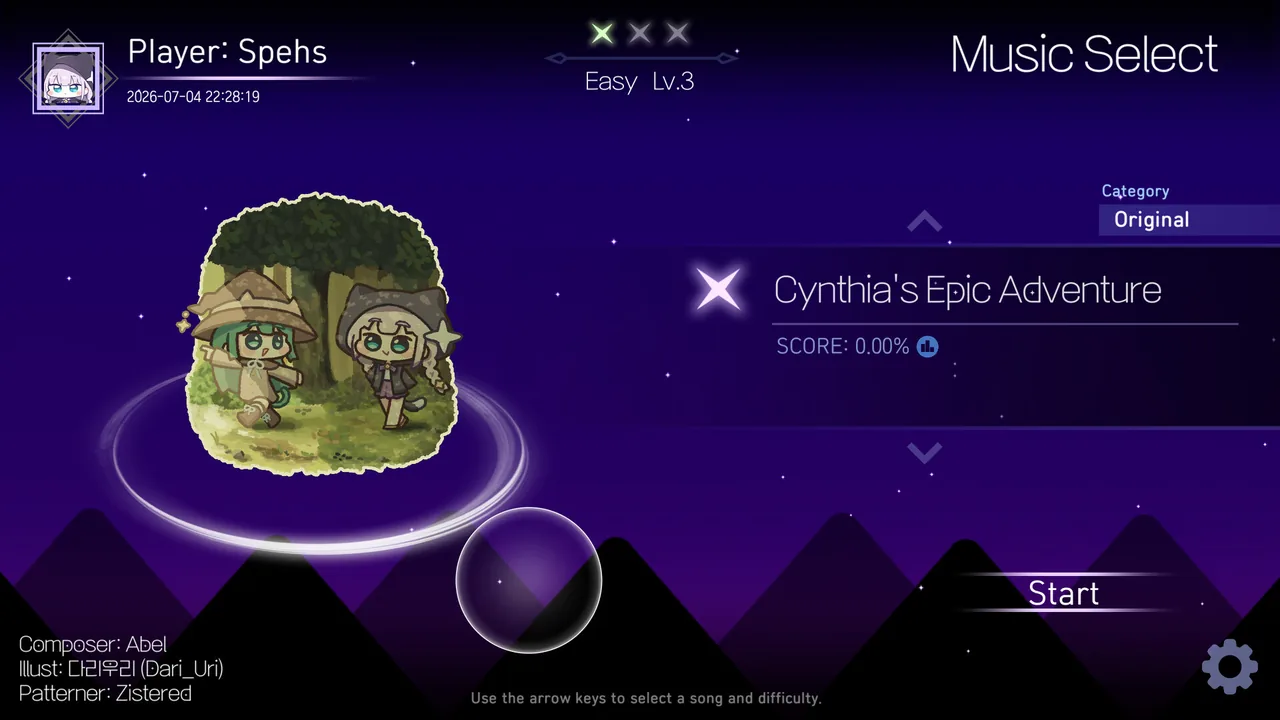
Unlike many Early Access rhythm games that launch with a handful of tracks, Glisynth already offers a substantial library: over twenty songs across three difficulty tiers, alongside a Story Mode that frames songs within a narrative rather than presenting them as isolated levels. Reviewers consistently praised the soundtrack quality specifically, with one writing that "even for an early access, the soundtrack is great and the music choice really blends in with the theme of the game," and another calling the charting "deceptively hard but also really fun." That's a meaningfully more generous starting point than most free Early Access rhythm titles offer at launch.
Genuinely difficult for players used to other systems
Not every experienced player found the two-layer system immediately intuitive, and the honest, detailed accounts of that difficulty are some of the review pool's most useful material. One self-described veteran of chord-heavy rhythm games like Deemo and DJMax wrote candidly: "I can understand the concept of having two layers... but my brain and hands get hung up when you have to have two layers, chorded, simultaneously... I just haven't had that clicking moment in my head where it all syncs up." Crucially, that reviewer still recommended the game, framing the difficulty as a personal skill gap rather than a design flaw, given it costs nothing to try. A separate, highly skilled rhythm player (citing rankings in Osu! and Sound Voltex) described the opposite experience, finding the forced hand independence "refreshing" rather than frustrating, which suggests the system's difficulty curve lands very differently depending on which specific rhythm-game habits a player is bringing in.
Calibration bugs and missing accessibility options
The most concrete, actionable criticism concerns rough Early Access execution rather than the core design. One detailed reviewer reported that "the calibration screen has scaling issues, music isn't muted during calibration (so you end up tapping to the wrong beat), and there's no remapping options yet and there's no colorblind mode either." For a rhythm game built entirely around split-second timing and color recognition, a broken calibration flow and the absence of a colorblind mode are genuine functional gaps rather than cosmetic complaints, and worth knowing about before diving in, especially for players who rely on remapped controls or have any color-vision difficulty.
Free, no microtransactions, and reviewers notice
A recurring thread across positive reviews is genuine appreciation for the game's business model, or lack of one: Glisynth is entirely free with zero microtransactions, and the developer has stated publicly it intends to keep it that way. One reviewer called it "a non-profit project with zero microtransactions," concluding "for a free game with this much heart, the bugs are forgivable," while another wrote simply, "all I need is one song to know that this game is well worth the $0 I paid for it," adding they'd happily pay for DLC down the line if the developer ever offered it. That goodwill runs through nearly every positive review, and meaningfully softens the impact of the Early Access rough edges since players aren't being asked to pay for an unfinished product.
A story mode that's a promising sketch, not yet the main event
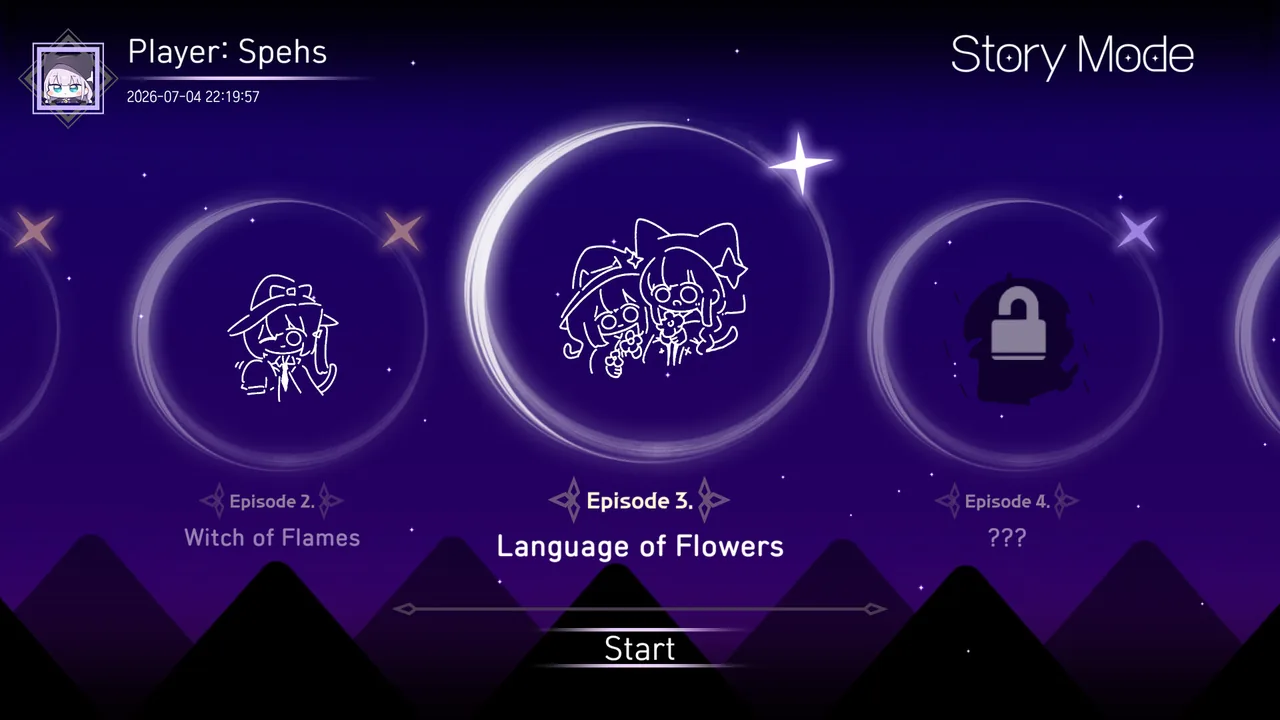
Several reviewers touched on the game's Story Mode as a nice-to-have rather than the core draw right now, and that framing seems accurate given its current state. One reviewer, who skipped straight to Free Play to test the mechanics, noted they "did not do the story yet," while another confirmed the mode currently spans "6 chapters" and is "also not finished yet because of this game being in early access," adding that what they'd heard secondhand about it "is good" without having experienced it firsthand themselves. That's not a knock against the writing so much as an honest snapshot of a feature still under construction; the songs and mechanics are clearly further along than the narrative wrapper around them, and prospective players drawn specifically to the story angle should expect an incomplete arc for now rather than a finished campaign.
Verdict
Glisynth pairs a genuinely novel two-layer note system with a surprisingly generous song library and a refreshing no-microtransaction free-to-play model, all of which reviewers responded to warmly even while flagging real, specific Early Access problems: calibration bugs, missing colorblind and remapping options, and a control scheme some experienced rhythm players are still struggling to internalize. Worth trying for any rhythm-game fan curious about a genuinely different mechanical hook, especially given it costs nothing; those who need a polished, bug-free calibration experience or full accessibility support from day one should give the developer more time to work through the current Early Access punch list first.
Pros and cons
Pros
- A genuinely distinct two-layer, color-and-row note system that reviewers consistently describe as a fresh mechanical identity rather than a reskin of existing rhythm games
- Over twenty songs across three difficulty settings already available in Early Access, with reviewers praising the soundtrack quality throughout
- Completely free with no microtransactions, and the developer has stated it will stay that way, a rare combination reviewers repeatedly single out as goodwill-earning
- A forgiving "OFF" judgment for correct-timing-wrong-row inputs that softens the learning curve without removing the challenge
Cons
- Calibration screen has scaling issues and doesn't mute background music, making it possible to calibrate against the wrong beat, according to a detailed reviewer
- No key remapping options and no colorblind mode yet, both real accessibility gaps for a rhythm game that depends entirely on color and timing recognition
- Several experienced rhythm-game players report real difficulty internalizing the simultaneous two-layer chord system, even when they understand the concept intellectually
- Story Mode currently caps out at six chapters, with the narrative itself described by multiple reviewers as unfinished and not yet the game's strongest asset
Screenshots
-
GlisynthImage: Team Charlotte via Steam -
GlisynthImage: Team Charlotte via Steam -
GlisynthImage: Team Charlotte via Steam