Game review
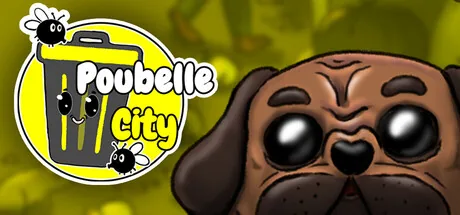
Poubelle City Review: A Filthy, Funny French Night You'll Want to Replay
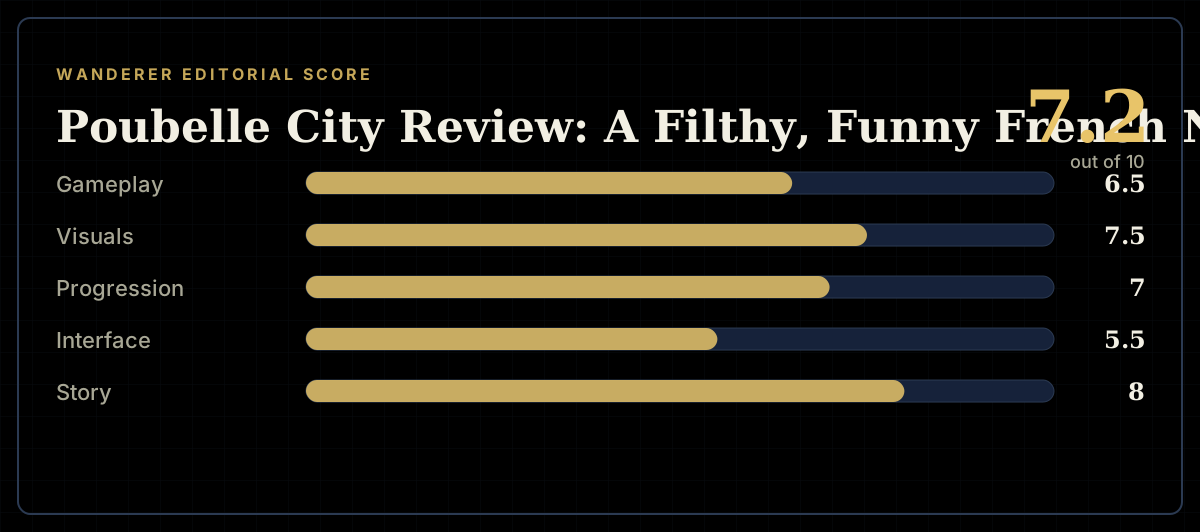
7.2 / 10
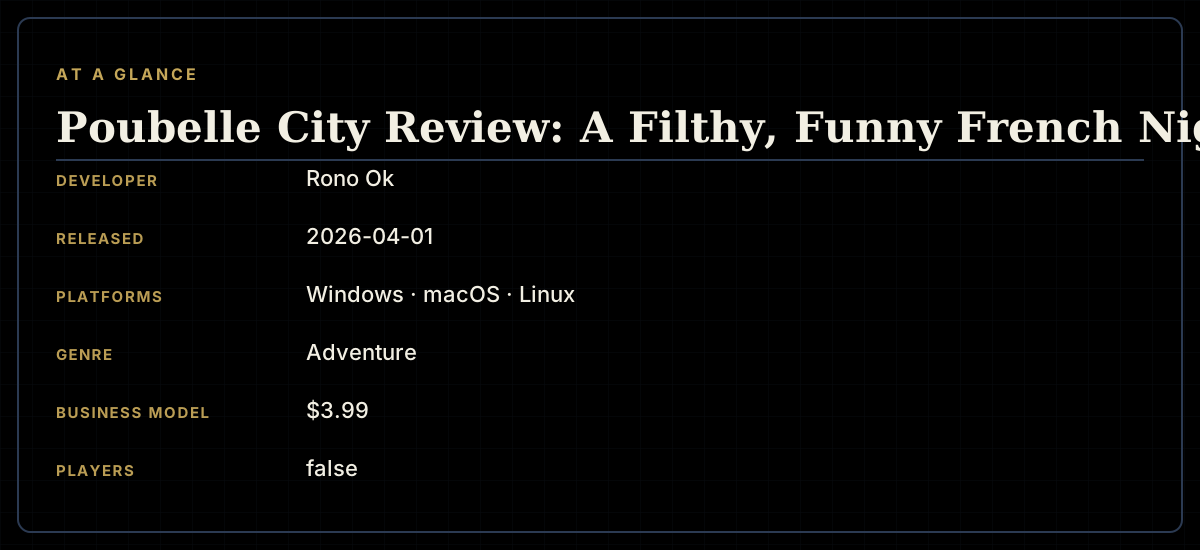
- Developer
- Rono Ok
- Publisher
- Rono Ok
- Released
- 1 April 2026
- Platforms
- Windows, macOS, Linux
- Genre
- Adventure
- Monetisation
- $3.99
- Players
- false
The short version
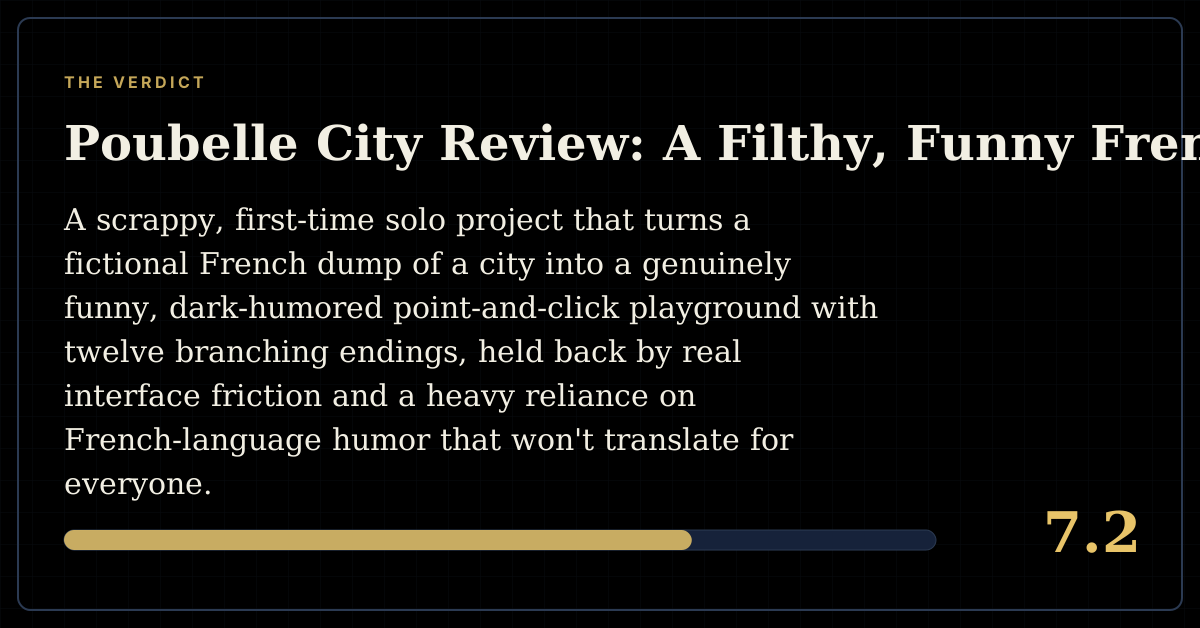
A scrappy, first-time solo project that turns a fictional French dump of a city into a genuinely funny, dark-humored point-and-click playground with twelve branching endings, held back by real interface friction and a heavy reliance on French-language humor that won't translate for everyone.
Biggest strengths
- Genuinely funny, distinctly French dark humor and social satire that reviewers repeatedly single out as the game's biggest strength, mocking tourist-brochure language against a deliberately grimy setting
- Twelve distinct branching endings driven by real player choice and an inventory system, giving a very short game surprisingly strong replay value
- A memorable, lived-in fictional city with specific, absurd landmarks and characters that reviewers say make repeat visits worthwhile just to see what happens next
Biggest weaknesses
- A specifically flagged interface problem: the player-name entry screen replays in full every time you restart after a bad ending, which reviewers say becomes tedious once you're chasing all twelve endings
- No on-screen navigation arrows between scenes, leaving at least one reviewer wishing for clearer visual cues to move between locations
- Despite English, French, Simplified Chinese, and Russian all being listed as supported languages, at least one Chinese-language reviewer reports the actual in-game text isn't translated, leaving achievements as the only localized content
Who it's for: Fans of short, choice-driven dark comedy visual novels and absurdist French humor who don't mind rough interface edges; less appealing if you want a long single session or don't read French, since much of the humor is culturally and linguistically specific.
Our recommendation: Buy it
7.2 / 10
A trash-heap of a city with real personality
Poubelle City — literally "Trash Can City" — casts you as a visitor or unwilling participant in one chaotic night in a fictional, self-mocking French metropolis, presided over by the endlessly self-congratulating Mayor Hugo Lupo. The premise is a joke from the first frame: official brochure language praises a "thriving center of culture and opportunity" while the actual city is proudly, deliberately grimy, its landmarks named things like Le Bar la Louze, La Pizza Crado ("Crado" meaning roughly "grubby"), and Le Kebab Subintrant. It's a first-person point-and-click adventure built entirely around that tension between civic-pride marketing copy and the absurd, chaotic reality underneath it, and reviewers consistently say the joke lands.
Dark humor that reviewers say genuinely delivers
The strongest, most repeated praise in the review sample is simple: this game is funny. One reviewer specifically frames it as "un point and click TRES DROLE" with replay value driven by chasing all twelve endings and visiting the legendary nightclub to see the world's best DJ. Another describes getting run over on their very first playthrough by a turtle working as an Uber Eats delivery driver and loving every second of it. A longer, more critical review acknowledges the game isn't a personal favorite but still credits it with "un concept vraiment original," genuine passion behind an atypical visual novel/point-and-click hybrid, and humor that's "drôle de fou" — while flagging, fairly, that the tone leans into dark, cynical humor that won't suit every player.
Twelve endings turn a short game into a real playground
Despite individual playthroughs running roughly ten to thirty minutes, Poubelle City leans hard on branching consequence: nearly every conversation, collected item, and decision can shift which of twelve distinct endings you land on. Reviewers treat this structure as the game's real backbone rather than a marketing bullet point — several explicitly frame their positive reviews around still chasing the full set of endings, and one calls the replayability "aussi énorme que le front des profs d'histoire géo" (a very French joke about the sheer size of history-geography teachers' foreheads) specifically because of how much the twelve-ending structure rewards repeat visits.
A first solo project, and reviewers know it
Multiple reviewers explicitly frame their reviews around the fact that this is a first game from a solo or very small indie team, crediting developer Rono directly by name in several reviews and calling the effort a promising, talented debut rather than judging it against larger productions. "Pour le premier jeu d'un inder c'est tres bien," reads one typical review, acknowledging "pas mal de truc a revoir" (plenty still to revise) while still calling it a good start worth its asking price. That context matters for calibrating expectations here: this is a scrappy passion project with real personality, not a polished, fully resourced production, and the review sample treats it accordingly — forgiving rough edges in exchange for genuine creative voice.
The interface friction that keeps coming up
Set against that goodwill, a specific and repeated complaint centers on the player-name entry screen: multiple reviewers note that dying or hitting a bad ending sends you back through the full name-entry sequence again before you can retry, which becomes genuinely tedious once you're deliberately chasing multiple endings back to back. A separate reviewer specifically wishes for visual navigation arrows to move between screens, since the current interface apparently relies on less intuitive cues to signal where you can go next. Neither complaint sounds like a deep structural problem, but both are the kind of friction that would meaningfully improve a game built entirely around encouraging repeat playthroughs.
A translation gap despite four listed languages
The store page lists English, French, Simplified Chinese, and Russian as supported languages, but at least one detailed Chinese-language review pushes back on that claim directly, noting the game has achievements but no actual Chinese text ("有成就 没中文") — suggesting the listed localization may cover only metadata like achievement names rather than the in-game dialogue and narration itself. Given how heavily the game's humor depends on specific written jokes and cultural references, this is a meaningful gap for non-French-reading players considering the purchase, and worth knowing about upfront rather than discovering after buying.
Is a ten-minute French comedy worth $3.99
At full price, and especially at the steep discount price of $0.79 seen during this review period, Poubelle City asks very little for what reviewers describe as a genuinely funny, replayable dark-comedy point-and-click experience. One reviewer suggests it's well suited to prepping actual tourists for a trip to Paris as a satirical primer; another calls it a "masterclass" while still chasing the remaining endings. The consistent throughline across a review sample that's small but entirely positive is that buyers went in expecting a quick, cheap joke and came away recommending it enthusiastically to friends.
A city built on minigames and social encounters
Beyond straight dialogue navigation, the review sample points to a handful of embedded minigames and social encounters scattered through the night — one French reviewer specifically praises "une variété de mini-jeux qui sont assez cool" as a welcome break from pure point-and-click exploration, while another flags a recurring "pseudo phase" that drags specifically because of how often you loop back to it across failed attempts, rather than because the minigames themselves are weak. A separate reviewer highlights a musician character by name as a specific point of frustration ("ce musicien je le déteste"), which, in context, reads less as a genuine design flaw and more as evidence that the writing succeeds at making individual side characters memorable enough to provoke a real reaction — exactly the kind of small-scale character work a short, choice-driven game like this depends on to make repeat visits feel worthwhile.
Verdict
Poubelle City is a scrappy, funny, dark-humored first project that gets far more mileage than its short individual playtime suggests thanks to a genuinely well-built twelve-ending branching structure. Its interface friction around retries and navigation, along with a real gap between advertised and actual localization, are legitimate rough edges worth knowing about, but for players who read French and want a cheap, absurdist night out, the overwhelmingly positive reception here is well earned.
Pros and cons
Pros
- Genuinely funny, distinctly French dark humor and social satire that reviewers repeatedly single out as the game's biggest strength, mocking tourist-brochure language against a deliberately grimy setting
- Twelve distinct branching endings driven by real player choice and an inventory system, giving a very short game surprisingly strong replay value
- A memorable, lived-in fictional city with specific, absurd landmarks and characters that reviewers say make repeat visits worthwhile just to see what happens next
- An extremely low price, especially at its frequent discount, that multiple reviewers explicitly call more than fair for a first solo indie project
Cons
- A specifically flagged interface problem: the player-name entry screen replays in full every time you restart after a bad ending, which reviewers say becomes tedious once you're chasing all twelve endings
- No on-screen navigation arrows between scenes, leaving at least one reviewer wishing for clearer visual cues to move between locations
- Despite English, French, Simplified Chinese, and Russian all being listed as supported languages, at least one Chinese-language reviewer reports the actual in-game text isn't translated, leaving achievements as the only localized content
- The game's humor leans heavily on French cultural references and slang, which several reviewers acknowledge may not land the same way for players outside that context
Screenshots
-
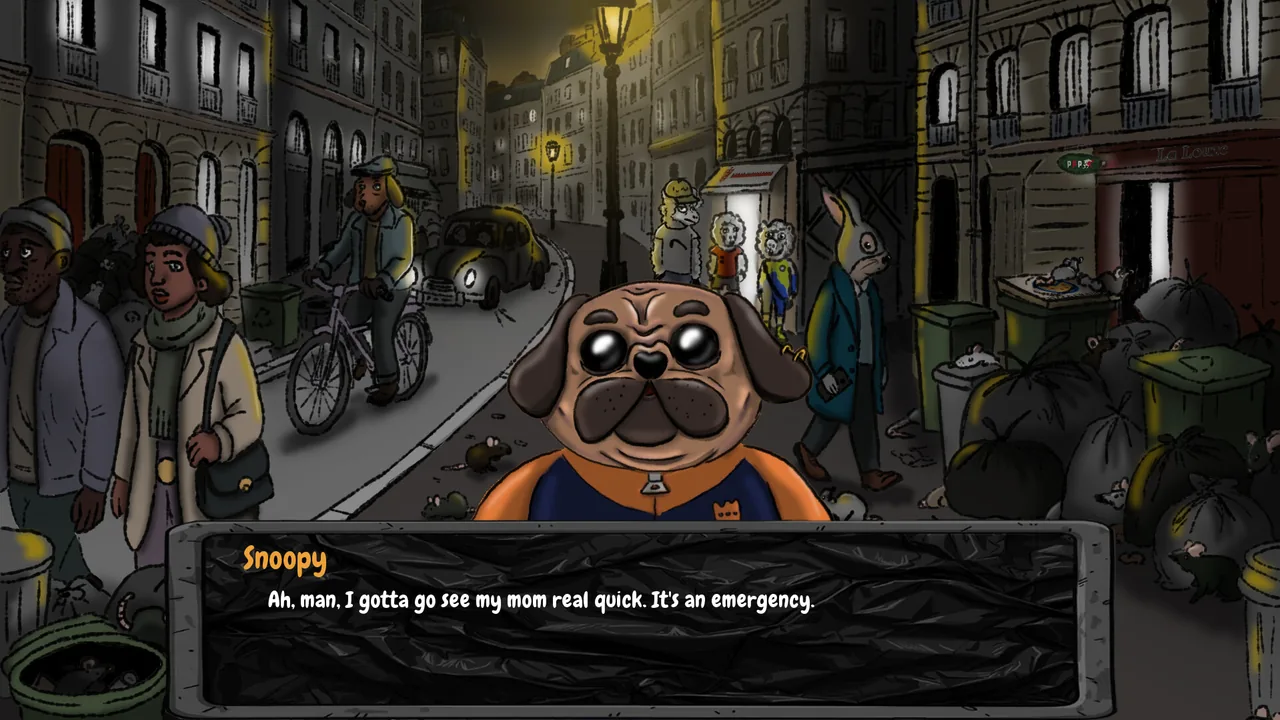
Image: Rono Ok via Steam -
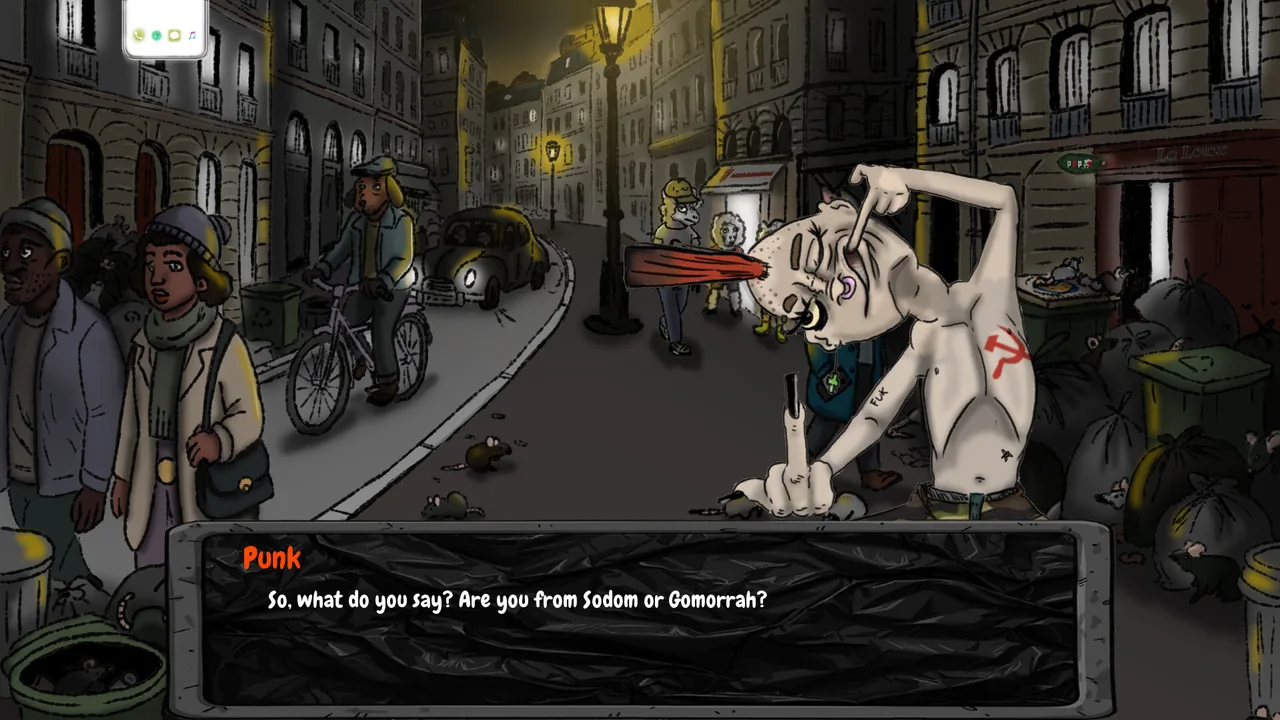
Image: Rono Ok via Steam -
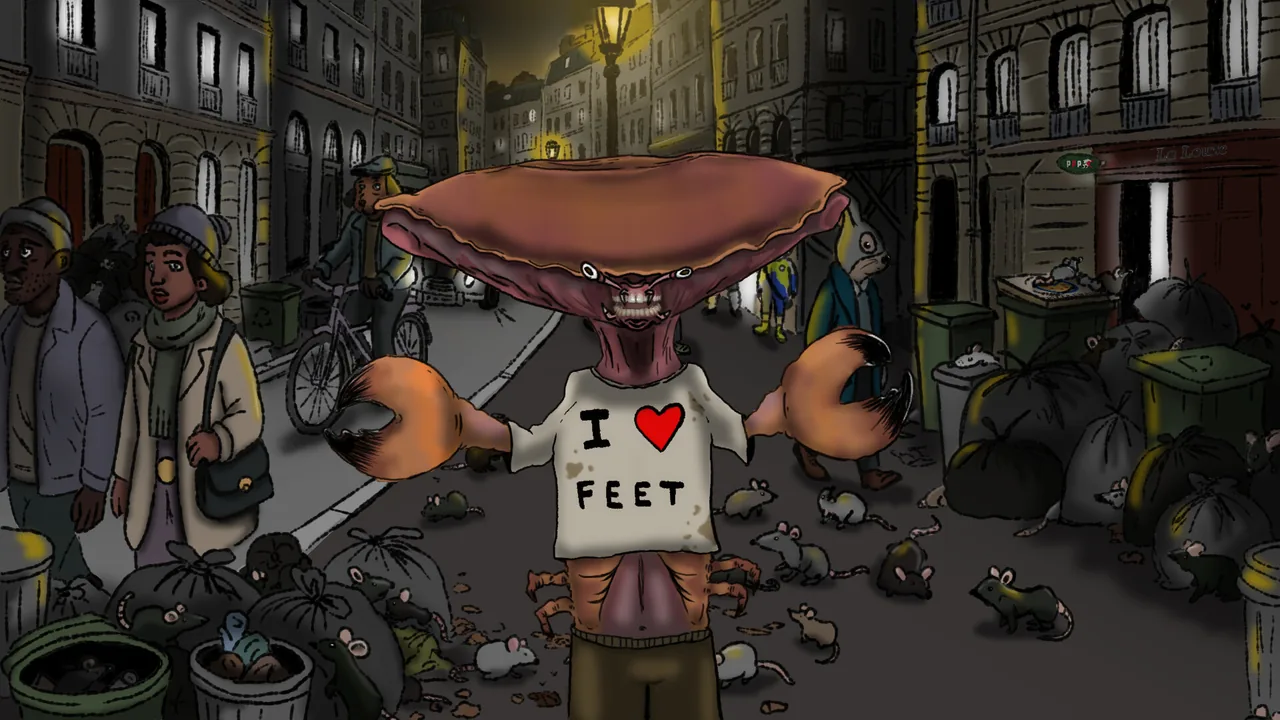
Image: Rono Ok via Steam -
Wanderer Editorial -
Wanderer Editorial -
Wanderer Editorial