Game review
Yellowcreek Stories - The Cabin Watcher
6.5 / 10
- Developer
- Carlos Azuaga
- Publisher
- JanduSoft
- Released
- 6 August 2026
- Platforms
- Windows
- Genre
- First-Person Stealth Horror
- Monetisation
- One-time purchase, no in-game store, no IAP, no DLC listed
- Players
- Single-player only
The short version
The Cabin Watcher strips slasher horror down to one rule: you have no way to fight back. A masked killer patrols a snowed-in mountain cabin and the woods around it, reading the player's noise, light and movement rather than following a fixed route, and every action — sprinting, flicking on a flashlight, even a footstep — is a small bet against a system that's actively listening. It's built for a single sitting rather than a long campaign, told across four acts tracked by its own achievement list, and it shipped a free demo five and a half months before launch to test the idea in public. One day after release it has exactly one English user review — enthusiastic, but explicit that the story wants more characters, a face reveal for the killer, and voice acting it doesn't currently have.
Biggest strengths
- The killer reacts to noise, light and movement rather than patrolling a script, per the store's own systems description, and there is no combat option at all to fall back on if stealth fails
- The one verified review at time of writing, from a player 71 minutes into a full playthrough, called it "a fun run for your life slasher" and praised its simplicity rather than complaining about it
- A free demo was public for five and a half months before launch (21 February to 6 August 2026), giving the game a real testing runway most day-one horror releases don't get
Biggest weaknesses
- Only one English user review exists at the time of writing, so pacing, difficulty balance and bug count currently rest entirely on the store page's own claims
- That one review explicitly wants what the game doesn't have yet — more characters, a face reveal for the killer, and voice acted dialogue
- Windows only, and the recommended-spec GPU (RTX 2070 or RX 5700 XT) is a real step up from the game's already-modest minimum requirements
Who it's for: Horror fans who want a short, tense, no-combat stalker experience they can finish in one evening — closer in spirit to Alien Isolation's noise-based AI or Outlast's flashlight risk than to a multiplayer slasher like Dead by Daylight — and who are comfortable buying on a strong pitch with almost no outside reviews to check it against yet.
Our recommendation: A reasonably priced, tightly scoped horror game with a real design idea at its core and an unusually long public demo period behind it, which buys it more confidence than the average day-one horror indie. Worth it now for genre fans who like buying early; everyone else should wait for the review count to grow past one.
6.5 / 10
A killer who never sleeps and a player who can't fight back is a simple enough pitch that it's almost surprising how few horror games commit to it fully. Yellowcreek Stories - The Cabin Watcher does: there's no weapon, no combat prompt, no moment where the tables turn. The entire game is one long negotiation between how much noise you're willing to make, how much you need your flashlight, and how fast you're willing to move — while something in the dark is actively keeping score.
One killer, no weapons
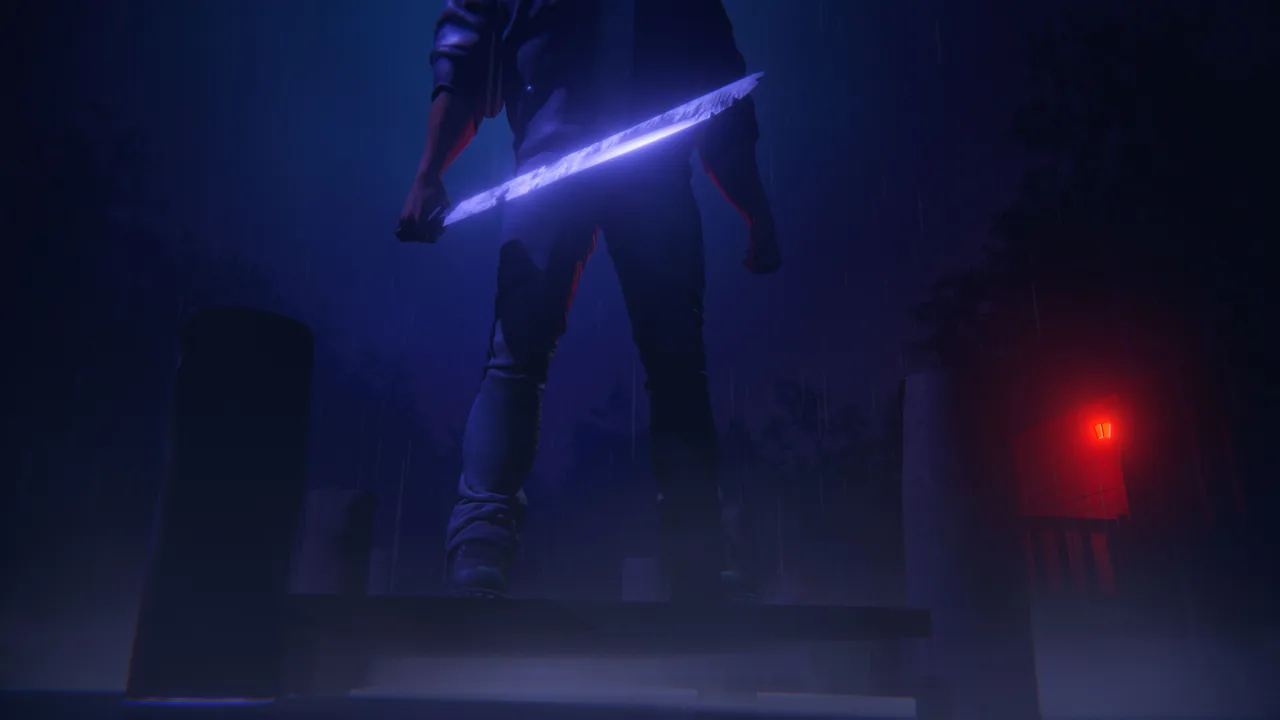
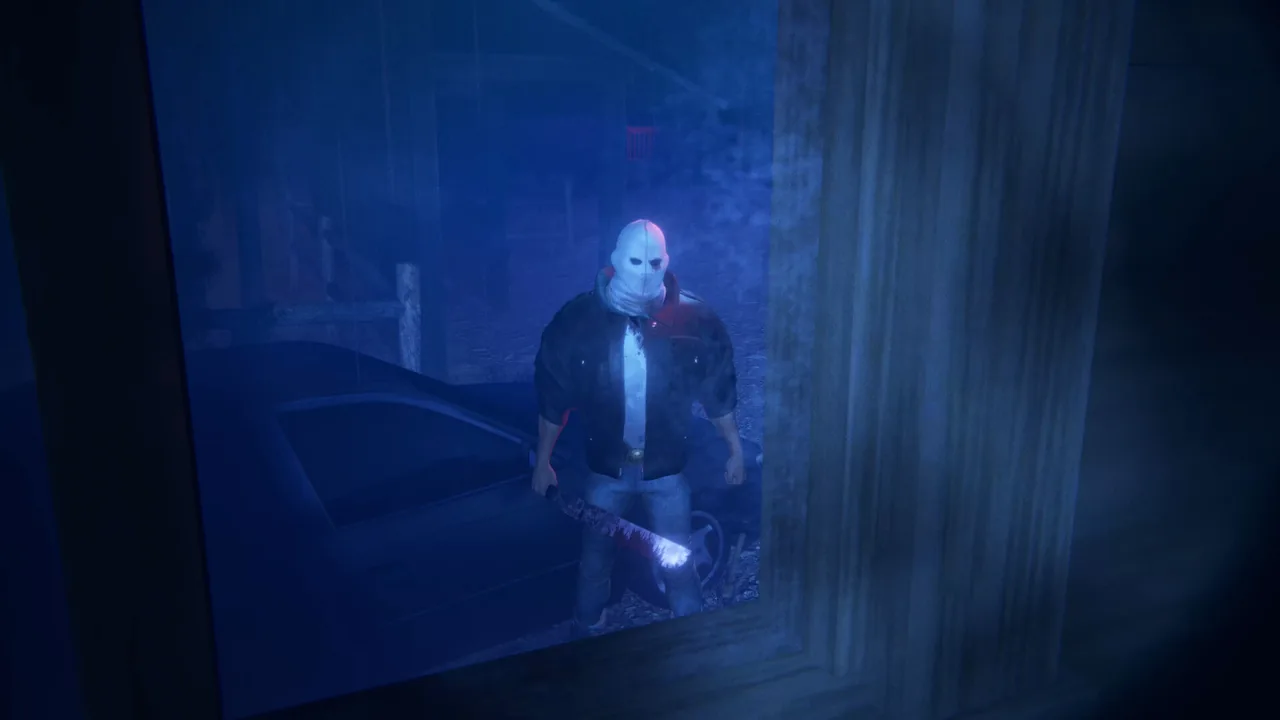
The pitch is built around three inputs the store page calls out by name: noise, light and movement. Sprinting closes distance fast but announces exactly where you are. The flashlight cuts through a stormy mountain night that would otherwise be unreadable, and also makes you an easy thing to spot from a distance. Standing still and moving carefully is the safe option almost by definition, which is precisely why the game needs an escalating threat to stop "safe" from also being "boring" — a masked killer described as actively searching based on player behaviour rather than patrolling a fixed loop. That's the detail worth taking seriously: a scripted patrol is something a player learns and then routes around, while a killer that's reading noise and light in real time is a harder thing to solve once and be done with. Whether the reactive AI actually holds up to that promise over a full playthrough isn't something a store page can settle on its own, but it's a coherent, specific design idea rather than a generic "hide from the monster" pitch, and the absence of any combat option at all is a real commitment to it — there's no fallback fight when stealth goes wrong, which is exactly what makes games like Alien: Isolation and Outlast tense in the same way.
A story called "Stories"
The title raises an obvious question: is Yellowcreek Stories an anthology, with The Cabin Watcher as chapter one of something ongoing? Right now, no — a check of Steam's storefront search turns up exactly two listings under that name, the paid base game and its own free demo, and nothing else. The developer's own product page leans into the branding anyway, opening with "Like in 80s VHS horror: in Yellowcreek Stories - The Cabin Watcher, your killer never sleeps," which reads as the naming of a fictional town meant to host future stories rather than a promise of specific sequels. That's worth flagging rather than assuming either way: buyers should treat "Stories" as a stated ambition for a series, not evidence that one currently exists. JanduSoft, the publisher, isn't a horror specialist either — its catalogue runs to fifty-plus wildly different titles from many different developers, from platformers to detective games to shoot-em-ups, so there's no sibling game in the same vein to read across from the way a single studio's back-to-back releases sometimes allow.
What the numbers say, carefully
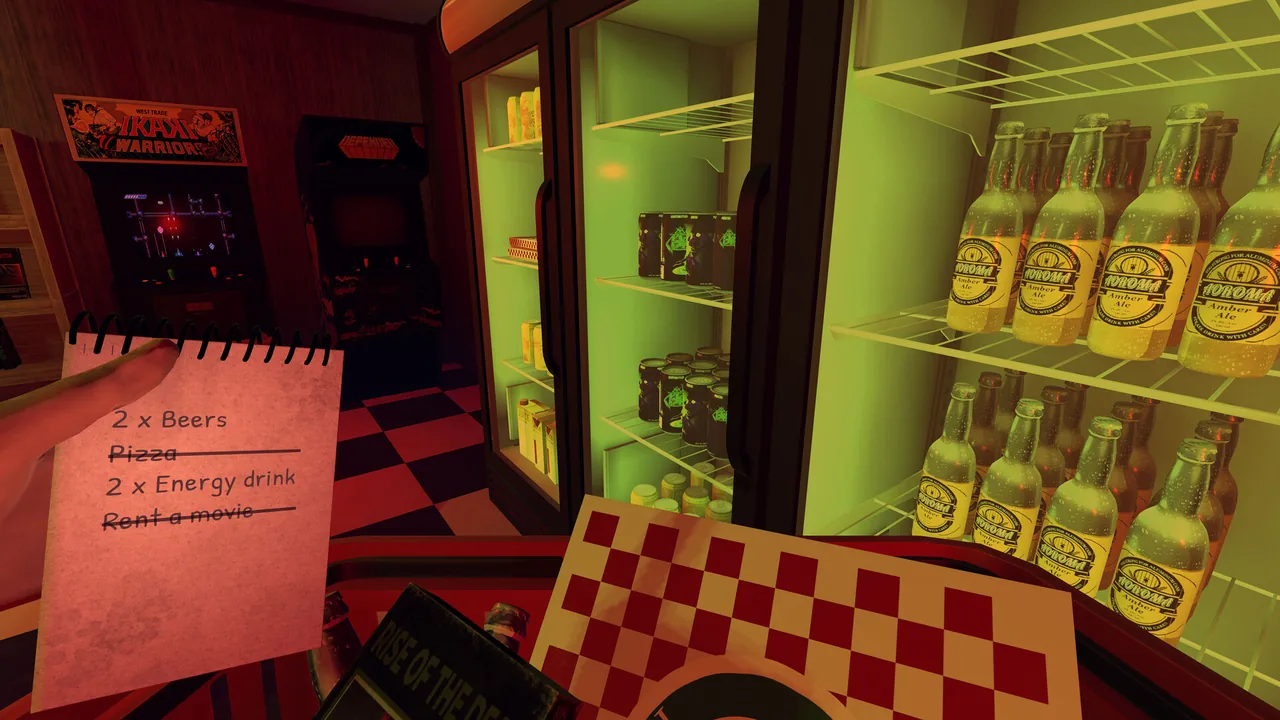
The most concrete evidence available a day after launch comes from Steam's own achievement tracking, and it's worth reading with the right caveat up front: the percentages imply a population of roughly twenty-two players total, so nothing here is a large-sample finding — it's a snapshot of a very small early audience. With that said, the shape of it lines up with a game built for one deliberate sitting. The opening achievement, "Home Sweet Home," sits at 72.7%. Three separate Act 2 and Act 3 achievements — "Shopping Night," "Movie Night," "On the Trail" and "Stay Calm" — cluster together at 59.0%, suggesting players who get past the intro tend to carry that momentum through the middle stretch rather than dropping off piecemeal. A further cluster — "Eye for an Eye," "Barricaded," "Just in Case," and the game's own ending achievement, "Live to Tell" — sits at 45.4%. Read end to end, that means roughly three in five players who cleared the opening act went on to see an ending, which is a healthy completion signal for a horror game explicitly scoped as one sitting rather than a long campaign. Two optional achievements trail well behind — "Curious" at 40.9% and "Perfect Shot" at 18.1% — which reads as exactly what optional side-goals are supposed to look like: available to everyone, chased by fewer.
The other hard data point is smaller still: exactly one English user review exists at the time of writing, and it's positive. The reviewer, 71 minutes into a logged playthrough, called it "a fun run for your life slasher" and specifically praised the game's simplicity rather than treating it as a shortcoming. But the same review is candid about what's missing — more characters to flesh out the story, a face reveal for the killer, and voice acting, none of which the shipped game currently has. That's a useful, specific piece of feedback from an actual early buyer rather than marketing copy, and it's the only outside opinion on record right now to weigh against the store page's own claims.
Content, disclosure and the small print
The store page is unusually direct about what's in the box. Its content descriptors specify "realistic violence, depictions of murder, blood, injured bodies, and a severed human head shown on screen," alongside "intense horror and psychological tension" — a level of detail well beyond the usual vague "violence" tag, which is worth crediting given how many horror games leave buyers to find that out for themselves. The game's AI-content disclosure is similarly narrow rather than sweeping: "Some environmental posters visible in the game were initially created using generative AI tools and then manually edited and integrated by the developer. These assets are static decorative elements and do not affect gameplay or narrative systems." That's a scoped, checkable claim rather than a blanket statement covering the whole production, and it's stated on the store page itself rather than something reviewers had to pry loose.
The game also arrived with more of a runway than most day-one horror releases get. A free demo went live on 21 February 2026 — five and a half months before the 6 August launch — which means the core loop had a public testing period long before anyone could pay for the full game. That doesn't guarantee the finished build plays well, but it's a meaningfully different launch shape from a game that appears from nowhere on release day with zero prior public feedback.
Price, platform and the one-sitting promise
At US$10.49 (discounted 20% to US$8.39 for launch week; NZ$17.49 down to NZ$13.99), The Cabin Watcher sits at ordinary small-indie pricing, and the monetisation itself is as clean as it gets — one purchase, no DLC, no in-app store. The catch is that the store page never states how long a playthrough runs, and with only one logged review at 71 minutes and counting, there isn't yet a sample large enough to estimate it independently. A game explicitly designed for "one intense sitting" lives or dies commercially on whether that sitting feels like a complete experience or a short one, and that's the single fact this review can't yet confirm either way.
Windows is the only platform live on Steam today, despite the developer's own site also listing PlayStation 5 and Xbox Series as platforms — worth noting as a stated intention rather than a current option, since nothing outside the developer's own product page confirms it yet. The minimum specification is reasonable for a modern indie horror title (a GTX 1050 Ti or RX 580 class card, 12GB RAM), but the recommended tier jumps to an RTX 2070 or RX 5700 XT, a meaningfully bigger ask that suggests the game leans on real-time lighting for its atmosphere rather than relying on cheaper tricks. Full controller support, including DualSense-specific features, is a genuine plus for anyone who prefers a pad for a tense, mostly-walking game like this.
Final verdict
The Cabin Watcher earns a 6.5 for a genuinely committed design idea — a stealth slasher with no fight button, a killer that reads the player rather than following a script, and a four-act structure that its own achievement data backs up as a real, complete story rather than padding. It doesn't score higher because almost everything that would confirm the pitch actually lands — how tense the noise-and-light system feels over a full run, whether the story holds up, how long "one sitting" turns out to be — currently rests on a single enthusiastic review and a developer's own claims, with a five-and-a-half-month demo period as the only independent-ish signal in its favour. Buy it now if a no-combat, 80s-slasher stealth game with an honest content warning and a clean one-time price is exactly what you're after; wait a little longer if you'd rather see the review count climb past one before spending on a game whose entire pitch depends on how well its central system actually plays.
Pros and cons
Pros
- The killer reacts to noise, light and movement rather than patrolling a script, per the store's own systems description, and there is no combat option at all to fall back on if stealth fails
- The one verified review at time of writing, from a player 71 minutes into a full playthrough, called it "a fun run for your life slasher" and praised its simplicity rather than complaining about it
- A free demo was public for five and a half months before launch (21 February to 6 August 2026), giving the game a real testing runway most day-one horror releases don't get
- The AI-content disclosure is narrow and specific — limited to background poster art, explicitly stated not to affect gameplay or narrative — rather than a vague blanket statement
- Achievement data shows a genuine four-act structure plus two optional side-goals, not a single undifferentiated slog, and content warnings for violence and gore are spelled out in detail on the store page
Cons
- Only one English user review exists at the time of writing, so pacing, difficulty balance and bug count currently rest entirely on the store page's own claims
- That one review explicitly wants what the game doesn't have yet — more characters, a face reveal for the killer, and voice acted dialogue
- Windows only, and the recommended-spec GPU (RTX 2070 or RX 5700 XT) is a real step up from the game's already-modest minimum requirements
- Quick-Time Events appear among the store's own tags, a mechanic some stealth-horror fans specifically find breaks tension rather than building it
- Designed explicitly for "one intense sitting," so value at US$10.49 depends on how long that sitting actually is — the store page never states a runtime and the review sample is too small to estimate one
Screenshots
-
Yellowcreek Stories - The Cabin WatcherImage: JanduSoft via Steam -
Yellowcreek Stories - The Cabin WatcherImage: JanduSoft via Steam -
Yellowcreek Stories - The Cabin WatcherImage: JanduSoft via Steam -
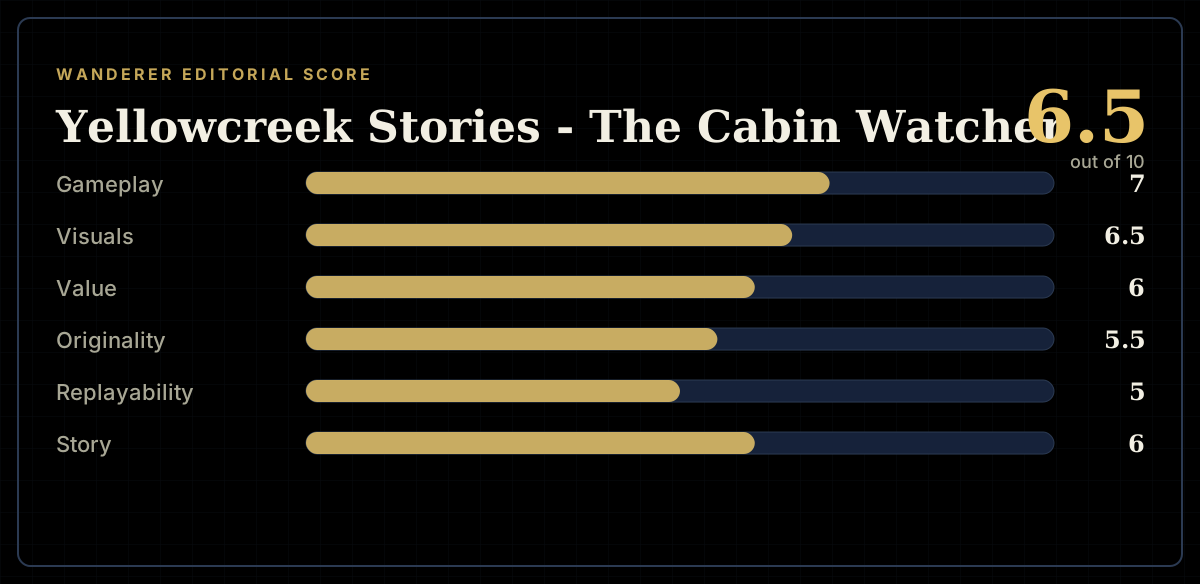
How the review scores each part of the gameWanderer Editorial -
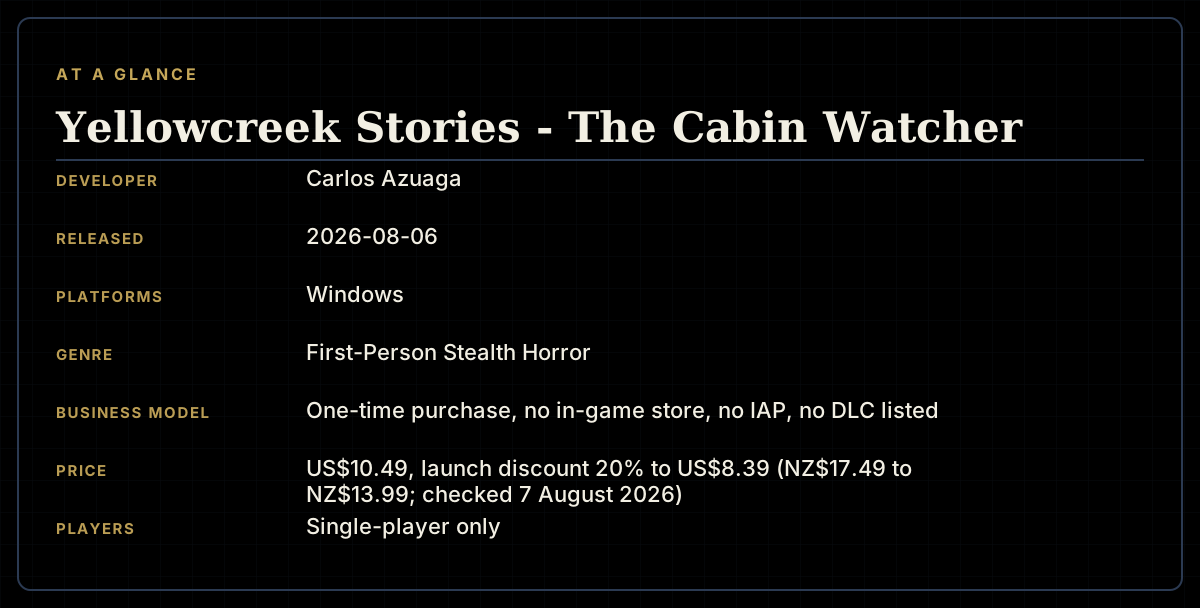
The game at a glanceWanderer Editorial -
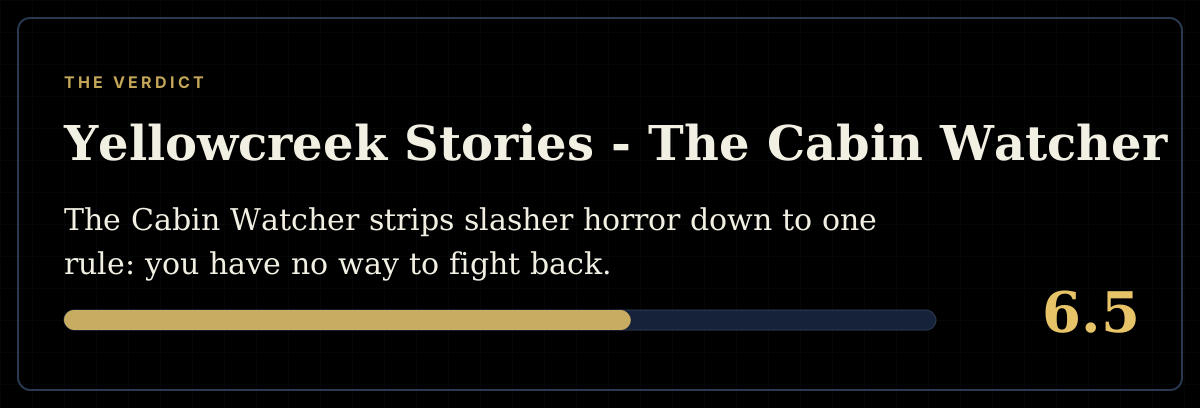
The short versionWanderer Editorial