Game review
WorldBox - God Simulator
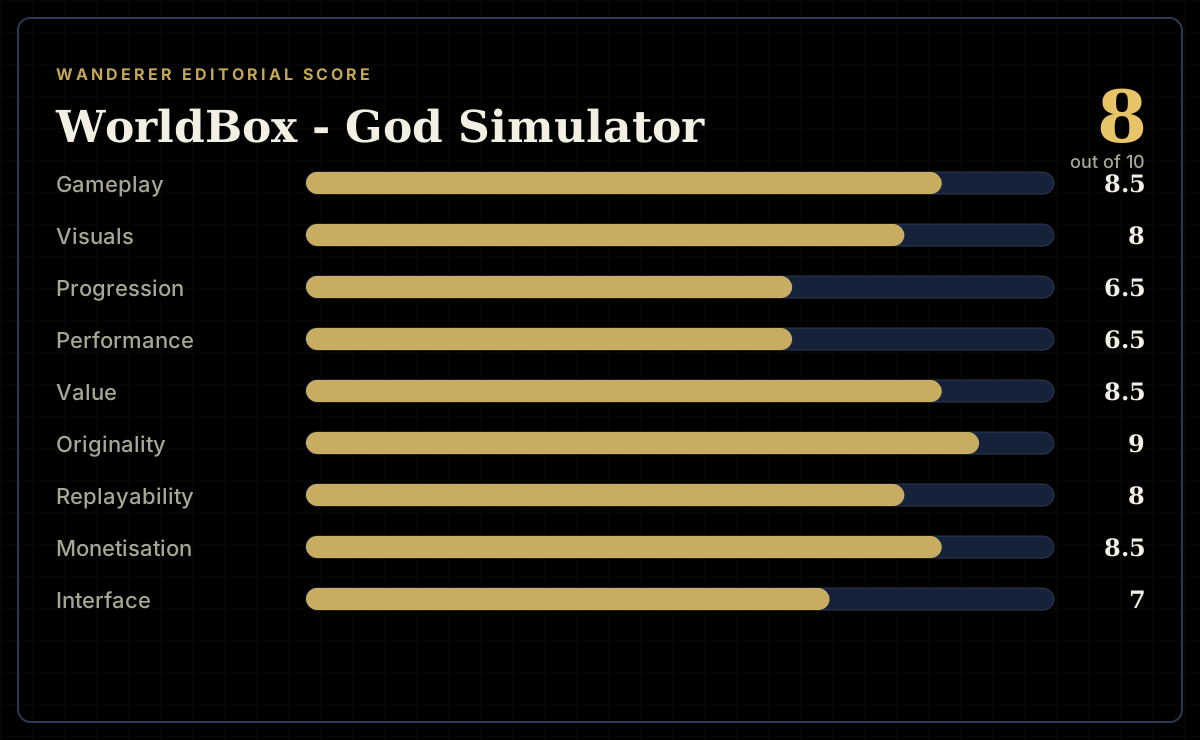
8 / 10
- Developer
- Maxim Karpenko
- Publisher
- Maxim Karpenko
- Released
- 2 December 2021
- Platforms
- Windows, macOS, Linux, iOS, Android
- Genre
- Sandbox god game and world simulator
- Monetisation
- Premium, one-off purchase on Steam — no DLC, no in-app purchases, no ads on the PC release. The free iOS and Android ports are a separate product monetised through ads and optional purchases, distinct from the version covered here
- Players
- Single-player only; there is no online or local multiplayer mode
The short version
WorldBox strips away everything a strategy game normally asks of you — resource costs, objectives, a win condition — and leaves just a world, a cast of stubborn little civilizations, and a toolbox of ways to help or ruin them. That toybox is genuinely one of the best in PC gaming: humans, orcs, elves and dwarves colonize, ally, rebel and burn each other's cities down with almost no input required, and a god-powers wheel lets you nudge, accelerate or annihilate any of it on a whim. Nearly five years of continuous free updates since its Steam debut have only widened that toybox rather than replacing it with structure, which is exactly the problem for anyone who wants a goal to chase rather than a sandbox to poke at.
It rewards curiosity more than mastery, and a long save with a sprawling population will eventually test your CPU as hard as it tests your imagination. Buy it to watch civilizations write their own doomed little histories, not to win at something.
Biggest strengths
- The god-powers toolbox — lightning, tornadoes, plagues, meteors, dragons, UFOs — has no mana or resource cost, so experimentation is instant and consequence-free to try again
- Civilizations behave with real autonomy: kingdoms colonize new land, form alliances, rebel and go extinct without any player input, which suits watching a world unfold as much as steering it
- Nearly five years of continuous free updates since the Steam Early Access launch have added ages and eras, alliances, sea travel and dozens of creatures without a second purchase
Biggest weaknesses
- There is no win condition, campaign, or structured objective of any kind, so players who need a directed goal are likely to exhaust the novelty in a single long sitting
- Simulating thousands of individual agents across a large world visibly drags the frame rate down once a save runs long or a kingdom's population balloons
- The radial power menu gets genuinely cluttered once dozens of unlockable powers, creatures and terrain tools are all sitting in the same wheel, with no way to trim it down to favourites
Who it's for: Players who enjoy open-ended sandbox toys — Dwarf Fortress fans who want the chaos without the learning cliff, Populous and Black & White veterans, Reddit's world-building crowd — and anyone who gets genuine satisfaction from watching autonomous systems run without needing to direct every outcome. Less suited to players who need a campaign, a score, or a defined way to win.
Our recommendation: An easy recommendation at $19.99 for anyone drawn to open-ended simulation, with Steam Workshop and five years of free content updates stretching the value well past the base roster of creatures and powers. Go in expecting a toybox rather than a strategy game — there is no ending to reach and no scoreboard to climb — and be aware that a large, long-running world will eventually strain performance no matter how modern the hardware.
8 / 10
WorldBox doesn't open with a tutorial telling you what to build or a quest log telling you what to do next. It opens with an empty world, a cursor shaped like a hand, and a wheel of powers that includes "drop a meteor" right next to "plant a forest." What happens after that is entirely up to whichever civilization you decide to place down and then either help or destroy — and that single decision, repeated in a thousand small variations, is the entire game. Nearly five years after it reached Steam, and closer to fifteen since its earliest free browser version, WorldBox is still one of the purest toyboxes on PC: no resource meters, no failure state, just a living world and every tool imaginable for disturbing it.
A god game with no god to obey
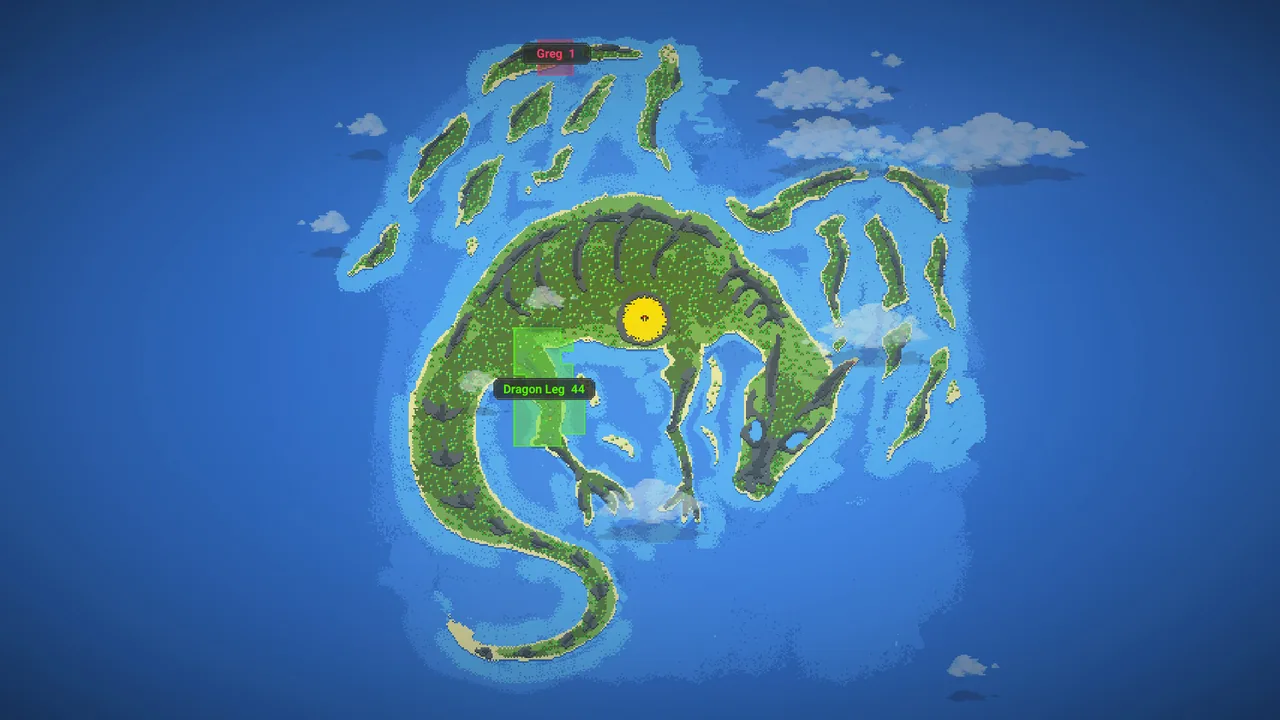
The premise is disarmingly simple. Populate a procedurally generated map with humans, orcs, elves or dwarves, and the game takes it from there — settlements form, kingdoms expand, armies march, and the whole thing keeps running whether you're actively steering it or just watching. The powers wheel is organized into world creation, civilizations, creatures, nature and disasters, destruction, and a catch-all "other" category, and every single one of them costs nothing to use. There's no mana bar, no cooldown timer, no currency to earn before you're allowed to summon a dragon or drop a nuke on a city that annoyed you. That absence of friction is the game's whole personality: WorldBox never makes you feel like you're managing a budget, only like you're playing with the most elaborate ant farm ever built, one where you can also become the weather.
That lack of resistance is also the game's most obvious limitation once the novelty wears thin. There's no scoring system, no campaign structure, and no moment where the game tells you that you've won or lost. Reviewers going back to its earliest Steam Early Access days made the same observation that still holds today: a session tends to burn hot and fast, and players who need an objective to chase will hit the ceiling of what WorldBox is actually offering well before the powers list runs out of new toys to try. It's a game built entirely around curiosity rather than mastery, and whether that's a feature or a flaw depends entirely on what you came looking for.
Civilizations that write their own doomed little histories
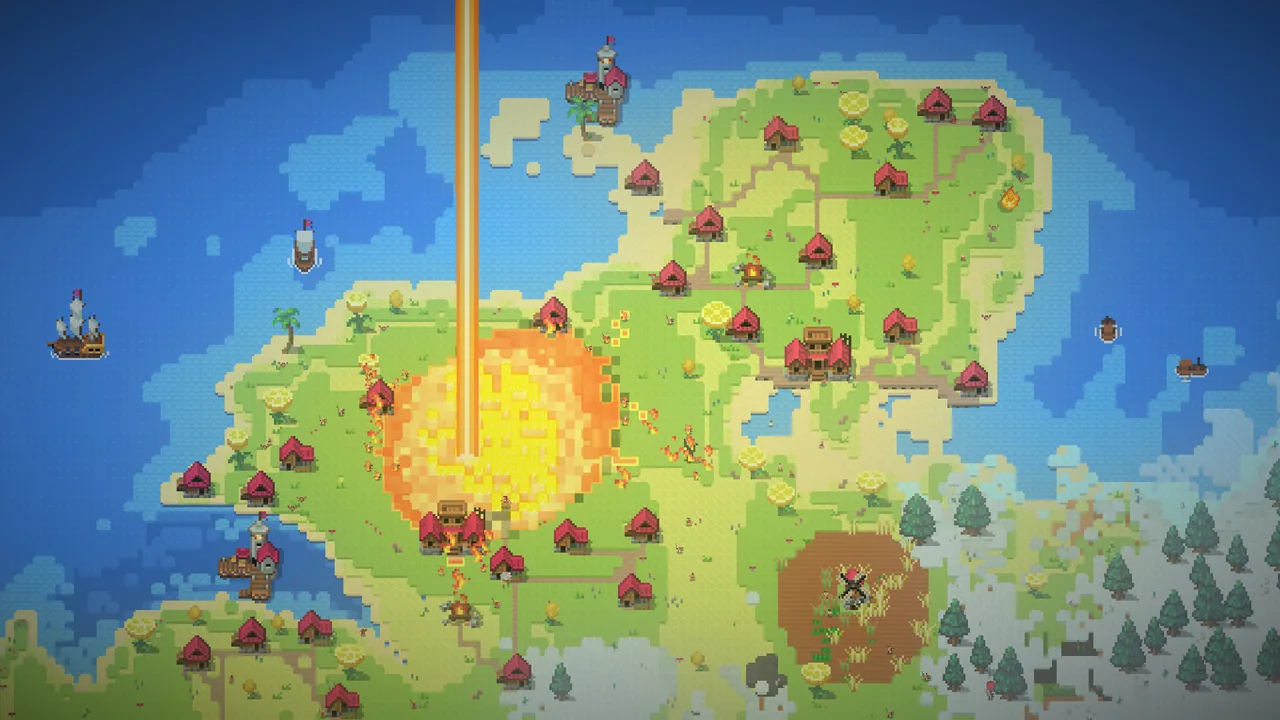
The strongest thing WorldBox has going for it is how genuinely autonomous its inhabitants feel once you stop interfering. Drop down a scattering of humans and orcs and walk away, and kingdoms will still form, colonize unclaimed land, build up armies, declare war, forge alliances, and eventually collapse into rebellion or extinction with zero further input. Later updates layered in a full diplomacy system — kingdoms negotiating, betraying, and occasionally uniting against a common threat — plus alliance and clan mechanics that give the political layer more texture than the original "everyone fights everyone" free-for-all. An ages system pushes each world through distinct eras that reshape which creatures and biomes are viable, so a save left running for long enough genuinely looks different by the end than it did at the start, rather than just accumulating more of the same buildings.
This is where WorldBox earns comparisons to Dwarf Fortress's legendary "the dwarves did this to themselves" storytelling, minus the notoriously punishing interface. You don't need to parse a wall of text logs to understand that a plague wiped out a kingdom's capital, or that a rival empire seized the opportunity to invade while the survivors were still recovering — you can watch it happen in real time, zoomed out over the whole map, and then zoom in on the specific town that's on fire. Letting a world run and treating yourself as an observer rather than a director is a genuinely different way to spend time with a strategy game, and it's the reason WorldBox built such a devoted following well before it ever charged money for the experience.
The trade-off is that the civilizations are reactive rather than deeply simulated in the way a colony sim's individual settlers are. Kingdoms follow legible, somewhat repetitive patterns — expand, clash with a neighbour, rebuild, expand again — rather than developing distinct personalities or long-term strategic behaviour. It's convincing at the scale WorldBox operates on, watching an entire map's worth of history compress into an afternoon, but it isn't the kind of granular character simulation that RimWorld or Dwarf Fortress build their reputations on at the individual-unit level. WorldBox trades that depth for scale, and mostly that trade pays off.
From a free Flash toy to five years of Early Access
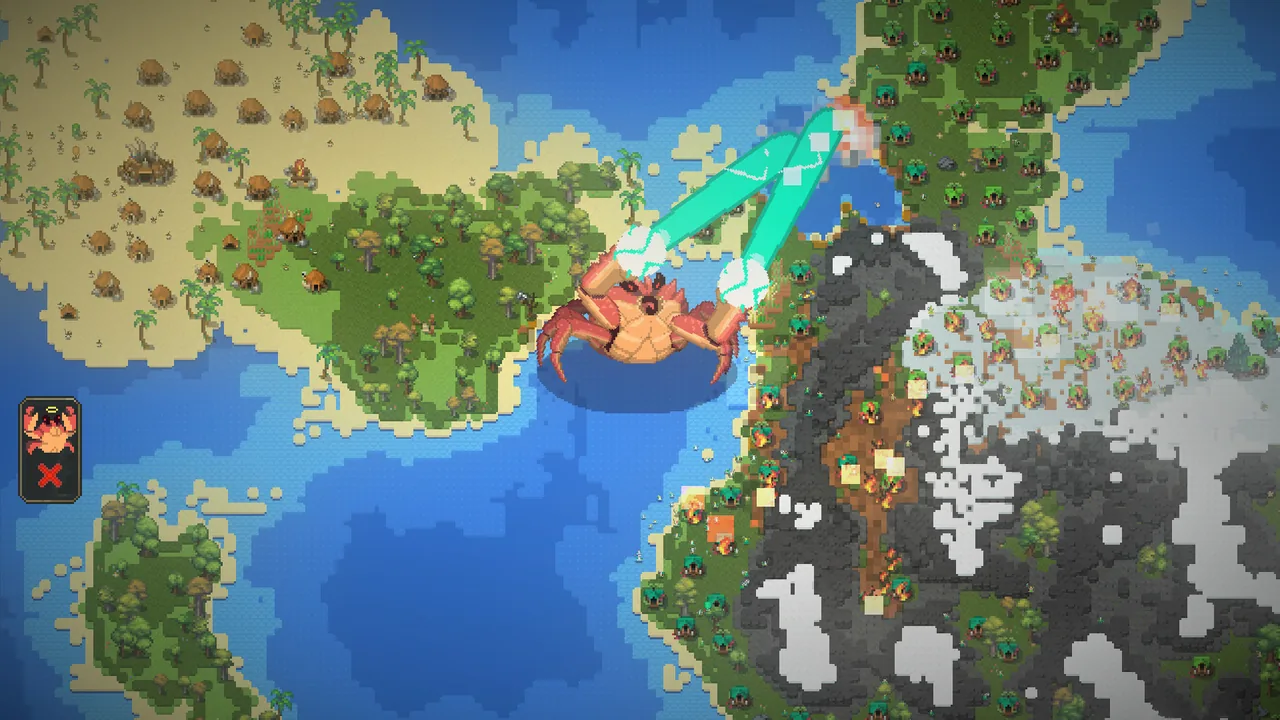
WorldBox's development history is unusually long even by indie standards. Maxim Karpenko built the first version as a free browser Flash prototype back in 2011, and it found its earliest audience on Newgorunds not long after. Standalone paid releases followed years later — first on mobile, then a dedicated Windows build — well before the game ever touched Steam. The Steam listing itself only opened in Early Access on 2 December 2021, and as of this writing it's still tagged Early Access there, with no publicly announced date for a 1.0 release. That's an unusually long runway for a one-person project, but it's also been a genuinely productive one: the update cadence since the Steam launch has added the ages and eras system, kingdom alliances, sea travel and colonization of new continents, dozens of new creatures up to and including controllable dragons and a giant crab boss, and a steadily expanding roster of destruction powers, all without asking existing owners to pay again.
That consistency matters more than the missing 1.0 label. A lot of Early Access games stall out or get abandoned mid-development; WorldBox has instead used the label as an ongoing subscription-free content pipeline, and the Overwhelmingly Positive review score — sitting at roughly 95% positive across more than 55,000 Steam reviews — reflects a community that's mostly made peace with buying an "unfinished" game that keeps getting bigger for free. Anyone weighing this purchase should still go in with the right expectation: there's no finish line coming, and the appeal of the game a year from now will look almost exactly like the appeal of the game today, just with a slightly longer powers list.
Performance, interface, and the cost of simulating everyone at once
The one place WorldBox's ambition runs into a hard technical wall is performance. Simulating every individual creature and settlement across a large map, each acting semi-independently, is genuinely expensive, and a save that's been left running for a long time with a booming population will start to visibly chug regardless of how capable the hardware is. It's a predictable cost of the exact thing that makes the game interesting — nobody wants a world simulator that fakes its population numbers — but it does mean the biggest, longest-running worlds are also the ones most likely to test your patience with a stuttering frame rate, and there isn't much players can do about it beyond keeping map sizes and populations in check.
The interface has a similar strength-and-weakness relationship with the game's own scope. The radial powers wheel is a genuinely good design for a game with this many verbs — it keeps destruction, creation, and creature summoning all one click away without burying anything in a nested menu tree — but five years of accumulated content has made that same wheel considerably more crowded than it was at launch. Sorting through dozens of unlockable powers, creatures, and terrain brushes to find the one you actually want takes longer than it should, and there's no way to build a personal shortlist of favourites to skip the hunting. It's a manageable annoyance rather than a serious flaw, but it's the most obvious sign that the game has grown well past its original scope without a matching pass on organizing that growth.
Value, modding, and the long tail
At $19.99 with no DLC and nothing resembling an in-app purchase on the Steam release, WorldBox is priced like a modest indie project despite having delivered five years of continuous free content on top of the base game. Steam Workshop support and a built-in level and scenario editor extend that further, letting the community share custom maps, creature packs, and scenarios that push well past whatever the base roster covers — genuinely useful for a game that has no campaign of its own to fall back on for structured replay value. Judged purely as cost against content delivered over time, it's one of the stronger value propositions in the sandbox-simulation space.
It's worth flagging that the free iOS and Android ports are a different animal entirely, monetised through ads and optional purchases rather than the clean one-off price of the Steam version. They share a name and a developer, but treat them as a separate product with a separate business model — the value case above applies specifically to the PC release covered here.
Players who like the idea of systems that keep developing on their own — a world that quietly progresses whether or not you're actively watching it — will find a smaller, much more structured cousin of that appeal in Wanderer's own gathering and combat loops, which keep advancing your character even while you're away.
Verdict
WorldBox succeeds by refusing to be anything other than exactly what it is: a god-powers toybox wrapped around civilizations that are genuinely capable of writing their own chaotic little histories without you. That combination — zero-cost experimentation plus autonomous kingdoms worth watching — is still one of the best pure sandbox experiences on PC, and five years of free updates since its Steam debut have only made the toybox bigger rather than diluting it. The performance cost of simulating a large, long-running world is real, the powers wheel has gotten crowded enough to need a search function it doesn't have, and there is still, after all this time, no finish line or formal 1.0 in sight.
None of that changes who should buy it. Recommend it without hesitation to anyone who gets satisfaction from open-ended systems and emergent stories rather than structured objectives — it's an easy, inexpensive way to lose an afternoon repeatedly. Steer players who need a campaign, a win condition, or a scoreboard elsewhere; WorldBox was never going to give them one, and at this point in its development, it's clear it never will.
Price and platform details checked 1 August 2026.
Pros and cons
Pros
- The god-powers toolbox — lightning, tornadoes, plagues, meteors, dragons, UFOs — has no mana or resource cost, so experimentation is instant and consequence-free to try again
- Civilizations behave with real autonomy: kingdoms colonize new land, form alliances, rebel and go extinct without any player input, which suits watching a world unfold as much as steering it
- Nearly five years of continuous free updates since the Steam Early Access launch have added ages and eras, alliances, sea travel and dozens of creatures without a second purchase
- Steam Workshop support and a built-in map and scenario editor give the sandbox a long tail well past whatever the base creature and power roster offers on its own
- At $19.99 with no DLC and no in-app purchases on the PC release, it undercuts most competing sandbox-simulation games on straightforward value
Cons
- There is no win condition, campaign, or structured objective of any kind, so players who need a directed goal are likely to exhaust the novelty in a single long sitting
- Simulating thousands of individual agents across a large world visibly drags the frame rate down once a save runs long or a kingdom's population balloons
- The radial power menu gets genuinely cluttered once dozens of unlockable powers, creatures and terrain tools are all sitting in the same wheel, with no way to trim it down to favourites
- Nearly five years after its Steam debut, the game is still formally tagged Early Access with no announced 1.0, so newcomers are buying into an officially unfinished product
- The free mobile ports are a separate ad-and-purchase-supported product, so the clean, one-off monetisation of the Steam version doesn't carry over to players who find WorldBox on a phone first
Screenshots
-
WorldBox - God SimulatorImage: Maxim Karpenko via Steam -
WorldBox - God SimulatorImage: Maxim Karpenko via Steam -
WorldBox - God SimulatorImage: Maxim Karpenko via Steam -
How the review scores each part of the gameWanderer Editorial -
The short versionWanderer Editorial