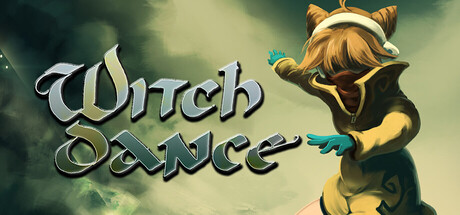
Game review
Witch Dance
7.2 / 10
- Developer
- Luna Flora
- Publisher
- Luna Flora
- Released
- 16 April 2026
- Platforms
- ["Windows"]
- Genre
- Action
- Monetisation
- Paid
- Players
- Single-player
The short version
Witch Dance is a tiny, cheap arcade high-score chaser whose teleport-strike movement and escalating risk-reward loop have won over almost everyone who's tried it, even though there's little to it beyond the loop itself.
Biggest strengths
- A movement system built around teleporting through lines of enemies for multi-hit kills that reviewers repeatedly describe as unlike anything else they've played
- A tight risk-reward loop, letting more enemies pile up for a bigger bomb, that keeps escalating in intensity and rewards deliberate, aggressive play
- An extremely low price paired with reports of dozens of hours of playtime, and a well-regarded, selectable soundtrack that reviewers say never grows stale
Biggest weaknesses
- No story, meta-progression, or unlockable content beyond missions and a leaderboard, so the entire experience is the moment-to-moment loop and nothing else
- Steam Deck and controller support work but are explicitly described by several reviewers as clearly secondary to mouse and keyboard, with touchpad control awkward
- A handful of reviewers note minor missing polish, extra backgrounds, a sound cue for full mana, that would round out an otherwise tight package
Who it's for: Fans of score-attack arcade games and 'just one more run' loops who want something they can pick up for a few minutes or a few hours without any story or meta-progression to manage.
Our recommendation: An easy recommendation at its asking price for anyone who likes arcade-style score chasing, though shoppers wanting a fuller game with content beyond the core loop should look elsewhere.
7.2 / 10
A Witch, a Mouse, and Nothing Else
Witch Dance, developed and published by Luna Flora, strips its pitch down to almost nothing: right-click to move, left-click to cast, and see how high a score you can post before the waves of ghosts, slimes, and enemy sprites close in and end the run. There's no story to speak of and barely any framing beyond a playful witch character weaving through swarms of enemies to a soundtrack of selectable electronic beats. It's the kind of premise that could easily be mistaken for a browser flash game, and several reviewers make exactly that comparison, in fondly nostalgic terms, but the response from its small review base has been close to unanimous: all 44 English-language Steam reviews at the time of writing recommend it, a perfect positive rate for a tiny, three-dollar indie release.
The developer behind Luna Flora is previously known, per numerous reviews, for a more traditional action game called Radix Chronicles, and a fair number of Witch Dance's reviewers say they bought in specifically to support that developer's next project rather than because the premise sold them outright. What they found, by their own accounts, was a much smaller, much more tightly-scoped game than Radix Chronicles, closer to a focused arcade toy than a full production, but one whose mechanical hook turned out to be strong enough to hold their attention for hours anyway.
Simple Controls, Surprising Depth
The core loop asks you to dodge a growing crowd of enemies while collecting mana orbs that spawn around the map, then spend that mana to teleport to your cursor's position, dealing damage to every enemy your teleport line passes through. It's a small idea, but reviewers describe it as feeling genuinely distinct from anything else they've played, closer in spirit to the precise, high-stakes positioning of a MOBA teamfight or a bullet-hell shooter than to a typical action game, despite the total absence of a traditional attack button. Several reviewers specifically invoke Dota 2 and League of Legends as comparison points, less for any surface similarity and more because landing a well-lined-up multi-enemy teleport strike produces the same kind of satisfaction as a clean last-hit or a well-aimed skillshot.
What elevates the loop beyond a simple dodge-and-click exercise is a bomb mechanic: magic circles appear on the map periodically, and standing inside their outer ring slowly draws it inward, escalating the bomb's power the longer it's left to charge and the more enemies are allowed to roam free nearby. Detonating a large bomb after deliberately letting danger build up is repeatedly cited as the game's signature high, and it's also where the risk-reward tension is sharpest, since leaving more enemies alive for a bigger payoff also means a much higher chance of a stray hit ending the run. Reviewers consistently describe this tension as the thing that turns a simple concept into something with real depth, and note that enemy spawn rates and enemy types escalate as a run's score climbs, keeping the challenge scaling in step with the player's growing mastery.
Missions, Bombs, and the Score Chase
Beyond the core dodge-and-teleport loop, Witch Dance layers in short missions, timed prompts to kill a specific enemy type within a window, that reward successful completion with a decoy charge, a secondary resource that can be used to lure enemies into a favorable position for a big hit or bomb setup. It's a modest system, but it gives runs a bit of structure beyond pure survival, nudging players toward specific short-term goals rather than only reacting to whatever the screen throws at them. There's a global leaderboard for players chasing bragging rights, and the soundtrack, several interchangeable tracks spanning slower and faster tempos, doubles as a way to tune the game's felt intensity to a player's mood, a detail multiple reviewers call out as a surprisingly thoughtful touch for a game this small.
What the game notably doesn't have is any meta-progression in the traditional sense: no persistent unlocks, no upgrade trees, no story beats between runs. One reviewer draws a direct, approving contrast to the current trend of stacking meta-progression and post-run summary screens onto every arcade-style release, framing Witch Dance's refusal to do either as a return to a more direct, "you game, you die, you repeat" style of design. Whether that reads as a strength or a gap depends heavily on what a given player wants from the genre, but it's a deliberate choice rather than an oversight, and the review set is largely receptive to it.
Presentation and Small Rough Edges
Witch Dance's pixel art is uniformly described as cute and clean, its sound effects as punchy and satisfying, particularly the feedback on landing a large multi-enemy hit, and its soundtrack as a standout that holds up even after many hours of repeat listening. At a price under five New Zealand dollars, several reviewers report tens of hours of playtime, one specifically logging over 45 hours, framing the value proposition as close to absurd for the cost. Accessibility gets a specific mention too: alternate Q and E keybindings for movement and dashing let players who struggle with sustained precise mouse input, including one reviewer using a trackball, engage with the game comfortably.
The rough edges that do surface are minor and consistent. Steam Deck and controller play work, remapped through the Deck's control menu, but multiple reviewers note the experience changes meaningfully without a mouse's fine motor control, forcing a more predictive, less reactive playstyle that can be harder to pick up, and one reviewer suggests the developer could ease enemy movement speed specifically for controller users. A couple of reviewers wish for more background variety or minor missing sound cues, such as an audio tell when mana is fully charged, small requests that speak to how little there is to actually criticize rather than any deeper flaw.
Verdict
Witch Dance doesn't try to be more than it is: a small, cheap, mouse-driven arcade score-chaser built around one genuinely clever teleport-strike mechanic and a bomb-detonation risk-reward loop that reviewers overwhelmingly describe as addictive in the best sense. It has no story and almost no meta-progression, and its Steam Deck support is a clear secondary consideration next to mouse and keyboard, but at its asking price, and with a soundtrack and moment-to-moment feel this well-received, it's easy to see why its entire review base recommends it. Anyone who enjoys arcade-style high-score chasing, or wants a low-commitment game to dip into between other tasks, should find it an easy, inexpensive pickup; anyone hoping for a fuller game with content beyond the core loop is better served looking elsewhere.
Pros and cons
Pros
- A movement system built around teleporting through lines of enemies for multi-hit kills that reviewers repeatedly describe as unlike anything else they've played
- A tight risk-reward loop, letting more enemies pile up for a bigger bomb, that keeps escalating in intensity and rewards deliberate, aggressive play
- An extremely low price paired with reports of dozens of hours of playtime, and a well-regarded, selectable soundtrack that reviewers say never grows stale
Cons
- No story, meta-progression, or unlockable content beyond missions and a leaderboard, so the entire experience is the moment-to-moment loop and nothing else
- Steam Deck and controller support work but are explicitly described by several reviewers as clearly secondary to mouse and keyboard, with touchpad control awkward
- A handful of reviewers note minor missing polish, extra backgrounds, a sound cue for full mana, that would round out an otherwise tight package
Screenshots
-
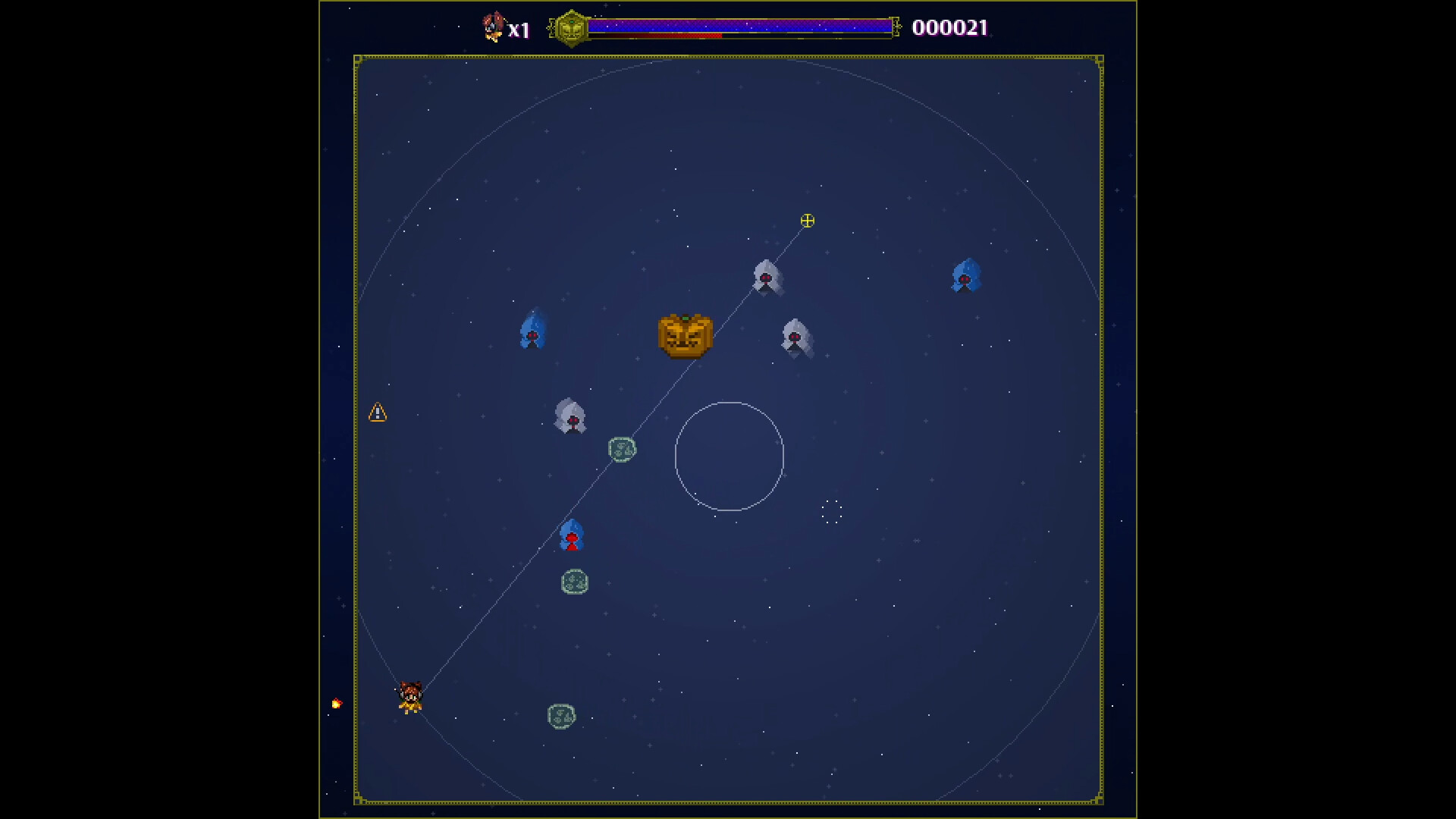
The circular arena, enemy waves, and teleport-targeting line that define the core dodge-and-strike loopLuna Flora -
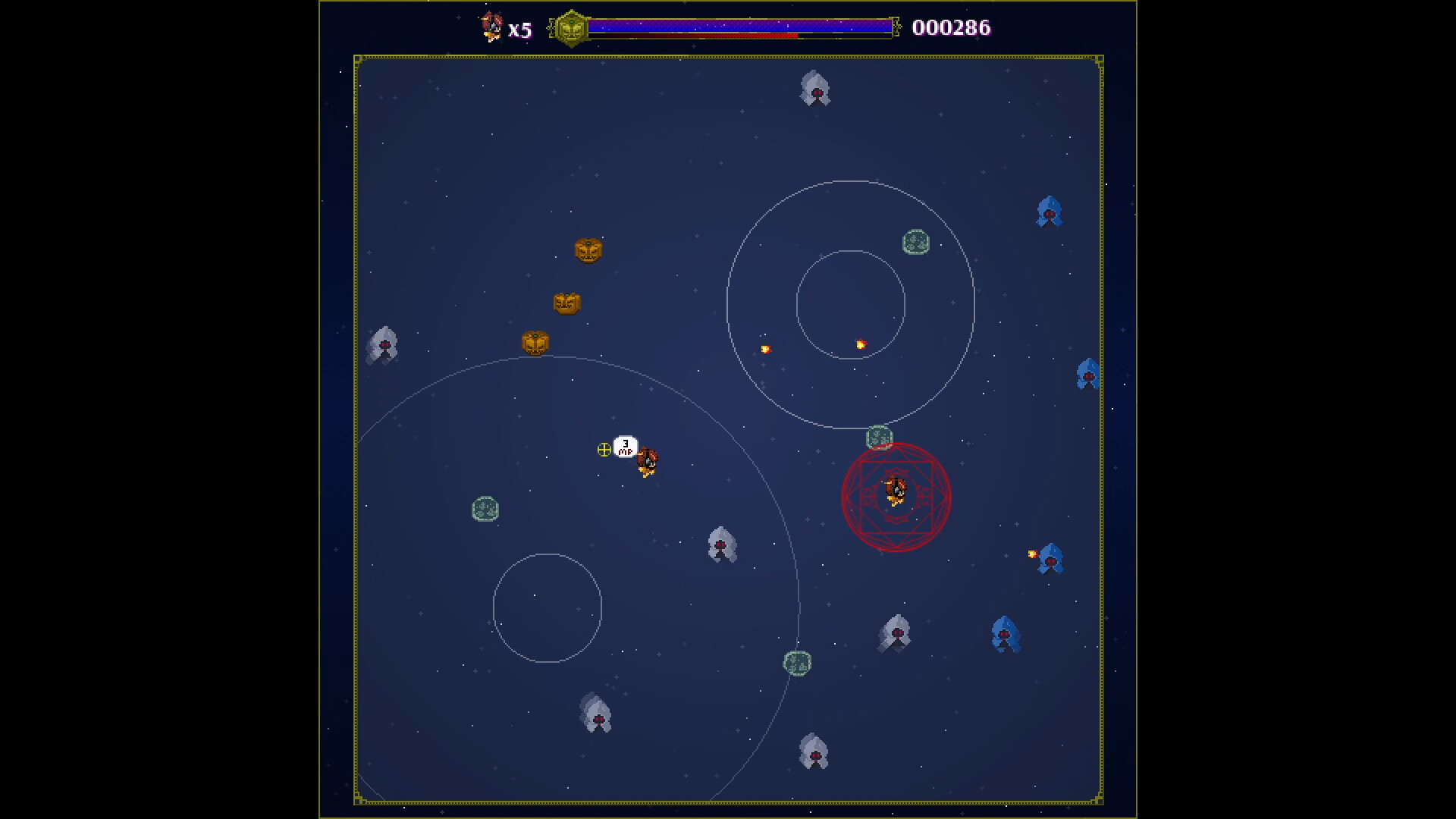
A bomb charging around the witch as enemies and hazards pile up, the game's signature risk-reward momentLuna Flora -
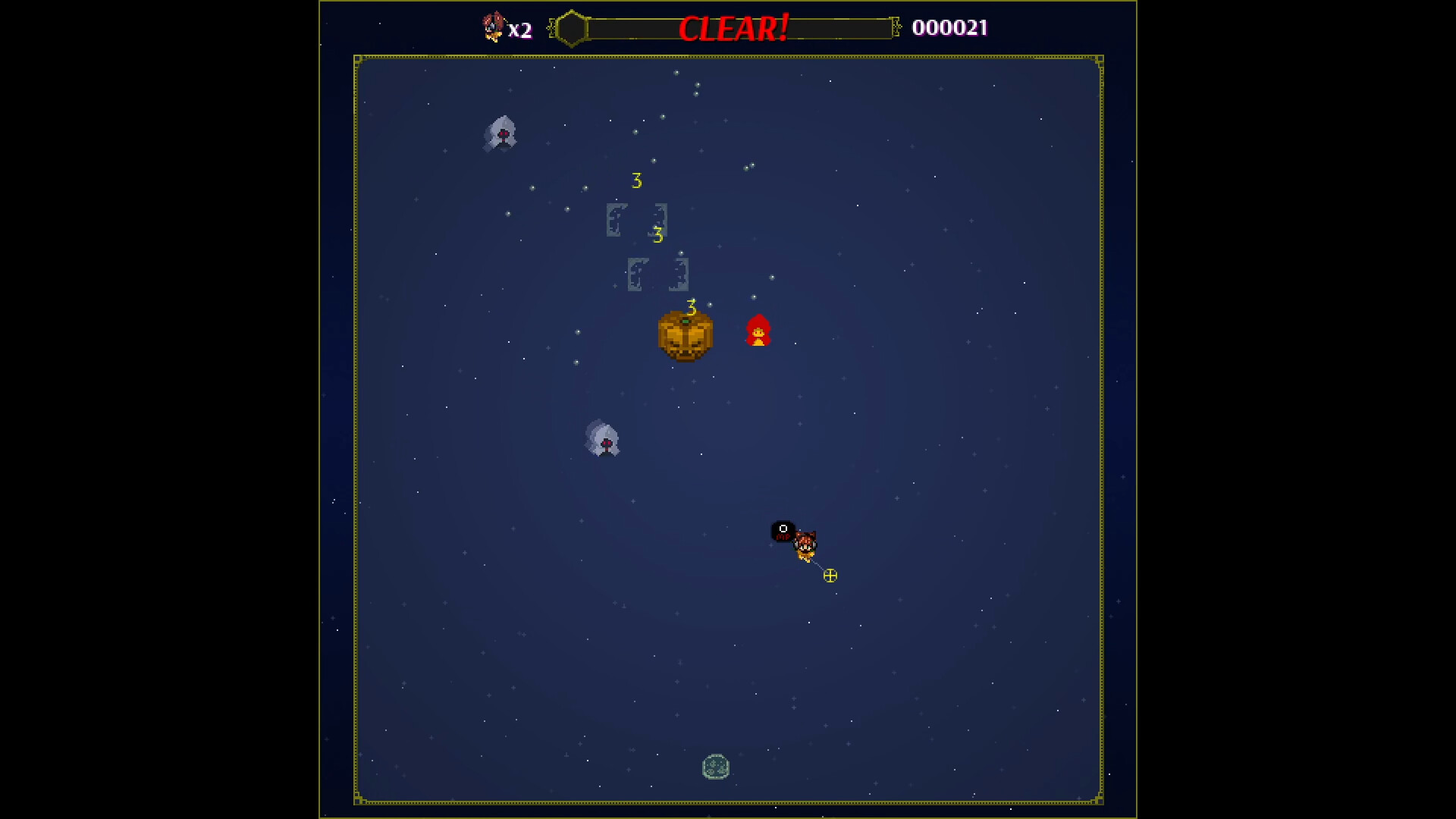
Completing a timed mission triggers a "CLEAR!" banner and rewards the player with a decoy chargeLuna Flora -
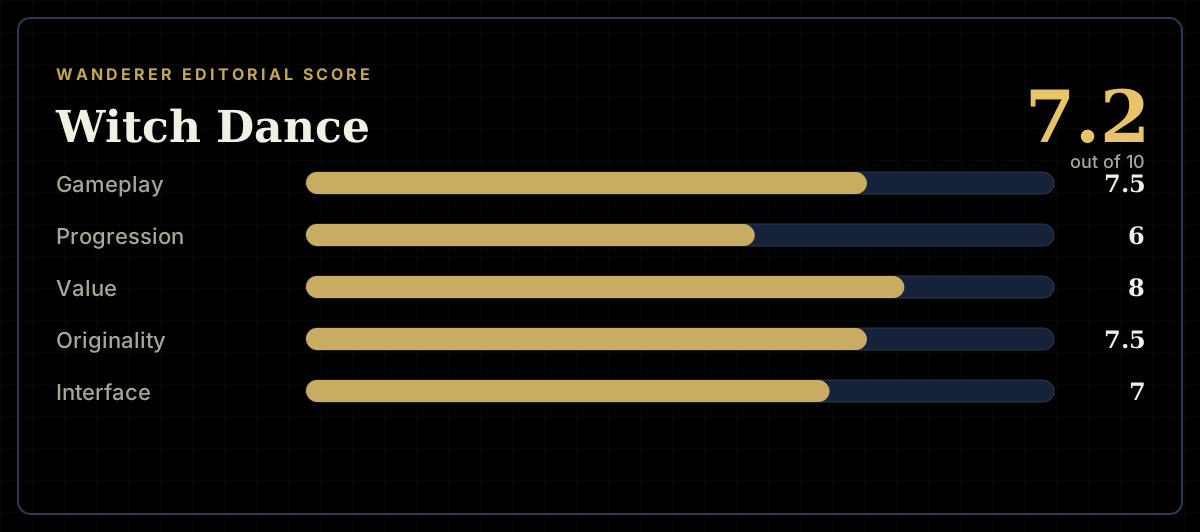
How the review scores each part of the gameWanderer Editorial -
The short versionWanderer Editorial