
Game review
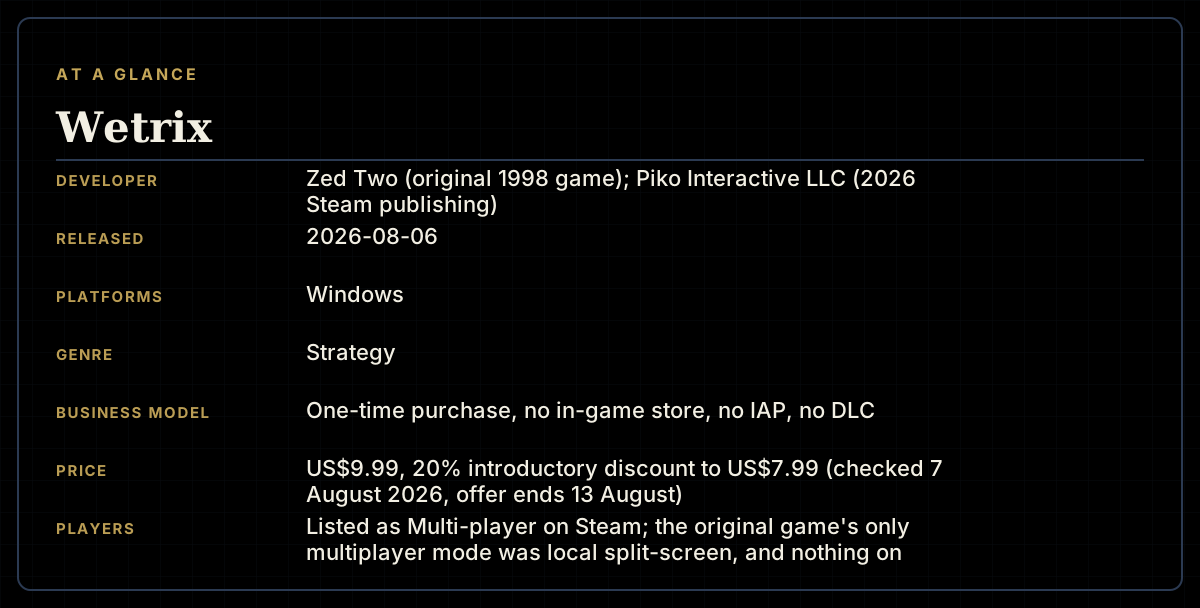
Wetrix
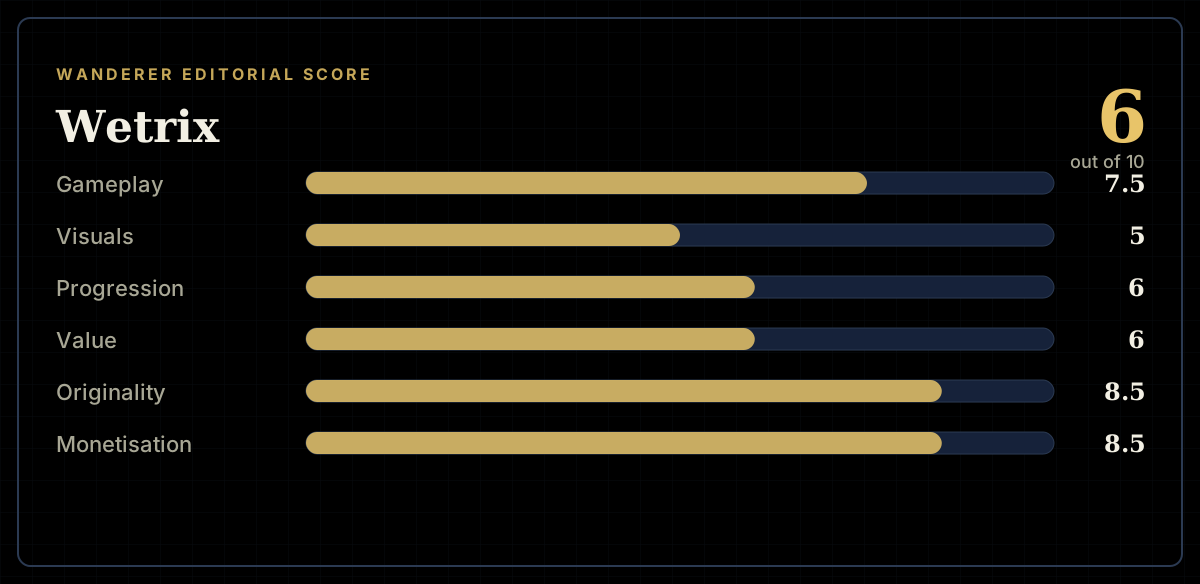
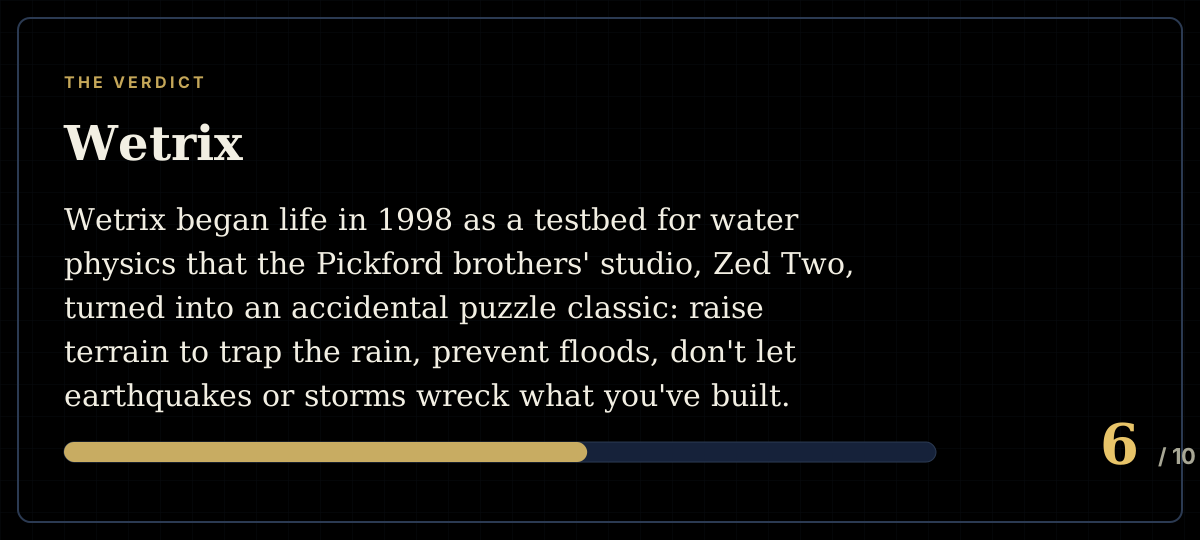
6 / 10
- Developer
- Zed Two (original 1998 game); Piko Interactive LLC (2026 Steam publishing)
- Publisher
- Piko Interactive LLC
- Released
- 6 August 2026
- Platforms
- Windows
- Genre
- Strategy
- Monetisation
- One-time purchase, no in-game store, no IAP, no DLC
- Players
- Listed as Multi-player on Steam; the original game's only multiplayer mode was local split-screen, and nothing on the store page indicates online play has been added
The short version
Wetrix began life in 1998 as a testbed for water physics that the Pickford brothers' studio, Zed Two, turned into an accidental puzzle classic: raise terrain to trap the rain, prevent floods, don't let earthquakes or storms wreck what you've built. It scored well with critics at the time (81/100 on Metacritic across 11 reviews) for being something genuinely new in a genre full of Tetris clones. This 2026 Steam listing is not a remaster in any way the store page claims — it's Piko Interactive, which picked up the Ocean Software and Infogrames catalogue from Atari in 2018, putting the trademark back on sale with 1990s-era system requirements still attached and zero reviews to judge it against on day one.
Biggest strengths
- The core loop — raise terrain to contain constantly falling rain while earthquakes, storms and lightning undo your work — was a genuinely original idea in 1998 and nothing since has copied it closely enough to make it feel dated by comparison
- Contemporary critics rated it well specifically for that originality: 81/100 on Metacritic across 11 reviews, in a puzzle-game landscape otherwise dominated by Tetris variants
- Clean, one-time purchase with no DLC, no in-game store and no monetisation layer of any kind
Biggest weaknesses
- The Steam listing carries zero user reviews and no achievement list at the time of writing, so nothing about this specific build's stability or compatibility on modern Windows has been independently confirmed yet
- System requirements are listed as a Celeron processor, 1GB of RAM and an Athlon 64-class GPU — unchanged from what a machine needed in the early 2000s, with nothing on the store page describing any resolution, control or interface updates for 2026 displays
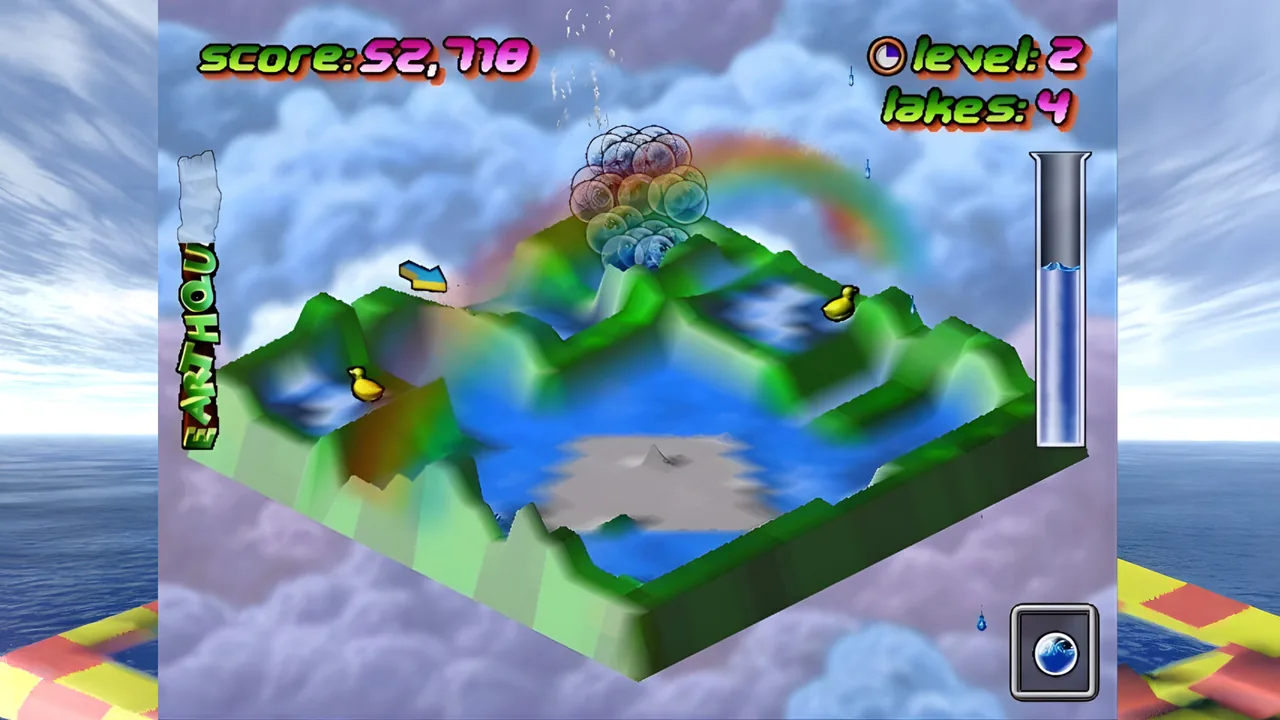
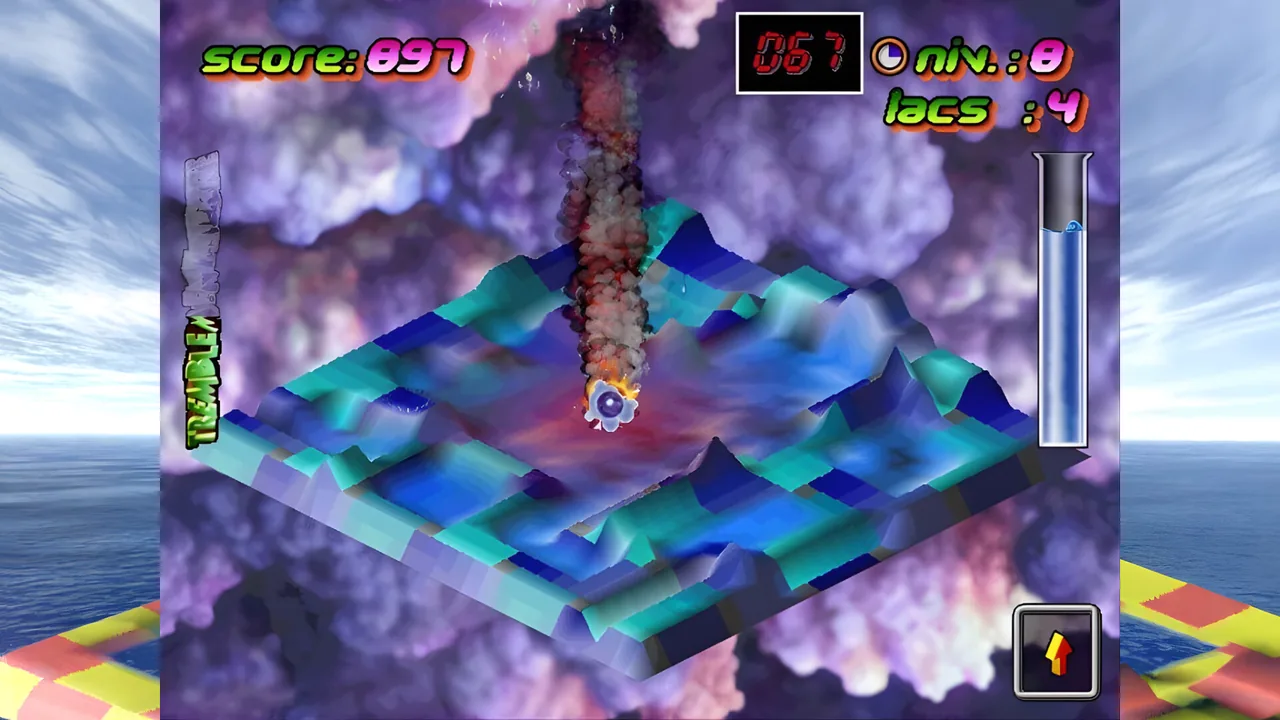
- Store screenshots show the original low-polygon, fixed-camera isometric visuals without any stated remaster pass, which is the single biggest risk for a buyer expecting a modern-looking puzzle game at this price
Who it's for: Puzzle-game collectors and anyone who remembers Wetrix from the N64 or the 1999 PC release and wants the original mechanics back at a modern digital storefront. A poor fit for anyone expecting a visual or interface pass to match a 2026 release date.
Our recommendation: The underlying design has aged well and is still worth the eight dollars for what it is — a genuinely original puzzle idea nobody has really cloned since. Go in expecting exactly the 1998/99 game and nothing more; there is no evidence here of remastered visuals, added content or online multiplayer, and no outside verdict yet exists to confirm the PC build runs cleanly on a modern machine.
6 / 10
Long before "cozy" became a marketing category, Wetrix was already doing the thing cozy puzzle games try to do now: turn a genuinely stressful problem — rain that never stops — into something oddly meditative to manage. It arrived on the Nintendo 64 and PC in 1998 from Zed Two, the small UK studio run by brothers Ste and John Pickford, and it did something almost nothing else in the puzzle genre that year attempted. It wasn't a Tetris variant with a new coat of paint. It was built from an actual physics simulation, and the puzzle came out of that simulation rather than being bolted on top of it. Twenty-eight years later, Piko Interactive has put the game back on Steam at $9.99, and the honest way to describe this release is: it's Wetrix, apparently unchanged, with a legal notice attached and no evidence yet of anyone having played the new build long enough to say whether it runs.
Where the idea actually came from
The origin story is one of the more charming accidents in puzzle-game history, and it's worth retelling because it explains why the mechanics feel the way they do. Zed Two was developing an entirely different game, a multiplayer vampire brawler called Vampire Circus, when programmer John Pickford built a side experiment: a flat grid where water accumulated, flowed downhill and dripped off the edges, purely to test a physics idea. Letting the player raise and lower individual cells to reshape that terrain turned the test into something people on the team kept sneaking off to play instead of working. Ocean Software initially passed on pitching it, reportedly calling it "too small" next to their bigger titles — then signed Zed Two anyway after their own testers wouldn't stop playing it on breaks. The game very nearly didn't survive its own publisher: Ocean merged with Infogrames a week after signing the deal, and the combined company saw a low-budget puzzle game as incompatible with a "mega-hits" strategy and slashed the North American print run. Wetrix shipped anyway, sold modestly, and still picked up an 81 out of 100 on Metacritic across eleven reviews — solid numbers for a game its own publisher had already written off.
The mechanics that made it work
Strip away the terrain and Wetrix is deceptively simple: rain falls constantly onto a flat grid, and the player drops Tetris-shaped "Uppers" to raise sections of ground into walls, basins and dams. Water pools in whatever shallow terrain exists and has to stay contained — let it spill over the grid's edge and a drain meter ticks down toward game over. That much would already be a reasonable puzzle idea. What made critics single it out at the time is everything layered on top: earthquakes randomly reshape terrain out from under carefully built dams, storms dump rain faster than a player can react to, lightning can shatter walls outright, and fireballs offer a risk-reward tool that evaporates standing water for points while also draining the meter. None of it is scripted in the way a hand-designed puzzle level is scripted — the challenge comes from a live simulation reacting to whatever the player has built, which is closer in spirit to something like Populous than to any Tetris descendant, even though the Tetris-shaped pieces were a deliberate design choice to make an unfamiliar concept approachable. An early working title, "Wetris," got dropped for being too on-the-nose, but the instinct behind it — borrow just enough Tetris grammar to make players comfortable, then do something Tetris never attempted — is exactly what the finished game delivers.
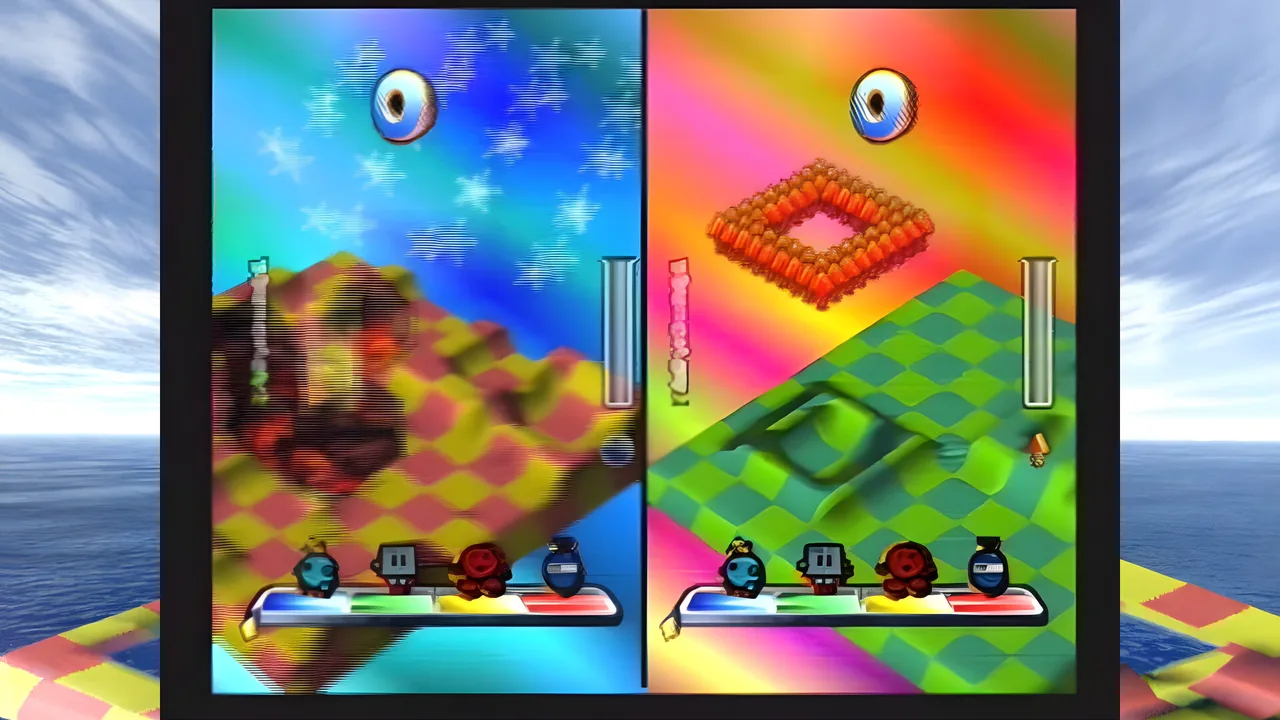
The original also shipped Classic, Pro and Practice modes plus assorted timed and survival challenges, giving it real score-chasing structure rather than a single fixed ruleset. Reviewers at launch were split mainly on two things: a steep, occasionally unclear difficulty curve, and a two-player split-screen mode that most called the weakest part of the package, with each player managing a separate board and a colored water-meter attack system that didn't land as well as the single-player game around it.
What Piko Interactive is actually selling here
This is where the 2026 listing needs a clear-eyed look rather than a nostalgia pass. Piko Interactive is a Texas-based publisher whose entire business is built around acquiring old game trademarks and putting them back into circulation — in January 2018 the company picked up roughly sixty titles and control of more than a hundred IPs in a bulk deal with Atari SA, a haul that specifically included Infogrames, Ocean Software, Legend Entertainment and Beam Software properties. Wetrix's original European publisher was Infogrames and its North American publisher was Ocean, so the chain of ownership from that 2018 deal to Piko's name appearing as trademark holder on this Steam page is straightforward and traceable — there's nothing murky about how Piko ended up with the rights.
What's less clear is what, if anything, Piko has actually done to the game itself. Steam's own developer field on the listing reads "Ocean/infogrames," which conflates the original publishers with the developer credit that properly belongs to Zed Two — a sloppy metadata detail, but a telling one. The system requirements listed for this 2026 release ask for a Celeron processor, 1GB of RAM and an Athlon 64-class graphics card, specs that describe a machine from roughly the early-to-mid 2000s, not anything a buyer would need to run a game released this week. The store page's own screenshots show the same low-polygon, fixed isometric camera the N64 and PC versions used in 1998, and nothing in the "About this game" text claims a remaster, a resolution bump, or any updated control scheme. Piko's re-release catalogue generally leans this way — packaging acquired IP with minimal additional work rather than commissioning a true remaster — and this listing reads as consistent with that pattern rather than an exception to it. None of that is necessarily disqualifying for a puzzle game whose appeal was always mechanical rather than visual, but it does mean a buyer should expect exactly the 1998/99 build with a Steamworks wrapper, not a 2026-standard presentation.
Steam does list the game under both Single-player and Multi-player categories. The only documented multiplayer mode Wetrix has ever had is the original's local split-screen battle format, and nothing on the store page describes online play, so a buyer expecting to challenge a friend remotely should not assume that's on offer here — it reads far more like an inherited category tag than a new feature.
The evidence gap this review can't close
As of this writing, the Steam page for Wetrix shows zero user reviews and no achievement schema, which is expected for a release barely a day old but does mean nothing here has been confirmed by an outside voice yet. There's no news post on the game's Steam feed, no professional coverage this review could locate discussing the specific 2026 build, and no patch notes describing what, if anything, changed from the version that last shipped commercially over two decades ago. That's a meaningful gap for a genre where compatibility issues — control mapping, resolution scaling, input lag on old fixed-camera 3D games — are common enough on modern Windows that they're worth checking for before buying, and there's currently no community record to check against.
Value
At $9.99 — $7.99 during the current introductory discount, which runs through 13 August — Wetrix is priced like the small, focused puzzle game it always was, not like a remaster commanding a premium for new work. There's no DLC, no in-app purchases and no live-service layer of any kind sitting on top of a single, one-time purchase, which is the cleanest part of this release by a wide margin. Judged purely against what the original design delivers, that's a fair price for a genuinely original puzzle concept that nothing else on the market closely replicates. Judged against the uncertainty of whether the specific build runs well on a current machine, with no outside confirmation either way yet, it's a more cautious recommendation than the price alone would suggest.
Final verdict
The idea inside Wetrix has held up better than most puzzle games from 1998 have any right to — raising terrain against a live weather simulation instead of clearing pre-set blocks was a genuine swing at something new, contemporary critics rewarded it for exactly that, and nothing in the twenty-eight years since has copied the formula closely enough to make it feel like old news. That's real, durable design, and it's the reason this scores as well as it does rather than reading as a straightforward nostalgia cash-in.
What holds it back from a stronger recommendation is entirely on the release side: unchanged, decades-old system requirements; screenshots showing the original unmodified visuals; a developer credit that gets the game's own history wrong; and a store page with zero user reviews, achievements or press coverage to confirm how the specific 2026 build actually behaves on a current PC. None of that is a mark against Zed Two's original design. It's a mark against how thin Piko Interactive's presentation of it is for a purchase asking full price on launch day.
Worth it for puzzle-game history buffs and anyone who remembers the N64 or PC original fondly and wants it back at a fair price with no monetisation strings attached. Everyone else should wait for a real review corpus to confirm the build holds up before spending on what is, right now, a leap of faith wrapped around a genuinely good twenty-eight-year-old idea.
Pros and cons
Pros
- The core loop — raise terrain to contain constantly falling rain while earthquakes, storms and lightning undo your work — was a genuinely original idea in 1998 and nothing since has copied it closely enough to make it feel dated by comparison
- Contemporary critics rated it well specifically for that originality: 81/100 on Metacritic across 11 reviews, in a puzzle-game landscape otherwise dominated by Tetris variants
- Clean, one-time purchase with no DLC, no in-game store and no monetisation layer of any kind
- The Classic/Pro/Practice mode split and score-attack structure documented from the original release give it real score-chasing depth for a puzzle game, not just a single fixed ruleset
- Piko's ownership of the trademark is traceable and legitimate — it came from a 2018 bulk acquisition of Ocean Software and Infogrames IP from Atari SA, not a disputed or unclear claim
Cons
- The Steam listing carries zero user reviews and no achievement list at the time of writing, so nothing about this specific build's stability or compatibility on modern Windows has been independently confirmed yet
- System requirements are listed as a Celeron processor, 1GB of RAM and an Athlon 64-class GPU — unchanged from what a machine needed in the early 2000s, with nothing on the store page describing any resolution, control or interface updates for 2026 displays
- Store screenshots show the original low-polygon, fixed-camera isometric visuals without any stated remaster pass, which is the single biggest risk for a buyer expecting a modern-looking puzzle game at this price
- Steam categorizes it as Multi-player, but the only multiplayer mode documented for the original game is local split-screen from 1998, and nothing here suggests it goes further
- Piko Interactive's other re-releases have drawn recurring criticism for minimal-effort packaging of acquired IP, which is relevant context for anyone weighing this purchase against that track record
Screenshots
-
WetrixImage: Piko Interactive LLC via Steam -
WetrixImage: Piko Interactive LLC via Steam -
WetrixImage: Piko Interactive LLC via Steam -
How the review scores each part of the gameWanderer Editorial -
The game at a glanceWanderer Editorial -
The short versionWanderer Editorial