
Game review
Void War
7.5 / 10
- Developer
- Tundra
- Publisher
- Tundra
- Released
- 2 June 2025
- Platforms
- Windows
- Genre
- Adventure, Indie, RPG, Simulation, Strategy
- Monetisation
- paid
- Players
- false
The short version
Biggest strengths
- A deep crew-equipment and psychic-power system that adds genuine tactical variety absent from FTL, with reviewers repeatedly praising the number of viable strategies and build combinations
- A large roster of unlockable crew types, ships, and commanders that reviewers say sustains dozens to hundreds of hours of replayability
- Frequent free content updates since launch, cited by numerous reviewers as an ongoing reason to keep coming back
Biggest weaknesses
- A near-universally acknowledged, extremely close resemblance to FTL: Faster Than Light, down to specific UI layouts and keybindings, which many reviewers explicitly flagged as a fairness or value concern given the asking price
- Rough quality-of-life gaps around post-boarding combat, including a lack of automatic weapon and crew recall that multiple reviewers said cost them crew members needlessly
- Reported balance issues, with several reviewers independently describing psychic powers combined with an uncapped crew count as overpowered relative to the rest of the system
Who it's for: Fans of FTL: Faster Than Light who have exhausted the original and its mods, and anyone drawn to grimdark space-opera settings, looking for a deeper crew-management layer over a familiar core loop
Our recommendation: recommended
7.5 / 10
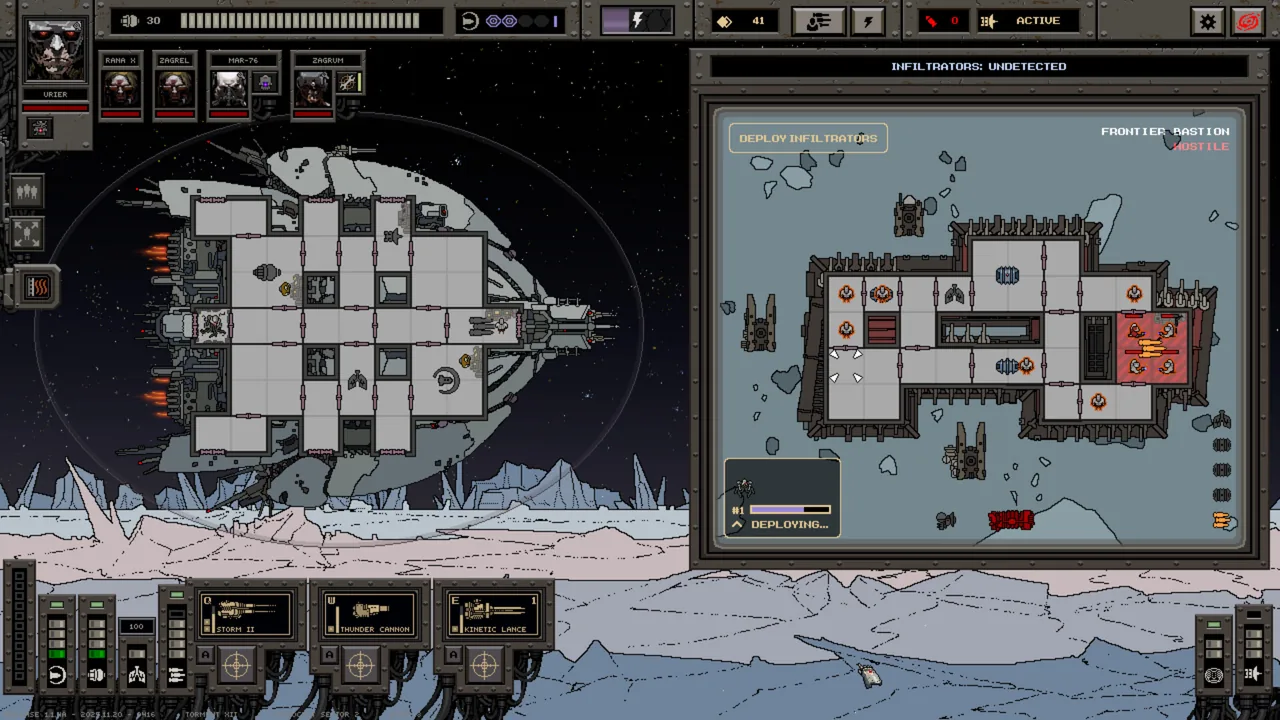
Void War released on Steam on June 2, 2025, a $19.99 roguelike strategy game from solo studio Tundra that wears its influences on its sleeve: it is, by nearly universal agreement among its reviewers, an FTL: Faster Than Light clone repainted in grimdark Warhammer-40K colors. With 3,524 total reviews sitting at a Very Positive 94%, the reception is a study in a specific kind of contradiction — reviewers openly calling out the game's lack of originality while still recommending it enthusiastically, because the execution and added depth largely earn the recommendation on their own terms.
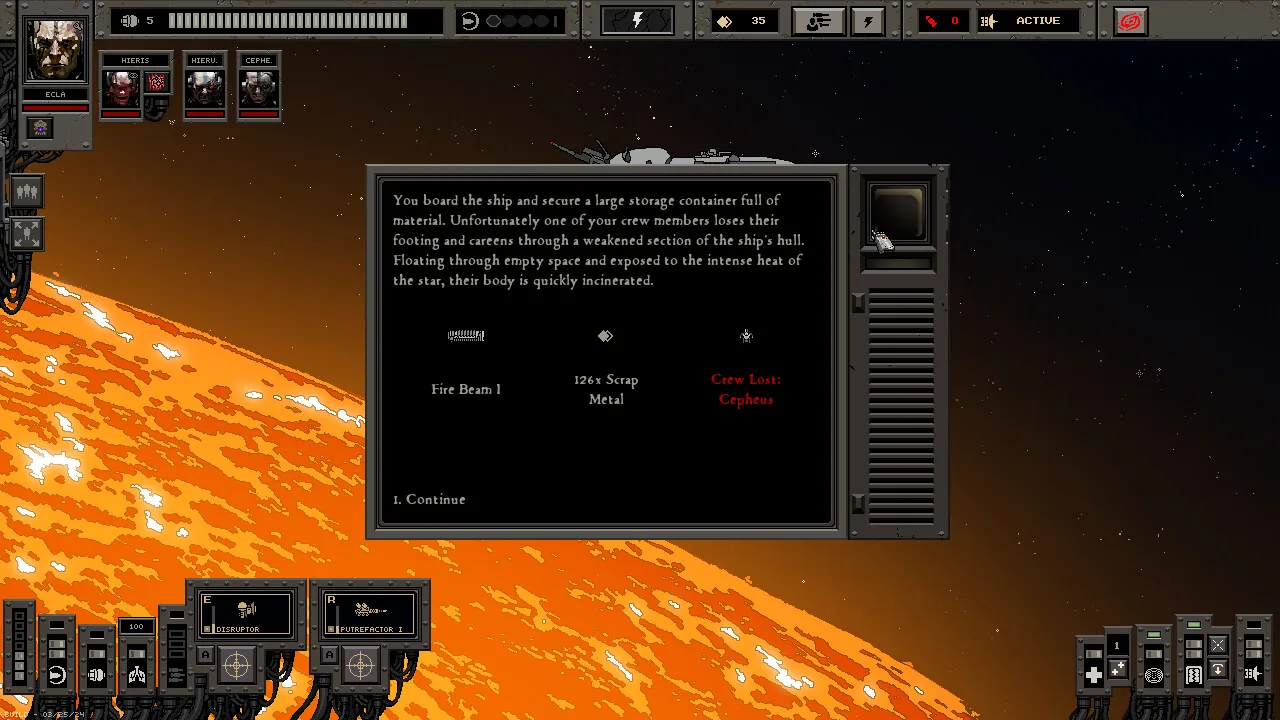
The derivative premise is not a minor undertone in this review pool; it is the first thing nearly every reviewer mentions, often before anything else. One reviewer called it flatly "a blatant ripoff of FTL," while another described it as "the weird, unauthorized lovechild of FTL and Warhammer 40k." A third put it even more bluntly: "Shameless FTL clone — no matter how much of a copy you think it is, it is even more so." One reviewer joked about the resemblance by imagining it as an AI prompt result — "'AI, give me a game that is the exact copy of FTL but with a WH40K skin.' This Void War." — a comment on how thoroughly the game mirrors its inspiration's UI and keybindings, not a literal claim about how the game was made.
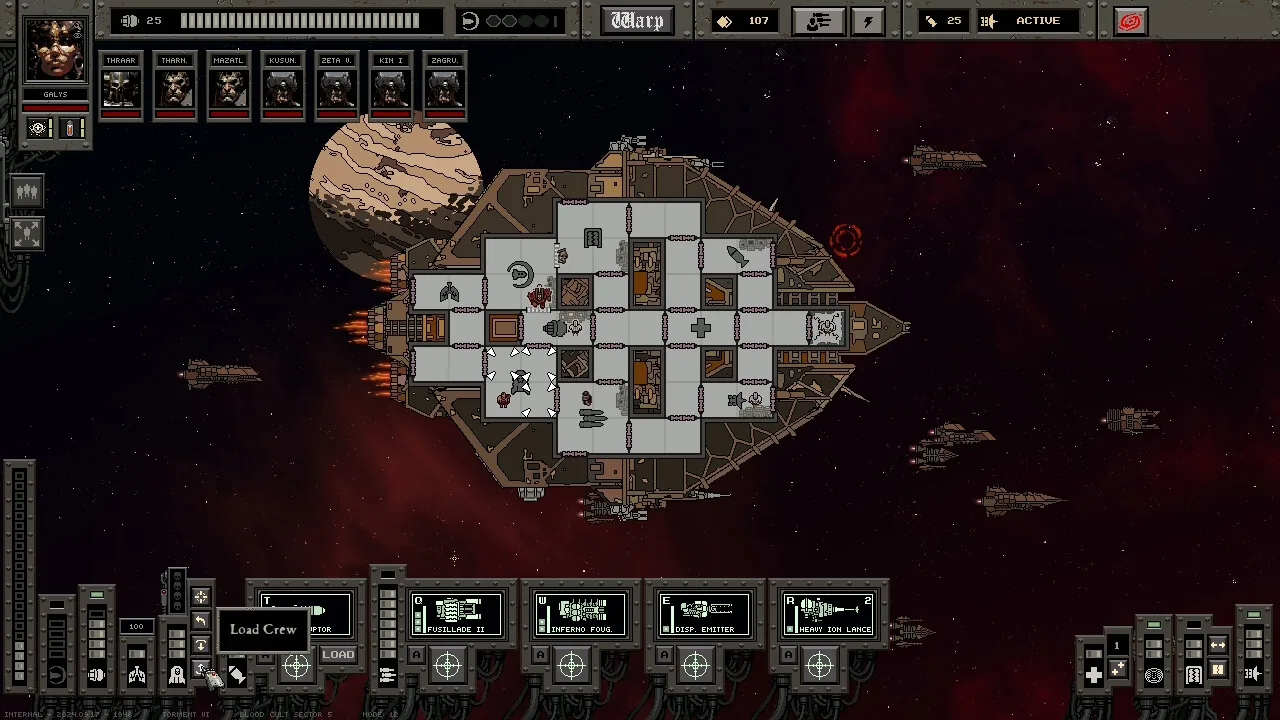
Where the reviews consistently turn positive is in what Void War adds on top of that familiar frame. The most repeated praise centers on the crew-equipment and psychic-power systems layered over FTL's ship-management core. One reviewer with 93 hours logged wrote that Void War "has eight times the variety of crewmates, who can all be equipped with a brand new equipment and psychic power system," adding that beating the endgame content "is extremely difficult running one singular strategy." Another reviewer, who had 100%-completed the game in roughly 65 hours, wrote, "there is no one way to play leading to countless runs and far too much time spent without realising," pointing to specific build combinations like using swords that grant fire immunity to boarding parties, or stacking "dark tech priests" to permanently disable enemy repairs. A reviewer with 213 hours summarized the core appeal simply: the game "allows for such a huge gigantic jump in quality and diversity of gameplay that would've been incredibly difficult to match otherwise."
The removal of fuel management from FTL's formula drew specific praise as a meaningful, positive change rather than a superficial one. One reviewer explained that getting rid of fuel meant "more currency for fun stuff like items and weapons instead of just fuel/hull points," while another highlighted that new crew members remain useful even late in a run since there's "no skill progression on crew members," avoiding a common roguelike trap where late unlocks feel weaker than what a player has already built up. Ongoing development also earned consistent credit: multiple reviewers independently noted the game "is currently getting content drops every month," with one calling that cadence a genuine reason to keep returning to a game they'd otherwise consider complete.
The negative side of the ledger is corroborated just as consistently as the positive side, which makes it worth taking seriously rather than dismissing as a handful of outlier complaints. Beyond the originality criticism itself — voiced by reviewers on both the positive and negative side of the ledger — several reviewers flagged specific quality-of-life gaps around post-combat management. One reviewer complained that after clearing an enemy boarding party, "you'd better be sure to immediately turn off any auto-firing because the game won't do it, and certainly won't auto-recall before your weapons explode the enemy ship and kill your boarding party," a frustration echoed independently by other reviewers describing "stupid lack of QoL and high levels of micro management." Balance also drew repeated, specific criticism: one reviewer wrote that "psychic powers combined with unlimited crew cap are obscenely OP," a near-identical observation to another reviewer's complaint about "very little diversity with the play styles and ships" once multiple ship variants had been unlocked, since "nearly every ship I unlocked so far has the same systems and stuff but just a slightly different layout."
It's worth situating Void War honestly within the roguelike deckbuilder-adjacent space it occupies: FTL remains a beloved, decade-old genre touchstone with an active modding community, including the sprawling Multiverse mod referenced by several reviewers here as the yardstick Void War doesn't quite meet in terms of raw content volume. Void War isn't trying to reinvent that formula so much as extend it with a heavier crew-management layer and a setting reviewers clearly find atmospheric and well-realized, even those most critical of its originality. That's a narrower kind of achievement than an original design would represent, and the $19.99 price tag — noted by more than one reviewer as steeper than FTL itself — is a real, fair point of friction for players who feel the game leans too heavily on a template it didn't build.
Taken as a whole, Void War is a well-executed, if unashamedly derivative, expansion on FTL's formula, offering real tactical depth through its crew-equipment and psychic-power systems, a large unlockable roster, and a genuinely engaging grimdark setting backed by regular free updates. Its resemblance to its inspiration is close enough that reviewers who value originality above all else should expect to be bothered by it, and the quality-of-life rough edges around combat aftermath are real, corroborated annoyances rather than isolated complaints. But for the large majority of this review pool, none of that outweighs dozens or hundreds of hours of enjoyment, and for FTL fans who've exhausted the original, Void War is an easy, substantial recommendation.
Pros and cons
Pros
- A deep crew-equipment and psychic-power system that adds genuine tactical variety absent from FTL, with reviewers repeatedly praising the number of viable strategies and build combinations
- A large roster of unlockable crew types, ships, and commanders that reviewers say sustains dozens to hundreds of hours of replayability
- Frequent free content updates since launch, cited by numerous reviewers as an ongoing reason to keep coming back
- A well-realized grimdark, Warhammer-40K-inspired setting and soundtrack that reviewers consistently praised even while criticizing the game's originality
Cons
- A near-universally acknowledged, extremely close resemblance to FTL: Faster Than Light, down to specific UI layouts and keybindings, which many reviewers explicitly flagged as a fairness or value concern given the asking price
- Rough quality-of-life gaps around post-boarding combat, including a lack of automatic weapon and crew recall that multiple reviewers said cost them crew members needlessly
- Reported balance issues, with several reviewers independently describing psychic powers combined with an uncapped crew count as overpowered relative to the rest of the system
- Unlockable ships and crew variants that multiple reviewers said feel too similar to one another once acquired, undercutting some of the reward from the game's own progression systems
Screenshots
-
Void WarImage: Tundra via Steam -
Void WarImage: Tundra via Steam -
Void WarImage: Tundra via Steam