
Game review
Tales of Justice Academy: Winds Arise Review: A Wuxia Epic Held Back by Its Own Ambition
6 / 10
- Developer
- 九芽川 Ninth Leaf
- Publisher
- 九芽川 Ninth Leaf
- Released
- 28 April 2026
- Platforms
- Windows
- Genre
- RPG
- Monetisation
- $10.99
- Players
- false
The short version
Tales of Justice Academy: Winds Arise puts players in the shoes of a young martial artist rising through a prestigious wuxia academy, and while its setting, hand-drawn art, and layered combat system have won genuine fans, a large and vocal share of reviews, especially from its core Chinese-speaking audience, criticize its writing, its rough English localization, and its uneven combat balance.
Biggest strengths
- A genuinely appealing wuxia academy setting with over 500,000 words of narrative and 30-plus hand-drawn CGs
- A combat system with real depth for players willing to learn it, built around interacting weapon styles, techniques, and stat builds
- A wide spread of side content, from ally affinity events to shopping and cooking systems, that rewards players who lean into the simulation side
Biggest weaknesses
- A large volume of critical reviews, concentrated among Chinese-speaking players, describing the main story as shallow, childish, or AI-generated in feel, with dialogue padded out for length
- Reports of a rough English localization that reviewers say worsens noticeably in the back half, at points shifting into what one Japanese-language reviewer described as clearly machine-translated text
- No battle speed-up or auto-battle option, a widely repeated complaint given the volume and length of the game's turn-based fights
Who it's for: A reasonable fit for genre-hungry wuxia and cultivation-sim fans willing to tolerate rough patches; a poor fit for players expecting the polish or narrative depth of genre benchmarks like Tale of Wuxia or Sword and Fairy.
Our recommendation: Try it on sale
6 / 10
Enrolling at a prestigious school of martial legends
Tales of Justice Academy: Winds Arise casts players as a young martial artist who enrolls at Mingjing Academy, a prestigious school for future legends of the wuxia world, only to find it sitting at the center of rival factions, court intrigue, and secrets from a fallen cult. Developed and published by the small studio Ninth Leaf, the $10.99 story-RPG promises over 500,000 words of original narrative, more than 30 hand-drawn CGs, multiple endings, and three romanceable heroines, wrapped around a combat system built on weapons, skills, and inner techniques. It arrived on Steam after roughly six months of public demo builds, followed by a genuine April 28, 2026 launch and immediate patch support.
Where the game earns its fans
Reviewers who click with Tales of Justice Academy tend to click hard. One detailed English-language review calls it a "surprisingly enjoyable" wuxia cultivation simulator, praising the way ally affinity and experience-bonus traits interact with the combat system's fiddly, interconnected mechanics. Another English review specifically credits the varied quest design and the game's willingness to lean on non-combat skills rather than making every scene a fight. The hand-drawn character art and CGs draw consistent praise even from more critical reviewers, and the sheer volume of side content, shopping, cooking, ally events, and collectibles that quietly affect which of the game's multiple endings players reach, gives simulation-minded players plenty to dig into.
A large, detailed wave of criticism from its core audience
The far larger and more detailed body of criticism comes overwhelmingly from Chinese-speaking reviewers, who make up the bulk of the game's audience and hold it to the standard of established wuxia RPG franchises like Tale of Wuxia and Sword and Fairy. Many describe the main story as shallow, padded, or reliant on excessive dialogue to disguise a lack of real branching choices, with several reviewers explicitly comparing the writing unfavorably to AI-generated text. A number of reviews single out a late-game harem storyline as a specific sore point, arguing it undermines the individual character writing that earlier chapters had built up. Combat draws similarly pointed criticism: reviewers describe damage-sponge enemies, sudden and severe difficulty spikes on harder settings, and a complete absence of any battle speed-up or auto-battle option, which turns the game's frequent, lengthy turn-based fights into a genuine point of fatigue by the back half of a playthrough.
Localization and interface problems compound the story issues
Translation quality is a recurring, specific complaint. A Japanese-language reviewer notes that the English and Japanese localizations hold up reasonably well early on but visibly deteriorate after roughly 90 in-game turns, at points reading as unmistakably machine-translated, with character tone becoming inconsistent scene to scene. English-language reviewers echo rougher, if less severe, localization complaints of their own. On the interface side, several reviewers describe menu navigation as needlessly deep, citing multiple submenu layers just to equip an item, alongside complaints that the game's controller support is entirely absent, a notable gap for a combat-heavy RPG released in 2026.
A bundled DLC pack draws its own backlash
Adding to the criticism, a same-day bundle pairing Tales of Justice Academy with another of the developer's titles drew specific anger from reviewers who felt it was released opportunistically alongside a game whose own writing was already under fire, with several explicitly framing the bundle as prioritizing revenue over addressing the base game's problems. That criticism sits alongside a broader, if smaller, thread of reviewers who feel the roughly six-month delay from the original planned release, explained by the developer as time spent polishing the story, didn't pay off in the way players expected, given how much criticism has focused on that exact story.
How it stacks up against the wuxia genre's benchmarks
Several of the most detailed critical reviews frame their disappointment explicitly through comparison, naming genre touchstones like Tale of Wuxia, Sword and Fairy, and 侠客风云传 (The Swordsman's Chronicle) as the yardstick Tales of Justice Academy fails to clear. Reviewers steeped in the genre argue that its core loop, most visible in its shopping, cooking, and errand-running systems, repeats the same handful of interactions dozens of times over a playthrough without meaningfully varying them, a criticism distinct from, but related to, the complaints about story pacing. A few reviewers who stuck with the game long enough to reach its later chapters describe a familiar arc: real enthusiasm for the academy setting and opening hours, followed by mounting frustration as combat balance and narrative pacing problems compound in the back third, culminating in a difficulty wall some players say effectively ended their run rather than being overcome through better builds or more grinding.
Length, endings, and what a full playthrough looks like
A single playthrough runs somewhere in the neighborhood of 10 to 20 hours depending on how much side content a player engages with, according to reviewer reports, with multiple distinct endings tied to specific late-game choices and a more hidden collection-based condition that some reviewers say isn't well telegraphed. Reviewers who reached the credits describe the ending slate, ranging from a "Master Healer" path to one that unites the martial world under the protagonist's banner, as a genuinely interesting structural idea, even among those otherwise critical of the writing that leads up to it. That said, several reviewers note the fastest route to any given ending still requires slogging through the same repetitive mid-game systems, which tempers how much the multiple-endings structure actually adds to replay value in practice.
Verdict: worth exploring for wuxia fans, with real caveats
Tales of Justice Academy: Winds Arise has real strengths: a genuinely appealing setting, strong art direction, and a combat and progression system with more depth than it might first appear to have. But the volume, consistency, and specificity of criticism aimed at its writing, localization, difficulty balance, and interface, concentrated among the exact players most invested in the wuxia genre, is hard to wave away. Genre fans willing to tolerate some rough edges, and to play through the game's slower, more frustrating stretches, will likely find something worthwhile here. Newcomers hoping for a polished, best-in-class wuxia RPG should look elsewhere first, or wait for further patches.
Pros and cons
Pros
- A genuinely appealing wuxia academy setting with over 500,000 words of narrative and 30-plus hand-drawn CGs
- A combat system with real depth for players willing to learn it, built around interacting weapon styles, techniques, and stat builds
- A wide spread of side content, from ally affinity events to shopping and cooking systems, that rewards players who lean into the simulation side
- Genuinely liked by a portion of its player base as a solid entry in a currently underserved genre on Steam
Cons
- A large volume of critical reviews, concentrated among Chinese-speaking players, describing the main story as shallow, childish, or AI-generated in feel, with dialogue padded out for length
- Reports of a rough English localization that reviewers say worsens noticeably in the back half, at points shifting into what one Japanese-language reviewer described as clearly machine-translated text
- No battle speed-up or auto-battle option, a widely repeated complaint given the volume and length of the game's turn-based fights
- Reports of severe difficulty spikes, particularly on harder settings, where a handful of enemies can end a run with little warning or opportunity to recover
Screenshots
-

Tales of Justice Academy: Winds AriseImage: 九芽川 Ninth Leaf via Steam -
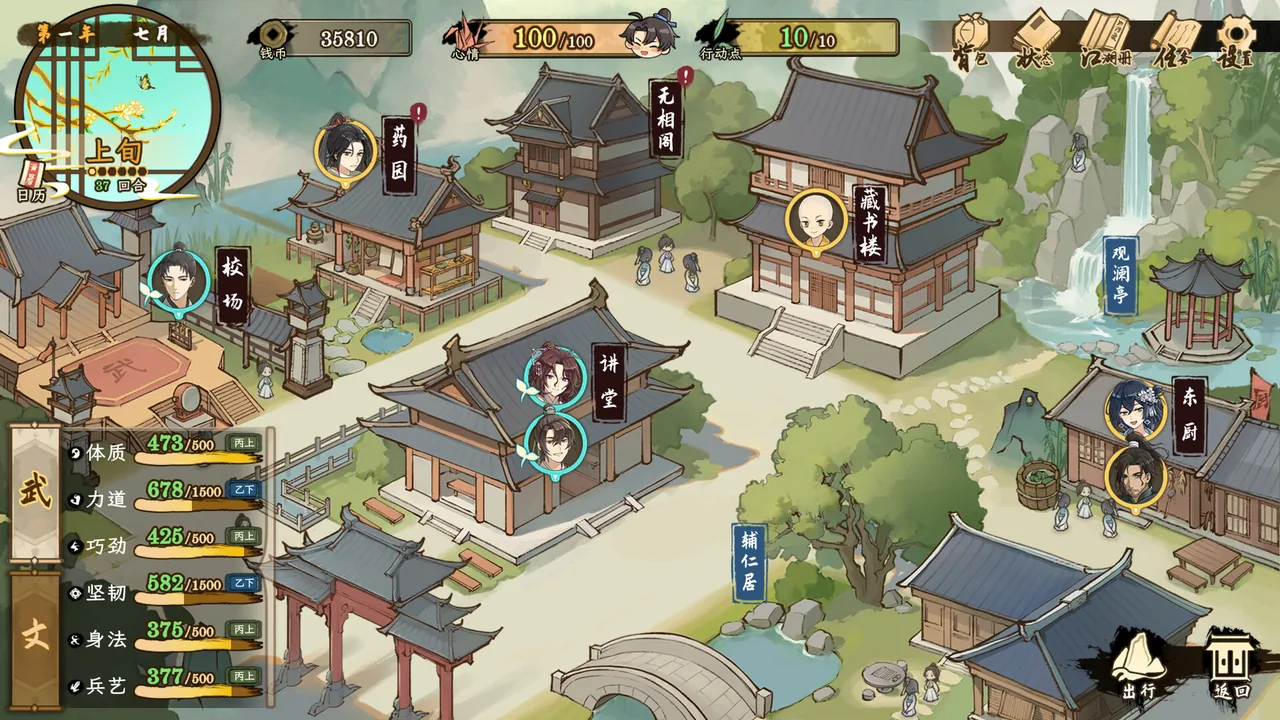
Tales of Justice Academy: Winds AriseImage: 九芽川 Ninth Leaf via Steam -

Tales of Justice Academy: Winds AriseImage: 九芽川 Ninth Leaf via Steam -
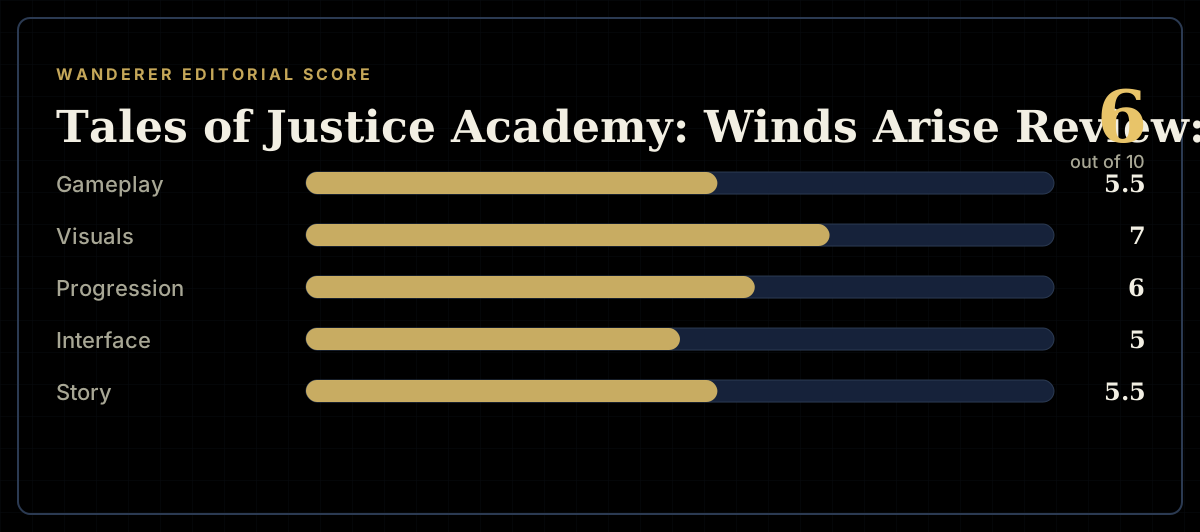
How the review scores each part of the gameWanderer Editorial -
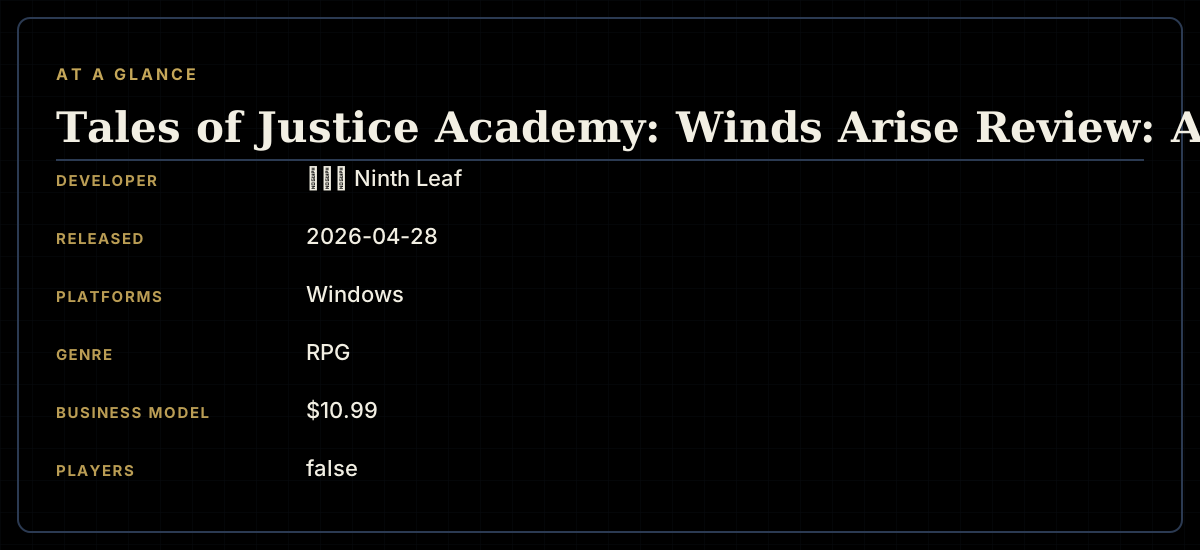
Platform and release detailsWanderer Editorial -
The short versionWanderer Editorial