
Game review
Victoriana - Steampunk Text Adventure
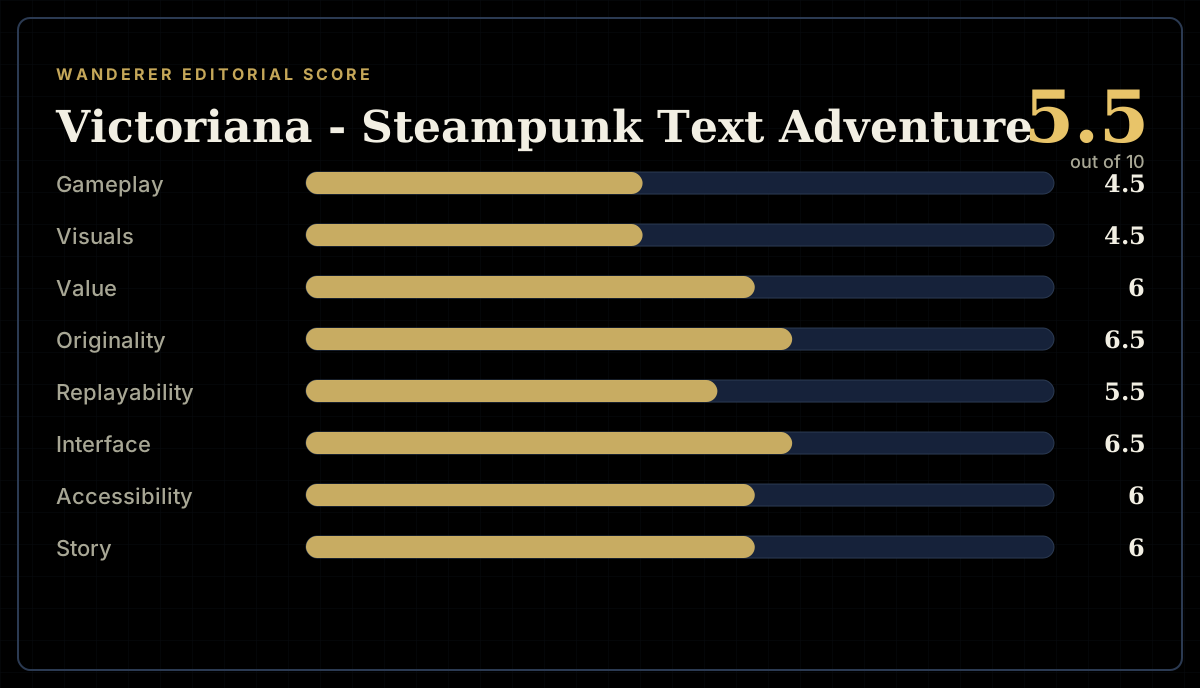
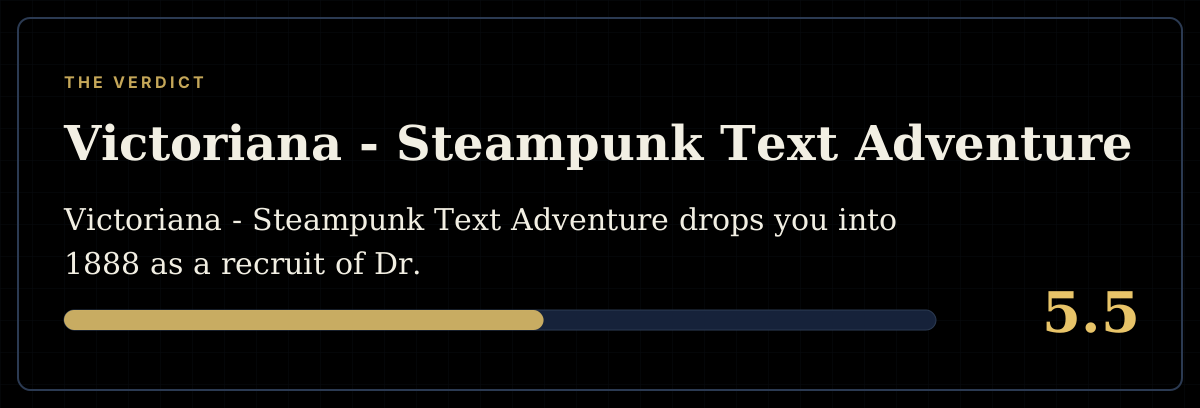
5.5 / 10
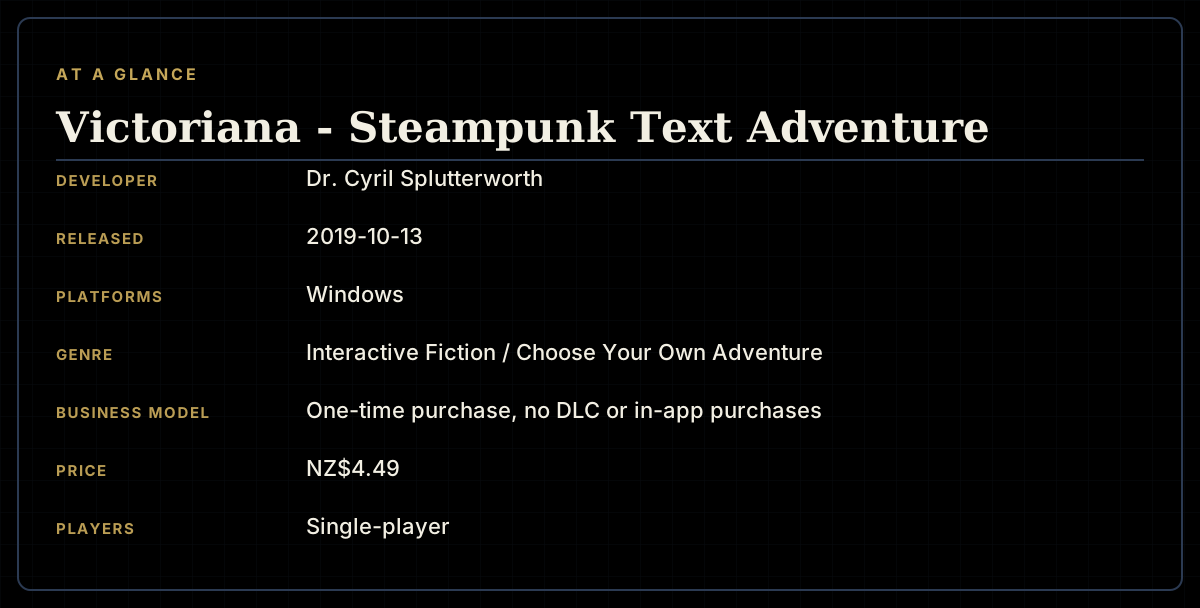
- Developer
- Dr. Cyril Splutterworth
- Publisher
- Dr. Cyril Splutterworth
- Released
- 13 October 2019
- Platforms
- Windows
- Genre
- Interactive Fiction / Choose Your Own Adventure
- Monetisation
- One-time purchase, no DLC or in-app purchases
- Players
- Single-player
The short version
Victoriana - Steampunk Text Adventure drops you into 1888 as a recruit of Dr. Cyril Splutterworth, an eccentric inventor, and walks you chapter by chapter through gadget-laden laboratories, aerial chases after Count Zeppelin's airships and colonial skirmishes on the frontiers of the British Empire, one multiple-choice screen at a time. The writing is where it earns its keep: chapter titles like "The Battle of Tin Lane" and gadgets named the Hephaestus Glove, the Pegasus Steamcycle and the Submersibubble show real comic invention, and the single English-language Steam review it has attracted calls it "the best laugh I've had while playing a game" over a spoiler-tagged twist involving a painting.
What holds it back is structural rather than tonal. Its one negative review, in Russian, reports no save system at all — every session restarts from the top, which cost that player over twenty-two logged hours redoing the same opening stretch — and Dr. Splutterworth's other eighteen-odd Steam titles are almost entirely jigsaw puzzles, sudoku variants and teaching games for shogi and xiangqi, which explains a lot about the plain, templated presentation. The Empire-and-conquest premise is also played straight rather than examined, with at least one colonial-frontier chapter leaning on old-fashioned "natives" framing that will read as dated to a 2026 audience.
Biggest strengths
- Genuinely witty gadget and chapter names — the Hephaestus Glove, the Pegasus Steamcycle, the Submersibubble, "The Battle of Tin Lane" — visible in the developer's own screenshots
- The one English-language Steam review calls it the funniest game the reviewer has played, built around a spoiler-tagged twist involving a painting
- Branching, multiple-outcome structure: the store page promises "several possible outcomes" and different chapters clearly hinge on earlier choices
Biggest weaknesses
- No save system, per the game's one negative Steam review: every session restarts from the beginning, which cost that reviewer 22-plus hours re-covering the same early chapters
- The premise — "conspiracy and conquest," an "interactive romp through Victorian England and the British Empire" in the store's own words — is played straight; a colonial-frontier chapter leans on "natives" framing and broad regional dialect that reads as dated in 2026
- No Steam achievements at all, unusual for a branching CYOA and a genre that typically uses them to mark which endings a player has found — there is no external way to gauge how deep the branching actually goes
Who it's for: Steampunk and Victoriana fans who enjoy short, choice-driven interactive fiction and can live with restarting from the beginning each session, at a price low enough that a couple of wasted attempts barely matter.
Our recommendation: Worth NZ$4.49 for the writing alone if you go in expecting a barebones CYOA template rather than a polished visual novel, and if a fixed British-Empire adventure premise played without much self-awareness doesn't put you off.
5.5 / 10
The pitch
Victoriana - Steampunk Text Adventure is a choice-driven interactive-fiction game from Dr. Cyril Splutterworth, a self-publishing developer, released on Steam on 13 October 2019 for NZ$4.49. It casts the player as a recruit of the titular "eccentric inventor," who "needs brave adventurers to help him explore the Victorian world" in 1888, and the store page's own pitch sets the tone: "Gadgets, conspiracy and conquest await you in this steampunk text adventure. An interactive romp through Victorian England and the British Empire." It's Windows-only, single-player, carries no DLC or in-app purchases, and there is no demo. The whole thing is delivered as a series of full-screen text passages with two-to-four multiple-choice options underneath, in the tradition of classic CYOA books rather than a parser- driven adventure — closer in spirit to Viktor, a Steampunk Adventure's point-and-click comedy than to anything with an inventory system, but built entirely out of prose and radio buttons rather than hand-drawn scenes.
This review draws on the developer's own store-page pitch and screenshots, Steam's public API data on the game's category tags and achievement list, and both of Victoriana's Steam user reviews — the entirety of its review corpus after almost seven years on sale, so nothing here needed sampling. It is not built on a play session.
The odd one out in a puzzle-heavy catalogue
Dr. Cyril Splutterworth's Steam developer page lists roughly nineteen titles, and Victoriana stands out immediately for not belonging with the rest of them. The bulk of the catalogue is casual and educational: Steampunk Jigsaw Puzzles, Jigsaw Puzzle World and Fantasy Jigsaw Puzzles, Super Kakuro, Let's Learn Shogi, Let's Learn Xiangqi and Let's Learn Janggi (teaching games for Japanese, Chinese and Korean chess variants), a Japanese-kanji sudoku hybrid, a virtual pet, and a reflex-and-memory puzzle game. Victoriana is the one narrative, choice-driven story in a portfolio otherwise built from puzzle templates and teaching tools — which goes a long way toward explaining its presentation. The screen furniture (a parchment-textured background, a single reading pane, a round back-arrow button, a chunky riveted "NEXT" bar) reads like shared UI chrome rather than something built bespoke for this story, and the steampunk skin specifically pairs it with Splutterworth's own Steampunk Jigsaw Puzzles, suggesting a house aesthetic reused across more than one product rather than a one-off.
Where the writing actually lands
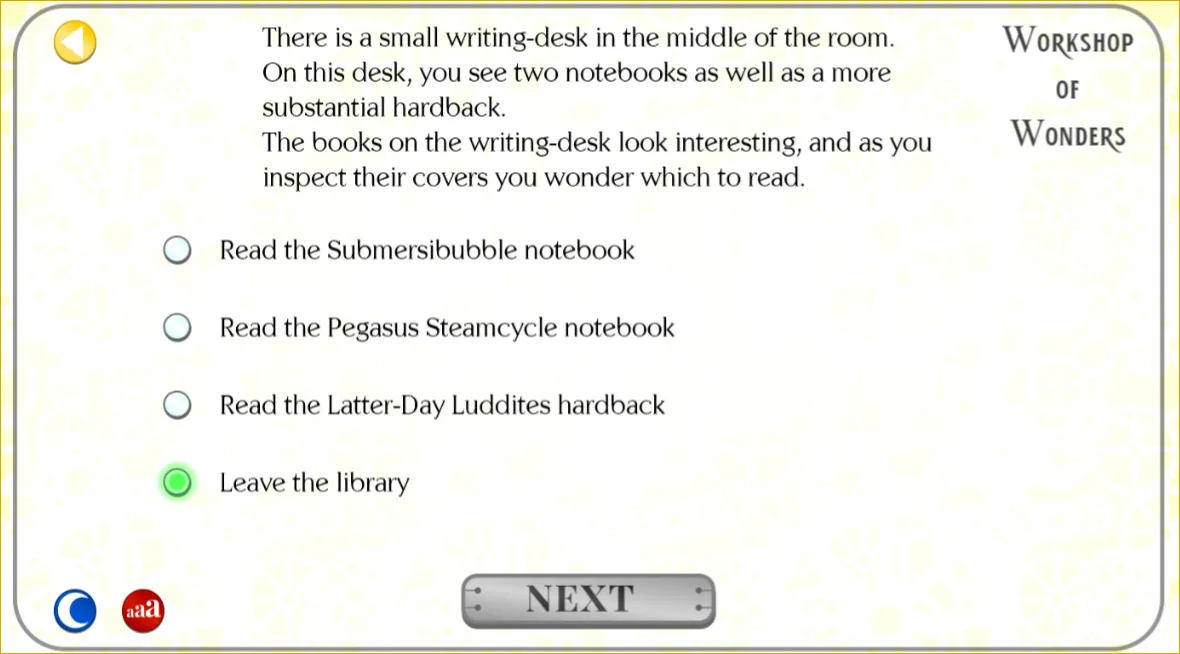
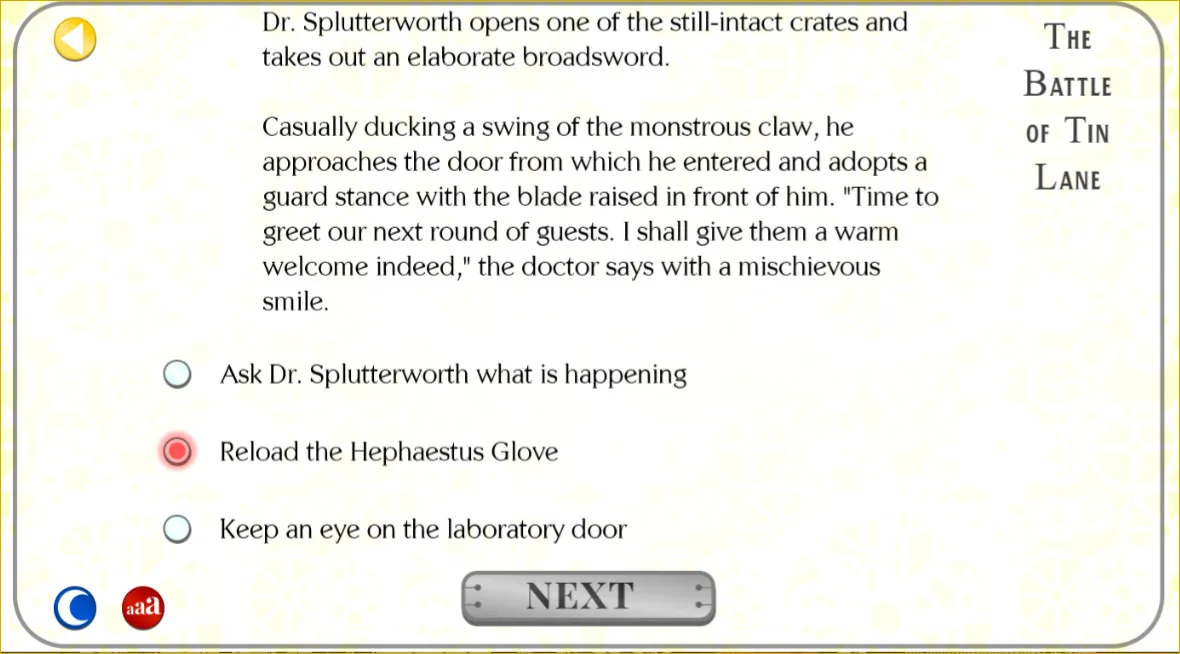
The five screenshots Steam hosts for the game are the best evidence available for what Victoriana is actually like to read, and they're more inventive than the plain interface around them suggests. One scene, set in a library titled "Workshop of Wonders," has the player choosing between three notebooks on a writing-desk before deciding whether to read them at all: a "Submersibubble" notebook, a "Pegasus Steamcycle" notebook and a "Latter-Day Luddites" hardback — gadget names that do real work establishing a setting where inventions get silly, memorable brand names rather than generic sci-fi labels. Another chapter, "The Battle of Tin Lane," has Dr. Splutterworth himself casually ducking "a swing of the monstrous claw" mid-fight, pulling a broadsword from a crate and offering to "give them a warm welcome indeed" with "a mischievous smile" while the player reloads something called the Hephaestus Glove — pulpy, self-aware and clearly having fun with its own premise. A third, "To The Skies," has the player spotting one of "Count Ferdinand von Zeppelin's famed 'Air Ships'" and choosing whether to circle it, inspect it up close, or land a personal Steamcycle nearby to investigate on foot.
That register — game gadgetry played for a grin rather than played straight — is exactly what the game's single English-language Steam review responds to. Logged at just ten minutes of playtime, it reads in full: "Best laugh I've had while playing a game," followed by a spoiler tag reading "All I can say is make sure you look at the painting." It's one data point, but it's a specific and enthusiastic one, and it lines up with the Lovecraftian tag Steam users have attached to the game — a hint that at least one chapter turns from steampunk romp to something stranger, and that the joke lands well enough to be worth protecting from spoilers even in a two-sentence review.
A colonial-frontier chapter that isn't examined, just played
The other side of "conspiracy and conquest... an interactive romp through... the British Empire" shows up in a fourth screenshot, titled "Redcoats and Riverboats." It puts the player in the boots of a Sergeant McNally, deciding how to handle "tribespeople" on the far side of a bridge while two subordinates argue in broad dialect — one insisting "we are Englishmen," another interjecting "You speak for yerself, bawjaws, ah'm a Scot!" while loading a Lee-Enfield rifle. The choices on offer are to try reasoning with the group on the other side, look for a way under the bridge, or "Ram the bridge!" outright. None of this is presented as anything other than an adventure beat — there's no framing device, unreliable narrator or later reversal visible in the available material that suggests the game is doing anything with the colonial content beyond staging it for excitement. For a 2019 release from a small, self-published studio that isn't unusual, but it's worth flagging plainly for a 2026 reader: the Empire-adventure premise here is played straight, and the dialect-heavy writing and "tribespeople"/"natives" framing will land as dated for a good number of players before they get to any of the game's better jokes.
No save system, and what that cost one player
Victoriana's one negative Steam review, posted in Russian, is short but specific, and translates roughly as: "You can't even save here. Every time you enter the game you have to spend half an hour to get back to where you last stopped. The story also doesn't grip you. Primitive and artificial." What makes that review worth taking seriously rather than dismissing as one grumpy outlier is the playtime attached to it: 1,340 minutes, more than twenty-two hours, logged against a text adventure that the game's own fan finished enough of to leave a review after just ten minutes. Read together, those two numbers tell a fairly clear story — this is not a case of someone bouncing off in frustration after five minutes, but someone who kept re-entering the game, re-walking the same early chapters because there was no way to pick up where they left off, and eventually ran out of patience with doing so. A missing save system is a real structural limitation for a branching narrative game, not a stylistic quibble, and it's the single biggest factor separating Victoriana's two published opinions.
No achievements to check the branching against
Unusually for the genre, Victoriana ships with no Steam achievements at all — its store category list covers only "Single-player" and "Family Sharing," and Valve's public achievement-percentage API returns nothing for the app. Most choice-driven CYOA and visual-novel games on Steam use an achievement list as an unofficial map of how many endings exist and roughly how many players find each one, the same way Viktor, a Steampunk Adventure's achievement data shows exactly how many players finished chasing its hardest minigame. Victoriana offers no equivalent breadcrumb trail, so the store page's promise of "several possible outcomes" is untestable from outside the game — there's no public data confirming how branchy it actually gets, or which of its endings, if any, most players see.
Presentation
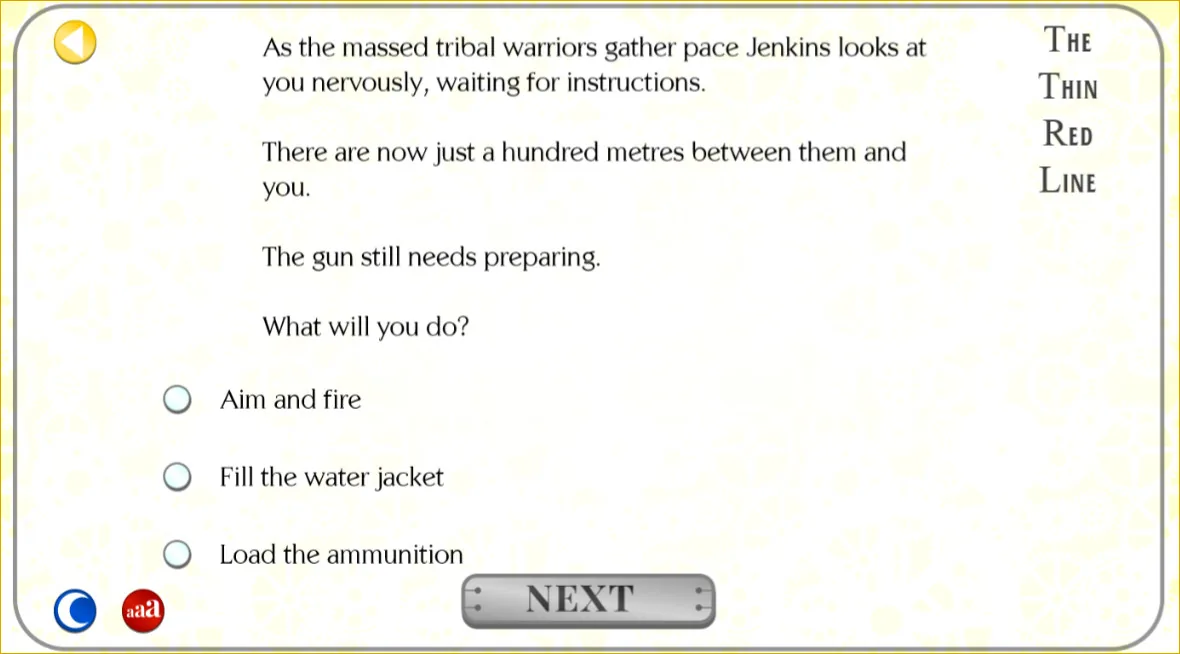
The interface itself is plain but legible: a cream, faintly patterned parchment background frames a single reading pane, chapter titles run down the right edge in a decorative serif face ("Workshop of Wonders," "The Thin Red Line," "The Battle of Tin Lane"), body text sits in a plainer serif, and choices appear as a simple vertical list of radio buttons under the passage, confirmed by a chunky riveted "NEXT" bar along the bottom. A round back-arrow in the top-left corner lets the player step back one screen — useful for re-reading a choice, though it's unclear from the available material whether it can undo a decision already made. The one flourish worth calling out is a small moon-icon toggle in the bottom-left of every screen that appears to switch the whole interface into a dark reading theme — a genuinely useful accessibility touch for a game that is, at its core, several hours of continuous reading, and one that plenty of much bigger visual novels don't bother to offer. There is no character art, no illustrated scenes and no animation beyond that toggle switch in any of the five screenshots Steam hosts; the whole experience runs on prose and choice lists.
Value and verdict
At NZ$4.49, Victoriana - Steampunk Text Adventure asks very little and, on the evidence available, delivers a handful of genuinely funny, well-named steampunk set pieces wrapped in a bare-bones interface clearly borrowed from a puzzle-game developer's back catalogue rather than built for this story specifically. The writing shown in its own screenshots — a broadsword-wielding inventor fighting a "monstrous claw," an airship investigation, a library full of gadget notebooks with names like Submersibubble — has real charm, and its one enthusiastic fan backs that up in the strongest possible terms. But the game asks a real structural cost for that charm: no save system, according to its one detailed negative review, which turned a text adventure into a twenty-two-hour slog of re-reading the same early chapters for at least one player, and a colonial-frontier premise that's staged for excitement rather than examined, which will read as dated to a chunk of any 2026 audience before they reach the good jokes. With only two Steam reviews on record after almost seven years for sale, this is a genuine curiosity rather than a known quantity — worth the low asking price if the pitch and the screenshots appeal to you, but go in knowing you may need to finish it in one sitting, or several from the very beginning.
Pros and cons
Pros
- Genuinely witty gadget and chapter names — the Hephaestus Glove, the Pegasus Steamcycle, the Submersibubble, "The Battle of Tin Lane" — visible in the developer's own screenshots
- The one English-language Steam review calls it the funniest game the reviewer has played, built around a spoiler-tagged twist involving a painting
- Branching, multiple-outcome structure: the store page promises "several possible outcomes" and different chapters clearly hinge on earlier choices
- A genuinely useful dark-mode toggle sits on every reading screen, a small but real accessibility touch for a text-heavy game
- Cheap at NZ$4.49, low enough that the game's flaws are easy to forgive at the price
- A back arrow lets you step back one screen without losing your whole session
Cons
- No save system, per the game's one negative Steam review: every session restarts from the beginning, which cost that reviewer 22-plus hours re-covering the same early chapters
- The premise — "conspiracy and conquest," an "interactive romp through Victorian England and the British Empire" in the store's own words — is played straight; a colonial-frontier chapter leans on "natives" framing and broad regional dialect that reads as dated in 2026
- No Steam achievements at all, unusual for a branching CYOA and a genre that typically uses them to mark which endings a player has found — there is no external way to gauge how deep the branching actually goes
- Presentation is purely functional: a parchment background, a serif font and radio-button choices, with no illustration or character art anywhere in the five official screenshots
- Extremely thin public reception — two Steam user reviews total after almost seven years on sale, so "positive" or "negative" here rests on a sample of two, not a verdict Steam's own algorithm even scores
- Windows-only, with no controller support listed
Screenshots
-
Victoriana - Steampunk Text AdventureImage: Dr. Cyril Splutterworth via Steam -
Victoriana - Steampunk Text AdventureImage: Dr. Cyril Splutterworth via Steam -
Victoriana - Steampunk Text AdventureImage: Dr. Cyril Splutterworth via Steam -
How the review scores each part of the gameWanderer Editorial -
The game at a glanceWanderer Editorial -
The short versionWanderer Editorial