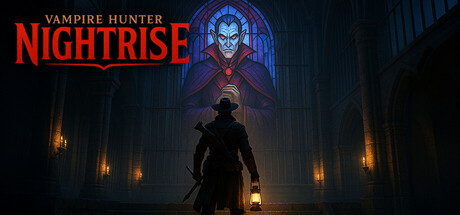
Game review
Vampire Hunter: Nightrise Review
7 / 10
- Developer
- Over The Moon
- Publisher
- Over The Moon
- Released
- 14 July 2026
- Platforms
- ["Windows"]
- Genre
- First-Person Adventure
One Castle, One Night, One Vampire
Vampire Hunter: Nightrise, developed and published by small studio Over The Moon, launched on Steam on July 14, 2026, priced at $14.99. It's a focused, first-person adventure that drops you into a single Gothic castle with a single goal: reach and kill the vampire master before Nightrise, armed with a stake-firing crossbow, a cross that channels faith into stuns and shields, and no keys, only knowledge of the castle's secret passages. Across the 22 English reviews read in full here, out of an all-language pool of 34 sitting at 94% positive, "Positive" on Steam's own scale, the reception is warm and remarkably consistent: reviewers describe a short, handcrafted, atmospheric experience that nails a specific gothic-horror mood, sold at a price that most feel matches its modest runtime, even as several flag the same specific gaps in combat depth and challenge.
"Castlevania Meets Tunic" Is The Pitch, And Reviewers Confirm It Mostly Lands
The comparison to Castlevania and Tunic shows up constantly, and most reviewers seem to feel it's earned rather than just marketing copy. "Very nicely done indie game that really nails the Castlevania atmosphere in an FPS. Music was great. Simple but fun gameplay mechanics and a surprisingly good story with a lot of lore to collect," wrote one. Another called it "the translation from 2D to 3D that I've been wanting from Castlevania for decades. A little on the easy side, but the vibes more than make up for whatever it lacks in challenge." Not everyone agrees the Tunic influence carries through to the actual design, though: one reviewer flatly stated the game "is nothing like Tunic," suggesting the comparison, however useful as shorthand in marketing, doesn't necessarily match what players experience once they're inside the castle solving its puzzles. Several reviewers also independently reached for a less obvious touchstone, the 2003 first-person horror title Nosferatu: Wrath of Malachi, which several longtime genre fans clearly remembered fondly and were happy to see echoed here.
Furniture-Smashing Ammo And A Faith Mechanic That Punishes Every Power-Up
The game's most distinctive systems draw specific, detailed praise. "Instead of finding ammo crates scattered around the castle, the game uses a much more creative system. Sprinting through wooden furniture like chairs and barrels smashes them apart, rewarding you with a handful of fresh stakes," one reviewer explained, walking through exactly how the crossbow-and-cross combat loop functions. Another reviewer highlighted the faith trade-off directly: "an interesting mechanic is that the more power-ups you unlock, the less maximum ammunition you have," turning the game's forbidden-powers temptation into a real, mechanically enforced cost rather than just narrative dressing. This pairing, environmental ammo scavenging plus a faith resource that actively punishes greed, is consistently cited as the game's cleverest idea, and it's the piece of the pitch that reviewers seem most convinced actually works as designed.
A Short, One-Sitting Game, And Most Reviewers Are Fine With That
Completion times cluster tightly across this pool: most reviewers report finishing a full first playthrough somewhere between two and five hours, with speedrun repeat playthroughs down around 30 minutes once the puzzles are known. "My first playthrough took a little longer than two hours... Not very challenging game," wrote one. Another beat it "in about 4 hours with 100% completion and with multiple endings it is well worth its asking price." A third framed the length as a feature rather than a flaw: "A one-sitting game, but the quality is incredible for such a bare-bones team." Multiple endings tied to specific achievements give the game some replay incentive beyond a single sitting, and several reviewers mention actively going back for a second or third run once they understood the castle's layout, treating the speedrun-friendly design as a deliberate strength rather than padding.
The Recurring Complaint: Combat And Challenge Feel Underbaked
Set against the atmosphere and puzzle design, this pool's most consistent critique targets combat depth and difficulty. "The puzzles, atmosphere, and enemy/boss concepts were all excellent, but the encounters themselves could be much more challenging... Most fights are fairly straightforward," wrote one reviewer, who also suggested "repopulating previously explored areas with enemies would make backtracking feel more engaging." Another echoed the same gap from a different angle: "could be a little more oppressive with more enemy variety and more messing with the player. more weapons too?" A third reviewer who otherwise loved the game still called it "a little on the easy side." This isn't a fringe complaint, it's the single most repeated critique across the entire positive side of the pool, and it points to a game whose atmosphere and puzzle craft are consistently a step ahead of its combat encounter design.
Wishlist Territory: Nearly Everyone Wants More Castle
A striking number of reviewers close their write-ups by asking for DLC or an expanded castle rather than complaining about what's missing outright. "Such a great little game. Well worth the money. I'd love to see more if there were DLC," wrote one. Another went further with specific ideas: "some other classic monsters show up in a dlc, flesh golem boss... a bride or three that are secret bosses, alpha werewolf in a garden section." A more critical reviewer tempered their praise with a similar note: "It feel a little lacking though, like they rushed it... Overall, not bad, but I do hope they do a dlc or have a way to expand the castle more!" One bugged secret area was reported, with a Spirit Trap that could apparently be broken and re-triggered via fast travel to yield more collectibles than intended, though this reads as a minor, isolated issue rather than a pattern in an otherwise reportedly stable, crash-free release.
Verdict
Vampire Hunter: Nightrise is a small, confident, atmospheric first-person adventure that earns its "Castlevania meets Tunic" pitch through genuinely clever systems, furniture-smashing ammo and a faith resource that punishes every shortcut, even if its combat encounters rarely rise to meet the tension those systems promise. At $14.99 for a two-to-five-hour single-sitting experience with a few endings worth chasing, this lands as a well-made, easy recommendation for gothic-horror fans looking for something atmospheric and finite rather than a stripped-down demo aching for a fuller game around it, though anyone hoping for a genuinely difficult vampire hunt should expect the castle's puzzles to test them far more than its monsters do.
Screenshots
-
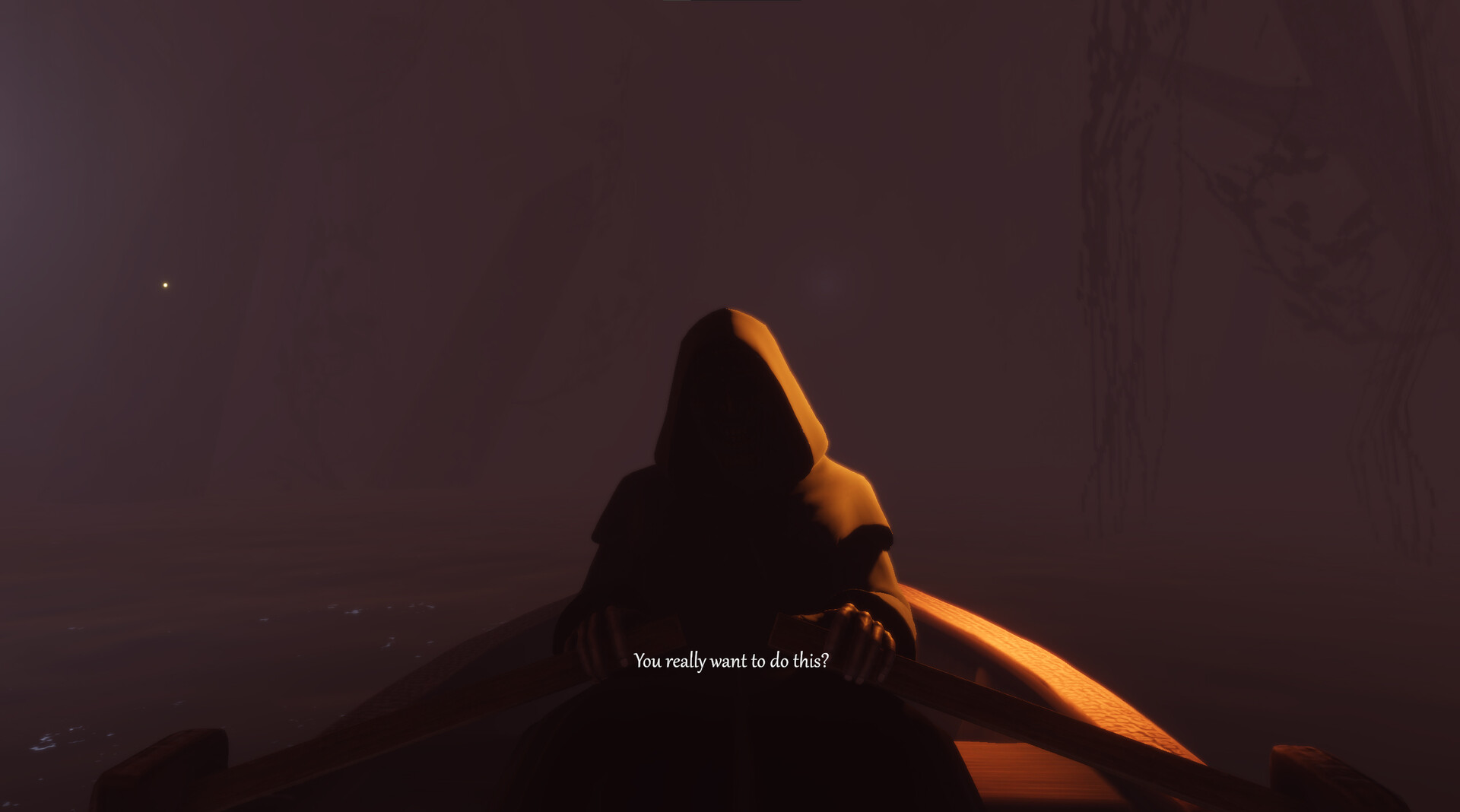
The hooded oarsman ferries the hunter toward the castle, questioning their resolve before the hunt even begins.Image: Over The Moon via Steam -
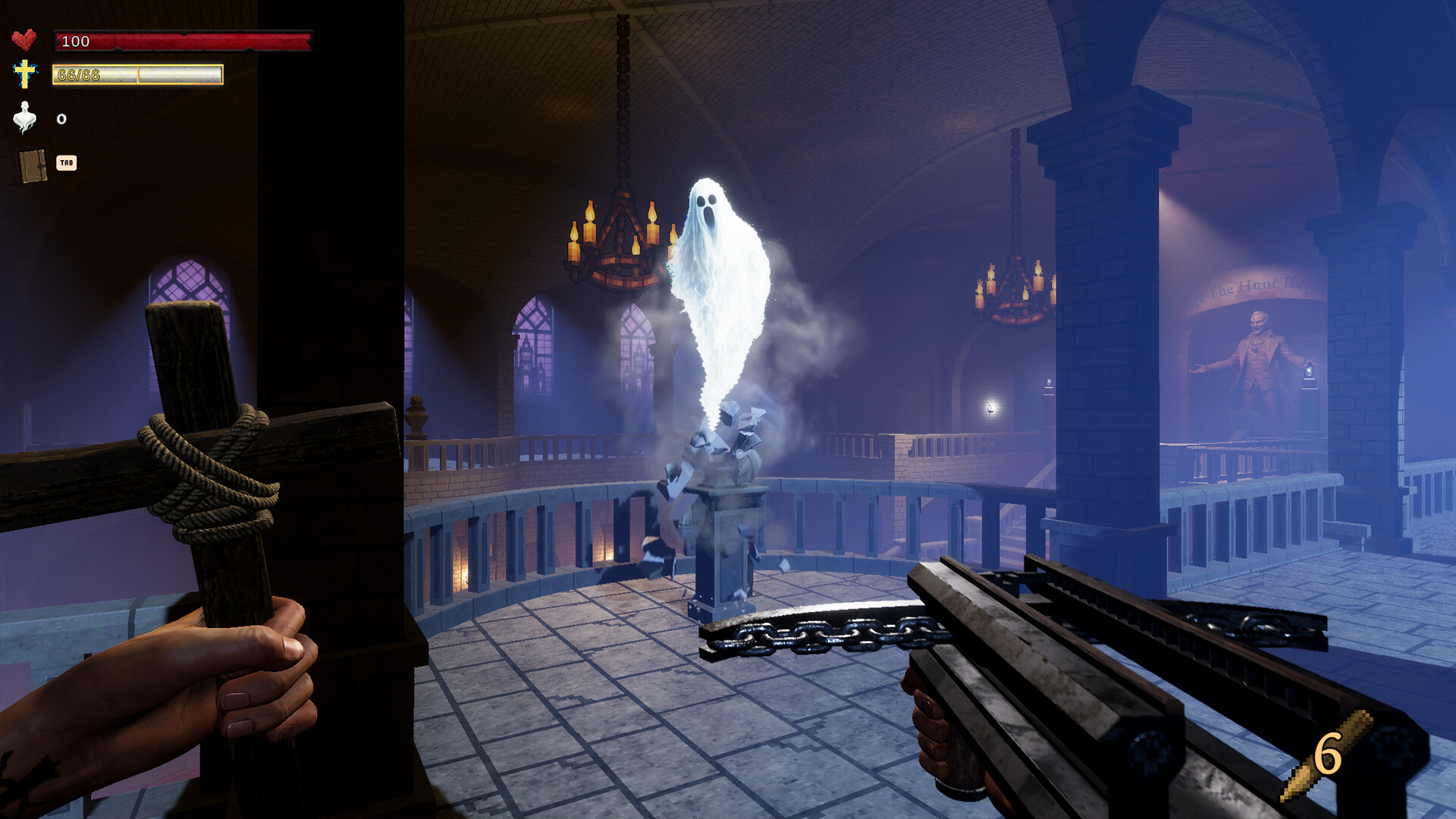
Taking aim at a ghost with the stake-firing crossbow in one of the castle's candle-lit halls.Image: Over The Moon via Steam -
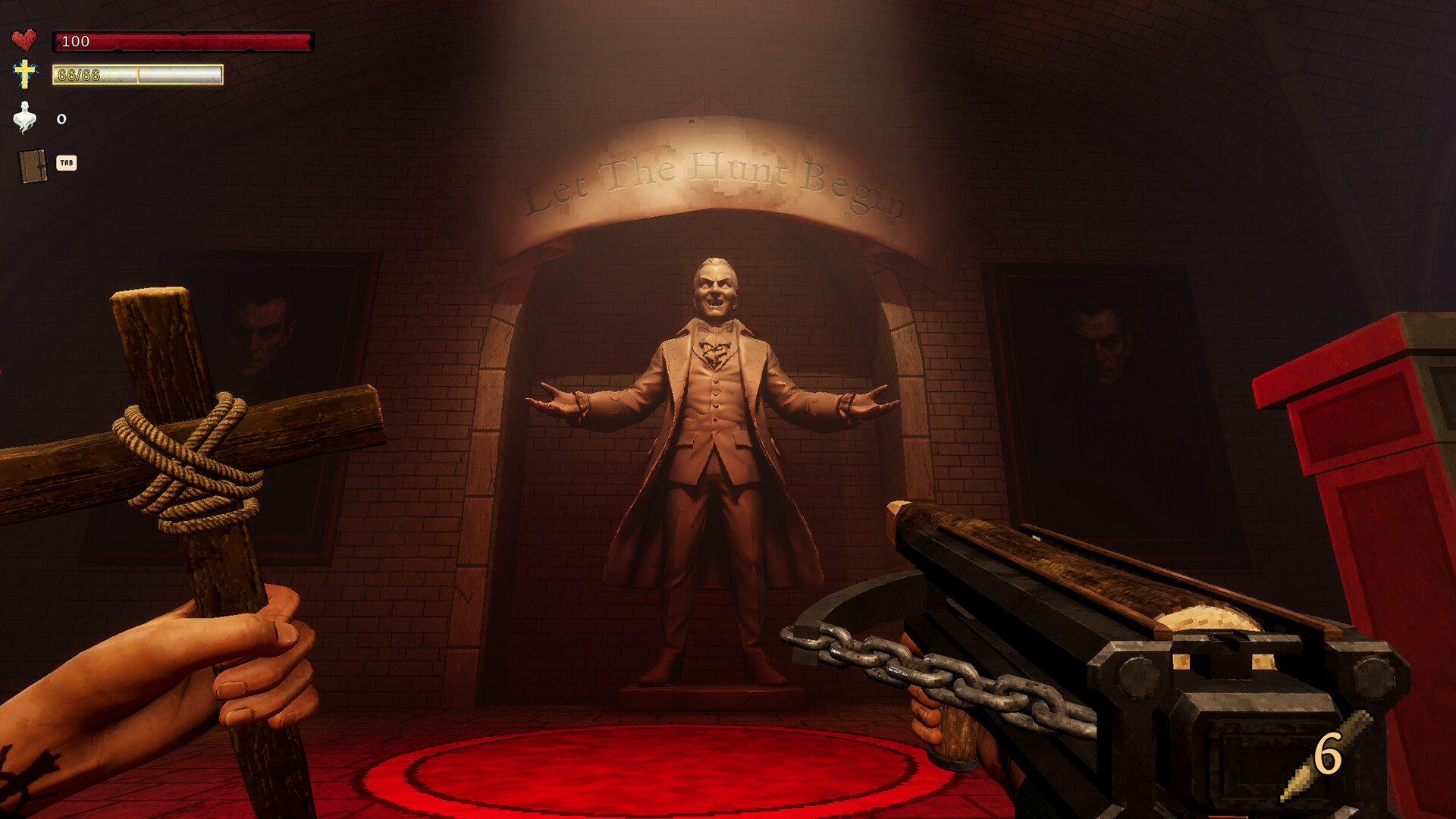
A statue of the vampire lord looms beneath the archway reading \"Let The Hunt Begin.\"Image: Over The Moon via Steam