Game review
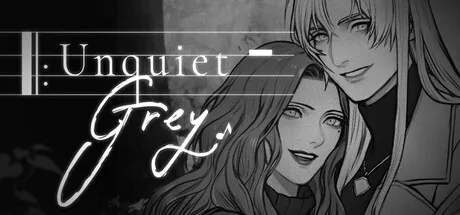
Unquiet Grey
7 / 10
- Developer
- ENDYSIS
- Publisher
- ENDYSIS
- Released
- 26 June 2026
- Platforms
- Windows
- Genre
- Adventure, Free To Play
- Monetisation
- free
- Players
- false
The short version
Biggest strengths
- Hand-drawn, expressive artwork that reviewers repeatedly singled out for personality and emotional weight during key scenes
- A soft, well-matched guitar and indie-rock soundtrack that reviewers said supported the story's quiet atmosphere without overplaying its hand
- A timeloop structure that most reviewers said keeps the focus on the central relationship rather than on solving a science-fiction mystery
Biggest weaknesses
- Writing that a vocal minority described as "tell don't show" and repetitive, summarizing emotional beats rather than dramatizing them
- A specific, detailed internal-logic inconsistency in how the timeloop's opening and closing scenes interact with its own established rules, flagged by at least one detailed reviewer
- A very short main story, around 11,000 words and about an hour long, that even positive reviewers said left them wanting more character development
Who it's for: Visual novel fans looking for a short, free, emotionally heavy timeloop romance about grief, who don't mind a summary-driven writing style over more literary prose
Our recommendation: recommended
7 / 10
A relationship told through repetition, not mystery
Unquiet Grey opens with its protagonist waking up beside a road with no memory of the man whose jacket she's wearing, only for the story to reveal a timeloop she's already lived through many times before. One detailed reviewer described why that structure works as more than a gimmick: "The time loop is easily my favourite part. I keep coming back to the same person and the same basic situation, but knowing that things are not going to play out normally gives the relationship a different feeling. The story is not really about trying to solve some huge science fiction mystery either. It is much more focused on the people involved... That makes the romance feel more important than the actual time travel idea." Another reviewer, writing about the developer's broader body of work, framed the story in more thematic terms: "It's a story about love, loss and how powerful and all-consuming grief can be. But it's also a story about how some things can't be changed and how trying to live in the past will hollow a person out."
Art and music reviewers kept coming back to
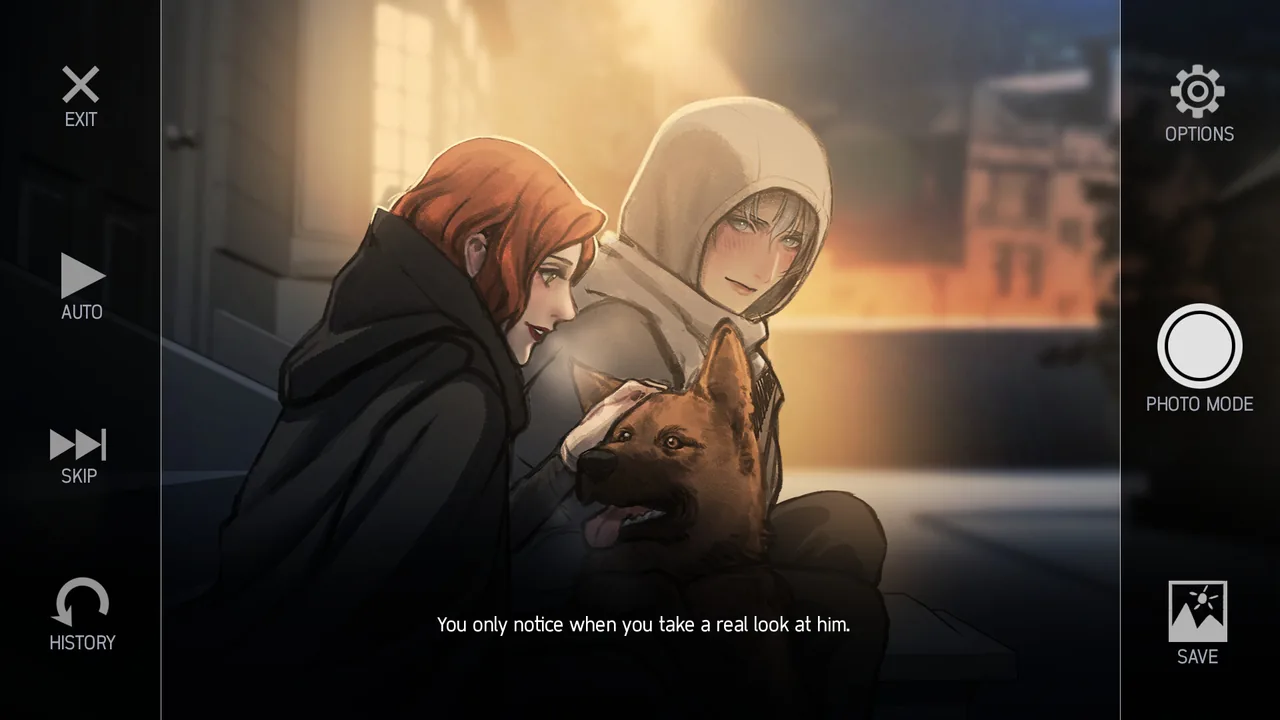
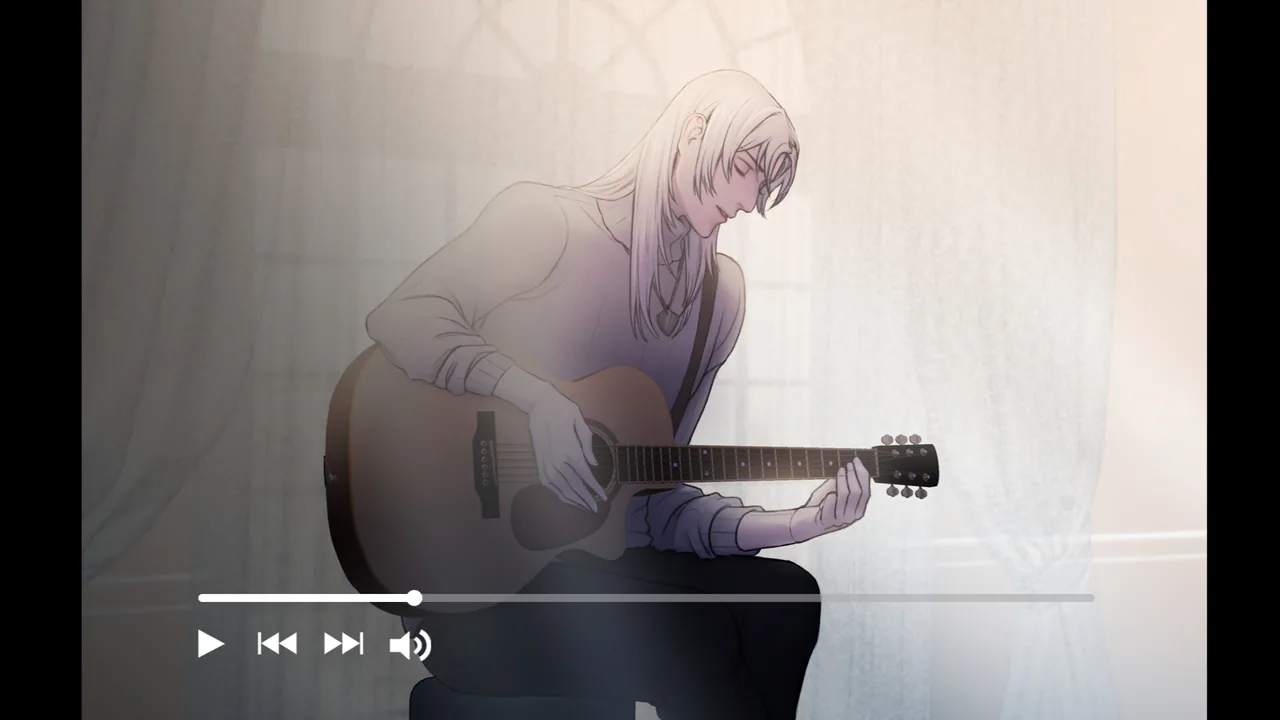
Across nearly every review, positive or critical, the hand-drawn artwork and soundtrack drew consistent praise. One reviewer wrote, "The illustrations are hand drawn and have a really soft style that suits the emotional side of the story. I especially like how the characters are presented during the more personal scenes because the artwork gives them much more personality than simple character sprites would. There is also a camera mode that lets me look at the artwork more closely." The same reviewer praised the music directly: "The soundtrack works well too, with soft guitar and indie rock giving the story a quiet atmosphere without constantly trying to tell me how I should feel." Even one of the pool's more critical reviews opened by conceding, "The game has beautiful visuals and satisfying sound design."
A story many reviewers found genuinely devastating
For the majority of the pool, the emotional impact landed hard. One wrote, simply, "I just finished the game and... I'M CRYING A RIVER RIGHT NOW! The game itself is simple and the gameplay even more so. But its pretty and the story... MY GOODNESS, the story is so beautiful and so incredibly sad." Another reviewer described a similar emotional arc across the game's multiple endings: "It took me on an emotional roller coaster each endings. I felt hopeless, then I felt like there was still hope if I could somehow change the ending. I felt sadness, and eventually, I started to give up." That range of endings, and the way reviewers described experiencing them differently, points to real replay value built directly into the timeloop premise rather than tacked on as an afterthought.
Writing some reviewers found too flat to land
Not every reviewer connected with the prose itself. One detailed negative review argued the writing style undercuts the story's emotional ambitions: "The writing is poor (very tell don't show, every conversation and every moment is summarized rather than lived, and not even very poetically... often it's basically 'You take the phone. You look at it. It makes you sad.')... I didn't feel anything at any point, and by the end I was just bored." The same reviewer also flagged a pacing issue with the game's text transitions: "the fade-out fade-in transitions are so slow, it forces a slow pace which is SO annoying." That reviewer's overall take, calling the game "not horrible, but not interesting," stands in sharp contrast to the majority who described being moved to tears, and is worth weighing seriously as a real difference in how tell-don't-show narration lands depending on the reader.
A developer with a returning fanbase
Several reviewers approached Unquiet Grey already familiar with ENDYSIS's earlier work, and treated it as another entry in a trusted body of emotionally heavy visual novels rather than a first impression. One wrote, "If you know ENDYSIS, then you know what you're in for: good storytelling, good writing and a good squeeze of your heart through words, good music and pictures. If you don't know ENDYSIS, lucky you, you have more stories to discover than I do now, go, play that VN!" Another returning fan wrote, "Like all of Endysis's games and stories, this one is another beautiful masterpiece full of emotion and heartbreak... everything is polished to perfection: writing, art, music." That pattern of loyal, repeat engagement suggests the writing style some reviewers found flat lands very differently for readers already attuned to the developer's particular voice.
A specific logic hole in the timeloop's own rules
The pool's other detailed critical review raised a more structural complaint: a scene early in the game, where the amnesiac teenage protagonist finds photos of her older self on a stranger's phone, appears to contradict the timeloop's own established rules. That reviewer explained, "In each loop, there is only one version of the protagonist: she lives through her entire life and only returns to a new loop after her death. Therefore, there is no way for her to encounter an older version of herself while she is still young." The same reviewer identified a second, similar inconsistency near the story's end. Notably, this same review opened by praising the game's visuals, sound, and emotional craft at length, calling the criticism a matter of the story being "surprisingly simple and rather shallow" beneath its polish rather than badly made.
Verdict
Unquiet Grey is a short, free, hand-drawn visual novel that most reviewers found genuinely moving, built around a timeloop premise that keeps its focus squarely on a relationship rather than on puzzle-box mechanics, backed by strong art and a well-matched soundtrack. Its detractors raise legitimate, specific concerns: a summary-heavy writing style that some found emotionally flat rather than affecting, and at least one real inconsistency in how its own timeloop rules are applied. At roughly an hour and completely free, it's an easy, low-risk recommendation for visual novel fans drawn to grief-focused romance, with the understanding that its prose style and short length won't land the same way for every reader.
Pros and cons
Pros
- Hand-drawn, expressive artwork that reviewers repeatedly singled out for personality and emotional weight during key scenes
- A soft, well-matched guitar and indie-rock soundtrack that reviewers said supported the story's quiet atmosphere without overplaying its hand
- A timeloop structure that most reviewers said keeps the focus on the central relationship rather than on solving a science-fiction mystery
- Free to play, with a runtime most reviewers described as roughly an hour, making it a low-commitment recommendation
Cons
- Writing that a vocal minority described as "tell don't show" and repetitive, summarizing emotional beats rather than dramatizing them
- A specific, detailed internal-logic inconsistency in how the timeloop's opening and closing scenes interact with its own established rules, flagged by at least one detailed reviewer
- A very short main story, around 11,000 words and about an hour long, that even positive reviewers said left them wanting more character development
- Slow, unskippable-feeling text transitions that at least one reviewer found actively disruptive to pacing
Screenshots
-

Unquiet GreyImage: ENDYSIS via Steam -
Unquiet GreyImage: ENDYSIS via Steam -
Unquiet GreyImage: ENDYSIS via Steam