Game review
Two Point Hospital
8 / 10
- Developer
- Two Point Studios
- Publisher
- SEGA
- Released
- 29 August 2018
- Platforms
- Windows
- Genre
- Management Simulation
- Monetisation
- One-time purchase, NZ$54.95. A substantial number of paid DLC packs, mostly new hospital campaigns, sold separately or in bundles.
- Players
- Single-player only
The short version
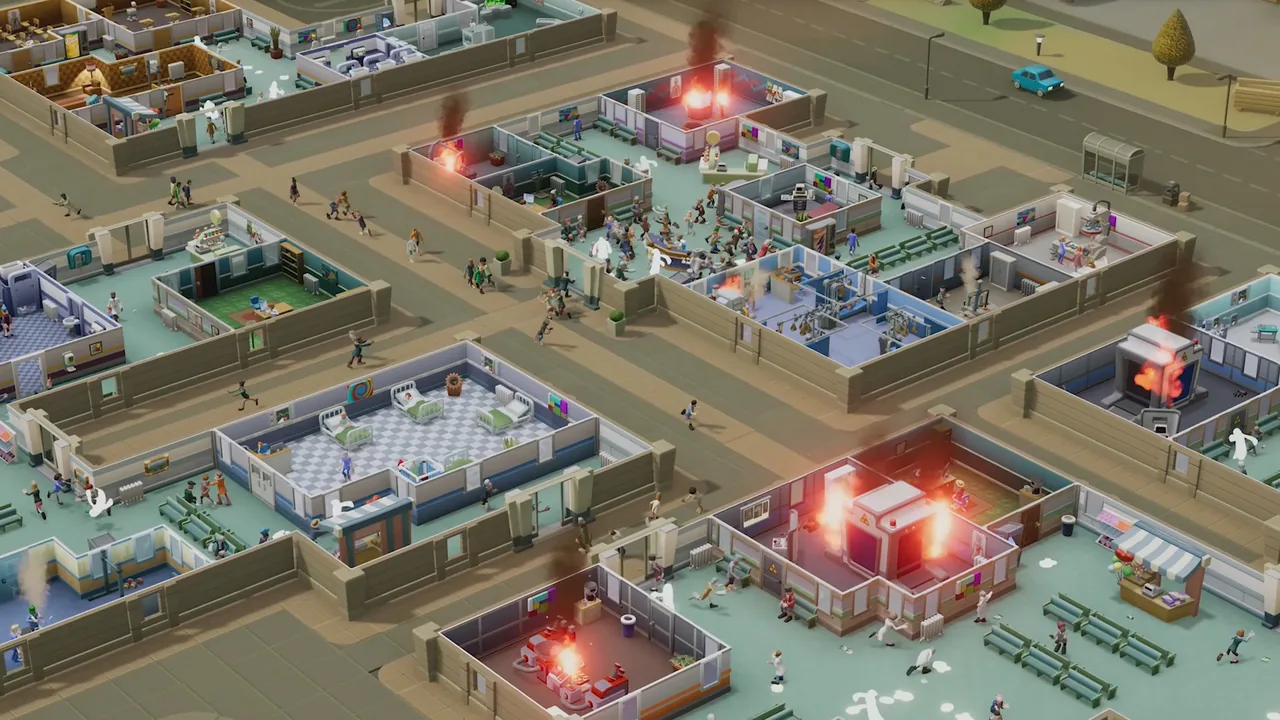
Two Point Hospital is the closest thing modern gaming has to a direct successor to Theme Hospital, built by veterans of the original — comedic ailments, expressive hospital staff, and the same satisfying loop of designing rooms and managing chaos as your hospital grows. 92% positive across 34,835 reviews reflects a game that largely delivers on that promise.
Unusually for this library, the negative-review timeline tells an improvement story rather than a decline. Reviews from 2018-2019 document genuine, specific problems — broken pathing, patients and staff getting stuck, a conspicuously missing copy-paste tool for building repetitive rooms — and negative-review volume has fallen steadily since, from 20 among the top 100 in the launch year to single digits in most recent years. The remaining honest criticism has shifted from bugs to a design complaint: the mid-to-late game can feel repetitive, and the DLC catalogue is extensive enough that assembling the full experience gets expensive.
Biggest strengths
- A faithful, well-executed successor to Theme Hospital's tone and core loop, built by developers with direct lineage to the original
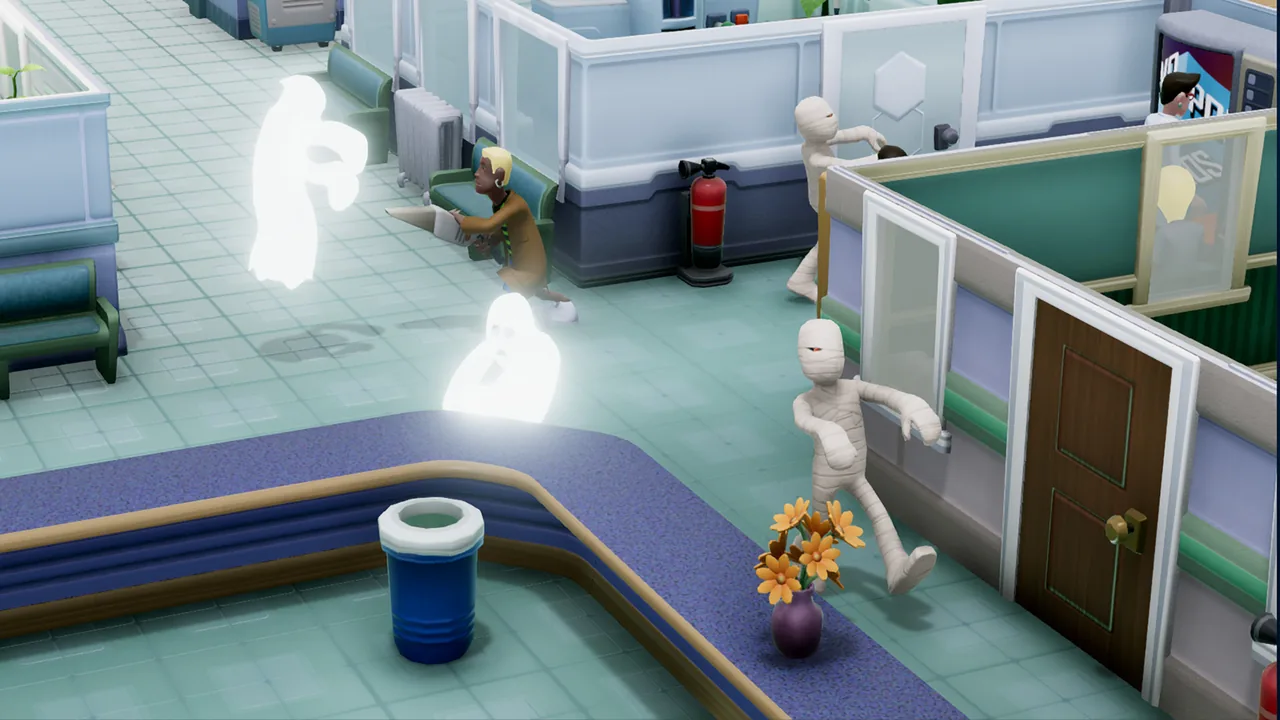
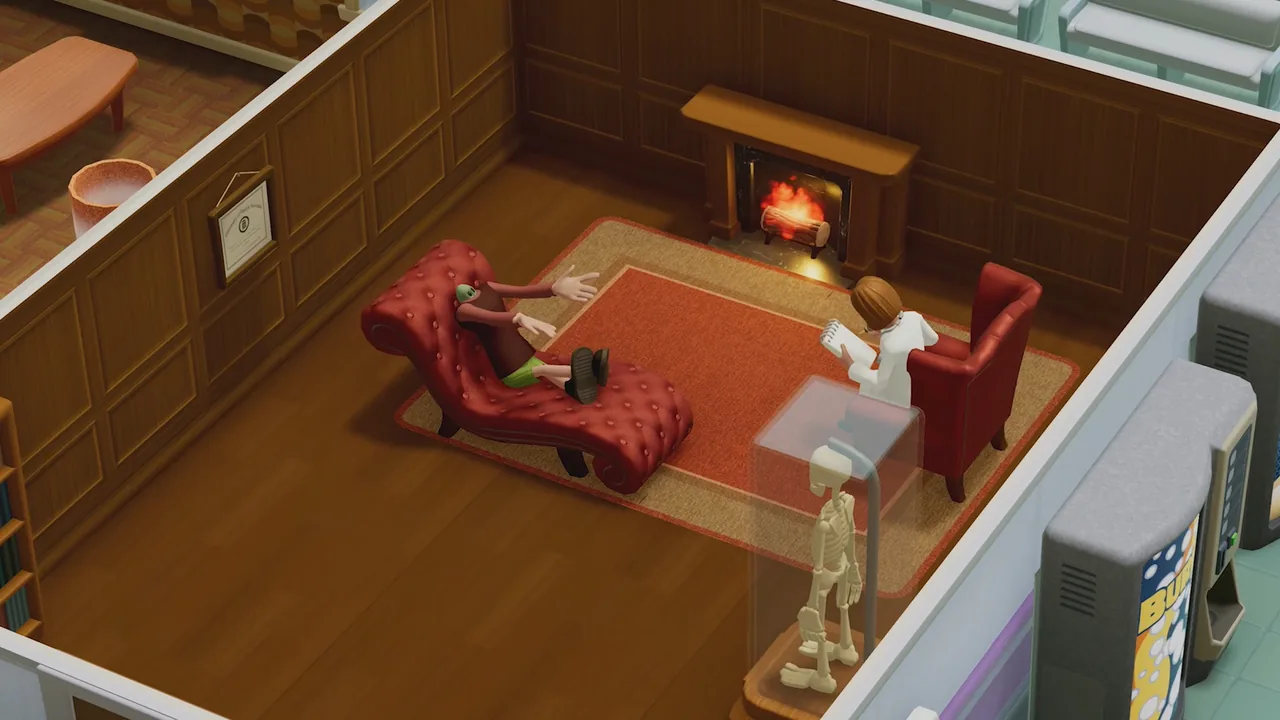
- Charming, comedic presentation — absurd ailments, expressive pixel-eyed staff and patients, and consistent visual polish
- Negative-review volume has fallen substantially since launch, suggesting real, sustained technical improvement over years of patches
Biggest weaknesses
- Launch-era technical issues — broken pathing, staff and patients getting stuck, a missing copy-paste tool for repetitive room building — drew heavy, specific criticism in 2018-2019, though volume has dropped sharply since
- A recurring design complaint across every era: later hospitals repeat the same room-building tasks with diminishing new content, and the mid-to-late game can feel like tedium rather than fresh challenge
- An extensive DLC catalogue, mostly additional hospital campaigns, adds up to a substantial cost beyond the base game for players who want everything
Who it's for: Fans of classic management sims and anyone who grew up on Theme Hospital looking for a faithful modern successor. Best enjoyed by players comfortable with the genre's usual late-game repetition rather than expecting constant new systems throughout.
Our recommendation: Buy the base game with confidence — the launch-era technical issues that dominated early reviews appear to be substantially resolved based on how sharply negative-review volume has fallen since. Be selective about DLC rather than assuming you need the full catalogue; several reviewers say the core game alone offers plenty before additional hospital packs become necessary.
8 / 10
Most of the games in this library that show a shift in sentiment over time show it getting worse. Two Point Hospital's review history runs the other direction, and it's worth tracing exactly how.
A faithful successor, built by the right people
Two Point Hospital exists because former Bullfrog and Theme Hospital developers wanted to make a spiritual successor to the 1997 classic, and the reviews consistently confirm they succeeded at the tone: absurd ailments (Light-Headedness, Cubism, an inflated head), comedic staff dialogue, and the same core loop of designing efficient hospital rooms while chaos unfolds around them. "Exactly how I remember Theme Hospital from the old days but with better graphics and extra mechanics," reads one of the most-upvoted early reviews, and that specific comparison recurs constantly across the entire corpus, almost always as praise.
What was actually broken at launch
The 2018-2019 negative reviews are specific and consistent in a way that's easy to verify against what changed later. The most-upvoted negative review in the game's history, from launch week, lists concrete issues rather than vague dissatisfaction: pathing problems, and a glaring missing quality-of-life feature — no way to copy and paste a room design, forcing players to rebuild identical layouts by hand for every new hospital. Another widely-upvoted review from the same period documents patients and staff getting physically stuck, dying in idle states, and general AI breakdowns once hospitals grew larger and busier. These are the kinds of complaints that either get fixed or don't, and the review timeline suggests they largely did: negative-review volume among the top 100 falls from 20 in 2018 and 19 in 2019 down to single digits in nearly every year since 2022. That's not proof every issue vanished, but it's a genuine, measurable signal of sustained improvement rather than the flat or worsening patterns this library has found in several other long-running games.
What's left to criticize
The complaint that has persisted, across every era rather than fading, is about design rather than bugs: later hospitals ask you to repeat largely the same room-building tasks with diminishing new systems to learn, and several reviewers describe the mid-to-late game tipping from satisfying into tedious. A separate, consistent thread flags the DLC catalogue — mostly additional hospital campaigns — as adding up to real money for players who want the complete experience, though this is a value complaint about scope rather than a criticism of what's actually included.
Reading the completion data
The achievement curve fits a management sim built around steady, achievable progress. A basic milestone — curing a single patient — sits at 94.2%, and completing the first hospital level reaches 58.6%, meaning most buyers genuinely get into the core loop. The rarest achievements, tied to elaborate long-term goals across dozens of hospitals, fall under 0.5%, the expected shape for a sim with a long completionist tail on top of an accessible core game.
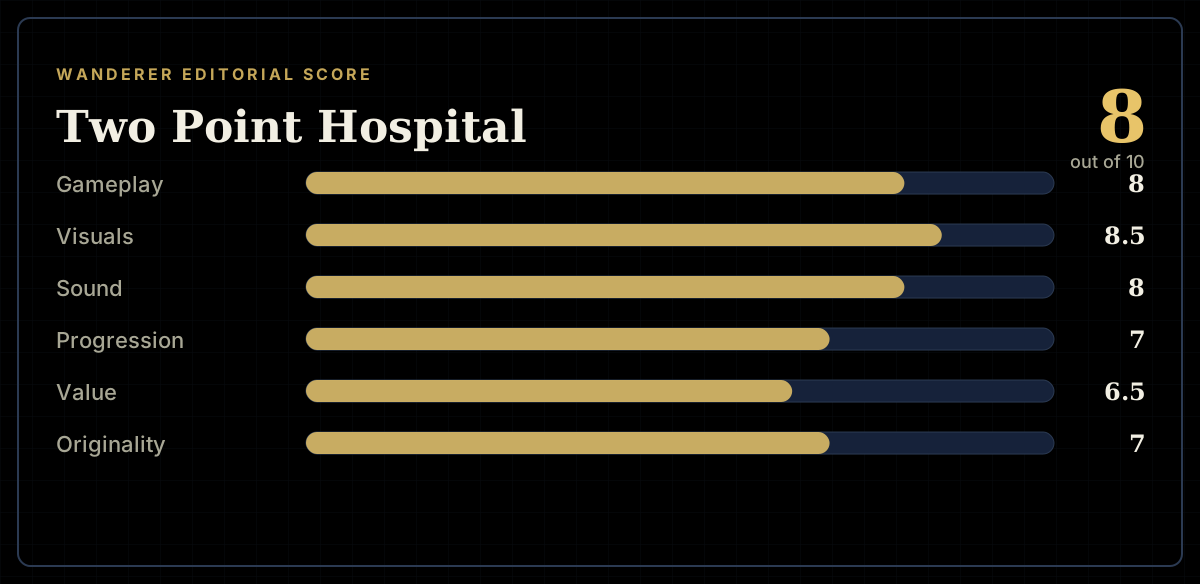
8 out of 10. Two Point Hospital succeeds as a faithful, charming successor to a beloved classic, and its review history offers a genuinely rare thing in this library: measurable evidence of a rough launch actually getting fixed rather than papered over. It's held below the top tier by a design complaint that predates and postdates the technical fixes — repetitive late-game hospitals and a substantial DLC catalogue — rather than anything still broken. Buy the base game; it holds up well on its own merits today.
Pros and cons
Pros
- A faithful, well-executed successor to Theme Hospital's tone and core loop, built by developers with direct lineage to the original
- Charming, comedic presentation — absurd ailments, expressive pixel-eyed staff and patients, and consistent visual polish
- Negative-review volume has fallen substantially since launch, suggesting real, sustained technical improvement over years of patches
- A satisfying core loop of room design and staff management that reviewers across every year describe as genuinely addictive in the early-to-mid game
- Deep achievement and completion systems for players who want long-term goals beyond a single playthrough
Cons
- Launch-era technical issues — broken pathing, staff and patients getting stuck, a missing copy-paste tool for repetitive room building — drew heavy, specific criticism in 2018-2019, though volume has dropped sharply since
- A recurring design complaint across every era: later hospitals repeat the same room-building tasks with diminishing new content, and the mid-to-late game can feel like tedium rather than fresh challenge
- An extensive DLC catalogue, mostly additional hospital campaigns, adds up to a substantial cost beyond the base game for players who want everything
- Some reviewers find the difficulty low overall, describing the game as relaxing rather than genuinely challenging once the basics are learned
Screenshots
-
Two Point HospitalImage: SEGA via Steam -
Two Point HospitalImage: SEGA via Steam -
Two Point HospitalImage: SEGA via Steam -
How the review scores each part of the gameWanderer Editorial -
The short versionWanderer Editorial