Game review
Too Many Toys! Review
7.5 / 10
- Developer
- 4ydam, Jakub T
- Publisher
- 4ydam, Jakub T
- Released
- 28 August 2026
- Platforms
- ["Windows"]
- Genre
- Simulation
A Toy Shop, a Colossal Mess, and 5,517 Things to Put Away
Too Many Toys! drops the player into a first-person toy shop that has, for reasons the game never bothers explaining, been left in total disarray, with plushies, vehicles, board games, building blocks, action figures, and candy scattered across every floor and staircase. The job is simple: pick everything up and put it back where it belongs. It's the latest entry in a small but increasingly crowded wave of first-person tidying games that took off after Librarian: Tidy Up the Arcane Library, and reviewers are upfront that they're comparing it against that lineage — some calling it one of the strongest follow-ups the genre has produced, others simply another well-made entry in a trend that's only a few months old. Developed and self-published by the two-person team 4ydam and Jakub T, the game commits fully to scale: with 5,517 individual toys to sort, it's a considerably bigger undertaking than a handful of compact sorting puzzles, giving the cleanup real long-term weight rather than functioning as a quick diversion.
The core loop is exactly what it sounds like — walk around, pick up a toy, carry it to the correct shelf, repeat — and the game deliberately avoids adding pressure to that process. There are no customers interrupting the player, no timers, and no penalty for taking a leisurely pace. Reviewers consistently describe this as the game's core appeal: a low-stakes, methodical task that rewards patience rather than speed, ideal for winding down after work or, as one reviewer movingly describes, getting through a genuinely rough night by having something calm and absorbing to focus on for a few hours.
Upgrades, Robots, and a Rideable Train Keep the Grind Moving
What keeps 5,517 toys from becoming an undifferentiated slog is a steady stream of unlockable upgrades. Players earn currency by shelving items and spend it on improvements like greater carrying capacity, faster movement, and tools that highlight or magnetically draw nearby toys toward them. Reviewers describe this progression as well-paced — early sections feel intimidatingly slow, but each new unlock visibly changes how much ground can be covered, and that growing sense of capability is repeatedly cited as one of the most satisfying parts of the experience.
The game's standout twist within its genre is its helper system: unlockable drones that place held items directly on the correct shelf, robots that autonomously gather toys and drop them near where they belong, and a rideable toy train for moving large batches of items between floors. Several reviewers single these out as a genuinely novel spin compared to other sorting games, which tend to offer only a vague "auto-sort" button rather than physical, visible helpers moving through the world alongside the player. That said, the robots come in for real criticism too — multiple reviewers report them shoving the player out of the way while pathing toward their own goals, occasionally clipping toys through shelves or the floor, and getting stuck in place after being loaded onto the train. A few reviewers say the issues are minor and even charming; others found the robots frustrating enough that they simply avoided unlocking them and did the whole job by hand.
A Genre Getting Crowded, But This One Distinguishes Itself
Reviewers who've played several of the recent wave of tidying games are notably generous toward Too Many Toys!, and the reasons they give are consistent: a sprawling, multi-floor shop layout rather than the flat, simplistic environments common in cheaper entries in the genre, strong and consistent performance without the frame drops some competitors suffer, and a level of production polish — ambient occlusion, physically grounded item placement rather than floating assets — that reviewers say is surprisingly rare for the price point. Several reviewers explicitly note the absence of any detectable AI-generated content in the game's assets or writing, treating that as a meaningful point in its favor given how common the concern has become across the wider sorting-game trend.
The developers also earn consistent praise for how actively they've responded to feedback since launch. Multiple reviewers describe reporting bugs and seeing them patched within days — fixes to zoom functionality, inventory clarity, a controller-mapping display, item wrapping textures, and the severity of the game's lighting all get called out by name as issues that were raised and then resolved in quick succession. One reviewer who kept an edited, running list of complaints in their own review ended up striking out nearly everything they'd originally written within a few weeks of release, closing with "devs listen and took into consideration most of the feedback from other players as well. Something to cherish these days!"
Where the Shine Wears Thin: Lighting, Shelving Logic, and a Lack of Variety
Not every criticism has been patched away. The most common complaint, raised by multiple reviewers independently, targets the shop's color grading and lighting: pools of light are small and tightly focused, leaving large stretches of the store — particularly the first floor — feeling dark and drab in a way several reviewers say undercuts the whimsical, cozy tone the toy-shop premise is going for. The developers have already tweaked the lighting once in response, though some reviewers say it hasn't fully solved the issue.
A more structural complaint concerns how items are grouped on shelves. Some categories, like plushies and vehicles, get a sensible one-per-slot display, while others — board games and wooden alphabet blocks in particular — are laid out in ways multiple reviewers call genuinely strange, wasting shelf space and making otherwise-complete sections look sparse rather than satisfying. That same design choice pushes small, easily lost items like candy pieces into disproportionately large quantities relative to bigger toys, and more than one reviewer specifically asks for a rebalance between how many small versus large items populate the store. A handful of reviewers also note that the game offers no control over how shelves are actually arranged — every completed playthrough ends up looking identical, removing a layer of creative freedom some other genre entries allow. Steam Deck support isn't officially verified, and the game's one strongly negative review reports tiny, hard-to-read interface text and heavy GPU demand on the platform specifically.
Verdict
Too Many Toys! is a confident, well-supported entry in a fast-growing genre, and it earns its near-unanimous positive reception honestly: a huge, well-designed shop to clean, a satisfying and well-paced upgrade path, a genuinely inventive robot-and-drone helper system that most reviewers enjoy even with its rough edges, and a two-person development team that has been unusually responsive to bug reports and feedback since launch. Its shortcomings are mostly matters of polish rather than design — dim, uneven lighting in parts of the shop, some genuinely odd shelving logic for a few item categories, and a lack of variety among the smallest items — alongside the more structural absence of any real shelf-arrangement freedom or additional content once the main sort is complete. For a genre this new and this crowded, a game that's this well put-together and this actively maintained stands out. Fans of cozy sorting and tidying games should consider this close to essential; anyone new to the genre could do a lot worse than starting here.
Pros:
- A huge, well-designed multi-floor shop with genuine scale to its 5,517-toy cleanup
- Satisfying, well-paced upgrade path that keeps the grind from feeling static
- Genuinely inventive helper system — drones, autonomous robots, and a rideable train
- Strong technical performance and polish relative to the price
- Developer has patched quickly and repeatedly in direct response to player feedback
Cons:
- Uneven, overly dark lighting in parts of the shop undercuts the cozy tone
- Odd shelving logic wastes space for some item categories, like board games and blocks
- Helper robots can shove the player around, clip items, or get stuck
- No control over shelf arrangement — every finished store looks the same
- Steam Deck support is unverified and reportedly rough for at least some players
Screenshots
-
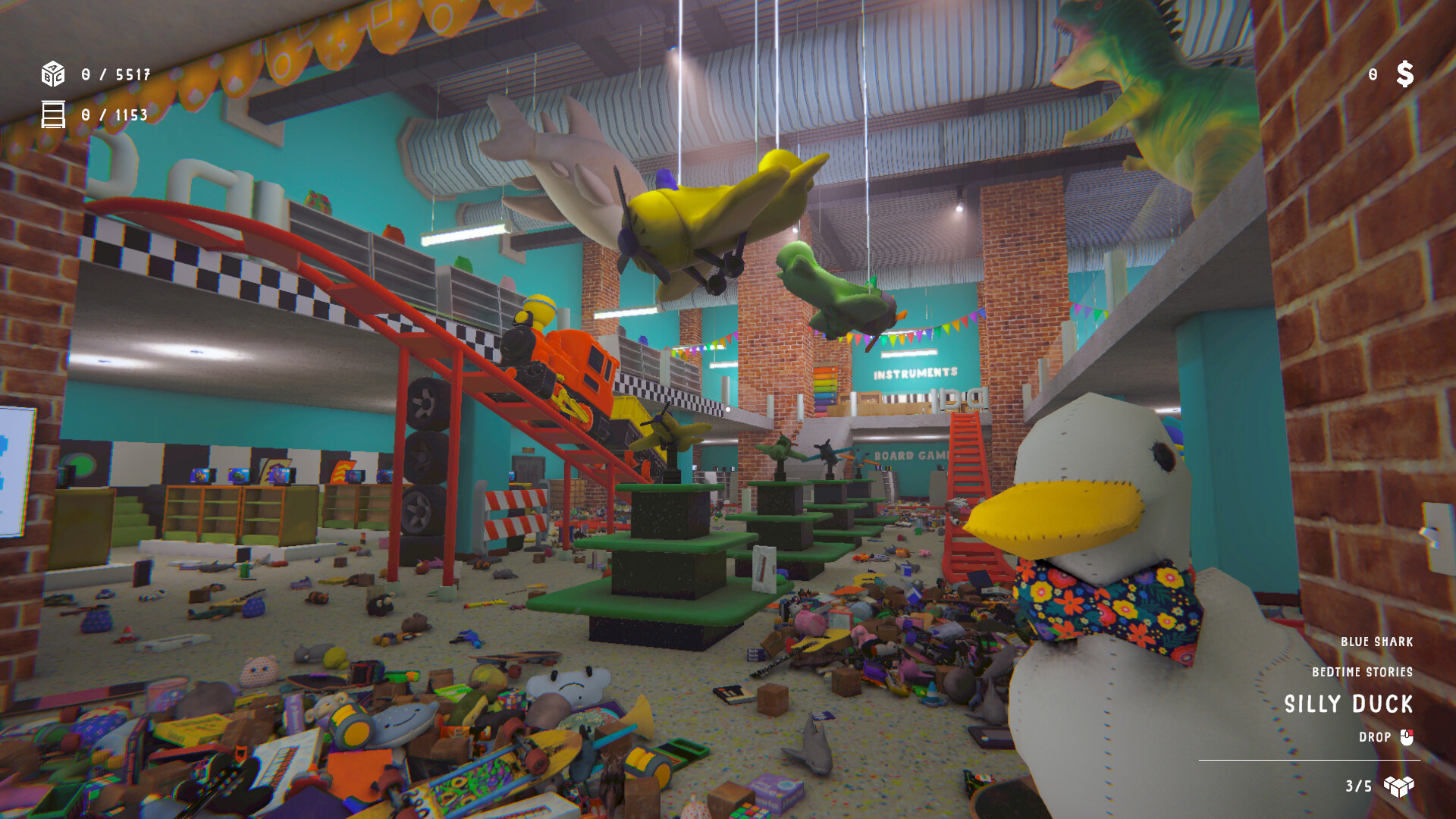
The scale of the mess is real — 5,517 individual toys are scattered throughout the multi-floor shopImage: 4ydam -
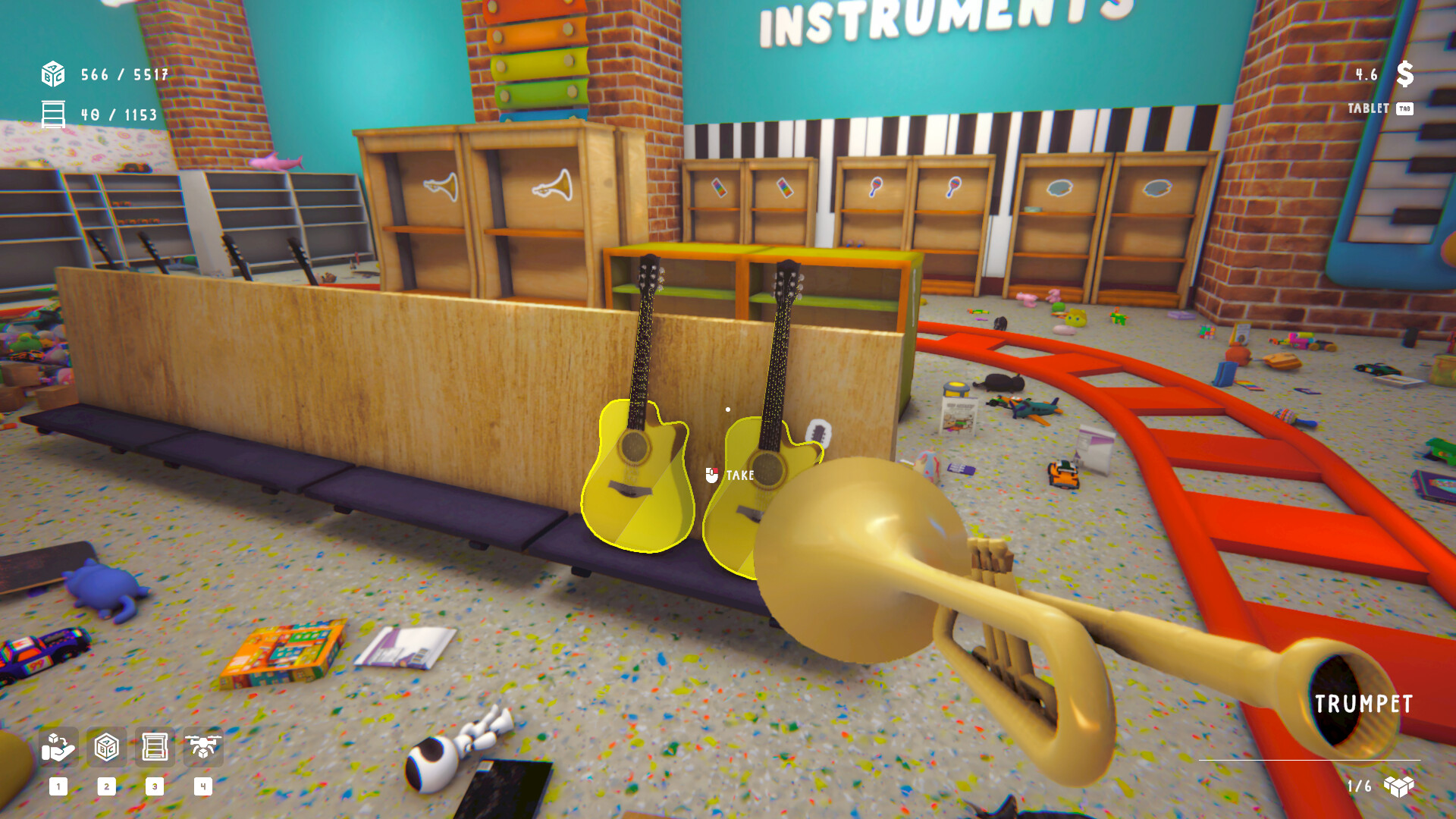
The instruments section, mid-sort, with empty shelves waiting to be filledImage: 4ydam -
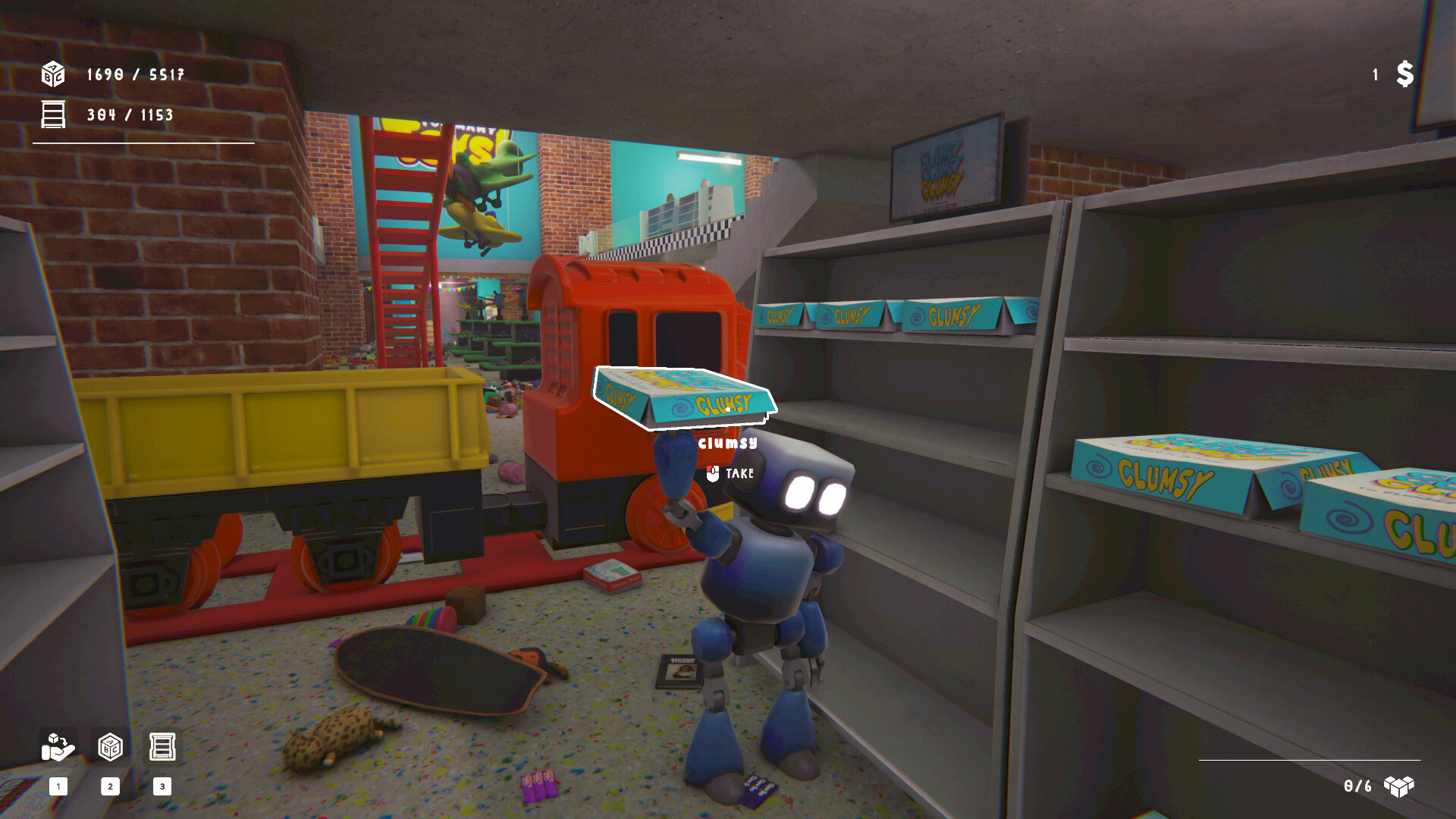
One of the unlockable helper robots delivering a boxed game toward its shelfImage: 4ydam -
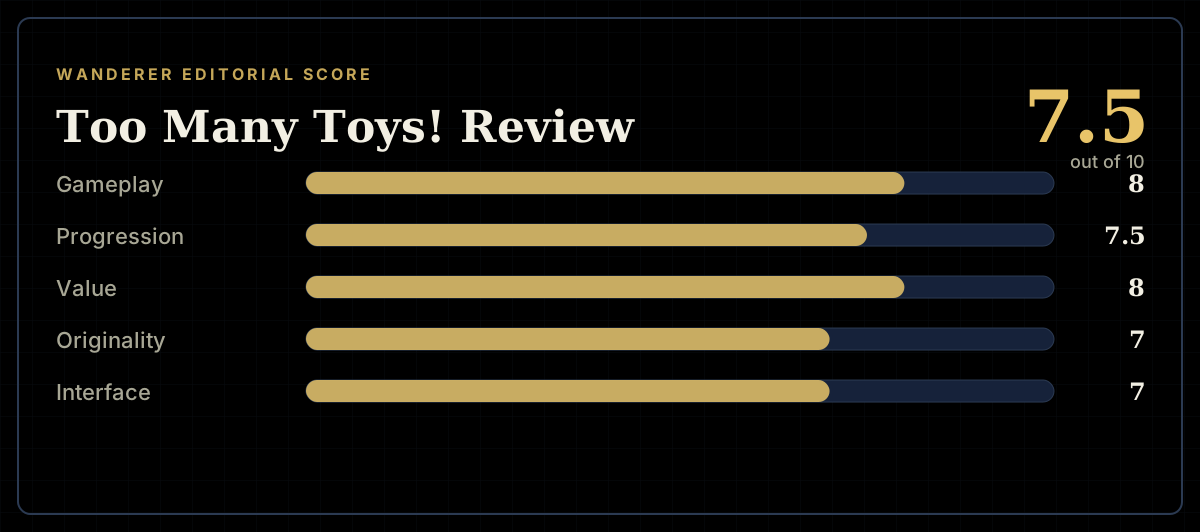
How the review scores each part of the gameWanderer Editorial -
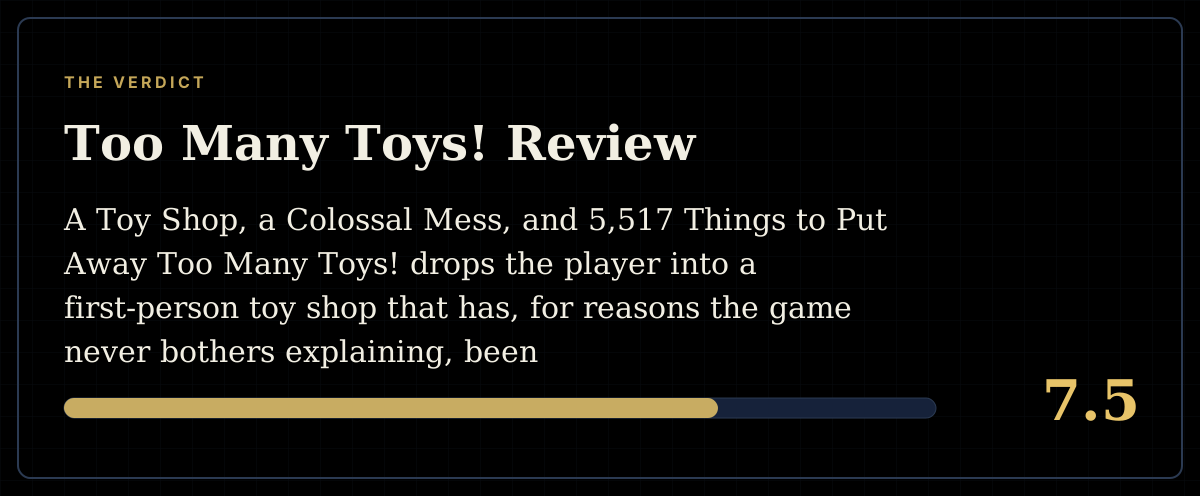
The short versionWanderer Editorial