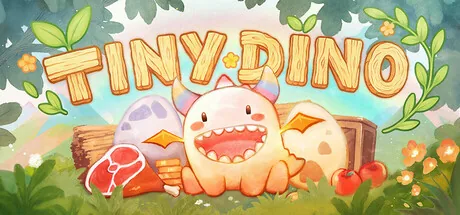
Game review
Tiny Dino
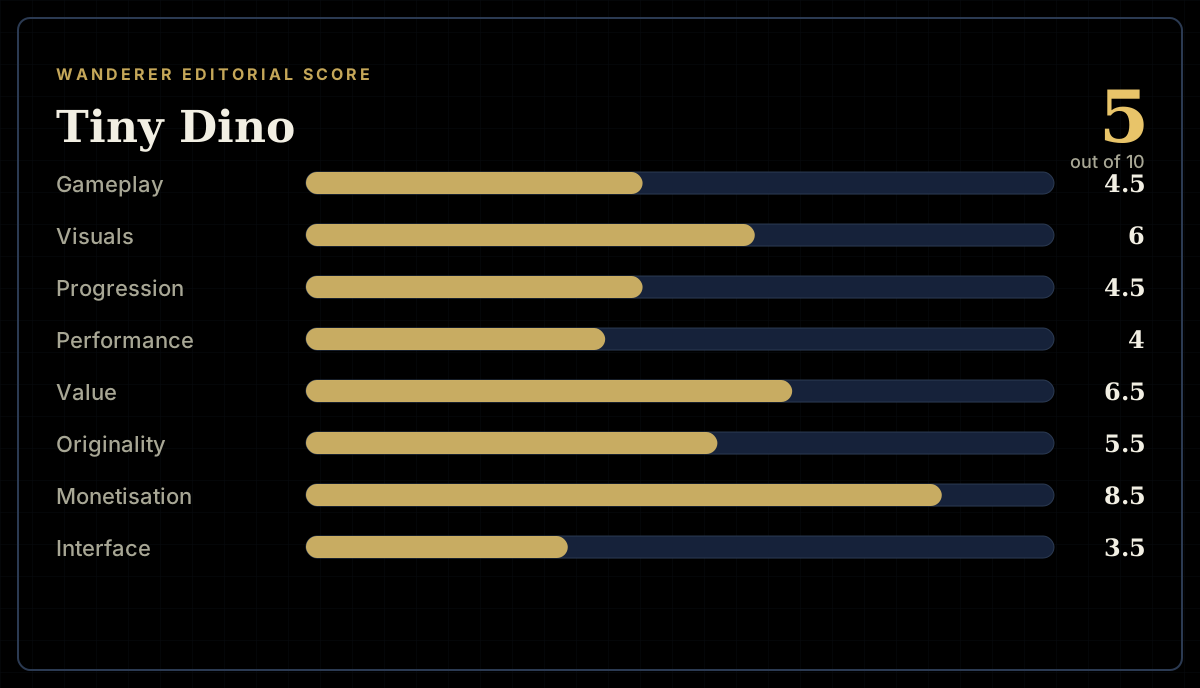
5 / 10
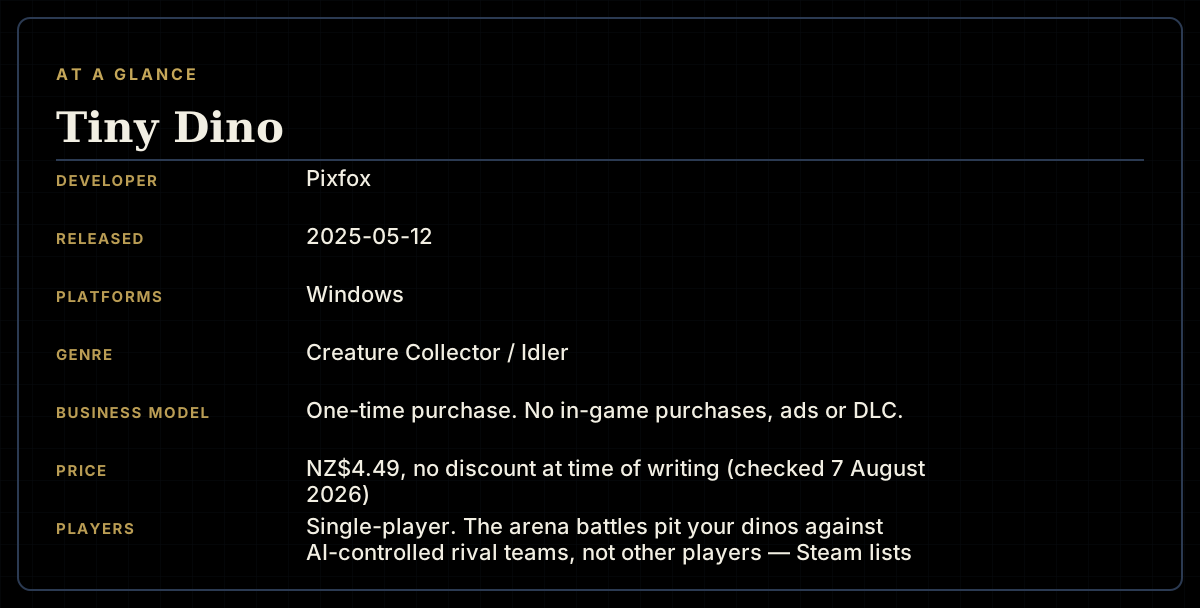
- Developer
- Pixfox
- Publisher
- Pixfox
- Released
- 12 May 2025
- Platforms
- Windows
- Genre
- Creature Collector / Idler
- Monetisation
- One-time purchase. No in-game purchases, ads or DLC.
- Players
- Single-player. The arena battles pit your dinos against AI-controlled rival teams, not other players — Steam lists no multiplayer category for this app.
The short version
A small dinosaur hatches, grows and burps out gems along the bottom of your screen while you work, and can eventually be sent to fight other dinosaurs in an automated arena. Steam's own vote-weighted tags call it **Creature Collector (70 votes)** first, ahead of **Casual (65)** and **Idler (62)** — the idle label is real, but breeding for one of seven elemental colours is the thing the game is actually organised around.
The real review corpus is tiny — **51 reviews total, only 11 in English** — but it lines up with what the numbers underneath it say. The achievement curve runs a clean 70% down to 26% across nineteen ordinary build-and-hatch milestones, then collapses to **2.5–4.1%** on the four completionist and arena-scoring achievements. Almost nobody who owns this game finishes breeding every colour or fights their way to a decent arena score, and the negative reviews explain why: drag-and-drop bugs, an arena that can freeze mid-fight, and a changelog that stopped three days after launch.
Biggest strengths
- NZ$4.49 one-time purchase with no in-game purchases, ads or DLC of any kind
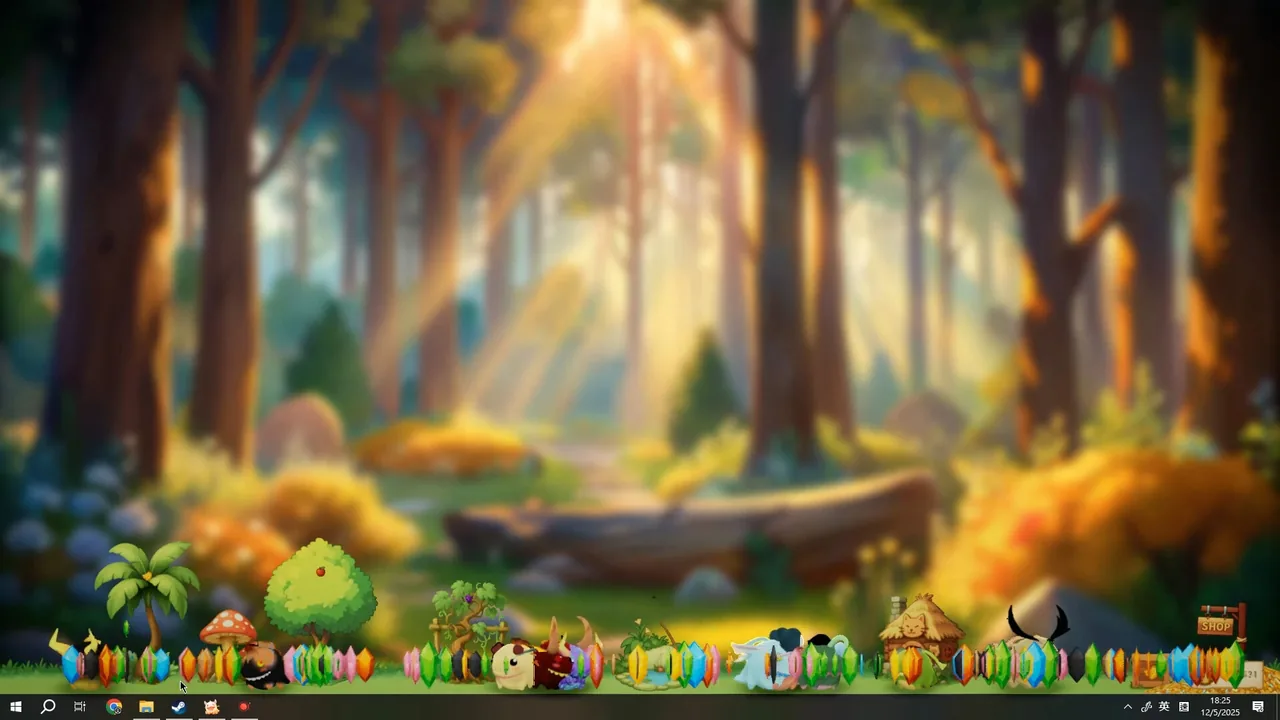
- Genuinely charming dino designs and a pleasant forest backdrop for the desktop strip
- Seven elemental colours give the breeding loop a real, if steep, long-tail chase
Biggest weaknesses
- Persistent bugs — crashes, a hatching bug that has stranded players' eggs, buildings that snag on the shop icon — reported from launch week through July 2026
- All six of the game's patch notes land within three days of release; nothing has shipped since
- Left-click, right-click and drag are inconsistently assigned and cause frequent misclicks
Who it's for: Fans of desktop pets and idle collectors who want something to glance at between tasks, and who can tolerate rough edges for a low price. Not for anyone who wants the breeding or battle systems to be deep, explained, or currently supported.
Our recommendation: Worth NZ$4.49 as a cute, harmless desktop ornament for the first few sessions. Go in expecting the content to run out fast, the interface to misbehave occasionally, and no further updates — because there haven't been any in over a year.
5 / 10
The fifth official screenshot on Tiny Dino's Steam page is not a screenshot of Tiny Dino. It's a screenshot of Photoshop — the layers panel open, the Traditional Chinese interface visible, the cover art for "TINY DINO" mid-edit on the canvas. Whoever assembled the store page grabbed the wrong file, and eighteen months later nobody has swapped it out.
That small mistake turns out to be a fair preview of the whole game: a genuinely likeable idea, built by hands that didn't have time to polish the edges, and then never returned to.
Is it actually an idler?
The library's own priority list puts idle and incremental games near the top, and the aggregator tag on Tiny Dino says Idler. Steam's vote-weighted tags, pulled from the store page's own tag-modal script rather than the ordered pills underneath the screenshots, tell a more precise story:
| Tag | Votes |
|---|---|
| Creature Collector | 70 |
| Casual | 65 |
| Idler | 62 |
| Cute | 59 |
| Relaxing | 55 |
| Singleplayer | 49 |
| Indie | 47 |
| 3D | 27 |
Idler is real — third place, and close behind the top two. But it isn't the dominant identity. Creature Collector edges it out, and the game agrees: everything is organised around hatching eggs into one of seven elemental colours (Grass, Water, Fire, Thunder, Rock, Dark, Love), growing them through feeding, and chasing the rarer results. The gem income that ticks up while you're at your desk is real and it is genuinely idle, but it's the fuel for the collection game, not the point of it. Compare that to a game like Ropuka's Idle Island, where the idle loop and the whole game are the same thing — Tiny Dino is closer to a pet-collecting sim that happens to sit on your desktop and earn while you're away.
The official genres on the store page — Casual and Indie — say nothing about any of this, which is exactly the gap the vote-weighted tags exist to close.
A very small corpus, read in full
Tiny Dino has 51 reviews total, and only 11 of them are in English. That is Mostly Positive at 74.5% lifetime — 38 positive, 13 negative — with the English slice landing at a cooler 54.5%, Mixed, 6 positive and 5 negative. Every one of the 13 negative reviews the game has, in any language, was read for this piece, along with its highest-voted positives.
The language split by itself is a finding. Two-thirds of the corpus — 34 of 51 reviews — is Simplified Chinese, sitting at 82.4% positive, noticeably warmer than the English 54.5%. One Simplified Chinese reviewer situates it plainly among a wave of similar screen-bottom pet games and still calls it fair for the price of "one cup of milk tea." The English-language sample is small enough that five negative reviews swing the badge by double digits, which is worth knowing before leaning on either number.
The more useful comparison is playtime. Positive reviews have a median playtime of 3.75 hours; negative reviews have a median of 6.45 hours. That's the invested-player pattern this library has flagged before — people who kept going past the opening hours are the ones more likely to sour on it, not people who bounced off immediately. The game's longest-tenured reviewers, at 47.8, 52.7, 55.0 and 58.0 hours, split between mild praise and outright disappointment, but nearly all of them mention the same handful of unresolved problems.
Where the achievement curve breaks
Tiny Dino ships 23 achievements, and Valve's global percentages lay out exactly where the playerbase stalls. Nineteen of them — hatching each elemental colour, growing the fruit trees, building the cave, mushroom house, pool and crystal formation, entering the arena, feeding your first dino — form a clean, gradual curve from 70.0% down to 26.1%. That's an ordinary progression shape: most owners clear the early milestones, fewer reach the later ones, nothing surprising.
Then it falls off a cliff. The four remaining achievements are the completionist and skill tiers:
| Achievement | Global completion |
|---|---|
| Collect All Back! | 4.1% |
| Collect All Horn! | 3.8% |
| Reach 500 Score! | 2.7% |
| Collect All Color! | 2.5% |
Getting one of every colour, one of every horn and back variant, or a 500 score in the arena are each achieved by fewer than one in twenty owners — and the rarest of them, fewer than one in thirty-eight. That's not a difficulty curve, it's a wall, and it corroborates the two loudest complaints in the review corpus almost exactly: that the breeding RNG for rarer colours is opaque ("不知道怎么搭配才能够繁殖出更高级的品种" — no idea how to combine parents to breed a higher-tier variety, one Simplified Chinese negative reads), and that the arena is where the game's bugs land hardest.
The arena and the bugs around it
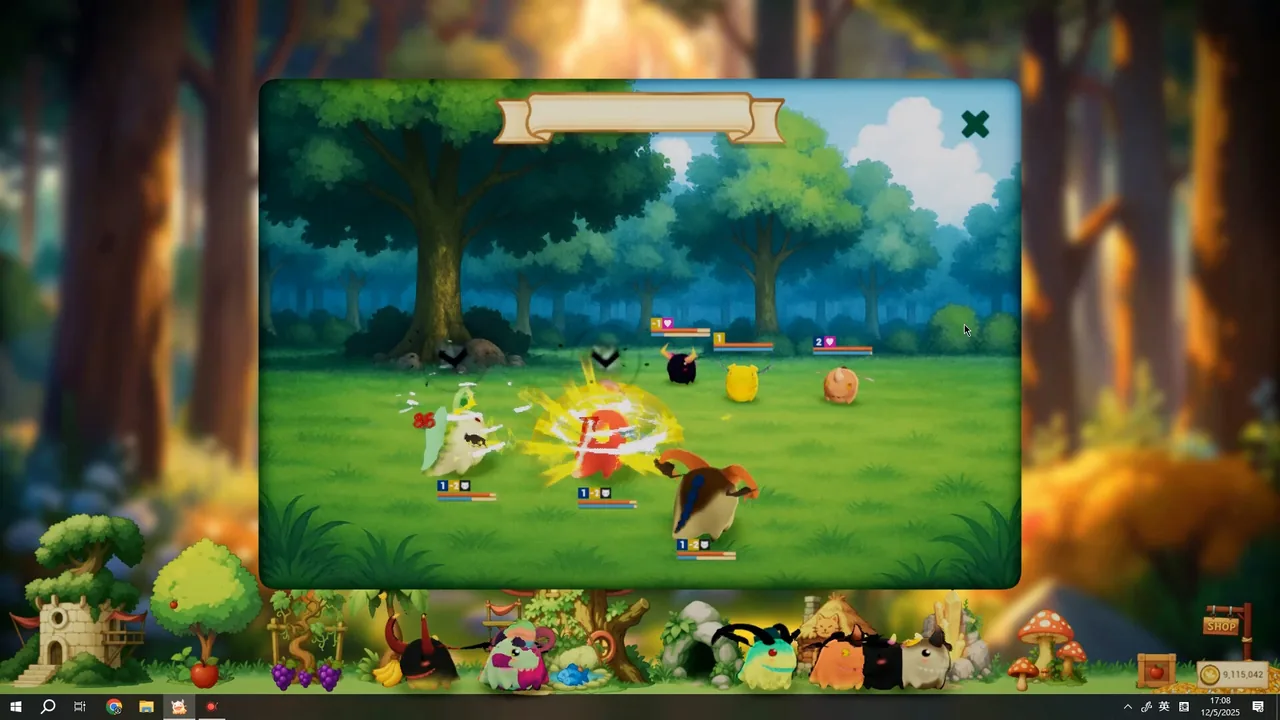
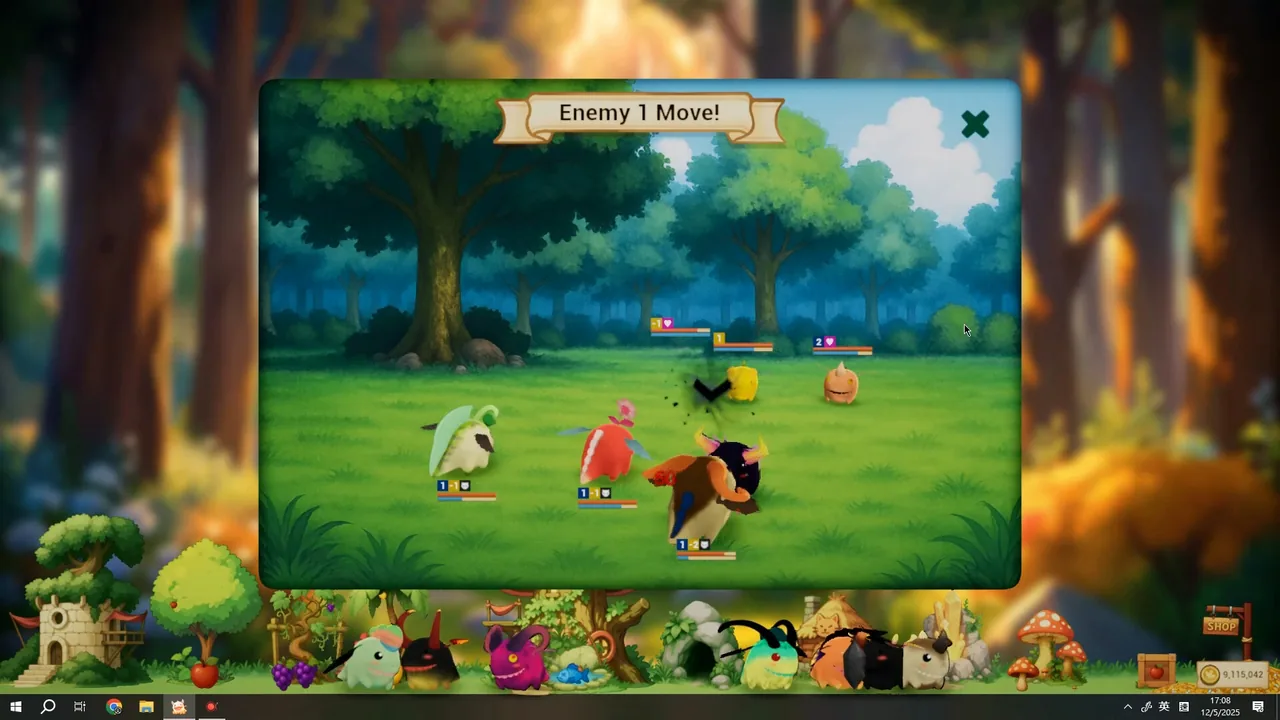
The battle system is automated — you assemble a team, send them in, and watch. Several reviewers, across two years of the review history, describe the same failure: your dinos stop attacking and just absorb hits until you close and reopen the game. A July 2026 review at 55 hours: "the achievements are a slog because of how badly the game currently functions... could be fixed but I don't think that's going to happen at this point." A review from thirteen months earlier, in Russian, describes an identical symptom at launch — dinos in the arena "don't attack, they just take damage." Same bug, fourteen months apart.
The other recurring complaint is the drag-and-drop interface. Buildings and the shop icon overlap and get stuck together, a bug reported in May 2025 and again in November 2025; left-click opens the shop but right-click opens other buildings, which several English reviewers found unintuitive; and holding the mouse a beat too long turns a click into an accidental drag, moving furniture or dropping a dino into storage by mistake. One reviewer lost a night's eggs entirely to a hatching bug that froze their save mid-incubation. None of this is exotic — it's the ordinary cost of a small team shipping a screen-bottom desktop app without much interface testing — but it has had over a year to get fixed and hasn't.
The support that stopped
Tiny Dino's public changelog has six entries. All six were posted between 12 and 15 May 2025 — the three days immediately after launch. Nothing has shipped since. One negative review from May 2025, still visible on the page, reads: "wait until more content is added." Fifteen months on, nothing has. That silence is the honest explanation for why the completionist achievement tiers sit under 5% — the systems that would reward pushing further were never built out, and the bugs blocking players from reaching them were never patched.
It's a familiar shape for a cheap idle game, and worth setting against VPet-Simulator, a free desktop pet in the same rough genre that has shipped seasonal content and anniversary updates continuously since 2023. Tiny Dino isn't free, and it stopped a week after it started.
What's actually good here
None of this erases the parts that work. The art is properly charming — soft, rounded dino designs, a warm forest backdrop, a satisfying little chime when gems get collected — and it's exactly the kind of low-effort delight a desktop companion should offer in its first few sessions. The price is honest: NZ$4.49, no ads, no in-app purchases, no DLC, and several of the game's own critics say as much explicitly before listing what's wrong with it. And the core idea — breed for colour, grow a population, occasionally send them off to fight — has real shape to it in the opening hours, even if the achievement data says almost nobody sees it through.
The verdict
Tiny Dino earns a 5. It's a fair impulse purchase for what it is in its first handful of sessions: cute, cheap, and genuinely idle in the way it advertises. It stops earning credit past that point, because the specific things that would turn "cute for an afternoon" into "worth keeping installed" — a working arena, a legible breeding system, a fixed drag-and-drop interface, any content added since launch week — never arrived, and the developer's own changelog shows they stopped trying three days after release.
Buy it if a small screen-bottom dino sounds pleasant for NZ$4.49 and you're not expecting it to grow. Skip it if you want the collecting or battling to go anywhere; the achievement numbers say it mostly doesn't, for almost anyone.
Pros and cons
Pros
- NZ$4.49 one-time purchase with no in-game purchases, ads or DLC of any kind
- Genuinely charming dino designs and a pleasant forest backdrop for the desktop strip
- Seven elemental colours give the breeding loop a real, if steep, long-tail chase
- Even several of its critics call it fair value for the asking price
- An auto-battle arena is an unusual, welcome addition for a desktop-pet game
Cons
- Persistent bugs — crashes, a hatching bug that has stranded players' eggs, buildings that snag on the shop icon — reported from launch week through July 2026
- All six of the game's patch notes land within three days of release; nothing has shipped since
- Left-click, right-click and drag are inconsistently assigned and cause frequent misclicks
- A ten-dino desktop cap frustrates collecting just as the breeding system opens up
- Achievement data shows the completionist and arena-scoring tiers are reached by 2.5–4.1% of owners
Screenshots
-
Tiny DinoImage: Pixfox via Steam -
Tiny DinoImage: Pixfox via Steam -
Tiny DinoImage: Pixfox via Steam -
How the review scores each part of the gameWanderer Editorial -
At a glanceWanderer Editorial -
The short versionWanderer Editorial