Game review
They Left in a Hurry: A Hidden Object Home
5 / 10
- Developer
- Softlight Studio
- Publisher
- Softlight Studio
- Released
- 23 June 2026
- Platforms
- Windows
- Genre
- Adventure, Casual, Indie
- Monetisation
- paid
- Players
- false
The short version
Biggest strengths
- A well-liked narrative-through-clutter approach, telling the story of the house's former occupants entirely through the objects scattered around a single home, which more than one reviewer called genuinely effective
- Charming, detailed 3D scene design that reviewers described as cozy and soothing to explore and tidy
- A genuinely low, accessible price point that most reviewers, even critical ones, acknowledged when weighing their final verdict
Biggest weaknesses
- Corroborated across nearly the entire pool as extremely short, roughly 5 to 10 minutes from start to finish, with the trailer's rooms reportedly being the only rooms in the game
- Multiple reviewers reported broken or non-triggering achievements even after repeated attempts
- One reviewer reported illegible white-on-white on-screen text that changes too quickly to read in full
Who it's for: Players who want a very brief, low-stakes, cozy tidying puzzle with a bit of narrative flavor, not recommended for anyone expecting more than 5 to 10 minutes of content or a genuine hidden-object search mechanic
Our recommendation: not-recommended
5 / 10
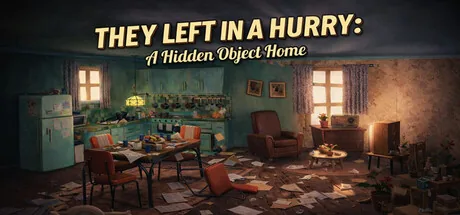
They Left in a Hurry: A Hidden Object Home released in full on Steam on June 23, 2026, from Softlight Studio, a short casual title that drops players into a single abandoned house and asks them to piece together why its occupants left so suddenly, entirely by clicking on and tidying up misplaced objects scattered through its rooms. Its 16-review English pool sits at Mixed (9 up, 7 down, 56%), and the reviews describe a genuinely charming, well-designed idea let down badly by how little of it there actually is.
The core narrative-through-objects hook draws the pool's most consistent praise from the reviewers who enjoyed it. One reviewer described the format directly: "we need to understand why they left. We must explore on our own, uncover the truth, and click back and forth," adding warmly, "reflect on (savor) this story!" A separate reviewer said they "have a rough idea of what kind of story this is" from the clutter alone, adding "the details are hidden among the casual items" and "I really like this narrative technique!" A third reviewer summed up the tone succinctly, calling it "cozy 3D hidden-object game, short playtime with minor flaws," a description that captures both the pool's affection for the concept and its central complaint in a single sentence.
The tidying mechanic itself, described by one reviewer as "a 3D hidden object game where you can click on misplaced items to rearrange them and make everything look neater," drew genuine, specific approval from multiple reviewers for how soothing and low-stress it felt to play. One reviewer called the gameplay "pretty simple and easy to pick up," adding that "the background story is a bit surreal" in a way they found interesting rather than off-putting, while another described the overall experience as "casual hidden-object gameplay is soothing, with intricate scene details and immersive story exploration." That combination, a calm, clutter-based puzzle loop wrapped around a mystery told through set dressing rather than dialogue, is clearly what the small pool of positive reviewers responded to most.
Runtime is where the pool turns sharply and near-unanimously critical, and the specific numbers reviewers report are remarkably consistent regardless of their final verdict. Multiple reviewers independently clocked the game at right around seven minutes: one wrote flatly, "the game literally is only 7 minutes long," adding "the rooms that you see in the trailer really are the only rooms in the game." Another simply stated, "7 minutes. Start to finish. Totally requesting a refund." A third reviewer, more measured but reaching the same conclusion, wrote that they "really liked the idea and enjoyed playing it, but the overall experience felt a bit too short," suggesting even reviewers who enjoyed the game found its length a genuine limitation rather than a deliberate, well-executed choice. One especially blunt reviewer noted "it took longer to download than it did to finish the game," a complaint that lands as pointed criticism precisely because it's so easy to verify.
Value-for-money framing splits the pool almost exactly along the same lines as the length complaints, though even critical reviewers were careful to note the price is genuinely low. One reviewer who called the puzzles "not very fun" still conceded "the price is pretty reasonable," adding "if it were selling for over 20, I would definitely complain." Another reviewer took the opposite position more forcefully: "even 3 bucks feel like too much for the experience it provides," while a third wrote plainly, "not a hidden object game, only 4 levels, dont buy, waste of money." That last complaint, that the game's four total rooms don't add up to enough content to justify the genre label on the store page, is corroborated closely enough by the seven-minute runtime reports to read as a fair characterization rather than an outlier grievance.
A handful of separate technical complaints round out the negative side of the pool, each specific enough to flag directly. One reviewer reported that "the words are sometimes illegible because they are white on white background and they change so fast you can't read everything," adding pointedly, "I am a fast reader and this was ridiculous." A separate reviewer reported the game was simply "boring and no settings to turn down the awfully loud music, there no hints if you are stuck either," a basic accessibility and quality-of-life gap for a genre that typically leans on hint systems when players get stuck. A third, unrelated complaint came from achievement hunters: one reviewer reported that "the scavenger hunt game that ends within 10 minutes has two achievement issues," having "tried multiple times" without success, and warned other completionists "should be cautious about entering."
The pool's split between positive and negative reviews maps unusually cleanly onto how each reviewer weighed atmosphere against runtime going in, which is worth naming directly since it explains the Mixed score better than any single complaint does. Reviewers who treated it as a cheap, five-minute mood piece, something to sample once for its narrative gimmick rather than a full game session, generally came away satisfied and recommended it on those terms. Reviewers who bought it expecting a traditional hidden-object game with the genre's usual scope, dozens of scenes, a search-and-find loop, meaningful difficulty, came away feeling the store page had oversold what's actually a four-room vignette. Both readings are fair given the reviews on record, which is exactly why a prospective buyer needs to calibrate expectations before purchasing rather than after: this is closer to a short, well-dressed narrative vignette than a genre hidden-object game, whatever the storefront's genre tags suggest.
Taken together, They Left in a Hurry: A Hidden Object Home has a genuinely appealing central idea, telling a quiet domestic mystery entirely through the clutter of an abandoned house, and the reviewers who connected with that idea describe a soothing, well-detailed short experience. But the pool's Mixed rating reflects a real, well-corroborated problem rather than a difference in taste: at roughly seven minutes and four rooms for around four dollars, most players who bought it in good faith expecting a fuller hidden-object experience came away feeling shortchanged, and broken achievements and a couple of avoidable presentation bugs don't help its case. Worth a look only if the price drops further or the scope expands.
Pros and cons
Pros
- A well-liked narrative-through-clutter approach, telling the story of the house's former occupants entirely through the objects scattered around a single home, which more than one reviewer called genuinely effective
- Charming, detailed 3D scene design that reviewers described as cozy and soothing to explore and tidy
- A genuinely low, accessible price point that most reviewers, even critical ones, acknowledged when weighing their final verdict
- Simple, easy-to-pick-up mechanics that don't require any hidden-object genre experience to understand immediately
Cons
- Corroborated across nearly the entire pool as extremely short, roughly 5 to 10 minutes from start to finish, with the trailer's rooms reportedly being the only rooms in the game
- Multiple reviewers reported broken or non-triggering achievements even after repeated attempts
- One reviewer reported illegible white-on-white on-screen text that changes too quickly to read in full
- A separate reviewer reported no way to lower an overly loud music track and no hint system when genuinely stuck
Screenshots
-
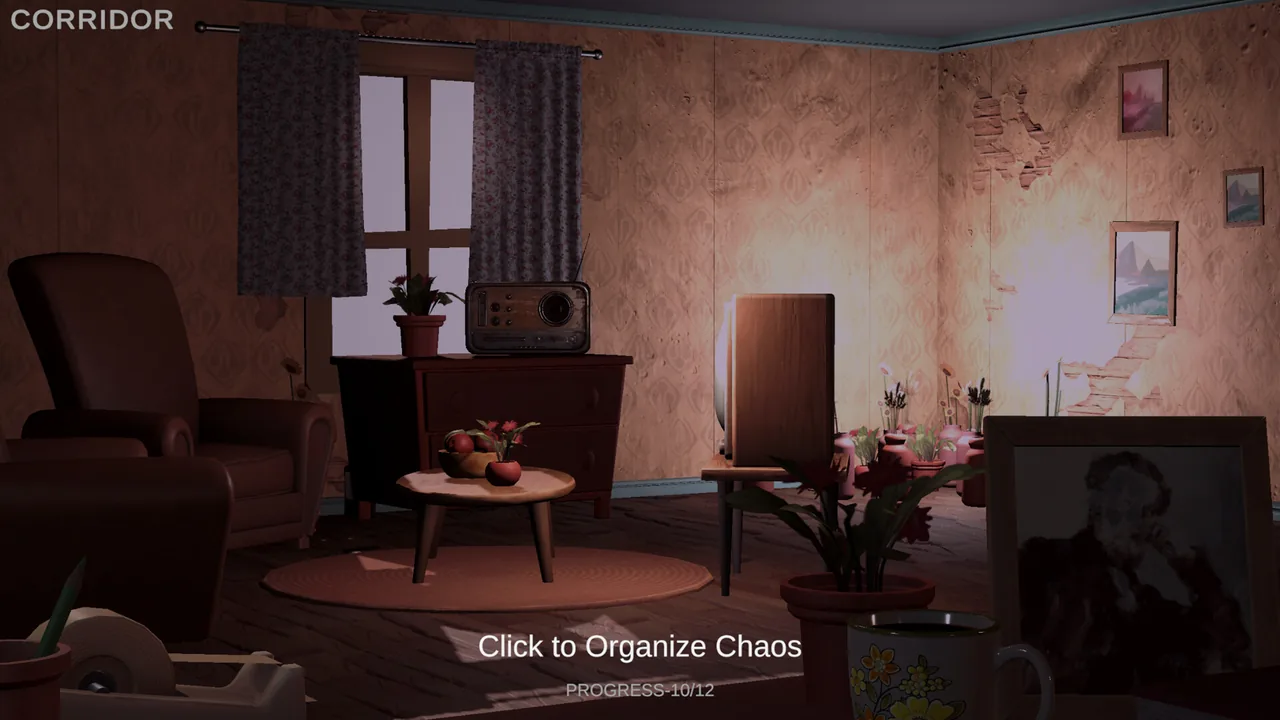
They Left in a Hurry: A Hidden Object HomeImage: Softlight Studio via Steam -
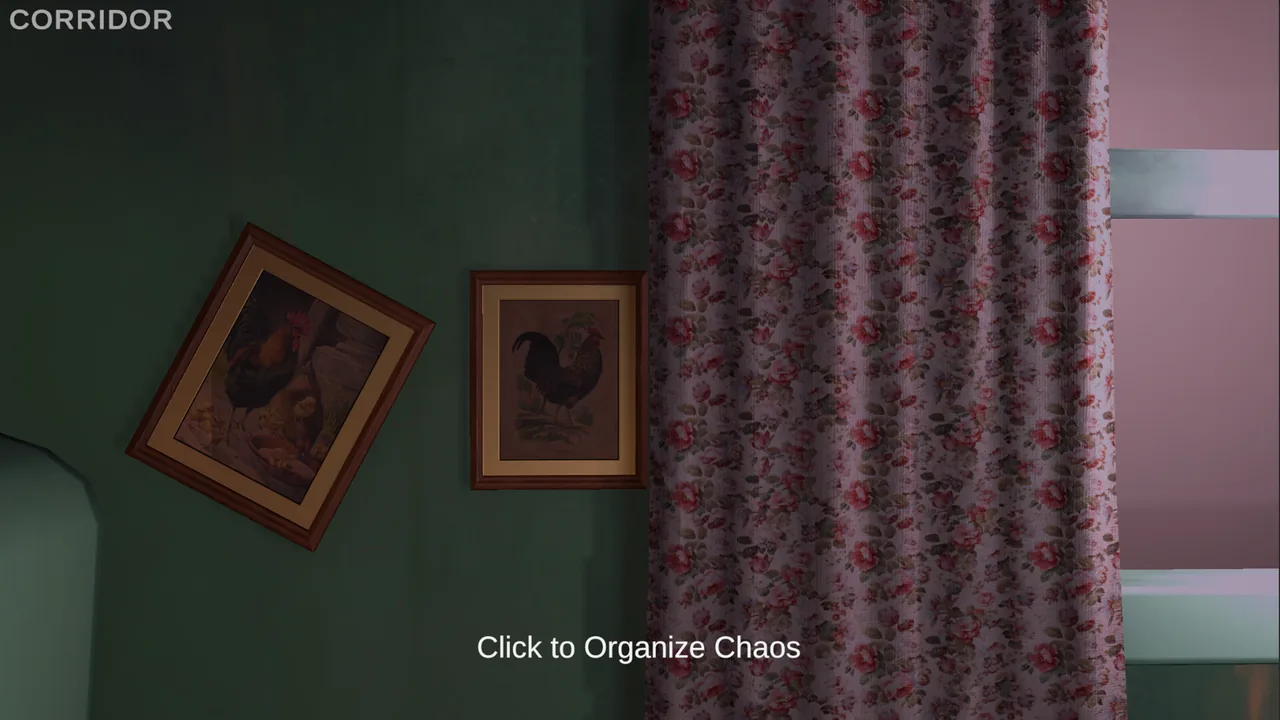
They Left in a Hurry: A Hidden Object HomeImage: Softlight Studio via Steam -
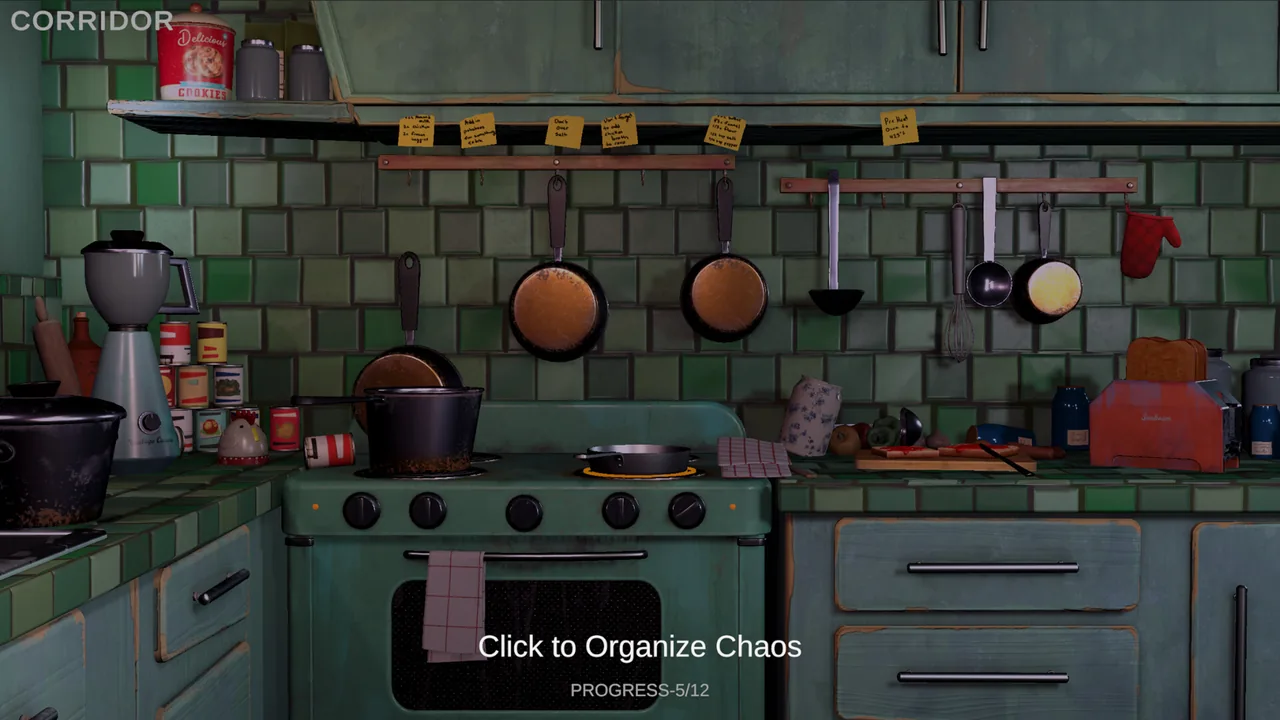
They Left in a Hurry: A Hidden Object HomeImage: Softlight Studio via Steam