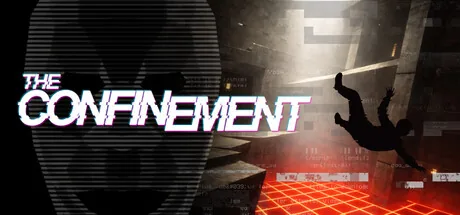
Game review
The Confinement Review: A Precision Platformer That Wants You to Rage Quit and Come Back
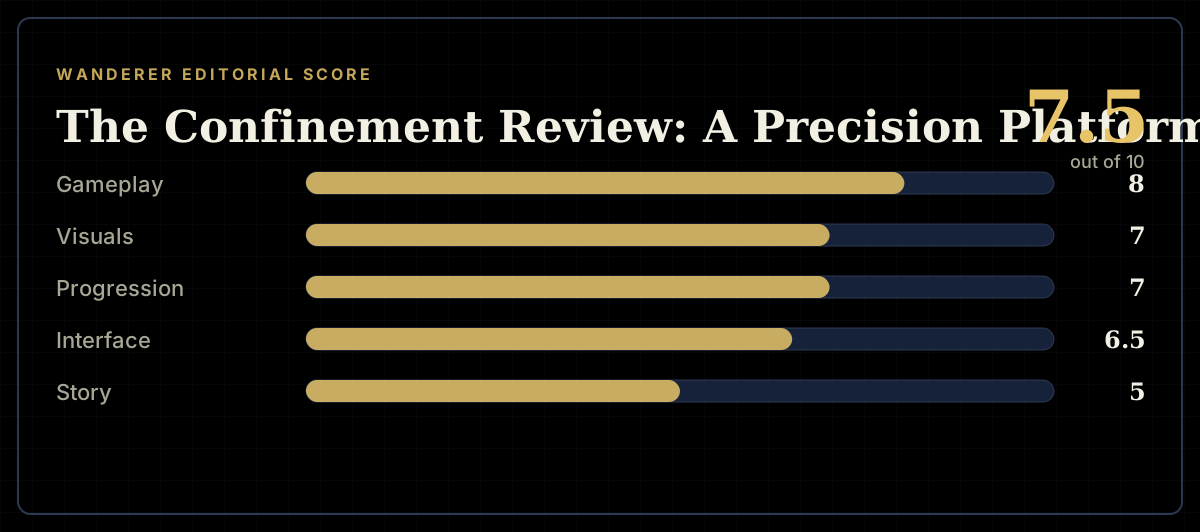
7.5 / 10
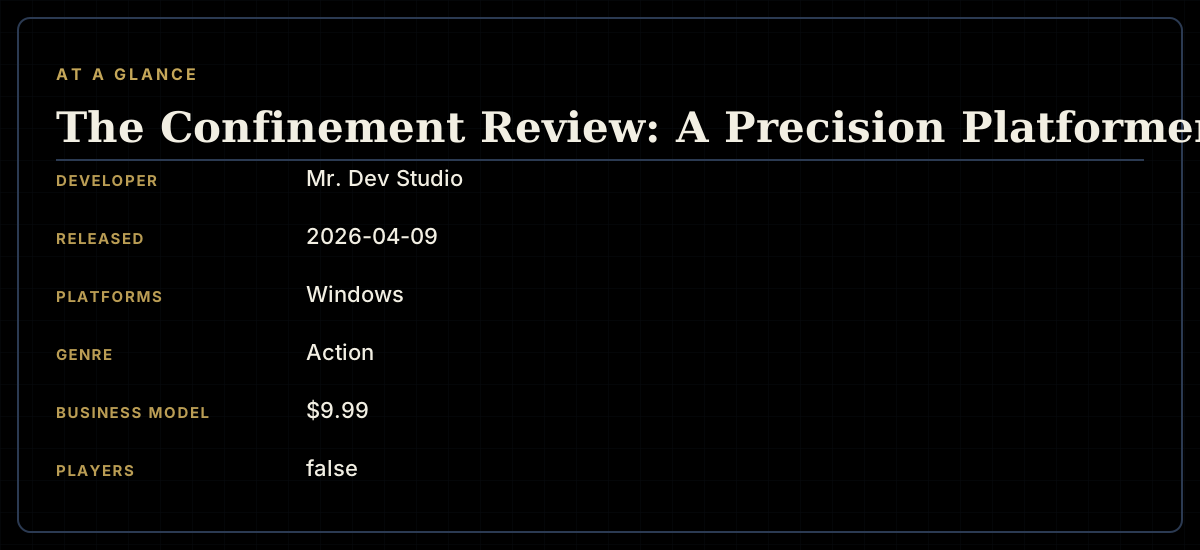
- Developer
- Mr. Dev Studio
- Publisher
- QUByte Interactive
- Released
- 9 April 2026
- Platforms
- Windows
- Genre
- Action
- Monetisation
- $9.99
- Players
- false
The short version
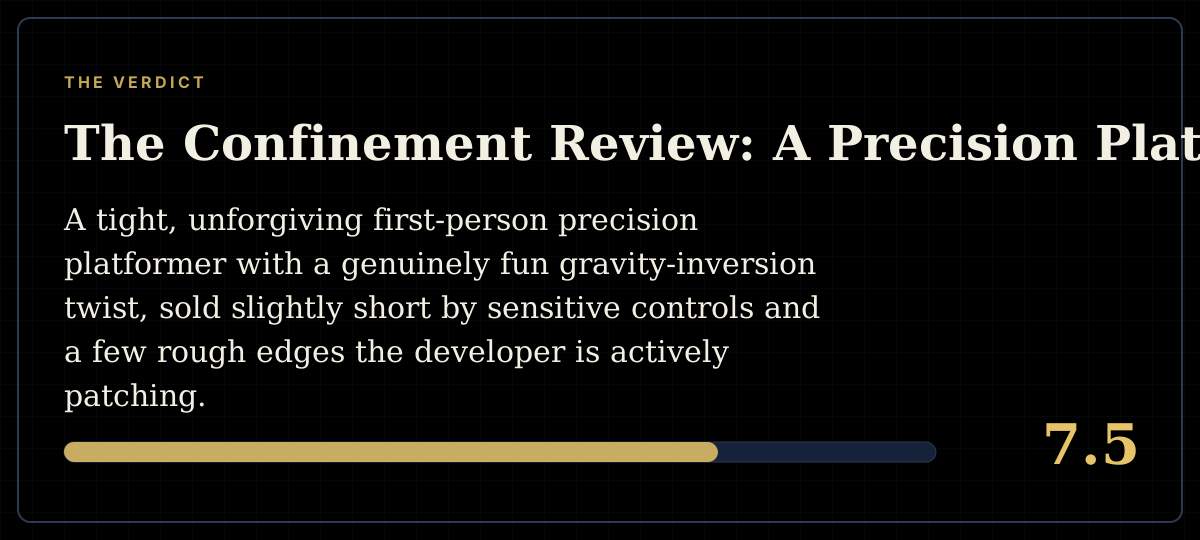
A tight, unforgiving first-person precision platformer with a genuinely fun gravity-inversion twist, sold slightly short by sensitive controls and a few rough edges the developer is actively patching.
Biggest strengths
- Gravity-inversion mechanic adds real depth to first-person platforming without overcomplicating it
- 30-plus levels built specifically for replayability and time-attack optimization
- Global competitive ranking gives skill-focused players a real long-term goal
Biggest weaknesses
- Controls are sensitive enough that multiple reviewers flag precision as a real barrier to entry
- Difficulty spikes hard and unapologetically, with almost no hand-holding
- Story/atmosphere framing is thin dressing around the core time-attack loop
Who it's for: Speedrunners and skill-based platformer fans who want a punishing, leaderboard-driven challenge, not players looking for hand-holding or a story.
Our recommendation: Recommended
7.5 / 10
Trapped in a simulation, one chamber at a time
The Confinement drops you into an AI-run testing facility with a simple premise: prove your reflexes are as sharp as you think they are, across more than 30 tightly-built chambers, competing for position on a global time-attack ranking. There's a thin sci-fi wrapper around it — "Test Subjects," a calibrating AI, chamber doors locking behind you — but as more than one reviewer notes, the actual appeal here has almost nothing to do with narrative. This is a pure, skill-based first-person platformer built for players who want to shave milliseconds off a run, not follow a plot.
The hook: gravity does what you tell it to
What lifts The Confinement above a generic precision-jumper is its gravity-inversion mechanic. One reviewer called it out directly as the thing that "adds a lot of depth to the gameplay," and it's easy to see why — flipping gravity mid-run turns familiar platforming geometry into something you have to re-read on the fly, and the best levels lean into that disorientation rather than treating it as a gimmick used once and discarded. Reviewers consistently describe the resulting movement as "sharp" and the game as "easy to pick up and play, but hard to master," which is close to the ideal pitch for a speedrun-focused platformer: a low floor for understanding the rules, a high ceiling for actually executing them well.
Unforgiving by design, and reviewers are fine with that
The Confinement doesn't soften its difficulty curve, and its own fans describe that bluntly. "The game doesn't hold your hand at all, every mistake is on you," one reviewer wrote, adding that "that's what makes it satisfying when you finally nail a run." Another reviewer captured the same dynamic more bluntly, joking through a step-by-step of dying repeatedly and rage-quitting before reopening the game to try again — a complaint framed as a compliment, in the way skill-based genre fans often mean it. That tension is real, though, and worth taking seriously as a buyer: this is explicitly not built for players who want a relaxed platformer, and the same review that praises the level design also cautions it "can be a bit unforgiving and the controls are very sensitive, so it's not for everyone."
Where the rough edges actually are
The controls-sensitivity complaint isn't isolated. Multiple reviewers independently flag precision and control feel as the game's main friction point, even while recommending it overall — one review summarizes the whole experience as "a bit rough around the edges, but well worth the price." That's corroborated by the achievement data: Steam lists 45 achievements for The Confinement, evidently tied to individual chambers, and while the first handful sit at a healthy 70-78%, the numbers fall off sharply from there, with most of the back half of the list sitting in the 15-30% range and the hardest achievements down near 11%. That steep drop-off lines up precisely with the "die repeatedly, rage quit, come back" rhythm reviewers describe — this is a game whose difficulty curve genuinely thins out the audience level by level, which is either exactly what a speedrun-focused player wants or a hard wall for anyone else.
A developer that's still tuning it
Mr. Dev Studio, a Brazilian indie team, ran a public Time-Attack Challenge and a free demo during Steam Next Fest before launch, and one reviewer with prior access to earlier builds specifically credits the finished game with "the quality always found in their projects." Since the April 9 launch, the developer has shipped a patch focused on Steam Deck optimization and options-menu fixes — settings not saving properly, menu display issues — and stood up a Discord server for ongoing community feedback. That's a reasonable amount of post-launch attentiveness for a $9.99 release from a small studio, and it lines up with the "rough around the edges" framing reviewers use: a genuinely fun core loop that's still being sanded down rather than one that shipped and was abandoned.
One reviewer's grand theory, and what it gets right
Not every review here stays in practical territory. One particularly florid write-up frames The Confinement as "a manifesto on the purity of movement and the occupation of space," arguing that where the wider industry chases "narrative excesses and visual distractions," this game finds its prestige "in subtraction," comparing its stripped-down, environment-as-antagonist design to the spatial intentionality of Hideo Kojima's more auteur-driven work. It's an unusually grand way to talk about a $9.99 gravity-flipping platformer, and it's worth taking with a grain of salt as pure enthusiasm rather than sober analysis — but underneath the theatrical language is a real observation that holds up against the rest of the review sample: The Confinement really is committed to minimalism over spectacle, using bare geometry and a stark neon-on-dark aesthetic rather than narrative dressing to create tension. Whether or not you'd reach for Kojima as the reference point, the underlying read — that the emptiness of each chamber is doing real design work, not just standing in for a bigger budget — tracks with how every other reviewer describes the moment-to-moment tension of a run.
Verdict
The Confinement is a tight, honestly difficult first-person precision platformer whose gravity-inversion twist gives it real identity beyond genre convention. It asks a lot of its players' patience and control precision, and it will lose plenty of people to frustration well before the leaderboard's top tiers — but for the audience it's built for, that difficulty is the entire point, and the developer's continued post-launch attention is a good sign for where the rough edges go from here.
Pros and cons
Pros
- Gravity-inversion mechanic adds real depth to first-person platforming without overcomplicating it
- 30-plus levels built specifically for replayability and time-attack optimization
- Global competitive ranking gives skill-focused players a real long-term goal
- Developer shipped a Steam Deck optimization and options-menu patch post-launch
Cons
- Controls are sensitive enough that multiple reviewers flag precision as a real barrier to entry
- Difficulty spikes hard and unapologetically, with almost no hand-holding
- Story/atmosphere framing is thin dressing around the core time-attack loop
Screenshots
-
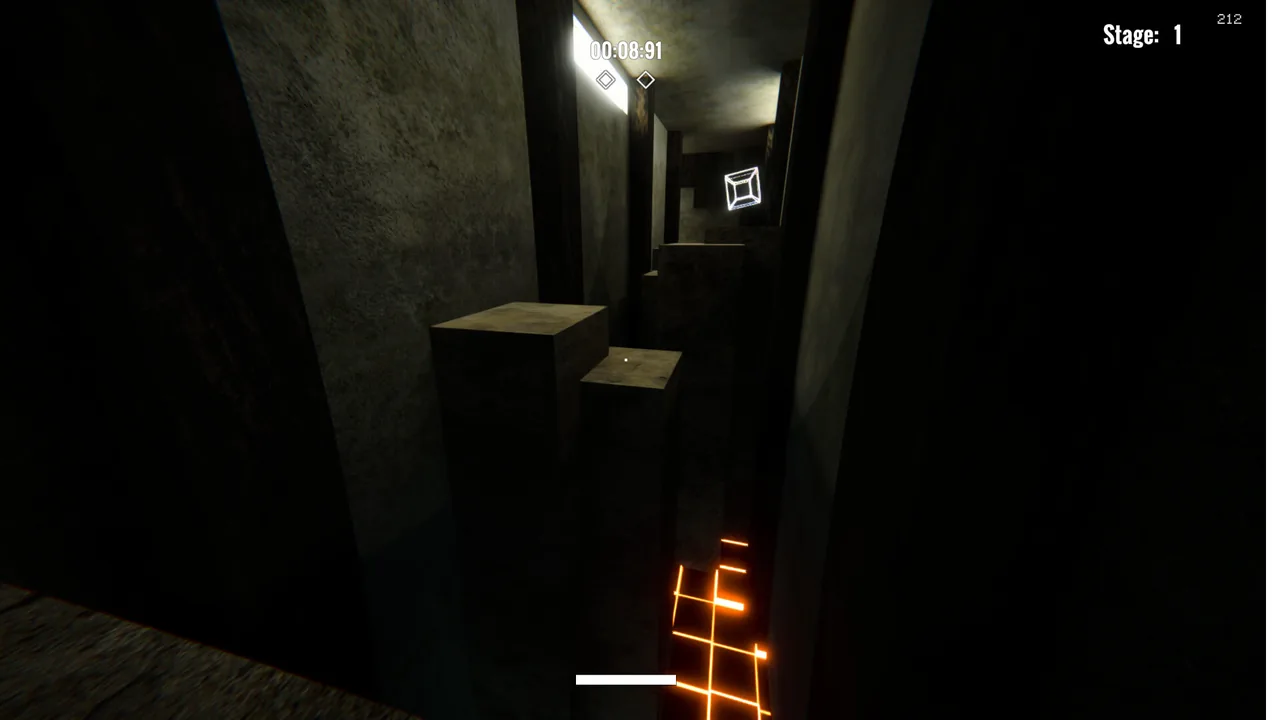
Image: QUByte Interactive via Steam -
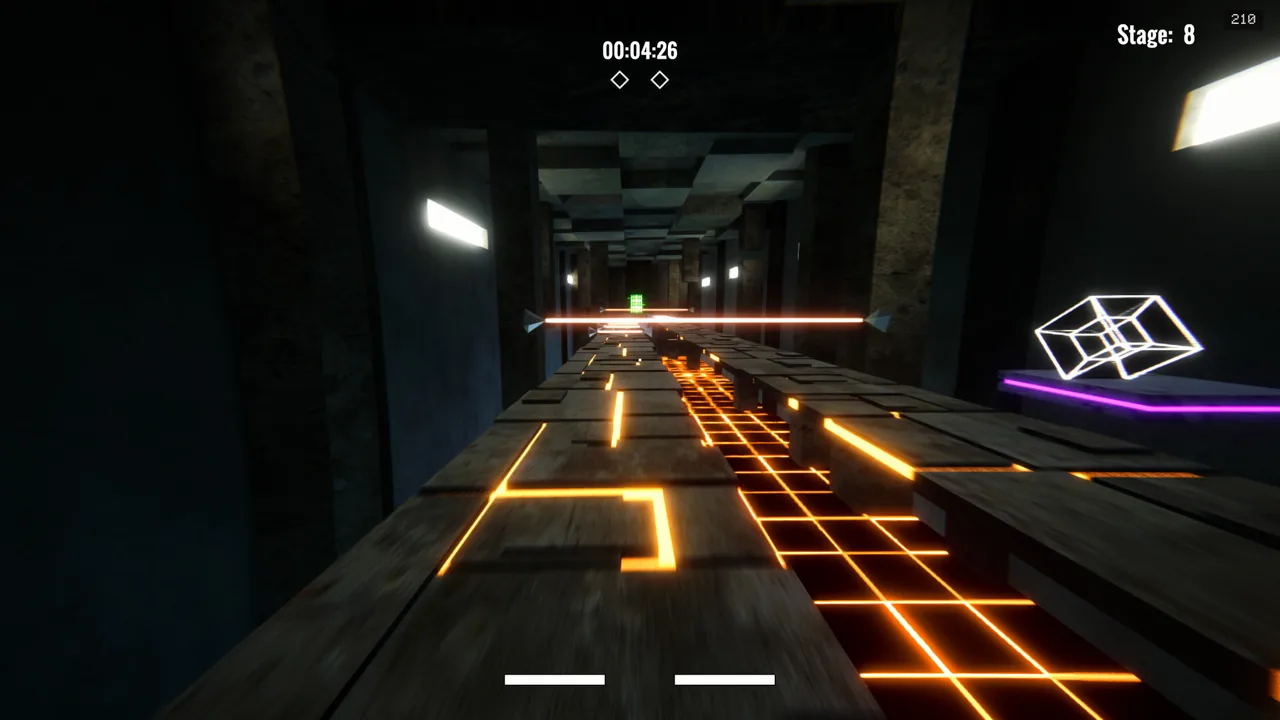
Image: QUByte Interactive via Steam -
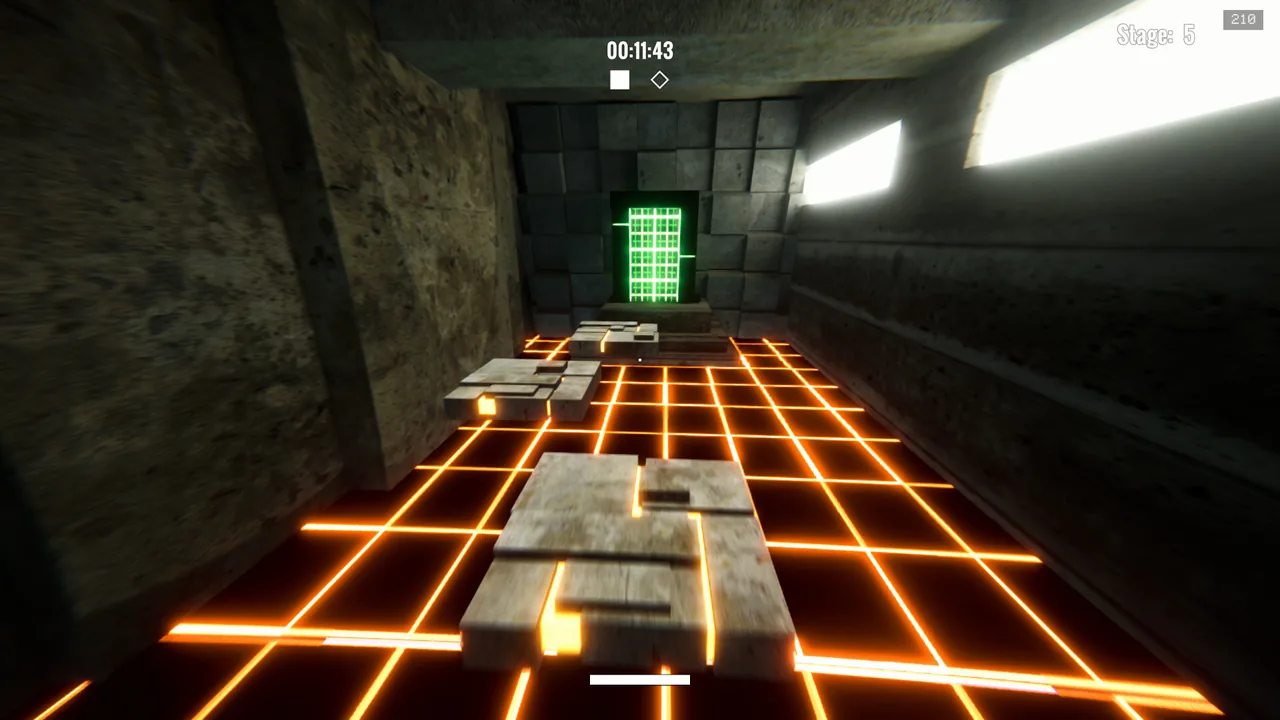
Image: QUByte Interactive via Steam -
Wanderer Editorial -
Wanderer Editorial -
Wanderer Editorial