Game review
Tales of Arise
8 / 10
- Developer
- Bandai Namco Studios Inc.
- Publisher
- Bandai Namco Entertainment
- Released
- 10 September 2021
- Platforms
- Windows, PlayStation 4, PlayStation 5, Xbox One, Xbox Series X|S, Nintendo Switch 2
- Genre
- Action RPG
- Monetisation
- Premium, one-off purchase, plus a long paid-DLC tail. Steam lists 32 separate DLC entries for the base game: the Beyond the Dawn story expansion (NZ$49.99), a string of costume packs that each bundle a cosmetic outfit with a passive stat bonus or Arte, and currency/XP boosters such as the Growth Boost Pack (NZ$8.99) and several "100,000 Gald" packs (checked 3 August 2026). None of it is required to finish the story, but the costume-locked Artes and the level/currency boosters are the specific reason this game has a genuine monetisation reputation — see the dedicated section below.
- Players
- Single-player only. There is no co-op, split screen or online mode of any kind, on any platform.
The short version
Tales of Arise is one of the best action-combat JRPGs Bandai Namco has shipped this decade — six switchable protagonists, an elemental Artes system that actually rewards reading an enemy, and a story about colonisation and liberation with more thematic ambition than the series usually risks. It is also the Tales game whose launch-week decision to gate small combat bonuses behind costume DLC, then advertise that DLC at every campfire, still shows up unprompted in its own negative reviews years later. Neither fact cancels the other out.
Biggest strengths
- Boost Strike team attacks and six-character elemental Artes give the action-combat system real depth once you're switching characters to exploit a specific enemy weakness rather than button-mashing the strongest party member
- The Dahna-and-Rena colonisation premise gives Alphen and Shionne's central relationship genuine thematic stakes instead of the series' usual generic save-the-world framing
- Motoi Sakuraba's score is one of his strongest Tales soundtracks in years and elevates even routine field encounters
Biggest weaknesses
- Costume DLC packs bundle small stat bonuses and Artes with cosmetics, which turns purely cosmetic purchases into combat-adjacent ones — a distinction multiple negative Steam reviews still raise unprompted, years after launch
- Campfire rest scenes double as an advertising surface for currency and level boosters, a design choice player feedback has flagged as immersion-breaking as recently as December 2024
- Skill Point and Gald income are paced slowly enough in the opening act that the level and currency booster DLC reads as a deliberate pressure valve rather than a genuine convenience
Who it's for: Action-RPG and JRPG players who want six-character team combat with real mechanical depth and a narrative willing to be genuinely dark, and who can shrug off a full-price game advertising to them between chapters. Less suited to players who want a clean premium purchase with no storefront left dangling in the menus, or who bounced off the Tales series' visual-novel skit format in the past.
Our recommendation: Worth playing for the combat and the first two-thirds of its story, but go in knowing this is the full retail price five years on with no discount, a DLC catalogue that includes gameplay-adjacent unlocks rather than pure cosmetics, and a back half that leans harder on padded boss fights than the opening earns. A sale price changes this calculation more than almost anything else about it.
8 / 10
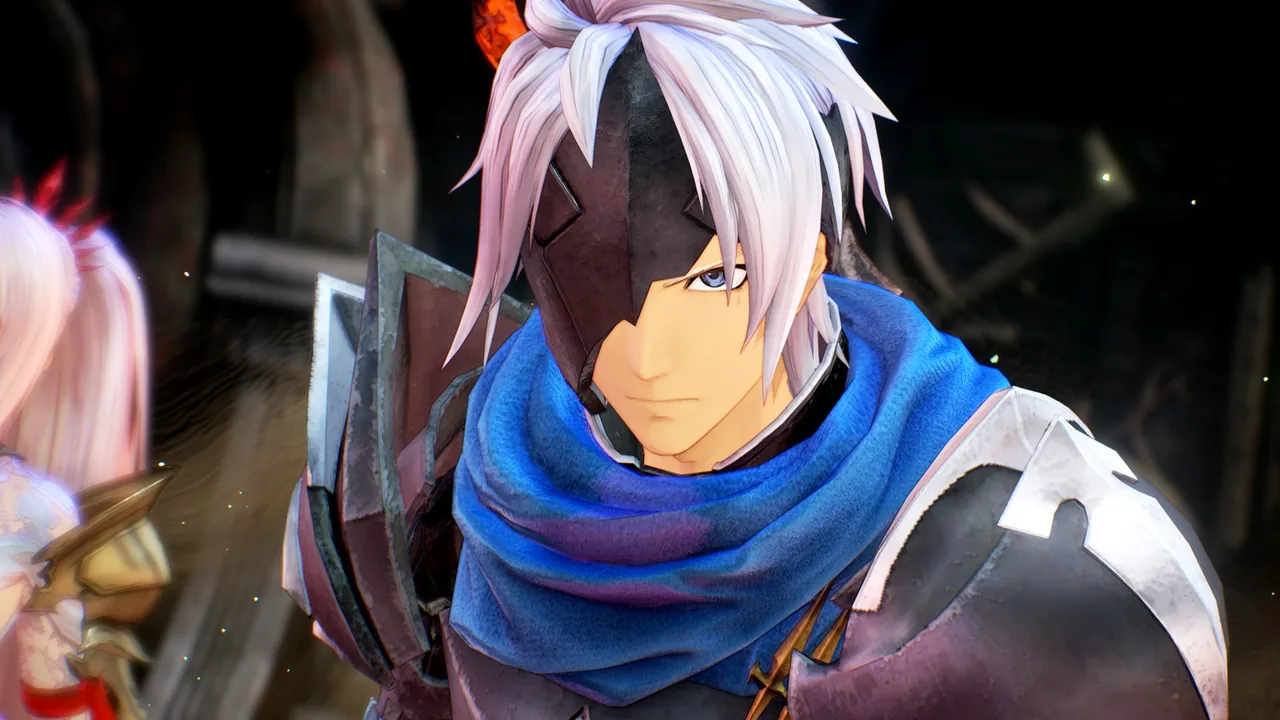
Alphen spends the opening hour of Tales of Arise wearing an iron mask that's been welded to his face for so long he can't remember what's underneath it or why it stopped hurting. That image — occupation so total it numbs the people living under it — is a blunter statement of theme than this series usually risks, and Tales of Arise spends its first two-thirds actually following through on it: Dahna's people are an enslaved, resource-stripped underclass to the ruling Renan lords from the sky, and the game is explicitly about what liberation costs the people who have to fight for it. It's also, five years after launch, a game whose own negative Steam reviews still talk about DLC and campfire advertisements as often as they talk about the story. Both of those things are true about the same release, and neither one makes the other go away.
Combat that finally matches the presentation
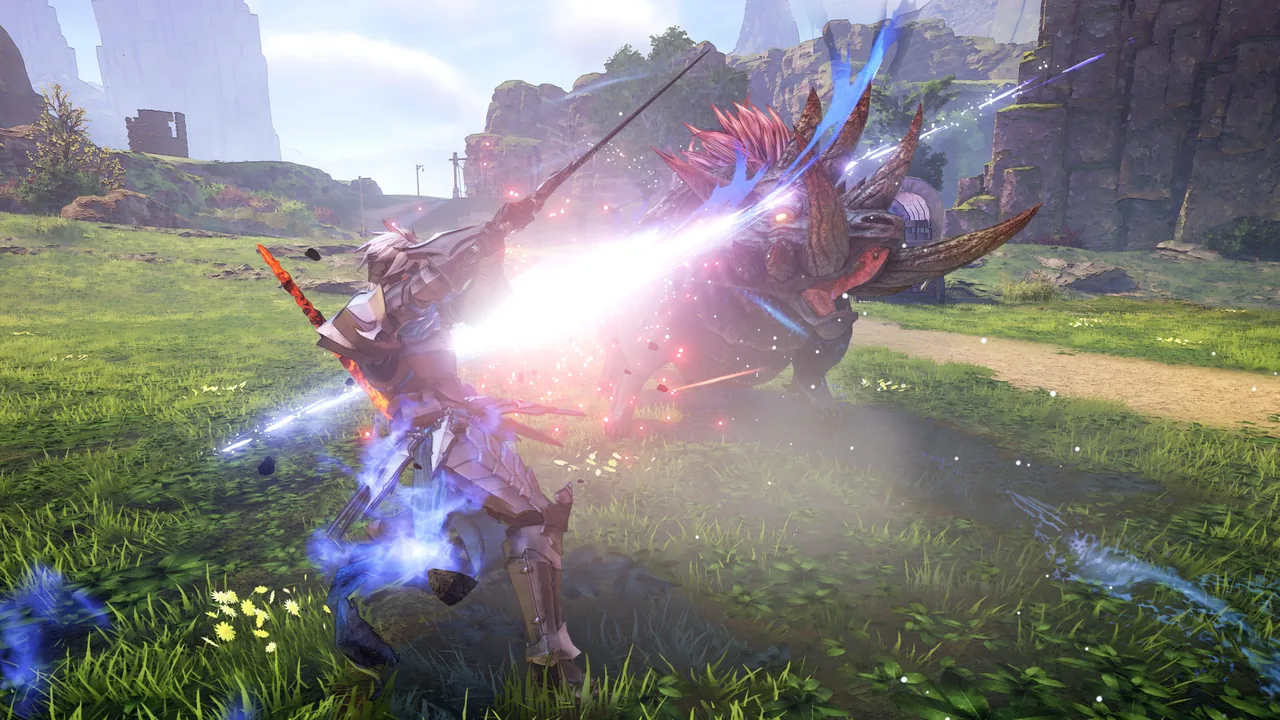
Six playable characters, three active in the field party at once, instant switching mid-combo, and an Artes system split across melee and ranged specialists who each carry a distinct elemental kit — that's the skeleton, and it's a genuinely strong one. The signature move is the Boost Strike, a cinematic team-up finisher two characters can unleash once a Boost Gauge fills, and it does real mechanical work rather than just looking good: regular enemies die outright, and bosses eat a hard stagger window that opens up free damage. Elemental weaknesses matter enough that swapping to the right character mid-fight is usually the correct read rather than a flourish, and the game rewards players who actually track an enemy's resistances instead of defaulting to whichever party member hits hardest.
This is the part of Tales of Arise that critics were near-unanimous about at launch — it won Best RPG at The Game Awards 2021, and Metacritic scores across platforms (84 on PC, 82 on PS4, 87 on PS5 and Xbox Series X) put it comfortably ahead of most Tales entries that came before it. Nothing about revisiting it years later changes that read. The combat is fast, legible and generous with spectacle without losing the tactical layer underneath, and it's the strongest argument for playing this game in 2026 regardless of anything else in this review.
A story willing to be genuinely dark
Tales of Arise's premise — an enslaved planet, a ruling class that's stripped its resources and numbed its people to keep them compliant, and a small group of escapees trying to actually change that — gives Alphen and Shionne's central relationship real stakes instead of the series' more typical save-the-world plotting. The story is at its best in its first two-thirds, when it commits to showing what occupation costs specific people rather than abstracting it into lore, and the Sword Art Online-style tension between Alphen's suppressed memories and Shionne's literal touch-based curse gives the central pairing a mechanical hook the writing keeps returning to.
Where it costs the game points is the back half. Once the story shifts from liberating individual regions to a wider political conflict, the pacing loosens considerably — cutscenes lengthen, boss fights increasingly rely on inflated HP pools rather than new mechanics, and the tight character-focused storytelling that defined the opening acts gives way to broader plot mechanics that don't always earn the same investment. It's not a collapse, but it is a real step down from what came before it, and it's consistent with what Steam's own achievement data shows: completion rates across the story's tracked chapter milestones fall steadily from roughly three-quarters of players finishing the first major story beat down to just under a third completing the campaign outright. That's a normal shape for any fifty-hour RPG, but it tracks closely with player complaints that the second half asks more patience than the first half banked.
The DLC problem, specifically
This is worth being precise about, because "DLC controversy" covers a lot of very different sins and Tales of Arise's version is a specific one. The base game ships complete — nothing in the main story, no playable character and no ending is locked behind a purchase. What drew the criticism, consistently, from launch week through negative reviews posted as recently as December 2024, is that several of the costume DLC packs bundle a cosmetic outfit together with a small passive stat bonus or an Arte, which turns what should be a purely cosmetic purchase into one with a genuine, if modest, combat effect. Layered on top of that are currency and experience boosters — the Growth Boost Pack (NZ$8.99) and a string of "100,000 Gald" packs among them — sold into a game whose Skill Point and Gald income is, by design, fairly slow in the opening hours. Enough players independently read that pacing as intentional pressure toward the booster DLC that it became a recurring theme in critical discussion well beyond the initial launch cycle, not just a one-off complaint.
None of that makes Arise pay-to-win in any competitive sense — it's a single-player game, nobody else sees your Gald balance, and every one of these bonuses can be earned through ordinary play. What makes it a fair target for criticism is presentation as much as substance: the game surfaces this storefront at rest camps, the same scenes doing quiet emotional lifting for the cast, and does it often enough that "immersion-breaking" is the single most consistent word players reach for when they bring it up. A full-price single-player JRPG selling stat-adjacent costumes and advertising them at the campfire is a defensible business decision and a legitimately unpopular one at the same time, and Tales of Arise's Steam reviews five years on say the second part hasn't faded.
What's notable reading through that feedback in bulk is how little of it comes from players who bounced off the game early. One negative review with roughly 44 hours logged specifically counts more than fifteen skill nodes it says are unreachable without the costume DLC; another, posted in December 2024 with close to 98 hours recorded, is still raising the campfire advertisements as its main complaint. That pattern matters more than a single angry review at the twenty-minute mark would — these are, in the main, players who finished or nearly finished the game and came away annoyed by the storefront rather than by the game itself. It's also why "it's just cosmetic" and "it's genuinely predatory" have coexisted as fair readings of the same release since launch week: the actual mechanical effect of any single costume's stat bonus is small, but the pattern of selling it that way, at that volume, in that location in the UI, is the part that never stopped drawing criticism.
Presentation and score
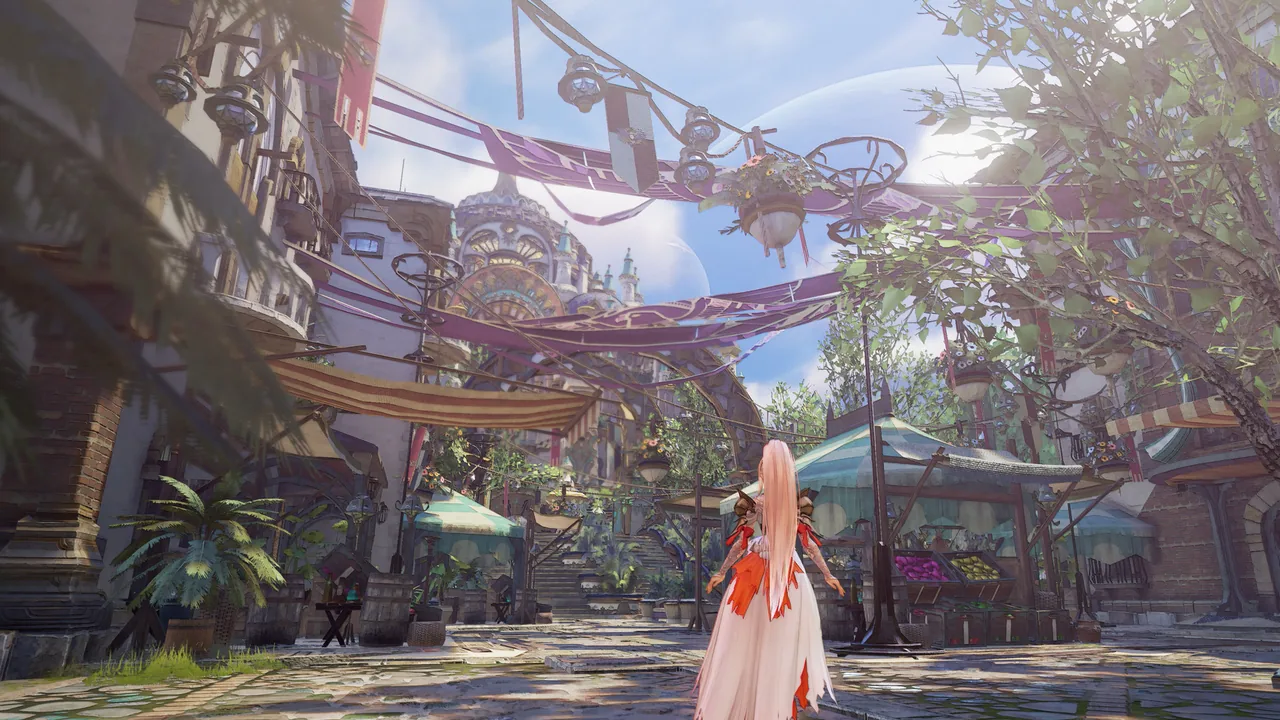
Arise's art direction was a deliberate departure for the series — a painterly, high-contrast look built to hide the seams between environment art and character models better than any prior Tales game managed — and it still holds up well against the genre in 2026, particularly in outdoor environments where the lighting does most of the work. Motoi Sakuraba's score is the other standout: after decades scoring this series, Arise is regularly cited as one of his strongest Tales soundtracks, leaning into orchestral horns for the big story beats without losing the more intimate character themes in between. Between the two, this is a game that earns the word "beautiful" without much hedging, and it's aged better visually than most of its 2021 action-RPG contemporaries.
The Switch 2 port
The newest way to buy this game is also the newest platform it's ever been on: a "Beyond the Dawn Edition," bundling the base game with the 2023 expansion, launched on Nintendo Switch 2 on 22 May 2026 — barely three months old at the time of this review. That's a meaningfully different product from the 2021 original in one specific way worth naming for anyone comparing platforms: it's the first version of Arise built for a handheld, running on hardware well below the PC and current-gen console targets the game was designed around, and getting the full experience with the expansion included from day one rather than as a separate later purchase. For a five-year-old release, a first-party handheld edition arriving with an integrated expansion rather than pre-order-locked carve-outs is a reasonable way to be new in 2026, even if the underlying game hasn't otherwise changed.
Progression, the endgame, and Beyond the Dawn
The character growth grid — passive nodes unlocked through Skill Points, spent across a shared tree with light specialisation per character — gives long-term progression a real sense of direction, even with the DLC friction noted above sitting on top of it. The Beyond the Dawn expansion (NZ$49.99, released 8 November 2023) is a genuine post-campaign story arc rather than a cosmetic epilogue, and it's the one piece of Arise's DLC catalogue that reads as straightforwardly good value: a real narrative addition, not a booster. Replayability outside that is fairly standard for the genre — side content, fishing and cooking systems, and post-game superbosses give completionists something to chase, but nothing here reinvents what a Tales game does once the main story ends.
Value, five years later
At NZ$89.95 with no discount active at the time of writing, Arise is asking full retail price for a game that launched in September 2021 — a harder sell in 2026 than it was at launch, and one this review can't fully separate from the DLC catalogue sitting next to it in the store. The Beyond the Dawn expansion is worth adding for players who finish the base story and want more; the booster and costume-DLC tail is worth ignoring entirely, since the base game is long, rewarding and completable without any of it. Where this genuinely earns a purchase is on sale — Arise's combat and its best story stretches are strong enough to justify a full playthrough, but the asking price today isn't doing this game any favours next to how long it's been on the market.
It sits in a similar lane to Nihon Falcom's Ys VIII: Lacrimosa of Dana — another fast, character-switching action JRPG with a rocky reputation attached to specifics rather than the core game — though Arise trades that game's settlement-building hook for six-person elemental combat and a considerably heavier narrative agenda. Players frustrated by Arise's paid growth boosters might also appreciate systems built the opposite way: Wanderer's own progression can't be bought outright, only earned through play or let run while you're away.
Verdict
Eight out of ten. Tales of Arise earns that score on the strength of genuinely excellent combat, a story willing to be darker and more specific than the series usually allows, and a production that still looks and sounds like one of the best-presented JRPGs of its generation. What keeps it from climbing higher is equally specific: a back half that trades character-driven pacing for padded boss fights, and a monetisation model that ties small combat bonuses to costume purchases and advertises them at every campfire — a decision that was controversial at launch and still turns up in this game's own player feedback years later. Buy it for the combat and the first two-thirds of the story. Ignore the booster DLC entirely. And if the full-price tag is the only thing giving you pause, it's the right thing to wait on.
Price, DLC list and platform history checked 3 August 2026.
Pros and cons
Pros
- Boost Strike team attacks and six-character elemental Artes give the action-combat system real depth once you're switching characters to exploit a specific enemy weakness rather than button-mashing the strongest party member
- The Dahna-and-Rena colonisation premise gives Alphen and Shionne's central relationship genuine thematic stakes instead of the series' usual generic save-the-world framing
- Motoi Sakuraba's score is one of his strongest Tales soundtracks in years and elevates even routine field encounters
- Environment art direction still reads as one of the best-looking entries in the series, years after launch and well clear of most genre peers on PC
- The Beyond the Dawn expansion adds a genuine post-game story arc rather than a cosmetic-only epilogue tacked on to justify its price
Cons
- Costume DLC packs bundle small stat bonuses and Artes with cosmetics, which turns purely cosmetic purchases into combat-adjacent ones — a distinction multiple negative Steam reviews still raise unprompted, years after launch
- Campfire rest scenes double as an advertising surface for currency and level boosters, a design choice player feedback has flagged as immersion-breaking as recently as December 2024
- Skill Point and Gald income are paced slowly enough in the opening act that the level and currency booster DLC reads as a deliberate pressure valve rather than a genuine convenience
- The back half of the campaign leans on padded boss HP pools and repeated exposition beats, and Steam's own achievement data shows real player drop-off through the story's later chapters
- NZ$89.95 with no active discount, five years after release, is a steep ask before any DLC gets added on top
Screenshots
-
Tales of ARISEImage: Bandai Namco Entertainment via Steam -
Tales of ARISEImage: Bandai Namco Entertainment via Steam -
Tales of ARISEImage: Bandai Namco Entertainment via Steam -
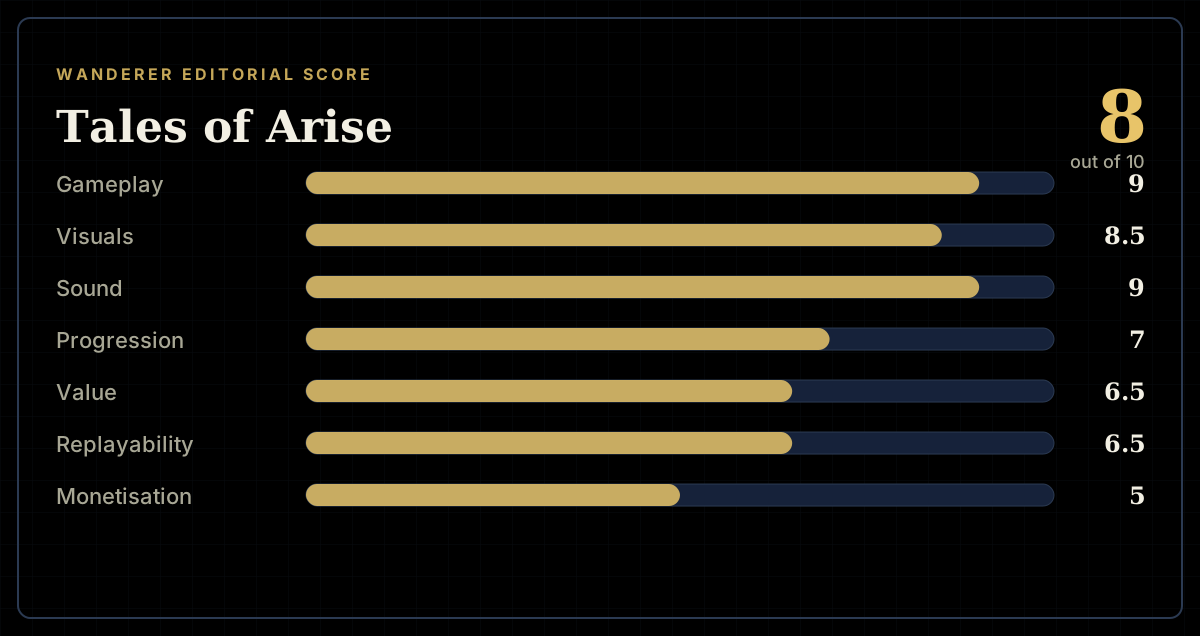
How the review scores each part of the gameWanderer Editorial -
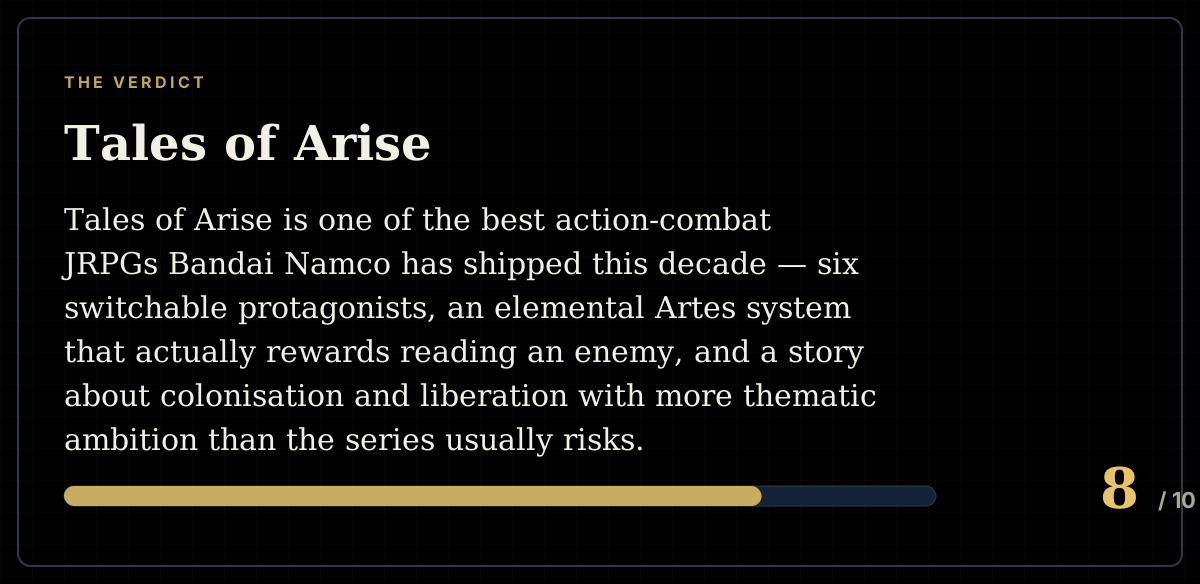
The short versionWanderer Editorial