Game review
Swords & Souls: Neverseen
7.5 / 10
- Developer
- SoulGame Studio
- Publisher
- Armor Games Studios
- Released
- 22 July 2019
- Platforms
- Windows, macOS
- Genre
- Training Action RPG
- Monetisation
- One-time purchase, no in-app purchases or ads
- Players
- Single-player, with online leaderboards for the endless mode
The short version
Swords & Souls: Neverseen replaces stat menus with a shelf of arcade minigames: juggle a coin for strength, loose arrows at moving targets for accuracy, flip cards for wit. Win them well enough and your character actually gets stronger, which makes training feel like the core game rather than a chore standing between you and it. That's a genuinely distinctive pitch for an RPG, and for a long stretch it works exactly as advertised.
The same design that makes the opening hours so likeable is also what wears players down later on. A handful of the minigames — archery draws the most consistent complaints — turn from a fun diversion into a gatekeeper as training requirements climb, and a small but real pattern of lost-save reports sits alongside the praise. Neither problem sinks the game, but both keep it from being an easy, unqualified recommendation.
Biggest strengths
- Training minigames that actually raise your stats make levelling feel like active play instead of a menu chore
- Six weapon types with their own passive skills and unique rings give real, distinct build identity
- A colourful, expressive art style sells the island's cast of eccentric townsfolk without leaning on lengthy dialogue
Biggest weaknesses
- The archery minigame in particular is singled out again and again by players as the point where training stops being fun and starts being an obstacle
- Later-game training requirements escalate sharply, and the endgame leans on RNG in a way that turns a skill-based system into a grind
- A recurring complaint describes save progress disappearing after time away from the game, and there is no cloud save to fall back on
Who it's for: Players who enjoyed the free browser original, anyone who likes idle-adjacent "number goes up" loops with actual hand-eye skill attached, and RPG fans who are tired of levelling up by reading tooltips instead of doing something.
Our recommendation: Worth buying, ideally on sale. Try to enjoy the training minigames on their own terms rather than racing through them, and keep an eye on your save file if you plan to put the game down for an extended stretch.
7.5 / 10
Most RPGs make you fill out a form to get stronger: spend points, pick a talent, close the menu. Swords & Souls: Neverseen makes you win an arcade game instead. Want more strength? Keep a coin bouncing off your palm as many times as you can. Want sharper aim? Loose arrows at targets that don't sit still. Want more wit? Flip cards and remember where things are. Every stat in the game is gated behind a minigame built specifically for it, and that single decision — train through play rather than through menus — is both the cleverest thing about this sequel and the source of nearly everything players end up complaining about once the credits should have rolled.
Training is the game, not a detour from it
SoulGame Studio's original Swords & Souls was a free browser hit built on exactly this idea, and Neverseen is a bigger, better-produced version of the same pitch rather than a reinvention of it. You wash up shipwrecked on an island caught between a witch's schemes and a cast of comic-relief locals, and almost immediately the game hands you a training ground full of distinct challenges, each one mapped to a stat that matters in combat later. The strength game rewards rhythm and timing. The archery game rewards precision under a moving target. Sorcery and wit lean on memory and quick reads rather than reflexes. None of it takes the form of a traditional skill check — it takes the form of a minigame you either get good at or don't, and your character's numbers move in lockstep with how well you actually play.
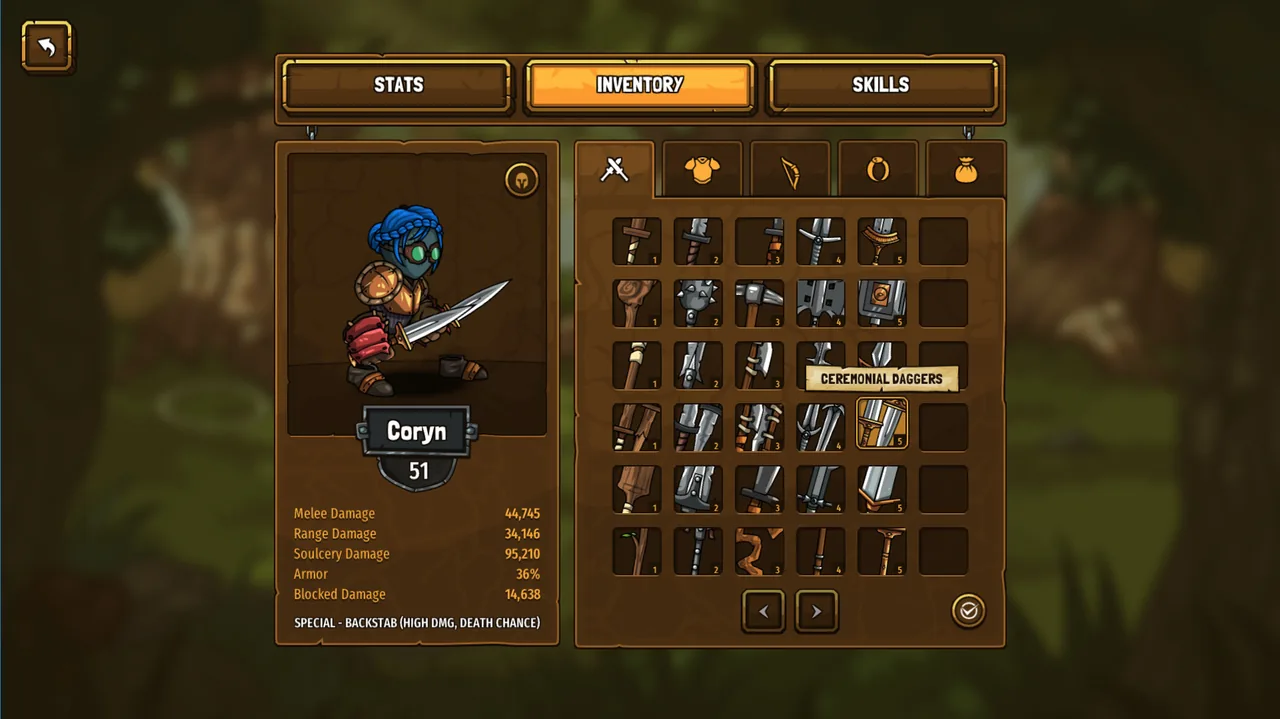
That's a smart structural choice for a game built around "levelling up takes skill," and it mostly earns its own tagline. Long-time fans of the original consistently describe the sequel as simply a bigger, more polished version of something they already loved as kids, and the appeal is easy to see: training sessions that would be filler in any other RPG become the main event here, stretching play sessions well past what players expect to spend, by their own account. Six weapon types, each carrying its own passive skills and a set of unique rings, give the resulting build enough shape that two players who trained differently end up playing differently, which is more character identity than most games in this budget range manage to offer.
Combat holds the loop together, without pushing it further
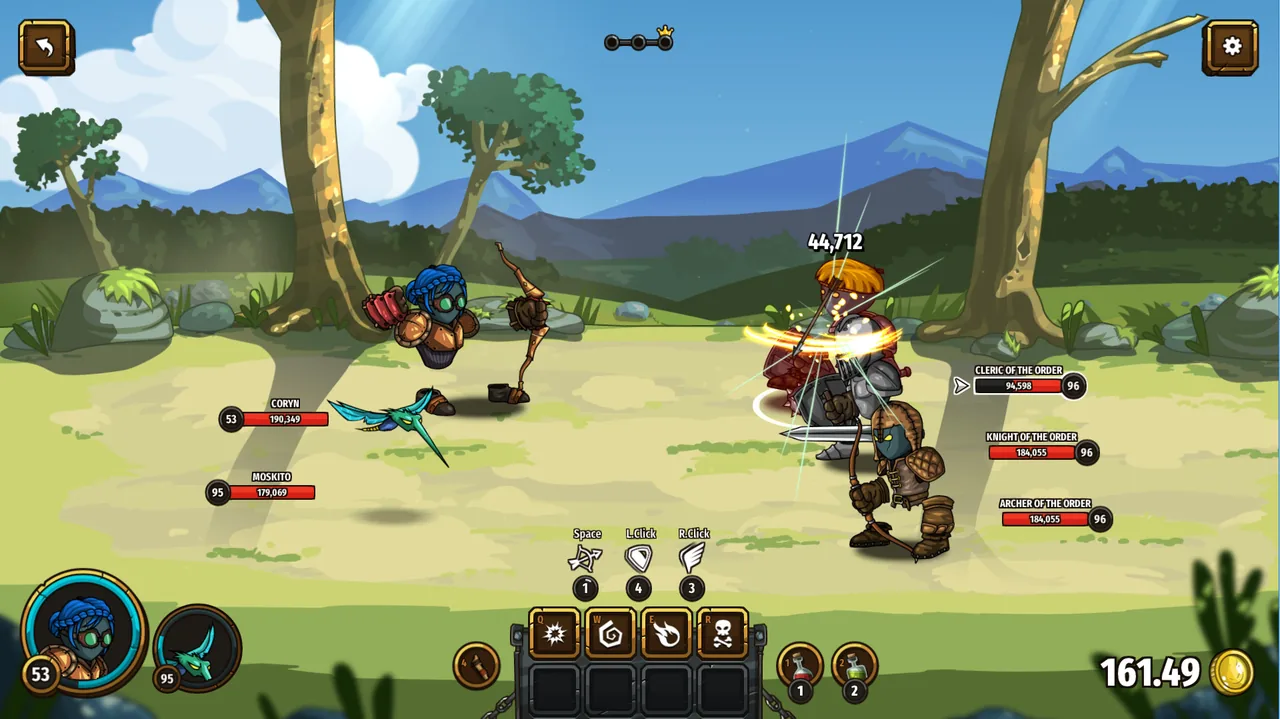
Combat itself blends real-time positioning with turn-based decision points, closer in feel to something like Paper Mario's action-command hybrids than to a straight ARPG. It's readable and immediately approachable, which matters because the training systems are already asking a lot of a player's attention — the last thing this game needs is combat that also demands a steep learning curve. Where it falls short is depth: once your stats are strong enough, encounters against the island's various enemy hordes tend to resolve on the strength of the numbers you've already built rather than on decisions made mid-fight. Companion pets and hired mercenaries add a layer of party composition, but the actual moment-to-moment combat stays simple throughout, functioning more as a stage for showing off your training gains than as a system with much to say on its own.
Where the loop turns against you
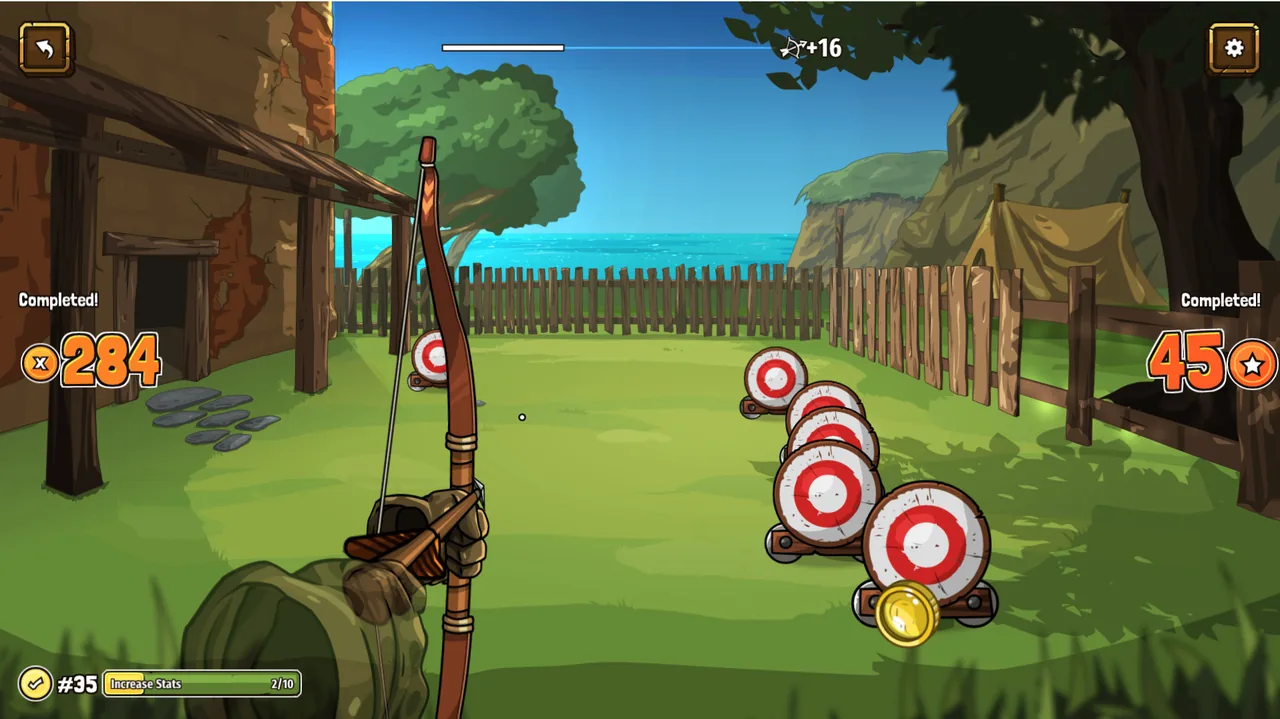
The trouble with building an RPG's entire identity around minigames is that a minigame a player dislikes doesn't stay a minor annoyance — it becomes the wall between them and every future stat gain. Archery is the one name that comes up over and over in player feedback, to the point that jokes about its designer's fate are practically a running gag in the Steam review section. It isn't that the mechanic is broken; it's that repeating it dozens of times to satisfy escalating late-game requirements turns a fun five-minute diversion into a chore that gates real progression. The strength-training coin flip draws similar, if gentler, fatigue complaints for the same reason. A design built on "training is fun" only holds up for as long as each individual training game stays fun to repeat, and by the later stretches of the game, several of them clearly don't for a meaningful share of the audience.
That escalation compounds with the game's endgame structure. Requirements to unlock later gear and areas climb sharply, and progress past a certain point starts leaning more heavily on random outcomes than the skill-driven training loop implies it should. Players who otherwise rate the game highly describe the back half turning "incredibly grindy and heavily stat-dependent, with a bit too much RNG involved" — a fair summary of a game whose best idea works cleanly for the first several hours and needs real willpower to enjoy by the last few. The post-game endless mode, with its randomised encounters and online leaderboards, gives committed players somewhere to point that willpower once the story wraps, but it's built for people already sold on the grind rather than a way to soften it.
Presentation carries the tone well; saves don't always carry the progress
Visually, Neverseen is a clear step up from its browser-game roots — bright, expressive character art and a genuinely funny, self-aware tone around the witch's plot and the island's oddball residents. It looks and reads like a game that knows exactly what kind of story it's telling and doesn't overstay its welcome doing it.
Less reassuring is a specific, recurring technical complaint: players describe returning after time away to find their save progress reduced or wiped outright, sometimes after hundreds of hours invested, and the game has no cloud save to protect against it. A handful of reviews also describe outright save corruption after a single day's play. This isn't universal — plenty of players report multi-thousand-hour save files with no issue — but the complaint shows up often enough, and specifically enough, that anyone planning to put the game down for weeks or months at a time should treat their local save file with more caution than most single-player games require.
Value
At a list price under fifteen US dollars, and routinely discounted well below half that during Steam sales, Neverseen is priced fairly for what it offers, and there's no monetisation layer to worry about beyond the purchase itself — no ads, no microtransactions, nothing sold separately from the base game. Given how many of its own players report playtimes running into the hundreds or thousands of hours, the cost-per-hour math works out about as well as this genre gets, assuming you're the kind of player the training loop clicks with rather than grinds against.
Verdict
Swords & Souls: Neverseen is one of the more distinctive RPGs of its era precisely because it refuses to separate "getting stronger" from "actually doing something." That idea is worth the price of admission on its own, and for a long stretch of the game it delivers on it better than almost anything else attempting the same trick. It loses points where any minigame-driven system eventually will: a couple of its training challenges wear out their welcome long before the requirements stop climbing, the endgame trades skill for RNG more than it should, and a real pattern of save-related frustration sits uncomfortably next to an otherwise well-loved game. Buy it, ideally on a sale, expect the training grounds to eat more of your time than you planned, and back up your save before you take a long break from the island.
Players who like the idea of a world that keeps progressing whether or not a minigame is demanding their attention might also want to look at what Wanderer does with idle progression on the other side of that trade-off.
Pros and cons
Pros
- Training minigames that actually raise your stats make levelling feel like active play instead of a menu chore
- Six weapon types with their own passive skills and unique rings give real, distinct build identity
- A colourful, expressive art style sells the island's cast of eccentric townsfolk without leaning on lengthy dialogue
- Post-game endless mode with randomised encounters and online leaderboards gives completionists a reason to keep playing after the story ends
- Reported playtimes in the hundreds and even thousands of hours from its own player base back up how sticky the core loop can be
Cons
- The archery minigame in particular is singled out again and again by players as the point where training stops being fun and starts being an obstacle
- Later-game training requirements escalate sharply, and the endgame leans on RNG in a way that turns a skill-based system into a grind
- A recurring complaint describes save progress disappearing after time away from the game, and there is no cloud save to fall back on
- Some players reject the premise outright, arguing the reflex-driven minigames replace meaningful RPG decisions rather than sitting alongside them
- Combat's real-time-meets-turn-based structure is easy to learn but doesn't develop much tactical depth once your stats are doing most of the work
Screenshots
-
Swords & Souls: NeverseenImage: Armor Games Studios via Steam -
Swords & Souls: NeverseenImage: Armor Games Studios via Steam -
Swords & Souls: NeverseenImage: Armor Games Studios via Steam -
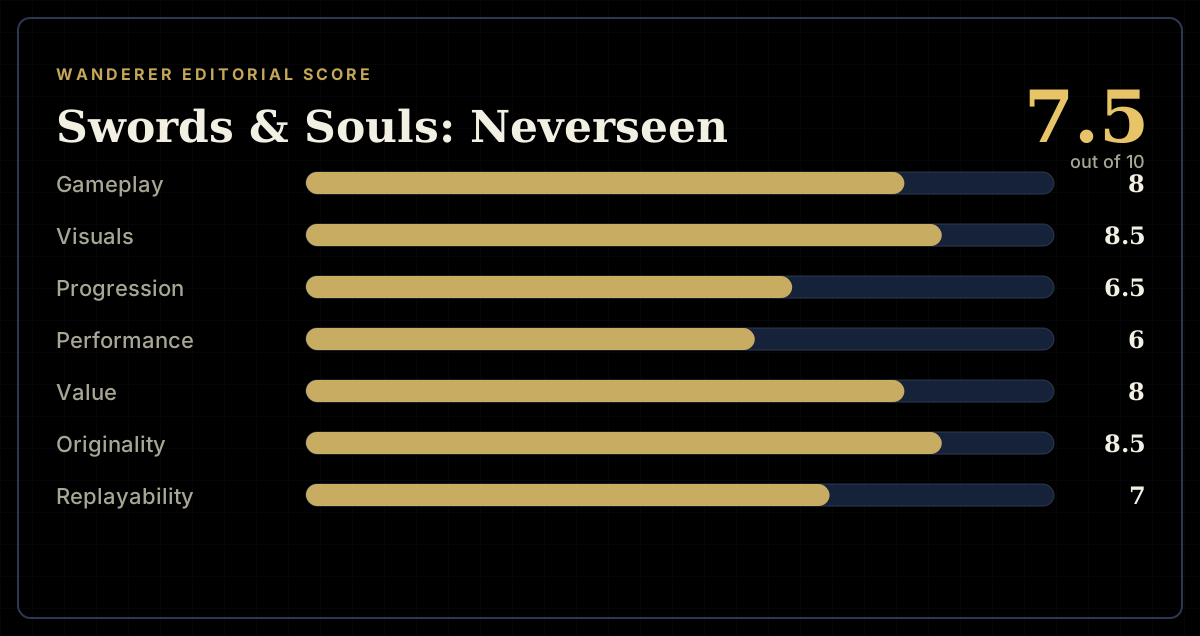
How the review scores each part of the gameWanderer Editorial -
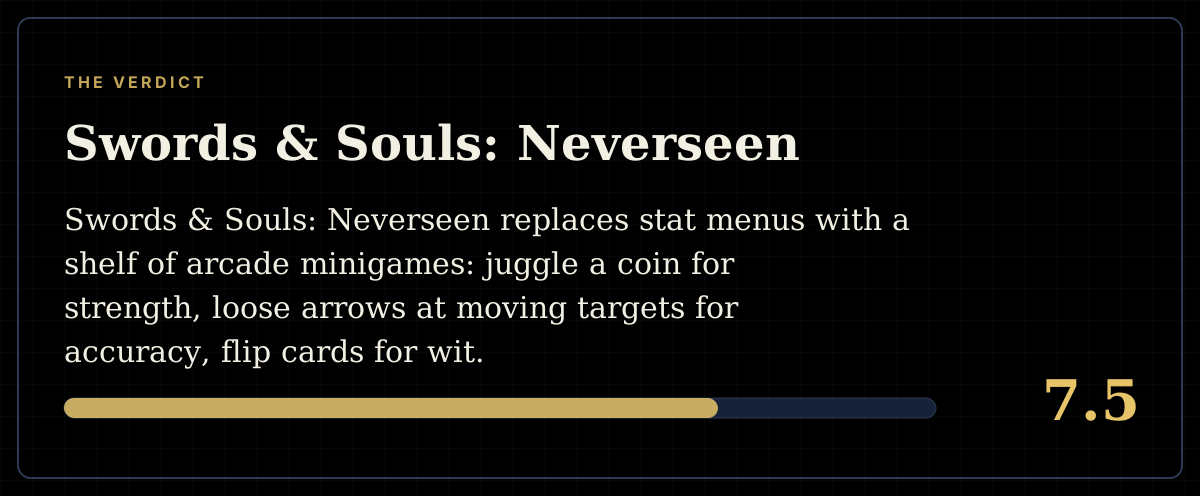
The short versionWanderer Editorial