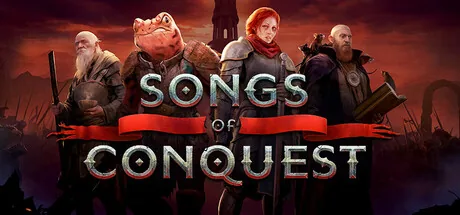
Game review
Songs of Conquest
7.5 / 10
- Developer
- Lavapotion
- Publisher
- Coffee Stain Publishing
- Released
- 20 May 2024
- Platforms
- Windows, macOS
- Genre
- Turn-Based Strategy
- Monetisation
- One-time purchase plus paid faction and campaign DLC. Seven DLC entries as of August 2026, with faction packs around NZ$16.79 each.
- Players
- Online and local multiplayer including hotseat, split-screen and co-op, plus a level editor
The short version
Songs of Conquest is what happens when someone tries to make Heroes of Might and Magic III again and mostly succeeds at the parts you can see. The pixel art is genuinely beautiful, the Wielders and their essence-based spellcasting give army composition a real identity, and Lavapotion have spent four years adding factions, campaigns and fixes at a pace most studios abandon long before.
The complaint is remarkably consistent: the AI. It appears in 87 of the hundred most-helpful English negative reviews — more than the interface, the campaign or the price — and in a turn-based strategy game, an opponent that doesn't threaten you is the flaw that undoes everything else. Add four base factions with more sold separately, and you have a very good game with two specific things standing between it and greatness.
Biggest strengths
- Outstanding pixel art and animation, easily the best-looking game in its lineage
- Wielders and the essence system give spellcasting and army-building genuine strategic identity
- Four years of sustained support — new campaigns, new factions, weekly devlogs and prompt hotfixes
Biggest weaknesses
- Enemy AI is cited in 87 of the hundred most-helpful negative reviews and remains the defining weakness
- The interface draws the second-largest cluster of complaints
- Only four factions in the base game, with further factions sold at around a third of the base price each
Who it's for: Heroes of Might and Magic players who want the formula back with modern presentation and don't mind a soft opponent. Great for hotseat and co-op, where a human supplies the challenge the AI doesn't.
Our recommendation: Worth buying if the HoMM itch is real — it's the closest anyone has come, and it's still growing. Play it multiplayer or hotseat if you can, and treat the faction DLC as optional rather than assuming the base four are the whole game.
7.5 / 10
The most-upvoted negative review of Songs of Conquest carries an unusual note at the top. Written in May 2022, it was edited in June 2026 by its own author: "This review is 4 years old and quite heavily outdated due to many patches and implementations inside new paid DLCs."
That's an honest thing for a reviewer to do and a useful warning for anyone reading this game's store page. Songs of Conquest spent two years in Early Access before its May 2024 release, and a large share of its most visible criticism describes a version that hasn't existed for years. Read the top reviews and you're reading 2022.
So what's true now?
What it is
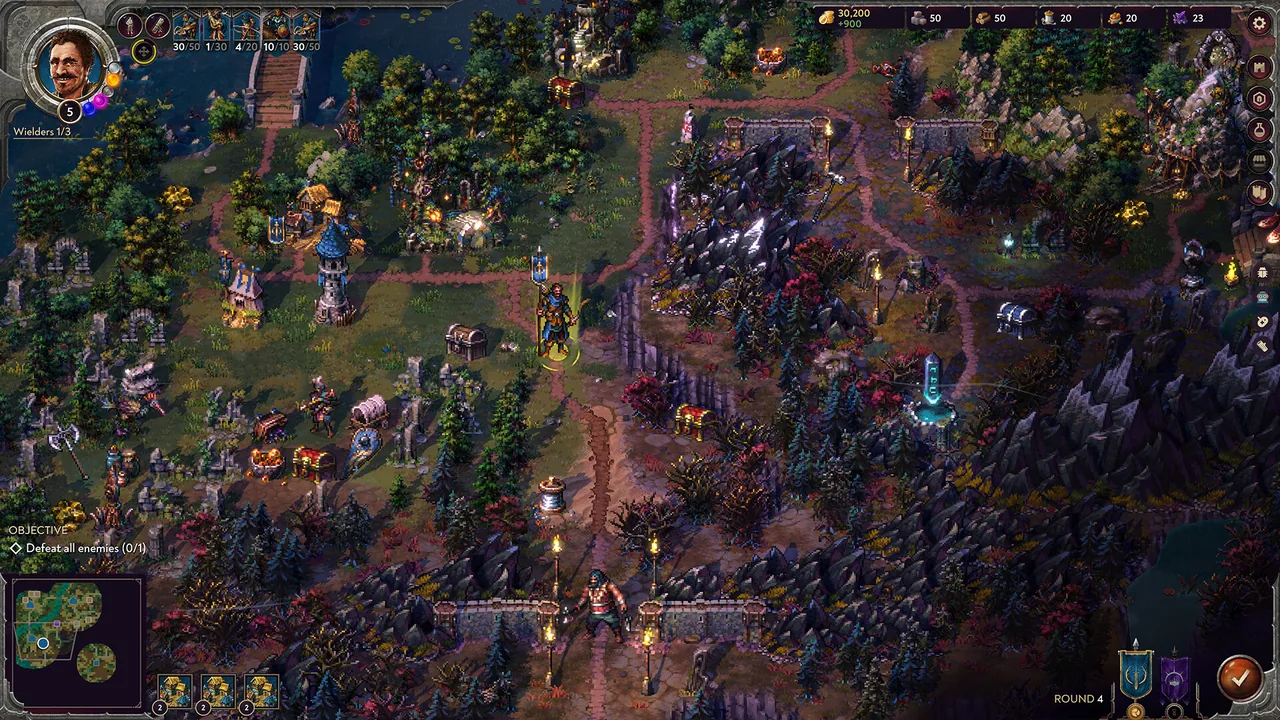
It's Heroes of Might and Magic, rebuilt. You move armies across a map, capture resource sites, develop a town through building tiers, and fight turn-based battles on a grid. If you played HoMM III you already know the shape.
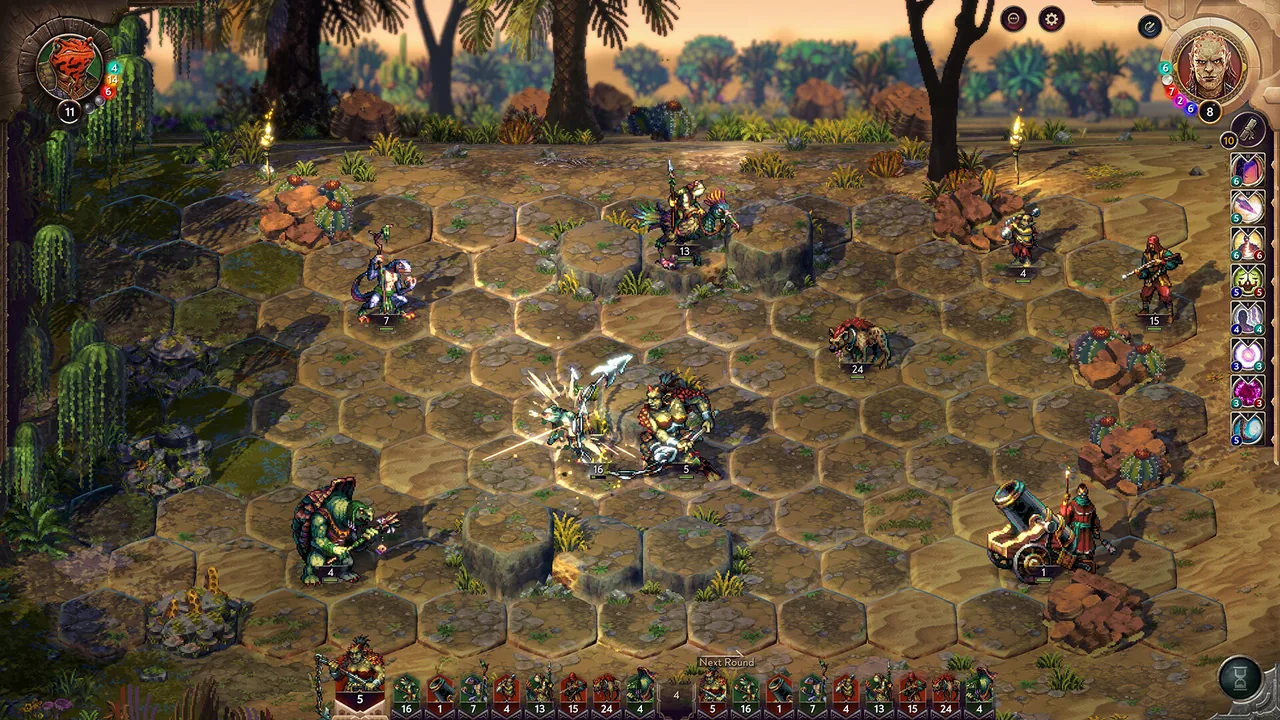
The two things that make it its own game are Wielders and essence. Wielders are your hero units, and unlike HoMM's heroes they're present on the battlefield as real pieces. Essence is generated by the troops in your army and spent on spells, so your army composition determines what magic you can cast — a genuinely smart coupling that makes stack choices matter beyond raw statistics.
And it is beautiful. The pixel art is the best in its lineage by a distance, with animation and lighting work that no screenshot does justice, and a soundtrack that even reviewers who dislike everything else stop to compliment. There's also a level editor, hotseat, split-screen and co-op — a generosity of features that has become rare.
The AI problem
Now the thing that keeps coming up, and it isn't close.
Enemy AI appears in 87 of the hundred most-helpful English negative reviews. Not the interface (65), not the campaign (53), not the price (16). In a genre where the entire experience is a contest of decisions, an opponent that doesn't press you turns a strategy game into a logistics exercise. If you've beaten it once, you've largely solved it.
This is the same failure mode I wrote about in Soulmask earlier — a game whose headline system is also its headline complaint — and it's more damaging here, because there's no way to route around it in single-player. The answer the community has settled on is to play other people: hotseat, split-screen, or online. That works, and it's why the feature list matters more than it might in another game.
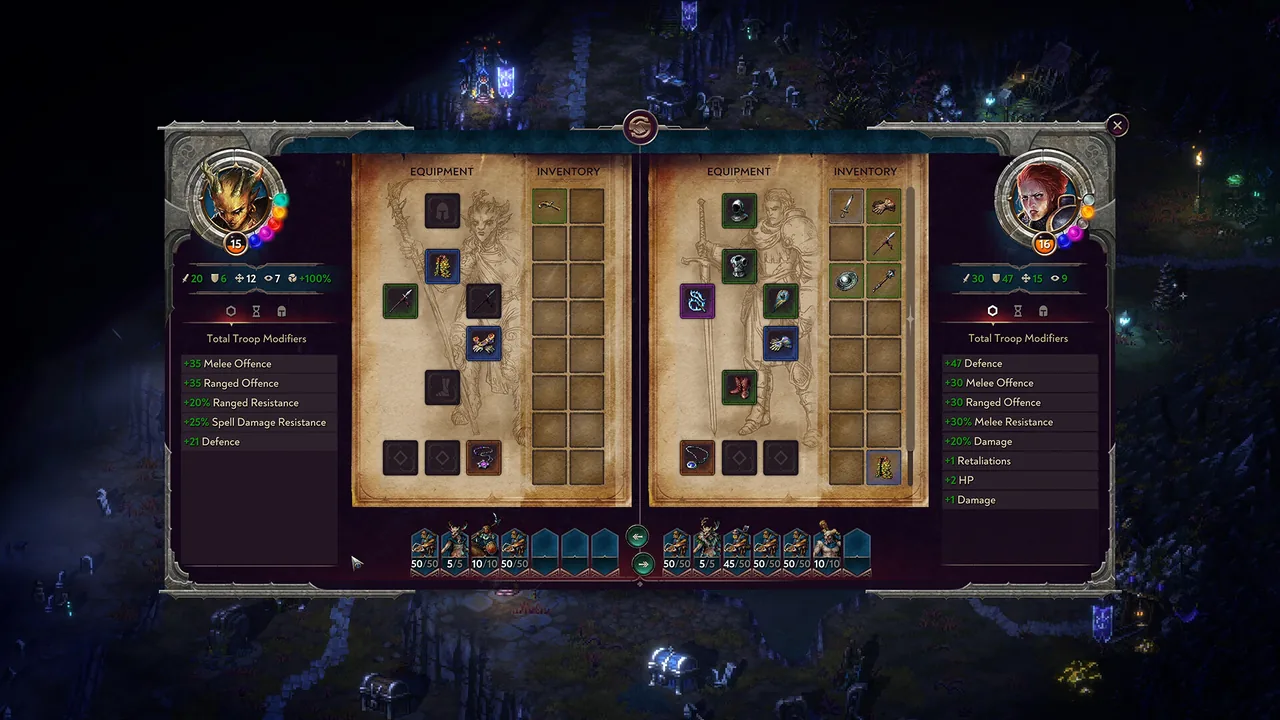
The second cluster is depth. Reviewers who came expecting a HoMM III successor find the systems thinner than the presentation implies. "Way too much stuff is exactly the same just with different numbers attached," writes one, listing weapons that are mostly "Offensive +X." Another, at 32 hours, argues the developers' repeated balance passes flattened the fun out — spells nerfed, artifacts inert, no wild combinations left. That's a legitimate tension in any long-running strategy game: balance and spectacle pull in opposite directions, and Lavapotion have leaned toward balance.
The factions question
The base game ships with four factions. Additional ones — Vanir, Roots, Yulan — are sold at NZ$16.79 each, roughly a third of the base price.
Sixteen of the hundred negatives mention DLC, and the objection is coherent rather than reflexive. "After paying 40 dollars for the whole game, we have to pay 15 for an additional faction? I feel ripped off," writes one reviewer with 229 helpful votes. In a genre where faction variety is the replay value, four is a modest starting hand, and selling the fifth changes the value calculation of the fourth.
There's also a claim I'd flag rather than assert: a reviewer with 386 helpful votes states that in 2025 the developer raised the base price and DLC prices substantially. I haven't verified the price history and won't present a single account as fact, but it's the kind of thing worth checking on the store page yourself before buying a bundle.
Still very much alive
Whatever else is true, this is not an abandoned game. In 2026 alone Lavapotion shipped the Rise Eternal campaign in March with three hotfixes inside a fortnight, ran weekly devlogs through spring on the art, houses and units of the Yulan faction, released Yulan on 4 June, and followed with more fixes. They write to the community in plain language and they answer.
Four years after Early Access and two after 1.0, that's a genuinely good record, and it shows in current sentiment: 80 of the last 100 English reviews are positive, with a median playtime of 38.9 hours — the kind of number that says people who buy it stay for a while.
The verdict
Songs of Conquest earns a 7.5. It looks superb, it sounds superb, the essence system is a real contribution to a formula that hadn't had one in decades, and it's supported with a diligence that deserves saying plainly.
It doesn't reach higher because the single-player opponent isn't good enough for a game about outthinking someone, and because a strategy game that starts with four factions and sells the rest is asking you to buy the replay value twice. Both are fixable in principle; neither has been fixed in four years of otherwise conscientious work.
Buy it if you miss Heroes of Might and Magic and have someone to play against — hotseat and split-screen turn its biggest weakness into a non-issue, and there's nothing else in the genre that looks like this. If you'd be playing solo against the computer, go in knowing what four in five critical reviewers are telling you, or take a look at Against the Storm instead, where the opposition is the world rather than an opponent.
Pros and cons
Pros
- Outstanding pixel art and animation, easily the best-looking game in its lineage
- Wielders and the essence system give spellcasting and army-building genuine strategic identity
- Four years of sustained support — new campaigns, new factions, weekly devlogs and prompt hotfixes
- Unusually generous feature set for the genre, with hotseat, split-screen, co-op and a level editor
- A strong soundtrack that even its harshest reviewers stop to praise
Cons
- Enemy AI is cited in 87 of the hundred most-helpful negative reviews and remains the defining weakness
- The interface draws the second-largest cluster of complaints
- Only four factions in the base game, with further factions sold at around a third of the base price each
- Reviewers describe repeated balance passes as flattening spells and artifacts into sameness
- Compared directly and often unfavourably with Heroes of Might and Magic III on depth
Screenshots
-
Songs of ConquestImage: Coffee Stain Publishing via Steam -
Songs of ConquestImage: Coffee Stain Publishing via Steam -
Songs of ConquestImage: Coffee Stain Publishing via Steam -
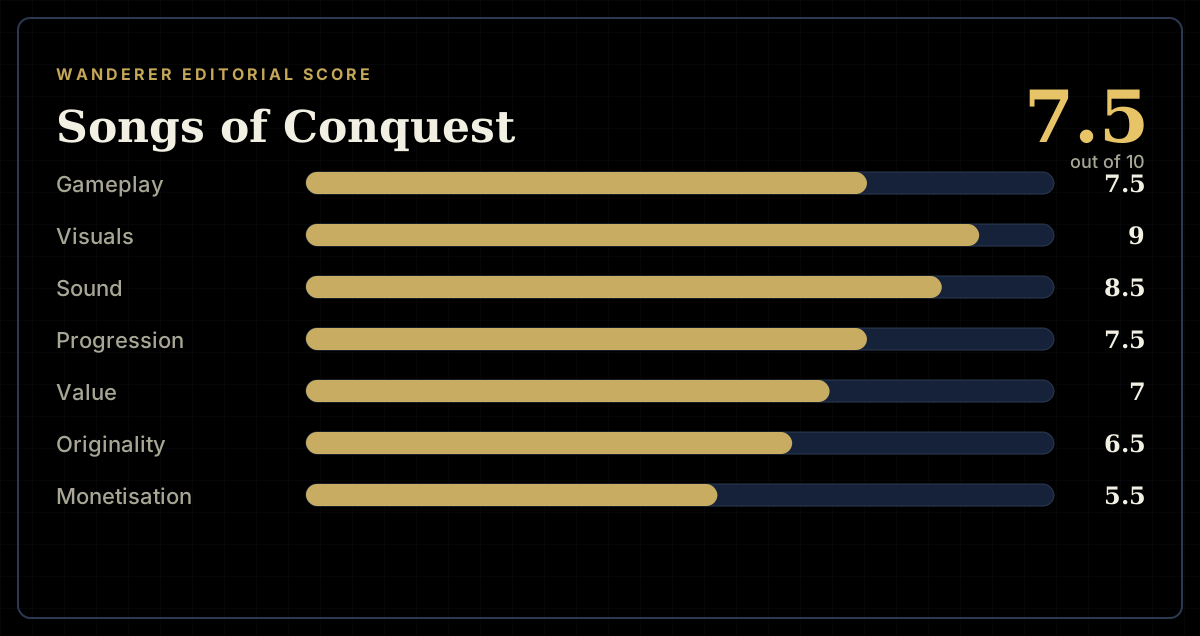
How the review scores each part of the gameWanderer Editorial -
The short versionWanderer Editorial