Game review
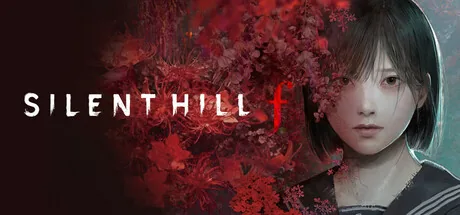
SILENT HILL f
7.5 / 10
- Developer
- NeoBards Entertainment Ltd.
- Publisher
- Konami Digital Entertainment
- Released
- 24 September 2025
- Platforms
- Windows
- Genre
- Psychological Horror
- Monetisation
- One-off premium purchase, with a Digital Deluxe upgrade and several paid cosmetic costume DLCs, including a pre-order-exclusive costume; no in-app purchases and no premium currency
- Players
- None. Single-player only, structured around multiple required playthroughs to unlock its full story
The short version
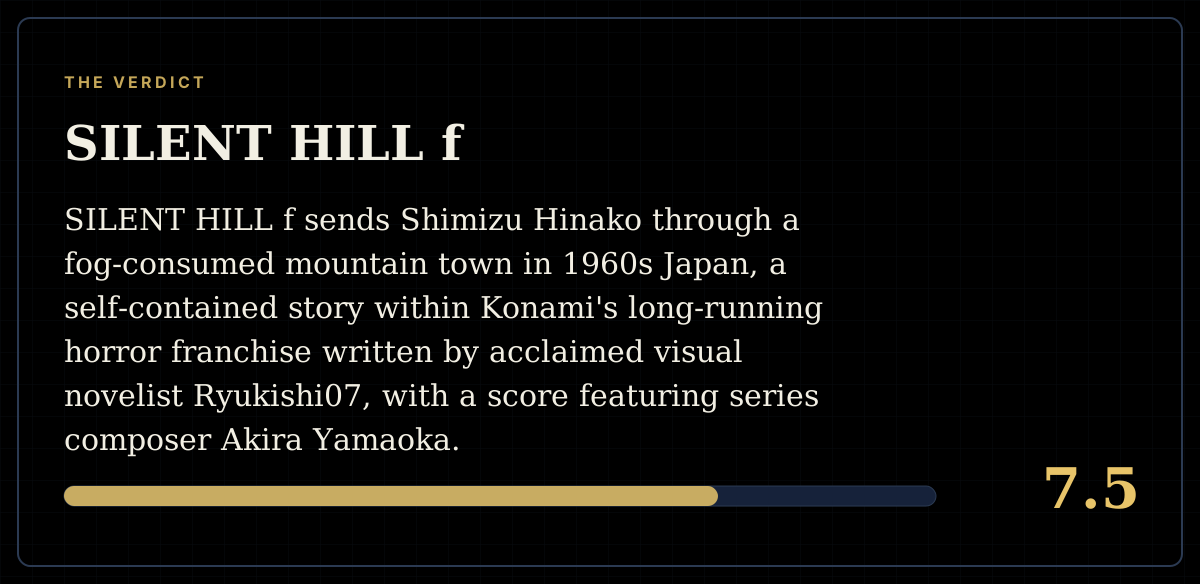
SILENT HILL f sends Shimizu Hinako through a fog-consumed mountain town in 1960s Japan, a self-contained story within Konami's long-running horror franchise written by acclaimed visual novelist Ryukishi07, with a score featuring series composer Akira Yamaoka. Very Positive across more than 18,000 Steam reviews, it earned the Steam Awards 2025 title for Outstanding Visual Style and sold over 2 million copies within its first eight months — a genuine critical and commercial achievement for a franchise entry that deliberately abandons the series' familiar setting for something new. The praise for its story, atmosphere, sound design and visual craft is close to unanimous, even among reviewers who ultimately can't recommend the whole package. What keeps this review from simply celebrating that achievement is how consistently — on both sides of the recommendation line — reviewers raise the same specific complaint about its combat: frequent, demanding encounters that a large share of the sample argues actively work against the slow-burn psychological dread the Silent Hill name has always promised, made more pointed by a story structure that requires up to three or four full playthroughs to fully understand.
Biggest strengths
- The story, written by acclaimed visual novelist Ryukishi07, draws close to universal praise as a genuine, thoughtful psychological horror achievement, distinct in setting and tone from the rest of the series
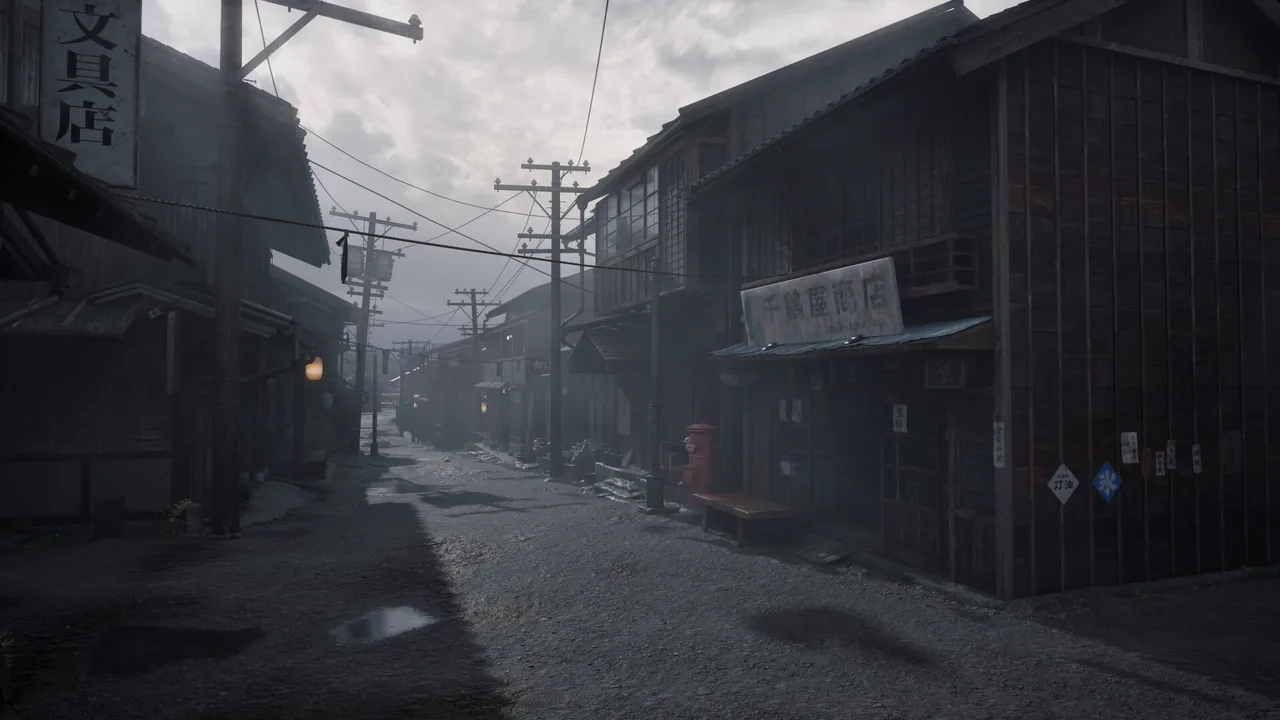
- Visual presentation is extraordinary and widely credited as such, backed by a Steam Awards 2025 win for Outstanding Visual Style — the 1960s rural Japanese setting is repeatedly singled out as a fresh, effective reinvention of the series' visual language
- Sound design and the score, featuring series composer Akira Yamaoka, draw sustained, specific praise for atmosphere and tension even from reviewers otherwise critical of the game
Biggest weaknesses
- Combat is the review sample's single most consistent complaint, described repeatedly — by positive and negative reviewers alike — as too frequent, too demanding, and fundamentally at odds with the series' traditional emphasis on vulnerability and avoidance over direct confrontation
- The story requires multiple full playthroughs, some reviewers say three or four, to unlock all five endings and fully understand the plot — a structural choice several reviewers find rewarding and others find repetitive given the disliked combat sits between each pass
- Only two difficulty options are available, "Story" and "Hard," with several reviewers noting the absence of a "Normal" difficulty as a real, specific design gap
Who it's for: Silent Hill fans and horror-adventure players who value story, atmosphere and visual craft over combat, with a real caveat for players who specifically want the series' traditional emphasis on evasion and vulnerability over frequent fighting.
Our recommendation: A visually and narratively extraordinary entry that stumbles specifically on combat — worth playing for its story and atmosphere alone, with realistic expectations that fighting, not avoiding, is how much of the game is actually spent.
7.5 / 10
Silent Hill has always been defined as much by a state of mind as by its fictional American town, and SILENT HILL f, released 24 September 2025, tests that idea more directly than any prior entry by abandoning the town entirely. Set in the fog-consumed mountain community of Ebisugaoka in 1960s Japan, with a story from acclaimed visual novelist Ryukishi07 and a score featuring series composer Akira Yamaoka, it's a genuinely bold creative pivot for one of horror gaming's most recognisable franchises. Very Positive across more than 18,000 Steam reviews, having sold over 2 million copies and won the Steam Awards 2025 title for Outstanding Visual Style, it's also a success by almost any commercial or critical measure. Understanding both why that success is so well earned and where a real, consistent, cross-camp complaint sits is what this review sets out to do.
A genuine creative achievement in story and atmosphere
The praise for SILENT HILL f's writing, world and presentation is close to unanimous across the review sample, regardless of how a given reviewer ultimately feels about the game as a whole. "The writer, Ryukishi07, is amazing, and so is the writing. The story is a masterpiece," one review states directly, addressing criticism from elsewhere in the sample that the game's themes read as heavy-handed. Another, more measured but equally positive: "You'll instantly recognize the series' essence: guilt, confusion, identity, trauma, and the slow descent into" madness that has always defined the franchise, even relocated to an unfamiliar setting. The 1960s Japanese folklore backdrop draws specific, repeated credit as a genuinely successful reinvention rather than a gimmick: "The folklore is Japanese rather than Americana... [and] this is not trying to be a copy of the older games. It is Silent Hill through a different cultural lens," one review states, a sentiment echoed by numerous others who approached the setting change with real scepticism and came away convinced.
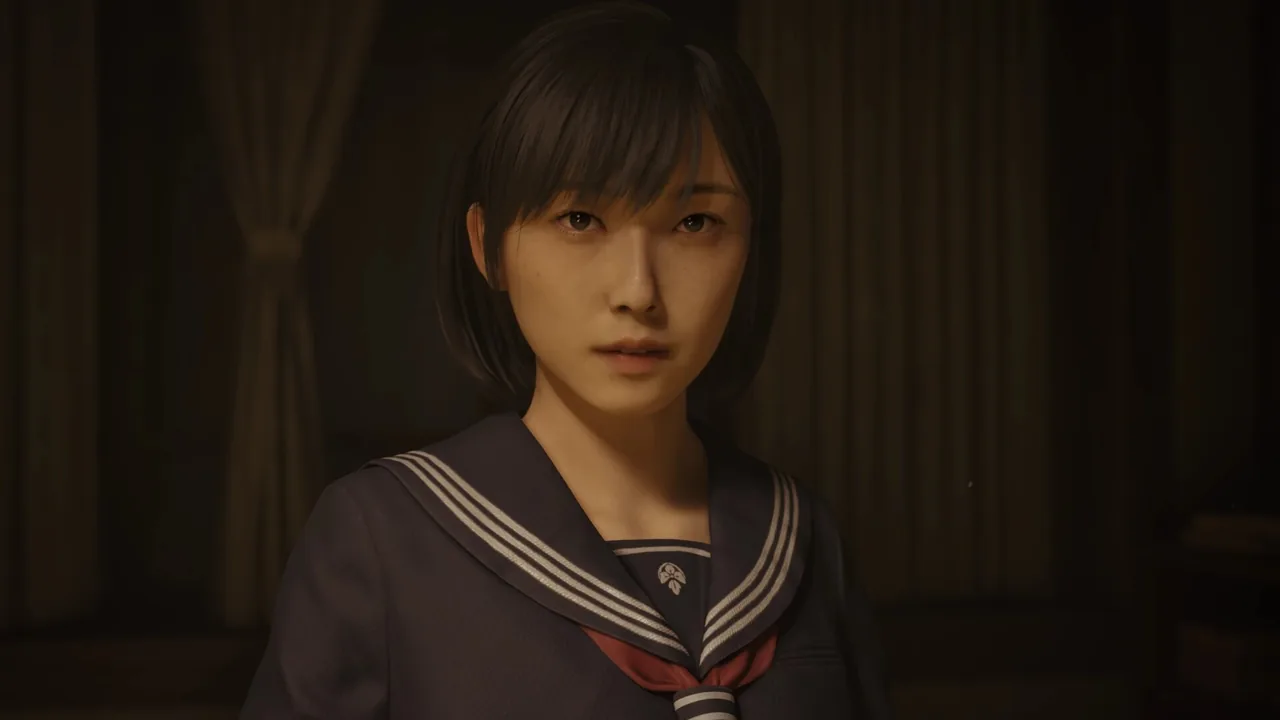
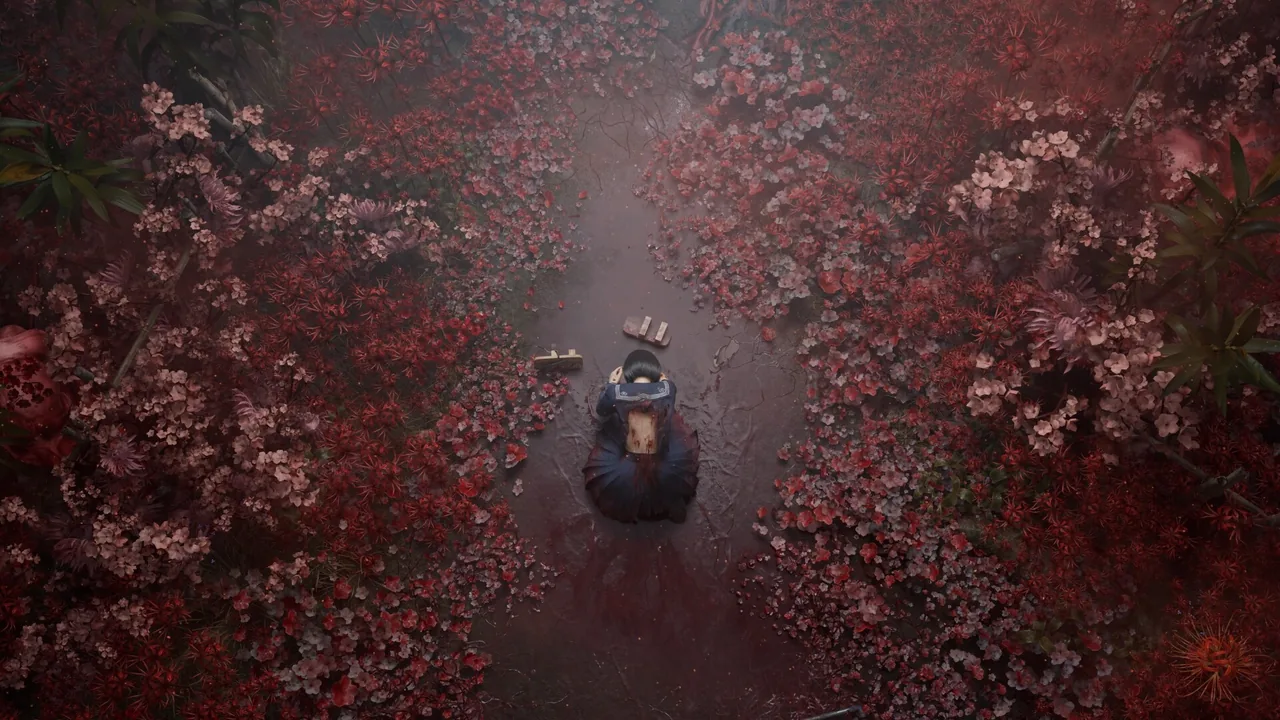
Visual and audio craft draw equally sustained, specific praise. "Pretty but terrifying... the character models are so realistic, you'll start wondering if they're alive," one review states, while another frames the game as "pure cinema," crediting the sound design, atmosphere, music and visuals as a cohesive, unified achievement even while criticising the gameplay layered on top. The Steam Awards 2025 win for Outstanding Visual Style is a real, independently verifiable marker of just how broadly that specific achievement has been recognised.
Combat: the complaint both camps share
What distinguishes SILENT HILL f's reception from a straightforward "great story, so-so gameplay" verdict is how specifically, and how consistently, the same complaint about combat recurs across reviewers who otherwise land on opposite recommendations. "This game is very combat oriented, and the story doesn't unfold in a way that's satisfying," one detailed negative review states, while a reviewer who ultimately recommends the game concedes the identical point: "the combat and puzzles weren't all that. I would even say they both kinda sucked." A particularly sharp formulation captures the tension directly: "Lock on targeting! Parrying! Perfect dodge! Bullet time! Detective mode!... 'Sir, this is a Silent Hill game,'" one review states, arguing the combat systems themselves are competently built but fundamentally mismatched to what the series has always promised. Another, more specific about the mechanical texture of the problem: "Being told that you need to be smart with your decision making when it comes to combat, only to force you into narrow hallways filled with multiple enemies and later on forced combat sections" undermines that intended tension entirely.
This isn't a fringe complaint — it recurs across positive reviews with real frequency. "I recommend the game, but with some significant caveats," one thoughtful, largely positive review states before detailing the exact same combat frustration raised throughout the negative sample. Even reviewers explicitly comparing the game favourably to the acclaimed Silent Hill 2 Remake single out combat as the one place it falls short: "I'd say [combat] has improved from SH2 Remake... [but the developers] did a fantastic job with the sound, atmosphere, music, and visuals" regardless. That cross-cutting consistency — a specific, mechanical complaint raised almost identically by reviewers who love the game and reviewers who don't — is the strongest signal in the sample about what this game's real weak point actually is.
A structure that multiplies the disliked mechanic
Compounding the combat complaint is the game's narrative structure, which requires multiple full playthroughs — several detailed reviews specify three or four — to unlock all five endings and fully piece together the plot. Reviewers are genuinely split on whether this is a strength or a liability. "This game requires three full playthroughs to be considered complete. While not always drastic or overt, these subsequent playthroughs build on the plot more than you could imagine," one enthusiastic review states, framing the structure as a deliberate, rewarding design choice in line with the franchise's tradition of multiple endings. Others find the same structure actively punishing given the combat sitting between each pass: "having to replay the entire game several times to get an ending that explains the entire plot also doesn't do the game any good," one review states. A related, more specific complaint concerns difficulty options: "the absence of a 'Normal' difficulty" between the game's only two settings, Story and Hard, draws direct criticism from at least one detailed review as a real design gap for players wanting a moderate challenge across repeated playthroughs.
Price and cosmetic DLC
A smaller, more straightforward complaint concerns value. "Story 10/10, Graphics 10/10, Gameplay 10/10, Price 0/10. Amazing horror game but it's too pricey. And locking 2 costumes behind DLC and pre-order bonus instead of unlockables? Totally not cool, Konami," one review states, a sentiment echoed by others noting the roughly 8-to-10-hour length of a single playthrough sits awkwardly against the NZ$114.99 asking price, even before factoring in additional paid cosmetic content.
Where this leaves a buyer
At NZ$114.99, SILENT HILL f delivers a genuinely bold, visually extraordinary reinvention of one of horror gaming's most storied franchises — the story, atmosphere, sound design and visual craft are real, independently recognised achievements that justify the game's Very Positive reception and its Steam Awards win on their own merits. The honest, necessary caveat, raised with remarkable consistency by reviewers who love this game as much as by those who don't, concerns combat: a system that's mechanically competent in isolation but that a large, cross-cutting share of the sample argues actively works against the vulnerability and dread the Silent Hill name has always been built around, compounded by a structure that asks players to sit through that same combat across multiple required playthroughs. Players who prioritise story, atmosphere and visual craft — and who can make peace with frequent, demanding fights rather than the series' traditional emphasis on evasion — are well placed to find one of the franchise's most genuinely memorable entries. Players hoping specifically for the classic Silent Hill feeling of being outmatched and avoiding confrontation should keep this review's central, widely-shared reservation in mind before buying at full price.
Pros and cons
Pros
- The story, written by acclaimed visual novelist Ryukishi07, draws close to universal praise as a genuine, thoughtful psychological horror achievement, distinct in setting and tone from the rest of the series
- Visual presentation is extraordinary and widely credited as such, backed by a Steam Awards 2025 win for Outstanding Visual Style — the 1960s rural Japanese setting is repeatedly singled out as a fresh, effective reinvention of the series' visual language
- Sound design and the score, featuring series composer Akira Yamaoka, draw sustained, specific praise for atmosphere and tension even from reviewers otherwise critical of the game
- A commercial and critical success for a genuinely risky creative pivot — 2 million copies sold and broad acclaim for taking the franchise somewhere entirely new rather than repeating past entries
Cons
- Combat is the review sample's single most consistent complaint, described repeatedly — by positive and negative reviewers alike — as too frequent, too demanding, and fundamentally at odds with the series' traditional emphasis on vulnerability and avoidance over direct confrontation
- The story requires multiple full playthroughs, some reviewers say three or four, to unlock all five endings and fully understand the plot — a structural choice several reviewers find rewarding and others find repetitive given the disliked combat sits between each pass
- Only two difficulty options are available, "Story" and "Hard," with several reviewers noting the absence of a "Normal" difficulty as a real, specific design gap
- At NZ$114.99 with additional paid costume DLC and a pre-order-exclusive outfit, several reviewers argue the game's price doesn't match its roughly 8-to-10-hour single-playthrough length
Screenshots
-
SILENT HILL fImage: KONAMI via Steam -
SILENT HILL fImage: KONAMI via Steam -
SILENT HILL fImage: KONAMI via Steam -
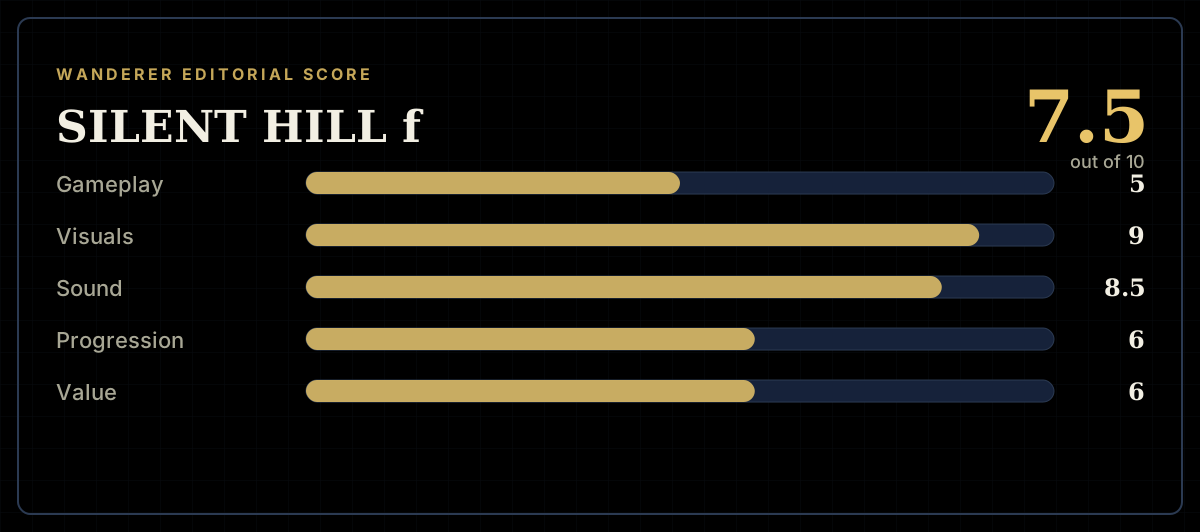
How the review scores each part of the gameWanderer Editorial -
The short versionWanderer Editorial