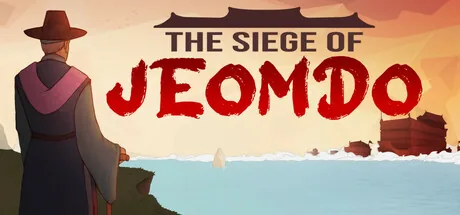
Game review
The Siege of Jeomdo
7 / 10
- Developer
- Studio Hip Sword
- Publisher
- Studio Hip Sword
- Released
- 10 May 2026
- Platforms
- Windows
- Genre
- RPG
- Monetisation
- Paid, one-time purchase.
- Players
- Single-player only.
The short version
The Siege of Jeomdo is a narrative RPG from solo developer Studio Hip Sword, casting players as a retired commander drawn into defending a besieged village against a tyrannical empire through weighty choices, resource management, and text-driven battles. Its unanimously positive rating across a small English review sample reflects genuine praise for its writing, hand-drawn art, and unusual older protagonist, with this review finding fair complaints about continuity bugs, an abrupt ending, and a resource system that can be confusing at first.
Biggest strengths
- Unanimously praised for its writing and story, with multiple reviewers specifically crediting choices that feel weighty and consequential.
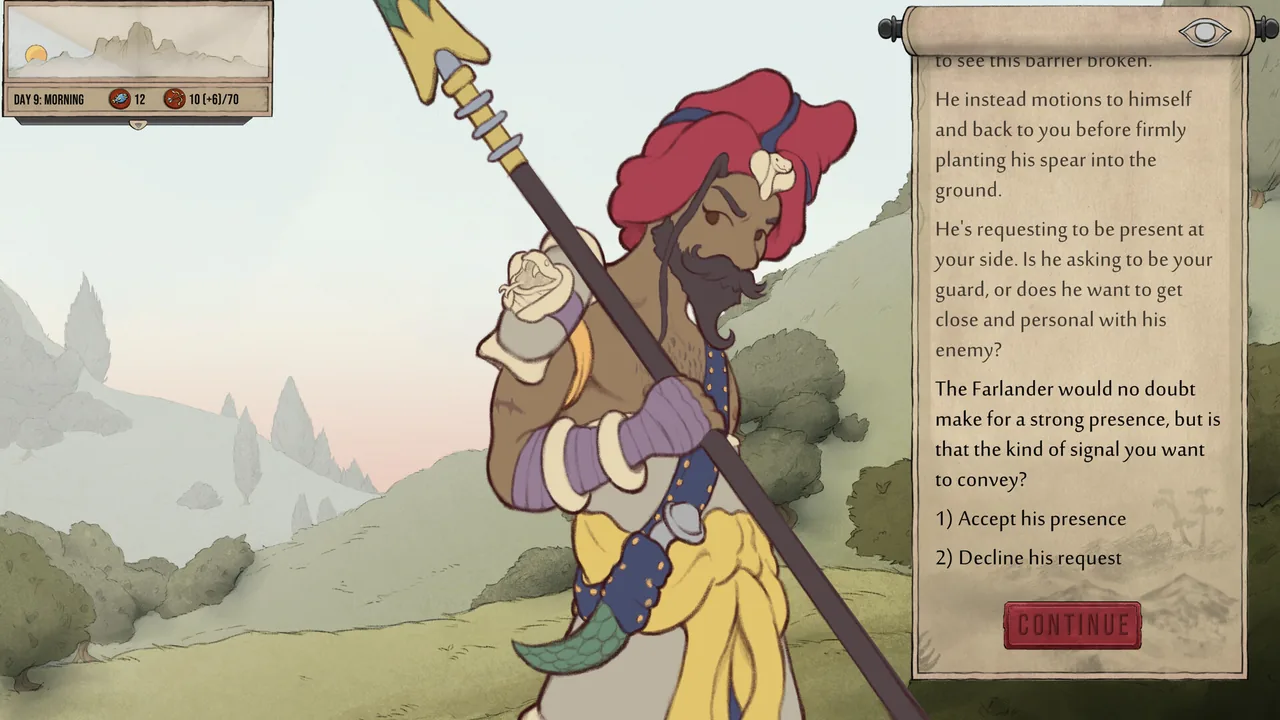
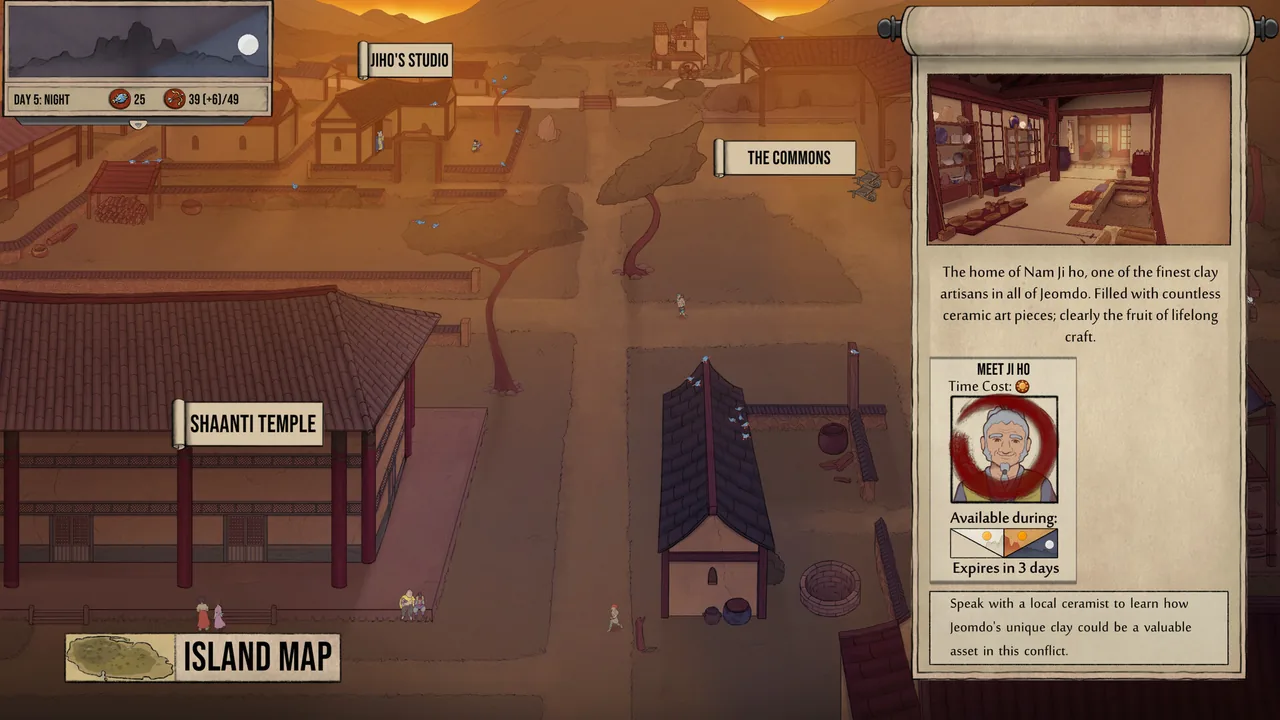
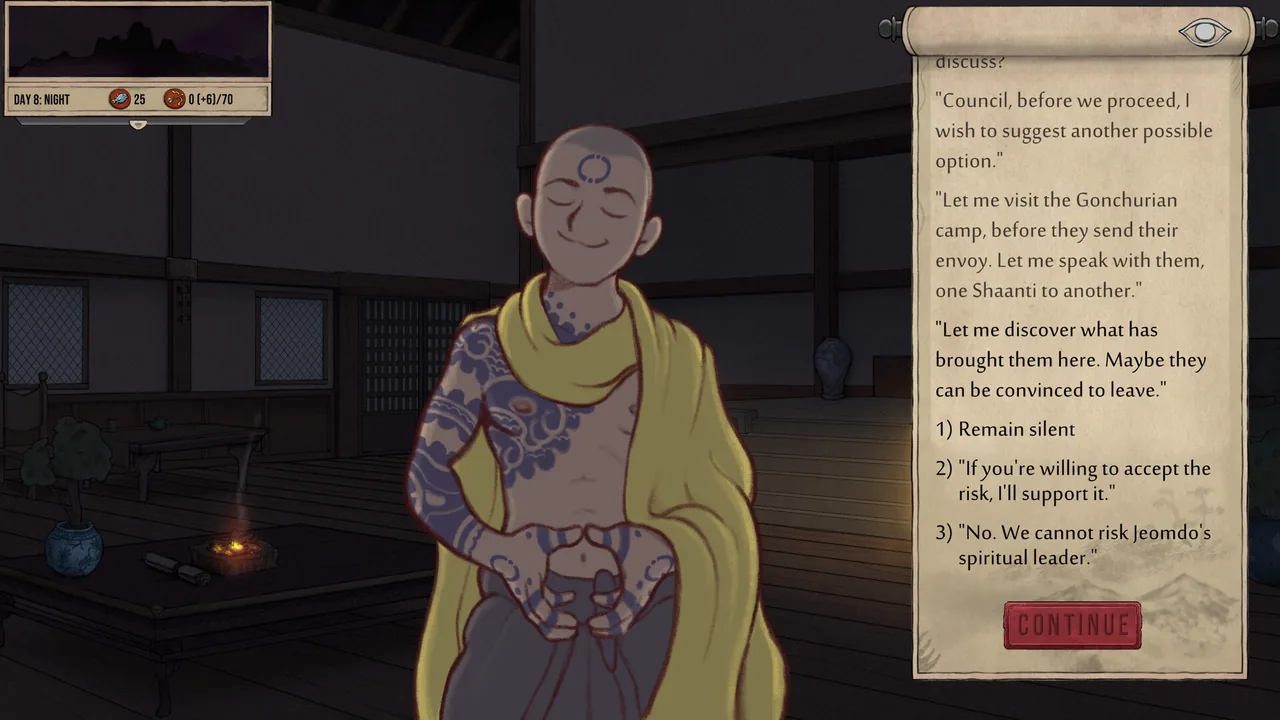
- Praised repeatedly for its hand-drawn art style and characters, with several reviewers specifically calling it striking and unlike anything else they had played.
- Praised specifically for its unusual protagonist, an older, retired commander, with multiple reviewers noting how rare that framing is within the genre.
Biggest weaknesses
- A fair, detailed complaint from one reviewer reports several continuity bugs, including narrative choices that fail to be reflected in the following scene, undercutting immersion.
- A fair, repeated complaint reports the game ends abruptly after its final battle, without the lengthier denouement several reviewers expected given the story's stakes.
- A fair complaint from one detailed reviewer reports the two core resources, Supplies and Resolve, are confusing to gauge at first, with little in-game guidance on safe thresholds.
Who it's for: Fans of choices-matter narrative RPGs and visual novels in the vein of Citizen Sleeper or Roadwarden who enjoy weighty decisions and resource management woven into a strong story; players wanting a lengthy game built for repeated replays should temper expectations.
Our recommendation: A beautifully written, hand-drawn narrative RPG let down by continuity bugs, an abrupt ending, and thin replay incentive.
7 / 10
Unanimous praise for its writing and consequential choices
The Siege of Jeomdo earns its unanimously positive rating first through consistent praise for its story. "The game gives you choices that seem to have real consequences, and I'm honestly curious how bad things can get if you choose wrong," reads one review, comparing the experience favourably to Citizen Sleeper and Roadwarden. A separate, detailed reviewer agrees on the design's rare strength: "Poor pacing is a familiar trap that many visual novels fall into, this is not the case for Siege of Jeomdo. This is a tight narrative experience where each decision you make feels appropriately weighted." This review treats that praise as fair: reviewers independently and repeatedly single out the same specific strength, choices that carry felt, visible weight rather than cosmetic branching, which is a genuine, specific writing accomplishment rather than a generic "good story" compliment.
Praised for its hand-drawn art and characters
Beyond its writing, this review found reviewers repeatedly praising the game's visual identity. "The hand-drawn art style is striking and charming, unlike any other game I've played. The characters are vibrant, some endearing, some... less so," reads one detailed review. A separate reviewer adds simply: "Incredible art style and well paced." This review treats that praise as fair: an original, hand-drawn art style specifically singled out as distinctive across a genre often dominated by stock or template visual-novel assets is a genuine, credible strength.
Praised for an unusually older, experienced protagonist
This review also found reviewers repeatedly praising a specific, less common character choice. "One thing that age has had me noticing is how underrepresented older or elderly lead characters are in RPGs. It's actually really novel to me to have a protagonist with great depth of knowledge, experience, and history," reads one review from a self-described veteran player. A separate reviewer echoes the same appreciation for the framing: "I've always enjoyed something as simple as the main character being much older than is typical." This review treats that praise as fair: reviewers independently identifying the same specific, unusual design choice, a retired commander rather than a young hero, as meaningfully fresh is a legitimate point of originality rather than incidental flavour.
A fair, detailed complaint about continuity bugs
Set against that praise, this review found a fair and specific complaint about technical execution. "There are a number of bugs I ran into, namely continuity errors which - given the nature of the game - can really rip you right out of the suspension of disbelief," reads one detailed review, describing a moment where a chosen action went undescribed in the following scene. This review treats that complaint as fair and significant: for a game whose entire appeal rests on the sense that choices matter and are tracked faithfully, a reviewer specifically documenting cases where the narrative fails to reflect an earlier decision is a real, credibility-undermining flaw, even for an otherwise glowing review.
A fair, repeated complaint about an abrupt ending
This review also found a fair, repeated complaint about pacing at the game's close. "My only gripe is that the game ends far too soon: after the final battle, the characters only comment shortly when one would expect a lengthier denouement, quickly transitioning into a canonical SRPG-style credits-and-results screen," reads one detailed review. This review treats that complaint as fair: a story built around raising the stakes across three acts benefits from a resolution that matches that build-up, and a reviewer specifically noting the ending feels truncated relative to the story's stakes is a legitimate structural critique.
Fair complaints about a confusing resource system and wasted effort
This review also found fair, specific complaints about the game's core systems. "Although the basic game system is self-explanatory, some things may go over your head during play and at first it can be confusing to understand in what ballpark the two main resources, Supplies and Resolve, should be," reads one reviewer. A separate, detailed reviewer goes further, describing a specific frustration with how that system pays off: "It still felt as though I had wasted a fair number of resources on things I didn't end up needing. And there were some tasks I felt that became pretty useless not long after they were introduced." This review treats both as fair: unclear resource thresholds and actions with unclear long-term payoff are concrete, specific management-system weaknesses, even within a game reviewers otherwise found rewarding.
Achievement data corroborates a gradual, story-driven completion curve
This review's own check of Steam's global achievement data shows a believable, gradual decline across the game's structure: 63.9% of players reach the end of Act 1, 52.2% reach the end of Act 2, and 45.0% reach the end of Act 3, a curve consistent with most players who start the game seeing its central story through. Notably, one specific late-game outcome achievement sits at just 7.2%, far below the act-completion milestones, which is consistent with reviewers' own account of a branching structure whose harder or more specific outcomes few players return to pursue, reinforcing the fair complaint about thin replay incentive.
Final verdict
The Siege of Jeomdo is a beautifully written, hand-drawn narrative RPG that earns its unanimously positive rating through consistently credible praise for its consequential choices, striking art, and unusually experienced protagonist. Its clearest weaknesses are a fair, detailed complaint about continuity bugs that undercut its own central appeal, a fair, repeated complaint about an abrupt ending, and fair complaints about a resource system that takes time to understand and can leave players feeling their effort went to waste. For fans of choices-matter narrative RPGs willing to accept some rough edges, this is a confident recommendation.
Pros and cons
Pros
- Unanimously praised for its writing and story, with multiple reviewers specifically crediting choices that feel weighty and consequential.
- Praised repeatedly for its hand-drawn art style and characters, with several reviewers specifically calling it striking and unlike anything else they had played.
- Praised specifically for its unusual protagonist, an older, retired commander, with multiple reviewers noting how rare that framing is within the genre.
- This review's own check of achievement data shows a gradual, believable drop-off across the game's three acts, consistent with a story most players see through to completion.
Cons
- A fair, detailed complaint from one reviewer reports several continuity bugs, including narrative choices that fail to be reflected in the following scene, undercutting immersion.
- A fair, repeated complaint reports the game ends abruptly after its final battle, without the lengthier denouement several reviewers expected given the story's stakes.
- A fair complaint from one detailed reviewer reports the two core resources, Supplies and Resolve, are confusing to gauge at first, with little in-game guidance on safe thresholds.
- A fair, more specific complaint from one detailed reviewer reports several resource-sink tasks and actions ultimately felt wasted or became useless soon after being introduced.
Screenshots
-
The Siege of JeomdoImage: Studio Hip Sword via Steam -
The Siege of JeomdoImage: Studio Hip Sword via Steam -
The Siege of JeomdoImage: Studio Hip Sword via Steam -
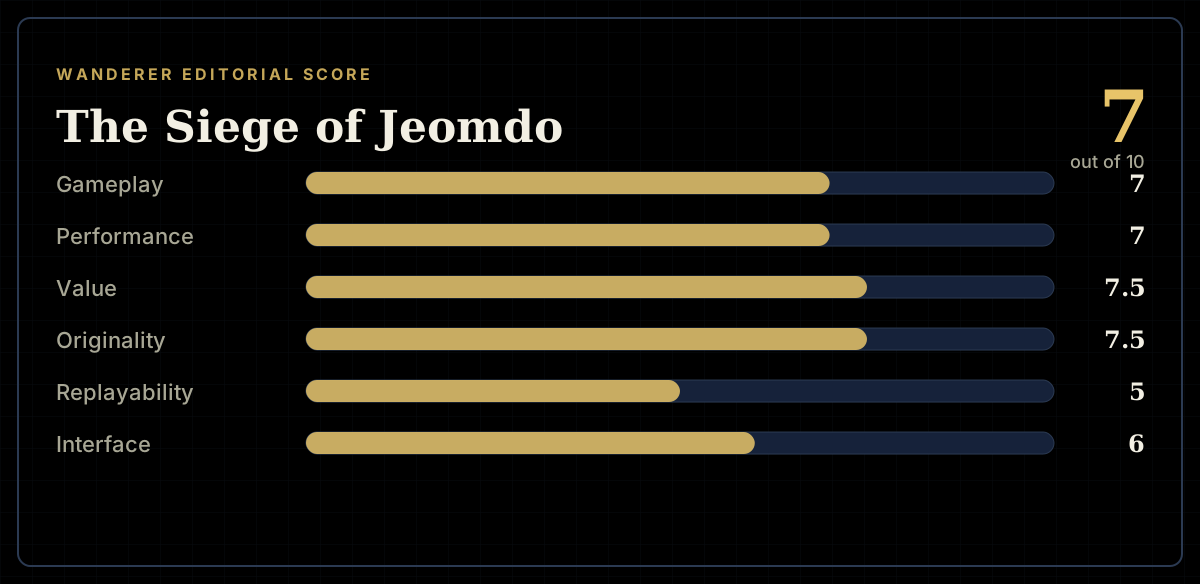
How the review scores each part of the gameWanderer Editorial -
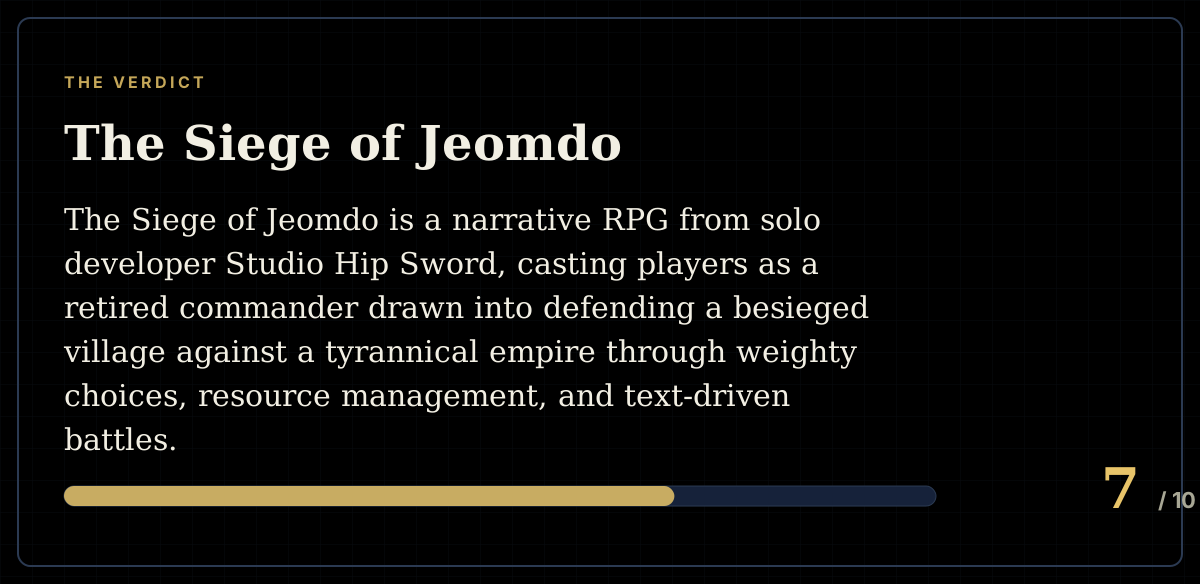
The short versionWanderer Editorial