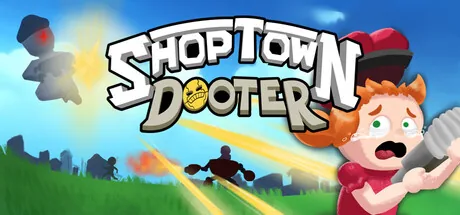
Game review
Shop Town Dooter Review: Twin-Stick Chaos With a Mech You Can Bribe Your Way Into
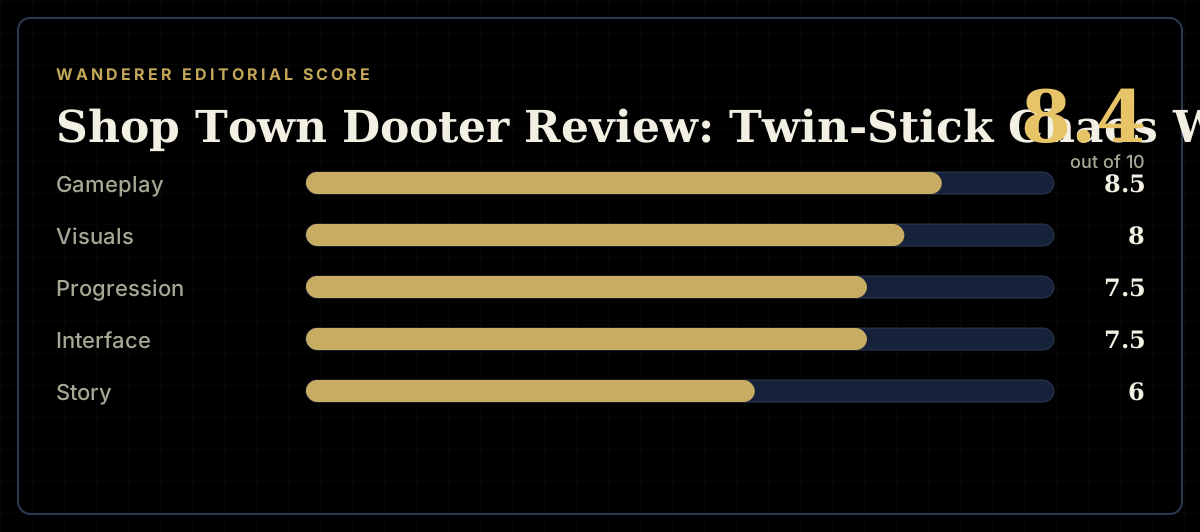
8.4 / 10
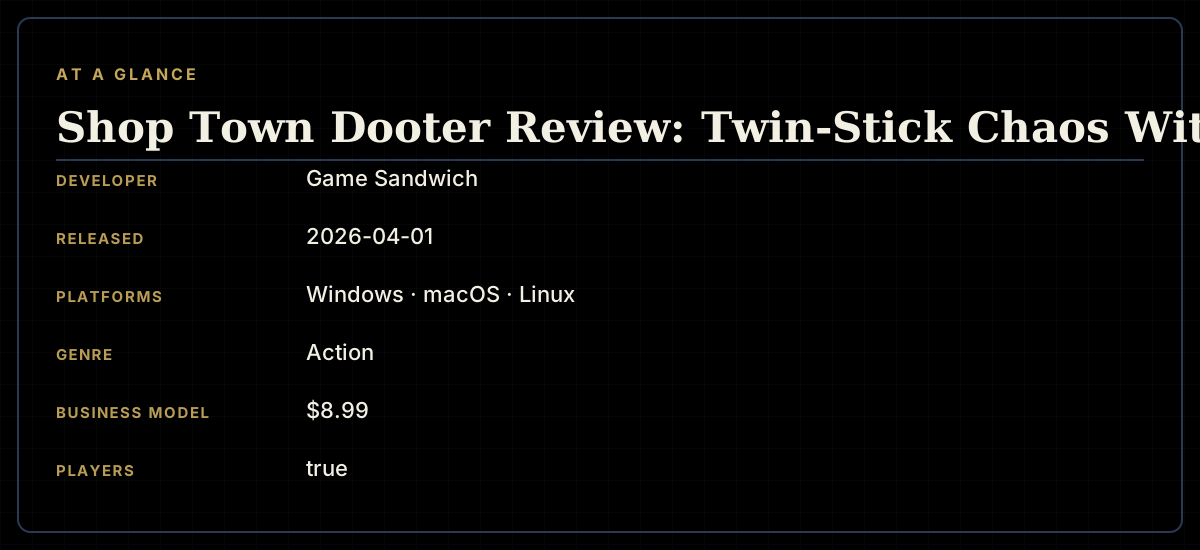
- Developer
- Game Sandwich
- Publisher
- Game Sandwich
- Released
- 1 April 2026
- Platforms
- Windows, macOS, Linux
- Genre
- Action
- Monetisation
- $8.99
- Players
- true
The short version
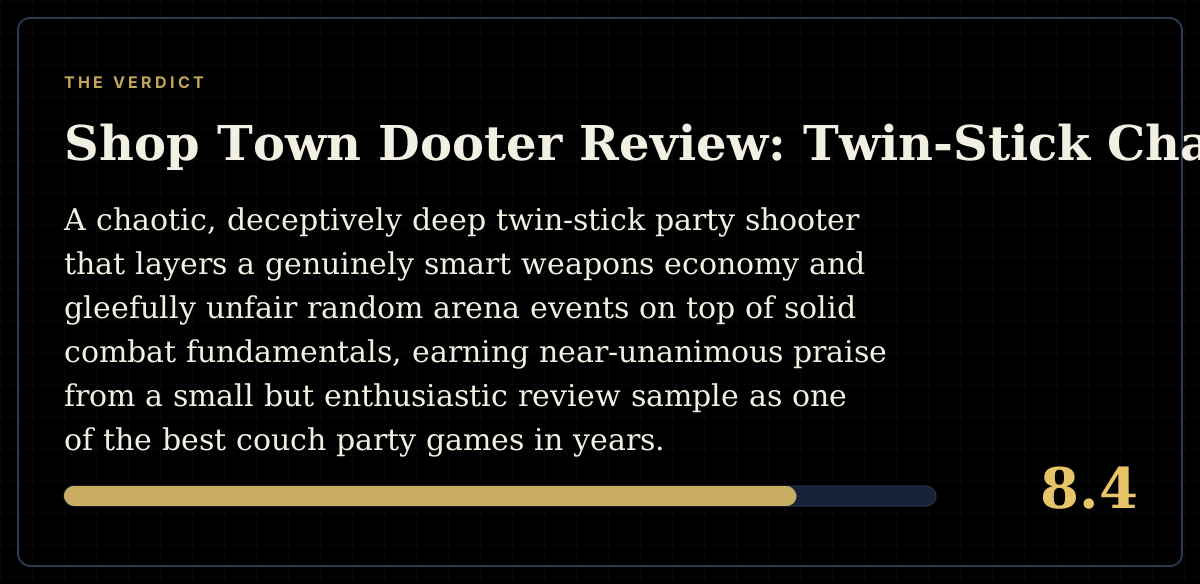
A chaotic, deceptively deep twin-stick party shooter that layers a genuinely smart weapons economy and gleefully unfair random arena events on top of solid combat fundamentals, earning near-unanimous praise from a small but enthusiastic review sample as one of the best couch party games in years.
Biggest strengths
- A genuinely deep economic and tactical layer hidden beneath frantic top-down combat — a mid-round weapons vendor, risk/reward pricing, and dirty tricks like stashing weapons in advance all reward strategic thinking, not just aim
- Random arena events (projectile storms, invading chickens, and more) and the option to buy a giant mech mid-match keep every round unpredictable and reviewers say genuinely hilarious
- Surprisingly capable bot AI that multiple reviewers specifically praise, making the game viable solo or with an incomplete group rather than strictly requiring four human players
Biggest weaknesses
- At least one reviewer reports real initial friction with the controls and visual clarity, describing them as unintuitive at first before the gameplay loop clicks
- Strongly recommended to be played with a controller rather than keyboard, since it's built as a classic twin-stick shooter — a real limitation for anyone without a gamepad on hand
- Purely arcade-focused with no campaign or story mode of any kind, so anyone wanting single-player narrative content should look elsewhere entirely
Who it's for: Groups of friends who want a competitive, controller-recommended couch party shooter with real tactical depth beneath the chaos; less essential for solo players, since bots are competent but the game is clearly built to shine with a full human group.
Our recommendation: Buy it
8.4 / 10
Chaos with a system underneath it
Shop Town Dooter's pitch is straightforward on the surface: a top-down twin-stick shooter where up to four players brawl across small combat arenas, with the explicit promise that "no refunds" apply if the chaos ends a friendship. What sets it apart, according to nearly every review in the sample, is what's underneath that chaos — a real weapons economy and dirty-tricks system that rewards planning as much as aim. A between-round vendor sells weapons at full price, but players brave enough to buy mid-firefight get them at half cost, and richer players can splash out on a genuinely game-changing mech to crush the competition outright.
A tactical depth reviewers didn't expect
The most detailed review in the sample, written in Spanish, breaks down exactly why this works: despite its chaotic, absurd appearance, there's real strategy in how each weapon alters your approach — area-control tools, wall-piercing snipers — and in how carefully you have to manage your in-round economy. A separate English-language review echoes this directly, praising how "seriously it treats the fundamentals of game design," specifically calling out thoughtful balance between weapons and skills that makes combat "feel intentional rather than random." Another reviewer describes discovering new interacting systems the more they play — shooting, zoning, items, even items interacting with arena walls — framing it as a genuine "must play" for friend groups who want a game with real room to grow into over many sessions.
Random events keep every match honest
Beyond player-driven chaos, each arena throws in randomized surprise events — projectile storms, invading chickens, and other absurd twists the Spanish-language review calls out by name as generating "very comedic situations and unexpected plot twists." Reviewers frame this unpredictability as central to the game's party-night appeal: no two rounds play out the same way, and the combination of environmental chaos with the economic layer described above means skilled play and lucky chaos both meaningfully affect who wins.
Bots capable enough to matter
A recurring, specific point of praise across multiple reviews is the quality of the AI opponents. One reviewer, noting they don't have friends to play with regularly, calls the bot AI "great" and says the mechanics hold up well even in solo bot matches. Another specifically highlights being "impressed" that bots can be "sometimes challenging," making them a legitimate way to fill out a match when a full group of four human players isn't available — a real practical strength for a genre that often treats bots as an afterthought.
The one real friction point
Set against the otherwise unanimous praise, one detailed review offers genuinely useful, constructive pushback: initial friction with the controls and visual clarity, describing both as feeling "slightly unintuitive or unfamiliar" before the gameplay loop clicks into place. That same reviewer specifically requests smoother controls and a more refined visual direction in future updates, while still calling the overall result "a very promising start" for the studio's first game. The Spanish-language review reinforces part of this by strongly recommending a controller over keyboard, since the game is built as a classic twin-stick shooter where joystick input adds meaningfully more fluidity than mouse-and-keyboard.
A long, visibly deliberate development cycle
One reviewer's account of following the game since well before launch adds useful context: repeated delays, each framed by the developers as "six months" away, stretched out over roughly a year and a half from first announcement to release. The reviewer describes this as frustrating in the moment but, in hindsight, clearly the result of a small team genuinely trying to get every mechanical detail right rather than dragging its feet — a read that lines up closely with the finished game's reputation for unusually deep, well-considered systems for a party shooter. The developer's own news history backs this up, spanning a 2024 announcement, a 2025 beta, and an October 2025 demo before the actual April 1, 2026 launch.
Is $8.99 worth it for a party shooter this deep
At $8.99, Shop Town Dooter sits a little above typical budget party-game pricing, but reviewers consistently frame that cost as easily justified by the amount of genuine mechanical depth on offer, competent bot support for solo or partial-group play, full controller support with DualShock and DualSense integration, and both local and Remote Play Together multiplayer options. Several reviewers explicitly rank it among the best party games they've played in recent memory, a strong signal given how crowded and disposable the couch-party genre typically is.
A cosmetic and achievement layer for repeat visits
Beyond the core matches, 11 Steam achievements track a mix of skill-based and playful goals — names like "New Hat," "Nice Dodge," "Grand Theft Weapon," and the pun-heavy "It Is Wednesday My Dootes" give a sense of a developer having genuine fun with its own systems rather than treating achievements as an afterthought checklist. Full controller support extends to dedicated DualShock and DualSense integration alongside Remote Play Together, meaning a group doesn't strictly need everyone to own a copy or be in the same room to get a full four-player match going, which meaningfully widens who can actually join a session compared to couch-only party games.
Verdict
Shop Town Dooter backs up its chaotic, mech-and-chicken-filled premise with genuinely smart economic and tactical systems that reward repeated play rather than wearing thin after a session or two. Real but minor control and visual-clarity friction keeps it from a perfect score, but for groups looking for a deep, controller-recommended party shooter with real staying power, the near-unanimous enthusiasm here is well earned.
Pros and cons
Pros
- A genuinely deep economic and tactical layer hidden beneath frantic top-down combat — a mid-round weapons vendor, risk/reward pricing, and dirty tricks like stashing weapons in advance all reward strategic thinking, not just aim
- Random arena events (projectile storms, invading chickens, and more) and the option to buy a giant mech mid-match keep every round unpredictable and reviewers say genuinely hilarious
- Surprisingly capable bot AI that multiple reviewers specifically praise, making the game viable solo or with an incomplete group rather than strictly requiring four human players
- A first game from a small studio that reviewers say clearly poured real design care into system interactions, balance, and mechanical depth rather than shipping a shallow party-game skin
Cons
- At least one reviewer reports real initial friction with the controls and visual clarity, describing them as unintuitive at first before the gameplay loop clicks
- Strongly recommended to be played with a controller rather than keyboard, since it's built as a classic twin-stick shooter — a real limitation for anyone without a gamepad on hand
- Purely arcade-focused with no campaign or story mode of any kind, so anyone wanting single-player narrative content should look elsewhere entirely
- A very small review sample of just 10, all positive so far, from a game that took an unusually long, repeatedly delayed development cycle to reach this launch state
Screenshots
-
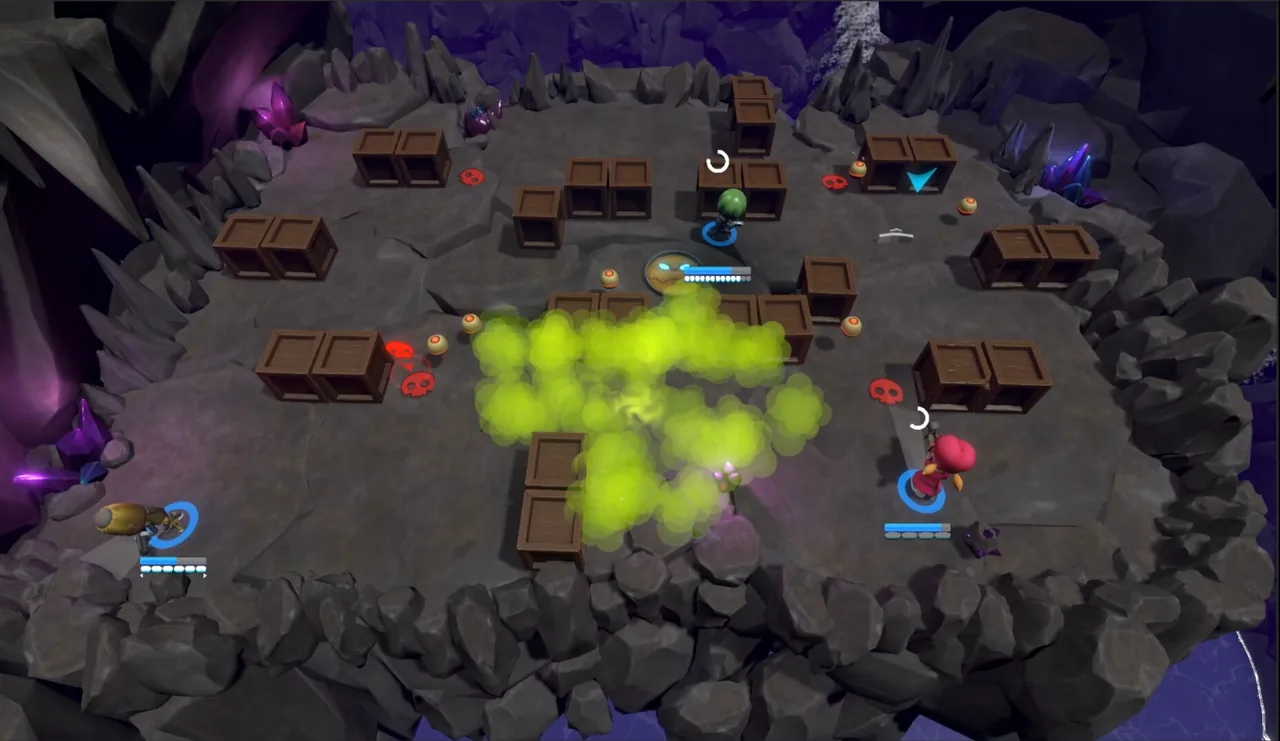
Image: Game Sandwich via Steam -
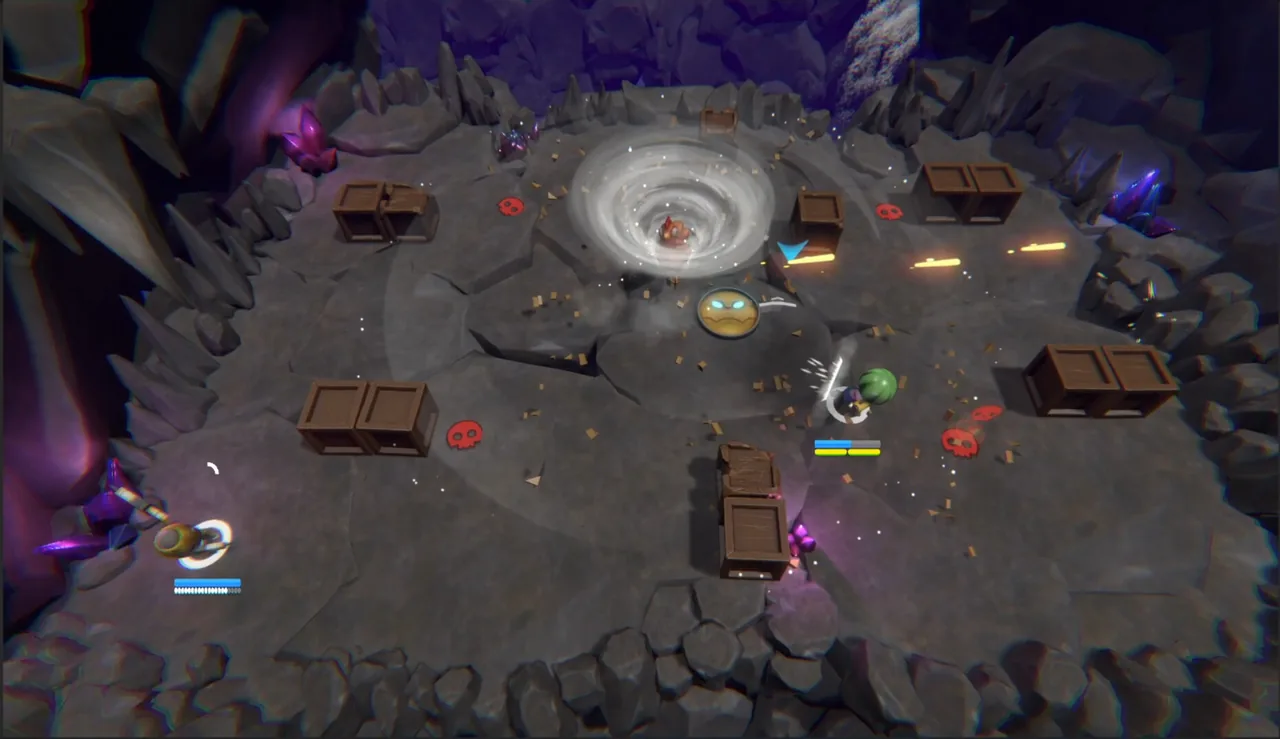
Image: Game Sandwich via Steam -
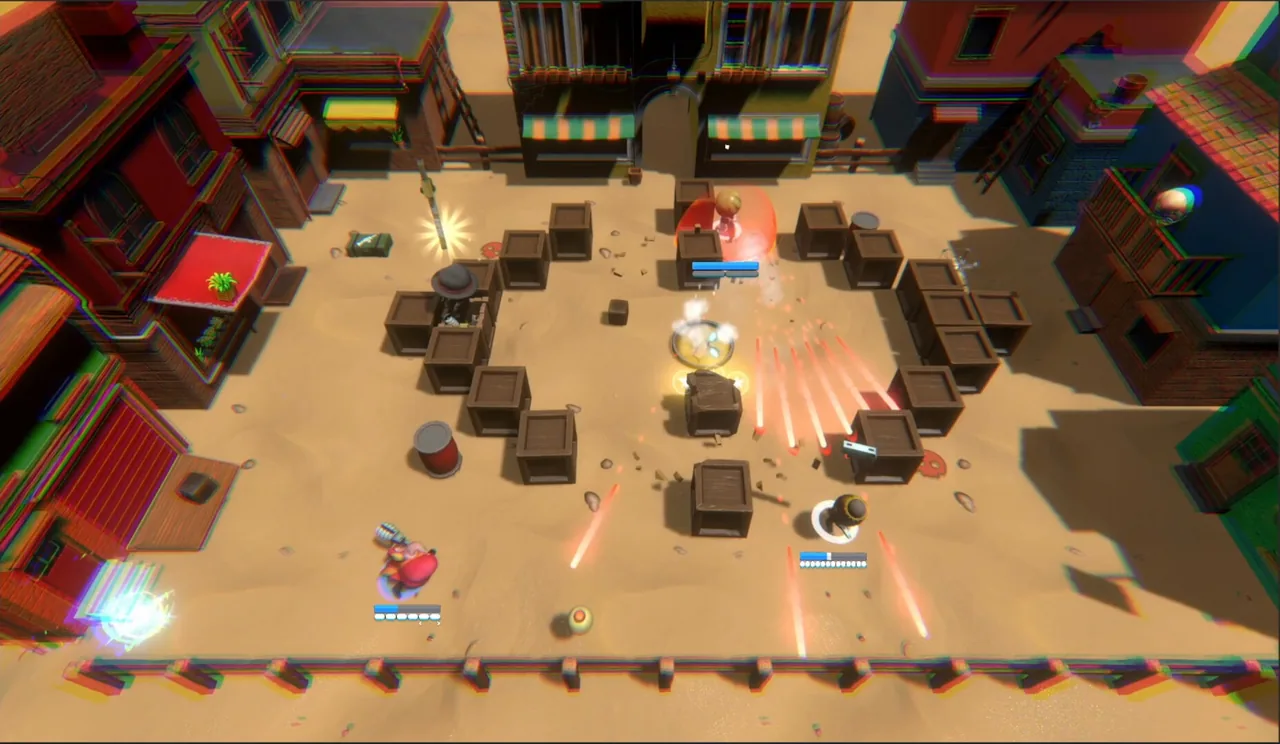
Image: Game Sandwich via Steam -
Wanderer Editorial -
Wanderer Editorial -
Wanderer Editorial