
Game review
ShipShaper: Falconeer Chronicles Review
5.7 / 10
- Developer
- Tomas Sala
- Publisher
- Wired Productions
- Released
- 2 September 2026
- Platforms
- ["Windows"]
- Genre
- Simulation
A Ship Builder, Not a Ship Battler
ShipShaper: Falconeer Chronicles is an explorative ship-building tool, not a combat game, despite carrying the Falconeer name into its title. Solo developer Tomas Sala, best known for the aerial combat game The Falconeer, built ShipShaper as a standalone construction sandbox where players stretch, drag, and push a generic hull into anything from a historically grounded Age of Sail frigate to a steampunk aircraft carrier or a fantasy sea-monster mech. There's no combat, no campaign, and no scoring system; the entire experience is the act of construction itself, aided by an experimental manipulation interface that lets pieces be pulled, snapped, and reshaped in real time, with sails and rigging that respond to physics as they're built rather than only once a ship is finished. Finished creations can be tested on open water, exported as 3D-printable FBX files, or shared through Steam Workshop, and the game explicitly doubles as what Sala calls "a foundational technology" for his own future projects, including an export pipeline into his other game, Bulwark. Published by Wired Productions alongside Gamersky Games, ShipShaper entered Steam Early Access on September 2, 2026, priced at $8.99, for Windows only, following roughly seven months of public demo builds and beta testing that began with a February 2026 reveal.
The Falconeer Chronicles branding functions as a spinoff rather than a sequel: several reviewers say they'd never played The Falconeer and bought ShipShaper on its own merits as a construction toy, while longtime fans of Sala's earlier work describe picking it up out of loyalty to a developer they consider unusually committed to his own vision.
A Long Demo Pays Off at Launch
ShipShaper has drawn 210 reviews so far, with 204 positive and 6 negative for a 97% "Overwhelmingly Positive" approval rating, split mostly between English and Simplified Chinese players with a scattering of French and Russian reviews. As with several of Sala's projects, a large share of that pool logged significant time in the public demo and closed beta builds before the Early Access launch; one reviewer with nearly 3,500 minutes played describes putting over 20 hours into the demo alone, treating the 1.0 Early Access release as confirmation of something they'd already decided they loved.
A Genuine Creative Tool, and Reviewers Can't Stop Building
The praise across the pool centers overwhelmingly on the pure creative pull of the building system itself. One reviewer with nearly 7,000 minutes played and self-described "3000+ hours on NavalArt" calls it, unreservedly, the best ship-building experience they've had, singling out the range of eras on offer, from Ancient galleys through WWI dreadnoughts, and the freedom to abandon historical accuracy entirely for something stranger. Multiple reviewers reach for the same comparison, describing ShipShaper as sitting somewhere between Townscaper and Tiny Glade: a tool built for the joy of manipulation rather than a game built around goals, where a small, forgiving nub of hull can be dragged and reshaped without fear of permanently ruining earlier work. One reviewer who set out to build "a small, simple ship" says it somehow became a dreadnought over five hours they "genuinely have no idea where the time went." The addictive quality shows up again and again in different phrasing: one self-described addict says they delete 99.9% of what they create and keeps building anyway, another says they can't stop making ships and just needs to find time to 3D print them, and a third calls it a delightful casual toolbox they now use to make isometric maps for their tabletop group's online sessions. The realism of the sail and rigging physics draws specific attention too, with one reviewer marveling at watching sails work in real time as they built a historical sloop, and several reviewers explicitly credit Sala's active presence on the community Discord and his track record of fast post-launch tweaks as reasons they trust an Early Access purchase from him specifically.
Raw Controls, Missing Menus, and Thin Localization
The negative and mixed reviews are unusually consistent for such a small slice of an otherwise glowing pool, and they cluster almost entirely around the manipulation interface rather than the concept itself. The most repeated complaint is the absence of a conventional parts menu: instead of browsing a full catalog, players hover the cursor near a build location and the game surfaces only pieces it judges compatible with that spot, and multiple reviewers describe this as "twitchy," with one writing that moving the mouse "1 centimeter in the wrong direction" swaps the available part entirely, while a French-language review calls the whole object-selection interface confusing and the underlying logic opaque. Several reviewers, writing in Simplified Chinese, add more specific interface frustrations on top of that: control icons that don't clearly communicate what a given manipulator does until it's already been misused, a mirroring tool that mirrors placement but not subsequent moves or resizes, and a highlight system for the active tool that reviewers say frequently fails to actually highlight, which one reviewer flags as a probable bug rather than a design choice. A separate cluster of complaints concerns missing basics: one reviewer reports their ship simply couldn't sail because it lacked a rudder, with no tutorial ever explaining rudders were required, and another asks for basic camera rotation via a held mouse-wheel, calling its absence "almost must-have for such games." Incomplete localization is its own recurring thread, with Chinese, French, and Russian-language reviewers all noting some interface text remains untranslated English months into the demo period. A few reviewers who tried exporting their creations for FDM 3D printing also report the geometry doesn't hold up at small scale, with fine details like window frames, lights, and railings failing to connect properly on the print file.
Verdict
ShipShaper: Falconeer Chronicles succeeds completely at the one thing it sets out to do: give players an unusually flexible, physically responsive tool for building ships that don't have to look like ships, and its 97% approval across a pool heavily seeded by a long public demo reflects real, earned trust in both the concept and its developer. The building loop itself, stretching and reshaping a hull into anything from a historical frigate to a fantasy sea monster, lands for almost everyone who tries it, and the export options into 3D printing, Steam Workshop, and Sala's own future projects give finished creations somewhere to go beyond the screen. But this is still very much an Early Access construction tool with the rough edges to match: a context-sensitive parts system that multiple reviewers found actively hostile to precise building, missing fundamentals like rudder requirements that go unexplained, and localization gaps that leave non-English players working around untranslated menus. At $8.99, ShipShaper is an easy recommendation for anyone who finds pure creative sandboxes like Townscaper or Tiny Glade appealing and can tolerate an interface that's still finding its footing, and a harder sell for anyone who wants a fully browsable, precision-friendly parts catalog on day one.
Screenshots
-
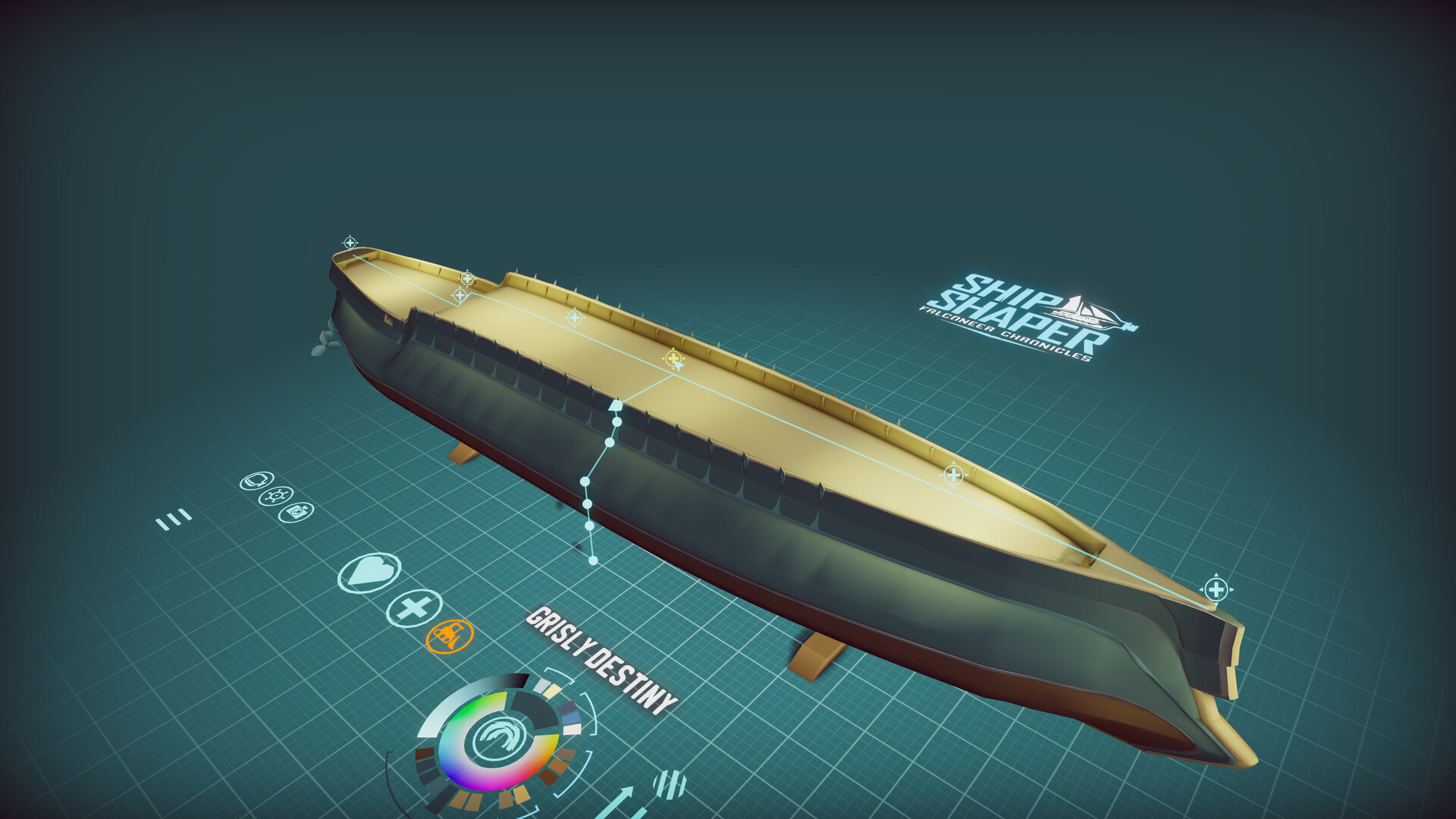
Early hulls like Grisly Destiny start as a bare, reshapeable form, with the manipulation handles and radial color wheel reviewers praised as intuitive once learnedImage: Wired Productions via Steam -
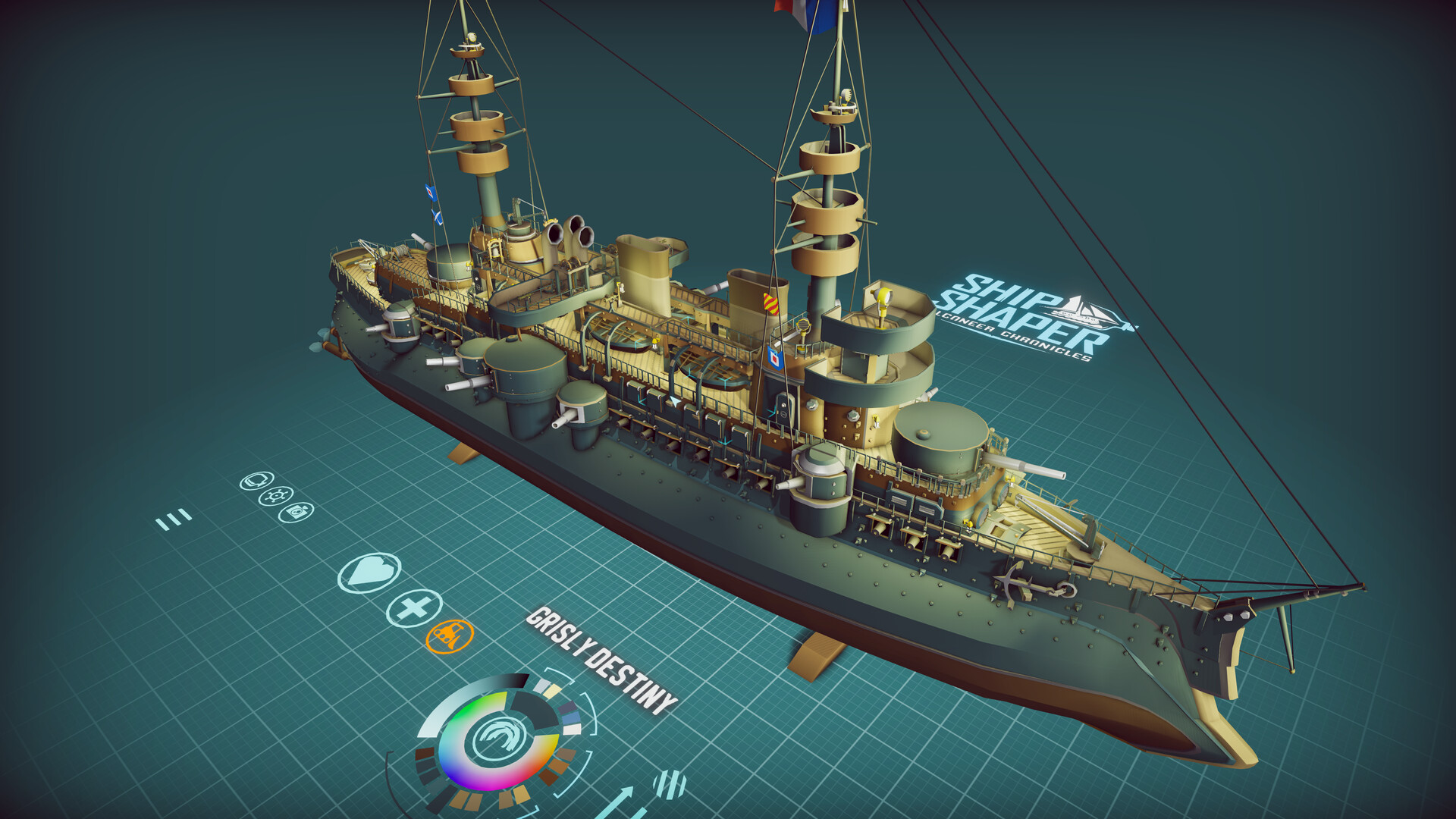
The same build workspace can produce a period-accurate dreadnought like this one, the historical range reviewers with hundreds of hours in NavalArt singled out as a highlightImage: Wired Productions via Steam -
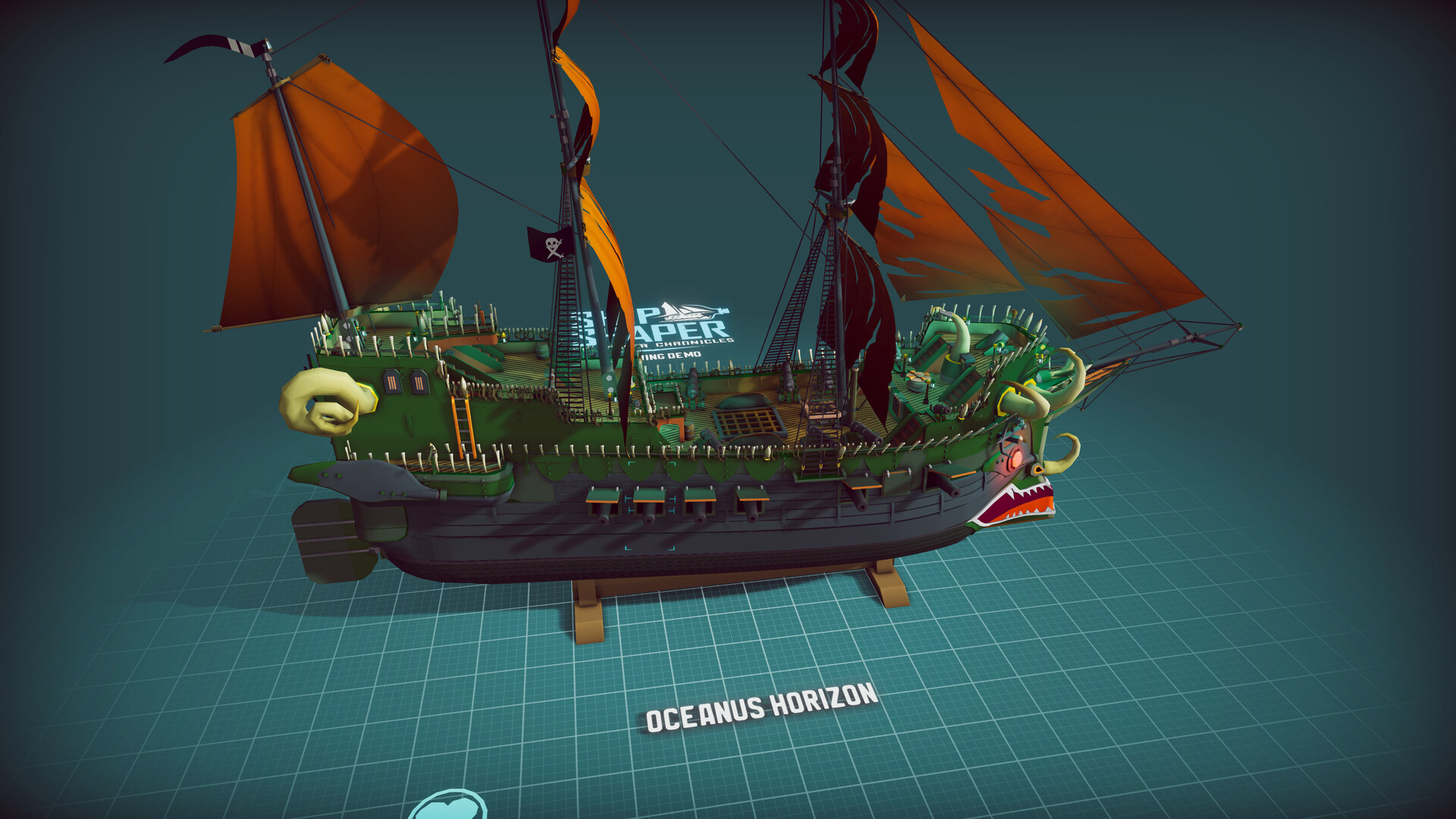
Nothing requires historical accuracy: creations like Oceanus Horizon lean fully into the fantasy sea-monster builds reviewers say the tool handles just as well as real-world shipsImage: Wired Productions via Steam