
Game review
Selaco (Early Access)
7.5 / 10
- Developer
- Altered Orbit Studios
- Publisher
- Altered Orbit Studios
- Released
- 31 May 2024
- Platforms
- Windows, Linux
- Genre
- Retro FPS
- Monetisation
- One-time purchase, no in-game currency
- Players
- Single-player
The short version
Selaco is a retro-styled FPS built in the GZDoom engine, drawing heavily on F.E.A.R.'s squad-based enemy AI and destructible-environment combat rather than pure Doom-style arena shooting. It's been in Early Access since 31 May 2024, offering Chapter 1 of a planned three-chapter campaign, with full release expected in late 2026 once Chapters 2 and 3 are complete. The reception has been outstanding by any measure — Kotaku called it one of the best shooters in years, Cnet named it one of the most polished Early Access titles ever released, and Steam's own audience agrees emphatically, Very Positive at 93.4% across nearly 4,800 reviews. What's remarkable reading through two years of reviews spanning launch week to this month is how consistently even reviewers who love the combat land on the same specific complaint: level design frequently buries a single mandatory keycard, PDA or switch inside an unmarked secret, turning what should be a five-minute firefight into an hour of tedious backtracking through maze-like, visually similar rooms before progress can continue.
Biggest strengths
- Combat is repeatedly described by critics and players alike as some of the best the retro-shooter revival has produced, with F.E.A.R.-inspired enemy squads that flank, take cover and call out tactical commands to each other
- Sound design draws specific, consistent praise, with players describing being able to track enemy positions purely by ear
- Weapon feel and destructible environments are technically impressive, especially for a game built on the GZDoom engine, drawing direct comparisons to F.E.A.R.'s own shotgun-and-gore feedback
Biggest weaknesses
- The single most consistent complaint across two years of reviews, from launch week through this month, describes critical progression items — keycards, PDAs, access codes — hidden in unmarked secrets, turning short firefights into long, disorienting backtracking sessions through visually similar rooms
- Several detailed reviews compare the level design unfavourably to genre peers, describing maze-like layouts that feel built to impress fellow GZDoom mapmakers more than to guide an ordinary player through cleanly
- A visual clash between high-detail and heavily pixelated assets is cited by multiple reviewers as making distance and threat position genuinely hard to read in fast combat
Who it's for: FPS fans who loved F.E.A.R.'s tactical enemy AI or Trepang2's combat-forward design will find some of the best gunplay the retro-shooter revival has produced. Players who want their combat's pacing matched by tight, legible level design, rather than long stretches of confused backtracking between firefights, should know this is the single most consistent complaint across two years of reviews — it hasn't been fully resolved as of this Early Access build.
Our recommendation: Recommended for the combat alone, which genuinely earns its critical acclaim, but go in aware you're buying into ongoing Early Access development with only the first of three planned chapters complete. The exploration-pacing complaint detailed below has persisted consistently since launch week, so don't assume it's been patched away by the time you buy.
7.5 / 10
Combat that earns its comparisons to F.E.A.R.
Selaco wears its inspiration openly: Monolith's F.E.A.R. is the clear touchstone, evident from the moment enemy squads start calling out flanking manoeuvres and taking real cover rather than simply charging forward. Built on the GZDoom engine — the same technical foundation as classic Doom source ports — Selaco combines that F.E.A.R.-derived tactical AI with genuinely destructible environments and a shotgun that reduces enemies to a satisfying mist, and the response from both critics and players has been about as enthusiastic as an Early Access shooter can hope for. Kotaku called it one of the best shooters in years; Cnet specifically praised how polished it felt for a game still labelled Early Access. Steam's own audience backs that reception up emphatically: Very Positive at 93.4% across nearly 4,800 reviews, a genuinely large and consistent sample rather than early hype that's since cooled.
The complaint that spans two years of reviews
What makes Selaco's story worth telling in more detail than a simple "great combat, still in development" summary is how consistently one specific structural complaint appears across reviews posted from the very first week of Early Access through to this month, more than two years later. Reviewer after reviewer describes the same frustrating pattern: clear a room of enemies in five or ten minutes of genuinely excellent combat, then spend an hour or more wandering large, visually similar, maze-like environments hunting for the one keycard, PDA or non-obvious switch that unlocks the next area. One especially detailed review captures the specific mechanism of the frustration: because so many critical progression items are tucked into secrets, players feel obligated to find every single one before moving on, turning what should be ten minutes of shooting per level into hours of tedious searching. Another reviewer draws a specific, unflattering comparison to Ion Fury, arguing the level design reads as a technical showcase built to impress fellow GZDoom mapmakers rather than a space designed to be intuitively navigated by an ordinary player.
This isn't a complaint that faded as the developers patched the game across two years of continued Early Access support — reviews making essentially the same argument appear from June 2024 through reviews posted within the last few weeks, suggesting whatever adjustments have been made haven't fully resolved the core pacing mismatch between Selaco's excellent combat and its frequently disorienting exploration.
Smaller, more technical complaints
A handful of more specific issues round out the negative review sample. Several reviewers describe a genuine visual clash between the game's high-detail assets and its more heavily pixelated elements, making it specifically harder to judge distance and incoming threats during fast combat than the overall presentation quality would suggest. Combat balance draws its own complaint from some players, who describe damage as difficult to avoid once a firefight starts — hitscan enemy weapons punish leaving cover immediately, and the dodge mechanic's stated invulnerability window doesn't always feel as reliable in practice as the game's own tutorial implies. Enemy movement is occasionally described as unnaturally fast or twitchy, a specific critique some reviewers attribute to quirks of the underlying Doom engine rather than a deliberate design choice.
What buying into Early Access actually gets you
It's worth being explicit about scope for anyone considering a purchase today: Selaco's Early Access build contains only the first of three planned campaign chapters, with the developers targeting a full 1.0 release in late 2026 once Chapters 2 and 3 are complete. That's a meaningfully different purchase than a finished game, even a good one, and buyers should go in understanding they're supporting continued development of an intentionally partial campaign rather than getting the complete experience critics have already praised so highly.
A well-supported Early Access, even if the core issue persists
To the developers' credit, this isn't a case of an Early Access title left to stagnate. Altered Orbit Studios has maintained active, visible development across the more than two years since launch, and the sheer size and consistency of the positive review sample — spanning that entire period rather than clustering at launch — suggests real, ongoing investment in the game rather than a one-and-done Early Access cash grab. The frustrating part is precisely that this level of sustained support hasn't yet produced a fix for the one specific, repeatedly documented pacing problem detailed above. That's worth separating clearly in your own expectations: a developer's commitment to a project and their ability to solve one particular, stubborn design issue are two different things, and Selaco's history so far demonstrates plenty of the first without yet fully delivering the second.
Verdict
Selaco's combat is exactly as good as its considerable critical and player acclaim suggests — genuinely tactical, F.E.A.R.-inspired enemy AI wrapped in destructible environments and weapon feel that punches well above what its GZDoom foundation might suggest is possible. The consistent, two-year-spanning complaint about level design and secret-hunting pacing is real and worth taking seriously before buying, since it's shown no clear sign of being fully resolved across the Early Access period so far. Buy it for combat that's genuinely among the best the retro-shooter revival has produced, go in expecting real friction in how levels guide you between those firefights, and remember you're buying one chapter of three with full release still some time away. Whether Chapters 2 and 3 finally solve the exploration-pacing problem, or simply extend it across more content, is the open question that will define whether this ends up one of the genre's defining releases or merely one of its most technically admired.
Pros and cons
Pros
- Combat is repeatedly described by critics and players alike as some of the best the retro-shooter revival has produced, with F.E.A.R.-inspired enemy squads that flank, take cover and call out tactical commands to each other
- Sound design draws specific, consistent praise, with players describing being able to track enemy positions purely by ear
- Weapon feel and destructible environments are technically impressive, especially for a game built on the GZDoom engine, drawing direct comparisons to F.E.A.R.'s own shotgun-and-gore feedback
- Critics were genuinely enthusiastic at launch, with Kotaku and Cnet both singling it out as an unusually accomplished Early Access release
- Steam's own audience backs up the acclaim strongly, Very Positive at 93.4% across nearly 4,800 reviews, a large and consistent sample
Cons
- The single most consistent complaint across two years of reviews, from launch week through this month, describes critical progression items — keycards, PDAs, access codes — hidden in unmarked secrets, turning short firefights into long, disorienting backtracking sessions through visually similar rooms
- Several detailed reviews compare the level design unfavourably to genre peers, describing maze-like layouts that feel built to impress fellow GZDoom mapmakers more than to guide an ordinary player through cleanly
- A visual clash between high-detail and heavily pixelated assets is cited by multiple reviewers as making distance and threat position genuinely hard to read in fast combat
- Some reviewers describe damage as difficult to avoid once combat begins, with hitscan enemy weapons and an invulnerability window on dodging that several say doesn't feel as reliable as the game's own tutorial implies
- Only the first of three planned chapters is currently available, with full release not expected until late 2026, meaning buyers today are purchasing an intentionally incomplete campaign rather than a finished game
Screenshots
-

SelacoImage: Altered Orbit Studios via Steam -

SelacoImage: Altered Orbit Studios via Steam -

SelacoImage: Altered Orbit Studios via Steam -
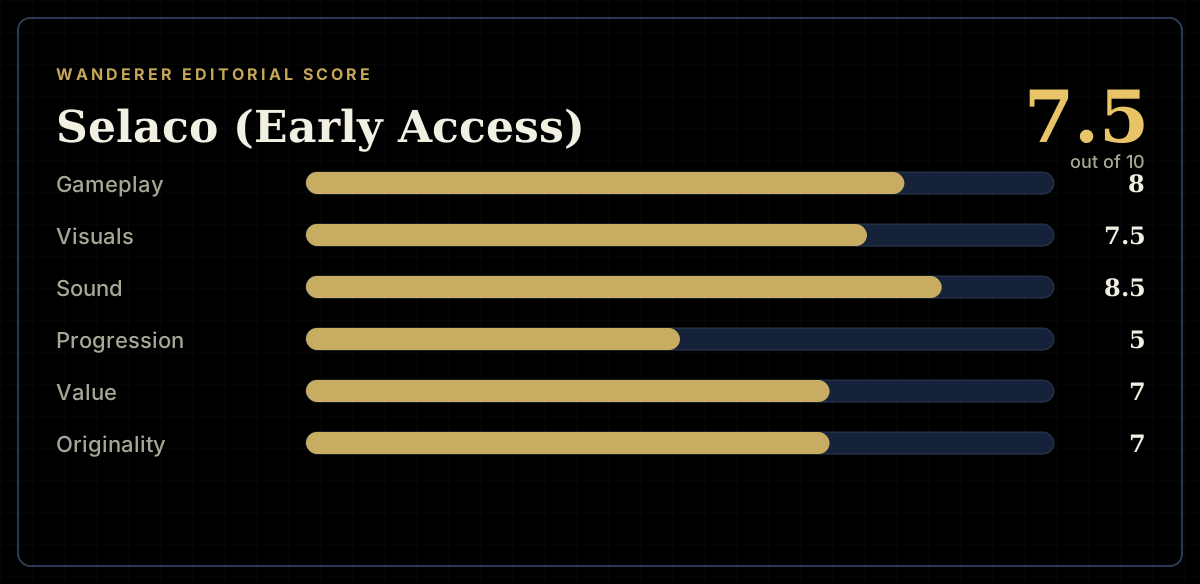
How the review scores each part of the gameWanderer Editorial -
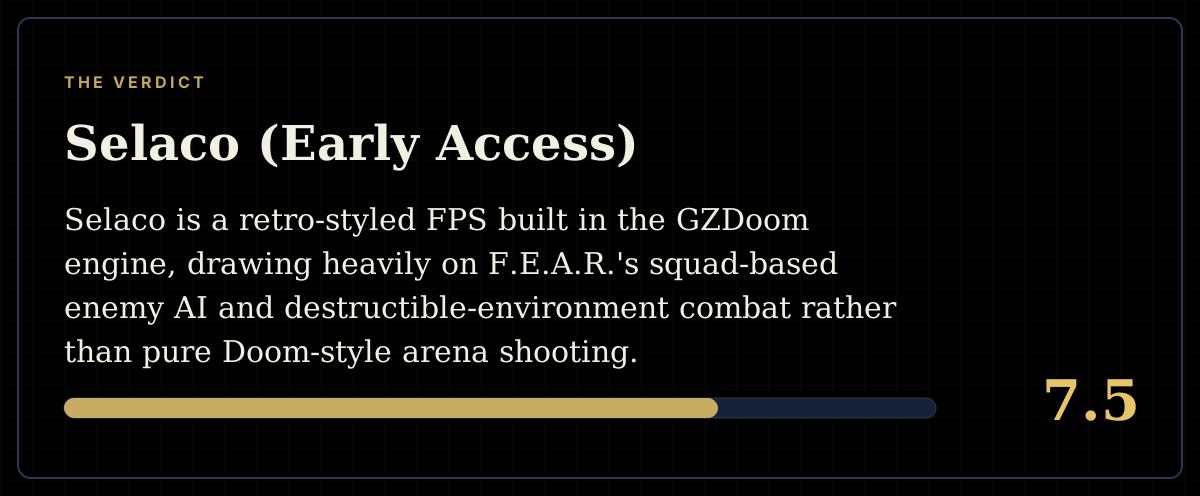
The short versionWanderer Editorial