
Game review
SEDAP! A Culinary Adventure
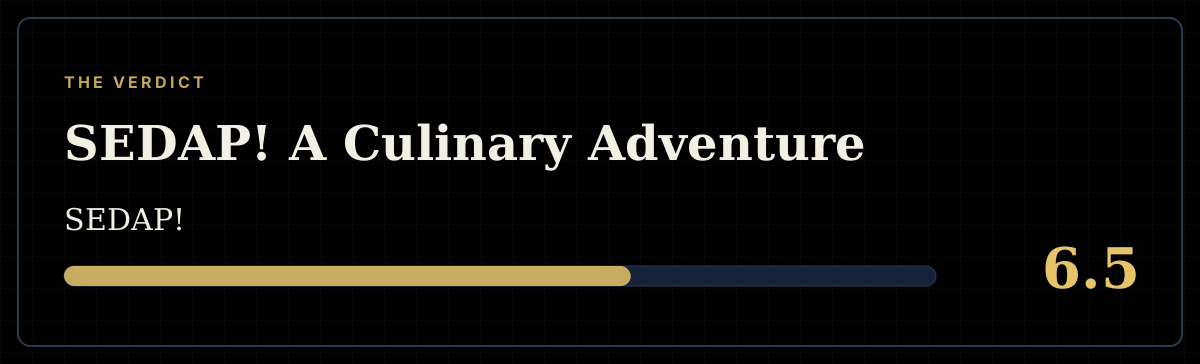
6.5 / 10
- Developer
- kopiforge
- Publisher
- Isolated Games Publishing, IndieArk
- Released
- 22 May 2025
- Platforms
- Windows, macOS
- Genre
- Action, Adventure, Indie, RPG, Simulation
- Monetisation
- Premium, one-time purchase. No microtransactions.
- Players
- Local and online co-op for up to two players; also playable solo.
The short version
SEDAP! A Culinary Adventure, developed by kopiforge and published by Isolated Games Publishing and IndieArk, takes the Overcooked formula and reworks it around Southeast Asian cuisine, sending one or two players hunting ingredients that fight back, wielding a wok with real weight, and cooking iconic dishes under mounting time pressure. Reviewers consistently praise its cultural specificity, art direction, and the sincerity behind its design, but a large and vocal share of the sample reports a rough launch marred by disconnects and controller bugs, a difficulty curve that spikes hard once levels sprawl across bigger maps, and a marketing pitch as a cozy co-op game that many found anything but cozy in practice.
Biggest strengths
- Praised for its cultural specificity and craft, with one reviewer calling it "a love letter to Southeast Asia" from the level design to the soundtrack, composed using "traditional instruments," and another, a self-identified Malaysian player, writing it made them "super proud" to see "Southeast Asian food and culture represented like this."
- Praised for its inventive twist on the Overcooked formula, with reviewers highlighting the ingredient-hunting and combat layer, "hunt ingredients that bite back," a wok that "actually feels like using a wok," and one reviewer summarizing it as "a unique Overcooked style co-op game with some additions like a combat system."
- Praised for scalable difficulty and solo viability, with one reviewer noting "there's an easy mode" for those who find the base game too hectic, and another confirming they "played this single-player and it was still really fun and well-balanced."
Biggest weaknesses
- The single most heavily corroborated complaint concerns launch-state bugs, with reviewers reporting "frequent disconnects," characters "getting stuck on cook stations," and one describing "extremely annoying bugs and crashes" including a game that "constantly disconnects/loses connection with host," though multiple reviewers separately credit the developers for actively patching these issues.
- A second, widely corroborated complaint concerns a sharp difficulty spike alongside sprawling later-level maps, with one reviewer stating this "is NOT A COZY CO-OP game" once players push past early stages, and another describing later levels as feeling like "more a memory game than a fun cooking game" of remembering ingredient locations across oversized stages.
- A third complaint concerns a stark gap between the English-language review score and the full all-language score, with one reviewer directly addressing a wave of negative reviews tied to "multiplayer achievement issues," suggesting technical achievement-tracking problems disproportionately soured the broader international reception even among players who otherwise enjoyed the game.
Who it's for: Overcooked fans looking for a genuinely fresh regional twist and willing to ride out early patches; players specifically seeking a relaxed, low-stress cooking game should be cautious, as later levels turn markedly stressful and map-heavy.
Our recommendation: A heartfelt, well-crafted co-op cooking game let down at launch by bugs and a difficulty curve that outpaces its cozy marketing, worth playing now that patches are landing but not without some friction.
6.5 / 10
A cooking game built around a specific, well-loved culture
SEDAP! A Culinary Adventure, released 22 May 2025 by developer kopiforge and publishers Isolated Games Publishing and IndieArk, reworks the now-familiar Overcooked-style chaotic-cooking formula around Southeast Asian cuisine and Khaya Island, a fictional setting steeped in real regional culture. Players hunt wild ingredients that fight back, wield a wok with genuine physical weight, and race against the clock to plate iconic dishes, alone or with a friend in local or online co-op. The specificity of that premise resonates strongly across the review sample. One reviewer calls it "absolutely delightful" and "oozing with passion," praising everything "from the level design to the equipment and, of course, the dishes" as "a love letter to Southeast Asia," and singling out a soundtrack "composed using traditional instruments." Another reviewer, writing as a Malaysian player, describes being "super proud" to see "Southeast Asian food and culture represented like this," adding that the game "feels like I'm in a real kitchen," down to how "the way you cook with the wok? It actually feels like using a wok."
That specificity extends into thoughtful design choices meant to welcome players unfamiliar with the region's food. One reviewer notes the game "introduces each dish with a handy recipe card and flavor texts at the beginning of the level," so "no worries if you aren't from the region," framing the game as both entertainment and light cultural education, "you might even find something to try the next time you travel." Several reviewers frame the gameplay loop itself as a genuine evolution of the Overcooked template rather than a reskin, with one describing "a unique Overcooked style co-op game with some additions like a combat system, collecting ingredients and some QTEs while cooking," a sentiment echoed broadly enough across the positive sample to suggest the added systems land as intended for most players who try them.
A launch weighed down by real, acknowledged bugs
Set against that goodwill, the review sample's most heavily corroborated criticism concerns the state the game shipped in. One reviewer, playing with a partner, reports the launch "wasn't great" but credits the developers as "incredibly transparent" while "absolutely smashing out bug fixes," suggesting the mixed early reception was understandable given real technical problems rather than a fundamental design failure. Other reviewers are considerably more frustrated in the moment: one reports "extremely annoying bugs and crashes," noting "controller and menus do not work well sometimes," an inability to "swap characters," and a game that "constantly disconnects/loses connection with host," calling the bugs "a major mood killer" given how frequently they occur. A separate reviewer catalogues "frequent disconnects" and characters "getting stuck on cook stations" as the primary reasons for an initial negative review, though they explicitly note these issues "have since been fixed by the developers," a pattern of active, responsive patching that recurs across multiple independent reports in the sample.
That responsiveness matters for a co-op-first game where a single dropped connection can end a whole session, and reviewers who returned after updates generally describe a smoother experience than those reviewing at launch. Still, for a game whose core pitch depends on a stable two-player kitchen, the frequency of early connection and control bugs represents a real dent in its opening impression, one severe enough that it appears to have meaningfully split the review sample between early adopters and those who waited.
A difficulty curve that undercuts the cozy pitch
Beyond bugs specifically, a second, widely corroborated complaint concerns how sharply the difficulty escalates once players move past the earliest levels, directly at odds with the game's cozy-cooking-game marketing. One reviewer states plainly the game "is NOT A COZY CO-OP game" once later stages arrive, warning "if you really want to enjoy the game as a casual, don't aim for 3 stars" because "this game will not only challenge but also frustrate you." Another pair of reviewers, excited for the game's Southeast Asian elements specifically, report being caught off guard by the intensity: "we really thought this was a fun time cosy cooking game. We were WRONG," describing struggling "to get three stars even on the early stages because there are so many things to do in such a short time."
A related, more structural complaint concerns level design itself as levels grow larger. One reviewer describes spending "more time walking around the map and finding where things are than actually playing a cooking game," concluding later stages feel like "more a memory game than a fun cooking game" of remembering ingredient and equipment locations spread "2-3 times" the size of comparable Overcooked stages. Another reviewer frames the same issue as wasted potential, calling the concept "cute" but arguing that once the game "boils itself down to just Overcooked with additional annoyances in running around a bigger map with combat, it's not very innovative or fun," and cautioning the experience leans heavily on having a committed co-op partner to feel worthwhile.
Verdict
SEDAP! A Culinary Adventure is, by its own review sample's account, a sincere and well-crafted tribute to Southeast Asian food and culture wrapped around a genuinely inventive twist on the Overcooked formula, let down at launch by real, developer-acknowledged bugs and a difficulty curve that outpaces its cozy framing once maps grow larger and stakes rise. The gap between its strong English-language score and its noticeably softer all-language score, tied partly to reported multiplayer achievement issues, suggests some of that friction has weighed more heavily on parts of its international audience than on others. Players drawn to its cultural premise and willing to ride out early patches, or play solo with the easy mode, should find plenty to love; those specifically chasing a relaxed, low-stress cooking game should wait or temper their expectations once the early levels give way to the real challenge.
Pros and cons
Pros
- Praised for its cultural specificity and craft, with one reviewer calling it "a love letter to Southeast Asia" from the level design to the soundtrack, composed using "traditional instruments," and another, a self-identified Malaysian player, writing it made them "super proud" to see "Southeast Asian food and culture represented like this."
- Praised for its inventive twist on the Overcooked formula, with reviewers highlighting the ingredient-hunting and combat layer, "hunt ingredients that bite back," a wok that "actually feels like using a wok," and one reviewer summarizing it as "a unique Overcooked style co-op game with some additions like a combat system."
- Praised for scalable difficulty and solo viability, with one reviewer noting "there's an easy mode" for those who find the base game too hectic, and another confirming they "played this single-player and it was still really fun and well-balanced."
Cons
- The single most heavily corroborated complaint concerns launch-state bugs, with reviewers reporting "frequent disconnects," characters "getting stuck on cook stations," and one describing "extremely annoying bugs and crashes" including a game that "constantly disconnects/loses connection with host," though multiple reviewers separately credit the developers for actively patching these issues.
- A second, widely corroborated complaint concerns a sharp difficulty spike alongside sprawling later-level maps, with one reviewer stating this "is NOT A COZY CO-OP game" once players push past early stages, and another describing later levels as feeling like "more a memory game than a fun cooking game" of remembering ingredient locations across oversized stages.
- A third complaint concerns a stark gap between the English-language review score and the full all-language score, with one reviewer directly addressing a wave of negative reviews tied to "multiplayer achievement issues," suggesting technical achievement-tracking problems disproportionately soured the broader international reception even among players who otherwise enjoyed the game.
Screenshots
-
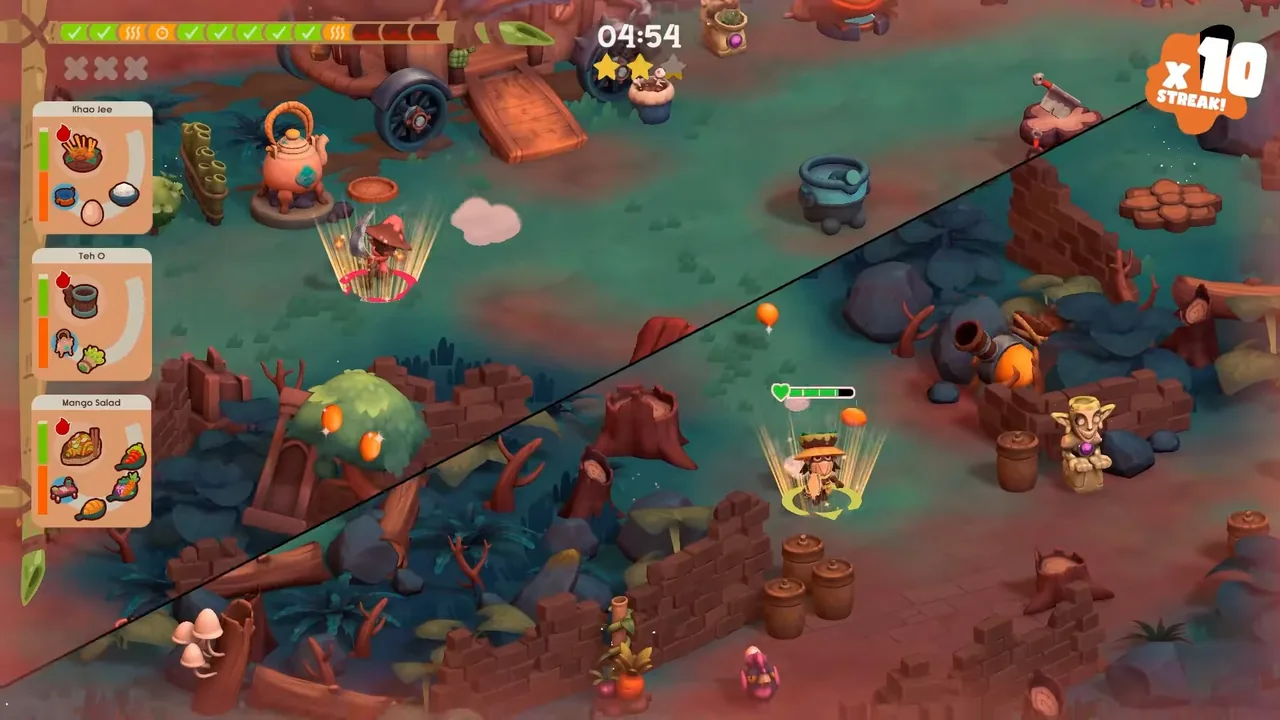
SEDAP! A Culinary AdventureImage: Isolated Games Publishing via Steam -
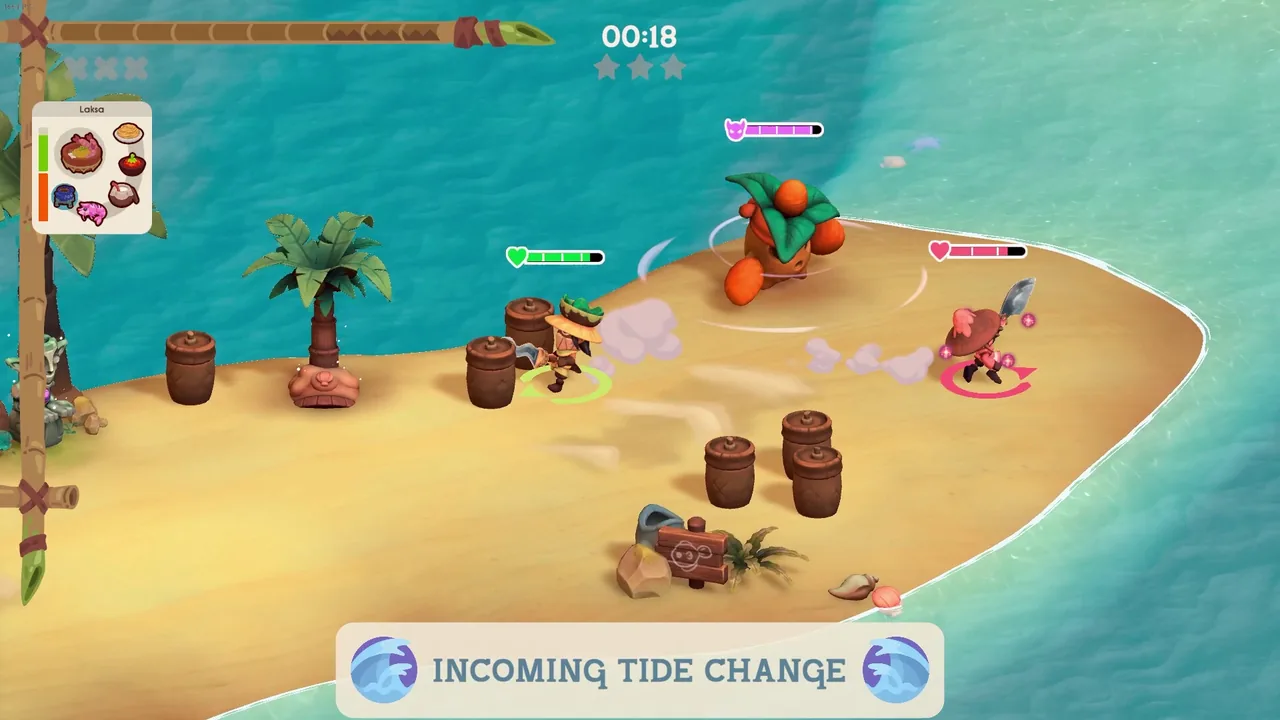
SEDAP! A Culinary AdventureImage: Isolated Games Publishing via Steam -
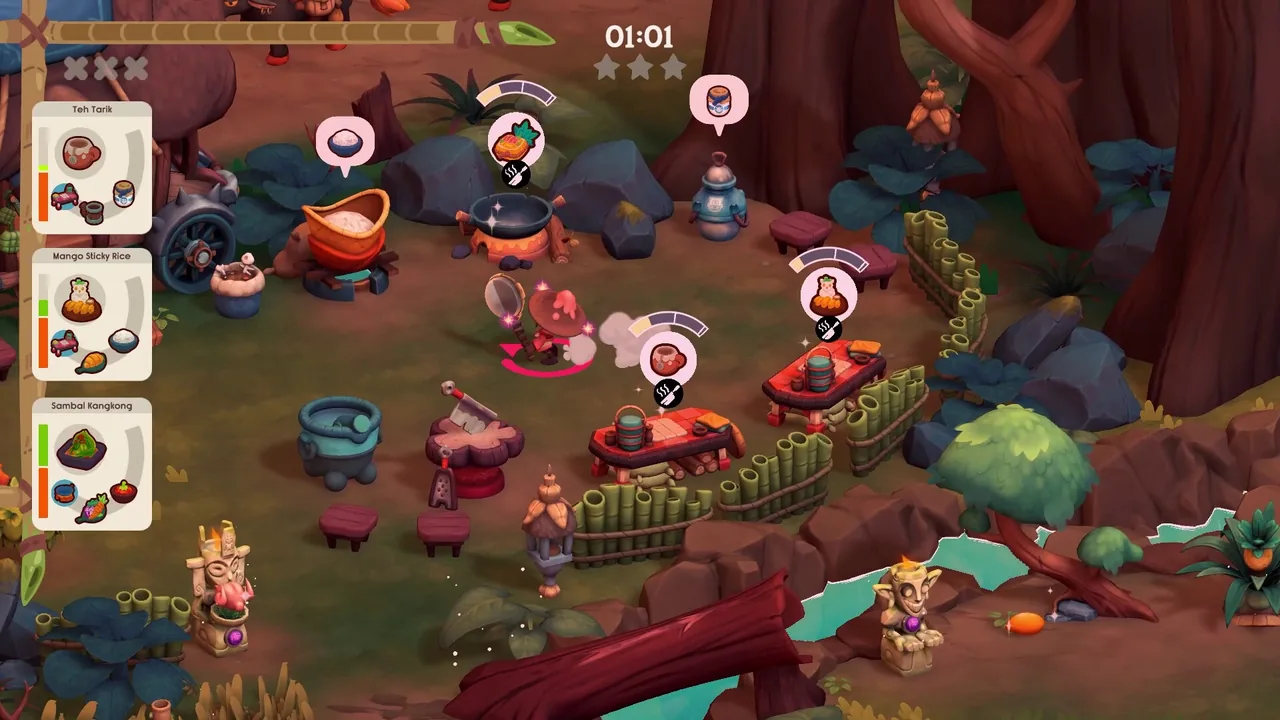
SEDAP! A Culinary AdventureImage: Isolated Games Publishing via Steam -
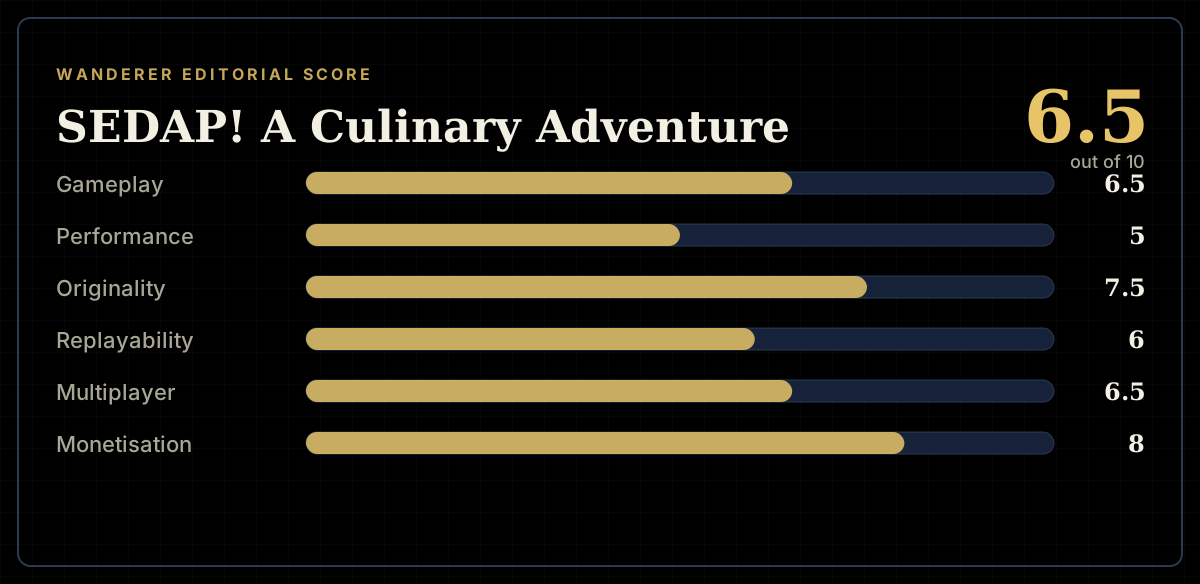
How the review scores each part of the gameWanderer Editorial -

Key facts at a glanceWanderer Editorial -
The short versionWanderer Editorial