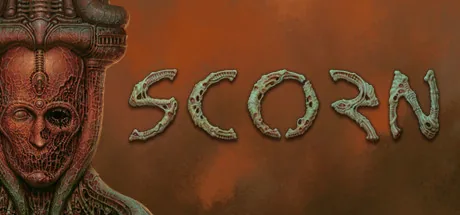
Game review
Scorn
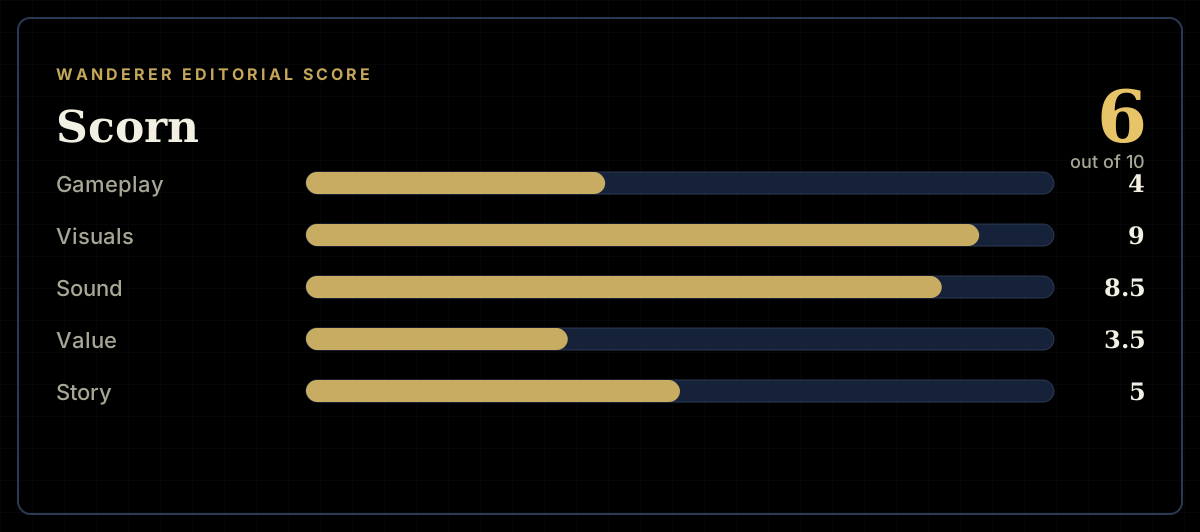
6 / 10
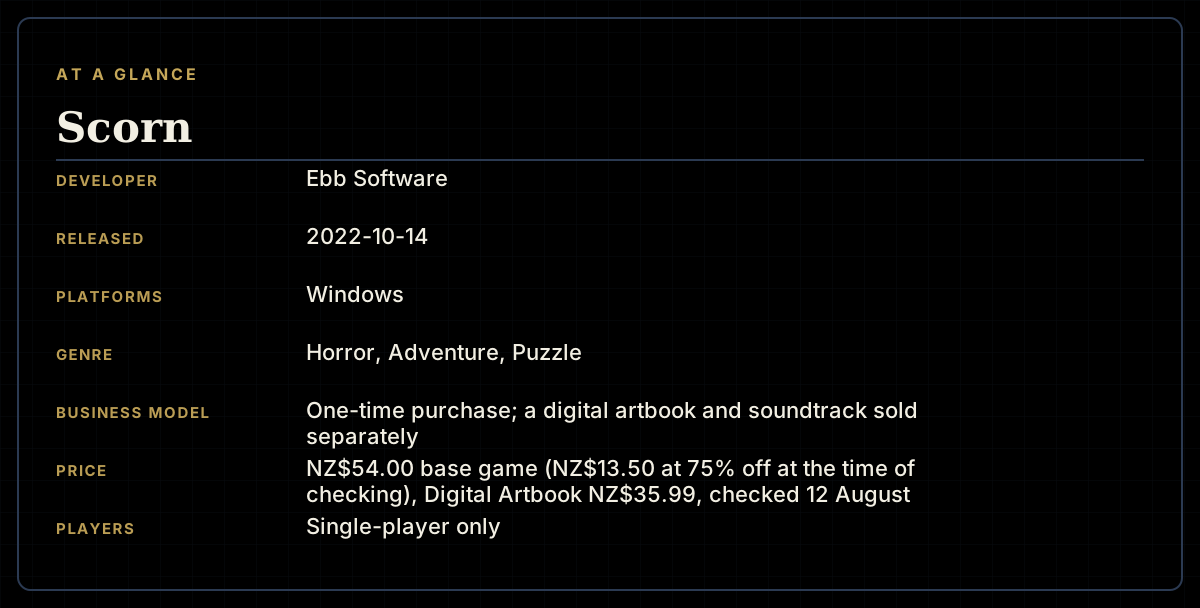
- Developer
- Ebb Software
- Publisher
- Kepler Interactive
- Released
- 14 October 2022
- Platforms
- Windows
- Genre
- Horror, Adventure, Puzzle
- Monetisation
- One-time purchase; a digital artbook and soundtrack sold separately
- Players
- Single-player only
The short version
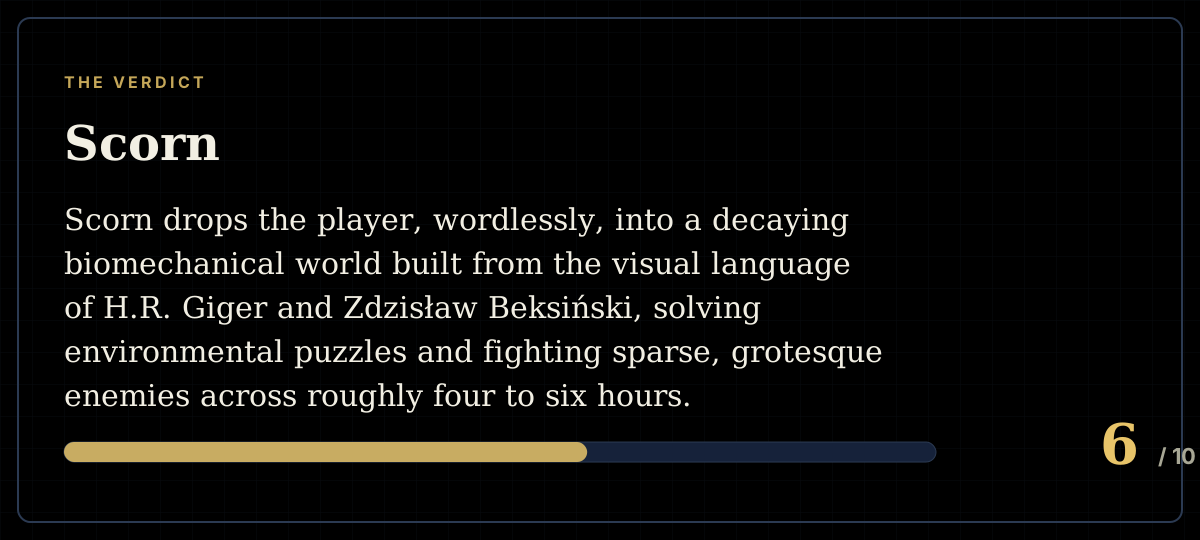
Scorn drops the player, wordlessly, into a decaying biomechanical world built from the visual language of H.R. Giger and Zdzisław Beksiński, solving environmental puzzles and fighting sparse, grotesque enemies across roughly four to six hours. Developed by Ebb Software and published by Kepler Interactive, it released 14 October 2022 after eight years of hugely hyped development and sits at Mostly Positive, 74.2% across 9,299 English-language reviews. What makes this corpus worth reading closely rather than trusting the percentage alone is how consistently both extremes agree on the diagnosis: near-unanimous, sometimes rapturous praise for the art direction and sound design, paired with an equally consistent verdict that the puzzles are mundane, the combat is clunky, the game is short for its price, and the store's own description of the experience — specifically its claim of non-linear exploration — doesn't match what shipped.
Biggest strengths
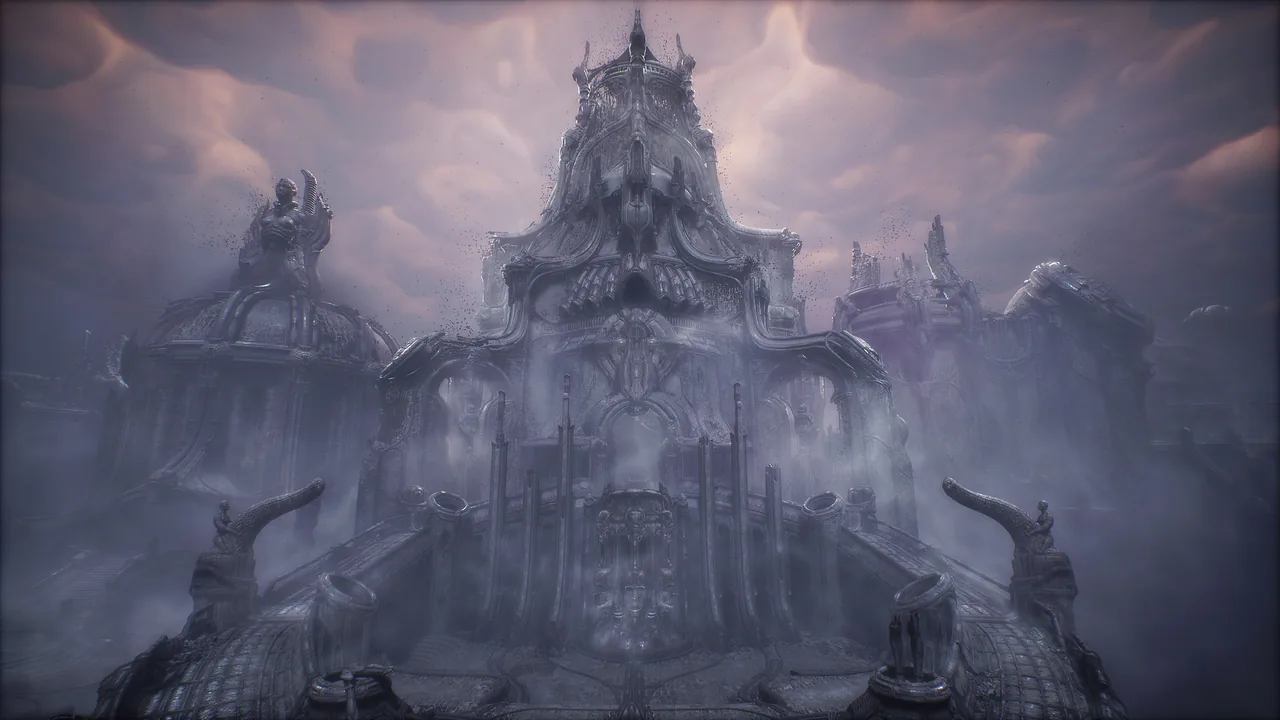
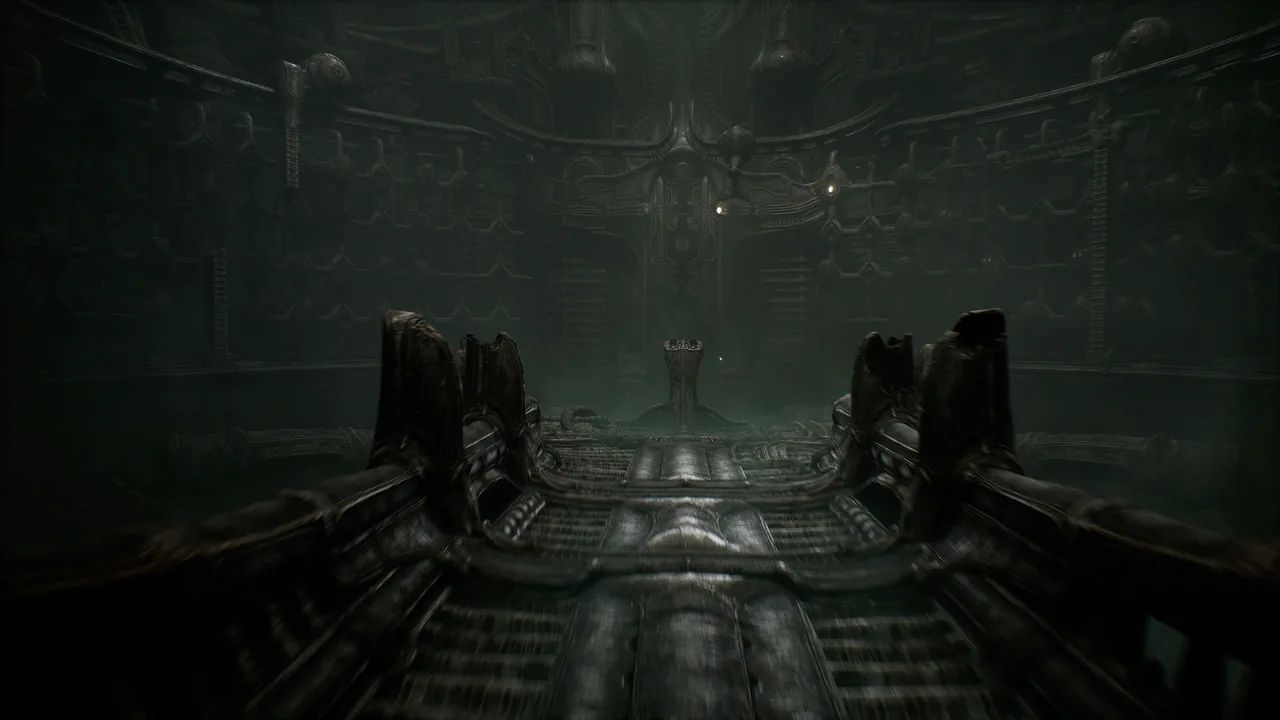
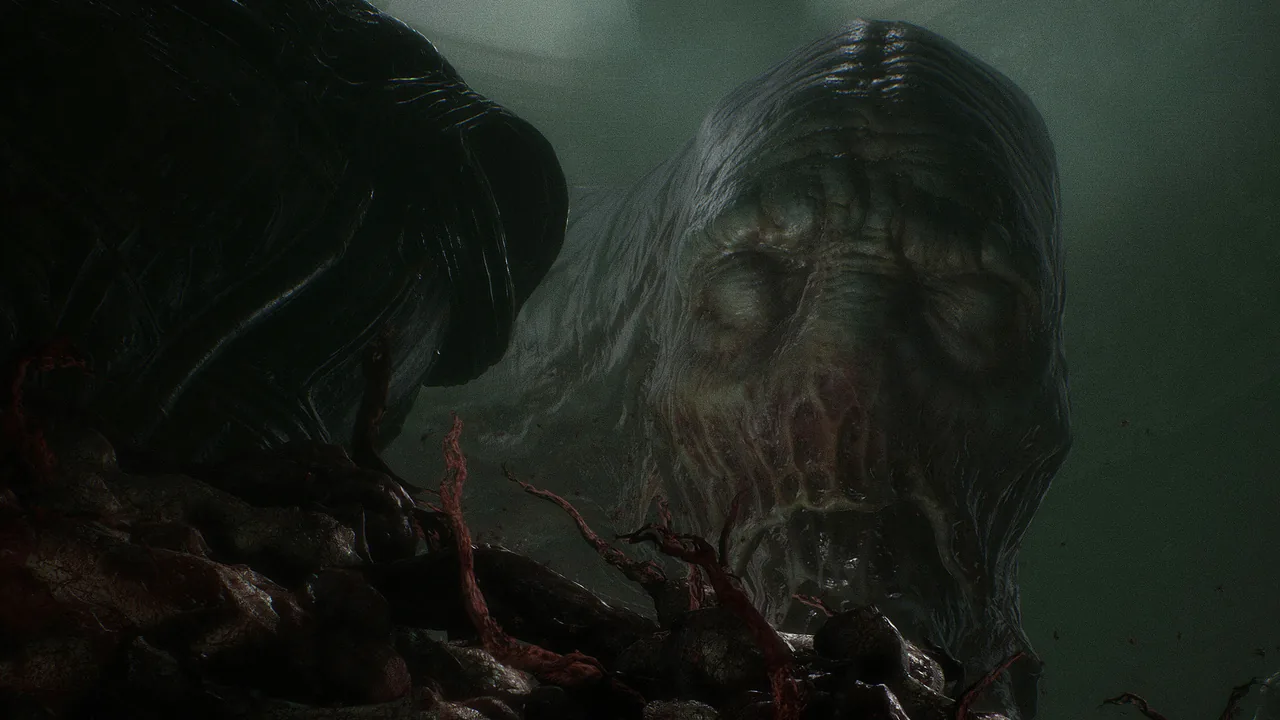
- Art direction draws near-universal, often superlative praise as genuinely unlike anything else on the market, translating H.R. Giger and Zdzisław Beksiński's biomechanical visual language into a fully realised, explorable world
- Sound design earns equally consistent praise for its role in sustaining the game's oppressive atmosphere without music or dialogue to lean on
- A commitment to silent, unexplained storytelling — no HUD, no dialogue, no text — that a real share of reviewers credit with creating a genuinely disquieting, immersive experience unlike a conventional horror game
Biggest weaknesses
- The single most-upvoted review this game has ever received, at over 2,500 votes, quotes the store's own description claiming "non-linear" exploration and calls it directly false — the game is reported as fully linear with no ability to move between regions freely
- Puzzles are repeatedly described as mundane and padded with extended traversal — elevators, moving platforms — rather than genuinely varied challenges, and combat draws consistent criticism as clunky and unsatisfying wherever it does appear
- A game-breaking softlock bug in the game's fifth act was reported as a structural design issue rather than an edge case in a highly-upvoted 2023 review, over a year after launch
Who it's for: Players who value atmosphere, art direction and ambiguous, unexplained storytelling above gameplay depth; a poor fit for anyone expecting the combat-forward horror shooter early trailers implied, or anyone unwilling to accept a short, linear runtime for a full-price purchase.
Our recommendation: One of the most visually and aurally distinctive games this library has covered, attached to gameplay systems its own audience overwhelmingly describes as underdeveloped — approach it as an art installation with light interaction, not the game eight years of trailers suggested, and buy it discounted.
6 / 10
Introduction
Scorn places the player inside a wordless, decaying biomechanical world — flesh fused with machinery, architecture that looks like it was grown rather than built — navigating environmental puzzles and occasional brutal combat across a linear, roughly four-to-six-hour campaign. Developed by Ebb Software and published by Kepler Interactive, it released 14 October 2022 after eight years of development that built extraordinary anticipation, largely on the strength of its H.R. Giger-inspired concept art. It sits at Mostly Positive, 74.2% across the 9,299 English-language reviews this review draws from — a number that undersells how sharply, and how consistently, opinion on this game splits along a single, clear line. This isn't a case of confused or scattered feedback; it's a case where the negative and positive samples largely agree on what the game is, and disagree mainly on whether that's enough.
What almost nobody disputes
Start with the closest thing to unanimous consensus this review has found in any corpus this session: Scorn's art direction is extraordinary, and reviewers on both sides of the recommend line say so in strikingly similar language. One 850-vote review, itself only mildly positive overall, still called the game "an arthouse homage to HR Giger, William Gibson, and other influential artists and novelists behind the bio-mechanical style," language echoed almost word for word across dozens of other reviews regardless of their final verdict. Sound design draws equally consistent praise for sustaining the game's oppressive mood without music or dialogue to fall back on. Several reviewers frame the whole experience less as a conventional video game and more as an art installation you can walk through — one described it bluntly as "a walking through a meat factory at 3AM simulator," intended as a compliment. That's the throughline connecting almost every review in this sample, positive or negative: nobody is arguing about whether Scorn looks and sounds remarkable. The disagreement is entirely about what's built around that achievement.
A store description reviewers say doesn't match the game
Here's where this review needs to be specific rather than impressionistic, because the single most-upvoted review Scorn has ever received — over 2,500 votes, roughly a third more than the next highest — makes a direct, checkable claim: that the store page's own description is factually inaccurate. The store text promises the player will explore "different interconnected regions in a non-linear fashion." That same review, and many others independently, report the opposite: the game is entirely linear, with no ability to move freely between areas once past them. This isn't a subjective complaint about pacing or difficulty — it's a specific claim about what a purchasing decision was based on, made by enough independent reviewers that this review treats it as an established fact about the shipped product rather than one player's misreading.
That mismatch between promise and delivery recurs elsewhere too. Multiple top reviews, including several of the most-upvoted positive ones, explicitly warn other buyers away from marketing-driven expectations: one described the game as "not, as the trailer suggests, a combat-heavy game," and another cautioned that "the mixed reviews are" largely a symptom of "misleading marketing" rather than the game itself failing on its own terms. That's an unusually self-aware pattern for a review corpus — reviewers actively correcting other buyers' expectations rather than simply expressing their own — and it's worth taking seriously as evidence that a meaningful share of this game's negative reception is about what was promised, not only what shipped.
The gameplay underneath the atmosphere
Set the marketing question aside, and a second, equally consistent complaint concerns the actual moment-to-moment design. Puzzles draw repeated, specific criticism as mundane, frequently padded with extended traversal through elevators and moving platforms rather than genuinely varied challenges. Combat, where it exists, draws near-uniform criticism as clunky and unsatisfying — even reviewers who recommend the game overall tend to describe it as a weak point rather than a strength. A detailed 344-vote review captured the tension precisely: "If Scorn had been a solid walking simulator, I'd have liked it... If Scorn had been a solid survival horror FPS, I'd have liked it... it's too poorly tuned" to fully commit to either identity. One especially serious technical complaint deserves particular weight: a highly-upvoted 2023 review, posted well over a year after launch, describes a game-breaking softlock in the game's fifth act, explicitly characterising it not as an edge-case bug but as "a symptom of the game's design" affecting large numbers of players attempting a specific, ordinary sequence of actions.
A short game that most players don't finish
It's worth being precise about length and completion, because the two numbers together tell a more useful story than either alone. Most reviewers report finishing Scorn in four to six hours, which a large share of the negative sample considers thin against its NZ$54 launch price — one reviewer noted getting every achievement in four hours flat. Steam's own achievement data adds a sharper point to that complaint: the final story achievement sits at just 22.1%, meaning fewer than one in four players who launched this short game ever saw it through to the end. That's a genuinely low completion rate for a game this brief, and it corroborates the gameplay criticism above better than any single quote could — whatever is driving players away, it isn't simply that the game demands too much time.
The price of understanding it
One further, smaller point worth including: several reviewers note that Scorn's minimal, unexplained storytelling leaves real gaps in what actually happened, and that meaningful lore and explanation exist primarily in a separately sold Digital Artbook — which, checked directly against the storefront, is priced at NZ$35.99, nearly as much as the base game itself carries at full price. One reviewer called this "a hefty price" for content some players feel should have shaped the base narrative rather than being sold alongside it. That's a fair characterisation to pass on rather than adjudicate: the artbook exists as an optional purchase, not a requirement, but its price relative to the base game is a real, checkable fact worth knowing before assuming the full story is available for the price of admission.
Final Verdict
Scorn accomplished something genuinely rare: it built a world that looks and sounds like nothing else on the market, translating a specific, difficult visual language into something fully playable rather than just illustrated. That achievement is real, and this review's corpus agrees on it almost without exception. What keeps the score from reflecting that achievement alone is everything built around it — puzzles and combat a large majority of reviewers describe as underdeveloped, a store description its own most-trusted review calls factually inaccurate, a severe bug that persisted over a year after launch, and a completion rate that suggests most buyers don't finish what is already a short game. If the prospect of a walkable art installation with light interactive elements appeals to you more than a fully realised game, there's something genuinely singular here. If you're hoping the gameplay lives up to the concept art, most of this game's own audience says, plainly, that it doesn't.
Pros and cons
Pros
- Art direction draws near-universal, often superlative praise as genuinely unlike anything else on the market, translating H.R. Giger and Zdzisław Beksiński's biomechanical visual language into a fully realised, explorable world
- Sound design earns equally consistent praise for its role in sustaining the game's oppressive atmosphere without music or dialogue to lean on
- A commitment to silent, unexplained storytelling — no HUD, no dialogue, no text — that a real share of reviewers credit with creating a genuinely disquieting, immersive experience unlike a conventional horror game
- Full controller support and a technically stable presentation outside of one specific, well-documented bug
Cons
- The single most-upvoted review this game has ever received, at over 2,500 votes, quotes the store's own description claiming "non-linear" exploration and calls it directly false — the game is reported as fully linear with no ability to move between regions freely
- Puzzles are repeatedly described as mundane and padded with extended traversal — elevators, moving platforms — rather than genuinely varied challenges, and combat draws consistent criticism as clunky and unsatisfying wherever it does appear
- A game-breaking softlock bug in the game's fifth act was reported as a structural design issue rather than an edge case in a highly-upvoted 2023 review, over a year after launch
- Most players report finishing in four to six hours for a NZ$54 launch price, and Steam's own achievement data shows only 22.1% of players who started the game ever finished it
Screenshots
-
ScornImage: Kepler Interactive via Steam -
ScornImage: Kepler Interactive via Steam -
ScornImage: Kepler Interactive via Steam -
How the review scores each part of the gameWanderer Editorial -
The essentials at a glanceWanderer Editorial -
The short versionWanderer Editorial