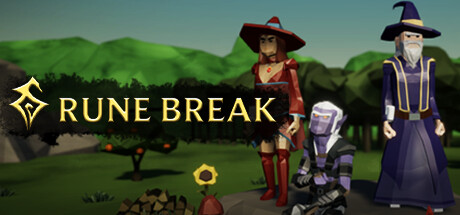
Game review
Rune Break
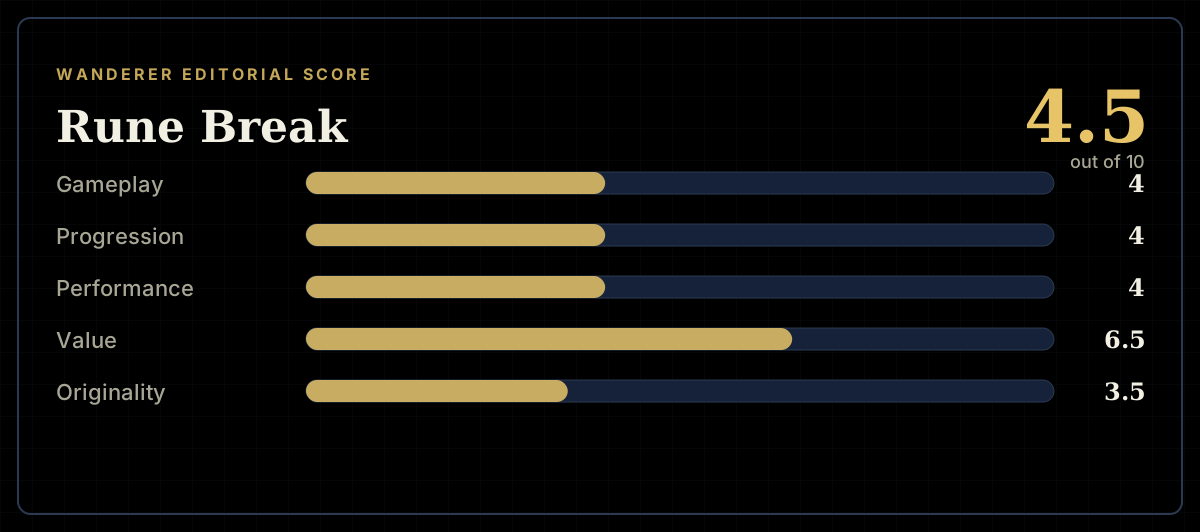
4.5 / 10
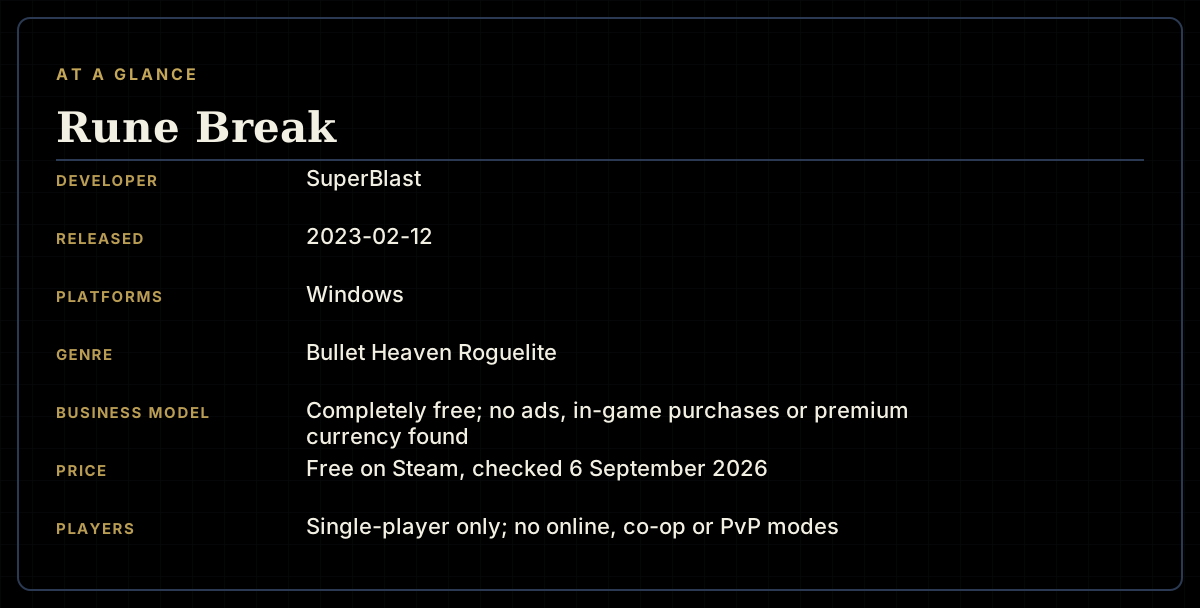
- Developer
- SuperBlast
- Publisher
- SuperBlast
- Released
- 12 February 2023
- Platforms
- Windows
- Genre
- Bullet Heaven Roguelite
- Monetisation
- Completely free; no ads, in-game purchases or premium currency found
- Players
- Single-player only; no online, co-op or PvP modes
The short version
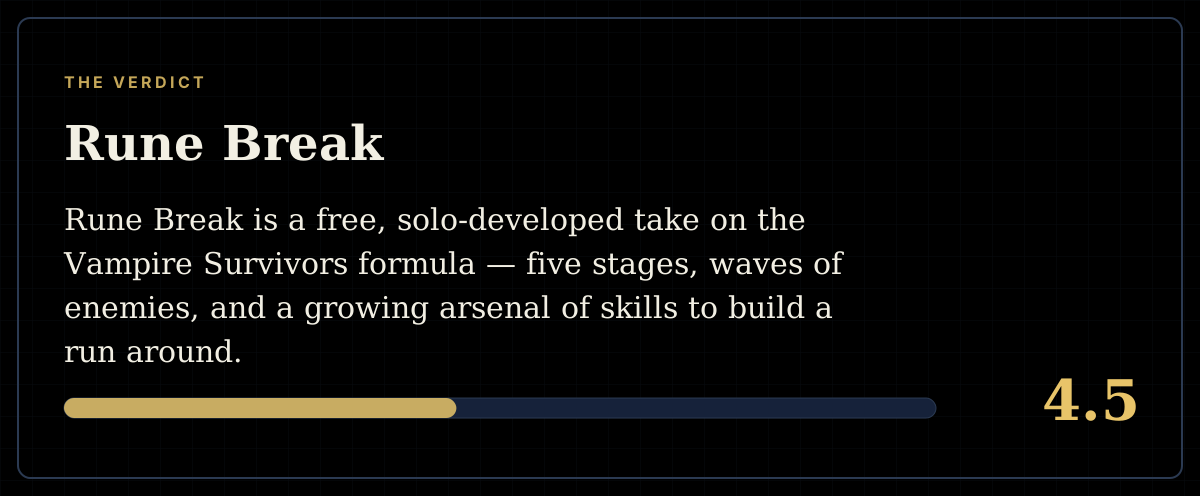
Rune Break is a free, solo-developed take on the Vampire Survivors formula — five stages, waves of enemies, and a growing arsenal of skills to build a run around. Being free with no monetisation of any kind buys it real goodwill, and a handful of reviewers describe genuinely addictive multi-hour sessions built on a foundation they call solid.
That goodwill runs directly into a wall of specific, well-documented problems. Reviewers describe every viable build strategy — pure offense, pure movement, pure area damage, or a mix — eventually getting overrun rather than scaling into a satisfying power curve, and cite concrete bugs including a weapon that fires exactly once and never again, achievements tied to meta-progression that don't track correctly, and reward scaling that can pay out less currency for a longer, more successful run than a shorter one. Public development activity stopped roughly two months after the game's March 2023 full release and hasn't resumed since.
Biggest strengths
- Completely free with no advertising, premium currency or purchases of any kind, a genuine no-cost entry point into the bullet heaven genre
- A handful of reviewers describe real, multi-hour addictive sessions built on what they call a fundamentally solid core loop, particularly praising how later stages of a run escalate
- Five distinct stages and a real selection of weapons give the game more structural content than many single-scenario genre entries, by at least one reviewer's specific account
Biggest weaknesses
- Reviewers consistently describe every viable build approach eventually getting overrun rather than scaling into a satisfying late-run power curve, suggesting a fundamental balance problem rather than a specific weak build choice
- At least one specific weapon is reported to fire exactly once and never fire again for the remainder of a run, a clear, checkable bug that was never addressed in the game's brief patch history
- Achievements tied to meta-progression are reported as unreliable or non-functional by multiple reviewers, undercutting a system meant to track exactly the kind of long-term investment the genre rewards
Who it's for: Genre completionists curious about a free entry, and players specifically forgiving of solo-developer jank in exchange for zero cost. Not recommended for anyone wanting a polished or actively balanced bullet heaven, given the large number of well-established, actively-supported alternatives in the genre.
Our recommendation: Worth a free look out of curiosity, but go in expecting real, unresolved balance and bug problems rather than a competitive alternative to the genre's established names.
4.5 / 10
Free bullet heavens have a low bar to clear: cost nothing, deliver a few hours of the genre's core "numbers go up, enemies pile up" appeal, and most players will come away satisfied regardless of polish. Rune Break clears that bar for a share of its audience, and reviewers who enjoyed it describe real, multi-hour sessions built on what more than one calls a genuinely solid foundation. The trouble is that a comparable, equally vocal share of reviewers ran directly into specific, checkable problems that a genre this crowded and this competitive doesn't forgive easily, especially once a game stops receiving any further attention from its developer.
A familiar structure, unevenly tuned
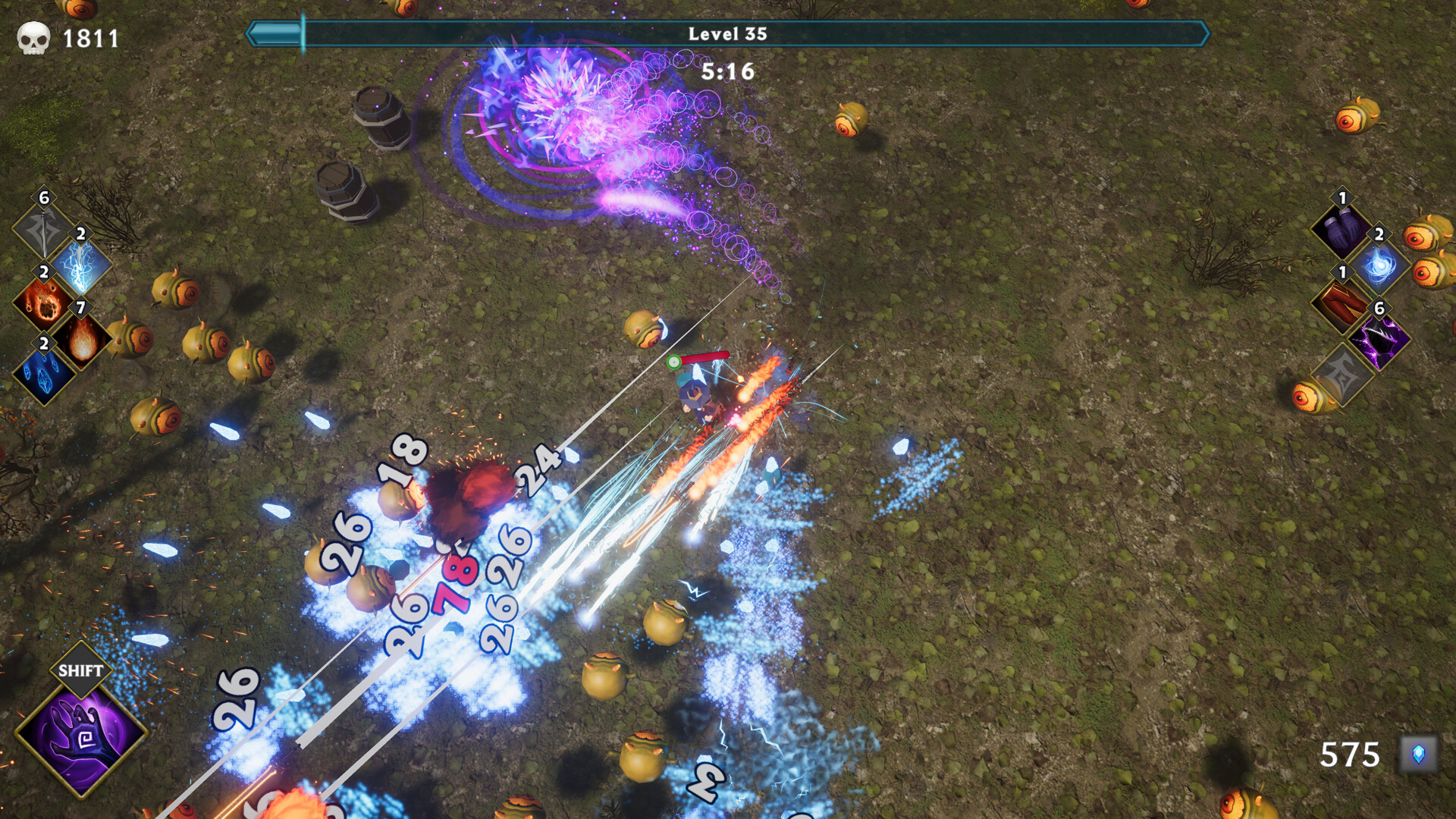
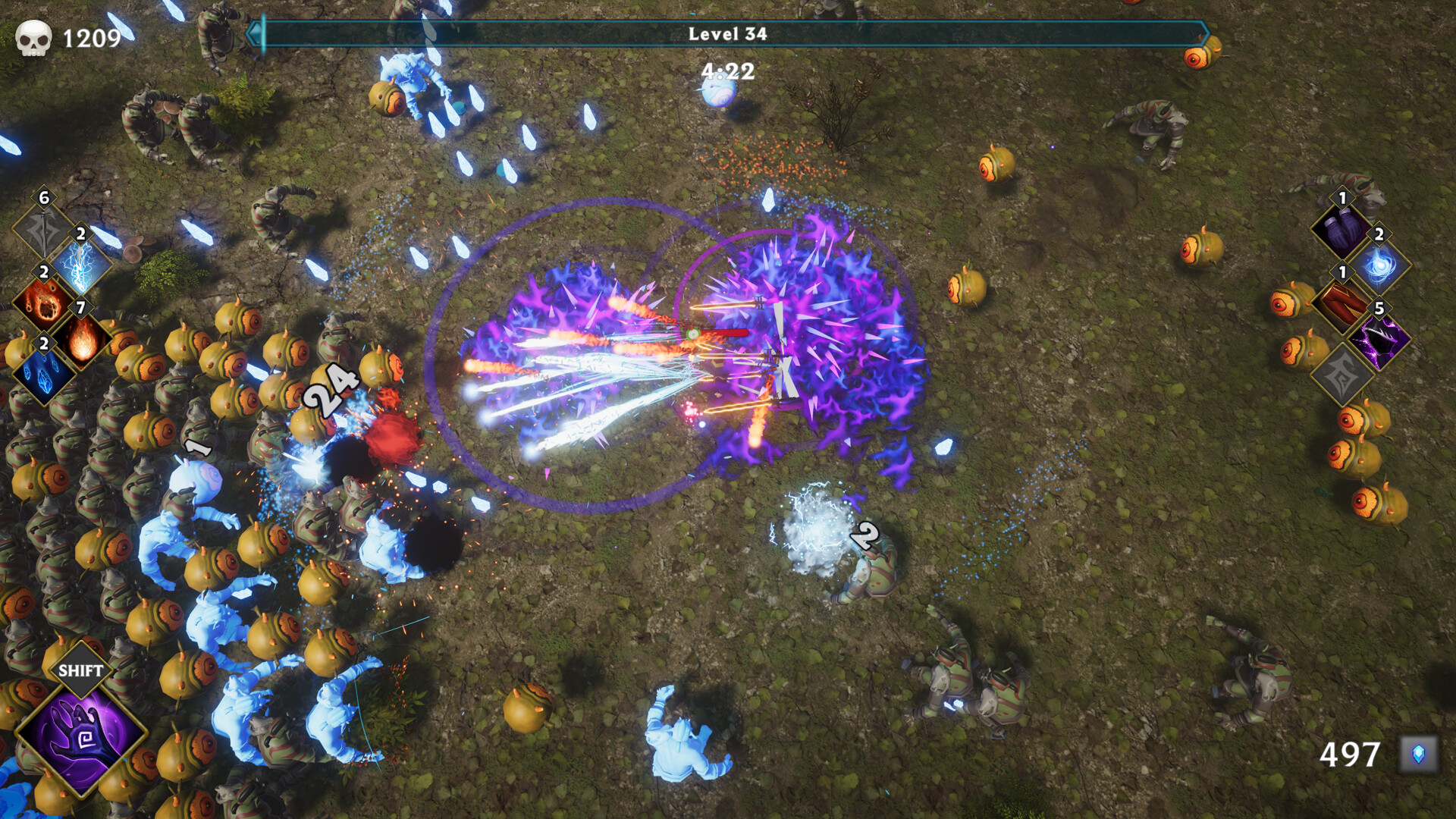
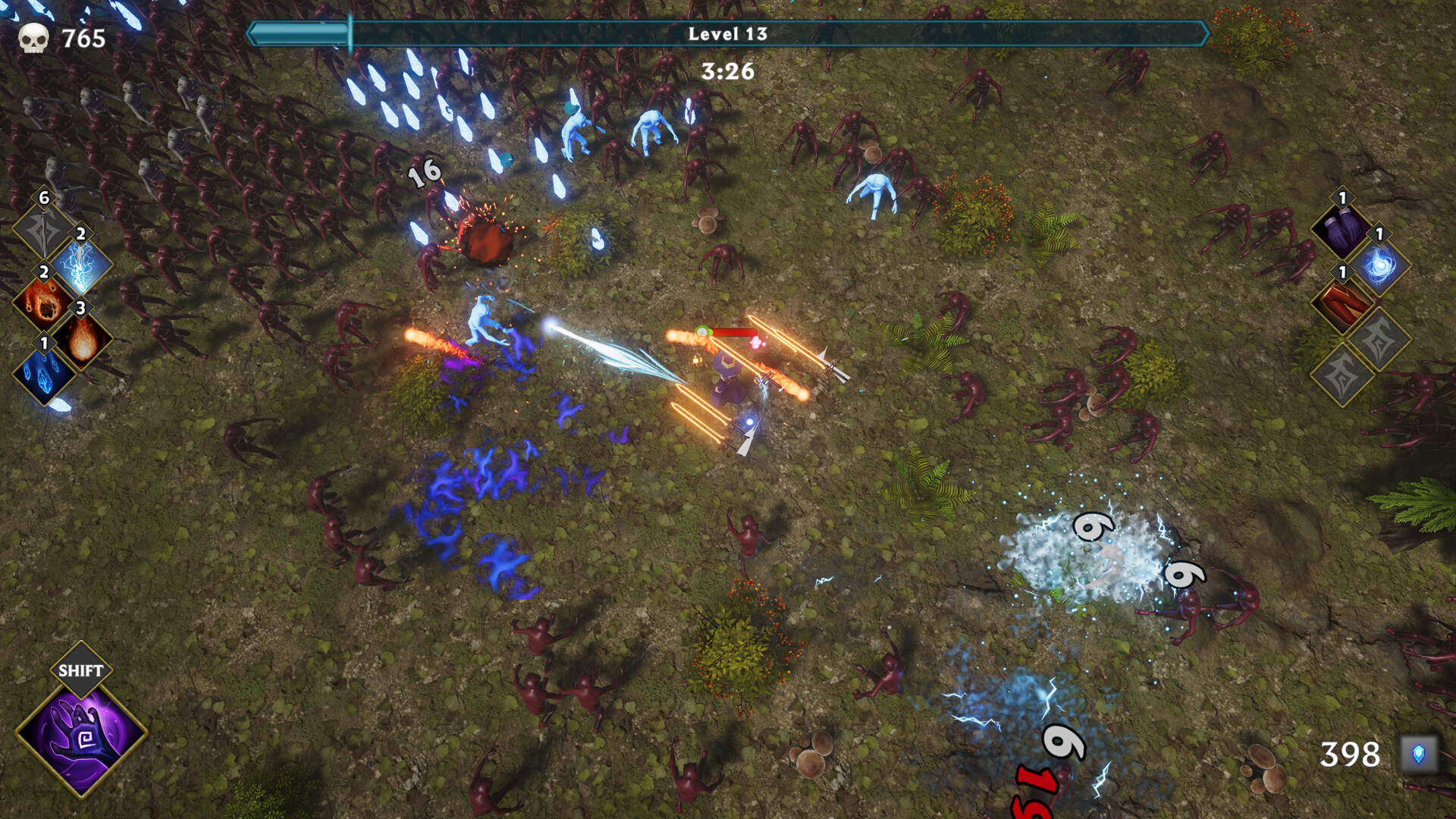
The core loop will be instantly familiar to anyone who's played Vampire Survivors or its many imitators: survive waves of enemies across a timed run, collecting experience and choosing new weapons and passive upgrades as you level. Where Rune Break runs into serious trouble is balance. Reviewers independently describe testing every major build approach — pure offensive stats, pure movement speed, pure area-of-effect damage, or blended combinations — and finding each one eventually overwhelmed rather than scaling into the escalating power fantasy the genre is built around. One detailed account lays out the pattern precisely: "Go full offensive -> too weak to kill enemies and get overrun. Go full movement speed -> too slow and no damage so get overrun. Go full AoE -> no damage so get overrun." That's not a complaint about one underpowered build; it describes every tested path failing the same way, which points to a systemic tuning problem rather than a single weak option among otherwise-viable ones.
Specific, unaddressed bugs
Beyond balance, this review's research turned up concrete, reproducible-sounding technical complaints. At least one weapon — described as the "Axe of Valhalla" — is reported to fire exactly once at the start of a run and never fire again for its remainder, a clear functional bug rather than a design choice. Achievements tied to meta-progression are separately reported as unreliable, with reviewers noting specific milestones failing to unlock despite meeting their stated conditions. A further specific complaint concerns the currency economy: one detailed account reports receiving roughly 150 units of unlock currency for a three-minute first run, but only 100 for a longer, presumably more successful ten-minute second run — the opposite of the scaling reward structure the genre typically uses to encourage longer, better runs. Separately, reviewers note the game lacks ultrawide monitor support and describe general optimization as poor.
A very short window of support
Rune Break's own history shows a real, if brief, period of active development: Early Access began in February 2023, followed by several patches through March, a full 1.0 release later that month, and one further "mainly bugfixes" patch in early April 2023. Nothing has been logged publicly since — over three years of silence as of this review, meaning the specific bugs and balance issues detailed above have had no opportunity to be addressed since shortly after launch. Reviewers who acknowledge this directly tend to frame their critique sympathetically, several noting the game's solo-developer origins and expressing hope the developer returns to it, but that hope doesn't change what's actually shipped and left unmaintained.
What the achievement data shows
Global achievement figures offer a useful supplement to the balance complaints above. Early milestones sit high — 94.1% of players have landed a single kill, 82.3% have dealt 1,000 damage — but completion drops off steeply from there: killing 500,000 enemies across a playthrough sits at just 16.3%, and specific weapon-mastery achievements tied to less commonly used skills sit in the 20-25% range. That steep, front-loaded curve is consistent with reviewer accounts of a game that's approachable in its opening minutes but becomes a losing proposition well before a typical genre entry would expect players to still be struggling, regardless of which build path they commit to.
A generous read, and why it's not enough
It's worth taking seriously the reviewers who frame Rune Break sympathetically as a promising solo effort let down by insufficient testing rather than a fundamentally bad idea. That framing has merit — several specific mechanical ideas (five distinct stages, a real weapon roster, an escalating late-run structure some reviewers praise directly) suggest a developer who understood what makes the genre work. But sympathy for a solo developer's effort and a fair assessment of the shipped product are two different things, and this review's job is the latter. A game that reviewers describe as un-winnable through every tested strategy, with a specific weapon bug and broken progression tracking left unaddressed for over three years, has to be judged on what actually exists on the storefront today — not on the more polished version its better ideas suggest it could have become with more time.
Where it lands
Rune Break's price of admission is genuinely zero, and that alone earns it some latitude a premium release wouldn't get — a handful of players clearly found real, multi-hour enjoyment in what's here. But the balance complaints recur too consistently, and the specific bugs are too concrete and long-unaddressed, to treat this as a strong recommendation even within its free-to-play tier. In a genre with dozens of actively maintained alternatives, both free and paid, Rune Break's combination of systemic balance problems and over three years of developer silence make it hard to recommend over better-supported options doing the same thing more reliably.
Pros and cons
Pros
- Completely free with no advertising, premium currency or purchases of any kind, a genuine no-cost entry point into the bullet heaven genre
- A handful of reviewers describe real, multi-hour addictive sessions built on what they call a fundamentally solid core loop, particularly praising how later stages of a run escalate
- Five distinct stages and a real selection of weapons give the game more structural content than many single-scenario genre entries, by at least one reviewer's specific account
- A solo developer who reviewers describe as responsive to feedback during the game's brief active development window
Cons
- Reviewers consistently describe every viable build approach eventually getting overrun rather than scaling into a satisfying late-run power curve, suggesting a fundamental balance problem rather than a specific weak build choice
- At least one specific weapon is reported to fire exactly once and never fire again for the remainder of a run, a clear, checkable bug that was never addressed in the game's brief patch history
- Achievements tied to meta-progression are reported as unreliable or non-functional by multiple reviewers, undercutting a system meant to track exactly the kind of long-term investment the genre rewards
- Reward currency scaling is reported as inconsistent, with one detailed account describing a longer, more successful run paying out less currency than a shorter earlier one
- Public development activity stopped roughly two months after the March 2023 full release and has not resumed since, meaning none of the specific bugs and balance issues reported above are likely to see further attention
Screenshots
-
Rune BreakImage: SuperBlast via Steam -
Rune BreakImage: SuperBlast via Steam -
Rune BreakImage: SuperBlast via Steam -
How the review scores each part of the gameWanderer Editorial -
The specsWanderer Editorial -
The short versionWanderer Editorial