Game review
Re:Blade
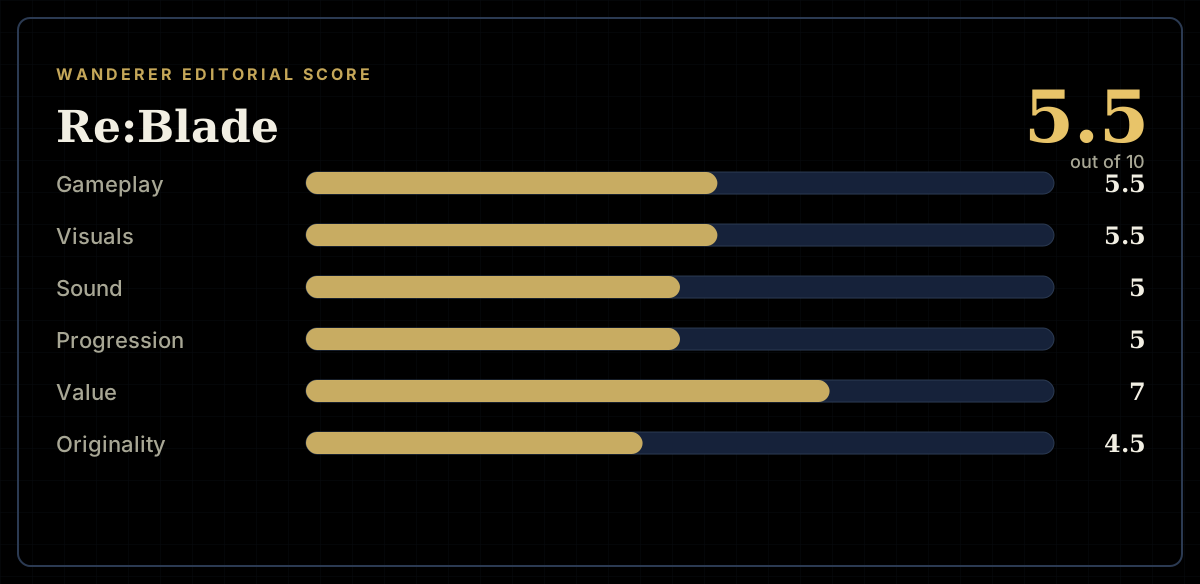
5.5 / 10
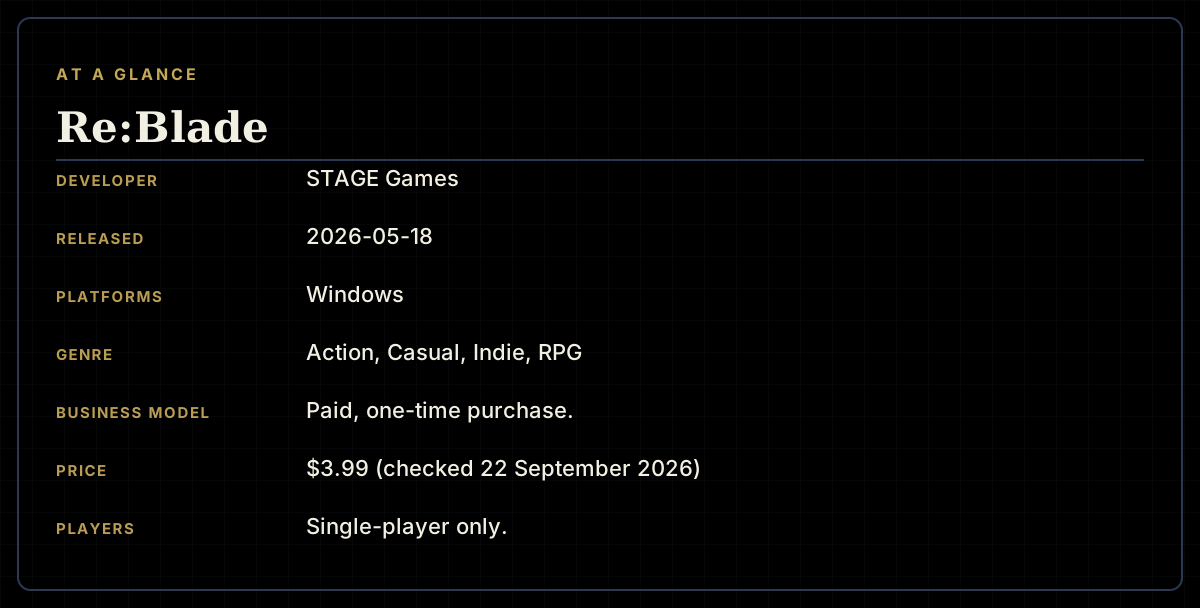
- Developer
- STAGE Games
- Publisher
- STAGE Games
- Released
- 18 May 2026
- Platforms
- Windows
- Genre
- Action, Casual, Indie, RPG
- Monetisation
- Paid, one-time purchase.
- Players
- Single-player only.
The short version
Re:Blade is a budget incremental action game from solo studio STAGE Games, casting the player's cursor as a sword that slays waves of enemies to fund a growing skill tree. Its review sample, split between Mixed English sentiment and Mostly Positive all-language sentiment, credits satisfying build variety and an excellent price, tempered by a heavily corroborated complaint about misleading roguelike marketing and a steep, repetitive endgame grind.
Biggest strengths
- Praised for its build variety and satisfying power fantasy, with one reviewer specifically enjoying an "ice build" where "everything explode," and another separately calling the game "addicting" with "a lot of room for growth."
- Praised repeatedly as strong value at its price, with one reviewer writing "you'll absolutely get your $4 worth," and another separately calling it "cheap for a few hours of something new and simple."
- Praised for a responsive developer, with one reviewer noting the dev "has been updating and fixing it a lot since launch," and another separately crediting fast patches that "really turned the game around."
Biggest weaknesses
- A heavily corroborated complaint concerns misleading roguelike marketing, with one reviewer calling the store description "seriously false advertising," insisting "it is absolutely not remotely anything like a roguelike, it is a standard basic incremental," a complaint echoed independently by a reviewer who called the genre tags "entirely inaccurate."
- A heavily corroborated complaint concerns repetitive content, with one reviewer noting the game offers "the same 3 weapons (sword, dagger, greatsword) over and over again, with the same skill tree and options," and a separate reviewer independently describing it as fighting "the same enemies, in the same arena with the same three weapons" throughout.
- A fair, corroborated complaint concerns steep endgame grind and buggy scaling, with one reviewer citing exp costs that jump from roughly "10m+" between levels 59 and 60 to "more than 30m" for the next level, and the game's own achievement data showing completion collapsing from 99.3 percent for the first upgrade to 3.8 percent for its hardest late-game milestone.
Who it's for: Fans of short, cheap incremental games looking for a few hours of satisfying number-go-up progression; players expecting genuine roguelike variety, as the store page implies, or a long-term game to sink dozens of hours into should look elsewhere.
Our recommendation: A decent, cheap incremental let down by misleading marketing and a repetitive core loop that wears thin after a few hours.
5.5 / 10
Your Cursor Is Your Blade
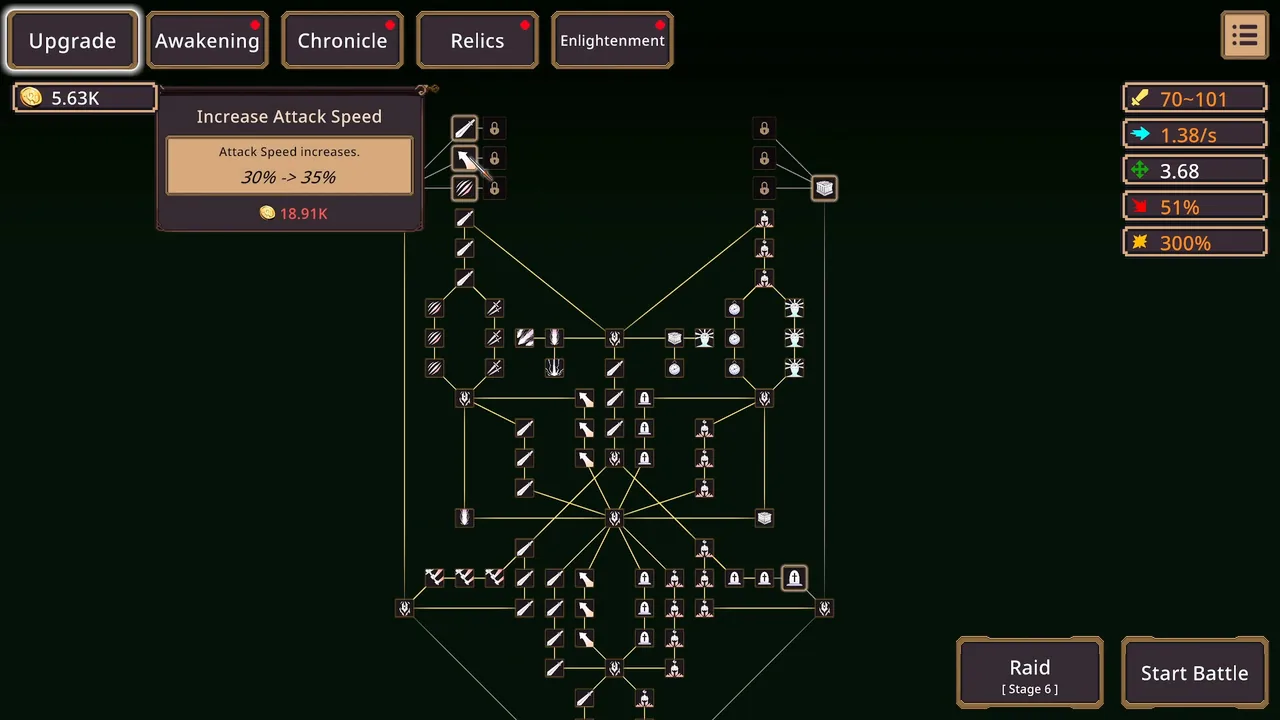
Re:Blade, from solo studio STAGE Games, is a budget incremental action game with a simple pitch, right there in its own store description: your cursor is your blade, and you drag it across a small battle arena to slice through waves of monsters, earning experience and gold that feed an ever-expanding skill tree of upgrades, relics, and weapon "Awakenings." It released 18 May 2026 for $3.99. This review draws on the full English review sample available at the time of research, 46 reviews out of 46 total, split 32 positive to 14 negative for an official "Mixed" rating, alongside a broader all-language sample of 173 reviews split 125 positive to 48 negative, landing just over the line into "Mostly Positive" territory. That gap between the English and all-language verdicts is itself worth noting, and much of the English-language dissatisfaction traces back to one specific, recurring grievance rather than a broad rejection of the game itself.
A Satisfying Core Loop, When It Clicks
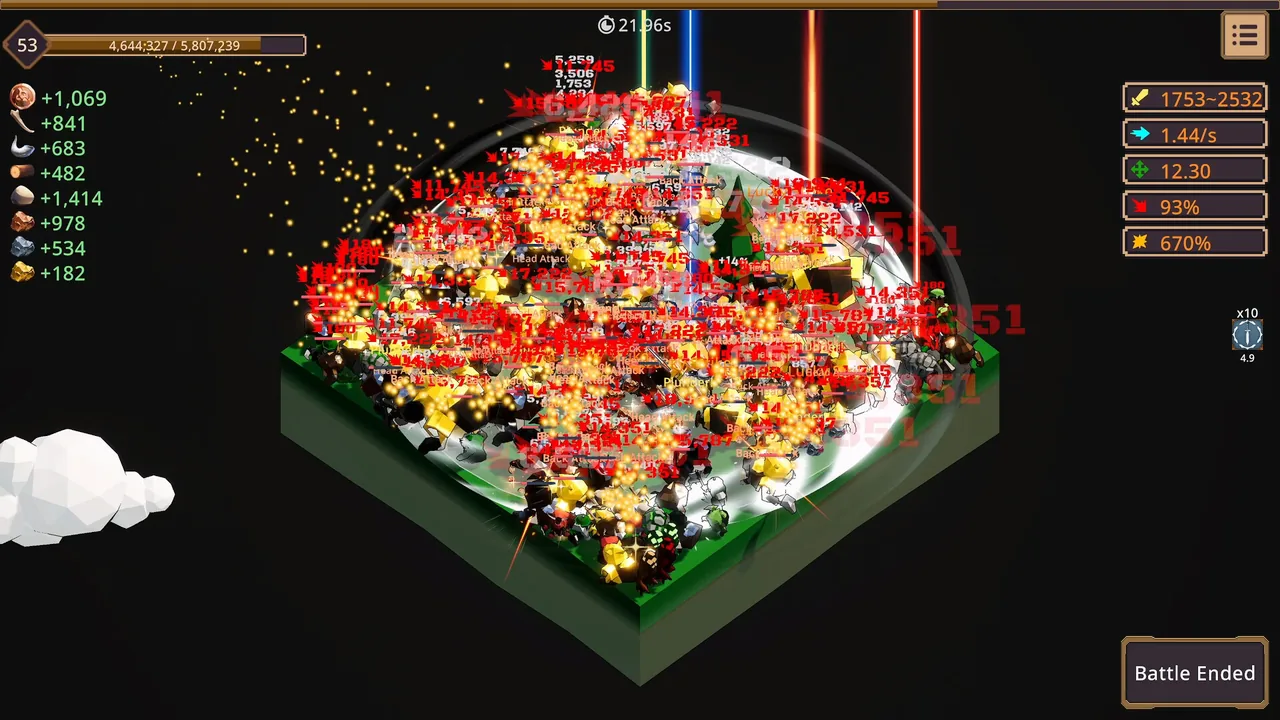
At its best, Re:Blade delivers exactly the kind of low-effort, high-reward power fantasy the incremental genre is built around. One reviewer specifically calls out an "ice build" as "incredibly satisfying seeing everything explode," while flagging the visual chaos it creates as something the developer should address with better performance options. Another reviewer describes the appeal in blunter terms: "absolutely addicting," with "a lot of room for growth" even though the underlying systems are "simple at its core." A third reviewer, who spent around 11 hours with the game, calls the late-game "definitely a grind but super fun game to play while killing time." The build-crafting hook genuinely resonates with players who come in expecting exactly what an incremental game promises: a low-commitment, number-go-up experience they can dip into and out of, with enough variety in weapon Awakenings and skill trees to keep decisions feeling meaningful even as the mechanical complexity stays intentionally shallow.
A Heavily Corroborated Complaint About False Advertising
The single most consistent and pointed complaint in this review's sample concerns the gap between how the game is marketed and what it actually delivers. One reviewer opens directly by quoting the store page's description of Re:Blade as "an action roguelike where every run reshapes your blade and every boss falls to your steps," before flatly rejecting the framing: "it is absolutely not remotely anything like a roguelike, it is a standard basic incremental, nothing more." A separate reviewer, writing what they frame as a "wish there was a neutral option" review, makes an identical point independently and in more detail, arguing the game's Steam tags are "entirely inaccurate," stating plainly, "this is an incremental game. It's not a Roguelike, it's not an Auto Battler, and it's only an Idler if you choose specific skill upgrades." This isn't a minor semantic quibble to either reviewer; both frame it as actively misleading players who come to the store page looking for genre conventions, like meaningful run-to-run variation or permadeath-driven build diversity, that the actual game simply doesn't contain.
Same Three Weapons, Repeated Ten Times
Closely tied to the marketing complaint is a substantive gripe about the game's actual content variety. Despite the store page advertising ten tiers of weapon progression, one reviewer reports that in practice "it's just the same 3 weapons (sword, dagger, greatsword) over and over again, with the same skill tree and options," adding that by the third tier they'd "unlocked every relic" available in the game. A separate reviewer independently levels the identical complaint: the game has players fighting "the same enemies, in the same arena with the same three weapons that have a different passive that isn't changing the game at all while ALWAYS skilling the same passive tree." A third reviewer, who had played and loved an earlier public demo of the game, writes with evident disappointment that "the direction this game took wasn't what was originally imagined," recalling that the demo offered "a slow grind" where players "would unlock new weapons with new abilities" through genuinely new content, a promise the finished release apparently doesn't keep at the same depth.
Buggy Patches and a Punishing Endgame Curve
A further fair complaint concerns technical stability and endgame balance, particularly around patch cadence. One reviewer reports a specific incident where "the game had a patch today" that forced a progress reset, unable to "even unlock the 2nd weapon," calling it "a waste of time and money" and criticizing the developer for insufficient testing before shipping changes. Endgame scaling draws its own specific criticism: one reviewer details exp costs that balloon disproportionately between levels, describing costs jumping from roughly ten million experience between levels 59 and 60 to over thirty million for the very next level, concluding "this has clearly never been playtested before" — though that same reviewer later updated their review from negative to positive after acknowledging "the first few patches really turned the game around." This review's own check of the game's global achievement data corroborates the pattern independently: early milestones like the first weapon upgrade sit at 99.3 percent completion among all players who own the game, while the hardest tracked late-game milestone, clearing the tenth Ascension tier, sits at just 3.8 percent, a steep falloff consistent with reviewers' complaints about a grind that intensifies sharply the longer a player sticks with it.
A Responsive Developer Working the Feedback Loop
To its credit, the review sample repeatedly credits STAGE Games, evidently a solo or very small team, with being actively engaged in fixing the issues reviewers raise. One reviewer simply notes the developer "has been updating and fixing it a lot since launch," while another writes "dev is super responsive to bugs ect and really cant beat the price." The reviewer who initially gave a negative review over broken endgame scaling flipped to positive within their own review text after a patch cycle addressed the core complaint, a rare and notable example of a review's verdict changing mid-document as the underlying game changed beneath it. This pattern, of a rough, sometimes-buggy launch followed by genuinely responsive post-launch support, is a meaningfully different story from a game that's simply broken and abandoned, and several reviewers explicitly factor the developer's track record into their overall recommendation.
Final verdict
Re:Blade is a small, cheap incremental action game that delivers real, if shallow, satisfaction for the few hours it takes to see most of its content, undercut by a genuinely misleading marketing pitch and a repetitive core loop that several independent reviewers describe in near-identical terms. The gap between its English sample, Mixed at 32 positive to 14 negative, and its broader all-language sample, comfortably Mostly Positive at 125 to 48, suggests the false-advertising complaint lands harder with players reading the store page closely in English than with the wider international audience judging the game purely on the moment-to-moment loop. This review takes that complaint seriously: calling a straightforward incremental game a "roguelike" on the store page sets expectations the finished product doesn't meet, and the reused three-weapon structure across ten supposed tiers is a legitimate content shortfall, not just a matter of taste. Still, at $3.99, with a developer clearly still patching and listening to feedback, this is a reasonable pickup for genre fans who go in with accurate expectations rather than the ones the marketing sets; anyone hoping for genuine roguelike variety should look elsewhere entirely.
Pros and cons
Pros
- Praised for its build variety and satisfying power fantasy, with one reviewer specifically enjoying an "ice build" where "everything explode," and another separately calling the game "addicting" with "a lot of room for growth."
- Praised repeatedly as strong value at its price, with one reviewer writing "you'll absolutely get your $4 worth," and another separately calling it "cheap for a few hours of something new and simple."
- Praised for a responsive developer, with one reviewer noting the dev "has been updating and fixing it a lot since launch," and another separately crediting fast patches that "really turned the game around."
Cons
- A heavily corroborated complaint concerns misleading roguelike marketing, with one reviewer calling the store description "seriously false advertising," insisting "it is absolutely not remotely anything like a roguelike, it is a standard basic incremental," a complaint echoed independently by a reviewer who called the genre tags "entirely inaccurate."
- A heavily corroborated complaint concerns repetitive content, with one reviewer noting the game offers "the same 3 weapons (sword, dagger, greatsword) over and over again, with the same skill tree and options," and a separate reviewer independently describing it as fighting "the same enemies, in the same arena with the same three weapons" throughout.
- A fair, corroborated complaint concerns steep endgame grind and buggy scaling, with one reviewer citing exp costs that jump from roughly "10m+" between levels 59 and 60 to "more than 30m" for the next level, and the game's own achievement data showing completion collapsing from 99.3 percent for the first upgrade to 3.8 percent for its hardest late-game milestone.
Screenshots
-
Re:BladeImage: STAGE Games via Steam -
Re:BladeImage: STAGE Games via Steam -
Re:BladeImage: STAGE Games via Steam -
How the review scores each part of the gameWanderer Editorial -
The specs at a glanceWanderer Editorial -
The short versionWanderer Editorial