
Game review
Puppergeist Review
8.1 / 10
- Developer
- Serenity Forge
- Publisher
- Serenity Forge, Mecrew Games
- Released
- 20 August 2026
- Platforms
- ["Windows"]
- Genre
- Rhythm
A Witch, a Lost Dog, and the Underworld Between Them
Puppergeist casts the player as Claire, a witch descending into the Doggie Underworld in search of her own lost pet, meeting a demon guide named Lunne and a parade of ghost dogs along the way, each carrying a small, complete story of love and loss. It's a visual novel built around rhythm minigames rather than dialogue trees, structured explicitly in the mold of Rhythm Heaven and WarioWare: eleven distinct microgame-style sequences, each with its own gimmick, its own song, and its own emotional beat to land. That structure lets the game move briskly between vignettes without ever settling into a formula, and reviewers overwhelmingly credit it with punching well above its modest scope. With 183 Steam reviews sitting at a Very Positive 96%, and 74 of 75 English-language reviews recommending it, Puppergeist has landed about as clean a reception as a five-dollar indie game can hope for. The premise reads as gimmicky on paper — a witch, a demon sidekick, and a underworld built entirely around dogs — but reviewers consistently note that the writing treats the concept with more sincerity than the elevator pitch suggests, refusing to play the "sad dog game" angle for cheap sentimentality alone.
Rhythm Heaven's Structure, a Grief Story's Heart
What elevates Puppergeist above a straightforward rhythm-game pastiche is how deliberately its minigames are paired with the stories they accompany — a tug-of-war level becomes a metaphor for holding on, a karaoke sequence becomes a reunion, and the mechanics rarely feel like an excuse to string dialogue together. Reviewers describe getting emotionally blindsided repeatedly, often within the first fifteen minutes: one described the game bluntly as "a trap, it wants you to cry in the first 15 minutes of gameplay, twice," while another simply wrote "made me cry like 4 times. I wish so badly that it was longer." The NomNomNami art direction, previously known from Bad End Theater, draws specific praise for its warmth and its dogs, and the soundtrack is repeatedly singled out as carrying as much emotional weight as the writing itself. For players who came in expecting a lightweight rhythm toy, the story's willingness to sit with loss rather than soften it is clearly the thing that's sticking with them. Multiple reviewers specifically cite the game's final stage as its emotional high point, with one describing the closing sequence's musical callback to the protagonists' names as the moment the whole structure clicked into place.
Charming Mechanics With Some Rough Timing
The rhythm gameplay itself earns consistent praise for being approachable without feeling shallow — most reviewers describe the difficulty as gentle but not trivial, with a generous input window that keeps the experience accessible to players who don't consider themselves rhythm-game regulars. That said, a recurring technical complaint concerns clarity: several reviewers flagged specific minigames, especially the tug-of-war and karaoke sequences, for lacking clear audio or visual cues about timing, making it hard to tell whether an input landed correctly or when a level phase was ending. "There was a constant issue of clarity in the game," wrote one reviewer, "knowing when I messed up, knowing when I should even start, and sometimes even knowing if I did something right." A handful of reviewers also reported minor bugs — visual glitches during the karaoke sequence, occasional freezes, and at least one report of broken input detection specifically when playing in Chinese — though most treated these as forgivable rough edges in a game that had, as one reviewer noted, "just released 2 days ago."
A Complete Story That Doesn't Overstay Its Welcome — Almost Too Little
The single most repeated criticism in the review pool isn't a flaw so much as a limitation: Puppergeist is short, typically clocking in around one to three hours, and many reviewers who loved every minute of it still came away wanting more. "Really a shame it's over so soon," reads a common refrain across dozens of reviews, with specific requests for a hard mode, remix maps for existing songs, or a sequel to extend the experience. There's no difficulty selection and no post-game content to speak of beyond chasing top ranks on each stage, which means the five-dollar asking price buys a tightly complete experience rather than one built for replay value. It's a fair trade for most reviewers given the price point, but anyone expecting substantial length alongside the emotional impact should calibrate expectations accordingly before buying. A small number of reviewers who don't typically enjoy rhythm games as a genre reported bouncing off the gameplay loop regardless of the story's strength, a reminder that Puppergeist is still fundamentally a rhythm game first and a narrative experience second, however tightly the two are woven together.
Verdict
Puppergeist succeeds by doing one small thing extremely well: pairing Rhythm Heaven-style microgame structure with a genuinely affecting story about grief, love, and letting go, wrapped in charming art and a soundtrack that earns every tear it wrings out of players. Some minigames could use clearer timing feedback, the story ends more abruptly than its buildup deserves, and there simply isn't much game here beyond its roughly two-hour runtime — but for five dollars, that runtime is dense with craft rather than padded with filler. If you like dogs, rhythm games, or both, Puppergeist is an easy, low-cost recommendation, and one of the more purely charming small releases of the year.
Screenshots
-
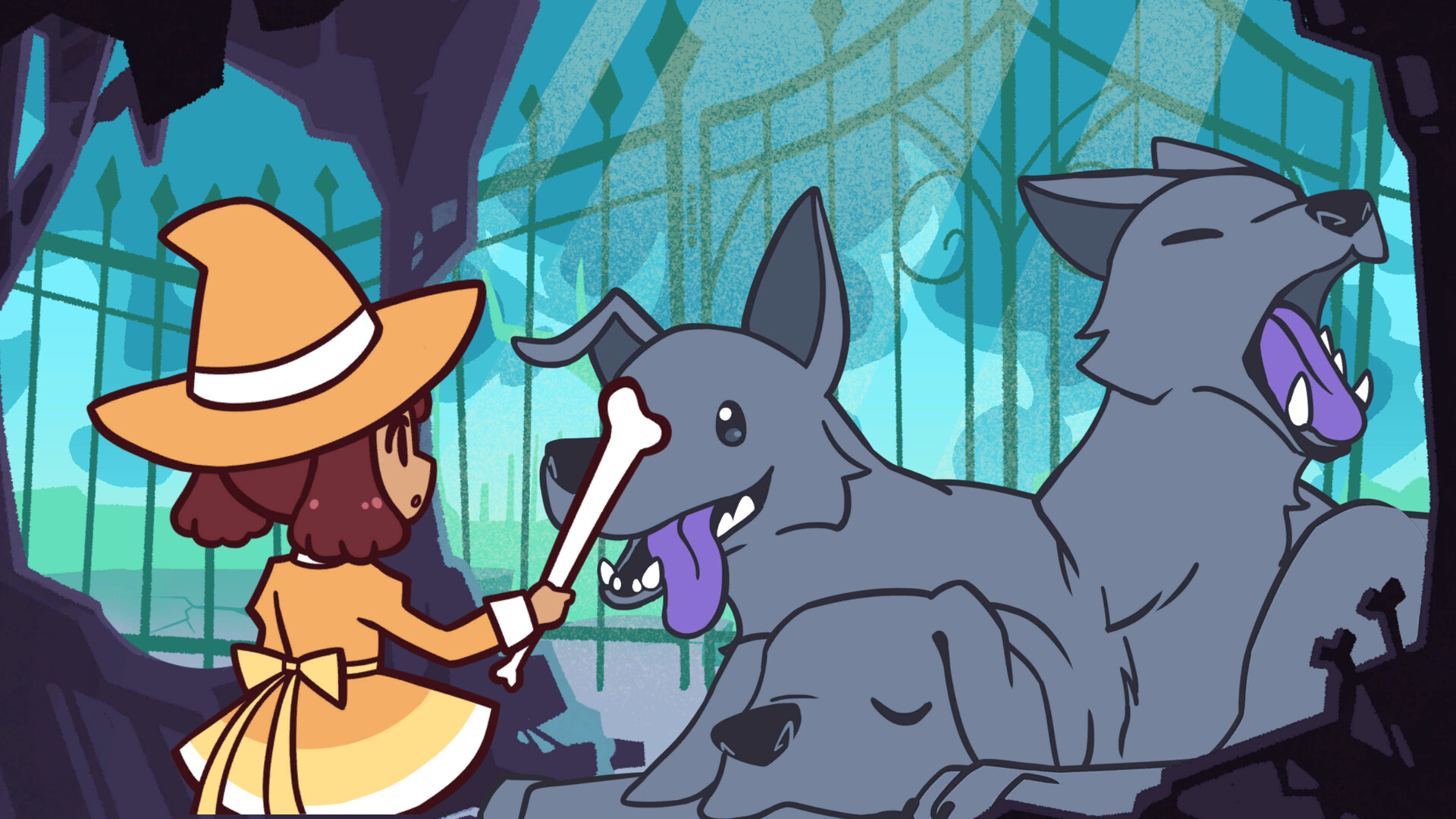
Claire's journey through the Doggie Underworld pairs each rhythm stage with a small story about the dog she meets.Image: Serenity Forge via Steam -
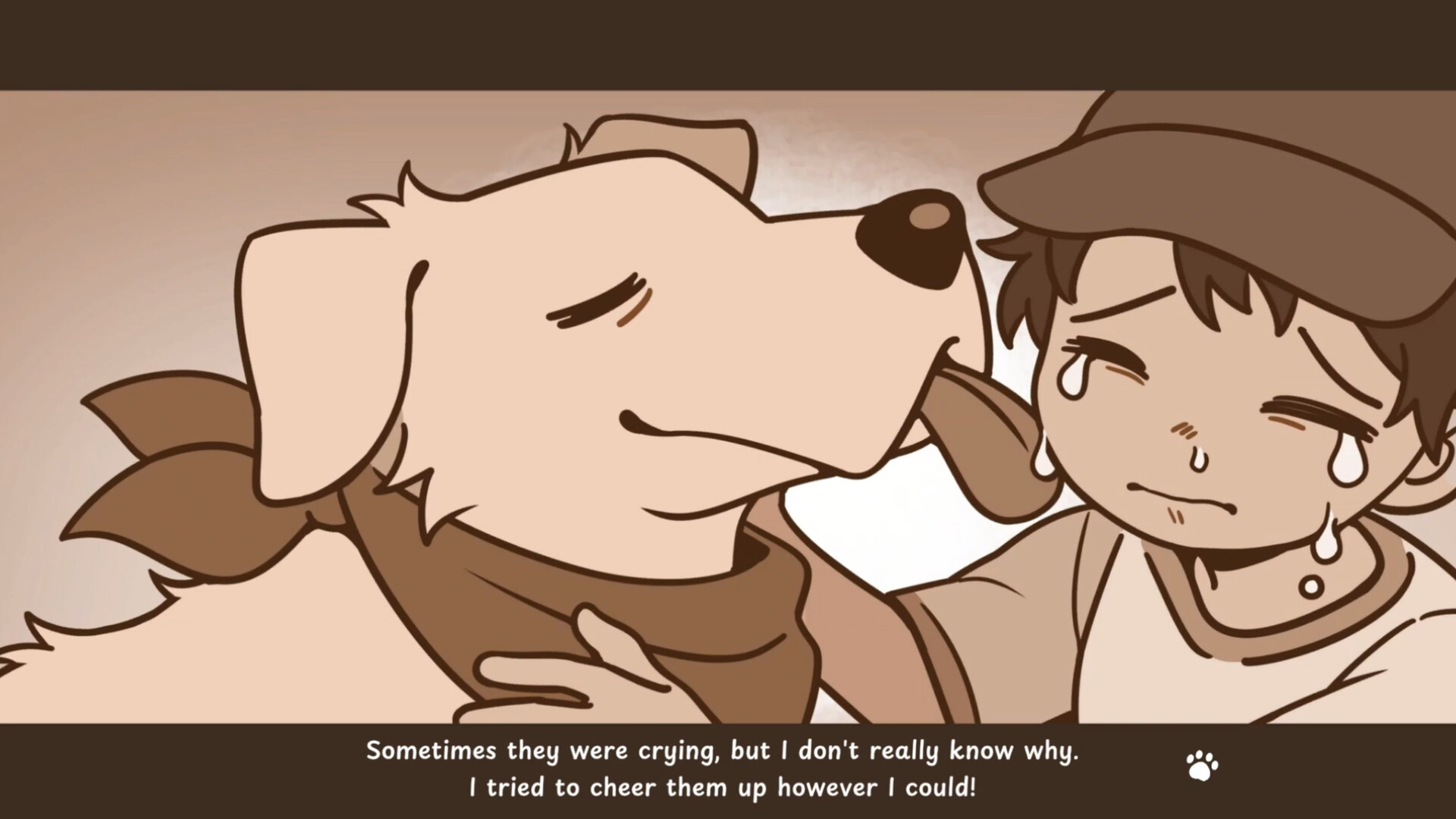
The visual novel sequences are where Puppergeist's reviewers say the game earns its tears.Image: Serenity Forge via Steam -
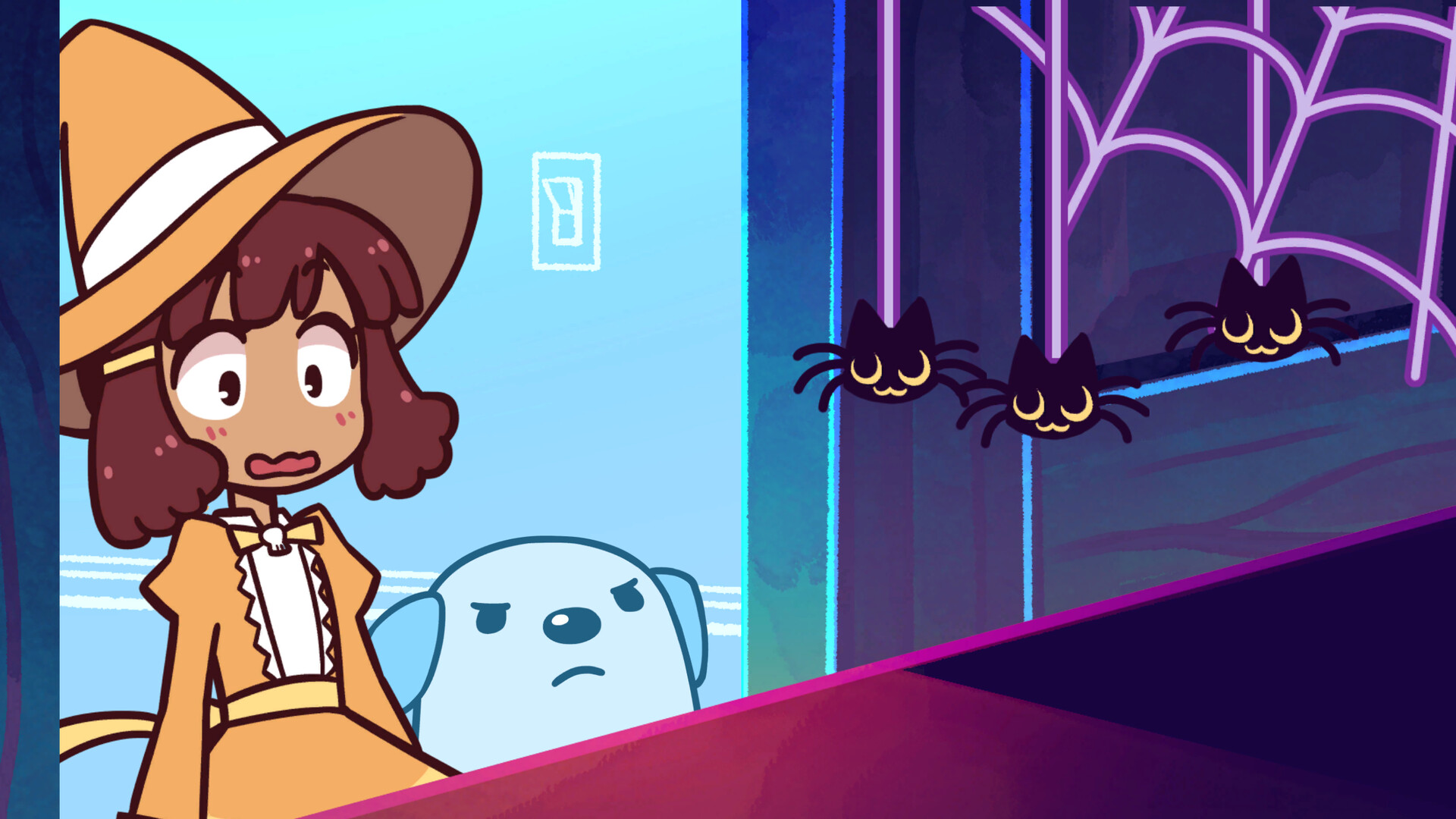
Not every stop in the underworld is gentle — some encounters lean into spookier, more unsettling imagery.Image: Serenity Forge via Steam