Game review
Demon Slumber Party Review
6.3 / 10
- Developer
- Whispered Eclipse
- Publisher
- Whispered Eclipse
- Released
- 3 September 2026
- Platforms
- ["Windows"]
- Genre
- Casual
Summon a Demon, Steal Your Soul Back, Doom Your Ex
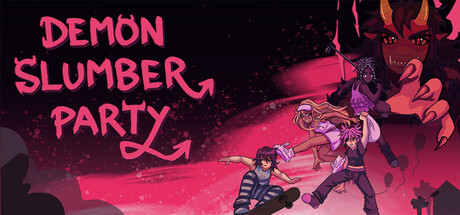
Demon Slumber Party opens with a premise that's silly on purpose: a group of friends summon a demon named Urgethsloth to drag an ex named Brad to hell, only for Urgethsloth to steal their souls instead and force them into a gauntlet of ridiculous "sports" to earn them back. The whole thing is soaked in exaggerated Y2K sleepover aesthetics — bubblegum color palettes, chunky early-2000s fonts, and a cast that talks in the kind of overheated teen-movie slang that knows exactly how corny it sounds. It's a comedic visual novel structured around four acts of story, broken up by short bursts of WarioWare-style microgame challenges, and the whole package is completely free. Whispered Eclipse describes it plainly in its own store page as a student project, and that context matters for how fairly it should be judged.
The five microgames themselves are the mechanical core: Shooting Brad, Window Golf, Pillow Fighting, Bed Bouncing, and Skateboarding, each built around a single simple input loop lasting just a few seconds. After each story act, the same five microgames return at a harder difficulty tier, which is the entirety of the game's replay structure. There's genuine charm in how unapologetically dumb the concepts are — aiming golf balls at an ex's windows "to make him cold in the winter months" is a better joke than most microgame premises bother to attempt — but five games recycled across escalating difficulty tiers is a thin foundation to build an entire experience on, and it shows in just how quickly most players are finishing it.
Short, Sweet, and Very Aware of It
Every review in the pool reports extremely short playtimes, mostly well under an hour, and the game doesn't pretend otherwise — its own marketing describes it as "very respectful of your time." That's an honest way to frame a project this size, but it also means there isn't much game here in the traditional sense. The four acts of visual novel content are the real draw, not the microgame interludes, and reviewers consistently praise the voice acting, character writing, and comedic timing of the story far more than they praise the actual gameplay segments. One reviewer specifically calls out the game as "very respectful of your time" while another simply says the story and Y2K references landed well enough to make the brief runtime worth it. Nobody in the pool complains about length, but that's partly because a free, 20-to-40-minute student project doesn't invite the same scrutiny a paid release would.
Where the microgames do work is as comic relief punctuating the story rather than as a standalone reason to play. They're not deep, they're not meant to be, and treating them as anything more than a light rhythm-break between story beats sets expectations in the wrong place. Judged purely as a five-minigame WarioWare clone, this would be a weak, shallow offering. Judged as a comedy visual novel that occasionally makes you play a joke instead of just reading it, the format makes a lot more sense.
A level-select menu lets you revisit any of the five microgames outside the main story once you've unlocked them, which is a small but sensible concession to the fact that most of the actual replay value lives in chasing a better score on a favorite bit rather than in the story itself, which doesn't branch. There's also a running gag involving a background character billed simply as "the best demon janitor in the world," the kind of throwaway detail that says more about the writing team's sense of humor than any of the marketing copy does — the jokes are dense and specific enough that they clearly weren't an afterthought bolted onto the microgame structure.
A Genuinely Thoughtful Accessibility Pass
One of the more unexpected strengths reviewers highlight is the accessibility work packed into a project this small. There's a PG content filter to widen the audience, adjustable time limits on the microgame segments, and voice acting explicitly framed by the developer and praised by at least one reviewer as helping players with dyslexia follow along with the dense, fast-paced comedic dialogue. Camera comfort options, adjustable difficulty, and custom volume controls round out a surprisingly considered settings menu for a free student release. It's the kind of polish that a lot of commercial games with real budgets skip entirely, and it's worth calling out on its own merits — this is clearly a team that thought carefully about who might want to play their game and what might get in the way.
Charming, Then Over Fast
The review pool here is unanimously positive, but it's also uniformly enthusiastic rather than critical — nobody in the sample pushes back on the game's thin mechanical depth or short length, likely because expectations for a free release are naturally lower and because the target audience clearly found exactly what it was looking for: a quick, funny, low-stakes visual novel with a strong sense of comedic voice. That's a real and valid thing to deliver well, and Demon Slumber Party does deliver it. But taken on its own mechanical merits rather than its charm, five simple microgames repeated across a few difficulty tiers isn't much of a game, and the actual "play" portion of this comedy visual novel is closer to garnish than main course.
Verdict
Demon Slumber Party is a likeable, well-voiced comedy visual novel wearing a very thin WarioWare costume, and it knows it. The Y2K humor lands more often than not, the accessibility features are a genuine highlight worth recognizing, and at a price of exactly nothing, there's no real risk in giving it 20 minutes of your time. Just don't come in expecting the microgame structure to carry much weight on its own — this is a story with jokes you occasionally get to play, not a minigame collection with a story bolted on, and it's best enjoyed with that framing in mind.
Screenshots
-
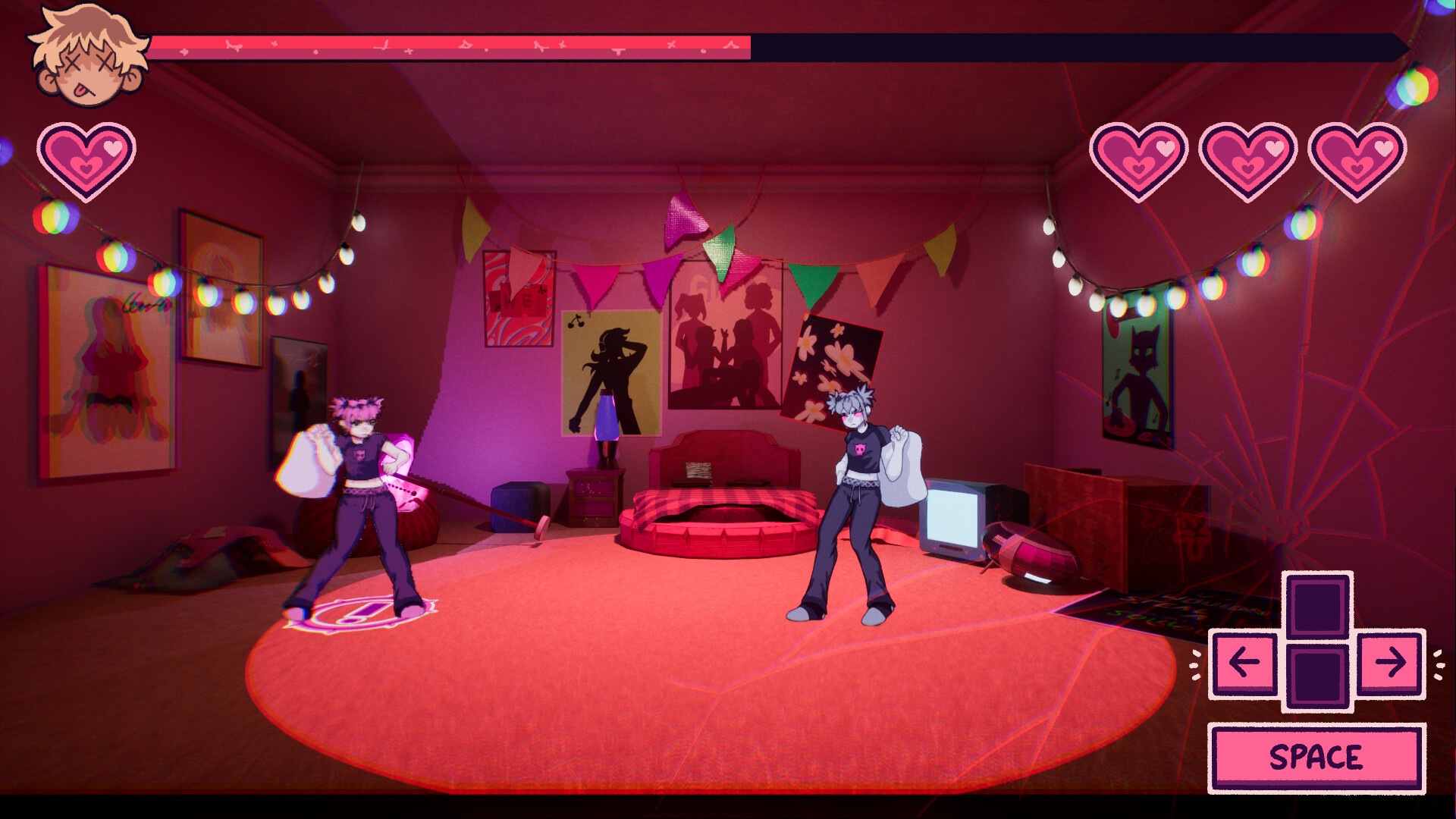
The Pillow Fighting microgame plays out like fencing, staged inside a Y2K-styled bedroom.Image: Whispered Eclipse via Steam -
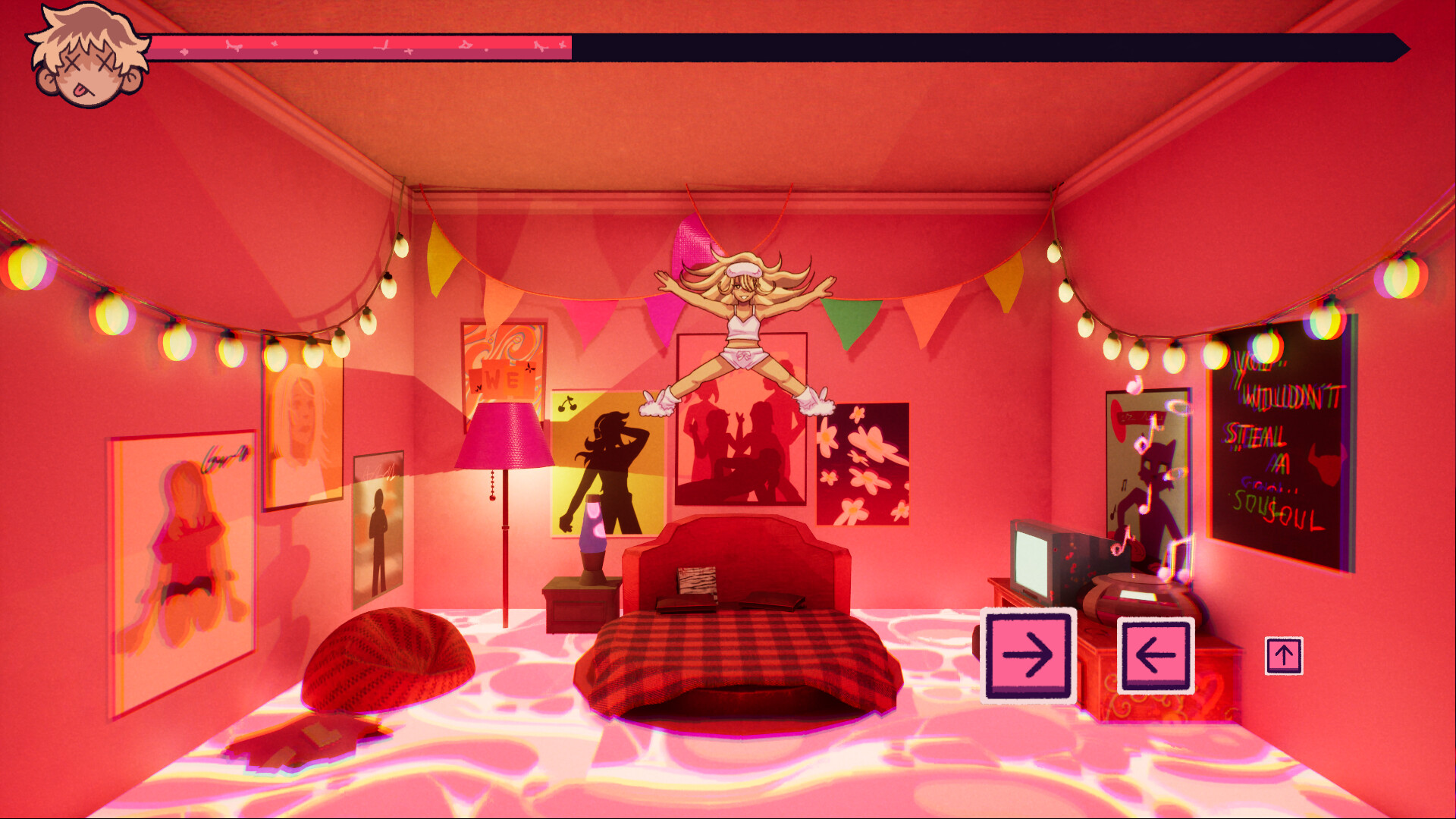
Bed Bouncing is one of the five simple microgames threaded between story acts.Image: Whispered Eclipse via Steam -
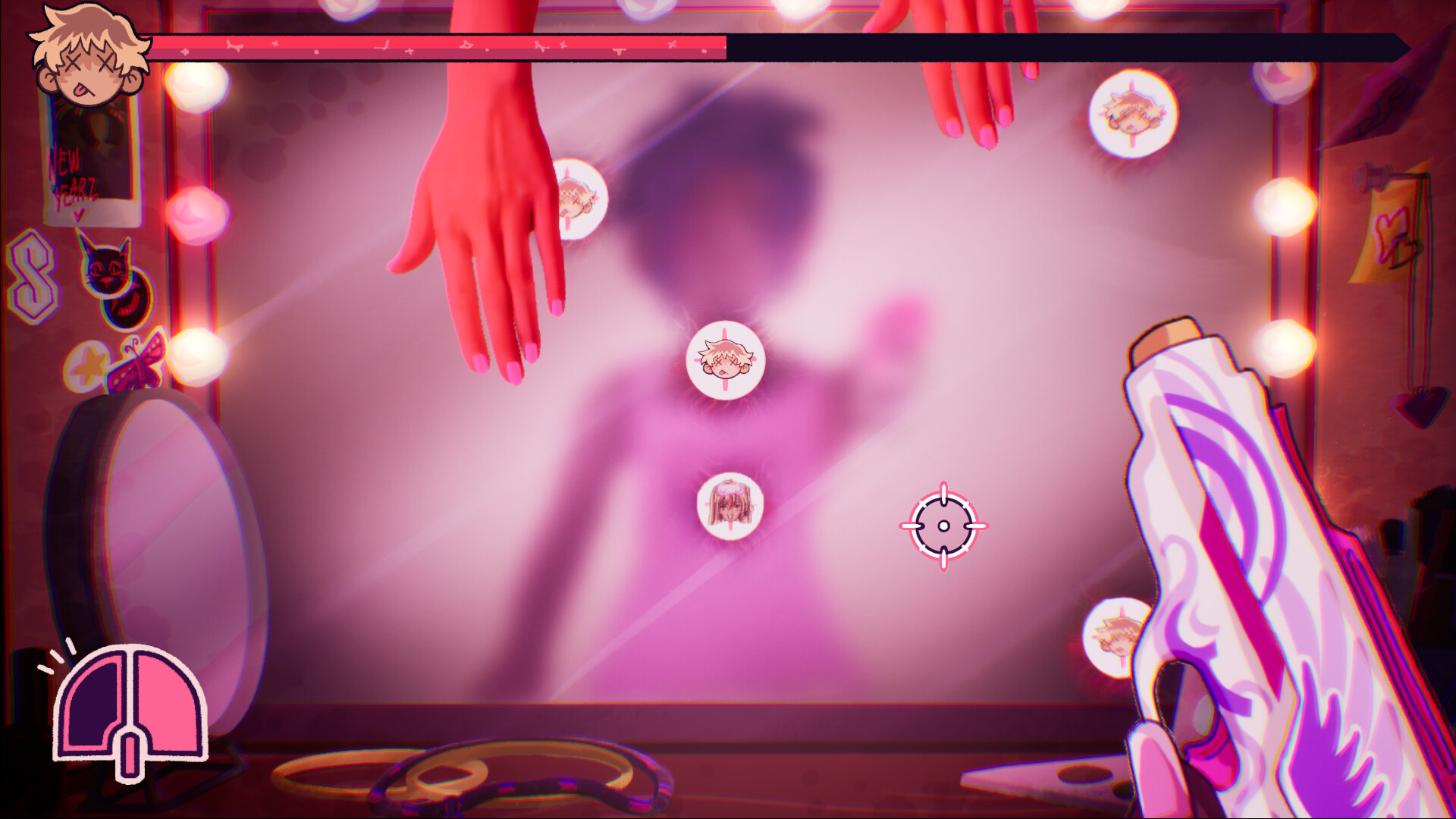
The Shooting Brad microgame has you aiming a spray can at your ex through a foggy mirror.Image: Whispered Eclipse via Steam