
Game review
Pro Cycling Manager 25
6 / 10
- Developer
- Cyanide Studio
- Publisher
- Nacon
- Released
- 5 June 2025
- Platforms
- Windows
- Genre
- Sports, Simulation
- Monetisation
- paid
- Players
- false
The short version
Biggest strengths
- A genuine, well-received Unreal Engine 5 visual overhaul that reviewers across both positive and negative reviews acknowledged as a real step up in lighting, weather, and stage atmosphere
- Deep, career-spanning team management systems, recruitment, and race-day tactics that longtime fans, some with over 1,000 hours logged across editions, continue to find genuinely engaging
- The only actively maintained road-cycling management simulator on the market, a niche the franchise fills essentially alone, which several reviewers cited as the core reason they keep coming back
Biggest weaknesses
- A widely and extensively corroborated complaint about broken peloton AI, with numerous independent reviewers describing entire fields sprinting unrealistically, breakaways behaving inconsistently, and teams failing to defend leads in ways that undermine race realism
- A well-corroborated set of launch-window stability problems, including career-mode crashes in the planner and transfer screens reported by multiple independent reviewers, some specifically in high-hour career saves
- A frequent, multi-year complaint that successive annual entries amount to minimal gameplay evolution, with several longtime players directly comparing this release unfavorably to versions from nearly a decade earlier
Who it's for: Long-time cycling management fans with the patience to weather launch bugs and lean on the modding community, not newcomers expecting a polished, innovative sports management experience
Our recommendation: recommended
6 / 10
Pro Cycling Manager 25 launched on Steam on June 5, 2025, the latest yearly entry in Cyanide Studio's long-running road-cycling management series, published by Nacon. Players take on the role of team director, handling recruitment, contract negotiation, and race-day tactics across a full professional calendar, or step directly into the shoes of a single rider in the game's separate Pro Cyclist mode. A 169-review English pool sitting at a Mostly Positive 121-to-48 reflects a franchise with a genuinely devoted fanbase, several of whom have logged well over 1,000 hours across editions, but the pool also documents a specific, extensively repeated set of frustrations that long predate this particular release.
The headline improvement this year is a real one. One reviewer who ultimately gave the game a negative recommendation still acknowledged "the graphics changes," and a more detailed positive review praised the new Unreal Engine 5 lighting, weather effects, and terrain detail, noting that "rain-slicked roads and dynamic lighting conditions contribute to a stronger sense of realism" during marquee races. That a graphical upgrade drew acknowledgment across both sides of the review split is a meaningful signal it's a genuine, not merely marketed, improvement. Note that the second-longest review sampled in this pool read as generic, feature-listing marketing copy without any specific personal account of play, and this lane has excluded it from quoting as likely low-effort or AI-assisted rather than a genuine review.
Set against that improvement, the pool's single most extensively corroborated complaint concerns the peloton AI. A detailed 425-hour review titled its own summary "Pro AI Shenanigans Manager 2025," describing how "the ENTIRE pack will sprint, not just those with an interest to do so," turning simple positioning mistakes into catastrophic results. A separate reviewer with over 1,100 hours in the series independently described the same core problem from a different angle: "it truly is you against the whole peloton," with rival teams refusing to cooperate with the player's rider while working seamlessly for AI-controlled stars. A third reviewer, with 481 hours, laid out specific, granular examples of unrealistic sprint-finish time gaps and breakaway management that diverge from how real professional racing actually plays out. That three or more reviewers with wildly different total playtimes, across different game modes, converged on the same category of AI complaint, often with matching specific examples, is what elevates this from a minor gripe into the review's central, most load-bearing weakness.
A second, distinct and also well-corroborated complaint concerns launch-window stability. One reviewer with 378 hours reported the game reliably crashing "in the planner & objectives screen" with rosters of 20 or more riders, forcing a workaround of building smaller rosters just to progress a career. A separate reviewer independently reported "constant freezes trying to start a mode," while a third, playing Pro Cyclist mode specifically, described repeated crashes and multiple races becoming permanently stuck in a loading state, requiring the results to be simulated rather than played. These are specific, reproducible-sounding technical failures recurring across independent accounts rather than isolated hardware issues, and they carry particular weight in a management game where losing progress in a multi-season career save is a real cost to the time players have invested.
A third, more structural complaint, and one distinctly tied to the franchise's long history rather than this release specifically, concerns stagnation. One reviewer who'd played "from the first version up until 2016" before returning wrote plainly that "not much has changed," describing the same menu structure, the same sprint mechanics, and stages with "the same bugged out versions where walls are on the track." A separate longtime player put it more bluntly, calling successive entries "copy paste basically like playing the same game from last year and the year before" for what they counted as roughly seven consecutive editions. This is a harder complaint to weigh than the AI or stability issues, since it reflects years of accumulated frustration rather than a defect unique to this specific release, but its repetition by reviewers with deep, multi-edition history with the series is worth reporting honestly rather than dismissing as a one-off grievance.
It's worth crediting the substantial minority of the pool, including some of the same reviewers cataloguing the AI and stability problems, who still recommended the game overall. One reviewer summarized the tension directly: despite everything, "the game's good," citing genuine engagement across 95-plus hours even while flagging AI-related frustrations with breakaway management. Several reviewers explicitly framed the franchise's near-total lack of competition in its specific niche, road-cycling management, as the deciding factor that keeps them buying each year despite the recurring issues, a pragmatic rather than uncritical endorsement.
A handful of smaller, more specific complaints round out the pool without rising to the same level of corroboration as the AI, stability, or stagnation issues above. One reviewer flagged the game's single available time trial bike as licensing-inaccurate, with outdated round-tube aero bar extensions not used by professional teams since around 2019, alongside stiff, unnatural sprint animations. Another reviewer described cars and motorcycles in the race convoy repeatedly clipping and nearly knocking over their rider during downhill sections, a complaint specific enough and detailed enough to be worth noting even though it didn't recur as widely as the pool's central concerns. Neither issue defines the overall experience the way the AI or crash complaints do, but both are the kind of granular, sport-literate feedback that suggests the pool's critics are engaged fans rather than casual dismissals.
Taken together, Pro Cycling Manager 25 delivers a real visual step forward wrapped around a set of AI, stability, and stagnation complaints that a substantial and highly experienced share of its own fanbase has been raising, in some cases, for years. For dedicated series veterans willing to lean on the modding community and wait through the usual post-launch patch cycle, it remains the only game that scratches this particular itch. For newcomers expecting a polished, actively evolving management sim, the well-documented AI and crash issues are worth taking seriously before buying in at full price.
Pros and cons
Pros
- A genuine, well-received Unreal Engine 5 visual overhaul that reviewers across both positive and negative reviews acknowledged as a real step up in lighting, weather, and stage atmosphere
- Deep, career-spanning team management systems, recruitment, and race-day tactics that longtime fans, some with over 1,000 hours logged across editions, continue to find genuinely engaging
- The only actively maintained road-cycling management simulator on the market, a niche the franchise fills essentially alone, which several reviewers cited as the core reason they keep coming back
- A dedicated, technically skilled modding community that reviewers repeatedly credited with fixing gaps and adding depth the base game itself doesn't provide
Cons
- A widely and extensively corroborated complaint about broken peloton AI, with numerous independent reviewers describing entire fields sprinting unrealistically, breakaways behaving inconsistently, and teams failing to defend leads in ways that undermine race realism
- A well-corroborated set of launch-window stability problems, including career-mode crashes in the planner and transfer screens reported by multiple independent reviewers, some specifically in high-hour career saves
- A frequent, multi-year complaint that successive annual entries amount to minimal gameplay evolution, with several longtime players directly comparing this release unfavorably to versions from nearly a decade earlier
- Repeated reports of missing or incorrect rider data and photos at launch, alongside frustration that the developer relies heavily on an unpaid modding community to fill gaps the base release leaves open
Screenshots
-
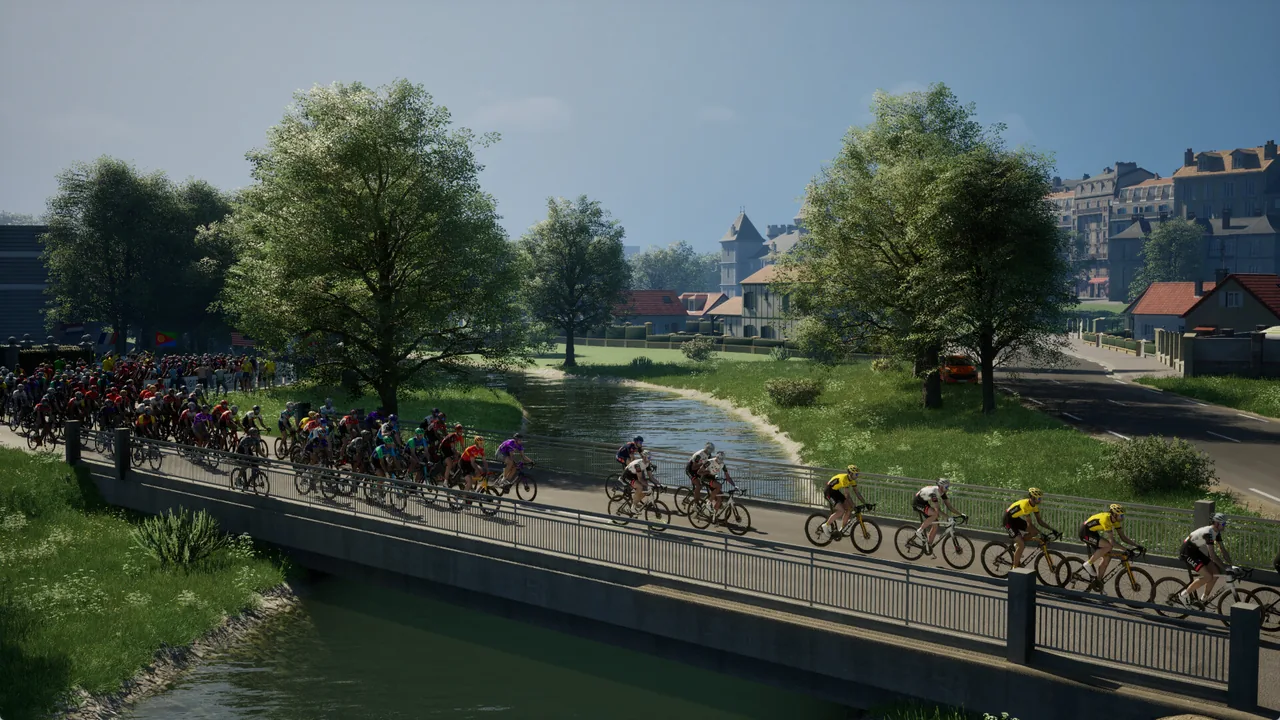
Pro Cycling Manager 25Image: Nacon via Steam -
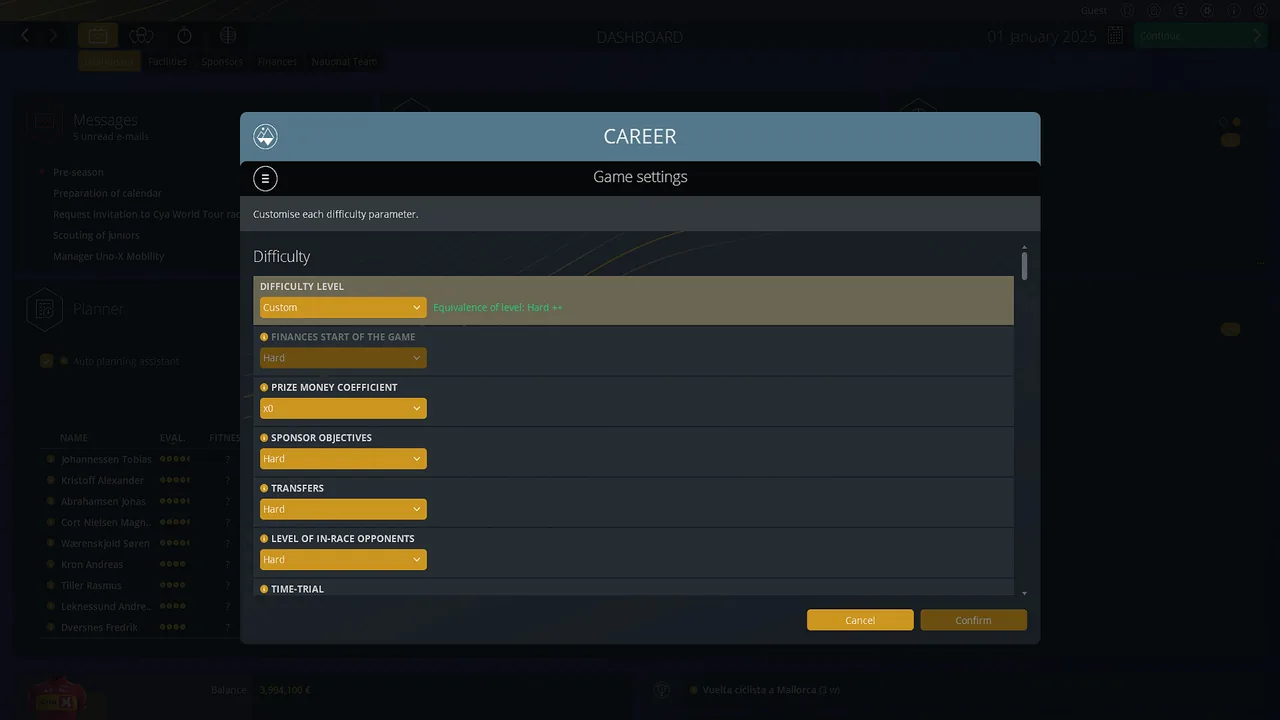
Pro Cycling Manager 25Image: Nacon via Steam -
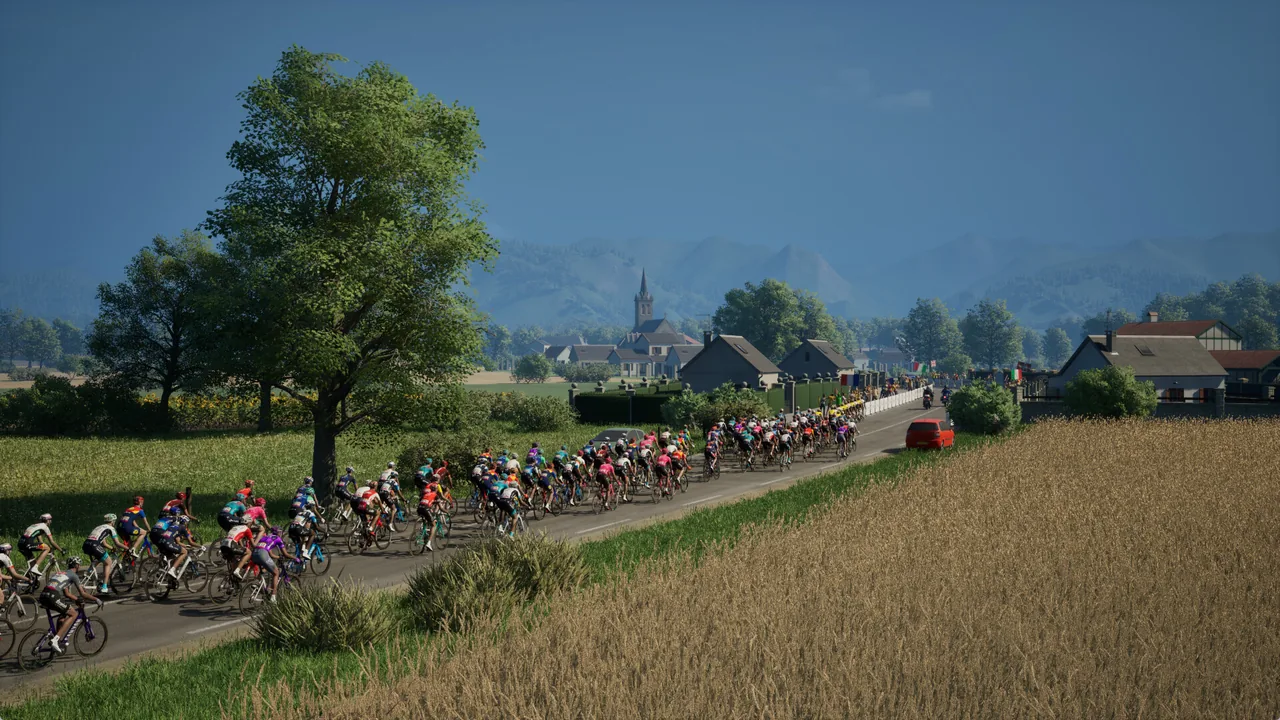
Pro Cycling Manager 25Image: Nacon via Steam