
Game review
POJANGMACHA Review: Running a Korean Street Food Stall, Drunks and All
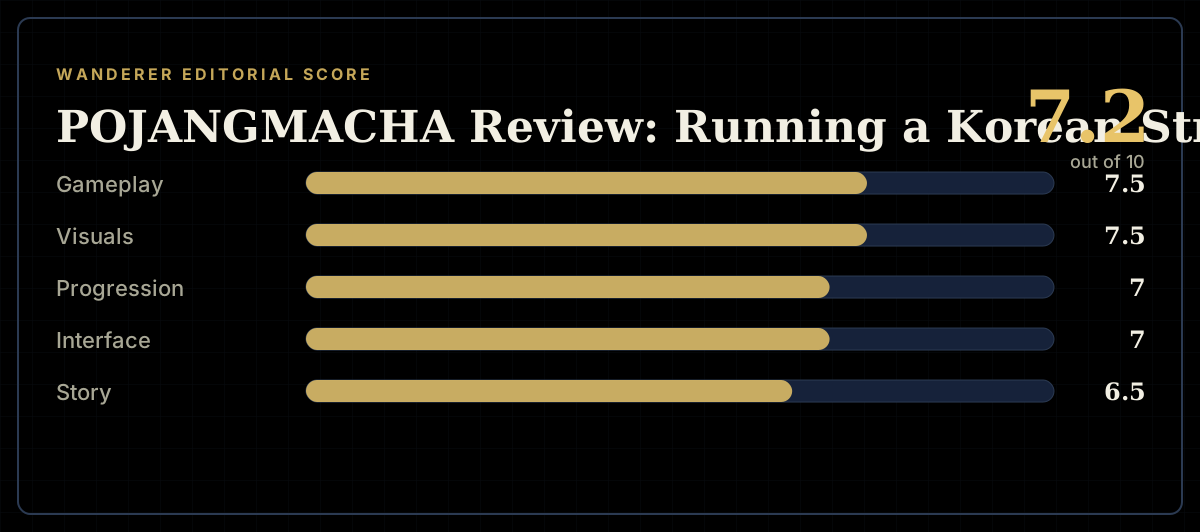
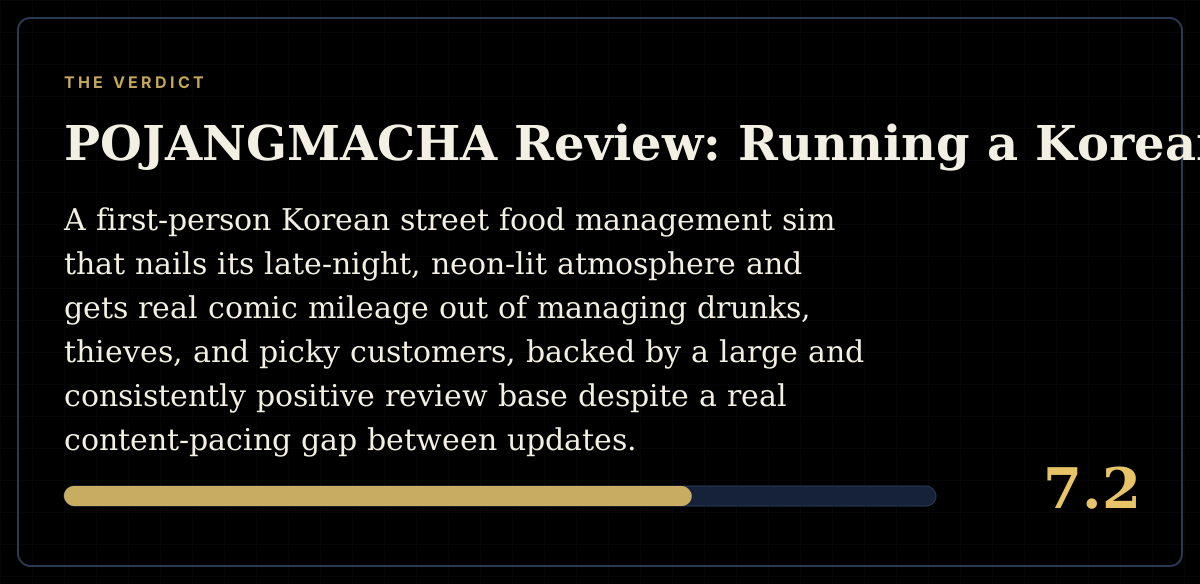
7.2 / 10
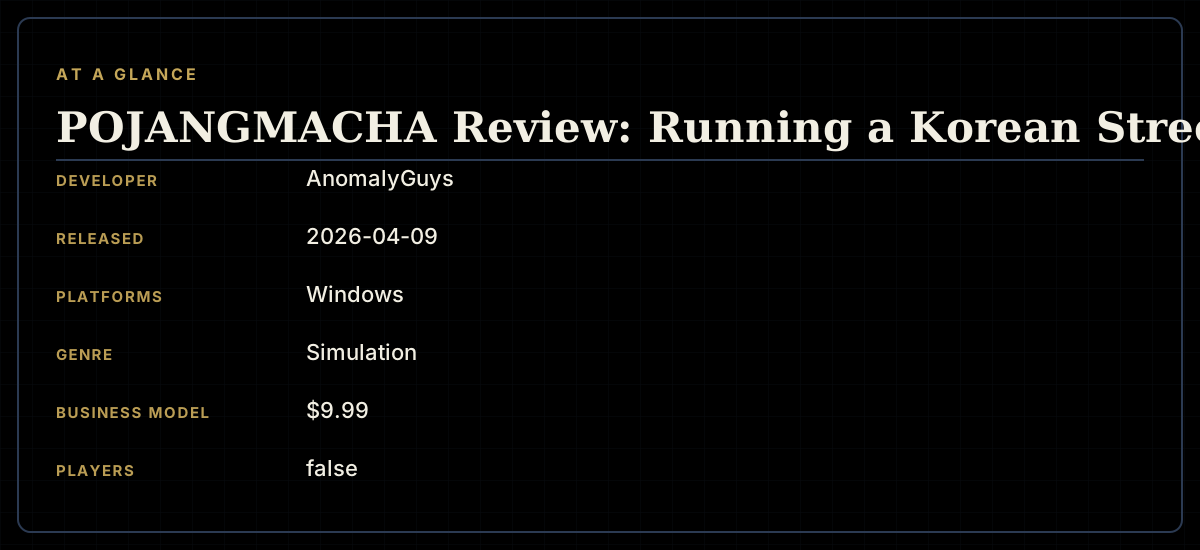
- Developer
- AnomalyGuys
- Publisher
- AnomalyGuys
- Released
- 9 April 2026
- Platforms
- Windows
- Genre
- Simulation
- Monetisation
- $9.99
- Players
- false
The short version
A first-person Korean street food management sim that nails its late-night, neon-lit atmosphere and gets real comic mileage out of managing drunks, thieves, and picky customers, backed by a large and consistently positive review base despite a real content-pacing gap between updates.
Biggest strengths
- A distinctive, well-realized late-night Korean street food (pojangmacha) setting that reviewers consistently credit as the game's biggest draw
- Genuinely funny, chaotic customer management: drunks causing trouble, thieves to catch, and eventually the ability to fight back or call the police
- A large, 242-review base running 95% positive, mostly from Korean players who kept playing for hundreds of hours
Biggest weaknesses
- A genuine content drought: one negative reviewer specifically calls out a released-in-April, updated-in-May, then-silent-since pattern, and no news posts have followed the May update as of this review
- Once a player fully upgrades their stall and unlocks all house space, several reviewers report running out of things to do and waiting on promised updates
- A requested item-resale feature was missing at launch and only partially addressed later, per multiple reviews
Who it's for: Tycoon and management-sim fans who enjoy a slower, atmosphere-first pace with a distinct cultural setting; not for anyone wanting deep cooking mechanics or wanting to avoid a lull in content once the core upgrades are maxed out.
Our recommendation: Buy it, especially if you enjoy tycoon sims with personality
7.2 / 10
Under the overpass, the lights come on
POJANGMACHA casts you as a protagonist who returns from an unsuccessful stint abroad to run a Korean-style street food cart with an uncle who actually knows how to cook. You handle the front of house — serving, upgrading, managing the chaos of a late-night crowd — while the uncle handles ramyun, tteokbokki, and fish-shaped cakes behind the scenes. It's a first-person, single-player management sim, and its most distinctive asset by far is the setting itself: a warmly lit stall glowing under a dim overpass, an atmosphere reviewers keep returning to as the thing that hooked them in the first place.
The real game is the customers
What separates POJANGMACHA from a generic cooking-and-serving loop is how much of its appeal comes from the chaos of the crowd rather than the cooking itself. One detailed Korean-language review sums up the operating hours bluntly: 8pm to 6am, "occasionally, or very frequently," catching thieves and fighting off drunks, all while keeping ingredients stocked and chasing a five-star reputation that can lead to police-station and hospital visits along the way. Another reviewer specifically praises being able to fight back against a drunk causing trouble — something an early build didn't allow — and later upgrading to proper "suppression" tools, while noting pointedly that this isn't how most real small-business owners actually get to handle unruly customers. That tension between the game's cathartic power fantasy and a nod to real service-industry frustration is a recurring, half-joking theme across the review base.
A tycoon loop with real structure
Underneath the chaos, there's a legitimate progression system: upgrading the stall itself, buying various robots to help run the business, operating a drive-through option, and reading books to unlock new skills, all building toward that five-star "Pochelin" (a Michelin-guide pun) rating. The achievement data backs up a game with real structural depth: early milestones like the first sale and surviving the first night sit above 90%, while a long tail of harder unlocks — a five-tier "Pochelin" star rating chain, a jackpot on an in-game slot machine, drinking ten in-game drinks — drops as low as 15-20%, the shape of a game that rewards sustained, dedicated play rather than a quick completion.
Where the content runs dry
The most consistent complaint across the review base, expressed independently by multiple Korean-language reviewers, is that the game runs out of things to do once a player fully upgrades their stall and unlocks all available house space. One reviewer phrases it plainly: it's fun, but content feels scarce once everything is maxed out, and they're left waiting for promised updates. That complaint is corroborated directly by Steam's news feed, which shows a dense cluster of hotfixes and small updates in the first two weeks after the April 9 launch, followed by a long quiet stretch, then one substantial "Major Update" in mid-May that added new stall upgrade tiers and a bookstore offering a wider range of stat-boosting books — directly answering the "nothing left to do" complaint. As of this review, no further news posts have followed that May update, a gap of several months that at least one negative reviewer calls out explicitly, saying they doubt further updates are coming and won't buy from the studio again as a result.
A resale feature, requested and partially delivered
A smaller but telling thread involves an item-resale feature. Multiple reviewers, including one of the most detailed positive reviews, specifically wished for the ability to resell unused stock rather than throwing it away — particularly after upgrading store fixtures makes certain older supplies (like gas canisters) obsolete. Steam's news feed shows the developer did respond to this: an April 19 update added a dedicated resale location inside the shop building, explicitly citing player feedback about being stuck with unusable leftover stock. That's a genuine, traceable example of a specific complaint being heard and acted on quickly, even if some reviewers wanted the feature to go further than what shipped.
A technical bar not everyone can clear
One review flags a hard technical requirement worth calling out directly: the game would not launch at all without a Direct3D 11-compatible GPU (Feature Level 11.0, Shader Model 5.0), producing an error message instead of running. That's a fairly modest bar by current standards, but it's a real dealbreaker for anyone on genuinely old or low-end hardware, and it's the kind of requirement worth checking before buying if you're at all unsure about your system.
Is $9.99 worth a late shift
At under ten dollars, POJANGMACHA is priced reasonably for what's here: a distinctive setting, a genuinely funny customer-management loop, and enough structural depth (upgrades, robots, skill books, a five-tier rating chain) to support dozens of hours for players willing to engage with the grind. The 242-review, 95%-positive base — overwhelmingly Korean, with a smaller but consistent positive contingent in Russian and English — is large enough, and specific enough in what it praises and criticizes, to trust as a genuine signal rather than a small, noisy sample.
Verdict
POJANGMACHA succeeds by leaning hard into a specific, well-realized setting and getting real comic and strategic mileage out of the chaos of late-night street food service — drunks, thieves, picky customers, and all. Its large review base backs up both the atmosphere's appeal and a legitimate structural depth of upgrades and unlocks, but there's a real content-pacing problem once a player maxes out the core systems, and the studio's silence since a mid-May update hasn't reassured its more skeptical players. For $9.99, it's still a worthwhile, distinctive tycoon sim — just go in expecting a proper stopping point once you've seen everything currently on offer, rather than an endlessly expanding business.
Pros and cons
Pros
- A distinctive, well-realized late-night Korean street food (pojangmacha) setting that reviewers consistently credit as the game's biggest draw
- Genuinely funny, chaotic customer management: drunks causing trouble, thieves to catch, and eventually the ability to fight back or call the police
- A large, 242-review base running 95% positive, mostly from Korean players who kept playing for hundreds of hours
- A real mid-year overhaul (new upgrade tiers, a stat-boosting bookstore) that directly answered the 'nothing to do once maxed out' complaint reviewers had been raising for months
Cons
- A genuine content drought: one negative reviewer specifically calls out a released-in-April, updated-in-May, then-silent-since pattern, and no news posts have followed the May update as of this review
- Once a player fully upgrades their stall and unlocks all house space, several reviewers report running out of things to do and waiting on promised updates
- A requested item-resale feature was missing at launch and only partially addressed later, per multiple reviews
- At least one reviewer couldn't launch the game at all without a Direct3D 11-compatible GPU, a bar some older hardware won't clear
Screenshots
-
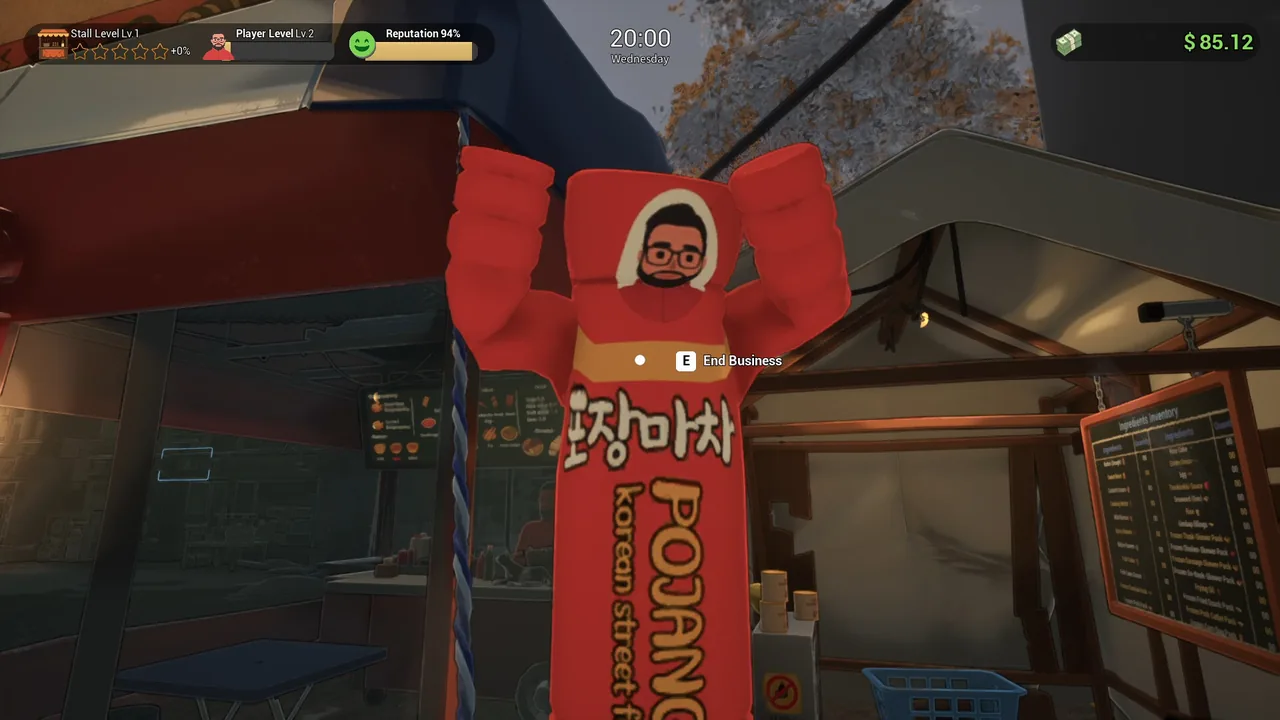
Image: AnomalyGuys via Steam -
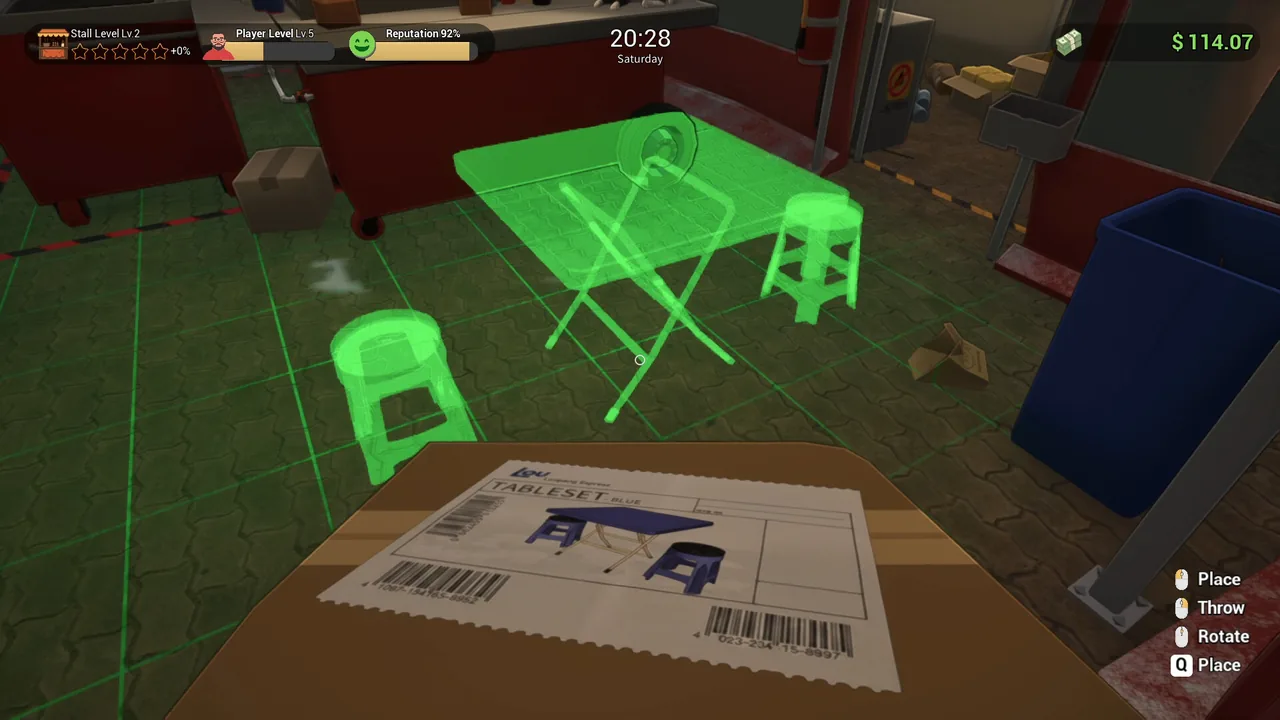
Image: AnomalyGuys via Steam -
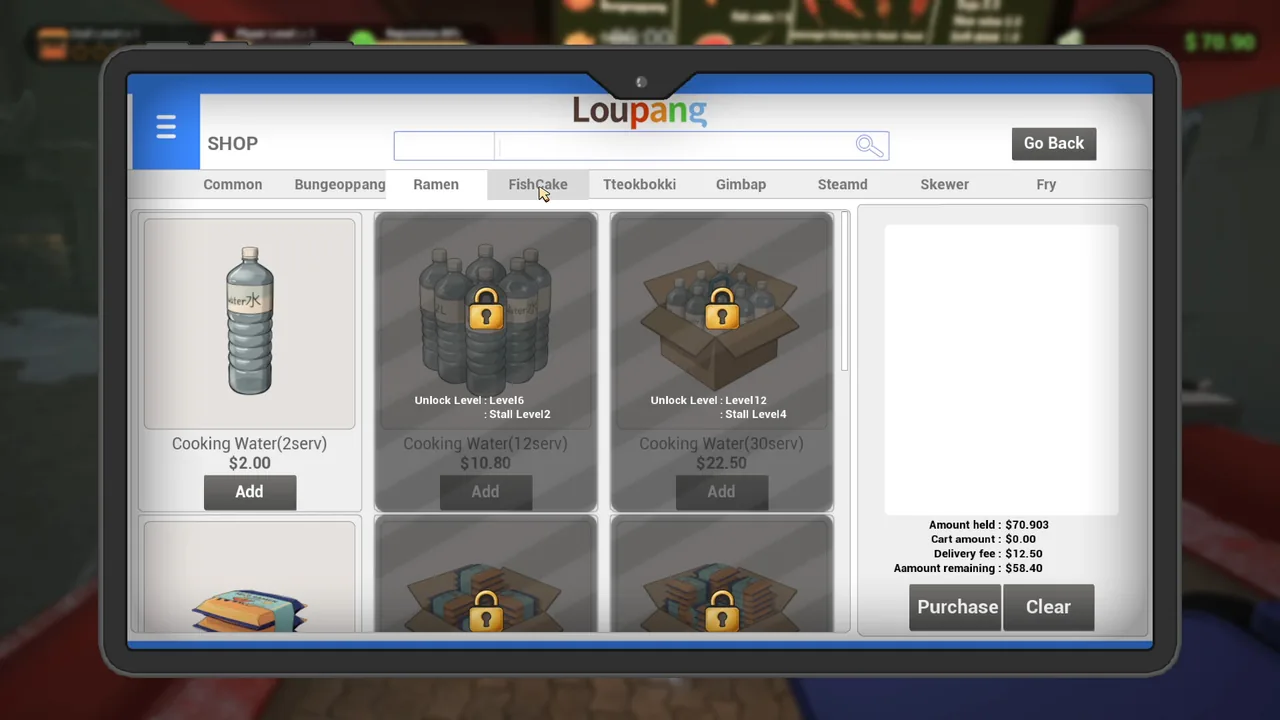
Image: AnomalyGuys via Steam -
Wanderer Editorial -
Wanderer Editorial -
Wanderer Editorial