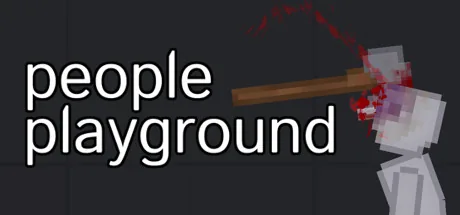
Game review
People Playground
8 / 10
- Developer
- mestiez
- Publisher
- Studio Minus
- Released
- 23 July 2019
- Platforms
- Windows
- Genre
- Physics Sandbox
- Monetisation
- One-time purchase. No DLC, no in-game purchases.
- Players
- Single-player
The short version
A two-dimensional physics sandbox in which you build contraptions and test them on ragdolls, using an enormous toolbox of weapons, machinery, electricity, fluids and explosives. There are no goals. It's 98.7% positive across 185,775 English reviews, and its critics have a **median playtime of 117 hours**, which tells you how much people get out of something with no objectives at all.
The Workshop is the engine of that — mods appear in 46 of the 100 most-helpful negatives, the top term by a distance. It's also the source of the game's one serious incident: **on 1 February 2026 the developer disabled the Workshop entirely** after a malicious addon spread itself through it, and published remediation steps the same day.
Biggest strengths
- A deep, genuinely satisfying physics toolbox that rewards experimentation
- Steam Workshop support that multiplies the content indefinitely
- Remarkable engagement — even critical reviewers average over 100 hours
Biggest weaknesses
- Roughly two years with no content updates before February 2026
- The Workshop incident reset achievements and deleted saved contraptions for affected players
- No tutorial or in-game guidance of any kind
Who it's for: People who like building machines and seeing what happens, and who are comfortable with cartoon gore as the medium. Not for anyone who needs structure or objectives.
Our recommendation: Buy it — NZ$12.39 for something people put hundreds of hours into is easy value. If you use Workshop mods, make sure the game is fully updated first; the February 2026 patches changed how mods load and that protection matters.
8 / 10
Earlier today I reviewed VPet-Simulator, where seventeen negative reviews called a desktop pet malware and the evidence turned out to be a leftover startup shortcut. This is the other case: a game where something actually happened, and where the record is unambiguous because the developer wrote it down.
The February 2026 Workshop incident
Three announcements over six days, quoted from the developer's own posts.
1 February — "Urgent PSA": "I have temporarily disabled the Workshop for People Playground. Nothing has been deleted. A malicious addon has spread itself throughout the Workshop." The post gives specific instructions — verify game files, delete the mods folder, delete the Workshop content folder, unsubscribe from anything updated after 30 January, and check whether your own uploads were modified without your consent.
3 February — "Security Update": "the mod spread by uploading itself onto the Steam Workshop by overwriting your own uploads. It also reset your preferences, deleted contraptions, and reset your achievements. It seems to have had no other effects or means of spreading." Patches were published to block that class of mod from loading.
6 February — "Updates and Workshop": the Workshop reopened, with a structural change — mods no longer auto-update, and must be manually approved when their contents change.
I'd rate that response well. It was fast, it was specific about remediation, it scoped the damage honestly with appropriate hedging ("decent certainty", "seems to have had"), and it ended with a fix to the mechanism rather than just the symptom. Security-related complaints in the negative reviews run 9 of 17 in 2026, and 13 of the hundred most recent reviews still mention the Workshop or the virus — so the memory is fresh, and recent sentiment at 89 of 100 positive is the lowest recent figure among the large-corpus games I've assessed today.
If you buy this and intend to use mods, update the game first. That's the practical takeaway.
What the game is
A side-on physics sandbox. You spawn ragdolls and objects into an empty space and build things: machines, weapons, electrical circuits, fluid systems, vehicles, traps. Then you find out what happens. There is no score, no progression, no fail state.
The store page is direct about the content, and its own descriptor is the fairest summary I could write: "This is a sandbox game with extreme cartoon gore. Blood, bones, organs, all of it. The humans in this game do not resemble real humans, show no emotion, and make no sound." That's accurate — the ragdolls are stylised, silent and expressionless — but the violence is the medium rather than a mode you can turn off, and that will settle it for some people immediately.
What makes it hold is the depth of the toolbox and the fact that systems interact properly. Electricity powers machinery, fire spreads, fluids pool and conduct. The 8.5 for replayability comes straight from the data: the median playtime among its critics is 117 hours, with one at 1,559. People do not spend 117 hours on a toy that isn't deep.
The other complaints
No tutorial. The most-upvoted negative of all, at 334 votes, is partly about that — a player who asked how to do basic things and was told to look it up. It's from 2019, and the game still doesn't teach you anything, so the substance stands even if the specific exchange is seven years old. Interface scores a 5.5.
Performance. Six mentions, and the pattern is predictable for a physics sandbox: build something big enough and the framerate collapses. One reviewer cheerfully describes combining fifty black holes and waiting for the lag to clear.
The quiet years. Update appears in 22 of a hundred negatives and abandon in 4. The last content patch was 1.27 patch 5 in January 2024, and nothing followed until the security posts two years later — a gap a 240-hour player in February 2026 described as the developer having "fell off the face of the world until now."
That's a fair criticism of a game that costs money and has a Workshop to police. It's also worth saying the developer came back promptly when it mattered.
The verdict
People Playground earns an 8. It's an inventive, deep, absurdly replayable physics toolbox for NZ$12.39, with no monetisation and a Workshop that has kept it alive far past what one developer could have supplied.
It loses ground for two years of silence, for teaching you nothing, for performance that falls apart at scale — and for an incident where the Workshop that makes the game great became the vector that reset people's achievements and deleted their saved builds.
Buy it if building machines and testing them to destruction appeals, and if the content description doesn't put you off. Update before you subscribe to anything. And unlike its neighbours Garry's Mod and BeamNG.drive, don't count on a steady stream of official updates — this one runs on its community.
Pros and cons
Pros
- A deep, genuinely satisfying physics toolbox that rewards experimentation
- Steam Workshop support that multiplies the content indefinitely
- Remarkable engagement — even critical reviewers average over 100 hours
- Cheap, complete, with no DLC or purchases of any kind
- The developer's handling of the 2026 security incident was fast and transparent
Cons
- Roughly two years with no content updates before February 2026
- The Workshop incident reset achievements and deleted saved contraptions for affected players
- No tutorial or in-game guidance of any kind
- Performance degrades sharply once contraptions get large
- Extreme cartoon gore is the entire medium, not an optional setting
Screenshots
-
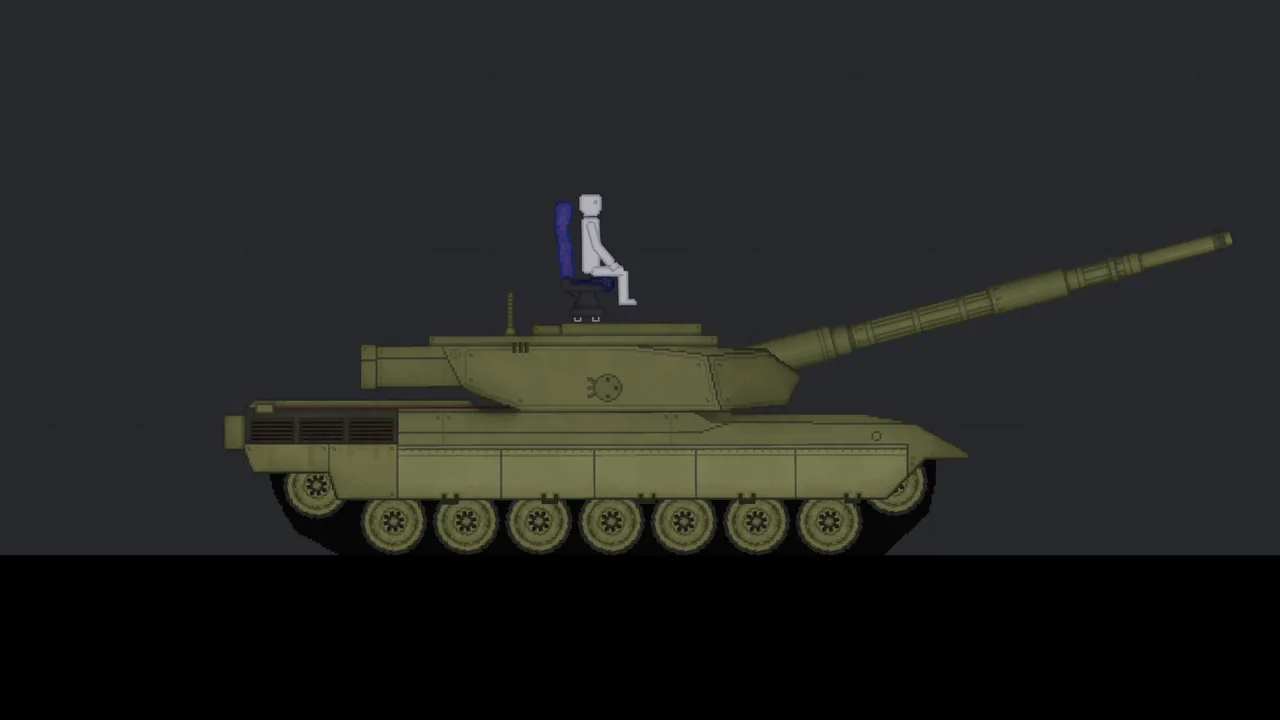
People PlaygroundImage: Studio Minus via Steam -
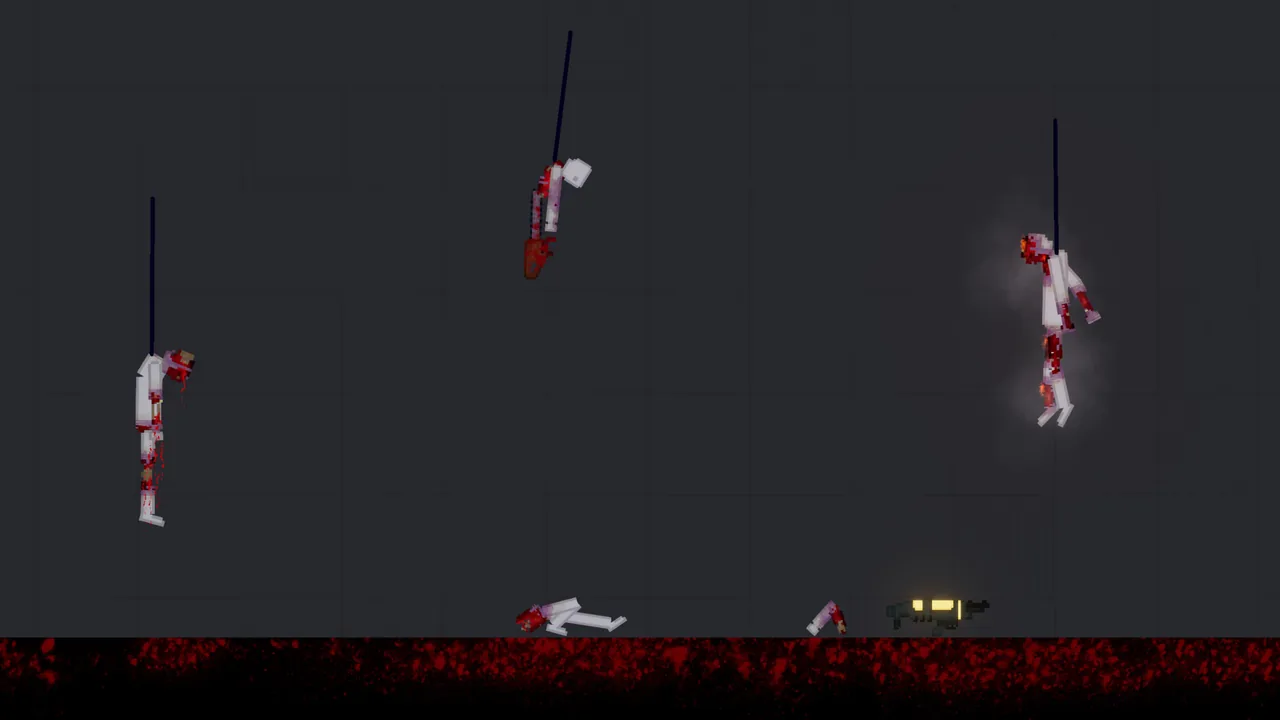
People PlaygroundImage: Studio Minus via Steam -
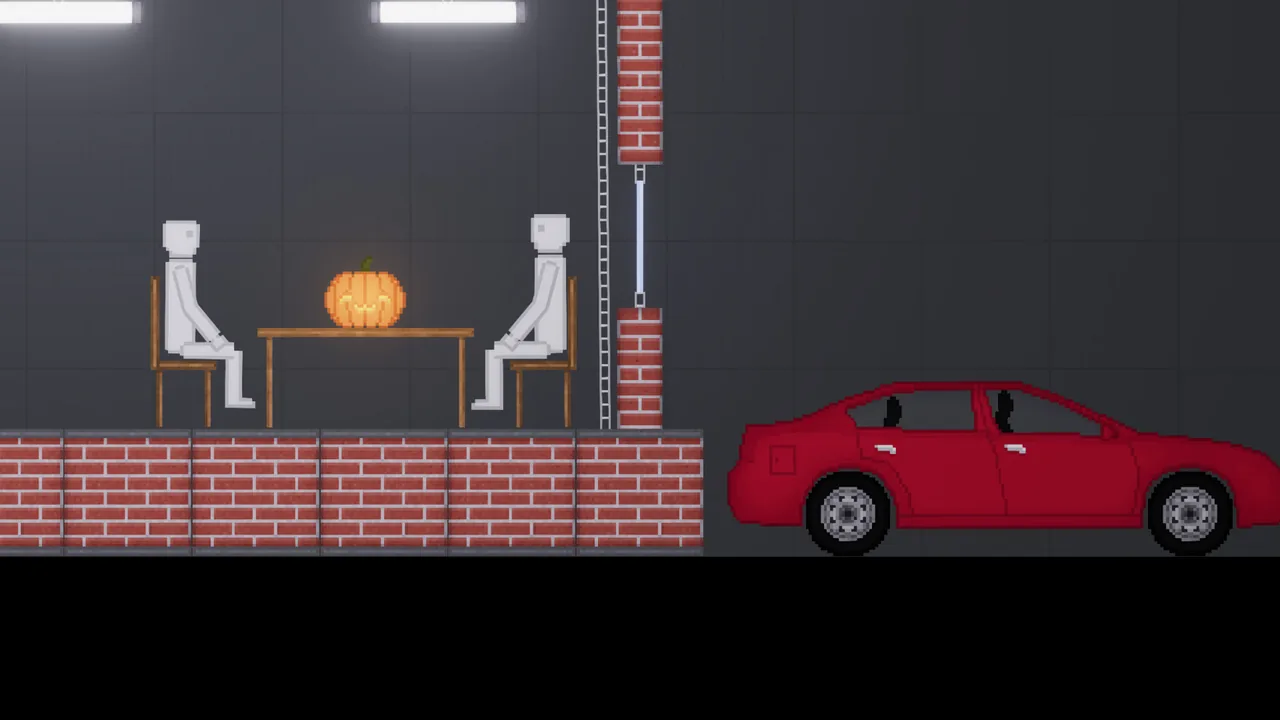
People PlaygroundImage: Studio Minus via Steam -
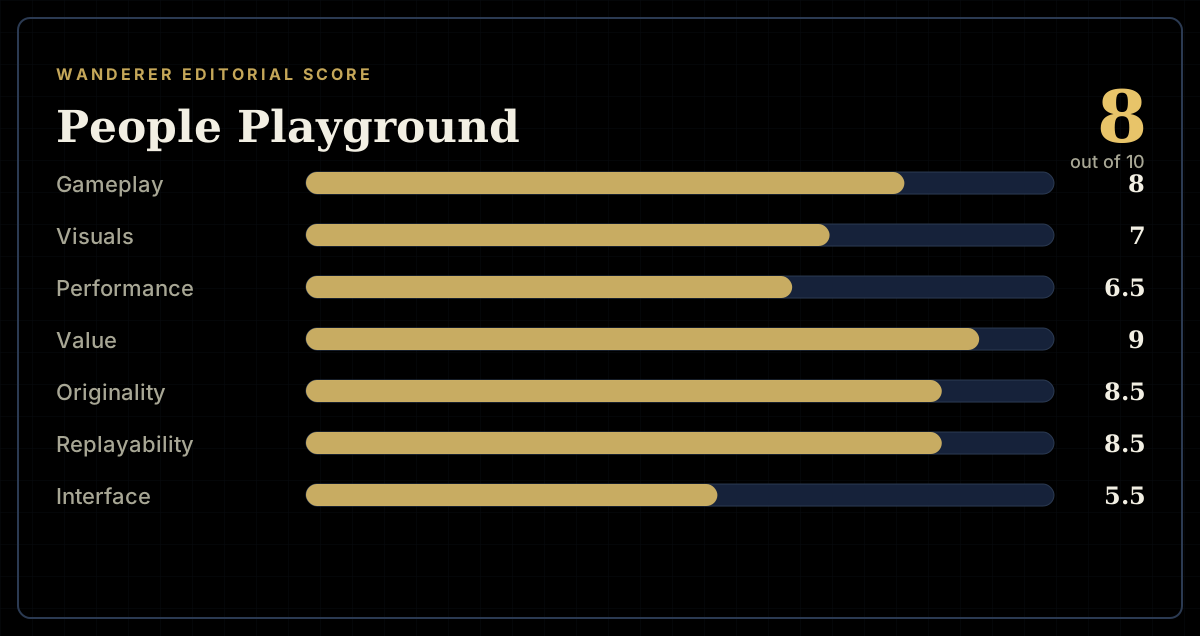
How the review scores each part of the gameWanderer Editorial -
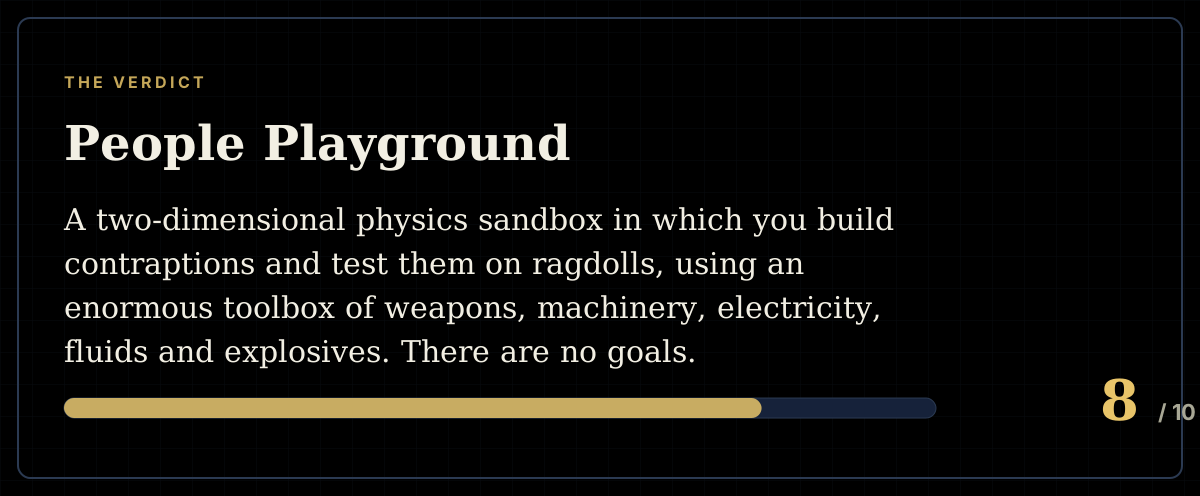
The short versionWanderer Editorial