
Game review
Ogre Chambers 2222
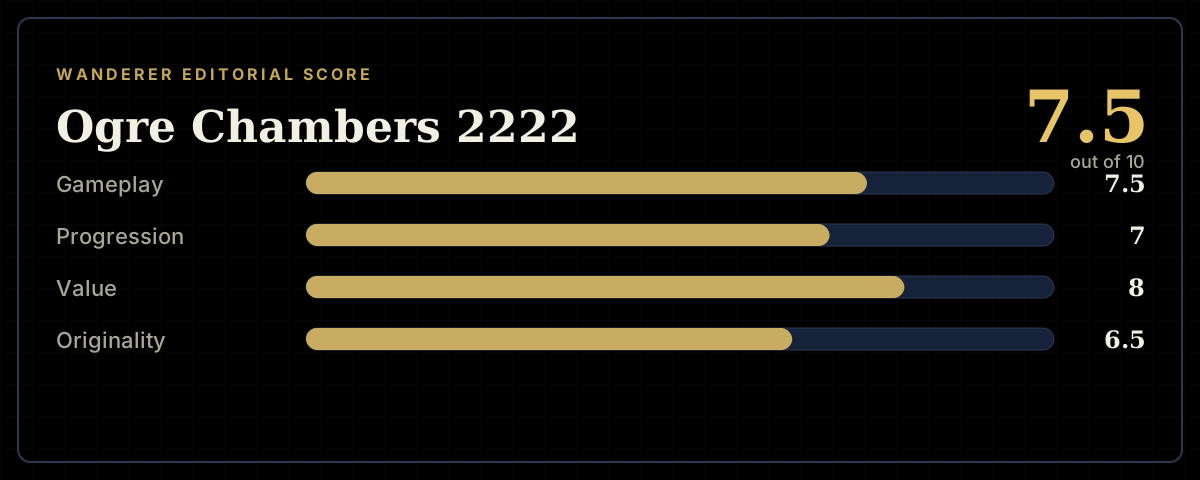
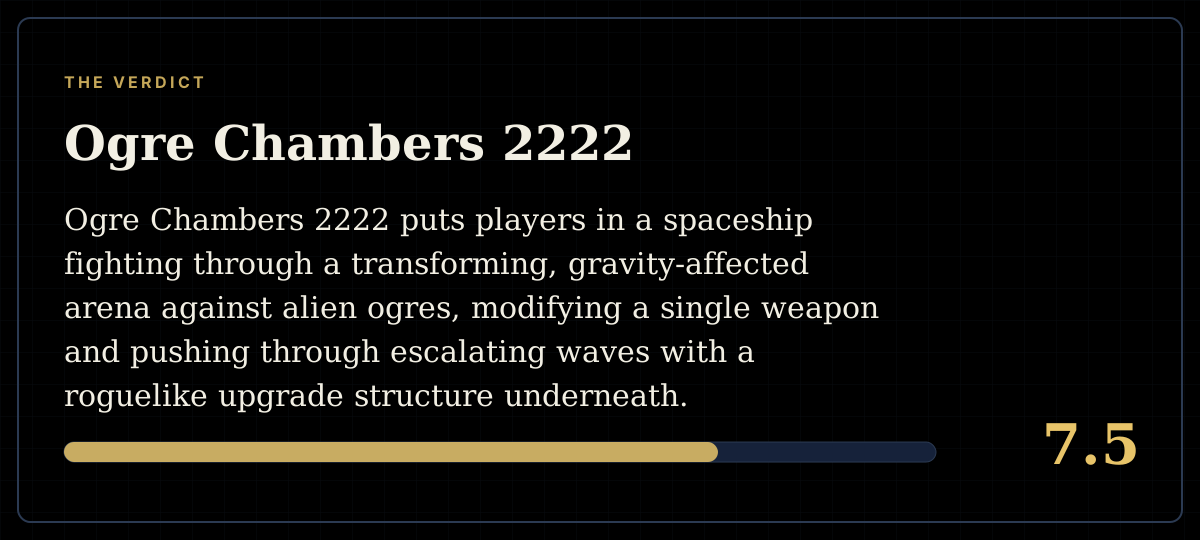
7.5 / 10
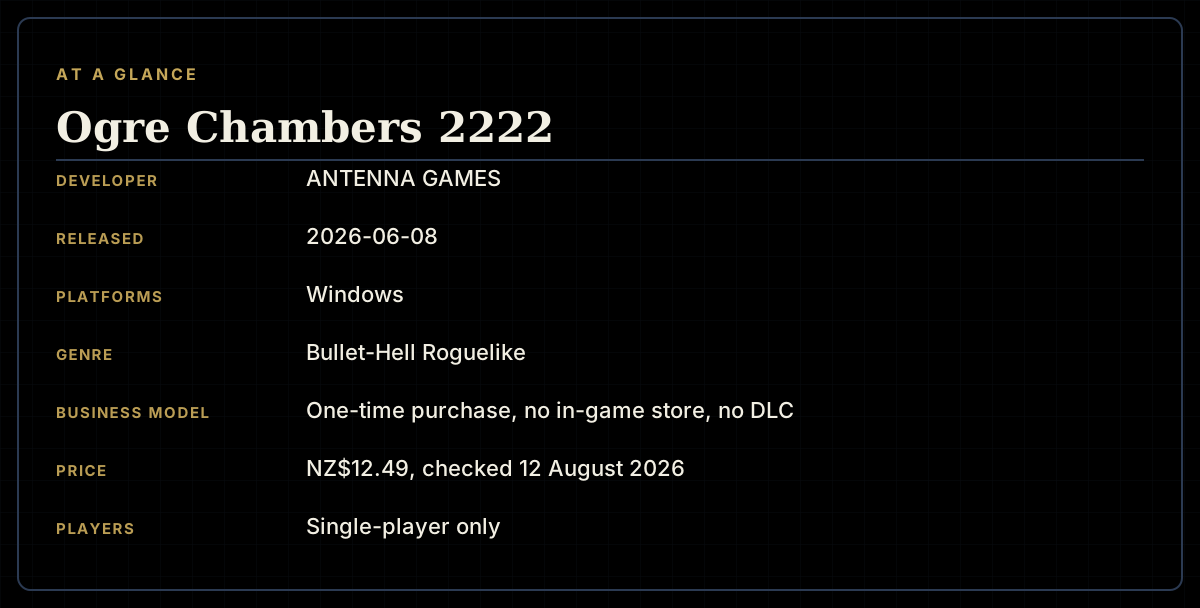
- Developer
- ANTENNA GAMES
- Publisher
- ANTENNA GAMES
- Released
- 8 June 2026
- Platforms
- Windows
- Genre
- Bullet-Hell Roguelike
- Monetisation
- One-time purchase, no in-game store, no DLC
- Players
- Single-player only
The short version
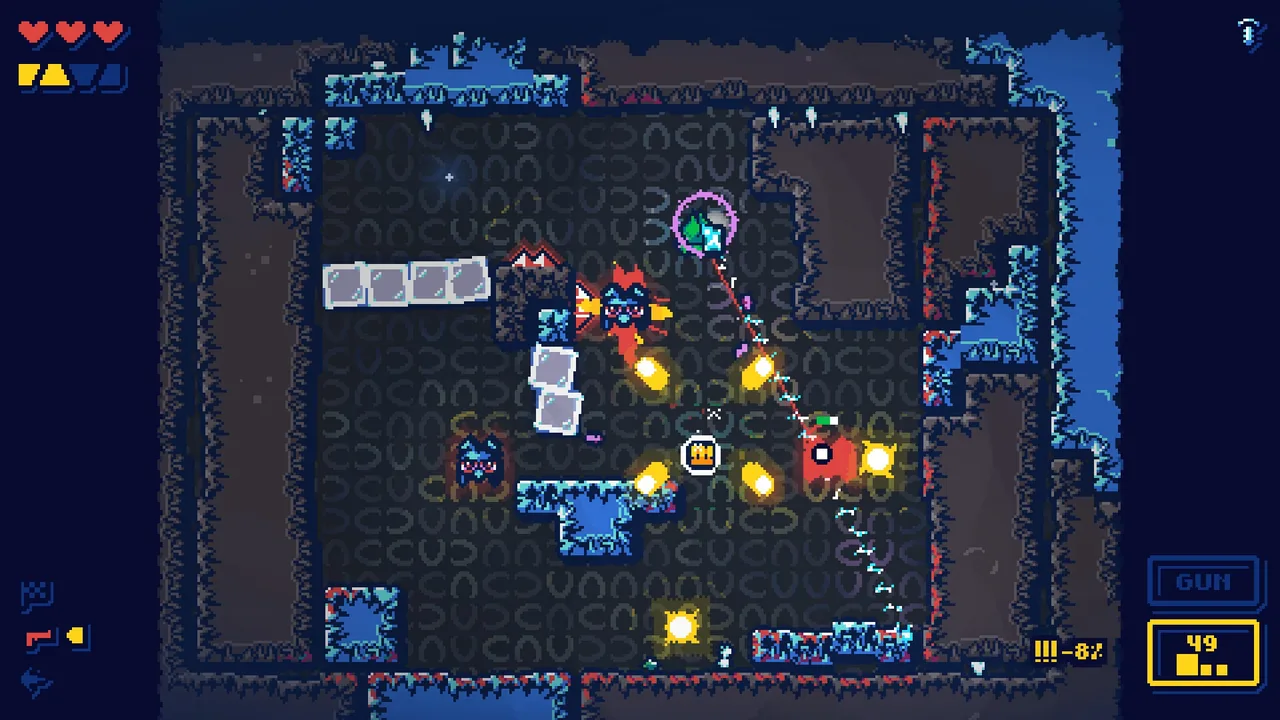
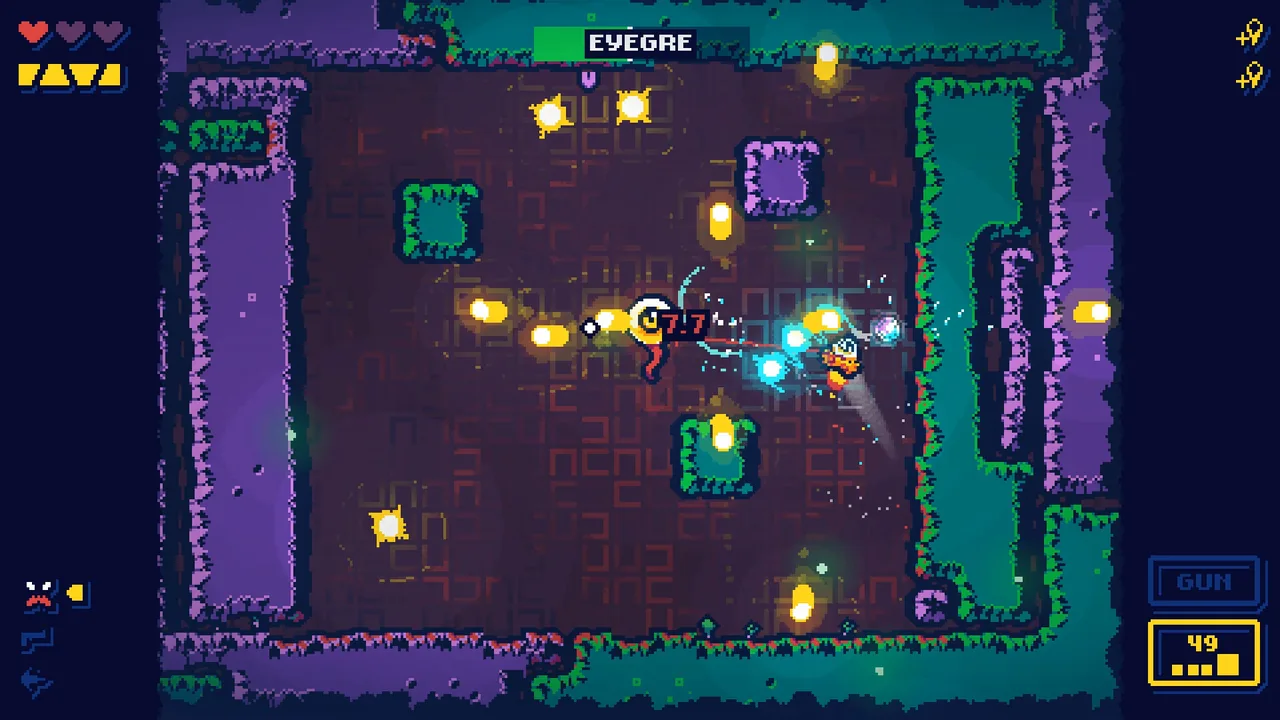
Ogre Chambers 2222 puts players in a spaceship fighting through a transforming, gravity-affected arena against alien ogres, modifying a single weapon and pushing through escalating waves with a roguelike upgrade structure underneath. It released 8 June 2026 to a startling 96.6% positive score among English reviews — startling not just for the number, but for what's actually driving a large share of it.
Reading the sample directly, the single most-upvoted review in the entire corpus, at nearly a thousand votes, isn't primarily about the game at all: "Saw the developer happily eating pizza while talking about the game. Bought it and played it. Great game." A wide swath of the most- visible positive reviews follow the same shape — purchases and reviews driven by a genuinely viral social-media moment around the solo developer rather than a considered assessment of the game itself. That's worth reporting plainly rather than pretending the score is purely a gameplay verdict. What balances it out: reviewers who logged real hours — several past 15, 20, even 35 — consistently confirm there's a genuinely fun, well-built roguelike underneath the goodwill, with specific, credible praise for its mechanics rather than just borrowed enthusiasm.
Biggest strengths
- The core gravity-and-thruster movement system, once learned, draws genuine praise from reviewers with substantial playtime as a distinctive skill ceiling most bullet-hells don't attempt
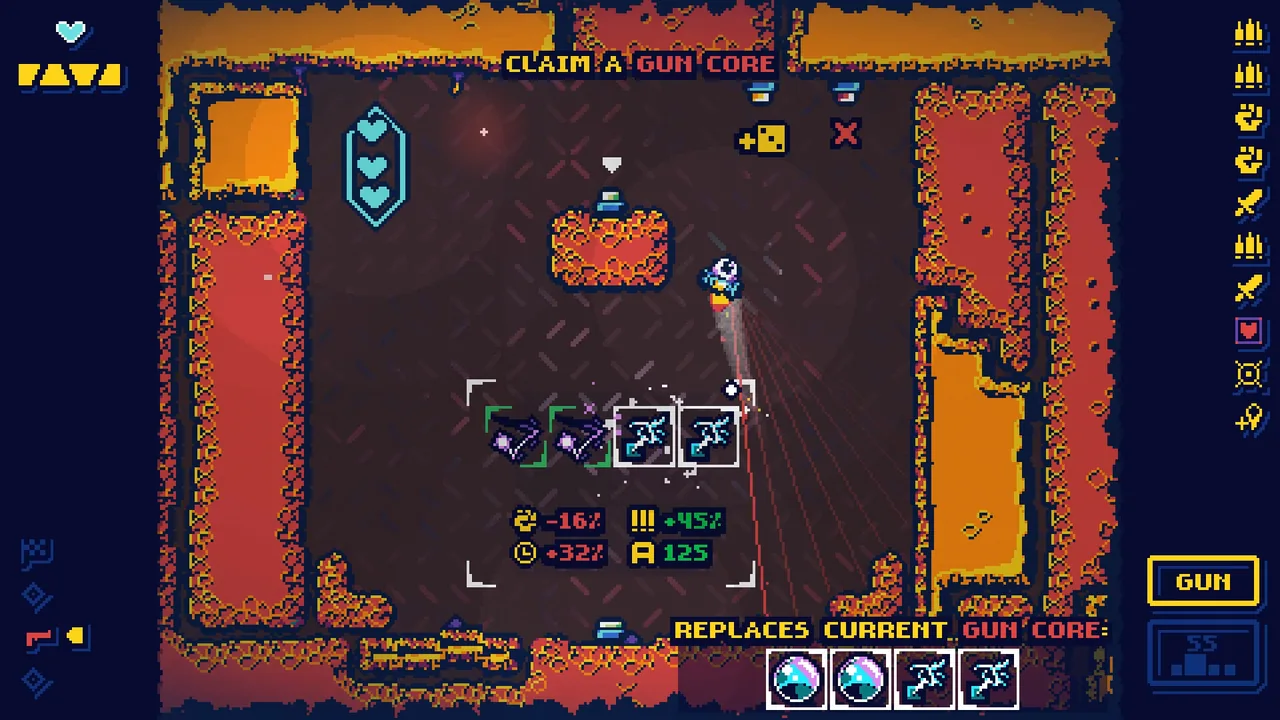
- A limited-ammo weapon-modification system forces real tactical decisions about when to spend rare mods, which one long-time player specifically credits as making boss encounters feel earned rather than simply survived
- A hardcore mode and daily endless runs give committed players real long-term goals beyond a single clear, and reviewers who found these describe them as genuinely challenging rather than padding
Biggest weaknesses
- A significant share of this game's review volume and score is driven by a viral social-media moment around the developer rather than considered assessment of the game — worth factoring in before treating the 97% figure as a pure gameplay signal
- At least one detailed reviewer flags a specific fairness issue: enemy projectiles can pass through walls that block the player's own shots, an asymmetry that reads as an oversight rather than intended design
- The upgrade pool is described by more than one reviewer as thin, with most options amounting to simple stat increases rather than build-altering choices, and only three biomes to explore
Who it's for: Bullet-hell and arena-roguelike fans who enjoy a genuine skill-based movement challenge, and anyone charmed by supporting an evidently well-liked solo developer. Less suited to players specifically expecting deep crafting-style customisation in the mould of Noita, which several reviewers say the marketing implies more than the game delivers.
Our recommendation: A confident recommendation on the strength of what long-playtime reviewers actually describe once the viral noise is set aside — just go in aware that a large share of its glowing reception reflects enthusiasm for the developer's online presence as much as the game itself, and judge your own purchase on the mechanics described below rather than the review count alone.
7.5 / 10
Introduction
Ogre Chambers 2222 is, on paper, a straightforward pitch: pilot a spaceship through a shifting, gravity-affected arena, modify a single weapon with situational upgrades, and survive waves of alien ogres in escalating roguelike runs. Released 8 June 2026 by solo developer ANTENNA GAMES, it sits at a genuinely eye-catching 96.6% positive among its English reviews. Understanding what that number actually represents, though, requires reading past the headline figure — because a very large share of this game's most-visible reviews aren't primarily reviewing the game.
A viral moment, reported plainly
The single most-upvoted review in this game's entire corpus — 965 votes, more than the combined total of every other review in this sample — reads in full: "Saw the developer happily eating pizza while talking about the game. Bought it and played it. Great game. After more playing, the game is still great." That's not an isolated case. Reviews citing "the reels," "his fyp," "social media presence" and simply "the pizza guy" recur constantly through the top of this sample, several with playtimes measured in single-digit minutes at the time of posting. This reads as a genuine viral moment — a solo developer's charming, humanising social media clip driving a wave of goodwill purchases and reviews, a phenomenon this library hasn't documented in quite this shape before. It's worth naming directly rather than letting a 97% score stand in for "97% of players carefully assessed this game and loved it," because that's not, on this evidence, entirely what happened.
What holds up once the noise is set aside
The more useful question for a prospective buyer is what the reviewers who actually put in hours say, and that picture is considerably more grounded — and still largely positive. "Really hooking game with good mechanics! I love your audio work bro," wrote a reviewer with over 36 hours logged, specifically praising the limited-ammo weapon modification system: "there's not unlimited ammo for mods. It forces you to save some ammo for bosses and harder levels." Another, with 35 hours and an honest framing of their own path in: "Came from the reels, stayed because its a really good game." A more structured review, written by a player with over 18 hours and clearly experienced with the genre, praised the "unique controls that provide a decent learning curve" and specifically called out the hardcore mode's "try to get hit as little as possible" challenge as genuine end-game content, while flagging the gun-module system's "lacking agency in decisions" as the one real design complaint. That's the shape of a review this library trusts — specific praise and specific criticism from someone who actually spent meaningful time with the systems — and it corroborates, rather than contradicts, the viral wave's underlying enthusiasm.
The real complaints worth knowing
Set against that, the small negative sample raises complaints specific enough to take seriously. One detailed reviewer flags an asymmetry that reads like an oversight rather than a design choice: "Enemy bullets can penetrate walls, but mine are blocked by them; that's not fair." A separate review describes the upgrade pool as thin: "Most upgrades in run are boring stat upgrades and only some of them matter... only 3 biomes and the enemies do not become harder, just more unpredictable." And the most detailed critical review in this sample raises an expectation problem worth flagging for any reader specifically drawn in by Steam's own recommendation algorithm: "If you're looking for a game with crafting style customization like Noita — this might not be it." That reviewer is explicit that the game itself isn't bad, just different from what its storefront placement alongside Noita, Hades and Binding of Isaac implies. Anyone buying on that specific comparison should watch gameplay footage first rather than relying on the algorithmic recommendation alone.
Final Verdict
Ogre Chambers 2222 is a genuinely solid bullet-hell roguelike wrapped inside a review record shaped significantly by a viral moment around its developer — and this review's job is to separate those two things clearly rather than let one borrow credibility from the other. Reviewers who actually logged real hours describe a distinctive gravity-and-thruster movement system, a weapon-modification loop with real tactical weight, and genuine long-term challenge in its hardcore and daily modes, alongside fair, specific complaints about upgrade variety and one clear fairness bug around wall penetration. At NZ$12.49, that's a good, honestly-earned recommendation on its own mechanical merits — the pizza is a nice story, but it isn't why this review is scoring the game as well as it is.
Pros and cons
Pros
- The core gravity-and-thruster movement system, once learned, draws genuine praise from reviewers with substantial playtime as a distinctive skill ceiling most bullet-hells don't attempt
- A limited-ammo weapon-modification system forces real tactical decisions about when to spend rare mods, which one long-time player specifically credits as making boss encounters feel earned rather than simply survived
- A hardcore mode and daily endless runs give committed players real long-term goals beyond a single clear, and reviewers who found these describe them as genuinely challenging rather than padding
- Extremely active post-launch patching in the weeks immediately following release, addressing reported issues quickly
- At NZ$12.49, reviewers past the viral-purchase wave consistently describe the price as fair for the amount of genuine replay value on offer
Cons
- A significant share of this game's review volume and score is driven by a viral social-media moment around the developer rather than considered assessment of the game — worth factoring in before treating the 97% figure as a pure gameplay signal
- At least one detailed reviewer flags a specific fairness issue: enemy projectiles can pass through walls that block the player's own shots, an asymmetry that reads as an oversight rather than intended design
- The upgrade pool is described by more than one reviewer as thin, with most options amounting to simple stat increases rather than build-altering choices, and only three biomes to explore
- Marketing and storefront recommendation algorithms position the game alongside Noita and Binding of Isaac-style deep crafting systems; several reviewers say the actual customisation depth doesn't match that comparison and recommend checking gameplay footage before buying on that expectation
- The gravity-based movement that gives the game its identity is, for some reviewers, more frustrating than skillful — described as clunky enough to cause unfair deaths near enemy spawn points
Screenshots
-
Ogre Chambers 2222Image: ANTENNA GAMES via Steam -
Ogre Chambers 2222Image: ANTENNA GAMES via Steam -
Ogre Chambers 2222Image: ANTENNA GAMES via Steam -
How the review scores each part of the gameWanderer Editorial -
The essentials at a glanceWanderer Editorial -
The short versionWanderer Editorial