Game review
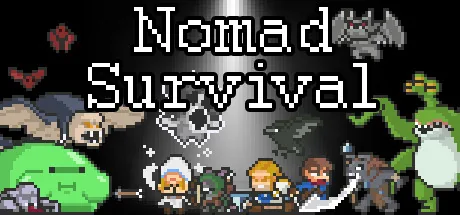
Nomad Survival
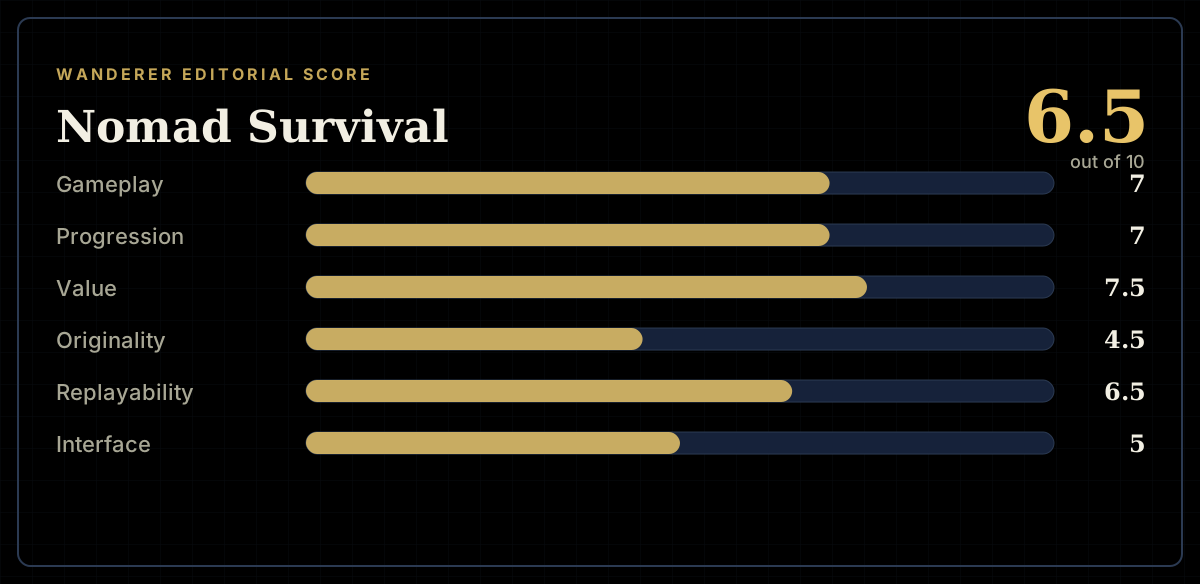
6.5 / 10
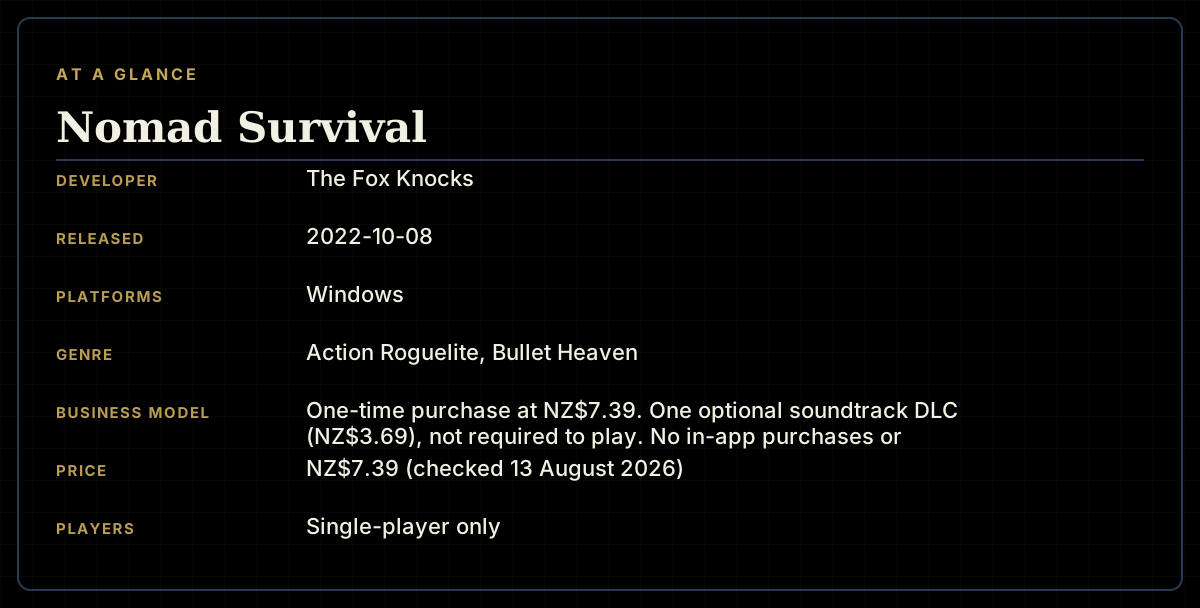
- Developer
- The Fox Knocks
- Publisher
- The Fox Knocks
- Released
- 8 October 2022
- Platforms
- Windows
- Genre
- Action Roguelite, Bullet Heaven
- Monetisation
- One-time purchase at NZ$7.39. One optional soundtrack DLC (NZ$3.69), not required to play. No in-app purchases or ads within the game itself, though the settings menu has been reported to open a Steam store page for the developer's other game.
- Players
- Single-player only
The short version
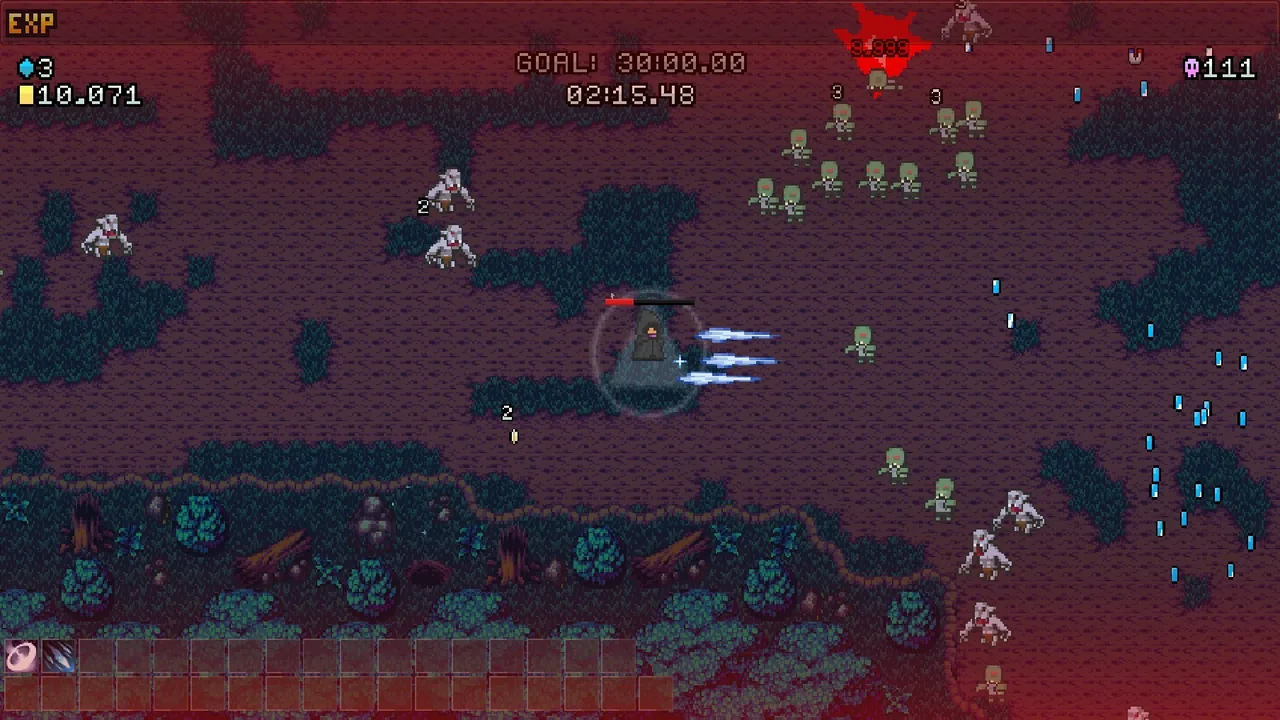
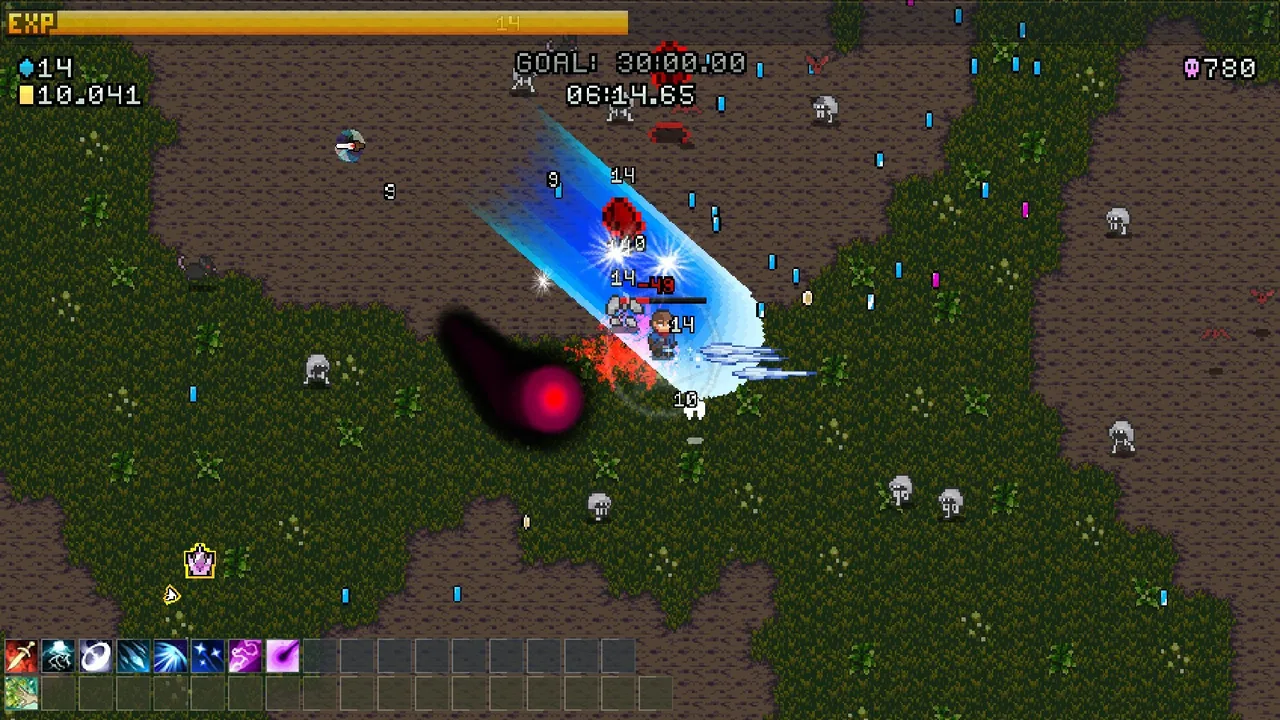
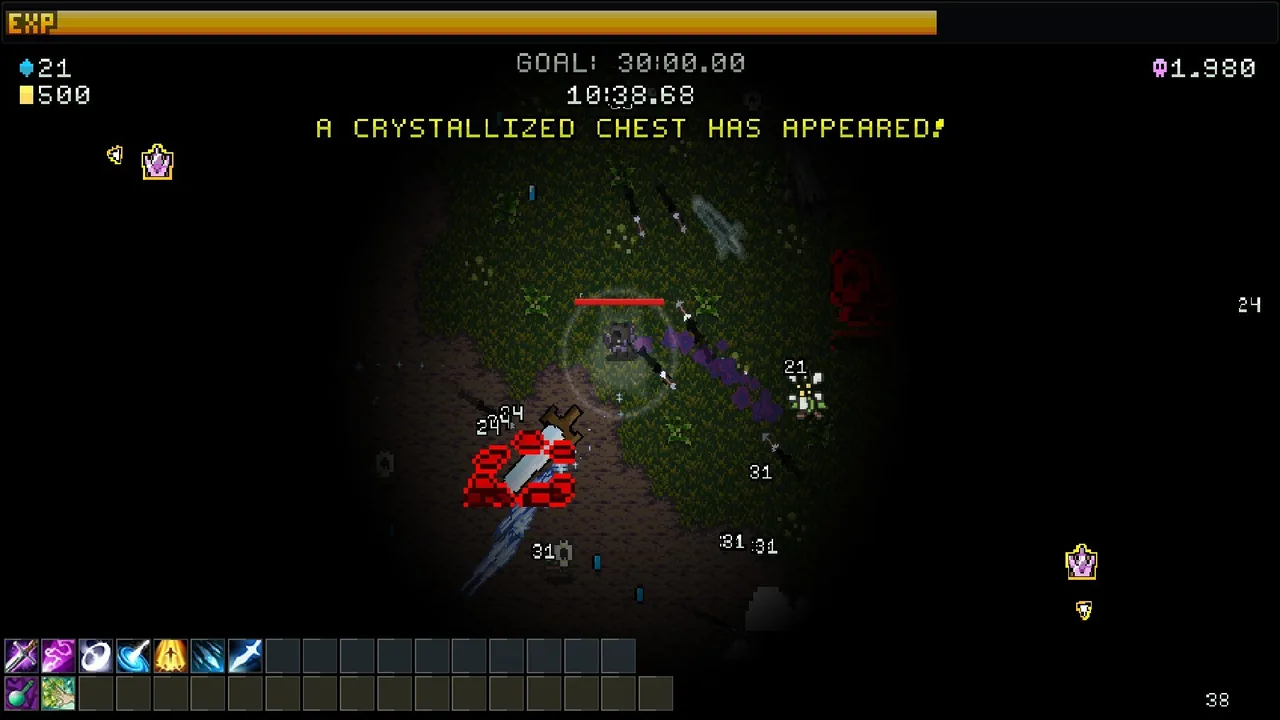
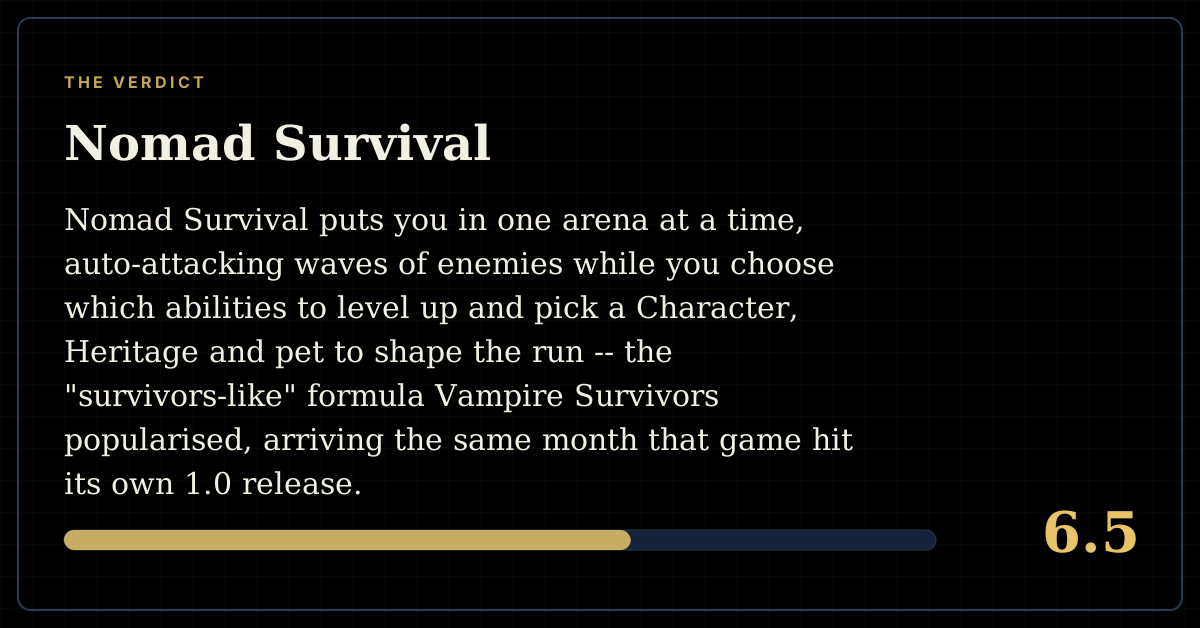
Nomad Survival puts you in one arena at a time, auto-attacking waves of enemies while you choose which abilities to level up and pick a Character, Heritage and pet to shape the run -- the "survivors-like" formula Vampire Survivors popularised, arriving the same month that game hit its own 1.0 release. It's a well-constructed entry in the genre, with real meta-progression depth across classes and subclasses, and it sits at Very Positive, 87.7% of 1,512 reviews.
The complaint that dominates the negative sample isn't really about anything Nomad Survival does badly on its own terms -- it's comparative. Reviewers, especially more recent ones, keep measuring it against a genre that's grown enormously more competitive since October 2022, and a meaningful share conclude it hasn't kept pace. Specific, repeated technical complaints -- a broken difficulty-modifier slider, unkillable enemies in certain late maps, and inconsistent Steam Deck controller support despite a Verified badge -- back up the sense of a game whose moment has partly passed it by.
Biggest strengths
- Real build depth through Character-specific Weapon Skills, branching Weapon Skill Evolutions and Heritage subclasses that give runs more shape than many genre entries
- Deep, if steep, meta-progression -- 116 Steam achievements and difficulty modifiers that reward long-term investment for players who want it
- Cheap at NZ$7.39 with no in-app purchases and only an optional soundtrack as paid extra
Biggest weaknesses
- The dominant recent complaint is comparative rather than specific -- reviewers increasingly measure it against newer, sharper genre entries and find it merely competent rather than standout
- A broken difficulty-modifier slider is a specifically reported bug: clicking to select a value doesn't always register correctly
- Some late-game maps reportedly spawn effectively unkillable enemies that force kiting rather than meaningful combat decisions
Who it's for: Bullet-heaven fans who haven't already burned out on the genre, and anyone who wants a solid, budget-priced entry with genuine class and subclass variety. Less essential for players who've already put serious hours into Vampire Survivors, Halls of Torment or Death Must Die and are looking for the genre's cutting edge rather than a competent contemporary of the original.
Our recommendation: A fair, cheap pickup on its own merits, particularly for the archetype and Heritage system that gives builds more shape than a lot of the genre's flood of imitators. Just go in aware that reviewers increasingly frame it as "fine, but there are better options now" -- a fair read for a genre that has moved fast since this game's release.
6.5 / 10
Nomad Survival has an unusual piece of timing working both for and against it: it launched on 8 October 2022, the same month Vampire Survivors -- the game that named and defined the entire "bullet heaven" genre -- left Early Access and became a phenomenon. One long-playtime reviewer puts the historical context plainly: "This was one of the earlier games to be released to ride the wave... it was the standard of the time a few years ago." That's a fair, honest way to read this game's current reputation. It isn't a bad survivors-like. It's a genuinely solid one that happened to arrive at the exact moment its genre was about to become one of the most crowded on Steam, and four years of reviews show the gap between "solid entry" and "genre standard" widening rather than closing.
What the formula actually offers here
Strip away the comparisons and Nomad Survival's own systems hold up well. You pick a Character with a unique Weapon Skill, branch it through Weapon Skill Evolutions, and layer on a Heritage -- a kind of sub-class that reshapes how the run plays overall. One reviewer specifically calls out enjoying "how each class has separate little offshoots," using the Crusader-into-Berserker path as an example of build variety that goes deeper than simply picking bigger numbers. Positive reviews consistently describe "endlessly replayable" meta-progression, "solid" class distinction, and enough difficulty modifiers to meaningfully reshape a run once you've unlocked them. It's a game built with real care about its own systems, not a rushed clone riding a trend -- and that shows in how many reviewers, even critical ones, describe genuine fun in their first several hours.
Where "fine" stops being enough
The negative sample's dominant note, though, is comparative fatigue rather than a specific complaint about broken systems. "It's ok but it's just another Vampire Survivors wanna-be with a fraction of the content," reads a representative 2026 review. Another, more pointed: "Maybe in 2022 it was more on par but Vampire Survivors has evolved so much since then... this does not add much to the formula." Several reviewers explicitly recommend genre alternatives instead -- Halls of Torment and Death Must Die come up repeatedly -- which is a telling pattern in itself: when a game's own reviewers keep pointing newcomers elsewhere, it's a reasonable signal that the genre has simply moved past what this particular entry offers, even without any single flaw being to blame.
That said, real, specific bugs do back up some of the frustration rather than leaving it purely comparative. A difficulty-modifier slider is reported as broken -- "selecting difficulty modifiers like enemy HP simply does not work properly," reads one detailed complaint, describing having to click and re-click before a value registers. Multiple reviewers separately describe certain late-game maps spawning enemies that are effectively unkillable, forcing kiting rather than meaningful engagement, with one calling it the thing that "ruins the game" in an otherwise positive review. And despite carrying a Steam Deck Verified badge, several reviewers report a controller experience that doesn't match the badge's promise -- "Steamdeck Verified my ass. So cumbersome," reads one blunt review, echoing a UI-on-controller complaint that's shown up across several other 2022-era Steam titles reviewed this year.
The settings-menu complaint worth knowing about
One more specific, if less common, complaint is worth flagging on its own: at least one reviewer reports that changing certain in-game settings opens a Steam store page for a different game from the same developer in their browser. "Don't really care how good the game could be if you're forcing ads for your other game into the settings menu," reads that review. It's a single, specific report rather than a pattern across the full sample, but it's a concrete, checkable claim rather than a vague grievance, and worth knowing before diving into the options menu.
What the numbers say about long-term appeal
Steam's own achievement data tells a more encouraging story than the comparative complaints alone suggest. Of the 116 achievements Nomad Survival ships with, the early ones sit above 80% completion -- unremarkable for any game -- but a real, if small, slice of the audience pushes all the way to the deepest unlocks, several of which sit below 3%. That's a steep curve, but it's the right kind of steep: it shows a genuine long tail of committed players still chasing full completion years after launch, not a game that simply loses its whole audience after the opening hours. One reviewer with nearly 4,500 hours logged calls it "endlessly replayable with solid meta progression," and playtimes in the thousands of minutes aren't rare across the positive sample either. Set against its NZ$7.39 asking price, that's a genuinely strong hours-to-dollar ratio even before factoring in how the genre's other budget entries compare.
Final verdict
Nomad Survival is a competent, thoughtfully built bullet-heaven roguelite that had the misfortune of launching right as its own genre exploded into one of Steam's most saturated categories. Judged on its own systems -- build variety, meta-progression depth, a fair price -- it holds up well years later. Judged against what the genre has become since, a fair number of its own players now recommend something else instead, and the specific bugs around difficulty sliders, certain late maps and Steam Deck controls give that comparative fatigue some real technical backing.
6.5 out of 10. Worth it at its low price if you haven't already exhausted the genre elsewhere, especially for the Heritage and Weapon Skill Evolution systems that add real shape to builds. If you've already put serious hours into the genre's newer standard-bearers, this is a solid but not essential addition to the pile.
Pros and cons
Pros
- Real build depth through Character-specific Weapon Skills, branching Weapon Skill Evolutions and Heritage subclasses that give runs more shape than many genre entries
- Deep, if steep, meta-progression -- 116 Steam achievements and difficulty modifiers that reward long-term investment for players who want it
- Cheap at NZ$7.39 with no in-app purchases and only an optional soundtrack as paid extra
- Launched into the bullet-heaven genre early, right as Vampire Survivors was hitting its own 1.0 release, and holds up as a solid contemporary rather than a cheap cash-in
Cons
- The dominant recent complaint is comparative rather than specific -- reviewers increasingly measure it against newer, sharper genre entries and find it merely competent rather than standout
- A broken difficulty-modifier slider is a specifically reported bug: clicking to select a value doesn't always register correctly
- Some late-game maps reportedly spawn effectively unkillable enemies that force kiting rather than meaningful combat decisions
- Steam Deck support carries a Verified badge that several reviewers say doesn't match their experience, citing poor controller-driven UI navigation
Screenshots
-
Nomad SurvivalImage: The Fox Knocks via Steam -
Nomad SurvivalImage: The Fox Knocks via Steam -
Nomad SurvivalImage: The Fox Knocks via Steam -
How the review scores each part of the gameWanderer Editorial -
The essentialsWanderer Editorial -
The final verdictWanderer Editorial