
Game review
Next Reign: Kingdom
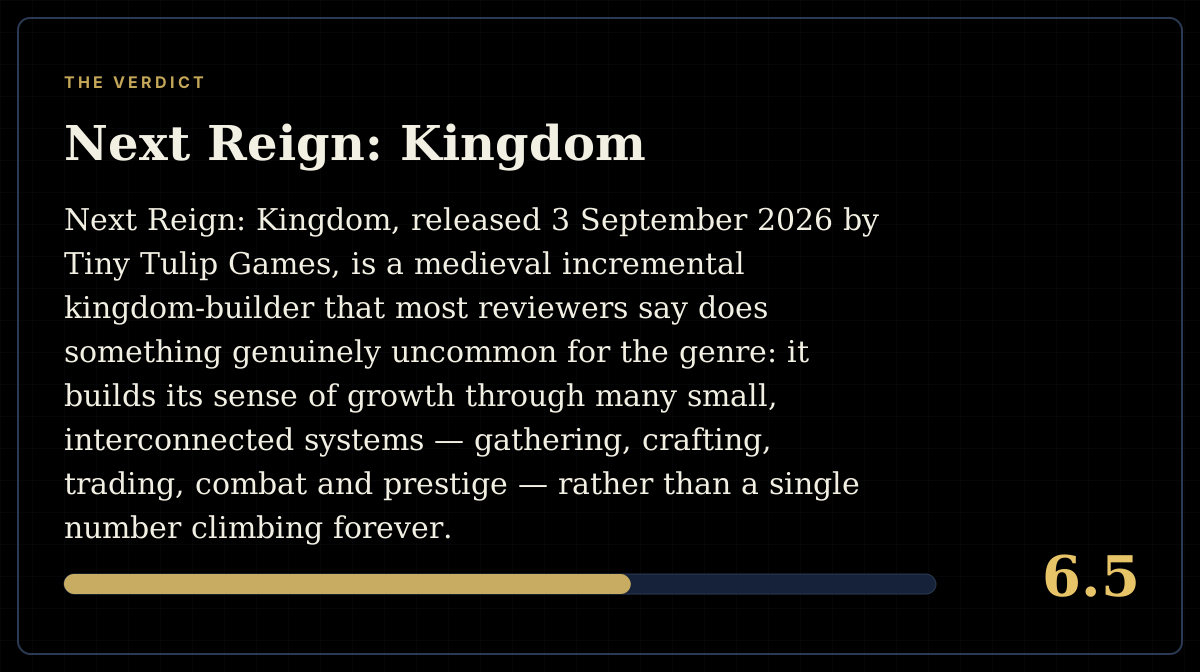
6.5 / 10
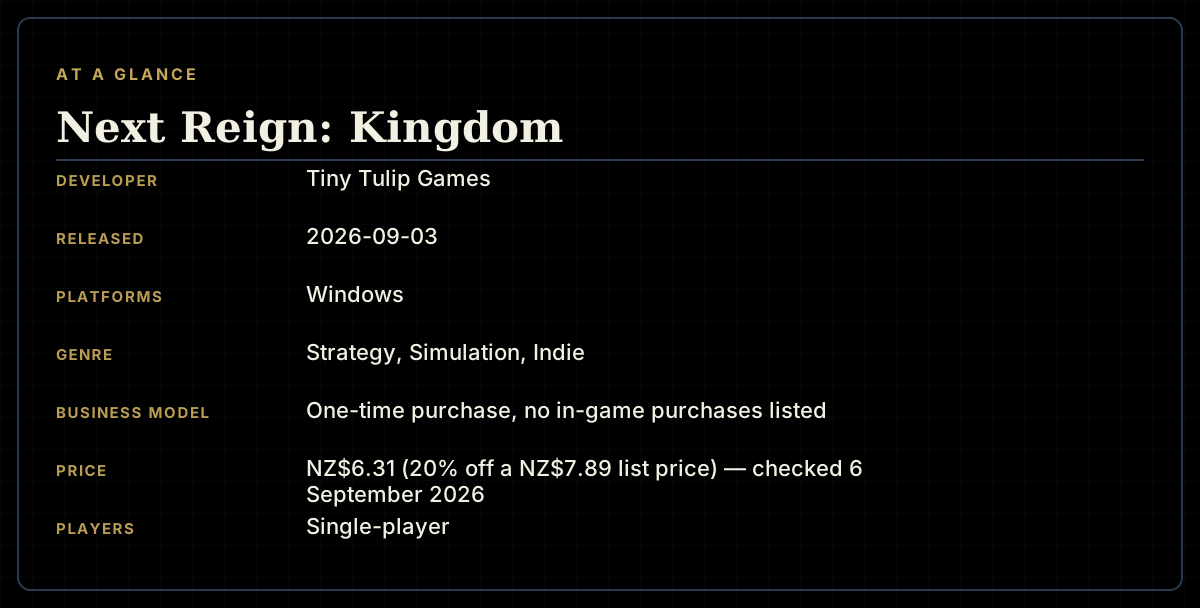
- Developer
- Tiny Tulip Games
- Publisher
- Tiny Tulip Games
- Released
- 3 September 2026
- Platforms
- Windows
- Genre
- Strategy, Simulation, Indie
- Monetisation
- One-time purchase, no in-game purchases listed
- Players
- Single-player
The short version
Next Reign: Kingdom, released 3 September 2026 by Tiny Tulip Games, is a medieval incremental kingdom-builder that most reviewers say does something genuinely uncommon for the genre: it builds its sense of growth through many small, interconnected systems — gathering, crafting, trading, combat and prestige — rather than a single number climbing forever. It sits Positive with English-speaking players, 90.3% across 31 reviews as of this check, and most of that sample is genuine, specific enthusiasm for the pixel art, the pacing, and how cleanly its systems build on one another. Set against that is a serious, detailed complaint from a 26-hour player: resource storage caps stay so low, even at full late-game upgrade completion, that several available purchases become mathematically impossible to afford, and a specific bug involving the final boss fight is reported to permanently break combat and block completion entirely. A separate positive review independently reports a smaller-scale version of the same storage-cap problem earlier in the game, and at least one reviewer notes the developer has already responded to complaints about the resource limits.
Biggest strengths
- Most reviewers specifically praise the game for building its sense of progress through many genuinely interconnected systems — gathering, crafting, trading and combat feeding into each other — rather than a single ever-climbing number, several calling this a meaningfully different and more thoughtful approach than typical incrementals
- The old-school pixel art and medieval kingdom-building theme draw consistent, specific praise, and the price is repeatedly cited as very low even relative to other cheap indie incrementals
- The prestige system is described by multiple reviewers as motivating rather than tediously grindy, since new systems and mechanics keep unlocking alongside each reset
Biggest weaknesses
- One detailed, 26-hour review reports that resource storage caps remain so low even after buying and upgrading everything currently available that some listed upgrades and buildings, priced above the maximum possible storage limit, become permanently unaffordable — a mathematically impossible progression wall rather than an intentional late-game challenge
- The same detailed review reports a specific, severe bug: losing to the final boss while "autofight" is enabled throws the player immediately back into the same fight, and exiting and restarting the game leaves combat non-functional afterward, blocking the reviewer from finishing the game at all
- A separate, otherwise positive reviewer independently reports hitting a smaller-scale version of the same storage-cap problem much earlier in the game, needing more of a resource to upgrade their storage than the storage itself could ever hold — suggesting this is a recurring mechanical issue rather than one player's isolated experience
Who it's for: Incremental-game fans who want genuine systems depth and a distinctive medieval kingdom-building theme rather than pure number-scaling, and who can tolerate real risk of hitting a progress-blocking bug before the developer patches it.
Our recommendation: Worth its very low price for the systems design and pacing most reviewers genuinely enjoy; keep an eye on patch notes regarding resource caps and the final boss fight before investing very long, uninterrupted sessions.
6.5 / 10
Introduction
Next Reign: Kingdom, released 3 September 2026 by Tiny Tulip Games, sets out to do something a little different within a crowded genre: rather than building its sense of progress purely around a single number climbing forever, it layers gathering, crafting, trading and combat systems on top of each other inside a growing medieval kingdom. Reviewers respond to that ambition specifically — it sits Positive with English-speaking players, 90.3% across 31 reviews — and reading through that small but detailed sample turns up genuine, specific enthusiasm for the design, sitting directly alongside one serious, credible, and independently corroborated technical problem.
Genuine systems depth, and reviewers who notice it
The praise here isn't generic. Multiple reviewers specifically credit the game with achieving growth through interconnection rather than raw scale — one describes it as an incremental that doesn't rely on "beeg number getting more beeg" alone, crediting the way new systems merge seamlessly into existing ones across roughly ninety hours of their own playtesting. Others specifically call out the old-school pixel art, a slow-building opening that ramps up sharply after the first prestige, and a reset system that feels motivating rather than repetitive because it keeps introducing new mechanics alongside the reward. For its price — repeatedly described as less than the cost of a coffee — reviewers consistently say it delivers more thoughtful design than the category typically offers.
A resource cap that one detailed review says breaks the game
Set against that enthusiasm is a serious, specific complaint from a reviewer with 26 hours logged who reports reaching full completion of every available upgrade and building. At that point, they report, the storage cap for resources remains fixed at a level below the listed cost of some remaining upgrades and buildings — meaning those purchases are not merely difficult to reach, but mathematically impossible to ever afford under the current numbers. The same review reports a separate, more severe bug: losing to the game's final boss while auto-battle is active throws the player immediately back into the same encounter, and exiting the game to escape that loop leaves combat broken entirely on return, preventing that reviewer from finishing the game.
This isn't an isolated complaint. A separate, clearly positive reviewer — who otherwise recommends the game — independently reports a smaller-scale version of the same underlying problem much earlier in a playthrough: their storage cap sat at 1,200 while the next storage upgrade required 1,224 logs, an amount their storage could never physically hold. Two reviewers hitting variations of the same specific numerical mismatch, at different points in progression, is a meaningfully stronger signal than either report would be alone.
Real endgame rough edges, and a developer who appears to be listening
A further reviewer, also broadly positive, separately describes the endgame as unbalanced and the late-game combat difficulty specifically as a "joke" they needed to bypass with cheats, calling the overall experience toward the end "stale" and "a bit unfinished." Taken together with the resource- cap reports above, this paints a consistent picture of a game whose early-to-mid systems genuinely work as intended, but whose late-game numbers and content haven't yet caught up to the rest of the design. On a more encouraging note, at least one reviewer specifically mentions a developer response addressing complaints about the resource limits, which — for a game only days old at the time of this review — is a reasonable basis for optimism that these specific issues get resolved rather than left standing.
An interface that splits opinion depending on how far you've gone
The interface itself draws genuinely mixed reactions that seem to track with how much of the game a given reviewer has seen. Reviewers describing their first hour or two consistently call the UI clean, easy to navigate, and light on hardware demands — reasonable praise for a game meant to sit comfortably on a second monitor. The detailed 26-hour critical review paints a different picture: by that point, it describes roughly twenty separate tabs, no way to hide items or upgrades a player has already finished with, and text small enough to require genuine effort to read. Both descriptions can be true at once — a clean early UI that hasn't been given the sorting and filtering tools it needs to stay legible once a player has actually unlocked everything the game currently offers, which is consistent with the broader pattern of early-game polish outpacing late-game readiness found elsewhere in this review.
A demo that earned real goodwill before release
Several reviewers explicitly mention having played a free demo before the full release, and their comments suggest that goodwill carried over directly into the launch reception — one reviewer states they're simply repeating praise from their earlier demo review, having now logged ninety hours in the full game. That pre-release track record likely explains some of the specificity and confidence in this sample's positive reviews compared to a typical week-one release: several reviewers already knew what they were buying and had time to form a considered opinion before money changed hands, which is worth factoring in when weighing how representative a 31-review sample is this early in a game's life.
Final Verdict
Next Reign: Kingdom earns its strongly positive reception honestly: reviewers who write in detail about it consistently point to real, specific systems design rather than vague charm, at a price that makes it an easy recommendation on that basis alone. What holds this score back is that its most detailed critical review documents a genuinely severe problem — a resource cap that appears to make some endgame purchases permanently unaffordable, and a specific bug capable of blocking completion outright — independently corroborated in smaller form by a reviewer who otherwise likes the game. Worth its very low price for the systems and pacing most reviewers praise; players planning a long session should watch for patch notes on the resource caps and final boss fight first.
Pros and cons
Pros
- Most reviewers specifically praise the game for building its sense of progress through many genuinely interconnected systems — gathering, crafting, trading and combat feeding into each other — rather than a single ever-climbing number, several calling this a meaningfully different and more thoughtful approach than typical incrementals
- The old-school pixel art and medieval kingdom-building theme draw consistent, specific praise, and the price is repeatedly cited as very low even relative to other cheap indie incrementals
- The prestige system is described by multiple reviewers as motivating rather than tediously grindy, since new systems and mechanics keep unlocking alongside each reset
- At least one reviewer reports the developer directly responding to a complaint about the resource-cap issues discussed below, a positive early signal for continued support
Cons
- One detailed, 26-hour review reports that resource storage caps remain so low even after buying and upgrading everything currently available that some listed upgrades and buildings, priced above the maximum possible storage limit, become permanently unaffordable — a mathematically impossible progression wall rather than an intentional late-game challenge
- The same detailed review reports a specific, severe bug: losing to the final boss while "autofight" is enabled throws the player immediately back into the same fight, and exiting and restarting the game leaves combat non-functional afterward, blocking the reviewer from finishing the game at all
- A separate, otherwise positive reviewer independently reports hitting a smaller-scale version of the same storage-cap problem much earlier in the game, needing more of a resource to upgrade their storage than the storage itself could ever hold — suggesting this is a recurring mechanical issue rather than one player's isolated experience
- The interface is described by the same detailed critical review as cluttered and difficult to read, with roughly twenty tabs and no way to hide completed or no-longer-relevant items, though several other reviewers describe the UI as clean and easy to navigate, suggesting the experience varies notably by how far a player has progressed
- At least one reviewer describes the endgame combat difficulty as unbalanced and reports needing to use cheats to get past a specific boss encounter, separately calling late-game progression stale and the game "a bit unfinished"
Screenshots
-
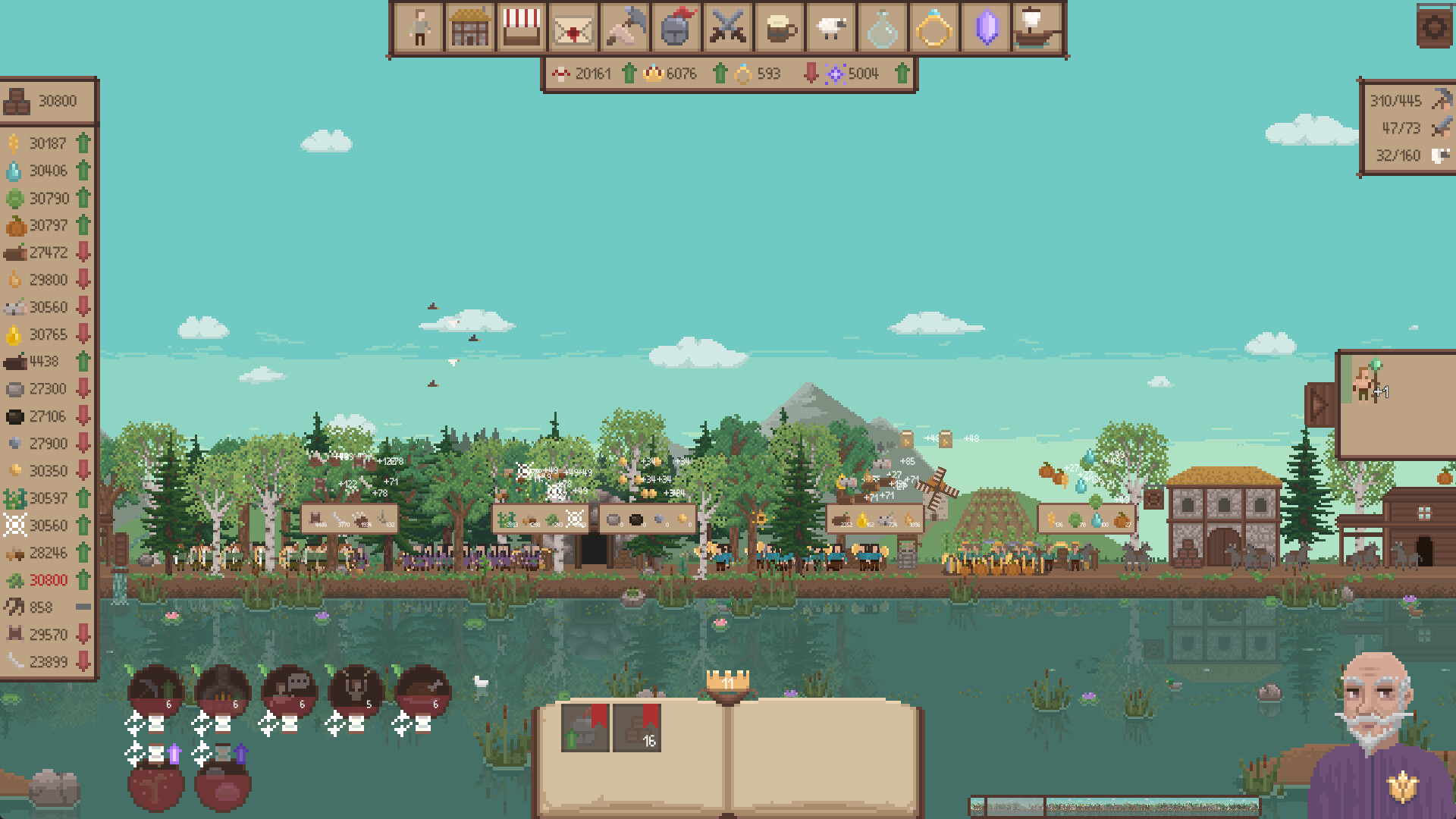
Next Reign: KingdomImage: Tiny Tulip Games via Steam -
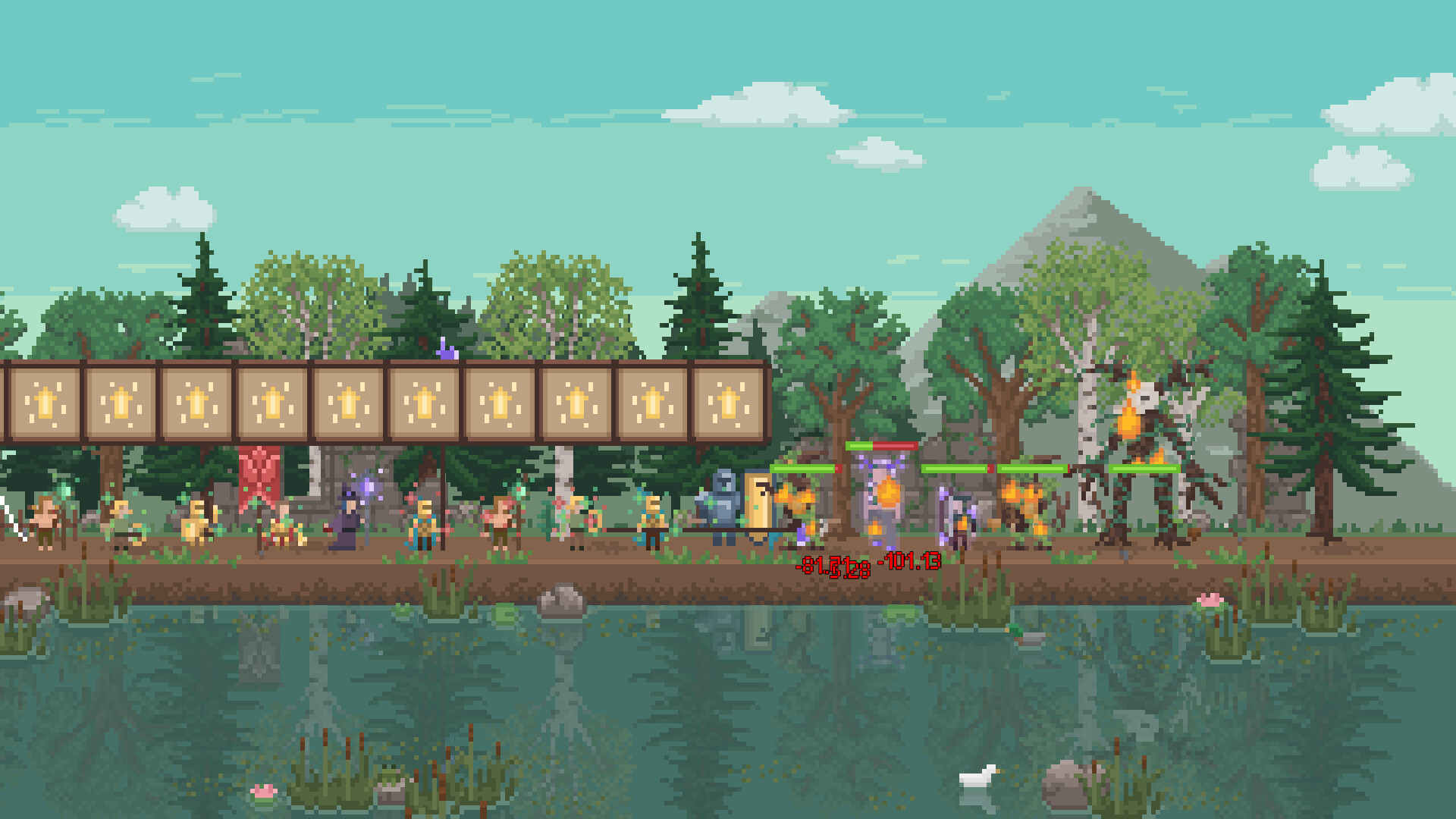
Next Reign: KingdomImage: Tiny Tulip Games via Steam -
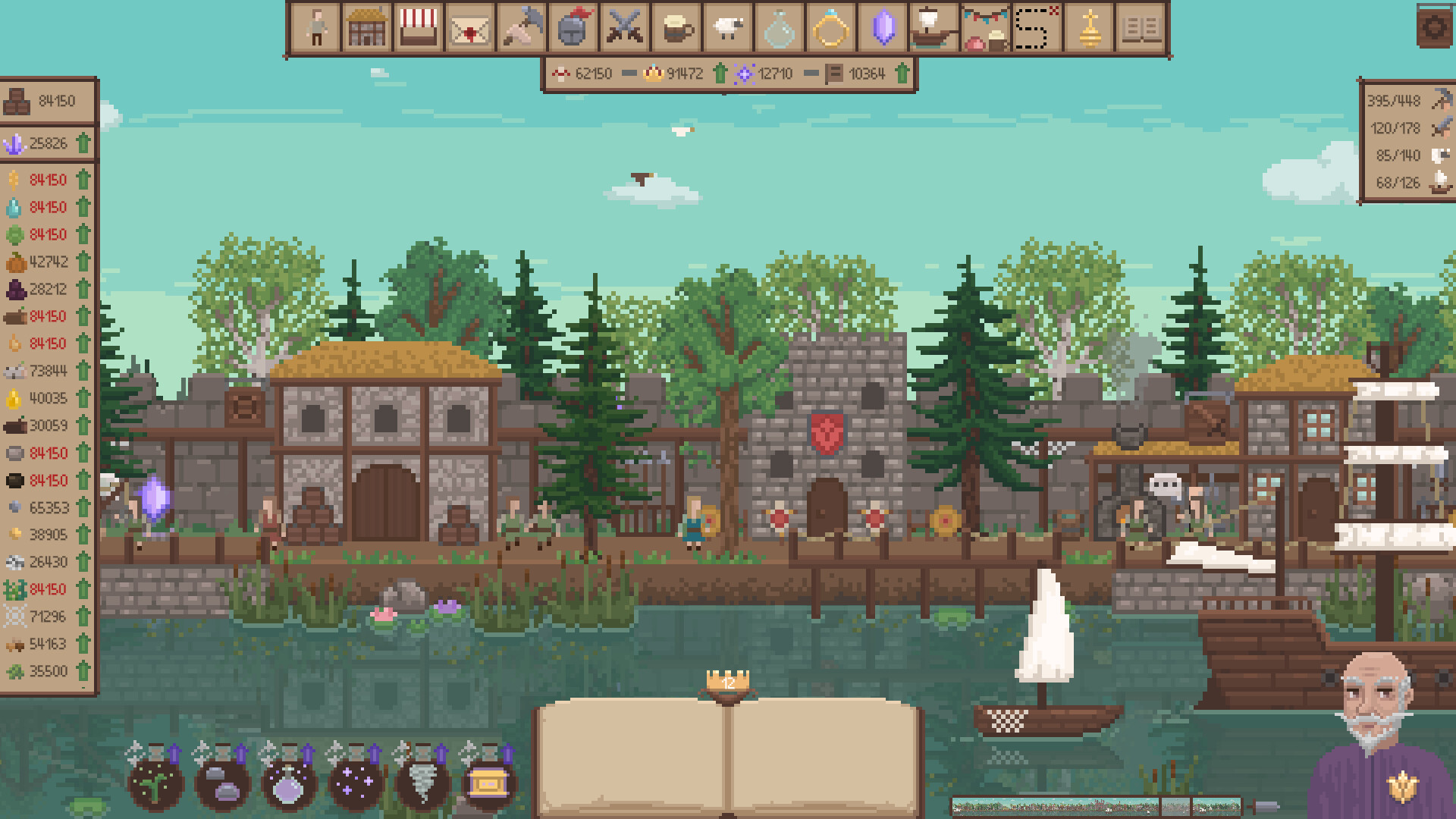
Next Reign: KingdomImage: Tiny Tulip Games via Steam -
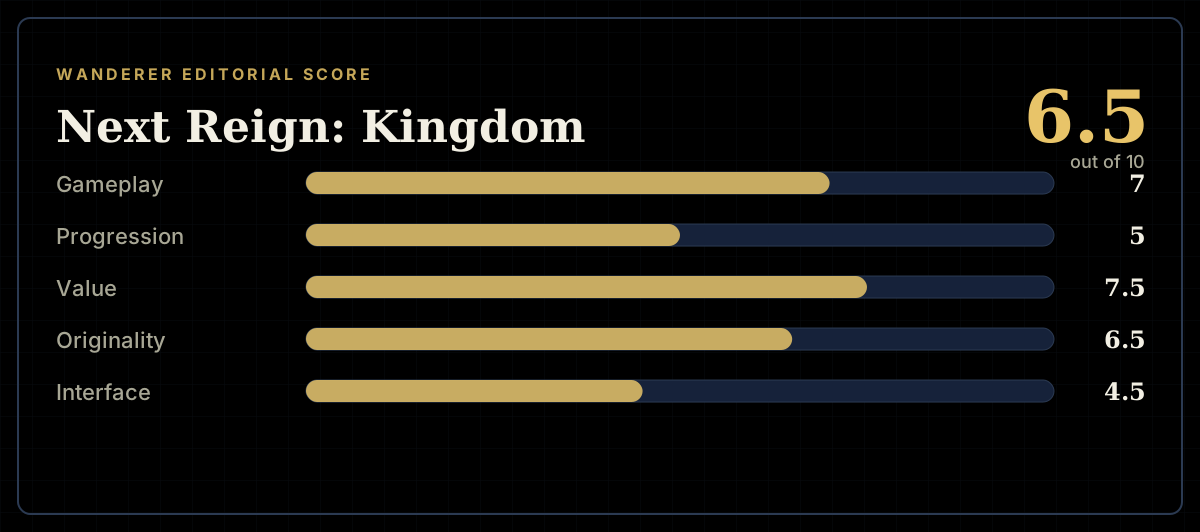
How the review scores each part of the gameWanderer Editorial -
The essentials at a glanceWanderer Editorial -
The short versionWanderer Editorial