Game review
Minimal Dungeon RPG
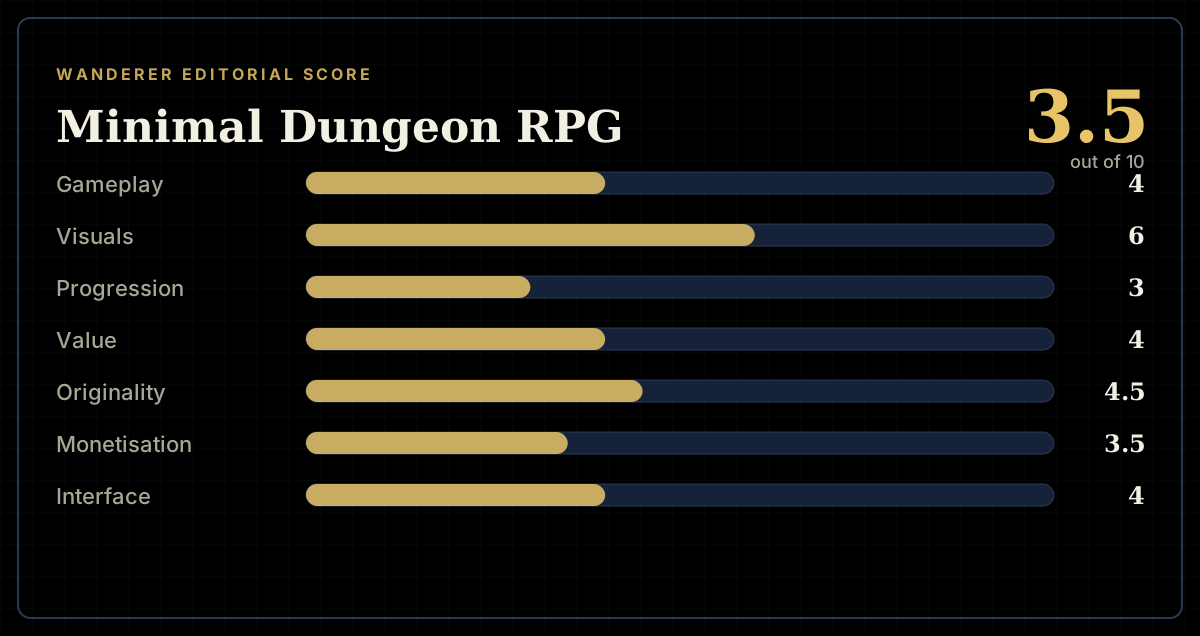
3.5 / 10
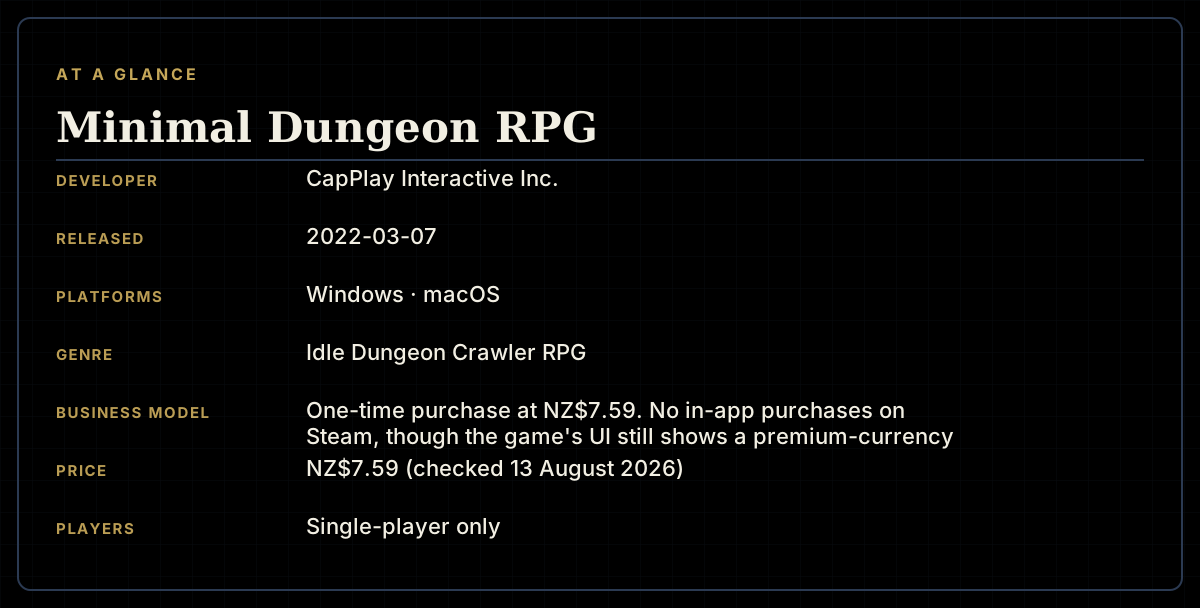
- Developer
- CapPlay Interactive Inc.
- Publisher
- CapPlay Interactive Inc.
- Released
- 7 March 2022
- Platforms
- Windows, macOS
- Genre
- Idle Dungeon Crawler RPG
- Monetisation
- One-time purchase at NZ$7.59. No in-app purchases on Steam, though the game's UI still shows a premium-currency (gem) counter left over from its mobile version.
- Players
- Single-player only
The short version
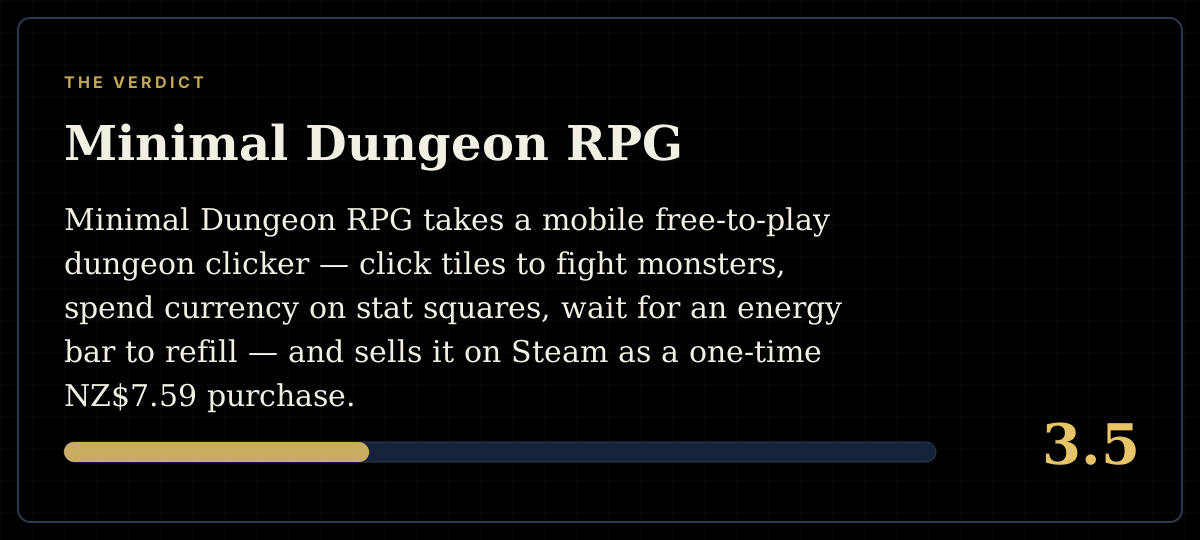
Minimal Dungeon RPG takes a mobile free-to-play dungeon clicker — click tiles to fight monsters, spend currency on stat squares, wait for an energy bar to refill — and sells it on Steam as a one-time NZ$7.59 purchase. The premise, a dungeon reduced to a grid of clickable squares, has a neat minimalist logic to it. The execution keeps every friction point a free mobile game uses to sell you patience, minus any way to actually buy your way past them.
It sits at Mixed across a small lifetime total of 59 reviews, and Mostly Negative among its 28 English-language reviews (10 positive, 18 negative). The developer posted one update four days after launch and nothing since.
Biggest strengths
- The core idea — a dungeon reduced entirely to clickable coloured squares in a grid — is a genuinely clean, readable interface for the genre
- Cheap at NZ$7.59, and some players report several relaxing hours out of it before the pace catches up with them
- Deeper than a bare clicker on paper, with a "sacrifice" stat-boost system, gear slots, a camp hub with a garden timer, and an optional Dreamland side-mode
Biggest weaknesses
- Carries over its mobile version's energy (AP) bar and key-gated content walls without the free-to-play systems that were built to offset them, so progress genuinely stalls
- Multiple reviewers report hitting hard walls — one describes being softlocked on floor 6, and a 2024 review describes needing to repeat the same grind roughly twenty times around level 60-70
- No Steam achievements exist for the game more than four years after launch, and the developer's news feed shows a single patch four days after release and silence since
Who it's for: Players who genuinely enjoy the "numbers go up" rhythm of idle clickers and don't mind an energy-gated pace, or anyone curious what a mobile idle RPG looks like stripped down to its barest interface. Not for anyone expecting the tactical depth "RPG" and "Strategy" in its Steam genre tags imply, or anyone who has already been burned by an energy-bar mobile game and paid money specifically to avoid another one.
Our recommendation: Hard to recommend at any price while the currency and key gating from its mobile version remains in place with no way to buy through it. If the minimalist click-and-loot loop sounds appealing, it's cheap enough to be a low-stakes curiosity, but go in expecting the first few hours to be the whole experience — the developer's own update history suggests nothing has changed since launch week.
3.5 / 10
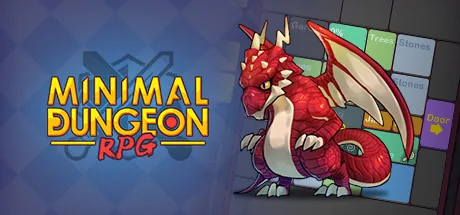
There's a real idea buried in Minimal Dungeon RPG: take the dungeon crawler down to its studs and present it as literally nothing but a grid of clickable squares. A room is a coloured tile. A monster is a red tile with a health bar. A chest is a gold tile with a price on it. Click the tile, resolve the outcome, move to the next one. It's the kind of reductive design pitch that could genuinely work as a palate-cleanser idle RPG. The problem is that CapPlay Interactive built this as a free mobile game first, and when it came to Steam in March 2022, the energy bars and paywalls that make sense in a free app came along for the ride — while the free-to-play systems built to let you route around them did not.
A dungeon you tap, not a dungeon you walk
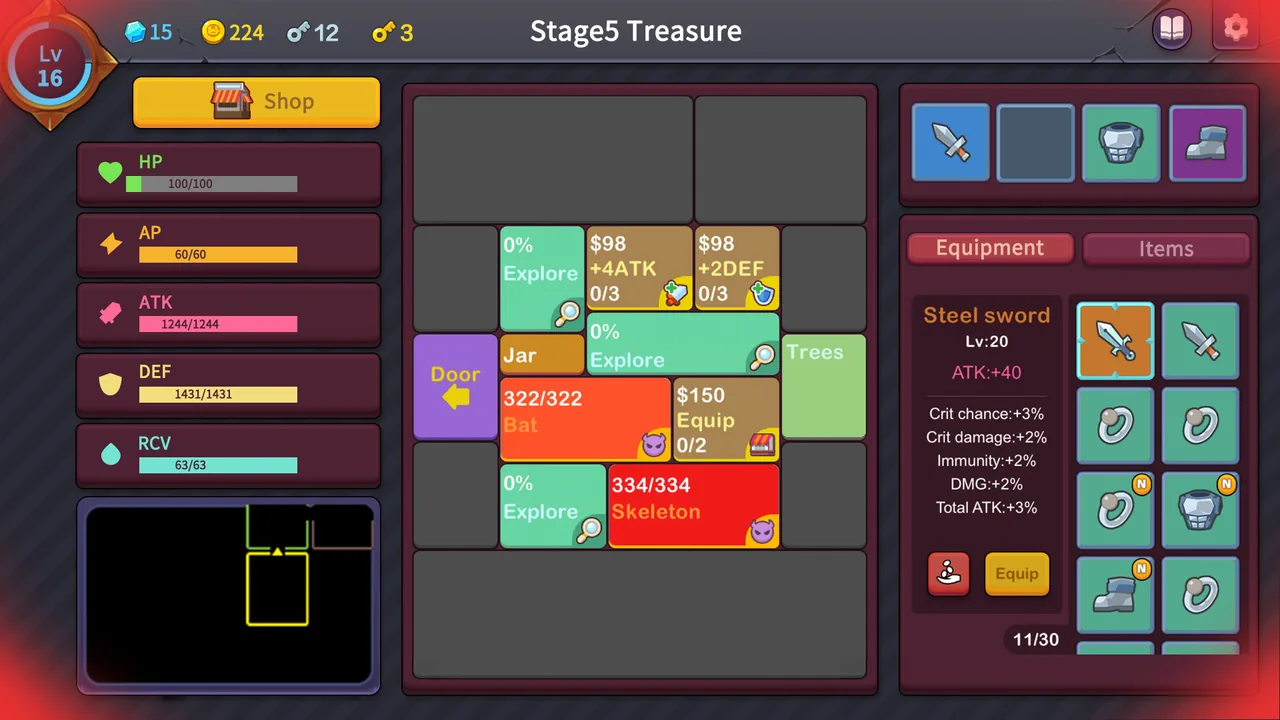
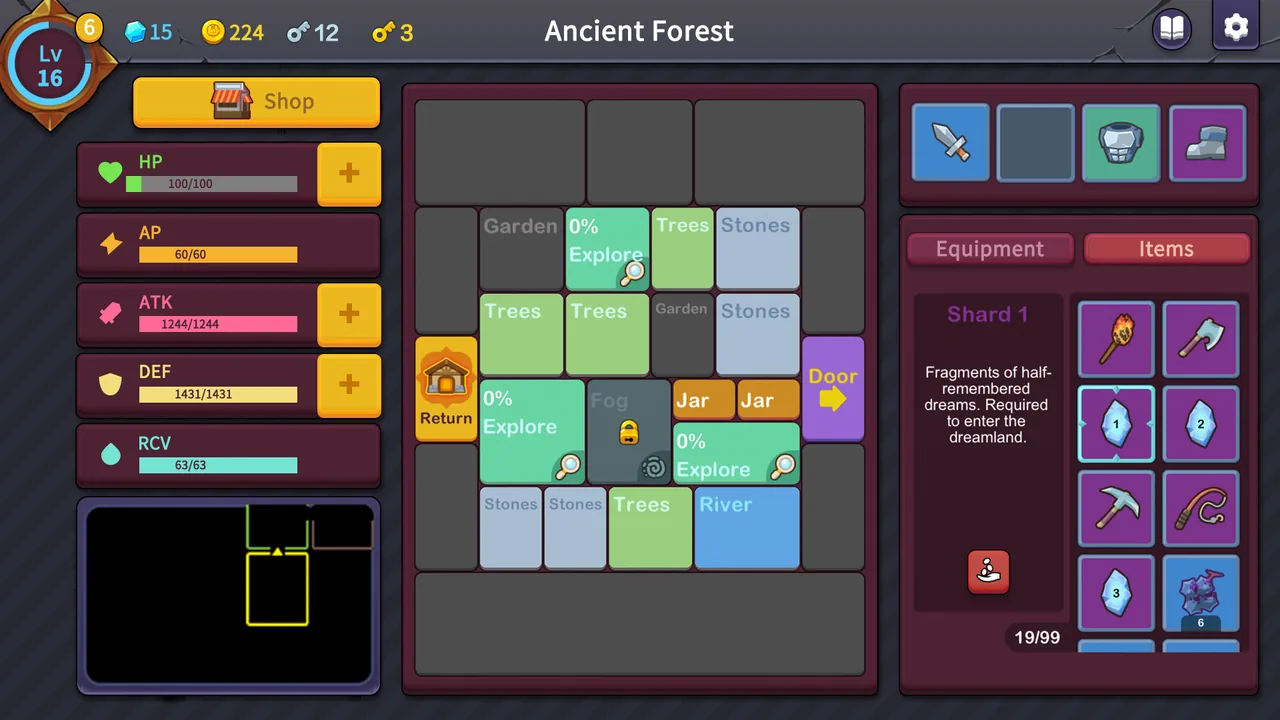
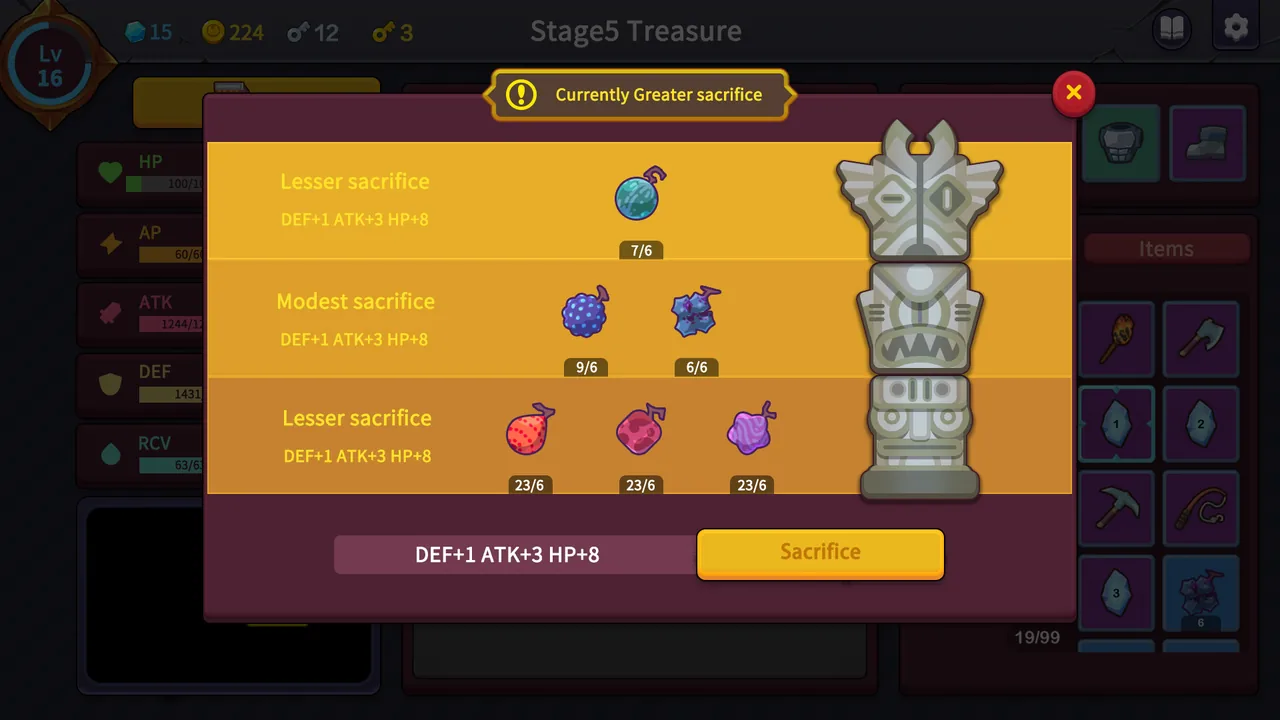
Booting into a run drops you into a small grid: a handful of rooms connected by doors, each one a square you tap to resolve. Some are monsters with an HP bar that drains as you click through your AP (action points). Some are "Explore" tiles that reveal a percentage chance of loot. Others are shop tiles that sell flat stat boosts — +4 ATK for a set price, capped at a handful of purchases per room. Outside the dungeon there's a camp hub with a shop, a "sacrifice" altar that trades crafting materials for permanent stat bumps, a gear panel with weapon and armour slots, a garden that produces resources on a real-time timer, and an optional "Dreamland" side-area gated behind shard currency. On paper that's a reasonably full idle-RPG toolkit for a $10 game. In practice, almost everything you do in it costs either AP, which regenerates slowly and caps low, or one of several currencies — coins, keys, golden keys, gems — that are also capped low and drip in slowly.
The mobile economy, minus the mobile way out
That's the part every serious critique of this game circles back to. Reviewers who played it on mobile first recognise the shape immediately: this is a free-to-play energy-and-gacha economy, built around the assumption that a stuck player either waits, watches an ad, or spends a few dollars on premium currency to skip the wait. The Steam version keeps the waiting and keeps the gem counter on screen, but removes the ability to buy more gems and removes the ads that would otherwise top them up. One of the most-upvoted negative reviews puts it plainly: it "feels like a bad 'free' mobile game that has been given a $9.99 price tag to offset the loss of ad/IAP revenue," noting that vestiges of a cash shop are still visible in the interface even though there's no way to actually use it. Another reviewer, further into the game at 20 hours played, describes the AP system scaling against you as you progress — your actions cost more AP the further you get, so you spend an increasing share of any session simply waiting for the bar to refill. A third reports getting "stuck forever in story and free mode" for lack of keys to unlock further content, keys that on mobile you could buy and on Steam you largely can't.
This isn't a hypothetical concern about monetisation philosophy — it shows up as an actual progress wall. One reviewer says they hit a softlock on floor 6 and didn't feel like resetting to try again. A 2024 review, written well after launch, describes hitting a similar ceiling around level 60-70, where killing a single monster means repeating the same click-through roughly twenty times. Read together, these aren't complaints about difficulty in the normal sense — they're complaints about a pacing system tuned for a business model that Steam's version doesn't have.
Minimal in the wrong places
Set the economy aside and the mechanical depth is thinner than the camp hub's row of icons suggests. Combat resolves as repeated clicking on a health bar rather than any kind of decision; stat purchases are a straight number-goes-up ladder with no build choices to speak of; and even basic settings are underbuilt — sound options are an on/off toggle with no volume sliders, which one reviewer specifically calls out as an odd corner to cut in a 2022 PC release. "Minimal is very accurate," reads one review, "but it's minimal in the wrong places... you shouldn't skimp on the mechanics in an RPG." It's a fair distillation of the whole critical case: the interface minimalism works, the mechanical minimalism doesn't leave enough game underneath it.
Worth flagging on its own, because it's the single most-upvoted review the game has ever received (129 votes, by a wide margin): one player reports finding an EULA and privacy policy tucked into the settings menu that gets agreed to automatically just by installing and playing, without ever being shown to the player, including data being sent overseas. No other review in the sample corroborates or expands on this, so it isn't a corroborated pattern — but given how prominently that one report sits on the store page, it's worth checking the settings menu yourself before committing, rather than taking either the accusation or its absence from other reviews as the final word.
Nobody's home
The developer posted a launch-week update on 11 March 2022, four days after release, and Steam's news feed for the game has been silent since. There's no achievement list at all — Valve's global achievement API returns an empty schema for this app, meaning none were ever added, which lines up with a 2022 review noting the game shipped without achievements or trading cards and hoping they'd arrive later. They didn't. That absence, more than any single review, is the clearest signal of how this one turned out: a mobile game ported over, patched once, and left to its energy timers.
Not every reviewer bounced. A handful describe genuinely relaxing sessions — one logged over 30 hours and called it "good clean fun," and more than one reviewer reaches for some version of "if you like watching numbers go up, you'll like this." That audience is real and this is cheap enough to serve it. But it's a narrow audience, and the game asks you to discover whether you're in it before you find the AP wall that most reviewers describe hitting.
3.5 out of 10. Minimal Dungeon RPG has a genuinely interesting minimalist premise — a dungeon crawler reduced to a grid of clickable squares — and just enough surrounding systems (gear, sacrifice upgrades, a garden timer, a side dimension) to look like a complete idle RPG from the camp screen. What it actually delivers is a free mobile game's pacing and monetisation shape with the "free" and the "monetisation" both removed, leaving energy gates and currency walls that this version of the game gives you no sanctioned way through. Worth a look only if the click-and-wait rhythm is genuinely what you're after, and worth going in knowing that whatever state it's in now is very likely the state it will stay in.
Pros and cons
Pros
- The core idea — a dungeon reduced entirely to clickable coloured squares in a grid — is a genuinely clean, readable interface for the genre
- Cheap at NZ$7.59, and some players report several relaxing hours out of it before the pace catches up with them
- Deeper than a bare clicker on paper, with a "sacrifice" stat-boost system, gear slots, a camp hub with a garden timer, and an optional Dreamland side-mode
- Straightforward, no-frills presentation that never pretends to be more than it is
Cons
- Carries over its mobile version's energy (AP) bar and key-gated content walls without the free-to-play systems that were built to offset them, so progress genuinely stalls
- Multiple reviewers report hitting hard walls — one describes being softlocked on floor 6, and a 2024 review describes needing to repeat the same grind roughly twenty times around level 60-70
- No Steam achievements exist for the game more than four years after launch, and the developer's news feed shows a single patch four days after release and silence since
- Sound options are a bare on/off toggle rather than volume sliders, and several reviewers call the mechanics themselves shallow once the initial minimalist appeal wears off
- One highly-upvoted (129-vote) review reports an EULA and privacy policy hidden in the settings menu that is accepted automatically just by installing and playing; no other review in the sample corroborates or elaborates on this, so treat it as a single flagged observation worth checking yourself rather than an established pattern
Screenshots
-
Minimal Dungeon RPGImage: CapPlay Interactive Inc. via Steam -
Minimal Dungeon RPGImage: CapPlay Interactive Inc. via Steam -
Minimal Dungeon RPGImage: CapPlay Interactive Inc. via Steam -
How the review scores each part of the gameWanderer Editorial -
The essentialsWanderer Editorial -
The short versionWanderer Editorial