
Game review
Mimicry! Review
8 / 10
- Developer
- Wayward Skies Studio
- Publisher
- Wayward Skies Studio
- Released
- 30 July 2026
- Platforms
- ["Windows"]
- Genre
- Party/Multiplayer
A Prop Hunt Riff With Real Personality
Mimicry! released on Steam on July 30, 2026, from Australian developer and publisher Wayward Skies Studio, for $9.99, after a run through Steam Next Fest demos and public playtests that a striking number of its reviewers mention having already logged serious hours in before the full release even launched. The pitch is immediately familiar to anyone who's played Garry's Mod Prop Hunt or Witch It: up to 12 players split into shapeshifting hiders and gadget-toting hunters, with the round ending when one side is wiped out or time runs out. What's less familiar, and what reviewers keep coming back to, is how much flavor Wayward Skies has layered onto that familiar shell, landing the game at Very Positive with 50 of 51 reviews recommending it.
Mimics Eat, Exterminators Burn, and Everyone Has a Job
The two sides aren't just cosmetic skins on hide-and-seek. Mimics transform into ordinary objects in the environment to hide in plain sight, but they also have to actively consume other objects to satisfy a hunger meter, which reviewers repeatedly single out as the mechanic that keeps a round moving instead of letting hiders freeze in one spot for ten minutes. Exterminators get a genuine loadout of weapons and gadgets, flamethrowers, scanners, tasers, and more, that reviewers describe as giving the hunting side its own skill ceiling rather than making it the "boring" role. When a Mimic dies, they respawn onto the Exterminator team, which several reviews note keeps everyone engaged through the whole round instead of leaving eliminated players to spectate. One detailed review calls the ability kit "a surprisingly original suite of mechanics" layered onto the prop-hunt formula, praising how the simple individual pieces combine into real strategic depth once players learn to chain a Mimic's evasive tools together.
The Lobby Somehow Became Half the Draw
An unusually large share of the review sample doesn't talk about the actual rounds at all, it talks about the pre-game lobby. Multiple reviewers describe spending upward of an hour just exploring the lobby space with friends before a single match starts, hunting for hidden secrets, a "dance room," and easter eggs scattered around the environment. One reviewer jokes about finding a "milk boy" hidden somewhere in the lobby and rating the game highly before even playing a round because of it. That's an unusual thing for a multiplayer party game to get praised for, and it comes up often enough across the sample, alongside consistent compliments about the cute, cartoony art style and a main-menu soundtrack more than one reviewer calls "a banger," that it clearly wasn't an accident.
A Small Studio's First Game, and Reviewers Keep Saying So
Wayward Skies Studio is a small Australian team, and this appears to be their first release, a fact that comes up unprompted across the review sample far more than is typical. Reviewers describe the game as having "an infinite amount of love and soul poured into it," praise the team for "put[ting] a lot of love and care into this game to make sure it's a delightful experience for all," and explicitly encourage others to "support Aussie devs" as part of their recommendation. That kind of unprompted goodwill toward a developer usually shows up when a small team visibly kept iterating in public, and the timeline backs that impression up: reviewers mention playing the same game across a demo, a Steam Next Fest build, and a separate playtest before the 1.0 release, several of them explicitly comparing what changed between each pass and reporting the full release as a genuine step up rather than a re-skin of what they'd already tried.
No Public Matchmaking Was the Real Launch-Day Complaint
The most substantial and recurring criticism in the sample, including the sample's lone negative review, is that Mimicry! shipped without public lobby browsing: players needed a lobby code and, in practice, a Discord server to find people to play with, which several reviewers flag as a real barrier for anyone without an existing friend group. The negative review is entirely built around this point, saying it's impossible to judge whether the game is good because there was no way to get into a match without already knowing people. To Wayward Skies's credit, the developer's own patch history shows this wasn't left to sit: a September 13, 2026 update titled "Hats and Hangouts: The Public Lobbies Update" specifically added public lobby support, addressing the complaint reviewers had been raising since launch week rather than leaving it unaddressed.
Minor Bugs and a Small Player Base Are the Remaining Caveats
Beyond matchmaking, the complaints get much smaller. A handful of reviewers mention minor bugs, one describing them good-naturedly as adding to the chaos rather than detracting from it, and a couple note the game feels tilted slightly in favor of the hunter side at low player counts. The more persistent worry, expressed by reviewers who clearly like the game a great deal, is population: more than one review says they hope a bigger streamer or content creator picks the game up because the actual population playing at any given time is thin, a real risk for a game built entirely around finding a full lobby of strangers or friends. It's a caveat about the game's audience rather than its design, but for a multiplayer-only party game it matters just as much.
Verdict
Mimicry! takes a genre that's had the same basic pitch since Garry's Mod mods made it popular and finds real, specific ways to make it feel fresh: a hunger-driven hiding mechanic with actual tension, a hunter loadout with its own depth, and a pre-game lobby that reviewers treat as an attraction in its own right rather than dead time. Its rough edges, at launch a genuine lack of public matchmaking and since then only minor bugs and a still-small player base, are the kind of problems a small, clearly dedicated studio can and did keep fixing after release. At $9.99, for anyone with even four friends willing to try it, Mimicry! earns the enthusiasm of its review sample far more than it deserves the "friendslop" label one reviewer jokingly floated before insisting the game outgrows it.
Screenshots
-
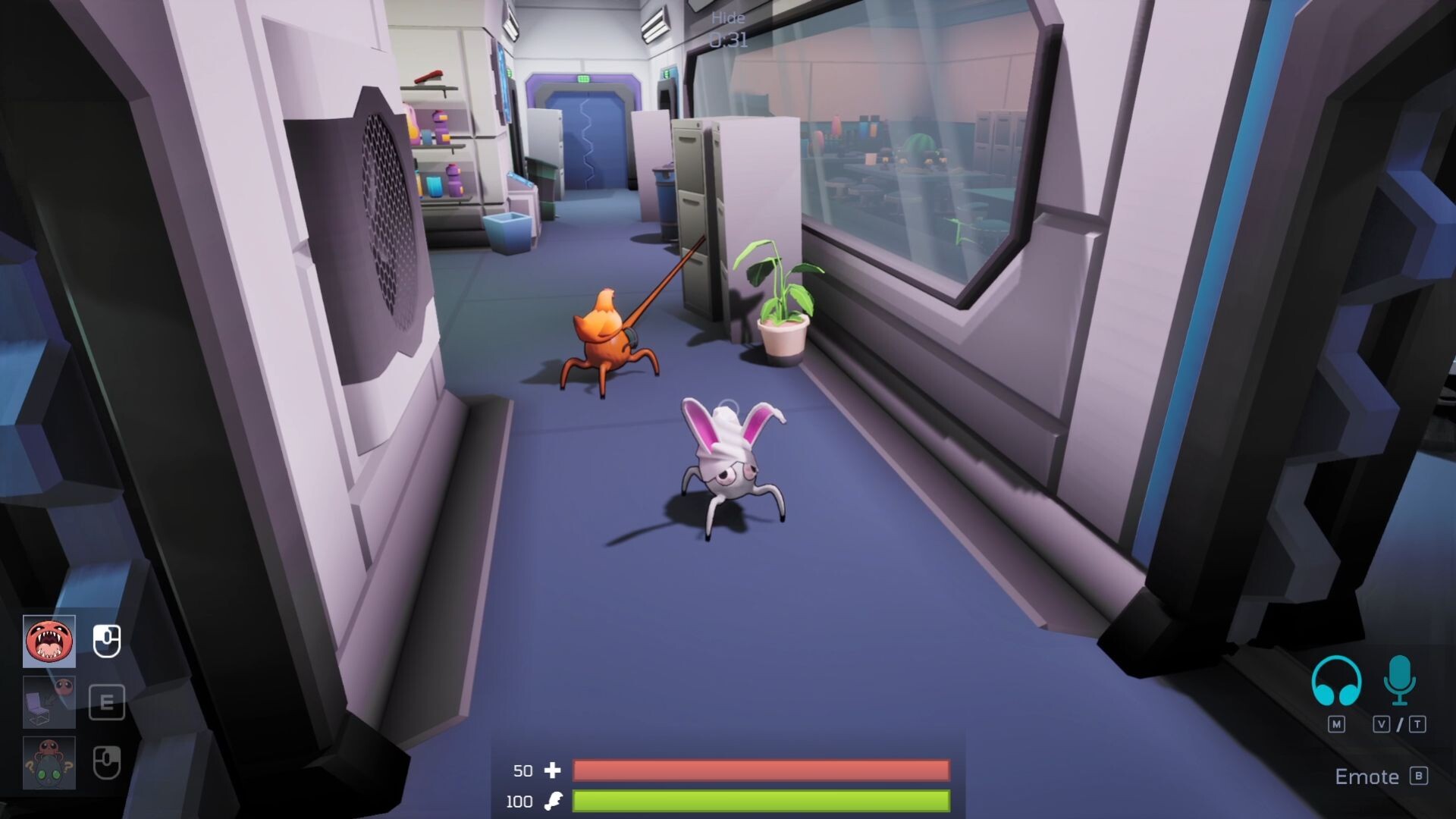
The Hide phase, where Mimics roam in their half-transformed forms before settling into an object to wait the round out.Image: Wayward Skies Studio via Steam -
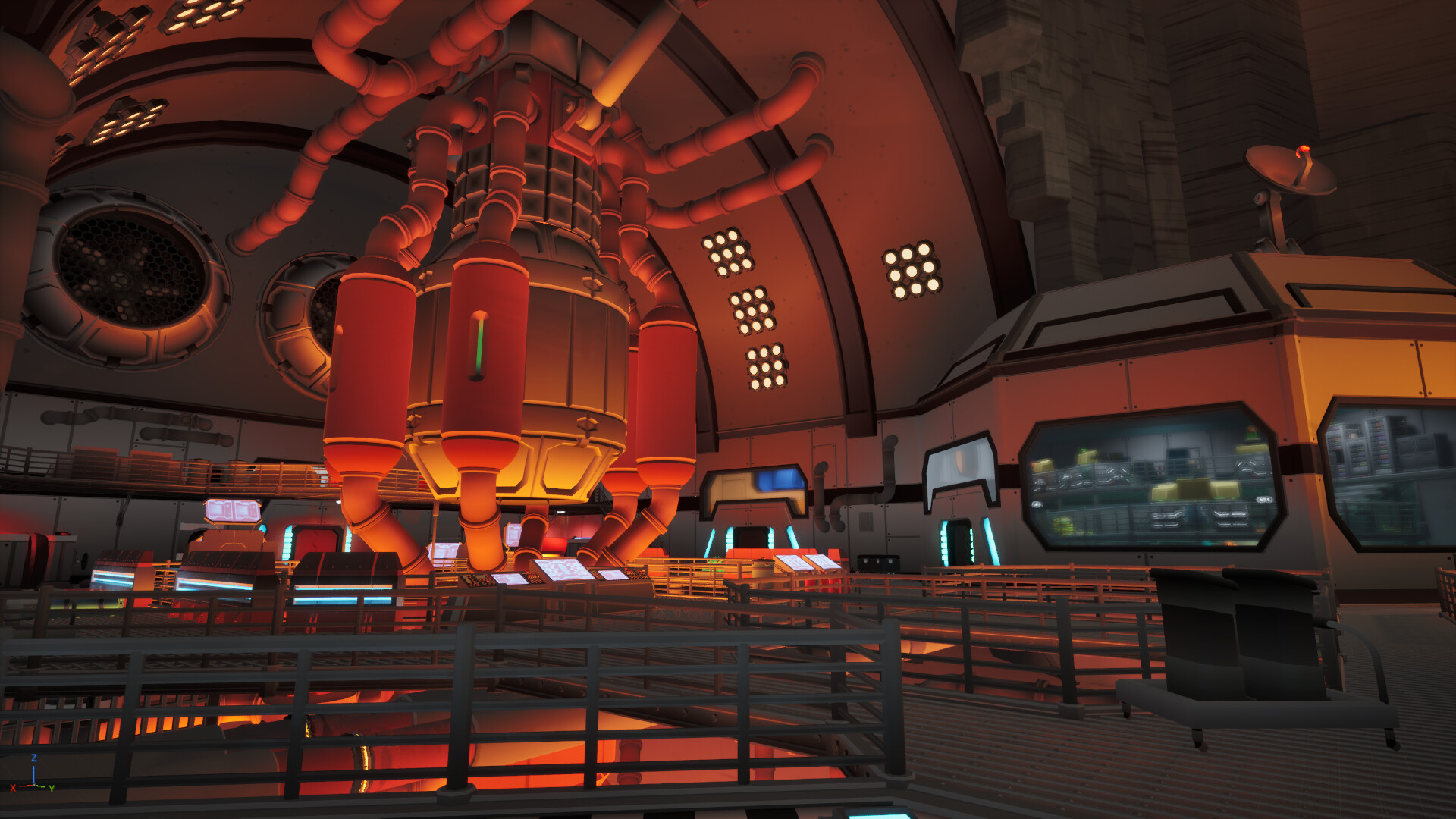
One of the game's map environments, the kind of detailed hiding ground reviewers say rewards exploring every corner.Image: Wayward Skies Studio via Steam -
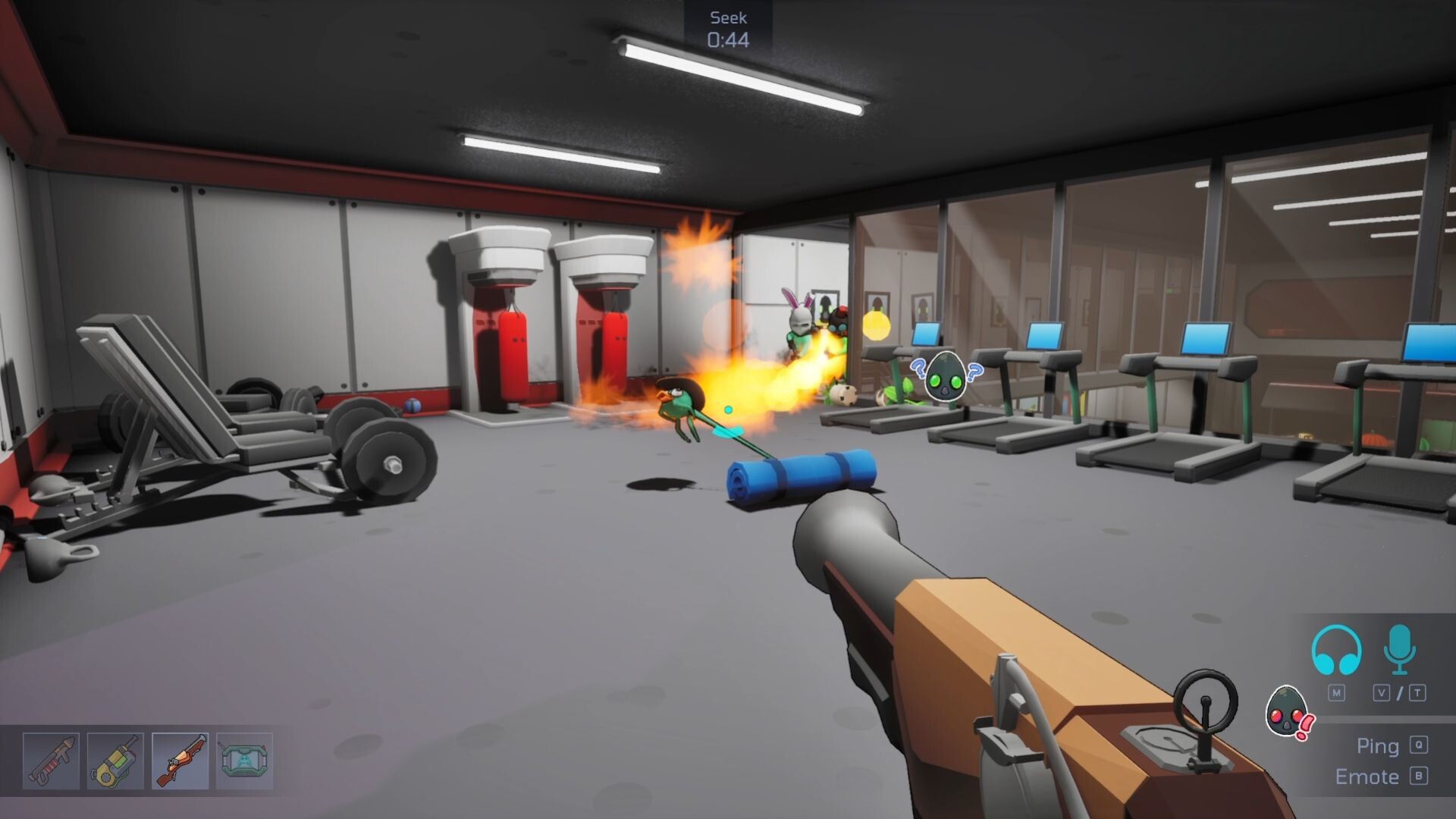
The Exterminator side's flamethrower in action during the Seek phase, chasing down Mimics before time runs out.Image: Wayward Skies Studio via Steam