Game review
Midas Gold Plus - Idle Clicker
5.8 / 10
- Developer
- Holyday Studios
- Publisher
- Holyday Studios
- Released
- 1 February 2017
- Platforms
- Windows, macOS
- Genre
- Idle Clicker
- Monetisation
- Free to play with optional in-app purchases
- Players
- Single-player, with online leaderboards
The short version
Midas Gold Plus is the more ambitious of Holyday Studios' two idle games — three switchable play styles, a pet arena, temple research and city-building all layered onto the tap-and-idle core — and years of reviews agree it's a genuinely deeper clicker than most of its rivals.
It's also the harsher one to actually stick with. Where stablemate Holyday City: Reloaded sells pure time-skips, a recurring, independently-repeated complaint here is that Midas Gold Plus gates core progression materials behind lottery-style in-game events, and the developer's own news feed has been silent for longer than that game's has.
Biggest strengths
- Three switchable play styles (a clicker mode, an idle mode and a hybrid) plus champions, a pet arena and a research tree give it more going on than a single-track idle clicker
- Fully free with Steam Cloud saves, leaderboards and 23 achievements, and reviewers with thousands of logged hours still describe finding new layers
- Shares its easy-going prestige-and-repeat hook with sibling Holyday City: Reloaded, for anyone who liked that game's formula
Biggest weaknesses
- Multiple reviewers, across different years, describe the in-game events that gate rare late-game materials as gambling or lottery mechanics — one long-time player calculates that over $10,000 wouldn't be enough to finish the game
- Progression narrows sharply past specific mid-tiers reviewers name directly, and a five-year, 3,000-hour player reports still not being near the end
- Steam's own news feed shows no patch since 17 April 2018 — over eight years of silence, longer than stablemate Holyday City: Reloaded's
Who it's for: Idle-game veterans who want more systems to fiddle with than a standard AdVenture Capitalist clone, and who can tune out gacha-style events without letting them dictate the pace.
Our recommendation: Worth a look for the genuinely varied core loop, but go in expecting the mid-game to lean on chance-based events rather than patience alone — and don't expect further support.
5.8 / 10
Introduction
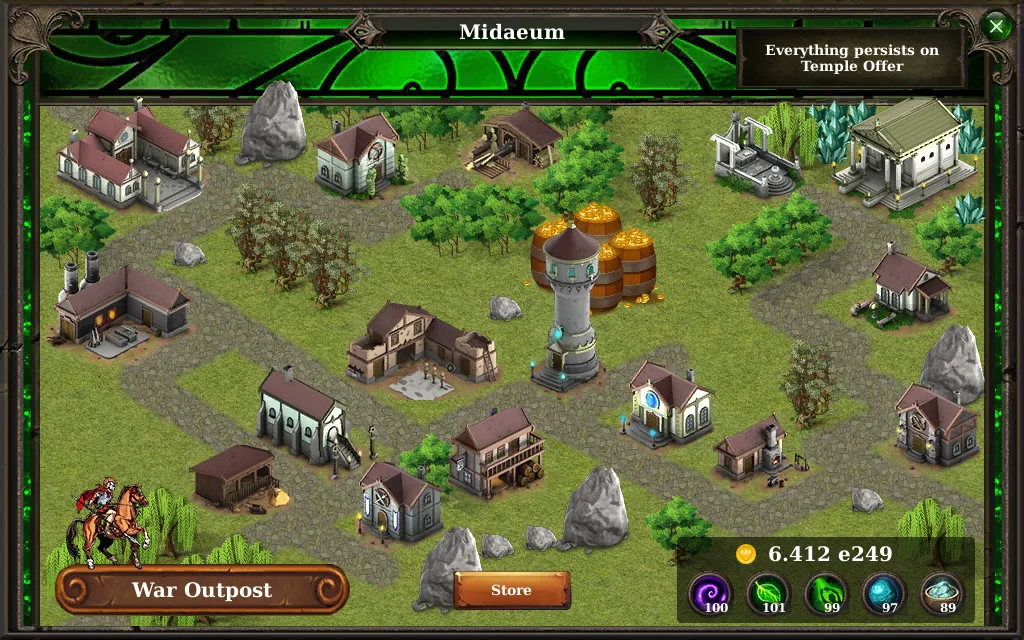
Midas Gold Plus started life as a browser game — first on Kongregate, then on Armor Games, where it went on to rack up several million plays — before Holyday Studios brought it to Steam on 1 February 2017. That's the exact same path its stablemate Holyday City: Reloaded followed a year later, and the two games share a developer, a monetisation shape, and, as it turns out, a very similar fate once the update log stopped moving. Where Holyday City wraps the AdVenture Capitalist formula in a business-tycoon skin, Midas Gold Plus wraps it in a King Midas fantasy: tap stone into gold, build the legendary town of Midaeum, and recruit champions to do the tapping for you. Steam's own genre tags list it as Casual, Indie, RPG and Free to Play all at once, which is a fair description of how many systems it actually tries to run simultaneously.
That's the headline difference from its sibling game, and it's the one long-time reviewers keep independently landing on: Midas Gold Plus is mechanically the richer of the two. A player who logged 4,853 hours earning every achievement calls it "pretty surprising in its depth," and another who compares it directly to Clicker Heroes says it's "finally a competitor that shows promise." Whether that extra depth is worth the extra friction it also brings is the real question this review is trying to answer.
Three ways to tap the same gold mine
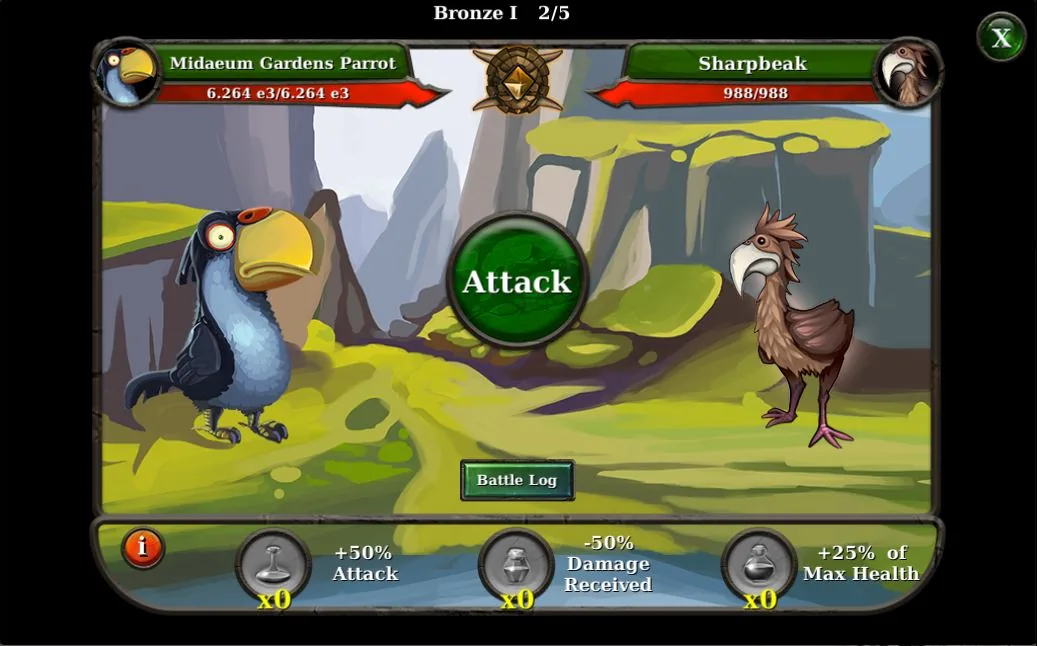
The core hook is Steam's own pitch, more or less verbatim from the store page: touch a stone, watch it become gold, spend that gold on upgrades, and repeat with a permanent prestige bonus once the run stalls. What sets Midas Gold Plus apart from a plain AdVenture Capitalist clone is that it offers three named play styles layered over that loop — Rage (an active clicker mode), Mana (a pure idle mode) and Energy (a hybrid of the two) — plus a roster of unlockable champions with their own abilities, a pet-arena side-game where creatures level up through food, potions and battles, and a university research tree that improves the whole kingdom over time. A positive review with 77,165 minutes (over 1,280 hours) logged calls it "more solid than Clicker Heroes and with a great depth behind it," and multiple reviewers echo the same framing: more genuine variety than the genre's usual "stare at numbers until reset" formula.
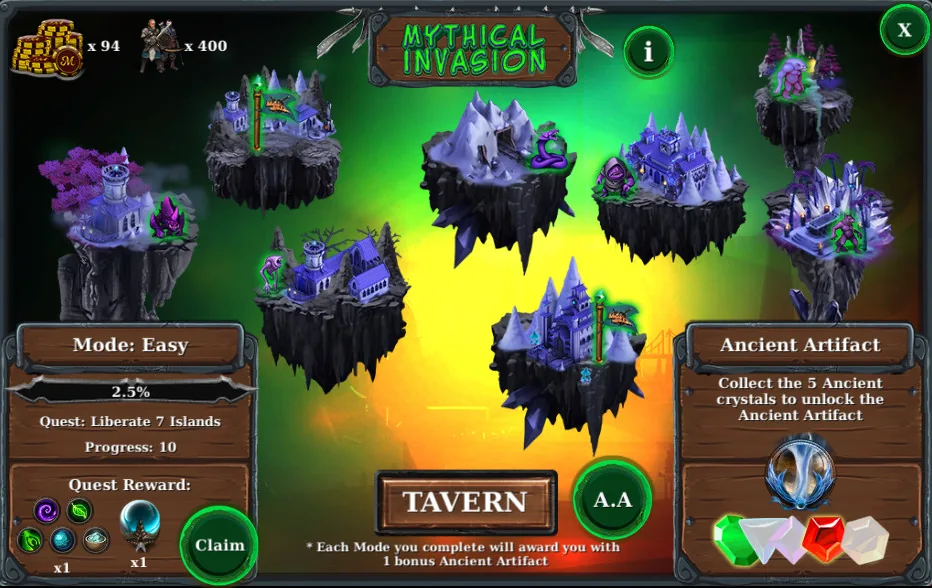
The trade-off shows up once the early rush fades. A detailed 24-vote review that opens by saying "I really want to be able to recommend this game" pinpoints specific tiers where the wall appears — by roughly the e75 gold mark, progress leans on raid loot from the game's "Mythical Cities" raid system at a rate the reviewer describes as needing "~50 of each between temple resets," and by e78 diamonds "you'll have the bulk of the game unlocked but that's so far into the exponential climb as to be unobtainable for your average player." That's not an isolated impression: a review logging over 184,000 minutes (more than five years and 3,000 hours) reports being "no where near the end," calling the pacing "forced" despite never spending money on it. The game's 23-achievement set backs the shape of that complaint up structurally — the single easiest achievement sits at only 57.8% completion across everyone who's ever unlocked one, and the list drops into single digits well before the end, a steeper early fall-off than sibling Holyday City: Reloaded's already-steep curve.
One specific, oddly-worded complaint is worth flagging on its own: the single most-upvoted negative review on the page (50 votes) says the game "forces you to turn it off and on again twice a day in order to maintain optimal production for some utterly absurd reason." Nothing in Holyday Studios' public materials explains that requirement, and it reads like exactly the kind of maintenance busywork an idle game is supposed to exist to avoid.
Monetisation: events that play like a lottery, not just a time-skip
This is where Midas Gold Plus and Holyday City: Reloaded genuinely part ways, and it's worth being precise about the difference rather than lumping both games' in-app purchases together. Holyday City's premium currency buys you a skip past a grind wall — a real design choice, but one that's opt-in rather than load-bearing. Multiple independent Midas Gold Plus reviewers, spread across different years, describe something structurally different: recurring in-game "events" that are the primary route to materials the mid-and-late game requires, built around chance rather than a straightforward price tag. "The bulk of the things you need to progress are easiest to obtain via gambling in the 'events'," one reviewer writes. "They're expensive, predatory, and it's the only realistic way to progress... you can easily spend $10,000 and still not complete the game (this is based on testing not supposition)." A separate review calls out a specific "beer festival event" lottery where "none has won any artifact of it," and rates the whole game around 5.2 out of 10 on that basis alone. A third, older but heavily-upvoted review opens with a quoted store-page warning about the game being "infested with a toxic mobile app style cash shop" that "expects" real money to progress. None of these are the same reviewer repeating themselves — they're separate accounts, years apart, converging on the same shape of complaint.
Set against that: this review's read of the corpus found no reports of forced video ads, which is consistent with sibling Holyday City: Reloaded and worth crediting the same way. And a meaningful slice of positive reviews insist the free path works if you're patient — "you don't have to spend money on it at all," one writes, describing converting a secondary currency into premium gems instead. Both things can be true: free progression exists, and multiple credible, detailed reviews still describe the events gating it as predatory by design. Steam's own store categories confirm in-app purchases and leaderboards are part of the build; one critical, heavily-upvoted review additionally describes a "mostly dead" competitive leaderboard scene decided by who has spent the most, though that specific claim comes from a single source and this review can't independently verify current leaderboard activity.
Visuals, sound and an isolated stability report
Reviewers who mention the presentation at all describe it as acceptable rather than a highlight — "looked ok, played good, sounded ok" is a representative summary, and nothing in the corpus singles out the art or audio as a problem worth avoiding the game over. Stability is a near-non-issue across the roughly 1,800 reviews the game has accumulated across all languages, with achievements, cloud saves and leaderboards all functioning as advertised. One outlier is worth naming rather than burying: a 2022 review describes the game launching itself unprompted and running invisibly in the background — no window, no sound, no cursor — for nearly a month, resisting Alt-F4, Task Manager and even a reboot, until a factory reset ended it. That account is alarming as written, but it is also uncorroborated anywhere else in the review corpus this review checked, so it reads as a rare, serious edge case rather than a pattern — worth a prospective player's awareness, not a reason on its own to avoid installing.
A studio that went quiet even earlier here
Holyday City: Reloaded's defining trait, by this outlet's own review of it, is that its developer visibly stopped supporting it after a September 2019 Linux announcement. Midas Gold Plus's own Steam news feed goes quiet even sooner: the most recent item of any kind is "Patch 17/4/2018 - Version 7.0.5," a bug-fix update, after which the feed has nothing at all — no further posts, patches or announcements across more than eight years and counting. That makes Midas Gold Plus the longer-abandoned of Holyday Studios' two Steam idle games by roughly eighteen months, on a title its own reviewers say has more systems to maintain, not fewer.
Reading the review score
Across all languages, Midas Gold Plus sits at 85.3% positive of 1,783 reviews — Very Positive. Restricted to English only, the figure is a close 81.7% of 972 reviews, also Very Positive; unlike its sibling game, the English subset here doesn't drop a full tier, though it's still the smaller and slightly less favourable of the two samples. The more telling number is recency: of the English reviews posted in the last twelve months, roughly 63% were positive, a real gap under the game's lifetime figure. That window is a small sample — under twenty reviews — so this shouldn't be read as a confirmed downward trend, but it lines up with the pattern the detailed critical reviews describe: a game whose early hours still land well with new players, and whose mid-game economy has not been retuned since the studio stopped visibly working on it.
Final verdict
Midas Gold Plus earns its place as the more interesting of Holyday Studios' two idle games — three play styles, champions, a pet arena and a research tree give it real texture that a plain AdVenture Capitalist clone doesn't have, and years of long-time players back that impression up. But "more interesting" isn't the same as "more comfortable to play for free." Where sibling Holyday City: Reloaded's monetisation is a straightforward, skippable time-tax, this game's is described, independently and repeatedly, as chance-based events gating the materials progression actually needs — and its own patch history stopped a year and a half before that game's did. If the extra systems sound like your kind of clicker and you can hold a hard line on the events, there's a genuinely deep game underneath. If gacha-shaped progression gates are a dealbreaker, Holyday City: Reloaded is the calmer sibling to install instead.
Pros and cons
Pros
- Three switchable play styles (a clicker mode, an idle mode and a hybrid) plus champions, a pet arena and a research tree give it more going on than a single-track idle clicker
- Fully free with Steam Cloud saves, leaderboards and 23 achievements, and reviewers with thousands of logged hours still describe finding new layers
- Shares its easy-going prestige-and-repeat hook with sibling Holyday City: Reloaded, for anyone who liked that game's formula
- Early hours are consistently praised across nine years of reviews as generous and quick to unlock
Cons
- Multiple reviewers, across different years, describe the in-game events that gate rare late-game materials as gambling or lottery mechanics — one long-time player calculates that over $10,000 wouldn't be enough to finish the game
- Progression narrows sharply past specific mid-tiers reviewers name directly, and a five-year, 3,000-hour player reports still not being near the end
- Steam's own news feed shows no patch since 17 April 2018 — over eight years of silence, longer than stablemate Holyday City: Reloaded's
- The single most-upvoted negative review describes needing to relaunch the game twice a day to keep production running at its stated rate, for reasons nobody at the studio has explained
- The last 12 months of English reviews run close to 63% positive, well under the game's 81.7% lifetime figure
Screenshots
-
Midas Gold Plus - Idle ClickerImage: Holyday Studios via Steam -
Midas Gold Plus - Idle ClickerImage: Holyday Studios via Steam -
Midas Gold Plus - Idle ClickerImage: Holyday Studios via Steam -
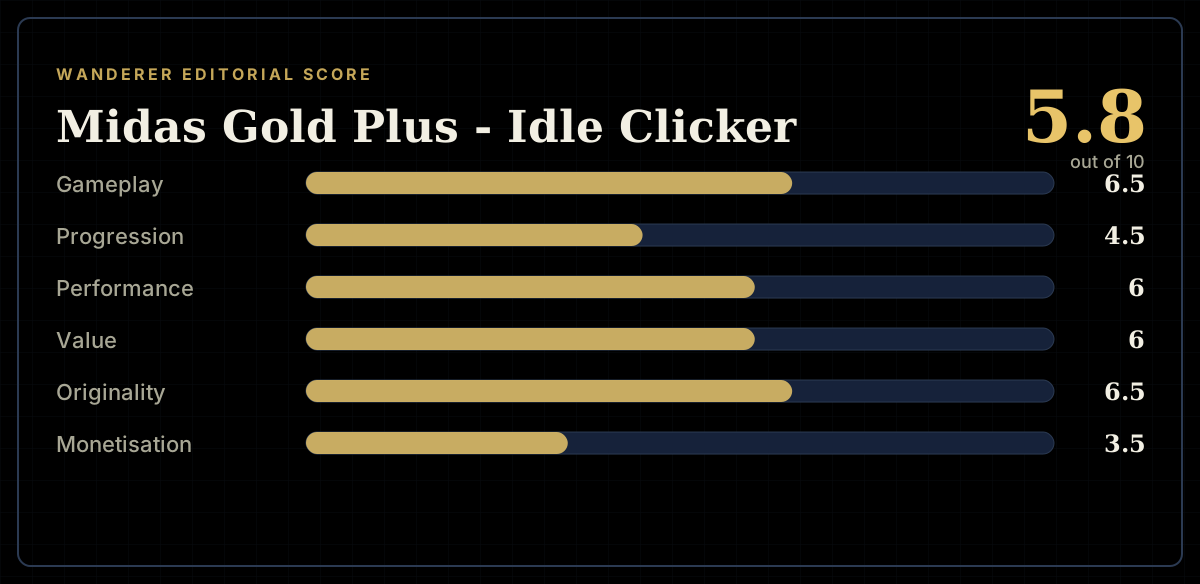
How the review scores each part of the gameWanderer Editorial -

The game at a glanceWanderer Editorial -
The short versionWanderer Editorial