
Game review
Max Manos
6 / 10
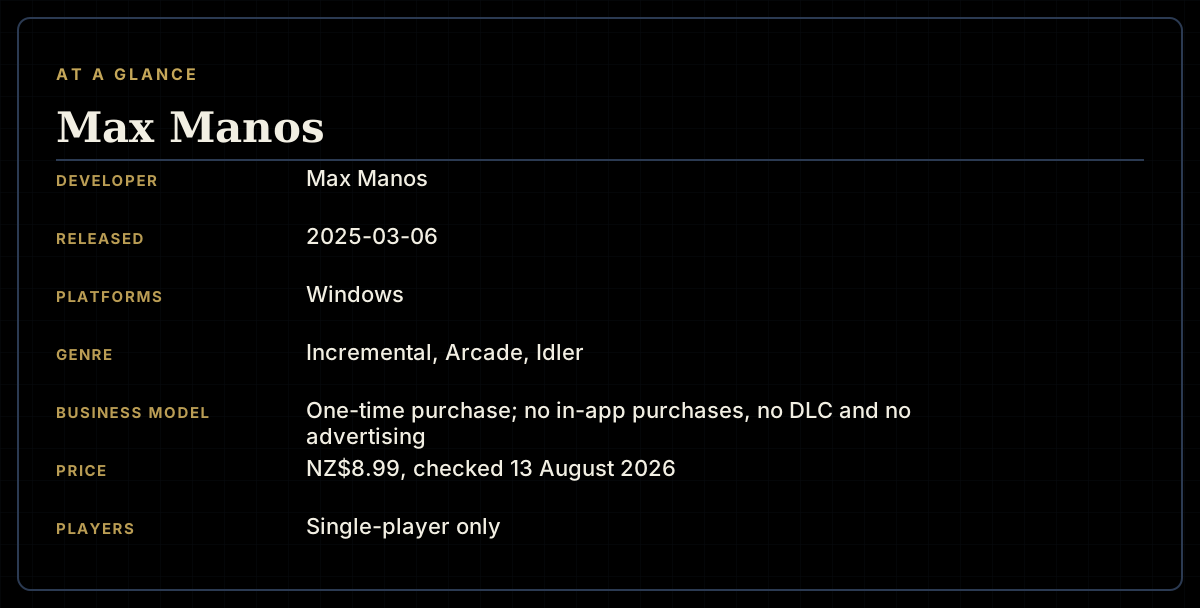
- Developer
- Max Manos
- Publisher
- Max Manos
- Released
- 6 March 2025
- Platforms
- Windows
- Genre
- Incremental, Arcade, Idler
- Monetisation
- One-time purchase; no in-app purchases, no DLC and no advertising
- Players
- Single-player only
The short version
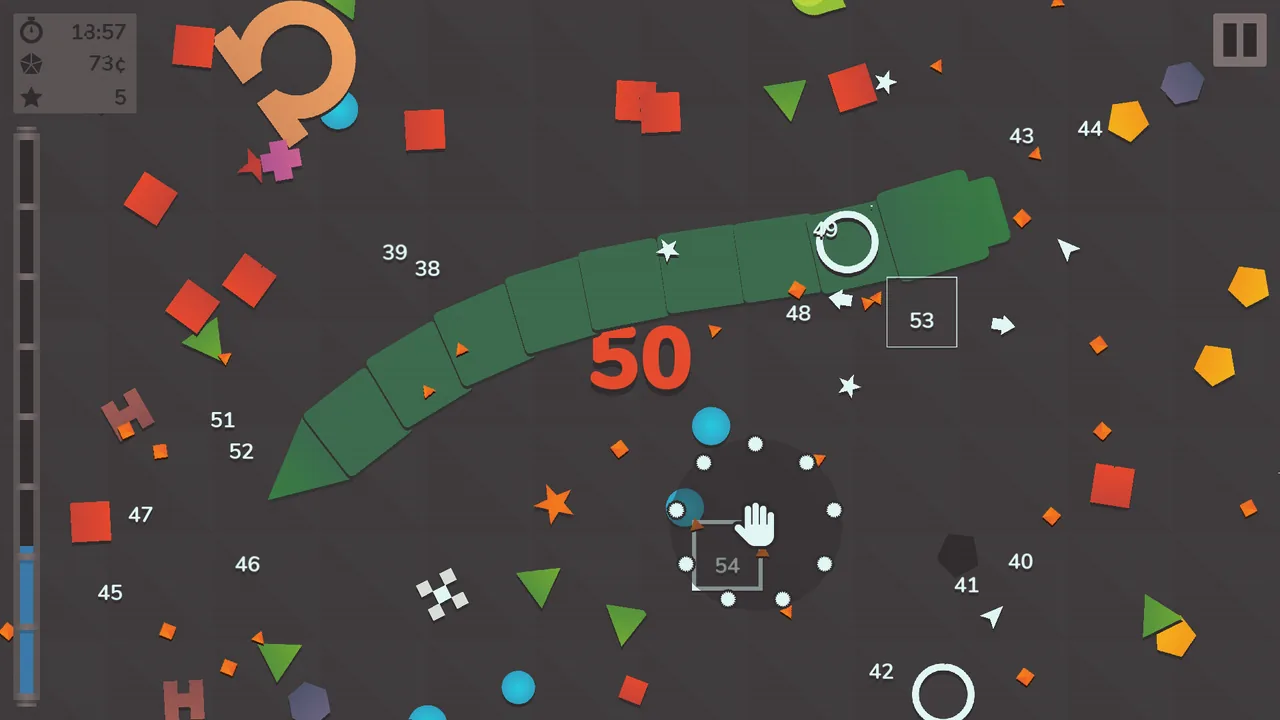
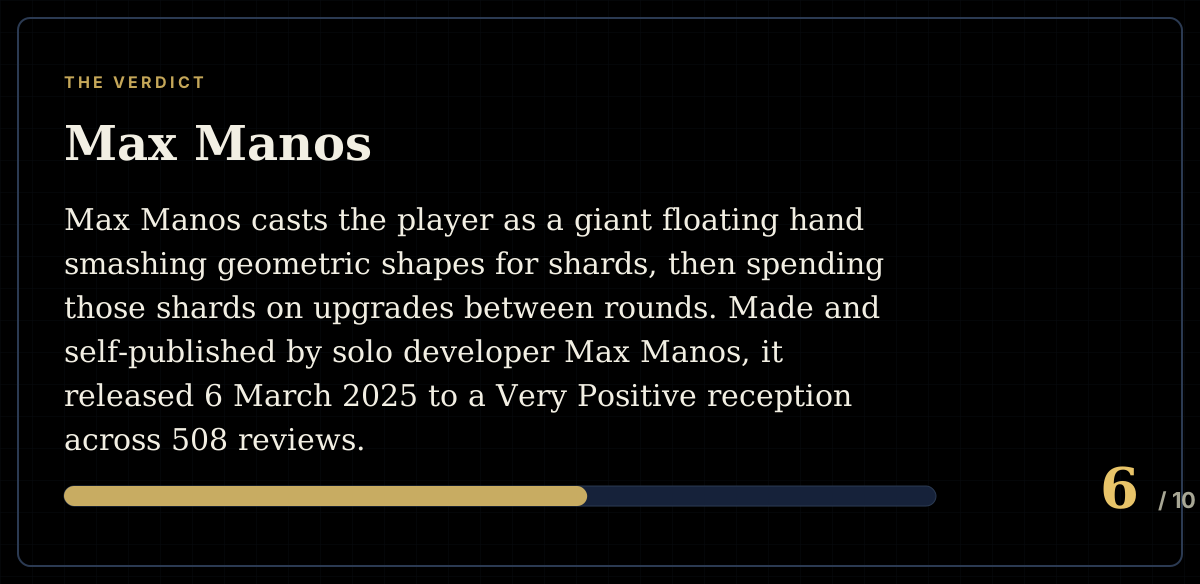
Max Manos casts the player as a giant floating hand smashing geometric shapes for shards, then spending those shards on upgrades between rounds. Made and self-published by solo developer Max Manos, it released 6 March 2025 to a Very Positive reception across 508 reviews. Its most distinctive idea is also its most contested: each prestige changes the game's core mechanics rather than simply scaling existing numbers up, which a share of players call the smartest thing in the genre and a comparably sized share call an active downgrade — several independently describing the loop as growing slower and less automated with each layer rather than more powerful. Both camps agree on almost everything else: sharp presentation, a satisfying initial hook, and a complete game finished in six to thirteen hours.
Biggest strengths
- Consistently praised presentation — art, music and "sensory feedback" all draw specific praise, including from reviewers who otherwise dislike the game
- An unusually inventive prestige idea: each run changes core mechanics rather than simply scaling up existing numbers, which a real slice of players single out as the best thing about the genre they've seen
- An unusually healthy completion curve — Steam's own achievement data shows even its lowest completion rate sitting at 59.4%, confirming most buyers who start do finish nearly everything
Biggest weaknesses
- The changing-mechanics prestige system draws a real, specific backlash from a comparable share of players, who describe later prestiges as making the game slower and less automated rather than more powerful — one reviewer coins it a "degramental" game for that reason
- A recurring complaint that the "Idler" tag misrepresents the experience: this is 100% active play, requiring continuous mouse movement, with no offline or hands-off progression at all
- Short by design — most reviewers report full completion, including nearly all achievements, in six to thirteen hours, with several wishing for another layer of content the developer hasn't added since a March 2025 translation update
Who it's for: Fans of tightly designed, short active-clicker incrementals who want a real ending rather than an endless treadmill; a poor fit for anyone chasing the genre's usual mounting sense of automation and power, or anyone shopping by the "Idler" tag expecting a hands-off experience.
Our recommendation: A polished, cheap, complete incremental with a genuinely inventive changing-rules prestige system that a real share of its own audience finds more punishing than rewarding — worth it at this price regardless of which camp you land in.
6 / 10
Introduction
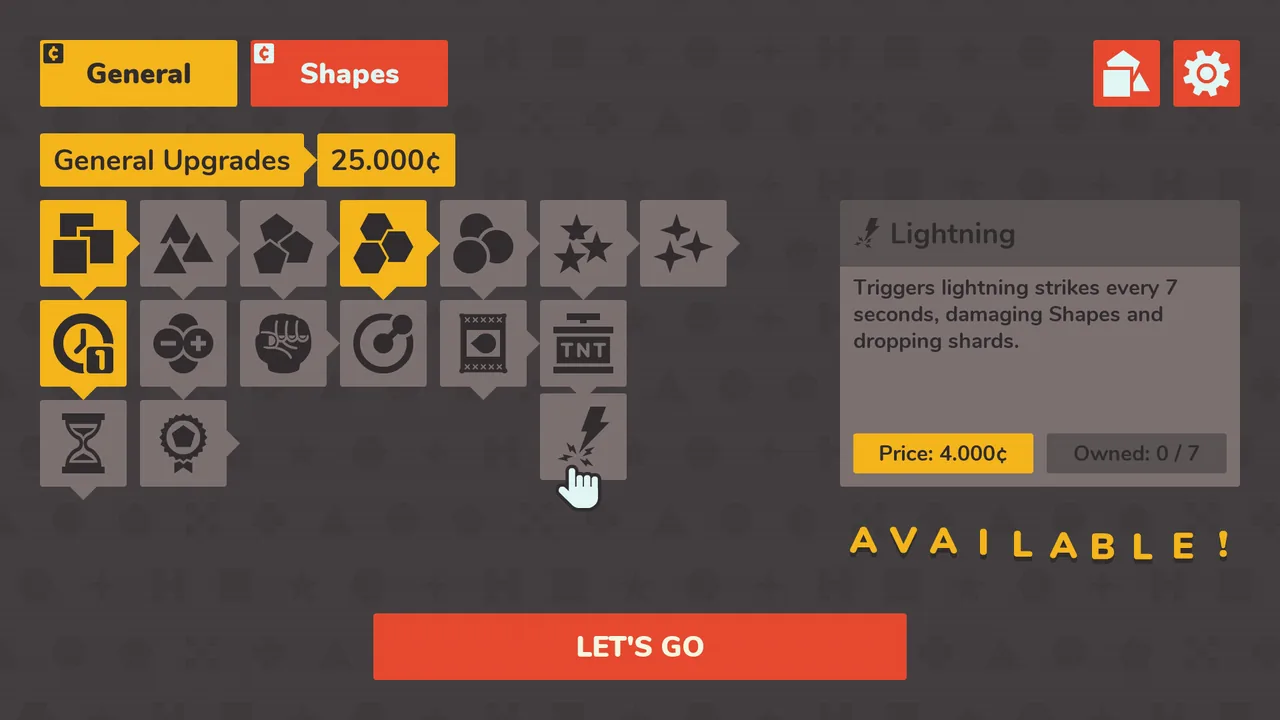
Max Manos puts the player in control of a giant, expressive hand with a grudge against geometry: wave the mouse across the screen, smash shapes for shards, and spend those shards on upgrades between rounds that make the next round more chaotic and more profitable. It's a self-published solo project, released 6 March 2025, and it has landed well — Very Positive across 508 reviews. Both sides of this game's small negative sample and its much larger positive one agree on the fundamentals: it looks and sounds great, and it's a complete, finishable experience rather than an endless treadmill. Where they split is over the one genuinely novel idea at its centre.
A hook that lands, presentation that earns its praise
The initial pitch works. "Is there a perfect active incremental game? I do not know, but I would say that Max Manos is as close as I have seen," reads one review, and even reviewers giving the game a thumbs-down keep returning to the same praise: "the artstyle and music are really nice," "great sensory feedback," "the interface is slick and works great." One reviewer, twelve hours and 100% of the achievements in, frames the whole pitch memorably: "Ever wanted to play as a giant floating hand with rage issues and a personal vendetta against geometry? Well, now you can." That's not faint praise for a four-and-a-half-dollar impulse buy at launch (now closer to nine dollars) — it's a genuinely well-received hook that both camps in this review's sample agree on.
The idea that splits the room
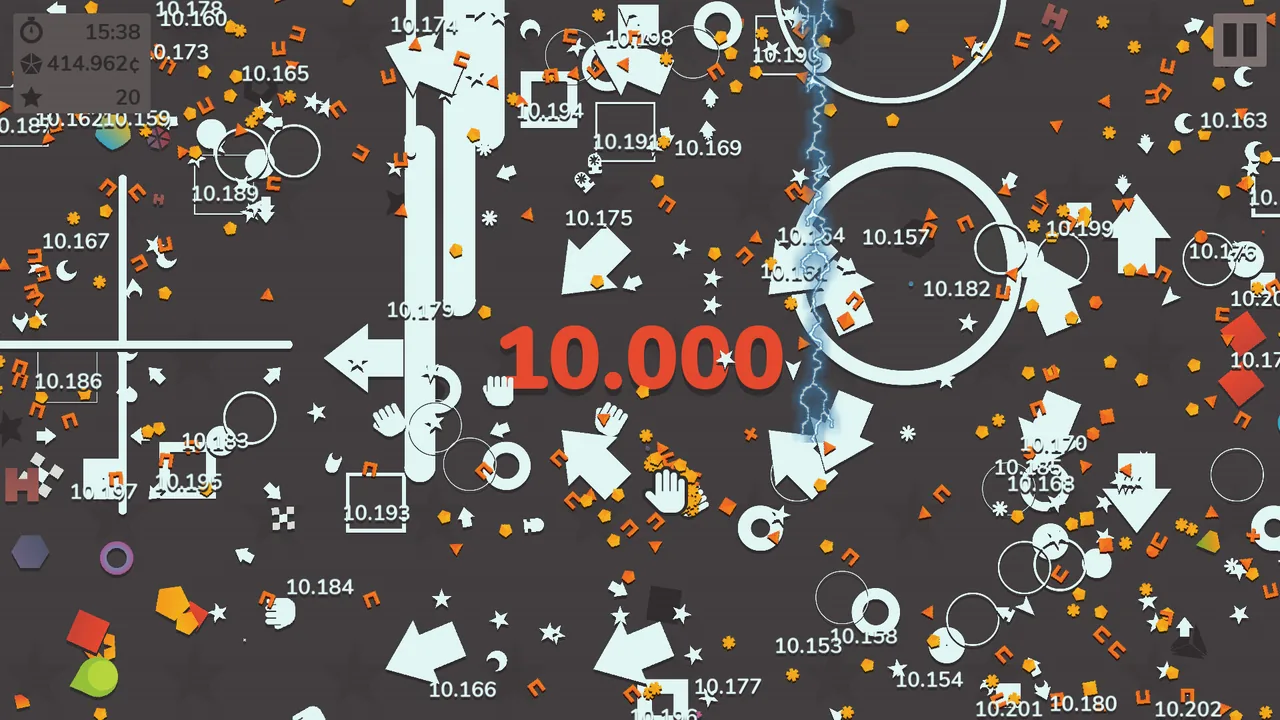
Max Manos's most distinctive design choice is that prestiging doesn't just reset the player with a multiplier, the way most incrementals do — it changes the rules. New mechanics, new attack types and new modifiers arrive with each layer, and reviewers are split almost exactly down the middle on whether that's the smartest idea in the genre or a serious mistake. On the positive side: "I have never played an incremental game that adds game modifiers after each prestige. I was like, 'wow this is actually really cool,'" reads one review, while another calls the new mechanics each round "cool" and genuinely fresh rather than boring repetition.
On the other side, a comparably sized and specific cluster of reviewers describes the same system working against the genre's basic promise. "After the 2nd time you literally have to manually click to fire," one writes, "each time it gets more and more LESS convenient and LESS automated" — the opposite of what a prestige system is supposed to deliver. Another, more pointedly, coins a term for it: "first degramental game I've played... after prestige you get a 20% multiplier for the cost of the game becoming incredibly slow." A third independently agrees the modifiers "just make the game slower and less fun." That's a real design tension worth taking seriously rather than resolving in either direction — this isn't one side being wrong about the mechanics, it's a genuine values disagreement about what a prestige system in an incremental is supposed to feel like, and Max Manos comes down firmly on the side of "different," not "more," which won't suit every incremental fan.
Not really an idler, whatever the tag says
A smaller but specific complaint concerns labelling rather than design. Several reviewers push back directly on the "Idler" tag the community applies to this game, pointing out there is zero offline or hands-off progression — the entire experience is continuous, active mouse movement. "This absolutely isn't an idler," one review states flatly, with a full mechanical breakdown to back it up: "Active Play - 100% Active play, there is no idle in this game." That's a fair warning for anyone shopping specifically for a background game, even though the community's own vote-weighted tags still rank Idler fourth overall, just behind Incremental, Strategy and Arcade — a genuine point of debate rather than a clear mislabel.
Short, complete, and largely bug-free
Consistently across both positive and negative reviews, Max Manos finishes fast — most reports of 100% completion, achievements included, cluster between six and thirteen hours. Steam's own achievement data backs up how accessible that completion is: even the single lowest completion rate across all 36 achievements sits at 59.4%, an unusually healthy floor that confirms most buyers who start the game do see the overwhelming majority of it through to the end, rather than bouncing off early. A handful of specific bugs are worth flagging — a third-prestige bug that delays manual attacks each round, and a slot-machine exploit that can waste limited upgrade rolls — but neither appears frequently enough in the sample to call a widespread problem, and no update has landed to address them since a translation pass on 15 March 2025, nine days after launch.
Value and monetisation
At NZ$8.99, with no DLC and no in-app purchases, Max Manos carries no monetisation complaints, and several reviewers explicitly call it worth the price for a complete, polished six-to-thirteen-hour experience. The value conversation really comes down to expectations set correctly: buyers wanting a bounded, finishable incremental get real value here; buyers hoping for a long-running live service with regular content drops should note the near-total silence on the update front since launch week.
Final Verdict
Max Manos is a well-made, distinctive incremental let down only by the fact that its single most interesting idea — a prestige system that reshapes the rules instead of just scaling numbers up — genuinely doesn't land the same way for everyone who tries it. That's a more interesting failure state than most of this library sees: not broken, not abandoned in any meaningful sense, just built around a design bet that roughly half its audience doesn't want. If the idea of a prestige system that trades convenience for novelty each time sounds appealing rather than punishing, this is a cheap, complete, genuinely well-crafted few hours. If what you actually want from a prestige loop is more power and less friction with each layer, you may be in the other half of the room.
Pros and cons
Pros
- Consistently praised presentation — art, music and "sensory feedback" all draw specific praise, including from reviewers who otherwise dislike the game
- An unusually inventive prestige idea: each run changes core mechanics rather than simply scaling up existing numbers, which a real slice of players single out as the best thing about the genre they've seen
- An unusually healthy completion curve — Steam's own achievement data shows even its lowest completion rate sitting at 59.4%, confirming most buyers who start do finish nearly everything
- No in-app purchases, no DLC and a low, fair price for a short but complete experience
Cons
- The changing-mechanics prestige system draws a real, specific backlash from a comparable share of players, who describe later prestiges as making the game slower and less automated rather than more powerful — one reviewer coins it a "degramental" game for that reason
- A recurring complaint that the "Idler" tag misrepresents the experience: this is 100% active play, requiring continuous mouse movement, with no offline or hands-off progression at all
- Short by design — most reviewers report full completion, including nearly all achievements, in six to thirteen hours, with several wishing for another layer of content the developer hasn't added since a March 2025 translation update
- Scattered but specific bug reports, including a third-prestige bug that delays manual attacks and a slot-machine exploit that can waste limited upgrade rolls
Screenshots
-
Max ManosImage: Max Manos via Steam -
Max ManosImage: Max Manos via Steam -
Max ManosImage: Max Manos via Steam -
How the review scores each part of the gameWanderer Editorial -
The essentials at a glanceWanderer Editorial -
The short versionWanderer Editorial