Game review
Maseylia: Echoes of the Past Review
6.5 / 10
- Developer
- Sol Brothers
- Publisher
- Sol Brothers
- Released
- 19 June 2026
- Platforms
- ["Windows", "Mac", "Linux"]
- Genre
- Metroidvania
A Rare 3D Metroidvania With Movement That Actually Delivers
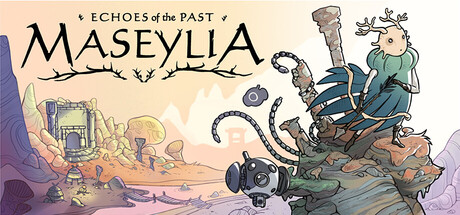
Maseylia: Echoes of the Past, developed and published by two-person studio Sol Brothers, released on Steam on June 19, 2026, priced at $16.99. It's a fully 3D, non-linear metroidvania built around ability-gated platforming across an interconnected world rendered in a hand-painted, Moebius-inspired art style, with light combat and environmental storytelling layered over the exploration. Across the 37 English reviews read in full for this piece, out of an all-language pool of 90 sitting at 82% positive ("Very Positive" on Steam's own scale, though the English-only slice runs slightly cooler at "Positive"), one theme comes up in nearly every single review, whether it recommends the game or not: this is a rare, ambitious attempt at a fully 3D metroidvania, and the platforming and movement genuinely deliver, even where everything built around them doesn't quite keep pace.
Reviewers Keep Comparing It To Pseudoregalia, Metroid, And Hollow Knight, And Mean It As Praise
"A very competent 3D Metroidvania that does everything right. Ability-gated progression, non-linear exploration of an interconnected map, versatile abilities, focus on platforming... It is a game closer to the Metroid-like design in the Metroidvania spectrum, compared to Castlevania-like or Souls-like, and I find that refreshing," wrote one reviewer. Another described it as feeling "like hollow knight and sable had a baby," praising "amazing exploration" and puzzle platforming that "takes a while for the game to really open up... but when it does it's very clever." A third reviewer, more critical overall, still opened with the comparison that clearly sets expectations across this whole pool: "Before I even knew this game was inspired by pseudoregalia I was instantly comparing them - I guess this makes sense as there are very few 3d metroidvanias." The genre is thin enough on the ground that reviewers seem to want to root for any credible new entry, and Maseylia earns real goodwill for simply committing to the format.
Combat Is Consistently Described As An Afterthought, By Positive And Negative Reviews Alike
If there's one point of near-total consensus in this pool, it's that combat should probably not exist. "Combat also feels like an afterthought, and I feel the game would likely be better without," wrote one reviewer who otherwise liked the movement. Another rated it bluntly: "Combat 1.5/10, Platforming 8.5/10." A third put it plainly: "Combat's the weakest point of the game as it works but there's nothing special about it." One detailed positive review went further, breaking down specific mechanical problems: "the lack of a lock on system makes encounters more frustrating than they should be, especially when using the bow... its aiming feels broken because arrows fly below the crosshair rather than directly at it." Several reviewers across both the recommend and don't-recommend columns independently suggest the game would simply be stronger with the combat stripped out entirely, leaving pure platforming and exploration, which is itself the clearest signal that combat isn't pulling its weight here.
The Moebius-Inspired Art Direction Is Beautiful, But It Actively Hurts Navigation
The hand-painted visual style draws consistent praise for its beauty and consistent complaints about its function. "I love the devs taking inspiration from Moebius, but it actually comes at the cost of readability. Playing on the Steam Deck, I have sometimes gotten turned around because" the environment doesn't clearly signal where to go, wrote one reviewer who otherwise recommended the game. Another negative reviewer was harsher: "It's mostly huge cavernous rooms that feel largely empty and because everything is the same color palette it is often difficult to tell where exactly you are supposed to go." Even reviewers who loved the look flagged the same issue as a minor gripe: "it's sometimes difficult to determine where I'm supposed to go. After reading some other reviews, I'm inclined to agree that stronger contrast in shading would be helpful." This is a case where a genuinely distinctive aesthetic choice, repeatedly praised on its own terms, creates a real, recurring functional cost that multiple independent reviewers land on the exact same explanation for.
Progression And Ability Design Draw Real Praise, Even From Critics
Despite the rough edges, the core loop of gaining new movement abilities and using them to reshape how you traverse the world lands well for most reviewers. "The upgrade system flowed nicely, and it became increasingly more enjoyable to navigate the map with new abilities," wrote one. Another called out the mechanical variety directly: "You gain a slide that lets you squeeze through narrow openings, which is later upgraded into an air dash... it's especially fun with the ice sliding or chaining movement abilities together for gauntlets." Most reviewers who finished the game clocked in around six to seven hours for a full completionist run, with one noting a five-hour speedrun achievement threshold, framing this as "a good short to medium sized game" rather than a knock against it. That said, one detailed critical review argued the pacing of introducing abilities felt backwards, giving players "a new thing, okay now this new thing" instead of building real mastery of each tool before moving on, a structural critique distinct from the more common polish complaints.
Polish, Controls, And At Least One Reported Progression-Blocking Bug
Beyond the readability issue, this pool surfaces a cluster of specific interface and control complaints worth flagging plainly. One reviewer reported the game is effectively unplayable on controller: "the R2 button is bound to the start menu and mellee at the same time and everything can be rebound except for mellee." Another flagged inconsistent dialogue controls: "the confirm button on dialogues with options is not the same button that closes dialogue boxes," with no in-game indication of which button does what. Most seriously, one reviewer described getting permanently stuck after acquiring the double-jump ability, unable to backtrack out of an area due to limited fast-travel waypoints: "I played that one section for over 2 hours and never got out... this game was fun, it is dead to me now because of poorly designed levels." A separate reviewer who'd played the earlier demo build was more pointed still, writing that the finished release "still feels extremely unpolished, to the point where it often resembles a student project or a hackathon prototype rather than a finished commercial release."
Verdict
Maseylia: Echoes of the Past is a genuinely rare thing, a fully 3D metroidvania built around movement and platforming that a wide range of reviewers, including several who ultimately didn't recommend it, describe as legitimately good. The combat is near-universally dismissed as an afterthought best ignored, the striking Moebius-inspired art style repeatedly undercuts its own readability, and a real cluster of control and polish complaints, up to and including at least one reported progression-blocking bug, keep this from feeling fully finished. At $16.99 for a five-to-seven-hour non-linear campaign, this is a genuinely interesting pickup for metroidvania fans specifically hungry for more games in the underserved 3D corner of the genre, best approached with patience for its rough edges rather than an expectation of polish.
Screenshots
-
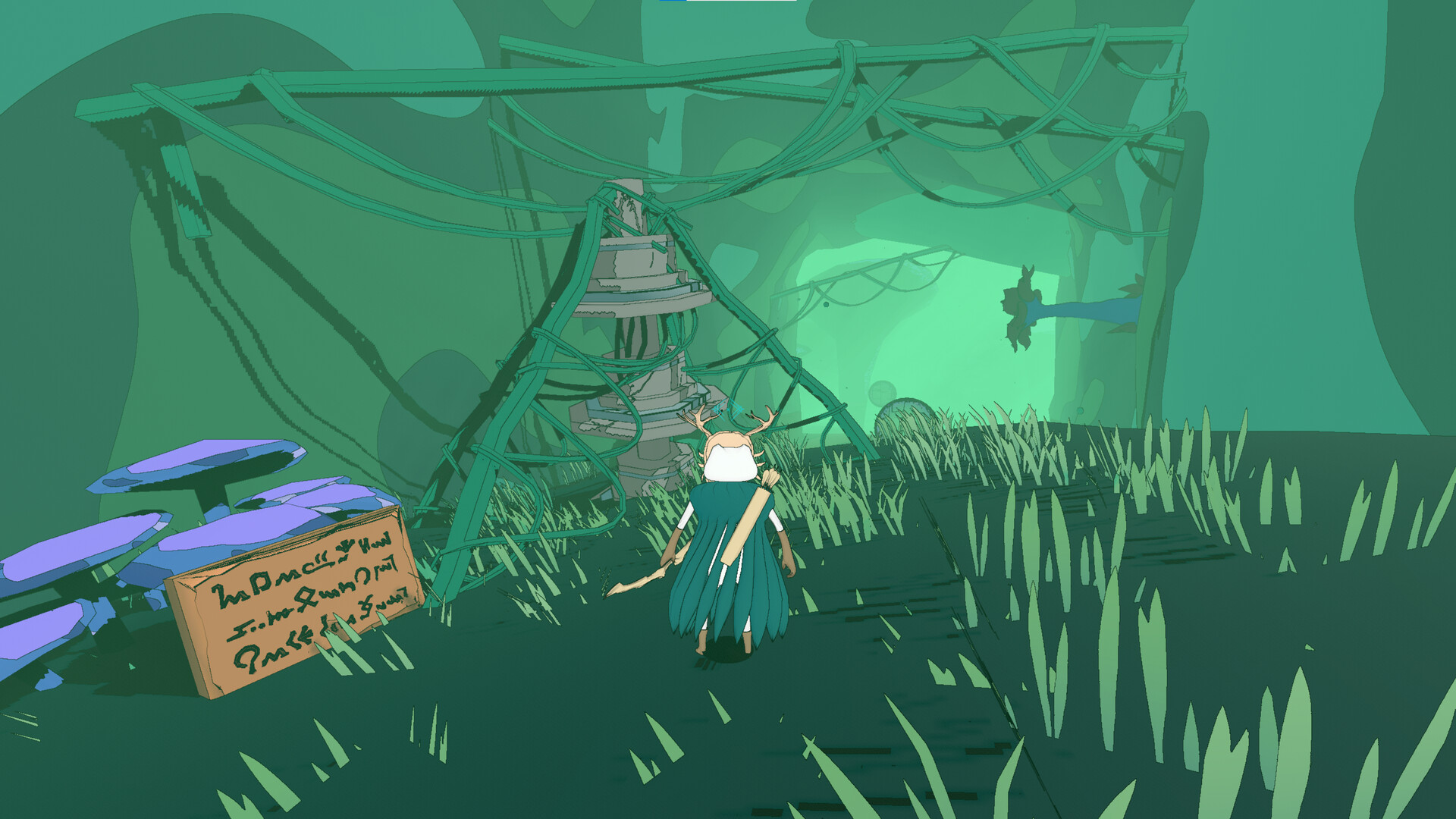
A near-monochrome green ruin, the kind of visually flat area several reviewers cite as hard to read.Image: Sol Brothers via Steam -
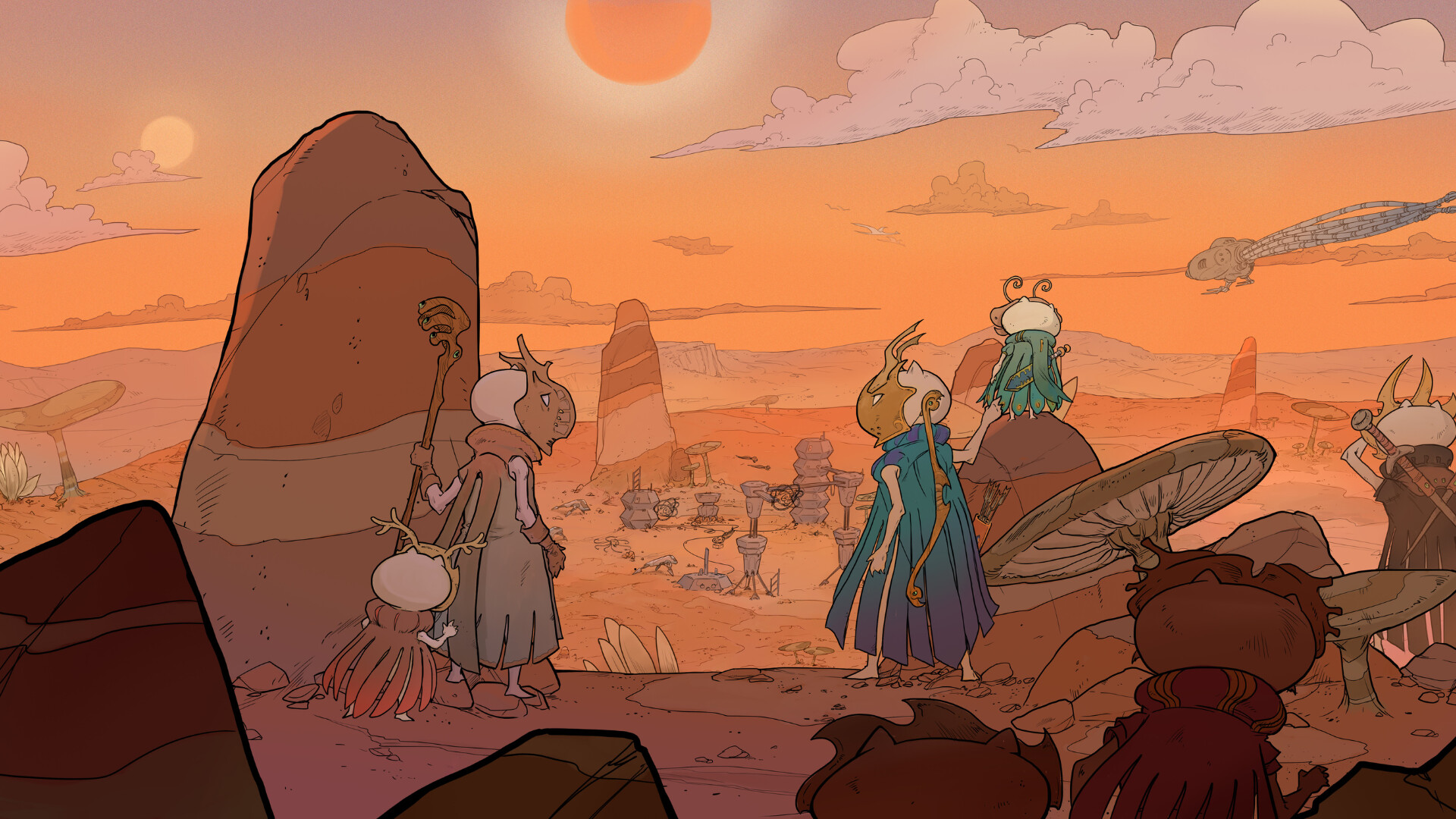
A desert settlement gathering, rendered in Maseylia's hand-painted, Moebius-inspired art style.Image: Sol Brothers via Steam -
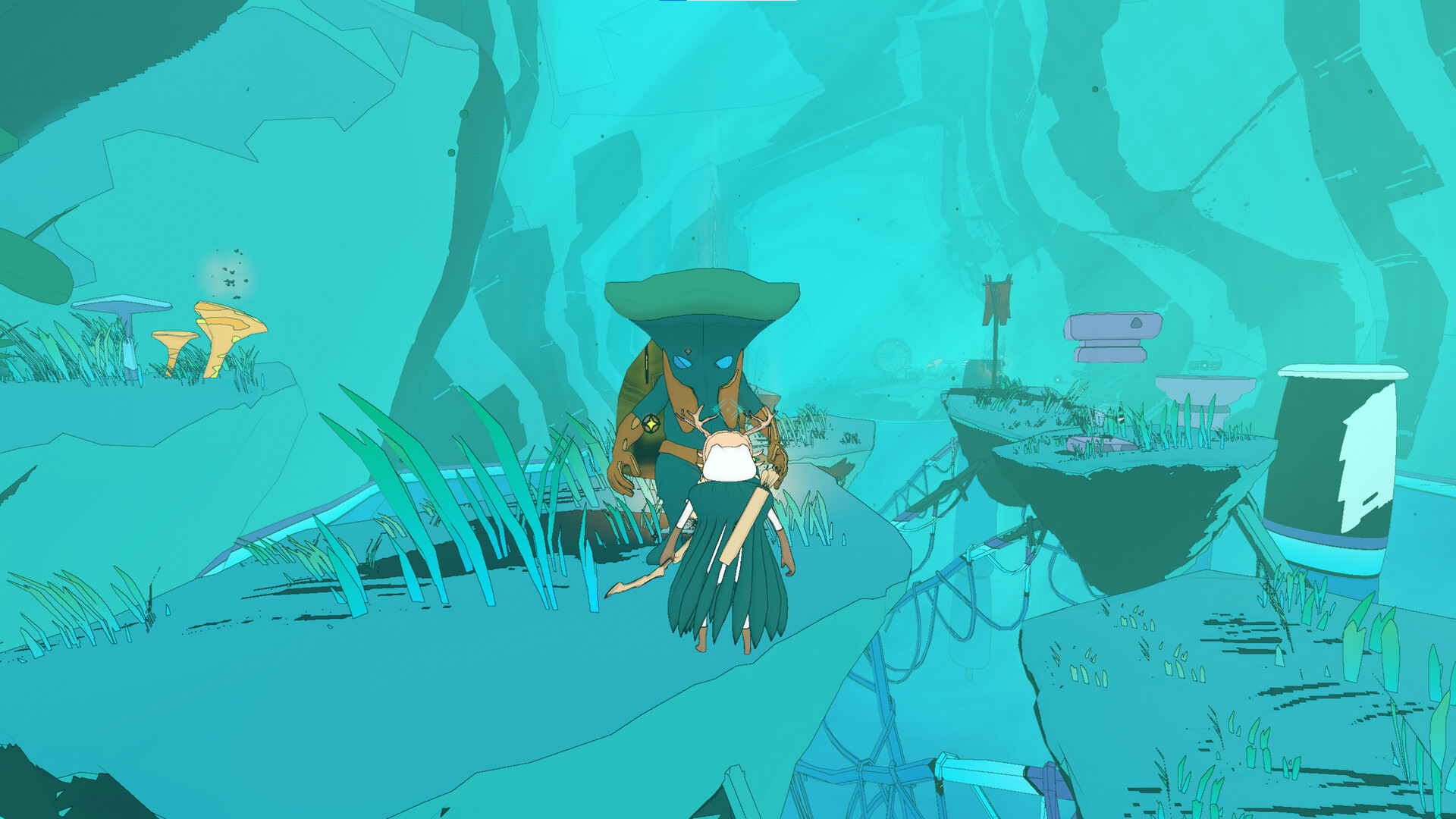
Floating platforms and a towering insectoid NPC in one of the game's teal-lit cavern biomes.Image: Sol Brothers via Steam