Game review
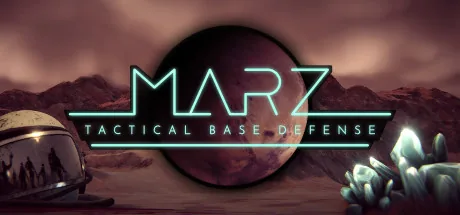
MarZ: Tactical Base Defense
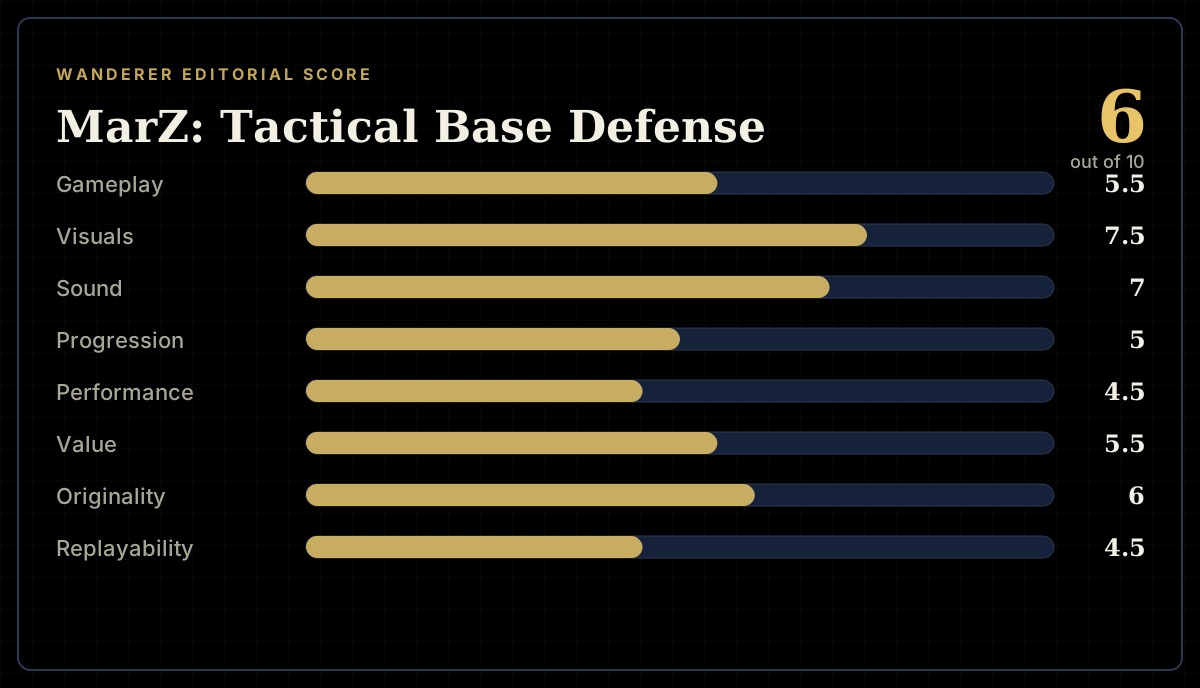
6 / 10
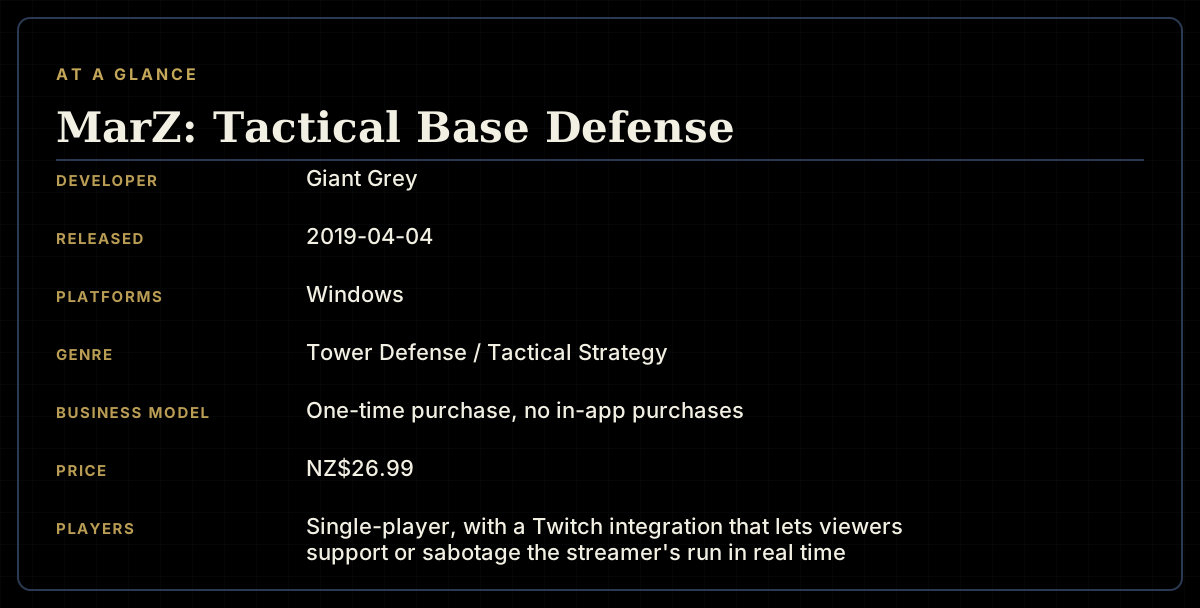
- Developer
- Giant Grey
- Released
- 4 April 2019
- Platforms
- Windows
- Genre
- Tower Defense / Tactical Strategy
- Monetisation
- One-time purchase, no in-app purchases
- Players
- Single-player, with a Twitch integration that lets viewers support or sabotage the streamer's run in real time
The short version
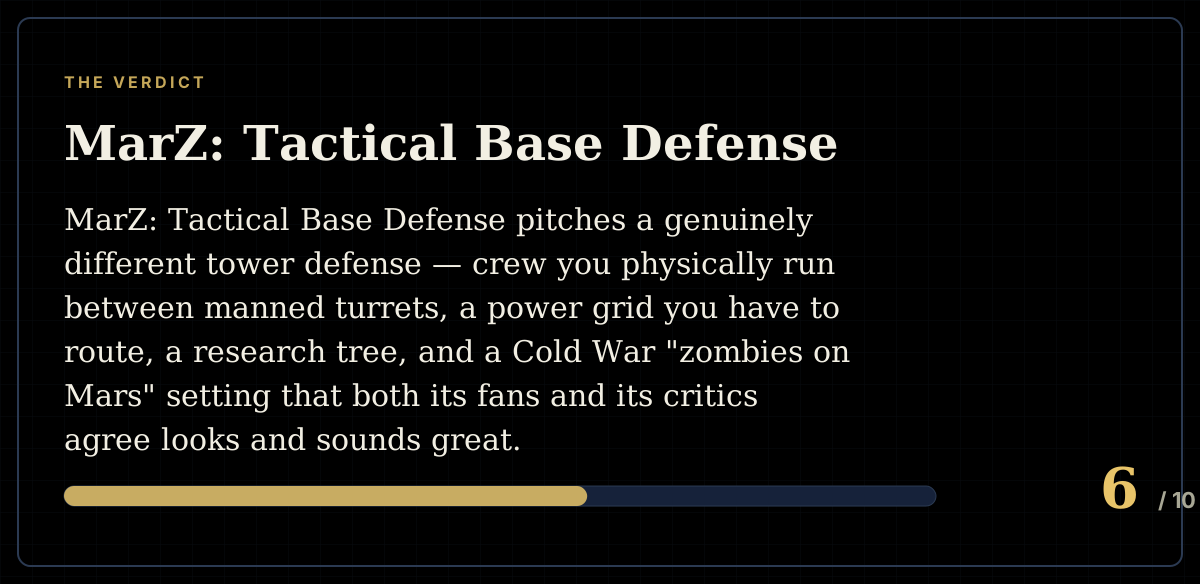
MarZ: Tactical Base Defense pitches a genuinely different tower defense — crew you physically run between manned turrets, a power grid you have to route, a research tree, and a Cold War "zombies on Mars" setting that both its fans and its critics agree looks and sounds great. What its own review history keeps circling back to, seven years after launch, is that most missions have one correct opening sequence, and finding it by repeated failure is the actual game more often than the tactics are. Add a persistent tail of crash and freeze reports and a campaign only 15% of owners have finished, and this lands as a well-dressed idea that never quite finished smoothing out its own edges.
Biggest strengths
- A genuinely different hook for the genre — crew must be run between manned turrets rather than placed and forgotten, and reviewers on both sides of the score line single this out
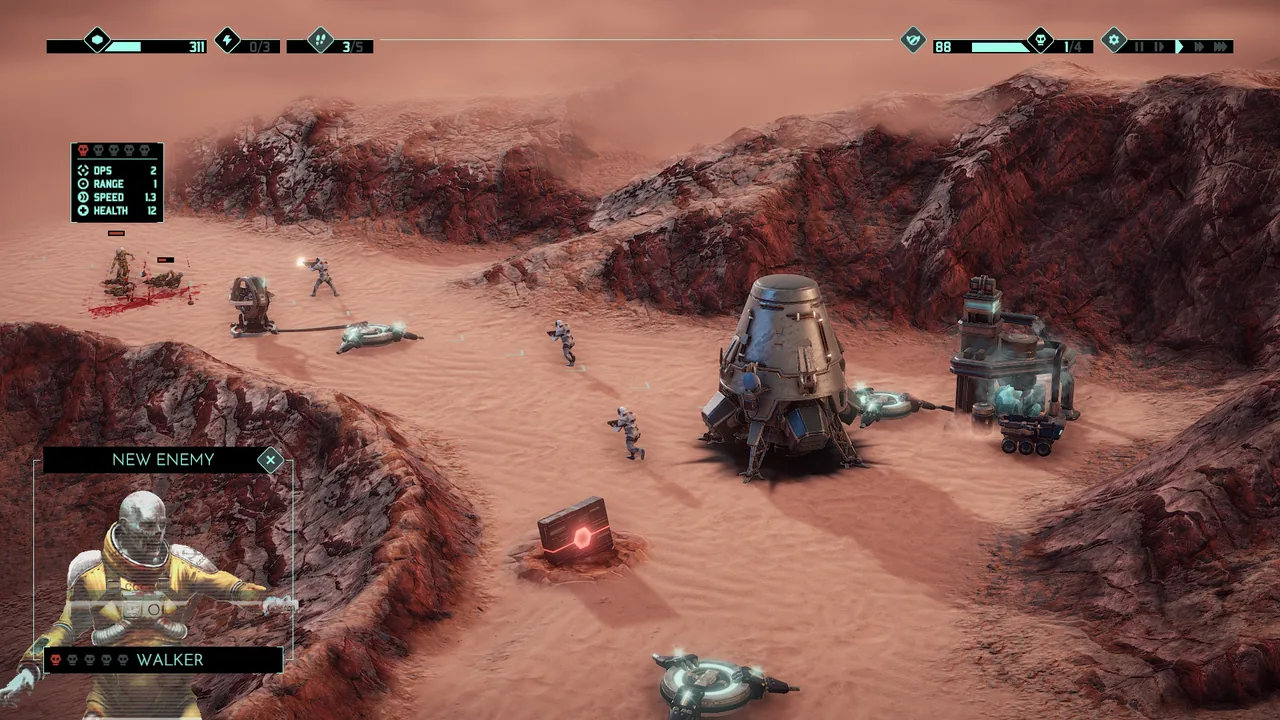
- A distinctive Cold War-era "zombies on Mars" aesthetic, praised across positive and negative reviews alike for its chunky retro tower and spacesuit designs
- A fully voice-acted 20-mission campaign plus Skirmish and Outbreak modes, and a Marsform level editor with Steam Workshop support for community maps
Biggest weaknesses
- The single most repeated complaint in the negative reviews, by a wide margin — missions have one "correct" build order, and deviating from it usually means restarting rather than adapting
- Specific, recurring bug reports (crew falling through the map, black-screen freezes, lost campaign progress on crash) appear from 2019 through reviews posted in 2026
- Several reviewers report unusually heavy GPU load and thermal spikes for a game of this visual scope
Who it's for: Tower defense players who want something structurally different from the genre's set-and-forget norm, and who don't mind replaying a level five or six times to find the one sequence it wants.
Our recommendation: Worth a look on sale for the setting and the crew-management hook; the persistent bug reports and the rigid mission design make full price a harder sell.
6 / 10
The pitch
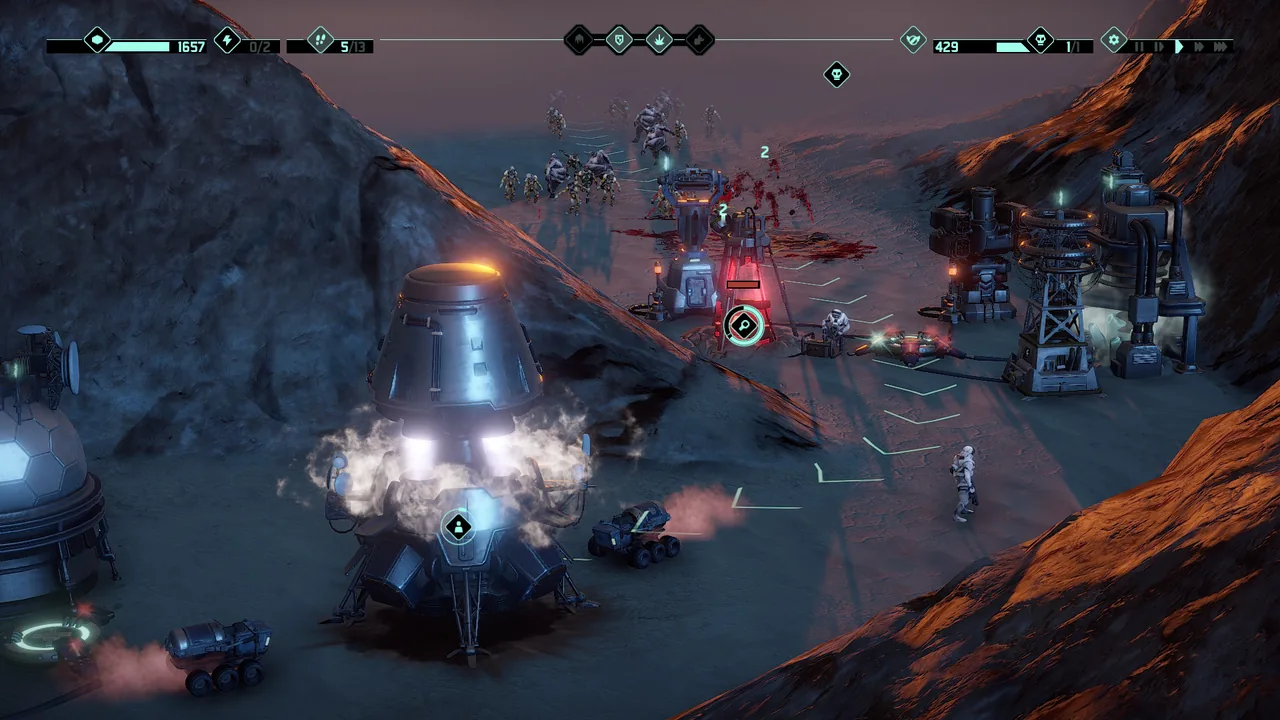
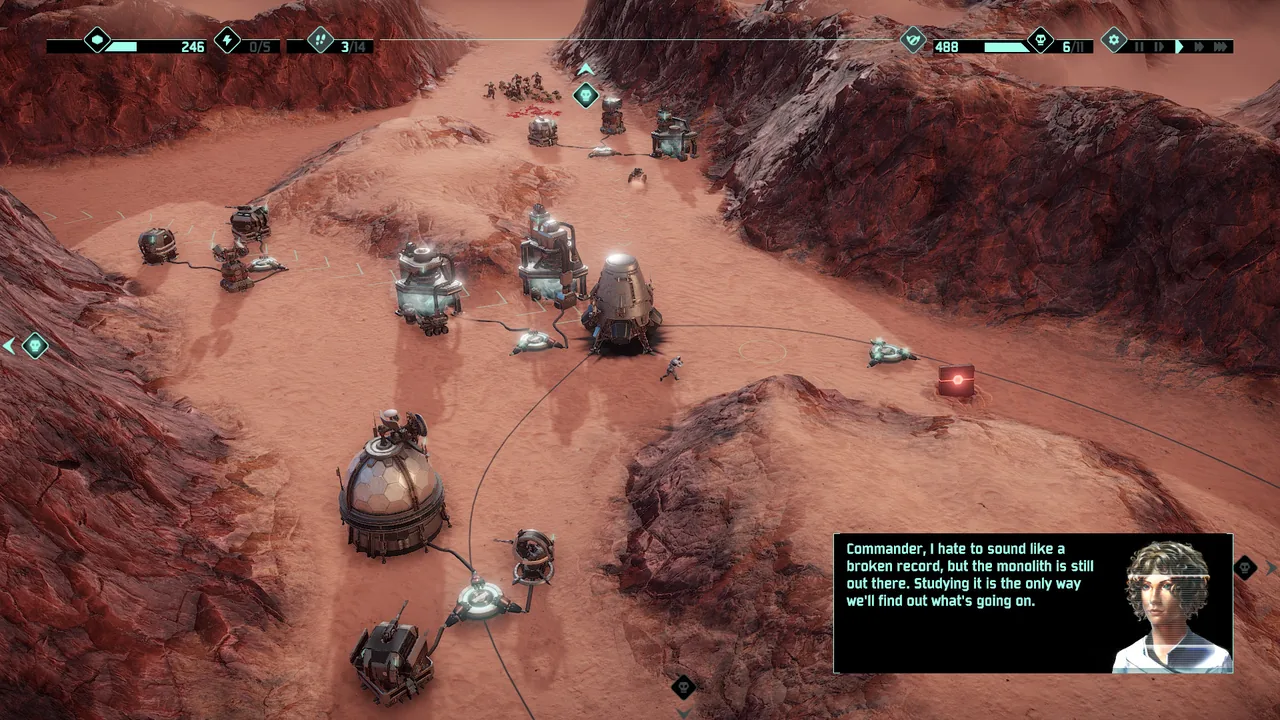
It's 2065, humanity is colonising Mars, and the first arrivals dig up a horde of undead cosmonauts who got there first. MarZ wraps a tower defense around that premise: you land a crew of marines, build a power grid, and defend a base across a 20-mission voice-acted campaign, a procedurally generated Skirmish mode, and an "Outbreak" variant that trades waves for one continuous horde. A Workshop-connected level editor called Marsform extends it further for players who want to build their own maps. The twist that separates it from the genre's furniture is that towers need to be manned — you're not just placing turrets, you're running a limited crew of marines between them, pulling people off one wall to reinforce another as the map tells you where the next rush is coming from.
What almost everyone agrees on
Giant Grey's retro Cold War art direction is the one thing that shows up as a compliment in nearly every review regardless of its final verdict, including ones that go on to recommend against the game. Reviewers use words like "chunky" for the tower and spacesuit models, praise the "nice atmosphere," and single out the voice acting as decent-to-good even when they think the plot it's narrating goes nowhere. One negative review that otherwise calls the game "wasted potential" still opens by crediting the graphics as "wonderfully done" and the tower and suit designs as "cohesive." That split — visuals and sound praised almost unanimously, everything built on top of them argued over — runs through the whole review history.
The complaint that dominates the negative reviews
Reading all 110 English-language negative reviews the game has ever received, one specific criticism recurs more than any other, often close to verbatim: that missions have a single correct build-and-research order, and that tower defense's usual creative latitude — try a layout, adjust, try again — doesn't really exist here. "There is no room for personalized strategy and only one path to win and then rinse and repeat," reads one review from April 2026, seven years after release. Others independently arrive at the same description: a "puzzle game with towers," a "recipe" you have to memorise, a game where "you have to follow a recipe to succeed" rather than build your own. One reviewer's entire review is literally the winning opening sequence, offered as proof that there is exactly one. This isn't a handful of outlier complaints — it's the same observation, made by strangers, across seven years of the review history.
The mechanism behind it, several reviewers explain, is the crew-running hook itself: because marines have to be physically walked between stations and each map has a fixed, learnable wave pattern, the optimal play increasingly resembles executing a memorised script rather than reacting tactically. A few positive reviews frame this as its own kind of challenge worth respecting; most negative ones frame it as the genre's core appeal — building a defense that's yours — being replaced by trial-and-error memorisation.
Bugs and performance, across seven years
Crash and freeze reports are not confined to launch week. Across the negative reviews, specific bug complaints — crew falling through the map and vanishing, black-screen lockups at the start of a level, lost campaign progress after a crash — appear in clusters through 2019 and 2020 and then keep resurfacing in smaller numbers through 2023, 2024 and into a 2026 review still describing the game as buggy enough to derail runs. Several reviewers who otherwise liked what they'd played specifically say they refunded over crashes rather than the difficulty or the mission design. A smaller but pointed cluster reports unusually heavy GPU load and thermal spikes for a game of this visual scope, with one comparison claiming it taxes a graphics card harder than recent AAA titles running at a higher resolution. None of this is universal — most reviews, positive and negative, don't mention stability at all — but it's a consistent enough thread across the game's life that a prospective buyer should expect some risk of hitting it.
The achievement curve tells the same story
Steam's global achievement data lines up with what the reviews describe. 91.4% of owners have landed a first kill and 85.8% have completed a first crew upgrade — the game hooks people early. From there the numbers fall steeply: 61.5% research something for the first time, 27.3% complete a full tech tree, and only 15.3% ever finish the 20-mission campaign. Fewer than one in ten (9.6%) complete every mission's optional challenge, and just 2.6% hold every achievement in the game — itself a figure one reviewer specifically flags as suspect, describing some achievements as "unattainable and buggy." Read next to the reviews, this looks less like a game people bounce off immediately and more like one that keeps a majority of buyers for its opening hours and then loses most of them to the difficulty wall the negative reviews describe.
What the positive reviews actually like
It would be wrong to read this as a game with no defenders — 76% of its 455 English reviews are positive, and Steam's own "Mostly Positive" tag reflects that. Fans describe real tension in juggling a power grid, a limited crew and simultaneous multi-directional assaults, and several specifically enjoy the "ultra slow-motion" option that lets you manage a chaotic wave without pausing outright. More than one comparison lands on "They Are Billions" crossed with classic Command & Conquer. A few reviewers who tried the game specifically to test the "only one way to win" criticism against their own playtime came away disagreeing, reporting a fair, well-paced difficulty curve instead — though, as with the bug reports, they're outnumbered by reviewers who ran the same experiment and landed on the opposite conclusion. One recent long-form review reports finishing 100% of the game in around 20 hours and calling it the best difficulty progression they'd seen in the genre — proof the design works for some playstyles even as it frustrates others.
Value and where it stands now
At NZ$26.99 for a roughly 20-mission campaign plus Skirmish, Outbreak and a level editor, several reviewers — including some recommending the game — explicitly say it's worth it on sale and a hard sell at full price. A newer review notes the developers "took his/her time to answer" a bug report directly, and the Steam news feed shows a research-and-balance update years after launch, which speaks to some ongoing attention. But a review posted in April 2026 states flatly that "the devs aren't reading these reviews and this game is dead," and there's no recent evidence in the review corpus of a fix for the specific rigidity complaint that dominates the negative column. Anyone buying today should weigh the distinctive premise and the strong art direction against a game whose most persistent criticism — for the buyers who bounce off it — has stood unaddressed since launch.
Verdict
MarZ: Tactical Base Defense is a tower defense with a real idea in it: manned turrets and a crew you have to physically move under pressure make for tension the genre's set-and-forget norm usually doesn't offer. Giant Grey backed that idea with genuinely well-liked art direction and voice work. But its own review history, read in full, keeps returning to the same complaint — that most missions resolve to one correct sequence rather than open tactics — and to a persistent, years-long tail of crash and freeze reports that a chunk of its buyers hit hard enough to refund over. A campaign only 15% of owners finish is the clearest evidence that whatever's wrong for those players is wrong early and stays wrong. Worth trying on a sale for the premise; go in expecting to replay missions until you find the sequence it wants, not to freely improvise one of your own.
Pros and cons
Pros
- A genuinely different hook for the genre — crew must be run between manned turrets rather than placed and forgotten, and reviewers on both sides of the score line single this out
- A distinctive Cold War-era "zombies on Mars" aesthetic, praised across positive and negative reviews alike for its chunky retro tower and spacesuit designs
- A fully voice-acted 20-mission campaign plus Skirmish and Outbreak modes, and a Marsform level editor with Steam Workshop support for community maps
- Achievement data backs up the reviews' own account of the game front-loading its quality — 91% of owners land a first kill, but only 15% finish the campaign
Cons
- The single most repeated complaint in the negative reviews, by a wide margin — missions have one "correct" build order, and deviating from it usually means restarting rather than adapting
- Specific, recurring bug reports (crew falling through the map, black-screen freezes, lost campaign progress on crash) appear from 2019 through reviews posted in 2026
- Several reviewers report unusually heavy GPU load and thermal spikes for a game of this visual scope
- Even recommenders frequently qualify their thumbs-up with "worth it on sale, not at full price"
Screenshots
-
MarZ: Tactical Base DefenseImage: Giant Grey via Steam -
MarZ: Tactical Base DefenseImage: Giant Grey via Steam -
MarZ: Tactical Base DefenseImage: Giant Grey via Steam -
How the review scores each part of the gameWanderer Editorial -
The game at a glanceWanderer Editorial -
The short versionWanderer Editorial