Game review
The Lord of the Rings: Gollum
3 / 10
- Developer
- Daedalic Entertainment
- Publisher
- Daedalic Entertainment, Nacon
- Released
- 25 May 2023
- Platforms
- Windows
- Genre
- Stealth, Action-Adventure, Fantasy
- Monetisation
- One-time purchase. No microtransactions. Several cosmetic and audio DLC packs (soundtrack, Sindarin voiceover, emotes) sold separately.
- Players
- Single-player
The short version
The Lord of the Rings: Gollum is a stealth-platformer from Daedalic Entertainment, released 25 May 2023, that casts you as Gollum navigating the years between The Hobbit and the events of the trilogy, torn between his cunning and his fading Sméagol self. It sits at a lifetime Mixed 40.4% across 1,513 reviews — a genuinely rare case where the badge undersells how bad the launch actually was, since roughly half of this review's negative sample dates to launch week alone. This review reads a substantial share of both the negative and positive corpora, cross-checks the most-repeated claims against Steam's own achievement data, and finds a game whose stealth and platforming mechanics were widely, specifically criticised as dated and clumsy, whose technical state on release caused crashes and severe frame drops even on capable hardware, and whose asking price drew comparisons to budget shovelware. The story around its launch is nearly as notable as the game itself: reporting from PC Gamer and PCGamesN, aggregated in the game's own Steam news feed, documents an official apology, the closure of Daedalic's development studio roughly five weeks after launch, and the game's Steam concurrent player count hitting zero multiple times by October 2023.
Biggest strengths
- The core premise — playing as a morally divided Gollum, choosing between his cunning and Sméagol impulses at key story moments — draws genuine, specific praise even from several critical reviewers, who single out the narrative concept and voice performance as the game's strongest element
- Several reviewers who stuck with the game past its rough opening hours describe a more forgiving, occasionally satisfying platforming rhythm once its systems click, particularly after post-launch patches
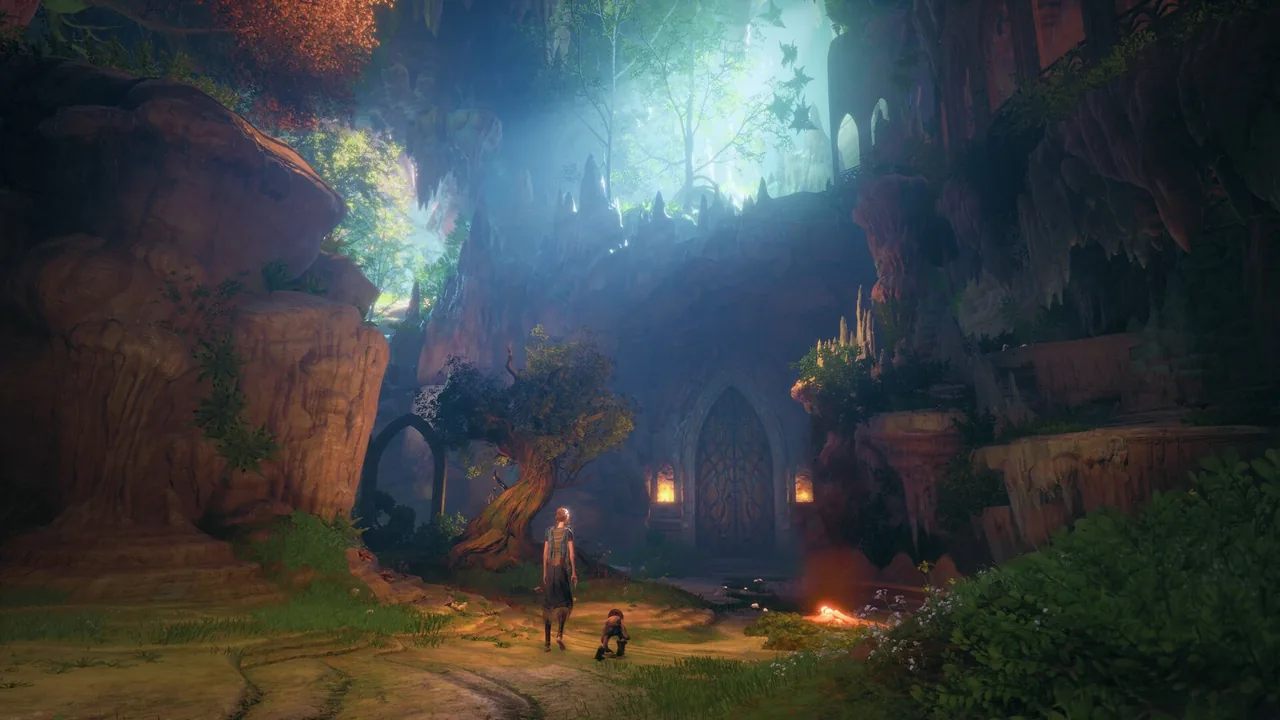
- Its art direction and character designs, while inconsistent with performance, earn isolated praise even in largely negative reviews
Biggest weaknesses
- Stealth and platforming mechanics draw widespread, specific criticism as clumsy and dated, with multiple reviewers comparing the control feel unfavourably to late-1990s action-adventure games
- Severe, well-documented technical problems on release — crashes, heavy frame drops and screen tearing reported even on high-end hardware — with Steam's own achievement data showing only 59.6% of players completed even the first chapter
- A NZ$78.99 asking price drew sustained, specific criticism as mismatched to the game's technical state and production values, a complaint that predates and is separate from any argument about its story or stealth design
Who it's for: Only die-hard Tolkien completionists curious about a genuine curiosity piece, ideally at a steep discount; not recommended to anyone shopping for a well-made stealth game or a strong Lord of the Rings experience.
Our recommendation: Skip it at full price without hesitation. If picked up in a bundle or heavy sale purely out of Tolkien curiosity, go in expecting a rough, dated technical experience rather than the "sneaking as Gollum" fantasy the concept promises.
3 / 10
Introduction
The Lord of the Rings: Gollum casts you as Middle-earth's most tragic supporting character during the years he spent as Sauron's prisoner and afterward, sneaking through Mordor and Mirkwood while his two competing selves — the calculating Gollum and the fading, more sympathetic Sméagol — argue over choices the player ultimately makes. Developed and published by Daedalic Entertainment, released 25 May 2023, it sits at a lifetime Mixed 40.4% across 1,513 reviews. That badge, on its own, undersells the scale of what happened around this launch. This review reads a substantial share of both the negative and positive samples, cross-checks the most repeated claims against Steam's own data, and covers a launch whose aftermath — documented by outside games press and aggregated directly into the game's own Steam news feed — is nearly as notable as the game's mechanics.
A genuinely interesting premise, poorly served
It's worth starting with what several critical reviewers, not just the game's defenders, credit as genuinely working. Playing as Gollum specifically, choosing at key moments between his cunning instincts and Sméagol's more sympathetic ones, is a distinctive angle this franchise hadn't tried before, and multiple reviewers single out the narrative concept and voice performance as real strengths even inside otherwise scathing reviews. One reviewer who finished the game states plainly that despite everything wrong with it, "I actually really enjoyed it," citing the character writing specifically. That context matters for a fair reading of what follows — this isn't a game whose foundational idea was bad, but one whose execution repeatedly undercut it.
Stealth and platforming that read as dated on arrival
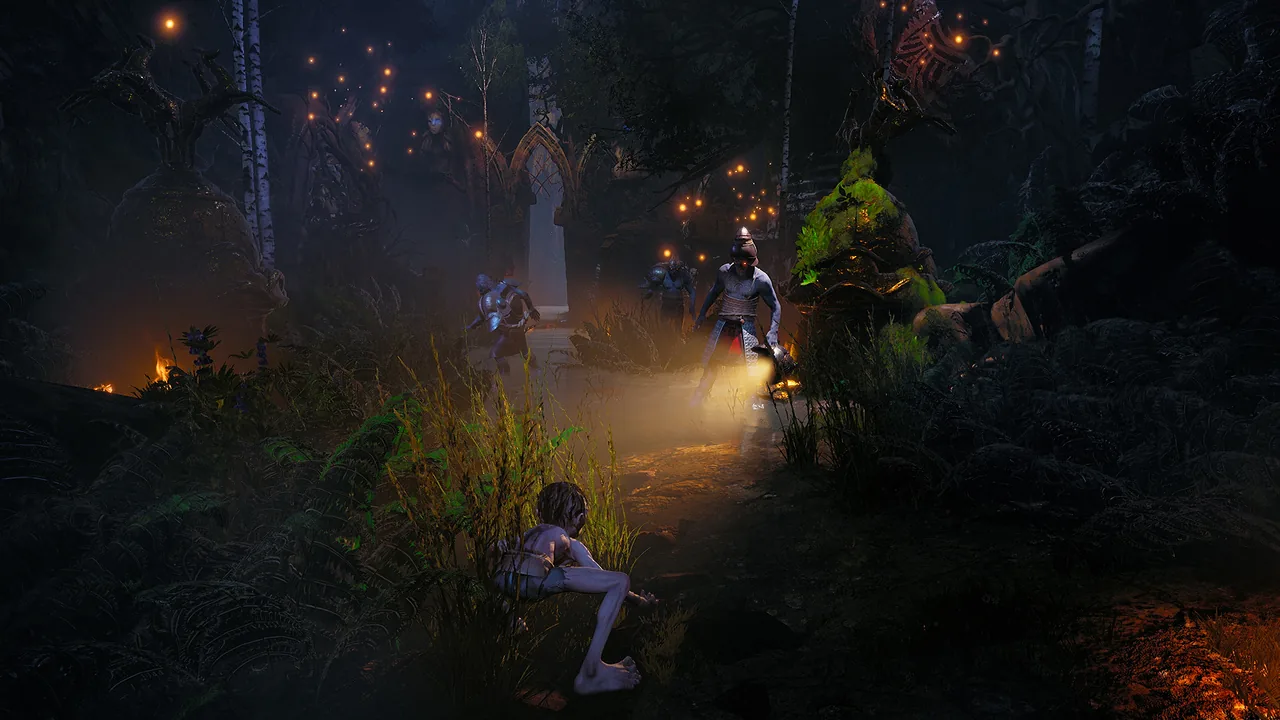
The mechanical core of the game — stealth sections and climbing-based platforming — drew consistent, specific criticism rather than vague dissatisfaction. Reviewers repeatedly compare the control feel to significantly older action-adventure games, with one describing mechanics "reminding me of old tomb raider games from 1998." Several reviewers who otherwise wanted to like the game describe checkpoints that failed to register properly, map sections that stopped loading after specific deaths, and stealth encounters offering little tactical depth beyond waiting for a patrol path to clear. This isn't a case of the mechanics simply not suiting every taste — the specificity and consistency of these complaints, across a full year of post-launch reviews, points to genuine design and implementation shortfalls rather than a mismatch of expectations.
A technical state severe enough to break progression
The clearest, most damaging finding in this review's sample is technical. Reviewers, including several running high-end hardware, report crashes, severe frame-rate drops and persistent screen tearing from launch day onward, and complaints of this kind continued well past the initial patch window — one review from October 2024, over a year after release, describes "an unavoidable crash and softlock in chapter 2" that made the game literally impossible to complete on multiple machines. Steam's own achievement data corroborates how many players never got far: only 59.6% of everyone who launched the game completed its first chapter, falling to 25.6% by the end of chapter two and 16.4% by chapter five. One widely-upvoted review's joking claim that "41% of people who own this game have jumped into the lava" versus "27%... finished chapter 2" tracks almost exactly against the real figures — the game's own "Lava" achievement sits at 38.6%, close enough that the joke doubles as an accurate summary of a genuinely severe completion cliff.
The most-upvoted reviews are jokes, not endorsements
Worth flagging plainly for anyone reading the game's Steam page directly: several of its highest-voted "positive" reviews are satirical rather than genuine recommendations, following the same pattern this library has documented on other games with infamous launches. A 60-vote thumbs-up opens "you have to have a very high IQ to appreciate" the game's "subtle" themes; a 167-vote review compares the experience to "a new FIFA game where you get to play as the guy who sweeps the parking lot." Reading the recommend percentage without checking which reviews carry it would meaningfully overstate genuine enthusiasm. Set against that, this review did find sincere, considered positive reviews too — several from 2024 specifically credit post-launch patches with meaningfully improving performance and describe a more playable, if still unremarkable, experience for anyone buying at a discount rather than full price.
A launch that became the story
What sets this review apart from most in this library is how thoroughly documented the fallout was by outside games press, all aggregated directly into the game's own Steam news feed rather than requiring outside digging. Daedalic issued a public apology the day after launch. PCGamesN reported on 30 June 2023 — five weeks after release — that Daedalic Entertainment was closing its development studio; PC Gamer separately reported that October that the studio's own apology statement appeared to have been written using ChatGPT without proper internal approval, a claim this review reports as that publication's finding rather than independently verified fact. By October 2023, PCGamesN reported the game's Steam concurrent player count had hit zero on multiple occasions. None of that changes what's actually playable today, but it's directly relevant context for a reader weighing whether to buy: this was, by any reasonable measure, one of 2023's most publicly acknowledged launch failures, not a game that merely underperformed critically.
Final Verdict
The Lord of the Rings: Gollum had a genuinely distinctive idea at its centre — playing the franchise's most morally complicated character, choosing which side of him wins — and a small but real minority of players, including some critical of nearly everything else, say that idea landed. Everything built around it fell well short: dated, clumsy stealth and platforming, a technical state severe enough to leave some players permanently stuck years after launch, and a full asking price that drew sustained, specific criticism as mismatched to what shipped. Its own studio's closure and a Steam concurrent player count of zero within five months aren't reviewer hyperbole — they're documented facts from outside games press, aggregated in the game's own store page. Skip it at full price; approach it only as a curiosity at a steep discount, and go in with patched-in performance improvements as your best hope rather than an expectation.
Pros and cons
Pros
- The core premise — playing as a morally divided Gollum, choosing between his cunning and Sméagol impulses at key story moments — draws genuine, specific praise even from several critical reviewers, who single out the narrative concept and voice performance as the game's strongest element
- Several reviewers who stuck with the game past its rough opening hours describe a more forgiving, occasionally satisfying platforming rhythm once its systems click, particularly after post-launch patches
- Its art direction and character designs, while inconsistent with performance, earn isolated praise even in largely negative reviews
Cons
- Stealth and platforming mechanics draw widespread, specific criticism as clumsy and dated, with multiple reviewers comparing the control feel unfavourably to late-1990s action-adventure games
- Severe, well-documented technical problems on release — crashes, heavy frame drops and screen tearing reported even on high-end hardware — with Steam's own achievement data showing only 59.6% of players completed even the first chapter
- A NZ$78.99 asking price drew sustained, specific criticism as mismatched to the game's technical state and production values, a complaint that predates and is separate from any argument about its story or stealth design
- The launch's aftermath was unusually public and well-documented by outside games press: an official apology, Daedalic Entertainment closing its development studio roughly five weeks later, and the game's Steam concurrent player count reportedly reaching zero multiple times by October 2023
Screenshots
-
The Lord of the Rings: Gollum™Image: Daedalic Entertainment via Steam -
The Lord of the Rings: Gollum™Image: Daedalic Entertainment via Steam -
The Lord of the Rings: Gollum™Image: Daedalic Entertainment via Steam -
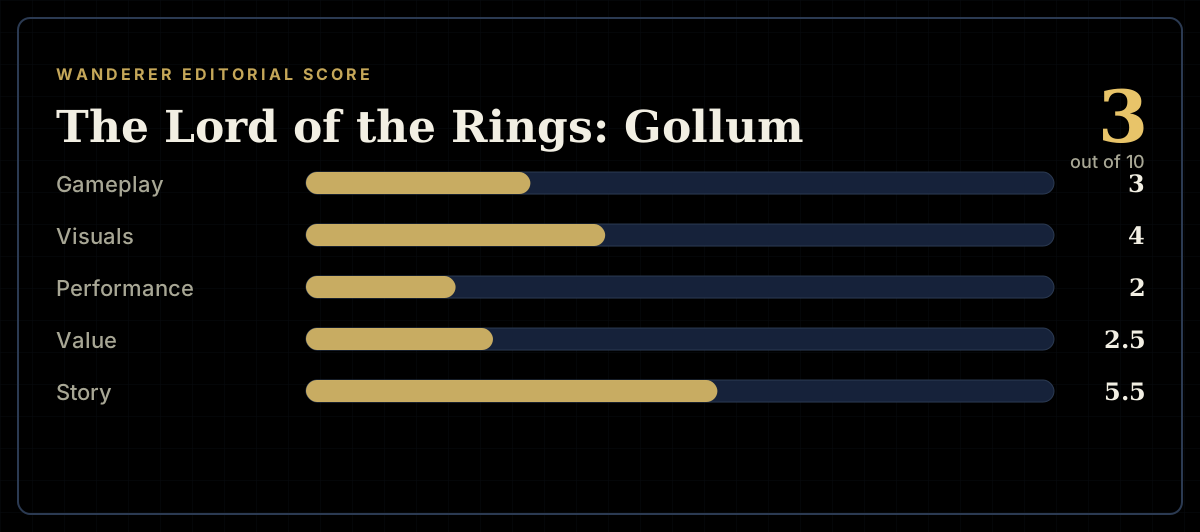
How the review scores each part of the gameWanderer Editorial -
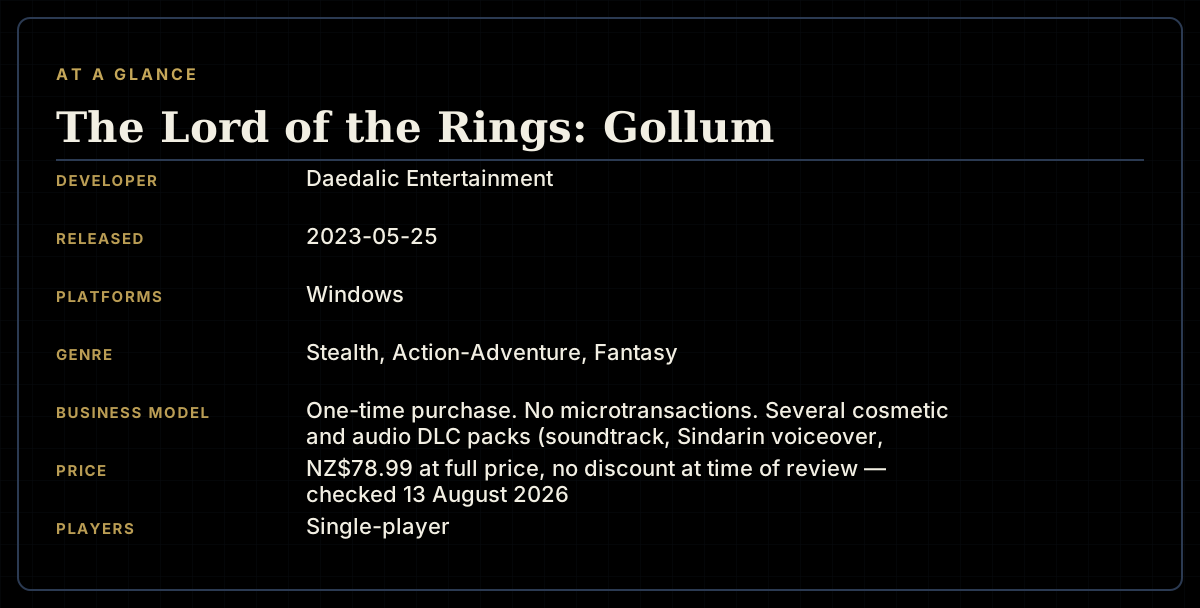
The essentials at a glanceWanderer Editorial -
The short versionWanderer Editorial