Game review
Loot Goblin
7 / 10
- Developer
- Rocky Strait Studios
- Publisher
- Rocky Strait Studios
- Released
- 4 August 2026
- Platforms
- Windows, macOS
- Genre
- Incremental heist game with active stealth dungeon-crawling and idle economy management
- Monetisation
- One-time purchase, no DLC listed on Steam, 19 achievements, no in-game store or premium currency of any kind — the in-game Shop and Trinket Workshop spend gold and dust earned through play only
- Players
- Single-player only; no co-op, PvP or online modes of any kind
The short version
Loot Goblin takes a premise this genre rarely bothers to question — why is the hero always the one who gets the treasure? — and builds an entire game out of answering it. Heroes clear the dungeons and find the loot; you play the goblin who sneaks in behind them, hides in barrels to dodge patrol cones, and steals it back before they can bank it. That's a genuinely different spin on the idle-loot formula, and the goblin's own stat sheet (speed, carry capacity, shields, loot value, drop odds) makes every upgrade feel like it changes how a raid actually plays rather than just inflating a number. What it doesn't have, three days after launch, is a single Steam review to weigh against any of that — which makes this as close to a first read as this library gets.
Biggest strengths
- Inverts the usual loot-RPG framing — heroes generate the treasure by clearing dungeons, and you play the goblin stealing it back from them mid-raid — which turns a familiar idle economy into an active heist
- Genuine stealth mechanics underneath the incremental shell, line-of-sight patrol cones, barrels to hide in, and a decaying "Stealth Streak" gold multiplier for staying undetected
- Upgrades are specific and systemic rather than flat multipliers, the goblin's own stat sheet touches carry capacity, hit-shields, sell price, loot value and drop-rarity odds as separate levers
Biggest weaknesses
- The game's own promotional screenshots show a genuinely busy HUD, treasure-rarity tables, an inventory counter, a stash ledger and a full goblin stat panel can all be open as stacked overlays at once, a lot of concurrent readouts for a game tagged "fast paced" on its own store page
- Three days after its 4 August release, Loot Goblin has zero Steam user reviews, and its own global achievement stats are tracking a population small enough that a tutorial-tier achievement sits behind two later-game ones, too small a sample to draw any real conclusion from
- Two upgrade trees, five loot rarities, a separate dust-and-trinket economy and gold-gated dungeon unlocks add up to a lot of interlocking systems for a game its own store page files under Casual and Arcade
Who it's for: Incremental and idle-RPG players who want their upgrade tree wired to an active, skill-based mini-game rather than a progress bar, and who don't mind being early to a release with no player consensus yet.
Our recommendation: At NZ$5.39 for a one-time purchase with no DLC and no premium currency, the downside of trying it is small even if the endgame loop turns out to be thinner than its opening hour promises. The free "Trial Run" demo is still live and is the more sensible way to find out whether the stealth-and-loot loop holds up for you, given there's no review base yet to answer that question for you.
7 / 10
Every idle loot game runs on the same fiction: you're the hero, and the dungeon owes you its treasure. Loot Goblin looks at that fiction and asks who's actually doing the work. In this version, heroes clear the dungeons and pocket the gold, same as always, they just do it offscreen, on their own schedule, while you play the goblin who sneaks in behind them and steals it back before they can bank it. It's a small reframing with a real effect: the loot table isn't a reward for winning a fight, it's a target you have to get away with.
The heist is the loop
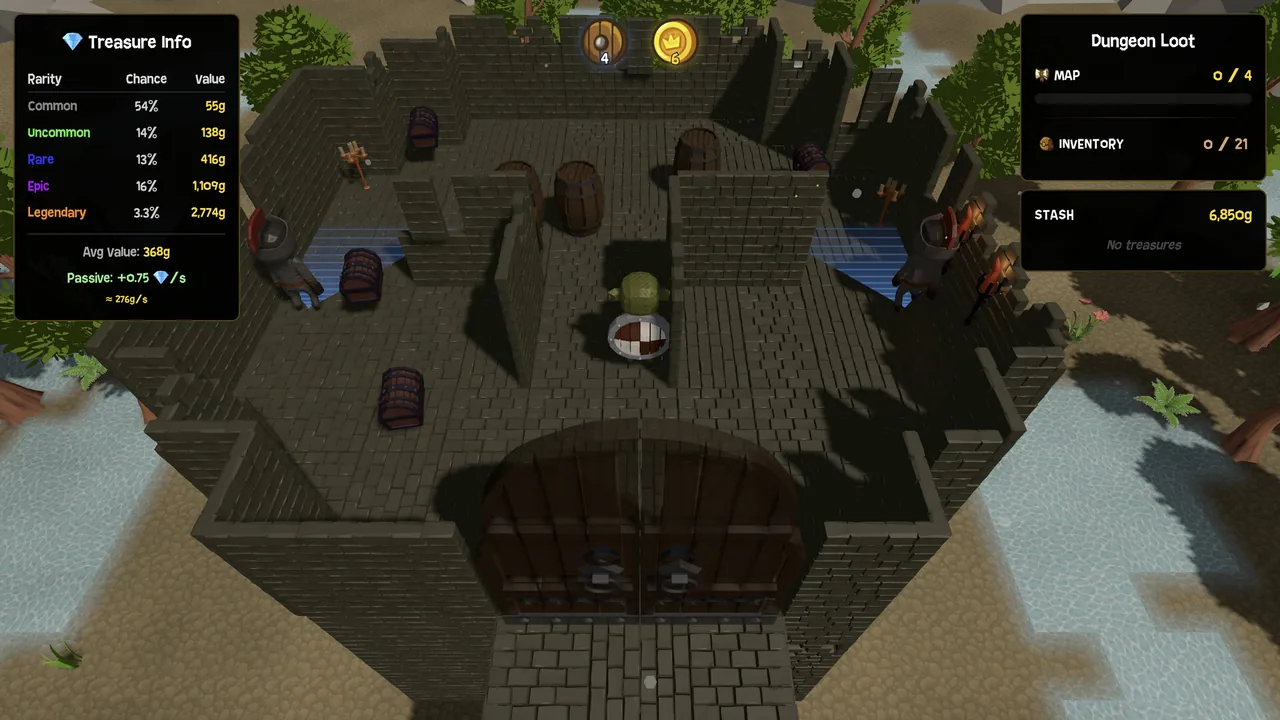
The active half of Loot Goblin plays out inside handmade dungeons — 15 of them across five biome types, according to the store page — where heroes patrol on their own routes and the goblin has to read those patrols rather than fight through them. The mechanics underneath are proper stealth, not idle-game dressing: patrol detection runs on line-of-sight raycasting rather than a simple proximity check, barrels dotted around each map let the goblin duck out of sight with their own entry animation and sound, and staying undetected for consecutive stretches builds a "Stealth Streak" that multiplies your gold take the longer you keep it going. Get spotted, and the goblin's stock of Shields — a defensive stat you upgrade separately, sitting at 2 in one official screenshot — is what stands between a close call and a run cut short.
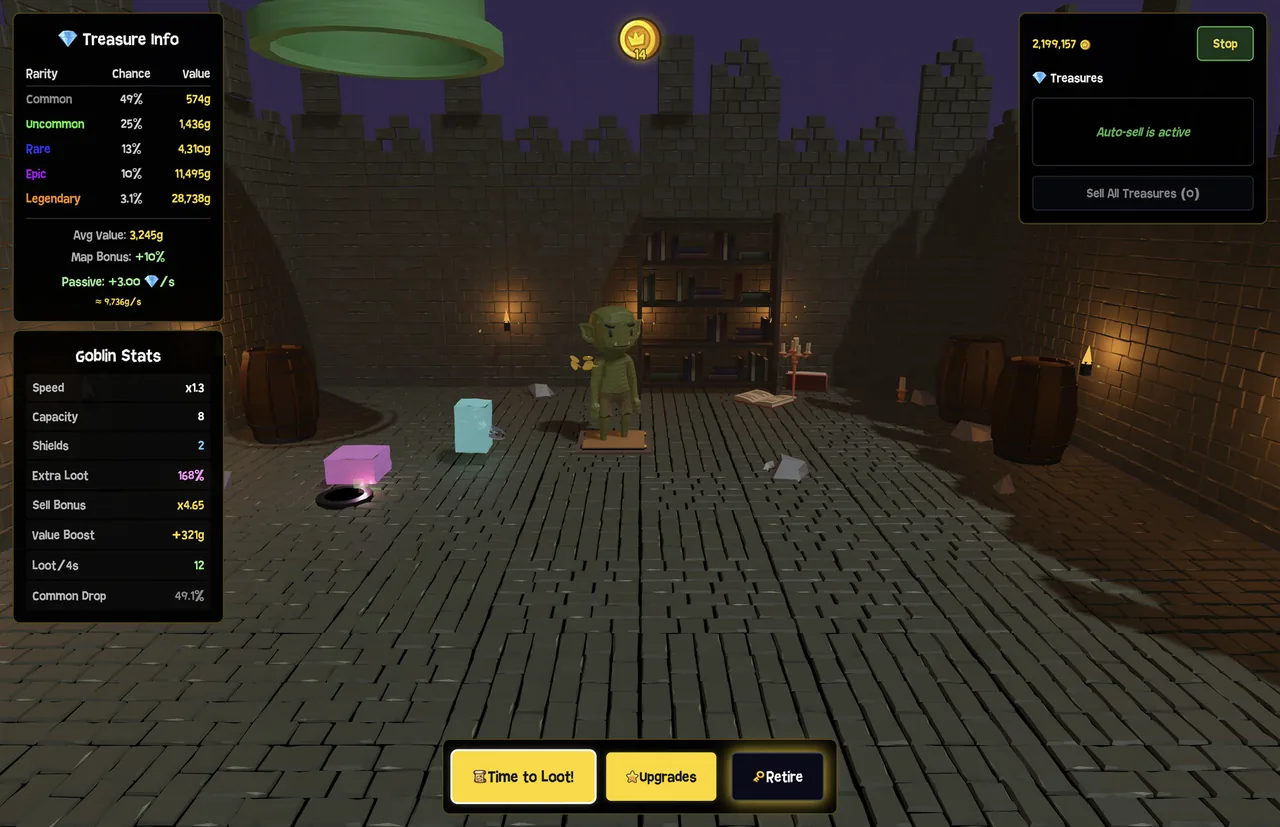
What you're actually stealing is graded on a five-tier rarity table that scales as you progress. In one of Rocky Strait Studios' own screenshots, a Common find nets 55 gold at a 54% drop chance while a Legendary sits at 3.3% for 2,774 gold; in a later-game shot from the same source, those same tiers have scaled to 574 gold and 28,738 gold respectively, with a passive income rate risen from under 1 gold a second to nearly 10,000. That's the shape of the whole game in two numbers — the loot table doesn't just get bigger, it gets restructured as your goblin's own stats change what "common" is worth finding.
An upgrade tree that changes how you play, not just how much you get
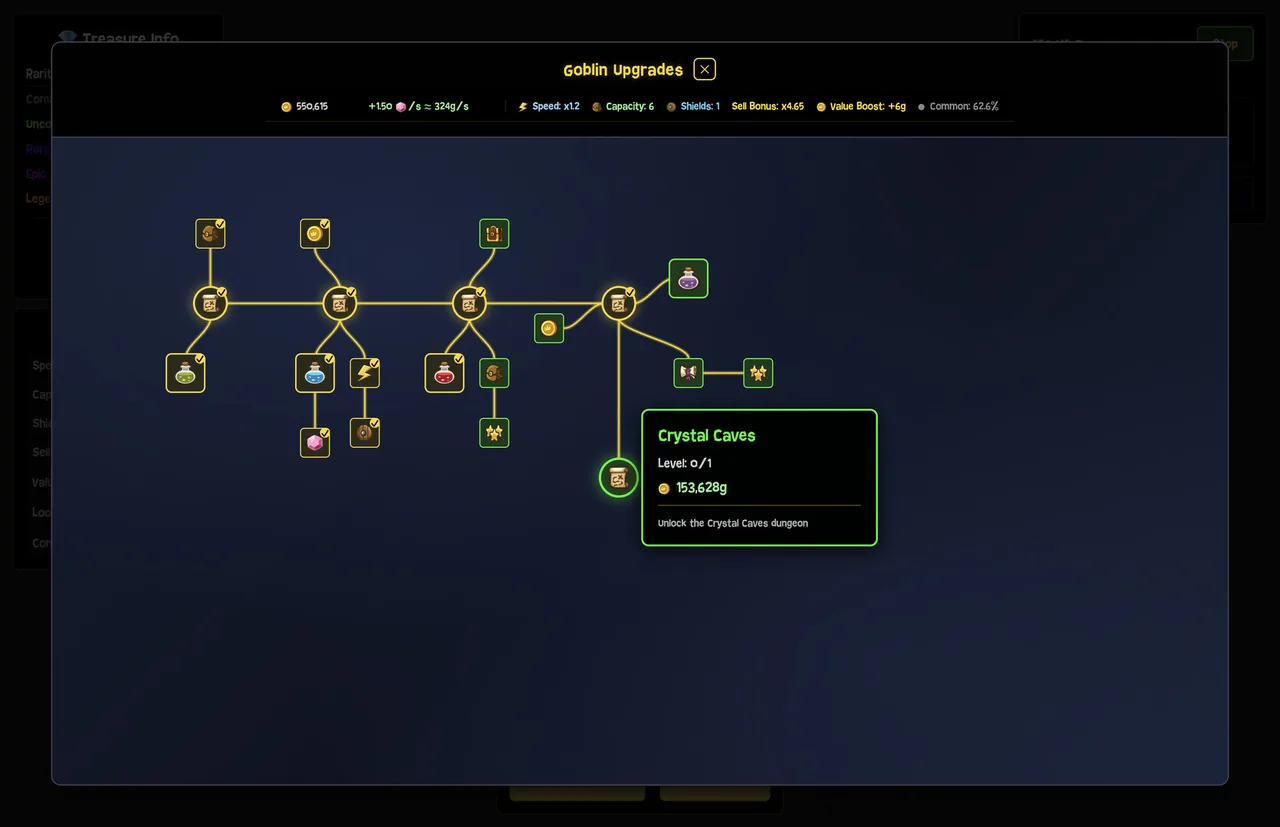
Loot Goblin's stated pitch — "meaningful upgrades that notably change the gameplay" — holds up better than most incremental games manage, at least going by what's on screen. The goblin's own stat panel lists Speed, Capacity, Shields, Extra Loot percentage, a Sell Bonus multiplier, a flat Value Boost, a Loot-per-tick rate and even the Common Drop percentage as separately upgradable numbers, which means spending gold on the tree changes what you can carry, how fast you move through a patrol, how much punishment you can absorb, and what the loot table itself looks like — not one abstract multiplier standing in for all of it. The upgrade tree pictured on the store page branches into potion-icon nodes, a speed boost, and gold-gated dungeon unlocks like Crystal Caves, priced at over 150,000 gold in one screenshot — which sets up a real spending tension between making your current goblin better and affording the next biome.
Sitting behind all of it is a second layer confirmed by the developer's own patch notes rather than the store page's pitch: a separate dust economy feeding a Trinket Workshop, where crafted trinkets carry rarity-graded modifiers (one patch note references nerfing an "of the Vault" modifier by roughly 25%, and buffing invisibility odds on "ghost" trinkets). And running underneath the whole climb is a "Retire" button, sitting next to "Upgrades" on the run-end screen — a prestige reset that lines up with the store page's own joke about the endgame being your "Retirement™." Two upgrade trees, a rarity-graded loot table, a second crafting currency and a prestige loop is a lot of interlocking systems for a game the store files under Casual and Arcade rather than Management — worth knowing going in if you were expecting something as disposable as its tags suggest.
Presentation and the one thing missing
Visually, Loot Goblin goes for a colourful, cartoony low-poly look — chibi goblin, blocky castle dungeons, glowing treasure props — that reads as a deliberate, coherent choice rather than a placeholder aesthetic, and it suits the heist framing better than a grim dungeon-crawler skin would. The interface is the one place the promotional material argues against itself: the same screenshots that show off the stat systems also show three or four overlapping panels open at once — a Treasure Info rarity table, a Dungeon Loot tracker, a Stash ledger and the full Goblin Stats sheet, all stacked in the corners simultaneously. For a game whose own short description calls it "fast paced," that's a lot of text to be reading mid-raid, and it's a fair thing to weigh against the otherwise clean idea underneath it.
The one thing this review can't do is check any of that against what other players are actually finding, because as of this week there isn't a player consensus to check it against. Loot Goblin's Steam page carries zero user reviews three days after its 4 August release, and the global achievement stats — Steam's other free source of aggregate player behaviour — are tracking a population small enough to be genuinely noisy: a tutorial-tier achievement called Fresh Start sits at 44.2%, behind two clearly later-game achievements, Ghost Run and Perfect Haul, both at 76.9%. That inversion is what a very small sample looks like, not a real finding about difficulty, and it's worth being upfront about rather than reading a trend into numbers this size. What the achievement list does confirm is scope: nineteen goals ranging from Barrel Bonanza and Stun Master through to Slime Empire and Modifier Encyclopaedia, touching stealth, combat, the passive economy and the trinket system in roughly equal measure.
That absence of player feedback isn't a mark against the game so much as a mark against the timing — Loot Goblin spent five months as a public "Trial Run" demo before launch, including a Steam Next Fest appearance, and the developer's own patch notes from that window show real iteration: barrel-hiding and the Stealth Streak mechanic were both added mid-demo, stealth detection was reworked from a proximity cone to proper line-of-sight raycasting, and a full tutorial system with controller support went in ahead of launch. That's a studio that used its testing window for more than marketing. It just means the verdict on whether the loop still feels good forty hours in is, for now, the same one this review has to leave open: nobody's said yet.
Final verdict
Loot Goblin earns a 7.0 for a premise that's genuinely rarer than it should be in this genre — an active stealth heist wired directly into an idle economy, with an upgrade tree that changes how a raid plays rather than just how big the numbers get — backed by five months of pre-launch iteration that shows in the mechanics rather than just the marketing copy. It doesn't score higher because there's no way yet to weigh the developer's own claims against anyone else's experience of the endgame grind, the trinket economy or whether that busy HUD settles down with familiarity, and because the interlocking systems on display are a lot to ask of a game wearing Casual and Arcade tags. At NZ$5.39 for a clean one-time purchase, the risk of finding out for yourself is small — and with the free Trial Run demo still live, you don't even have to spend that much to start.
Pros and cons
Pros
- Inverts the usual loot-RPG framing — heroes generate the treasure by clearing dungeons, and you play the goblin stealing it back from them mid-raid — which turns a familiar idle economy into an active heist
- Genuine stealth mechanics underneath the incremental shell, line-of-sight patrol cones, barrels to hide in, and a decaying "Stealth Streak" gold multiplier for staying undetected
- Upgrades are specific and systemic rather than flat multipliers, the goblin's own stat sheet touches carry capacity, hit-shields, sell price, loot value and drop-rarity odds as separate levers
- A one-time NZ$5.39 purchase with no DLC, no premium currency and no in-game real-money store, in a genre where monetisation is often the first thing to go wrong
- Five months of a public demo and a Next Fest appearance before launch, with patch notes showing real iteration on stealth detection, tutorial pacing and controller support well ahead of the 1.0 date
Cons
- The game's own promotional screenshots show a genuinely busy HUD, treasure-rarity tables, an inventory counter, a stash ledger and a full goblin stat panel can all be open as stacked overlays at once, a lot of concurrent readouts for a game tagged "fast paced" on its own store page
- Three days after its 4 August release, Loot Goblin has zero Steam user reviews, and its own global achievement stats are tracking a population small enough that a tutorial-tier achievement sits behind two later-game ones, too small a sample to draw any real conclusion from
- Two upgrade trees, five loot rarities, a separate dust-and-trinket economy and gold-gated dungeon unlocks add up to a lot of interlocking systems for a game its own store page files under Casual and Arcade
- No Linux support, and with no player consensus yet to check your own impressions against, the free demo is doing more of the pre-purchase legwork than usual
Screenshots
-
Loot GoblinImage: Rocky Strait Studios via Steam -
Loot GoblinImage: Rocky Strait Studios via Steam -
Loot GoblinImage: Rocky Strait Studios via Steam -
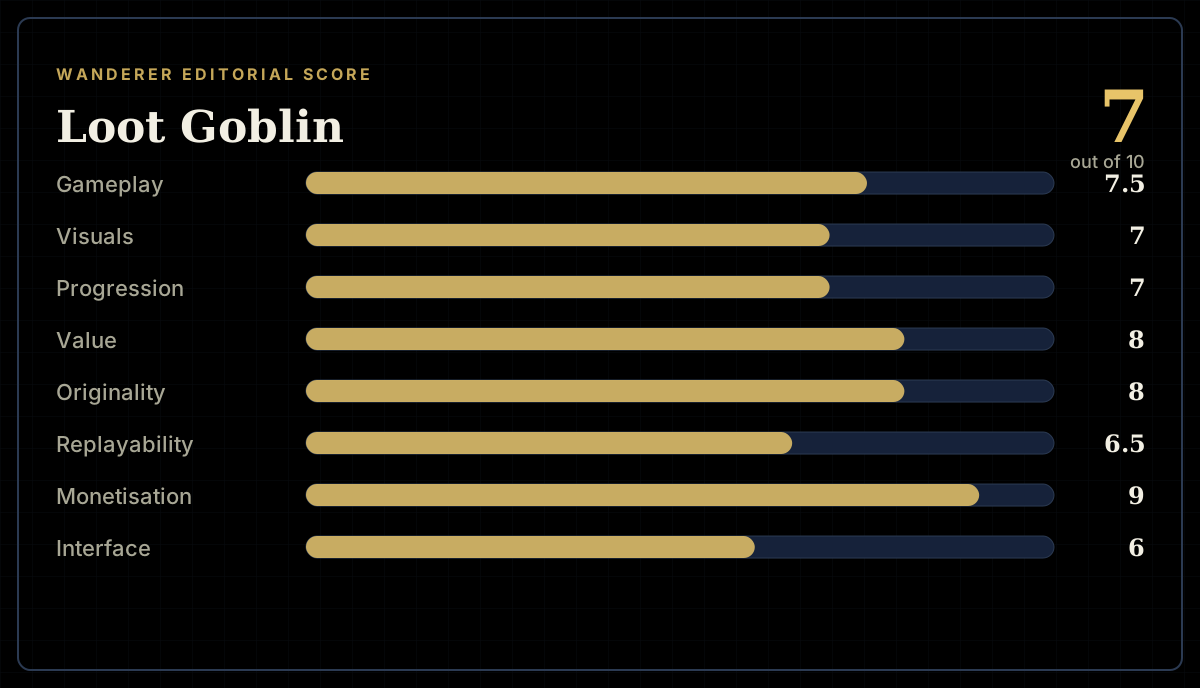
How the review scores each part of the gameWanderer Editorial -
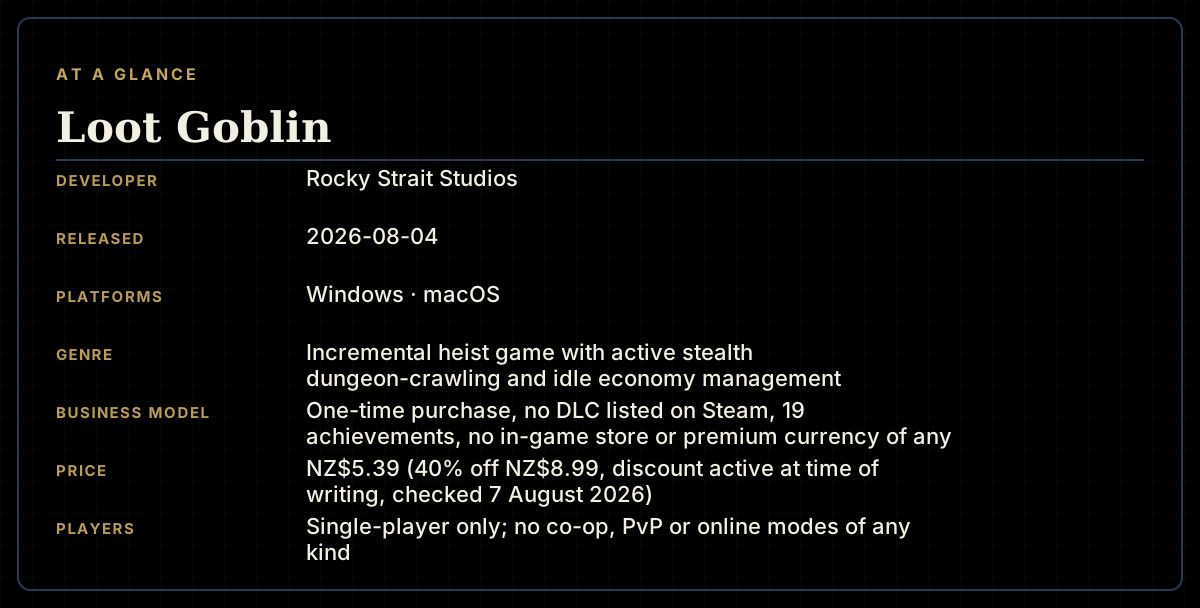
The game at a glanceWanderer Editorial -
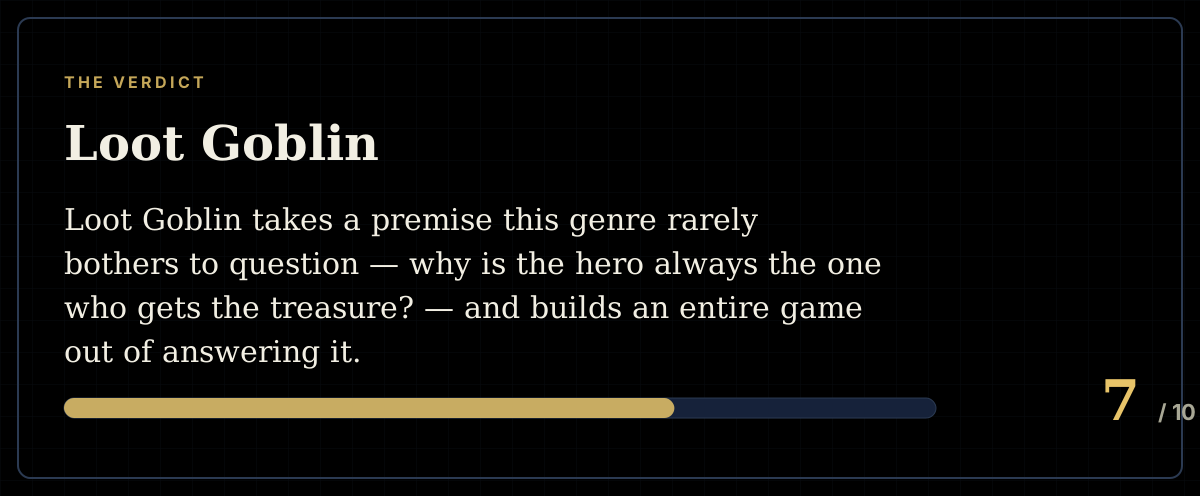
The short versionWanderer Editorial