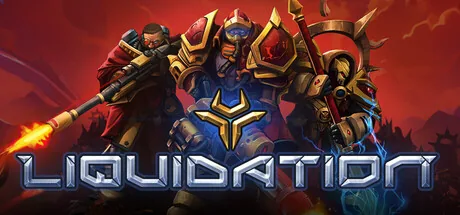
Game review
Liquidation
7.5 / 10
- Developer
- Divio
- Publisher
- MicroProse Software
- Released
- 4 August 2026
- Platforms
- Windows
- Genre
- Strategy
- Monetisation
- One-time purchase, no in-game store, no IAP
- Players
- Online PvP and co-op; multiplayer performance is an acknowledged early-stage weak point at high unit counts
The short version
Liquidation wears its influences on its sleeve, and its reviewers keep naming them for it. "If StarCraft and Warcraft had a baby, this would be their epic offspring," reads one. Another calls it simply "a modern Warcraft III." That comparison shows up independently, over and over, across a review sample built almost entirely of people who've apparently been waiting years for something like it — several disclose they've followed the game's development and tested it in its community Discord since as early as 2019, before MicroProse stepped in to publish this formal Early Access release.
Fifty-one of its first fifty-three reviewers recommend it, and reading closely, the praise isn't vague nostalgia — reviewers score individual systems, name specific comparison points (Warcraft 3, StarCraft, Dawn of War), and flag real, specific rough edges even inside their recommendations: a hero roster that's thinner than the games it's chasing, pathfinding that sometimes sends units the long way round, and multiplayer that at least one detailed reviewer calls not yet functional at higher unit counts. This is Early Access software with real substance already in it, built by someone reviewers clearly want to see succeed.
Biggest strengths
- A genuinely classic RTS feel that reviewer after reviewer independently compares to Warcraft III, StarCraft and Dawn of War, describing responsive controls, clean readability and combat that captures a specific, well-loved genre feeling modern RTS releases have mostly abandoned
- Three distinct, asymmetrical factions each with their own units, heroes and playstyle, praised for genuine visual and mechanical variety rather than reskinned symmetry
- A story-driven campaign that multiple reviewers score highly on its own merits, alongside skirmish and multiplayer modes that make the Early Access release feel complete rather than a thin proof of concept
Biggest weaknesses
- Multiplayer is flagged directly by at least one detailed reviewer as not yet reliably functional, with lag appearing once unit counts climb — a real limitation for an RTS where competitive play is a core draw
- Only two heroes per faction are currently available against the three offered by Warcraft III, a specific, repeated complaint that narrows build variety compared to the games it's most often compared against
- Pathfinding issues are reported specifically rather than vaguely, including harvester units travelling across the map to a distant base instead of the nearest available one
Who it's for: Classic RTS fans who grew up on Warcraft III, StarCraft or Dawn of War and have been waiting for something built in that specific tradition, especially those comfortable buying into Early Access and watching a passion project mature.
Our recommendation: A strong, cheap pick for RTS veterans specifically, with real Early Access caveats around multiplayer stability and hero variety — go in expecting a genuine work in progress with an unusually engaged community and developer behind it.
7.5 / 10
Every so often a genre that big publishers have mostly stepped away from gets picked back up by someone who simply refuses to let it die. Liquidation is a classic real-time strategy game built in the specific tradition of Warcraft III and StarCraft — resource gathering, hero units, asymmetrical factions, base building under pressure — developed largely solo, tested for years by a community that gathered around it before it ever had a formal release. MicroProse, the storied strategy publisher, has now put its name behind the Early Access launch, and the reception from that community is about as warm as this library sees: 51 of the game's first 53 reviewers recommend it.
A game its own reviewers have been waiting years for
The tone across the review sample is unusual for a brand-new release — it reads less like people discovering something and more like people finally getting something they've been anticipating. One reviewer discloses directly: "I've been testing the game for the past several years, as a member of the community... I just bought it, first and foremost to write this review," and goes on to praise the design with the specific, critical eye of someone who's watched it evolve. Another writes: "I have been following the game since the original devs posted first snippets on Twitter," adding they remain "very critical of all RTS games" despite that history. A third: "joined their Discord in 2019, and I'm extremely glad it persevered through all the hardships of life and circumstance devs encountered."
What those long-time testers actually praise, once they get into specifics, is consistent: "fully polished product with campaign, skirmish, and multiplayer... gameplay feel 9/10... game responsiveness 10/10, really smooth," reads one detailed breakdown. Others repeatedly reach for the same genre touchstones without apparent coordination — Warcraft III and StarCraft dominate, with Dawn of War coming up as a secondary reference. "If StarCraft and Warcraft had a baby, this would be their epic offspring," is about as clean a summary as the sample offers. Given how specifically and how often that comparison recurs, it reads as the accurate description of what this game is actually going for, rather than marketing language repeated back.
What the fans themselves flag as unfinished
The most useful criticism in this review sample doesn't come from the two negative reviews — it comes from inside the positive ones, from reviewers clearly invested enough to want the game to succeed and specific enough to say exactly where it currently falls short. One detailed comparison against Warcraft III notes the current roster sits at two usable heroes per faction against that game's three, "which I think severely limits gameplay variety" even while praising the faction designs otherwise. A separate reviewer flags multiplayer directly: "the online play is not really functional... same issues as all the other RTS games using off-the-shelf engines, just tons of lag when unit counts get up there. Not recommended for online play at the moment" — a specific, credible caution from someone who otherwise recommends the game for single-player use. Pathfinding draws a similarly concrete complaint: harvester units get stuck after building an extraction structure, and "instead of bringing the resources to the nearest HQ building they just run across the map to the opposite side."
The campaign draws more mixed marks than the moment-to-moment combat. One veteran reviewer, giving the game a strong overall recommendation, is blunt about one element: "the dialogs are horrible," adding the game "is made for veterans" of the genre rather than newcomers. Another notes the story "feels a bit rushed, but I guess this is EA, so hopefully will get iterated as time goes on" — a fair, patient framing rather than a dismissal. A recurring, more minor technical complaint is worth flagging plainly: several independent reviewers report their GPU running notably hot while playing, with specific temperatures cited in the high 60s to 80-degree-Celsius range. This review can't determine from a review corpus alone whether that reflects inefficient rendering work or simply what sustained, full-load RTS play does to hardware, but it's specific and repeated enough to be worth a prospective buyer's attention.
A developer already responding
Liquidation's own patch history backs up what reviewers describe as an actively engaged developer. A patch — the first since Early Access launch — shipped in the same window this review was researched, adding a new playable hero for the Scourge faction and fixing a settings bug where display resolution frequency wasn't saving correctly, alongside quality-of-life additions like an option to invert mouse drag-scroll. One reviewer describes a personal experience of that responsiveness directly: "I had an issue with the resolutions in the game and he fixed it within an hour or two." That kind of turnaround, this early, is a meaningfully different signal than a studio that's gone quiet post-launch.
Final verdict
Liquidation is a genuinely accomplished Early Access RTS built with real care by someone reviewers clearly trust, wrapped in a specific, well-executed homage to a style of strategy game the genre's biggest publishers have mostly left behind. The praise in its review sample is detailed rather than vague, and so is the criticism sitting alongside it — thinner hero rosters, real multiplayer performance concerns, and pathfinding rough edges that a longer Early Access period should have time to address. None of that reads as neglect; if anything, the patch history and the reviewers' own accounts of quick fixes suggest the opposite.
Recommended for RTS fans specifically, at a price that makes the Early Access risk easy to accept — just treat multiplayer as a work in progress for now, and play the campaign and skirmish modes if you want the most finished version of what's currently on offer.
Players who want that same base-building, hero-driven strategic tension sustained across a persistent, ever-expanding world rather than a single skirmish map, may also want to look at Wanderer.
Pros and cons
Pros
- A genuinely classic RTS feel that reviewer after reviewer independently compares to Warcraft III, StarCraft and Dawn of War, describing responsive controls, clean readability and combat that captures a specific, well-loved genre feeling modern RTS releases have mostly abandoned
- Three distinct, asymmetrical factions each with their own units, heroes and playstyle, praised for genuine visual and mechanical variety rather than reskinned symmetry
- A story-driven campaign that multiple reviewers score highly on its own merits, alongside skirmish and multiplayer modes that make the Early Access release feel complete rather than a thin proof of concept
- An unusually engaged, long-running community built up over years of pre-release testing, and a developer reviewers describe as responsive — one account describes a personal bug getting fixed within an hour or two of reporting it
- A genuinely low price for the amount of content on offer, repeatedly singled out by reviewers as excellent value even before considering further planned updates
Cons
- Multiplayer is flagged directly by at least one detailed reviewer as not yet reliably functional, with lag appearing once unit counts climb — a real limitation for an RTS where competitive play is a core draw
- Only two heroes per faction are currently available against the three offered by Warcraft III, a specific, repeated complaint that narrows build variety compared to the games it's most often compared against
- Pathfinding issues are reported specifically rather than vaguely, including harvester units travelling across the map to a distant base instead of the nearest available one
- The campaign's dialogue is criticised directly by at least one veteran reviewer as weak even while the same review recommends the game overall, and the story is described elsewhere as feeling rushed for an Early Access build
- Multiple independent reviewers report high GPU temperatures while playing, worth flagging plainly even though this review can't determine whether it reflects inefficient rendering or simply sustained full-load play
Screenshots
-
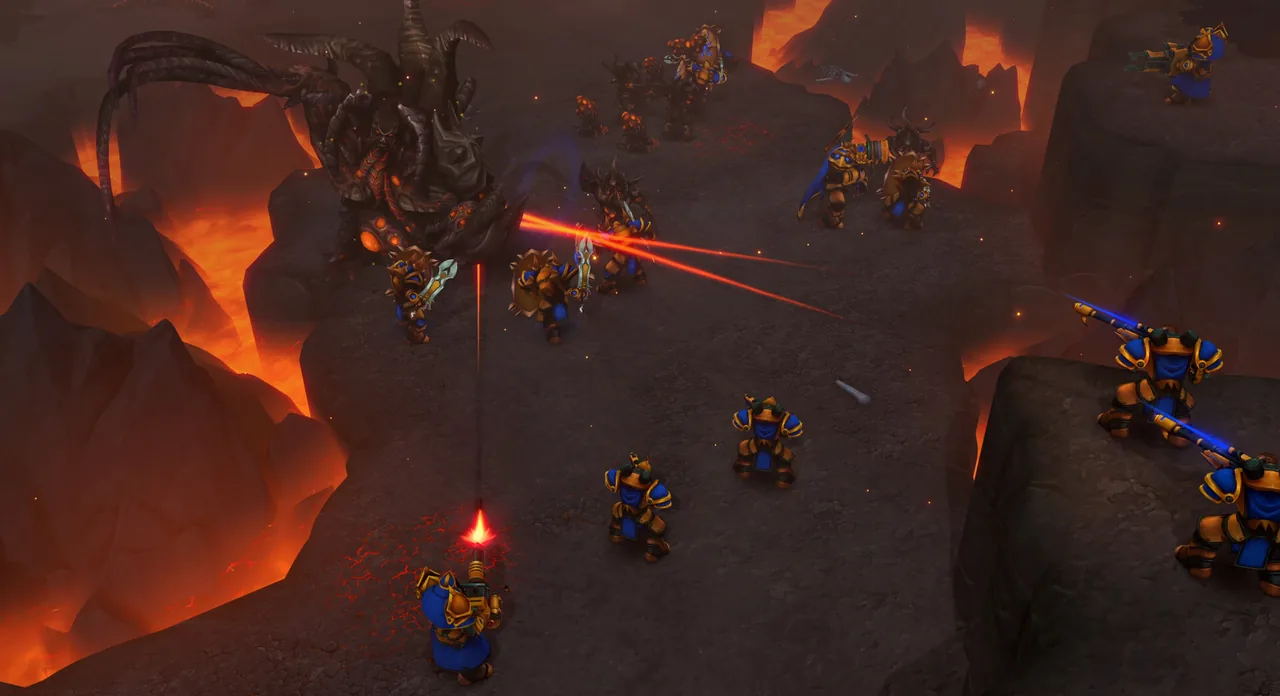
LiquidationImage: MicroProse Software via Steam -
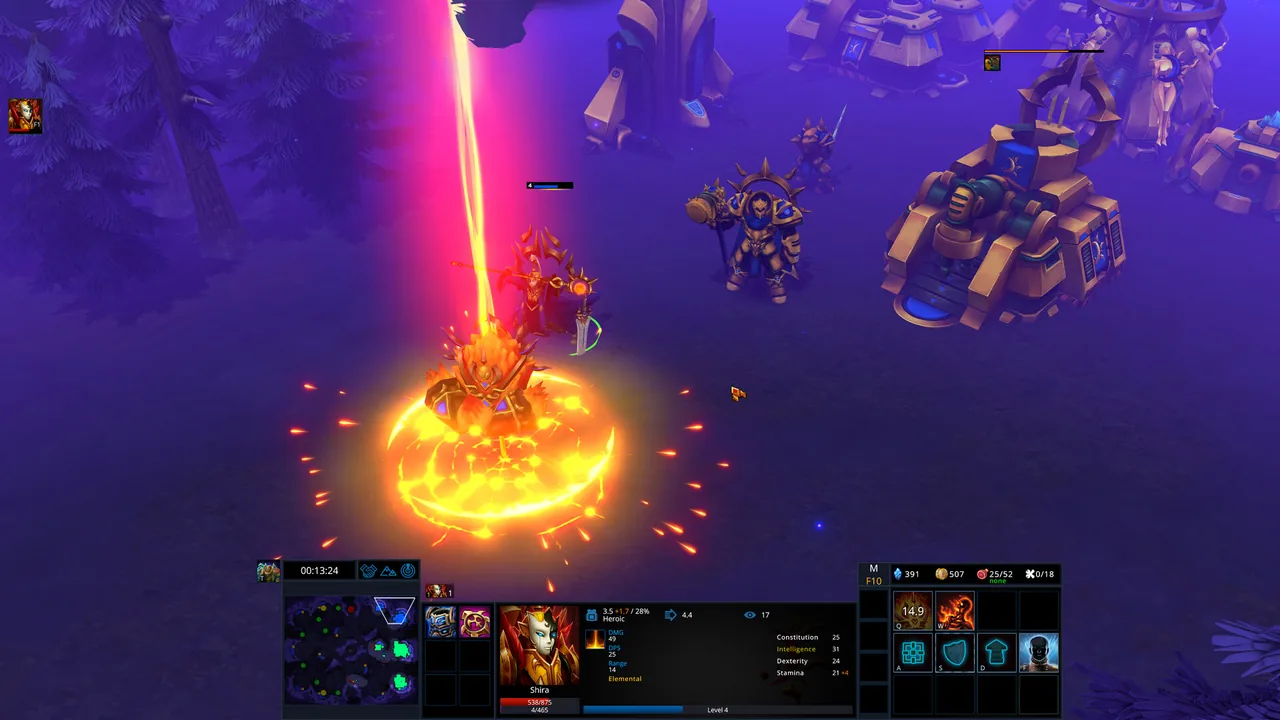
LiquidationImage: MicroProse Software via Steam -
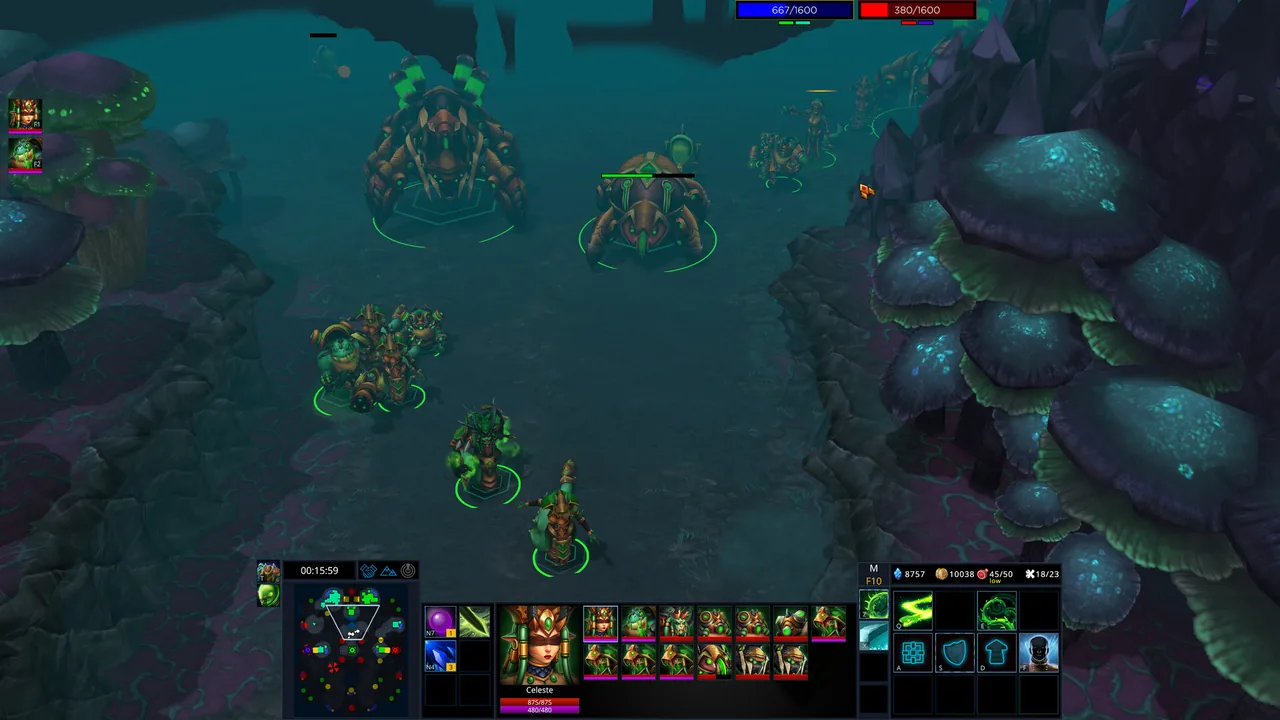
LiquidationImage: MicroProse Software via Steam -
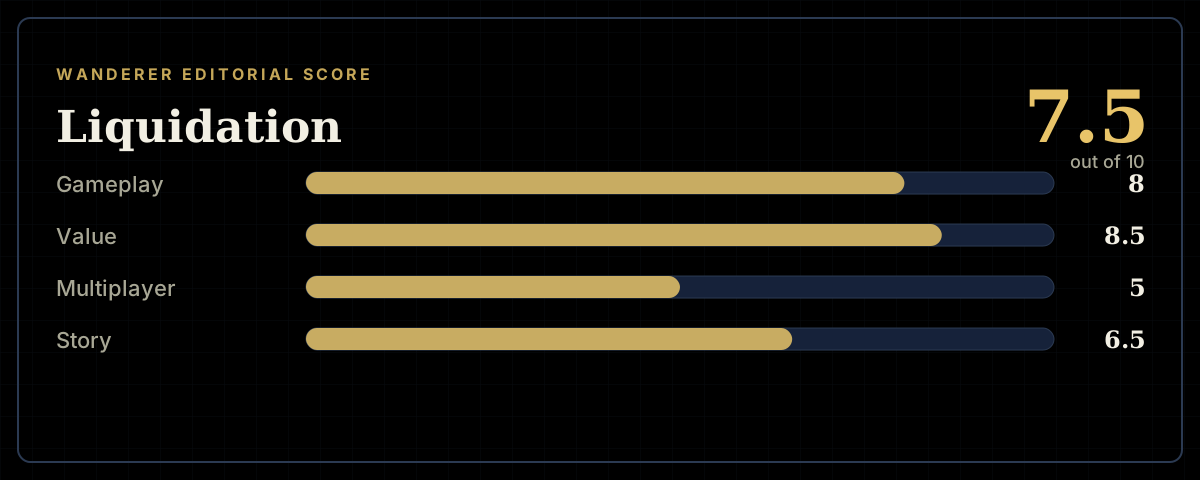
How the review scores each part of the gameWanderer Editorial -
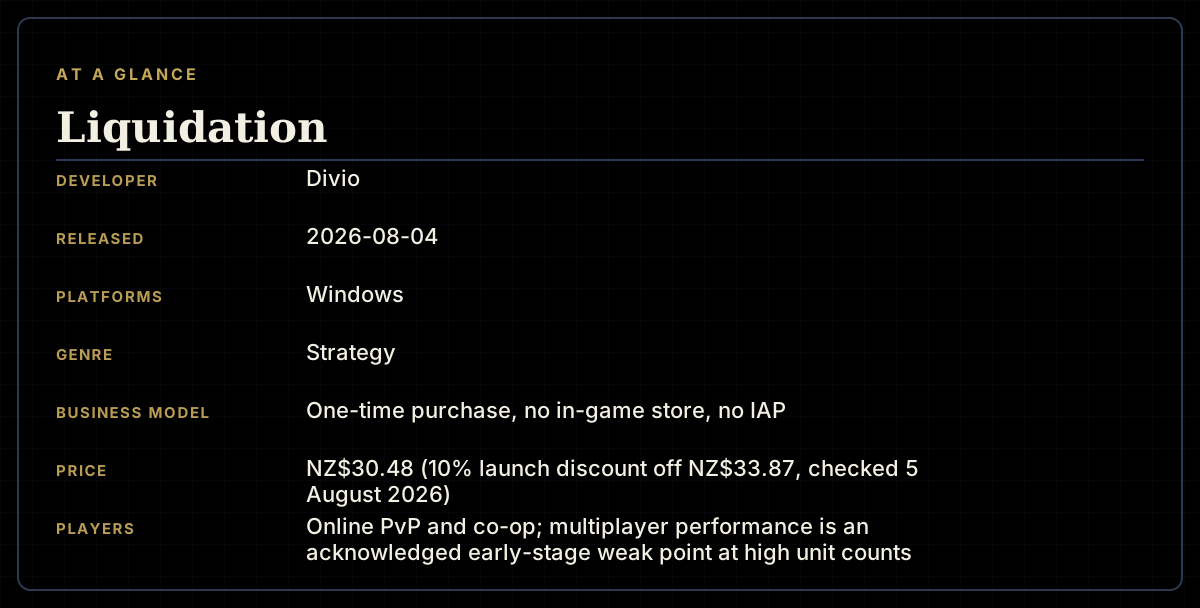
The game at a glanceWanderer Editorial -
The short versionWanderer Editorial