
Game review
Inner Voice Review: A Solo-Developed Walking Sim Steeped in Grief
7.7 / 10
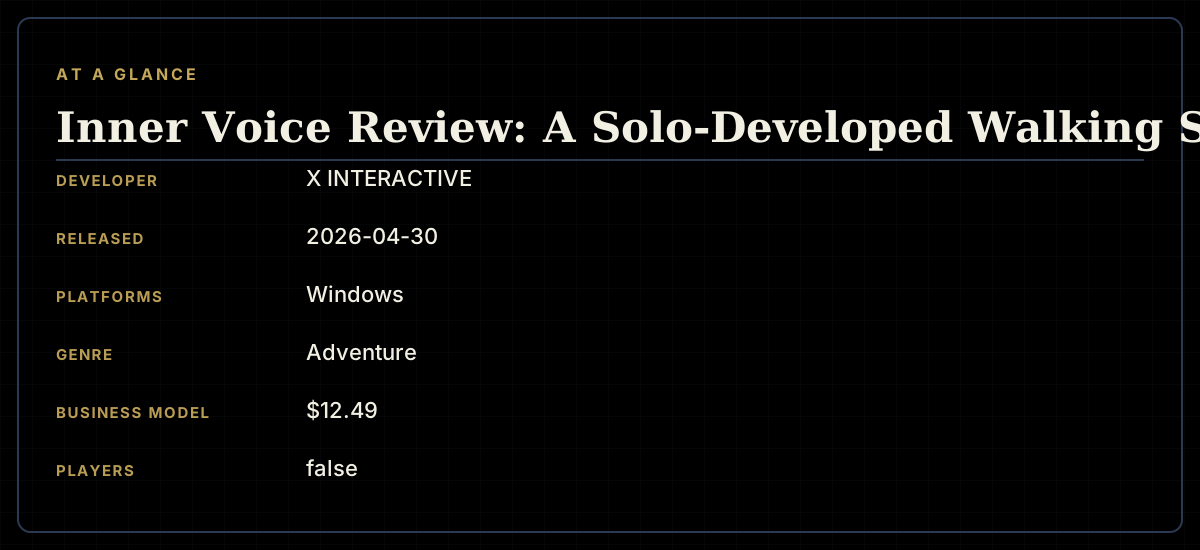
- Developer
- X INTERACTIVE
- Publisher
- Dionous Games
- Released
- 30 April 2026
- Platforms
- Windows
- Genre
- Adventure
- Monetisation
- $12.49
- Players
- false
The short version
Inner Voice is a quiet, solo-developed exploration horror that trades jump scares for a slow, narrator-led walk through grief, memory, and a haunted Victorian-Western town, and its Positive review sample keeps comparing it favorably to Dear Esther, Layers of Fear, and Amnesia for its restraint and distinctive art direction, even while a minority found its emotional payoff unclear and its lack of comfort options a real barrier for motion-sensitive players.
Biggest strengths
- A distinctive, surreal art direction blending Victorian and Western aesthetics across four dreamlike chapters, repeatedly singled out by reviewers as one of the most memorable things they've seen in the genre this year
- A well-received narrator performance from Magnus White, described by multiple reviewers as a voice that 'stays with you long after the credits roll' and that carries the emotional weight of the story
- Atmospheric horror built on sound design, pacing, and restraint rather than cheap jump scares, with reviewers specifically praising well-timed scares and comparing the tone favorably to Dear Esther, Amnesia, and Layers of Fear
Biggest weaknesses
- At least one reviewer found the emotional payoff unclear, unsure what Booker's redemption was actually for, and described the environmental quality and voice acting as inconsistent across the game's four chapters
- A specific accessibility gap: one reviewer reports the game induces motion sickness with no options to mitigate it and no easy way to quit once affected, a real barrier for motion-sensitive players given the genre's inherent camera movement
- As a roughly 4-5 hour solo-developed narrative experience priced at $12.49, value-conscious buyers who bounce off the ambiguous, symbol-driven storytelling may feel the runtime-to-price ratio is thin
Who it's for: Best for fans of narrative-first, low-threat walking simulators who want atmosphere and voice-led storytelling over combat or chase sequences; a poor fit for players sensitive to camera-motion discomfort, since no comfort settings are reported, or for anyone wanting a tightly resolved narrative rather than an ambiguous, symbol-driven one.
Our recommendation: Buy it
7.7 / 10
A solo-developed walk through grief and memory
Inner Voice is a first-person, exploration-driven adventure developed solo by X INTERACTIVE and published by Dionous Games, and it wears its small-team origins as a point of pride rather than an excuse. The developer's own note on the store page asks players to "take your time, explore carefully, and let the atmosphere guide you," and that instruction turns out to be the entire design philosophy in miniature. You play as Booker, a man searching for answers after his wife's disappearance, led through four dreamlike chapters by the voice of a mysterious narrator named Magnus White, who questions, guides, and occasionally haunts him as fragments of the truth surface. One reviewer, reflecting after finishing it, called it "a solid showing, especially for a one man shop" — a fair summary of how the review sample generally frames the game's ambitions against its modest scale.
A distinctive Victorian-Western art direction
The single most consistently praised element across this Positive review sample is Inner Voice's visual identity, which blends Victorian and Western aesthetics into abandoned spaces and surreal locations that don't quite resemble anything else in the genre. One reviewer called the art direction "one of the most distinctive things I've seen this year," while another described arriving at "a haunted town in the Wild West" as "such a unique horror setting" that pulled them in faster than expected. A German reviewer specifically praised the game's ability to mix "Victorian and Western themes" into a coherent, unsettling whole rather than a stylistic mishmash, and multiple reviewers cited the environmental art and lighting as reason enough to recommend the game on its own.
Magnus White's narration carries the emotional weight
Because Inner Voice deliberately avoids combat, stealth, or chase sequences, its storytelling rests almost entirely on Magnus White's narration, and the review sample treats that voice performance as the game's emotional anchor. One reviewer wrote that "Magnus White's voice stays with you long after the credits roll," while another described the whole experience as "less of a game than an intense experience" that reminded them of childhood nightmares. The voice-led structure means players who don't connect with the narrator's delivery are likely to bounce off the whole experience, but for the majority of this sample, it's precisely what elevates Inner Voice above a generic walking simulator.
Horror built on restraint, not jump scares
Reviewers repeatedly frame Inner Voice's horror as atmospheric and slow-burning rather than reliant on cheap scares, comparing it favorably to genre touchstones like Dear Esther, Amnesia, and Layers of Fear. One reviewer specifically praised the game for having "no cheap jumpscares" while still delivering "very specific and more atmospheric horror aspects," and another highlighted that the environment, sound design, and pacing "all work together to create a consistently unsettling experience" without overly relying on shock tactics. A reviewer who enjoys Layers of Fear specifically called out the absence of "stealth, no chasing, no real threats," framing that as a selling point for players who want dread without the stress of an active pursuer.
Environmental puzzles hit a comfortable difficulty balance
The story puzzles woven through each chapter get consistent, if less effusive, praise for their pacing. One reviewer said the puzzles "are well spread throughout the game and hit a nice balance in difficulty: not too easy, not frustrating," while another singled out the game's final puzzle specifically as "truly unique." The puzzle design leans on close observation of symbols, artwork, and hidden clues rather than inventory logic or reflex challenges, which fits the deliberately slow, symbol-driven pace the rest of the game establishes, and reviewers who engaged with the multiple endings, including a hidden secret ending for attentive players, described that layer as a meaningful reason to revisit the game after finishing it once.
A real accessibility gap around motion sickness
Not every reaction in the sample was positive, and the most concrete complaint is also the most actionable one for prospective buyers with motion sensitivity. One reviewer reported flatly that the game "will induce motion sickness, no way to make it so it's able to be played and no quit button without illness inducing motion," pointing to an absence of comfort settings, such as adjustable field of view or camera smoothing, that many modern first-person walking sims now include by default. Given the genre's inherent reliance on slow camera movement through tight, atmospheric spaces, this is a real barrier rather than a minor nitpick, and players who know they're sensitive to this kind of movement should weigh it seriously before buying.
The narrative payoff doesn't land for everyone
The other negative review in the sample raises a more subjective but still worthwhile caution: uncertainty about what the story was actually building toward. That reviewer wrote they were "underwhelmed," adding "I'm not entirely sure what the message was or what Booker's redemption was actually for," and noted that "the environment was mixed. Some of it was good, other parts looked a mess," alongside inconsistent voice acting in places. Notably, this reviewer said they wished they "could put a neutral review instead" rather than a negative one, which suggests the game's ambiguous, symbol-first storytelling approach will land more or less strongly depending on how much a given player enjoys piecing together meaning from artwork, memory items, and narration rather than explicit exposition.
A confident, atmosphere-first recommendation
At $12.49 for a roughly four-to-five-hour experience, Inner Voice asks players to trust a slow pace and an ambiguous, symbol-driven story in exchange for a genuinely distinctive setting and a narrator performance the review sample keeps returning to as the game's standout achievement. For fans of Dear Esther-style walking sims who want dread and mystery without stealth sections or combat, and who can tolerate camera movement without discomfort, this is an easy recommendation from a solo developer clearly working above their resources. Players sensitive to motion sickness, or those who need their horror stories to resolve cleanly rather than ambiguously, should treat the two critical reviews here as genuine, specific warnings rather than outliers to dismiss.
Pros and cons
Pros
- A distinctive, surreal art direction blending Victorian and Western aesthetics across four dreamlike chapters, repeatedly singled out by reviewers as one of the most memorable things they've seen in the genre this year
- A well-received narrator performance from Magnus White, described by multiple reviewers as a voice that 'stays with you long after the credits roll' and that carries the emotional weight of the story
- Atmospheric horror built on sound design, pacing, and restraint rather than cheap jump scares, with reviewers specifically praising well-timed scares and comparing the tone favorably to Dear Esther, Amnesia, and Layers of Fear
- Well-balanced environmental story puzzles that reviewers say hit a comfortable difficulty middle ground, alongside multiple endings including a hidden secret ending for attentive players
Cons
- At least one reviewer found the emotional payoff unclear, unsure what Booker's redemption was actually for, and described the environmental quality and voice acting as inconsistent across the game's four chapters
- A specific accessibility gap: one reviewer reports the game induces motion sickness with no options to mitigate it and no easy way to quit once affected, a real barrier for motion-sensitive players given the genre's inherent camera movement
- As a roughly 4-5 hour solo-developed narrative experience priced at $12.49, value-conscious buyers who bounce off the ambiguous, symbol-driven storytelling may feel the runtime-to-price ratio is thin
Screenshots
-
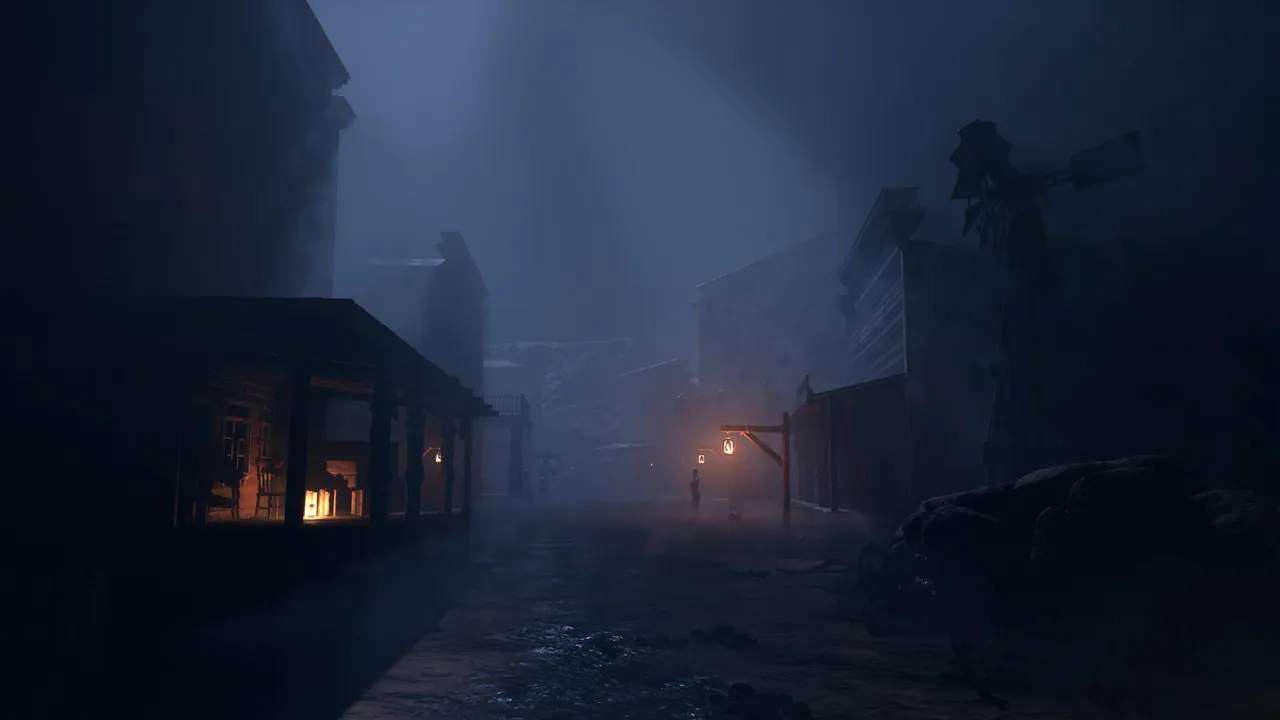
Inner VoiceImage: Dionous Games via Steam -
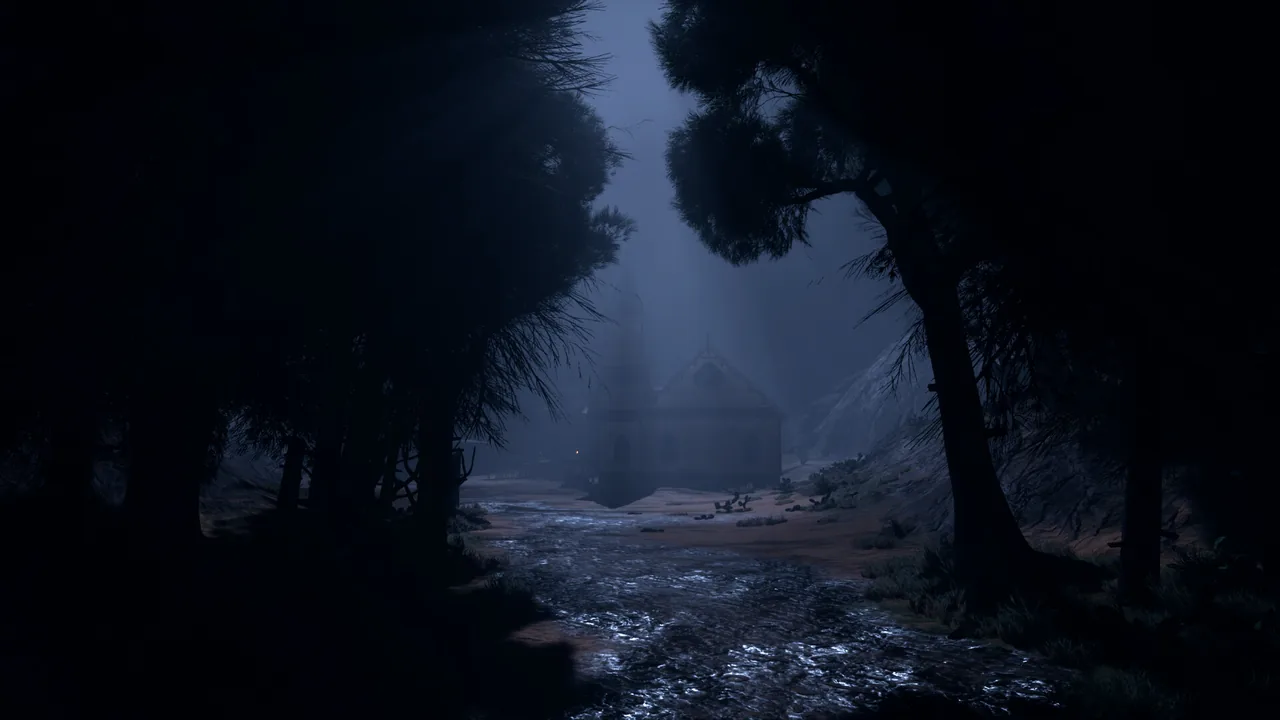
Inner VoiceImage: Dionous Games via Steam -

Inner VoiceImage: Dionous Games via Steam -
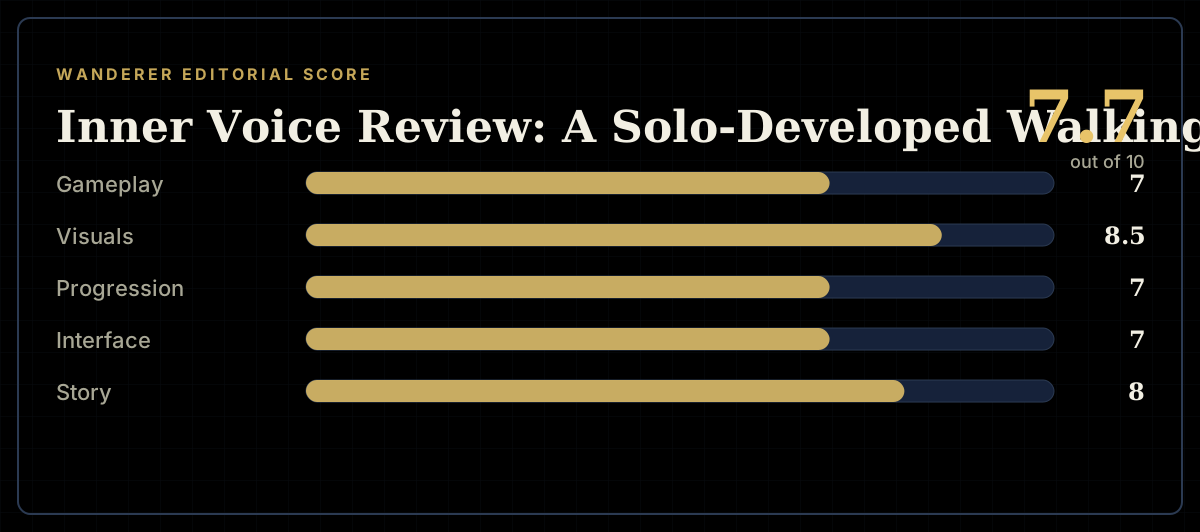
How the review scores each part of the gameWanderer Editorial -
Wanderer Editorial -
The short versionWanderer Editorial