Game review
Increbraintal
7 / 10
- Developer
- Hymoori
- Publisher
- Hymoori
- Released
- 24 April 2026
- Platforms
- [Windows]
- Genre
- Simulation
- Monetisation
- $2.99
- Players
- false
The short version
Increbraintal is a genuinely clever, cute idea, defend a brain from viruses with an auto-battling incremental tower-defense hybrid, undercut by a confusing skill tree and a runtime that most players finish in under two hours, but at $2.99 it's hard to argue with the value even so.
Biggest strengths
- A genuinely fresh mashup of incremental progression and auto-battling tower defense, built around defending a brain from waves of invading viruses
- Cute, appealing pixel art presentation that reviewers across languages consistently praise, alongside a pleasant, if singular, soundtrack
- An extremely low price point that most reviewers, even critical ones, cite as softening complaints about the game's short length
Biggest weaknesses
- A near-universal observation across the review sample: most players finish and fully unlock the game in under two hours, with many reporting closer to 60 to 90 minutes
- The skill tree is repeatedly described as confusing and poorly organized, with available upgrade types shifting unpredictably rather than following a clear, readable progression
- No replayability once the game is finished, nothing changes and there's no prestige or endless mode to return to, which several reviewers specifically request
Who it's for: Fans of short, cheap incremental games who want a quick, low-commitment session rather than a long-term idle grind.
Our recommendation: Buy it on sale
7 / 10
Defending the mind, one wave at a time
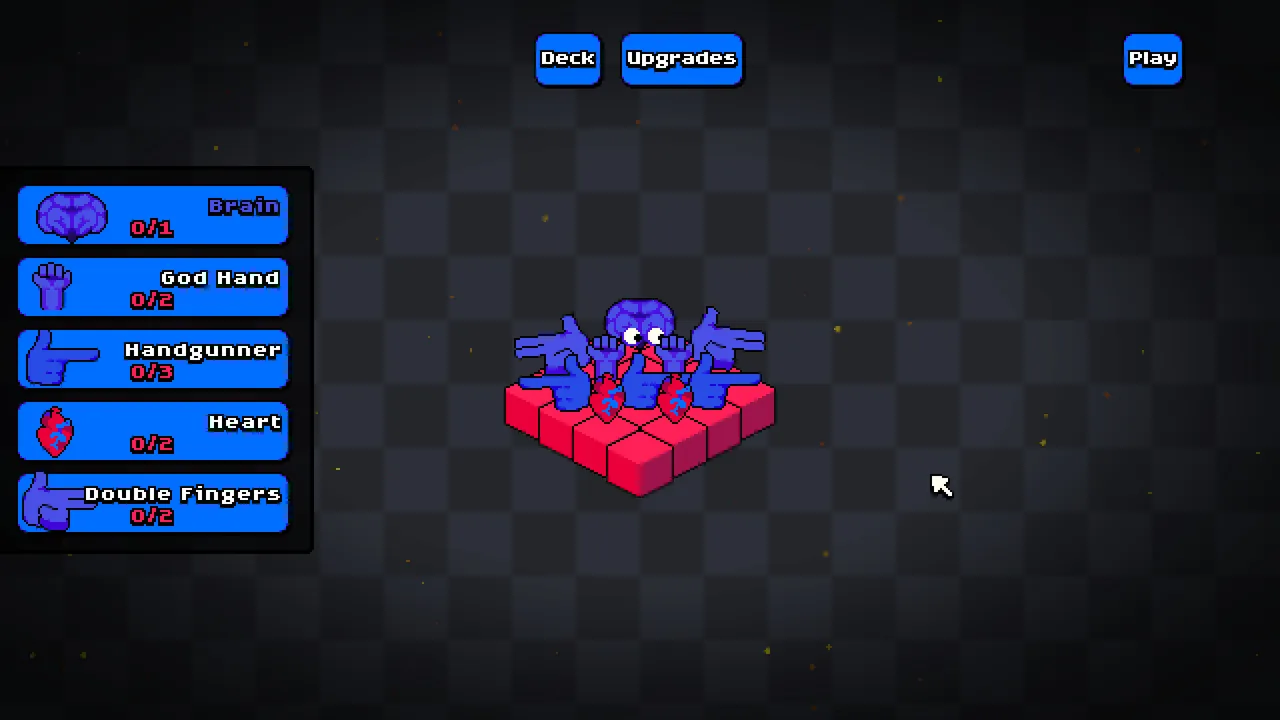
Increbraintal, released April 24, 2026 by solo developer and publisher Hymoori, casts you as the immune system's last line of defense: build a team of auto-battling companions, place them to defend a stylized brain, and unlock permanent upgrades through a skill tree to push back an ongoing viral infection. It's a $2.99 incremental auto-battler, and it launched to a Very Positive reception (176 reviews, roughly 82%) built largely on the strength of its concept and presentation rather than its depth.
A clever, cute mashup
The reviews are consistent in praising the core idea: blending idle, hands-off auto-battling with incremental currency and upgrade progression, wrapped in a charming, brain-and-virus visual theme that several reviewers describe as adorable rather than gross. The pixel art style draws repeated compliments, as does the game's single musical track, even from reviewers who wish there were more than one song to listen to across a playthrough. Multiple reviewers frame the whole experience as reminiscent of the free browser flash games of an earlier internet era, intended as a compliment about its low-friction, pick-up-and-play appeal.
Where the skill tree loses people
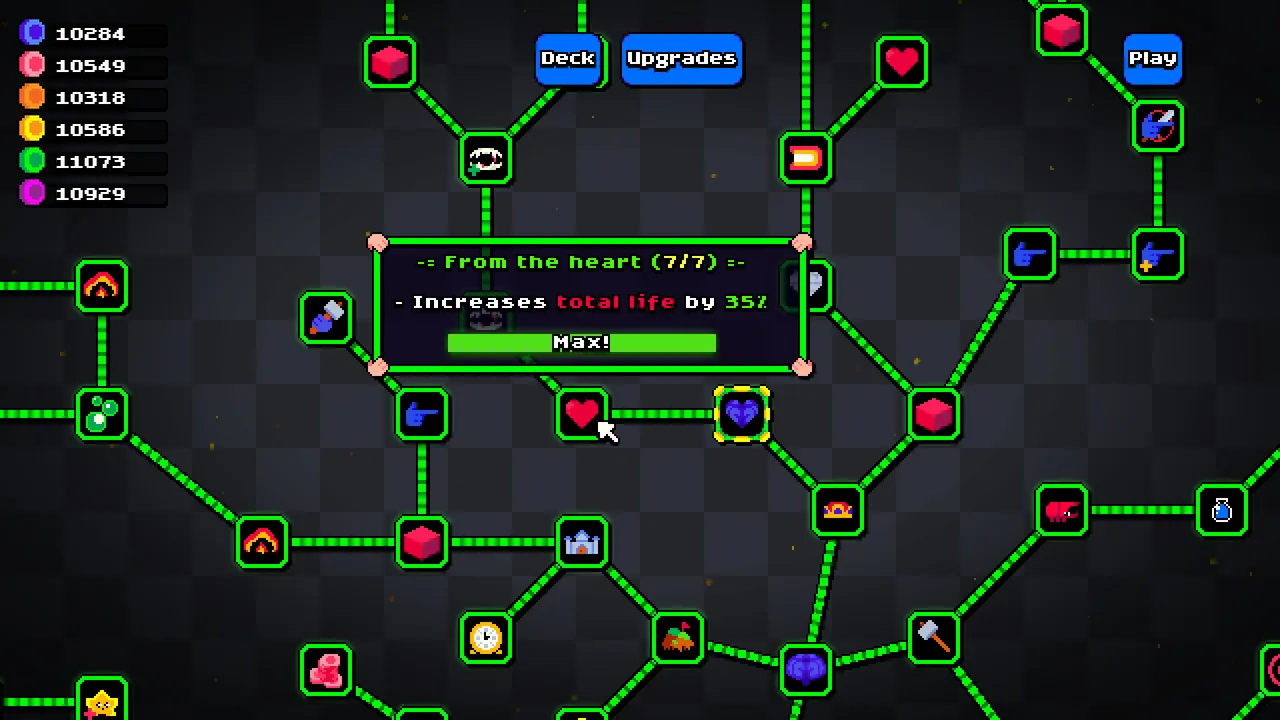
The most consistent structural criticism concerns the skill tree itself, which a number of reviewers describe as messy and difficult to parse, with available upgrade categories shifting between damage, health, and other currencies in ways that don't clearly signal what a "correct" build path looks like. Compounding that, several reviewers report missing quality-of-life features: no way to zoom out and see the full upgrade tree at once, no window resize option, and a fullscreen mode that reportedly breaks hitboxes on the upgrade screen entirely. None of these individually sink the experience, but together they leave the impression of a game that needed another pass of polish before launch.
The dominant complaint: it's just very short
By far the most repeated observation across the entire review sample, in English, Portuguese, Spanish, Korean, German, French, and Polish alike, is how quickly the game ends. The overwhelming majority of reviewers report finishing and fully unlocking the content in well under two hours, with many landing closer to sixty to ninety minutes. Reactions to that split roughly along value lines: a large share of reviewers, especially those who paid the low asking price or bought on sale, treat the brevity as acceptable given the cost, while a smaller but vocal group calls the game closer to a demo than a finished product and explicitly advises waiting for a discount. A few reviewers go further, suggesting the current state would be better positioned as free or heavily discounted content meant to build anticipation for a larger sequel.
No reason to come back
Once the game is completed, there's currently nothing more to do: no prestige system, no endless mode, and no meaningful build variety to chase on a second playthrough. Several reviewers, including largely positive ones, specifically request some form of extended or infinite mode in a future update, framing it as the single change that would most improve the experience without requiring new content from scratch.
Rough edges for some players
A smaller number of reviewers report harsher technical problems: one detailed a launch that reportedly failed outright along with options that wouldn't save, and others mention occasional frame stutters during otherwise smooth play. These reports aren't corroborated by the bulk of the sample, which runs smoothly for most players, but they're specific enough to flag for anyone particularly sensitive to launch-day rough edges from a small, solo-developed release.
Value at $2.99
Price is genuinely the deciding factor for how the review sample lands on this game. At $2.99, several reviewers explicitly note they'd be eligible for a Steam refund given how quickly they finished, and choose not to request one specifically because they enjoyed their time and want to encourage the developer rather than discourage future updates. That's a telling dynamic: it suggests the game's fundamentals land well enough that even reviewers frustrated by the length want to see it grow rather than write it off, which speaks well of the core concept even where the current package falls short.
A promising foundation from a solo developer
Several reviewers specifically flag that Increbraintal appears to be a solo or very small-team project, and extend real goodwill accordingly, framing their critiques as hopes for a sequel or major content update rather than dealbreakers for the current release. Given the strength of the core hook, blending auto-battling with incremental progression in a way genre fans describe as fresh, that goodwill seems reasonably earned: the bones of something with real staying power are visible here, even if the April 2026 launch build doesn't yet deliver on all of it.
Who should defend the brain
Increbraintal is best suited to players looking for a short, cheap, low-commitment incremental to fill an afternoon rather than a long-term idle project to return to over weeks. At $2.99, even reviewers disappointed by the length generally conclude it was a fair trade for the time spent; players who specifically want a deep, ongoing incremental grind should look elsewhere, or wait to see whether the skill tree and replayability improve.
The verdict
Increbraintal has a genuinely appealing hook and a cute presentation that outpaces its price tag, but a messy skill tree and an abrupt ending keep it from being more than a pleasant afternoon distraction. It's an easy, low-risk pickup on sale, and reasonable even at full price for players who know exactly what they're getting into.
Pros and cons
Pros
- A genuinely fresh mashup of incremental progression and auto-battling tower defense, built around defending a brain from waves of invading viruses
- Cute, appealing pixel art presentation that reviewers across languages consistently praise, alongside a pleasant, if singular, soundtrack
- An extremely low price point that most reviewers, even critical ones, cite as softening complaints about the game's short length
- A tight, hands-off session that several reviewers compare favorably to browser flash games of decades past, good for unwinding without demanding much attention
Cons
- A near-universal observation across the review sample: most players finish and fully unlock the game in under two hours, with many reporting closer to 60 to 90 minutes
- The skill tree is repeatedly described as confusing and poorly organized, with available upgrade types shifting unpredictably rather than following a clear, readable progression
- No replayability once the game is finished, nothing changes and there's no prestige or endless mode to return to, which several reviewers specifically request
- Missing quality-of-life features draw repeated complaints, including no zoom or window resize on the upgrade screen and broken hitboxes in fullscreen mode
Screenshots
-
IncrebraintalImage: Hymoori via Steam -
IncrebraintalImage: Hymoori via Steam -
IncrebraintalImage: Hymoori via Steam -
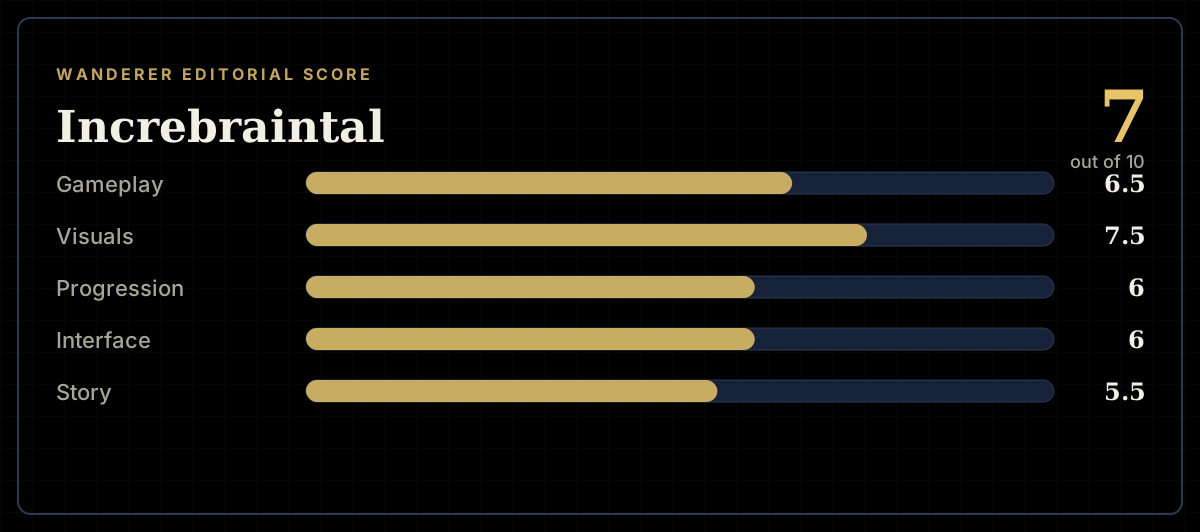
How the review scores each part of the gameWanderer Editorial -
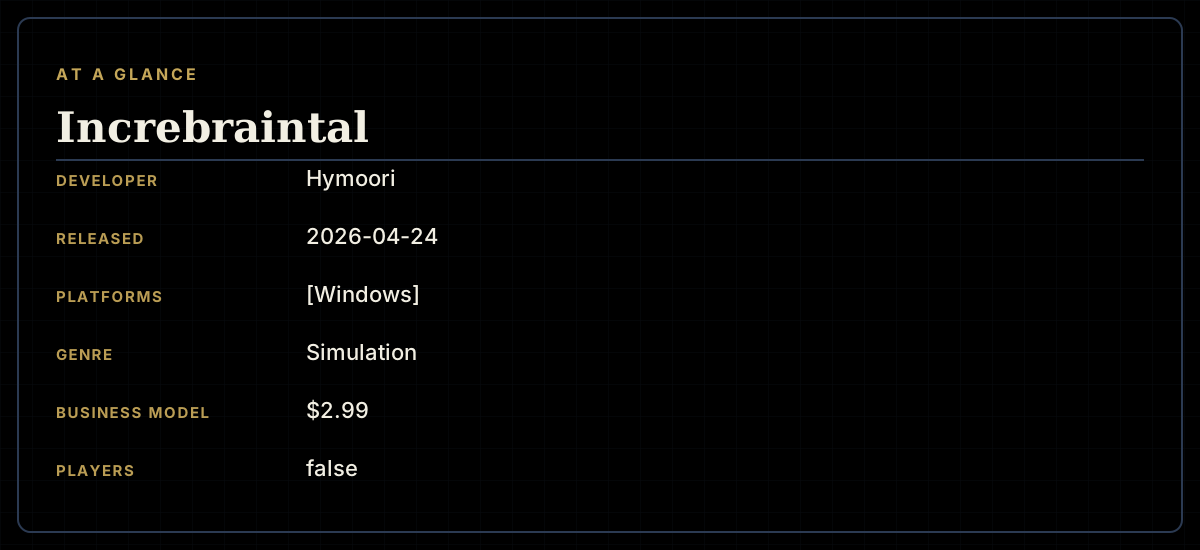
Key facts at a glanceWanderer Editorial -
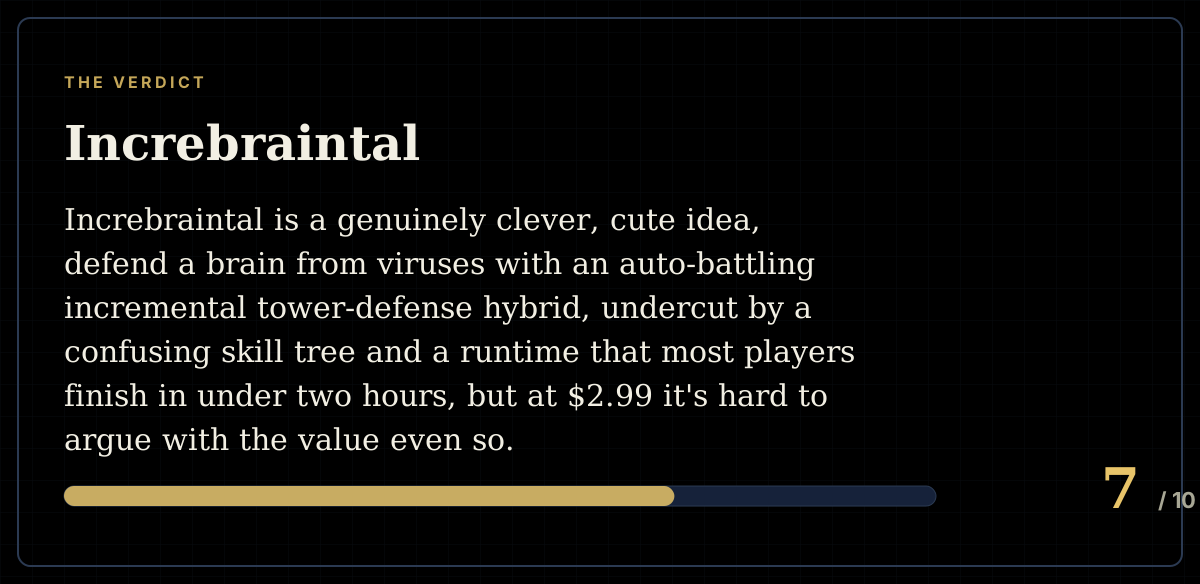
The short versionWanderer Editorial